Ruscus aculeatus L.
Eng.: Butcher’s-broom. Spa.: Rusco, jusbarda. Fre.: Fragon petit houx, fragon faux houx. Ara.: Khizana, khizerane, khallaku, senesaq, ass berri, meurdjel, sobhan. Tam.: Redradj, atkizunn.
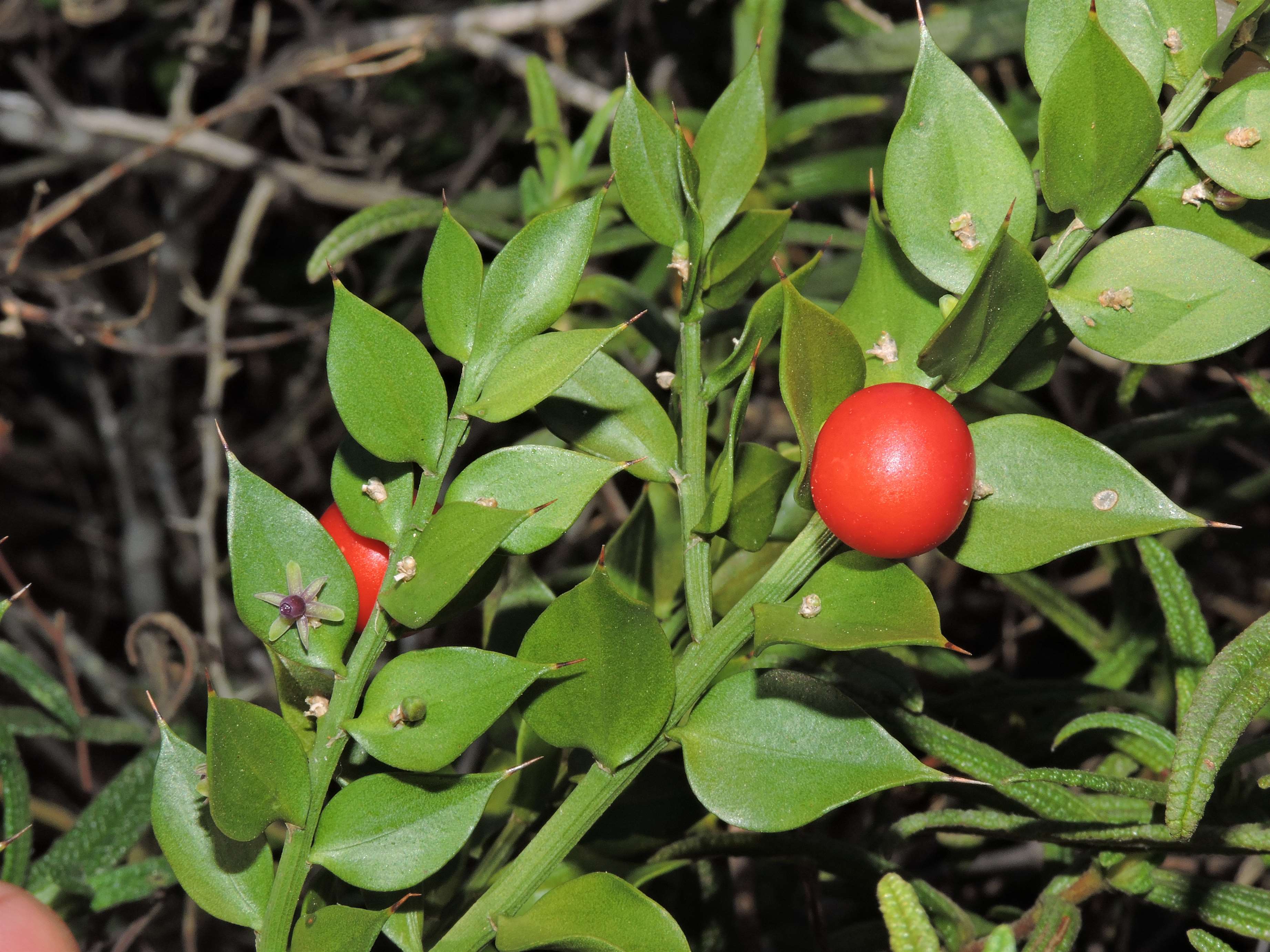
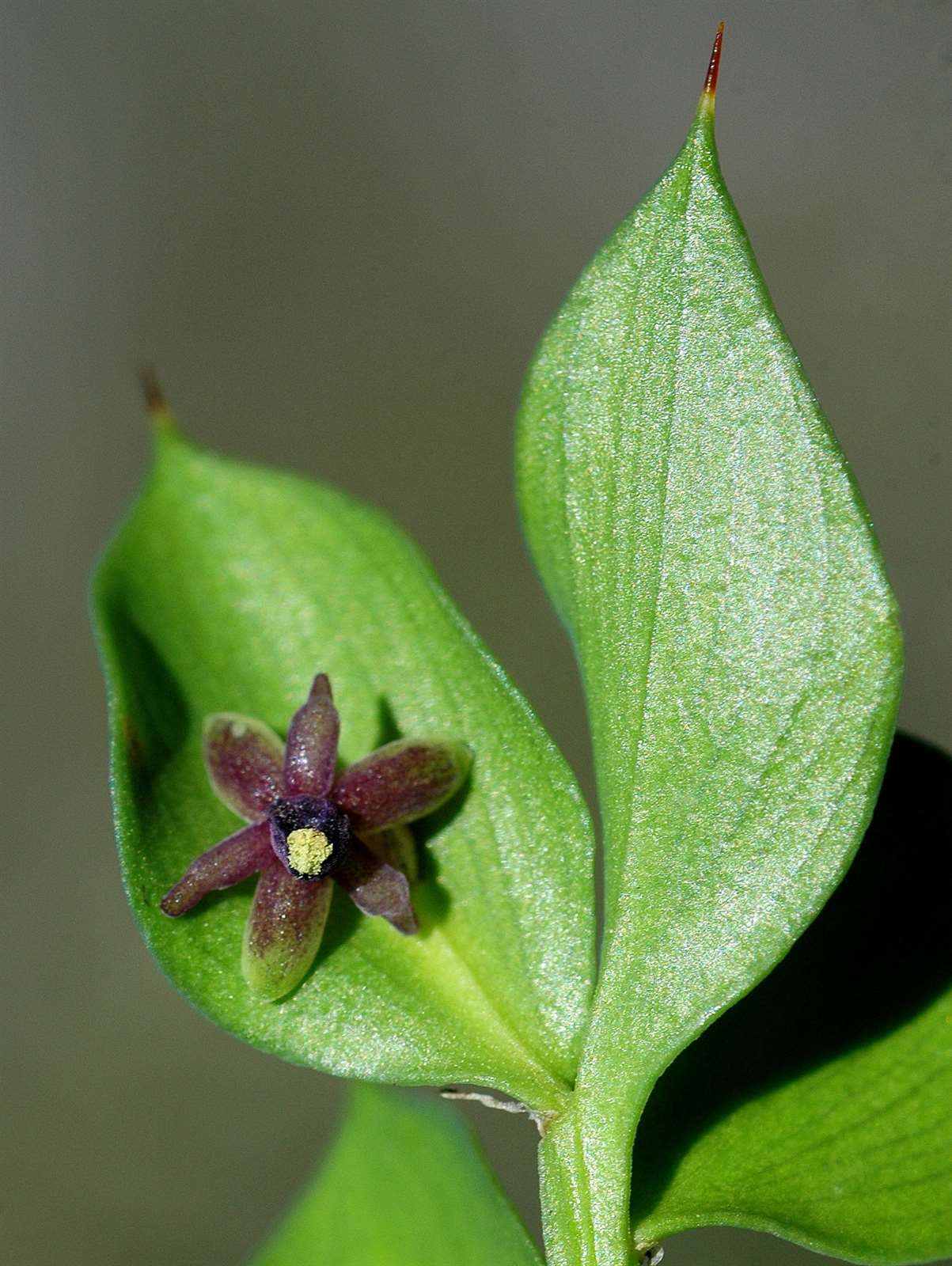
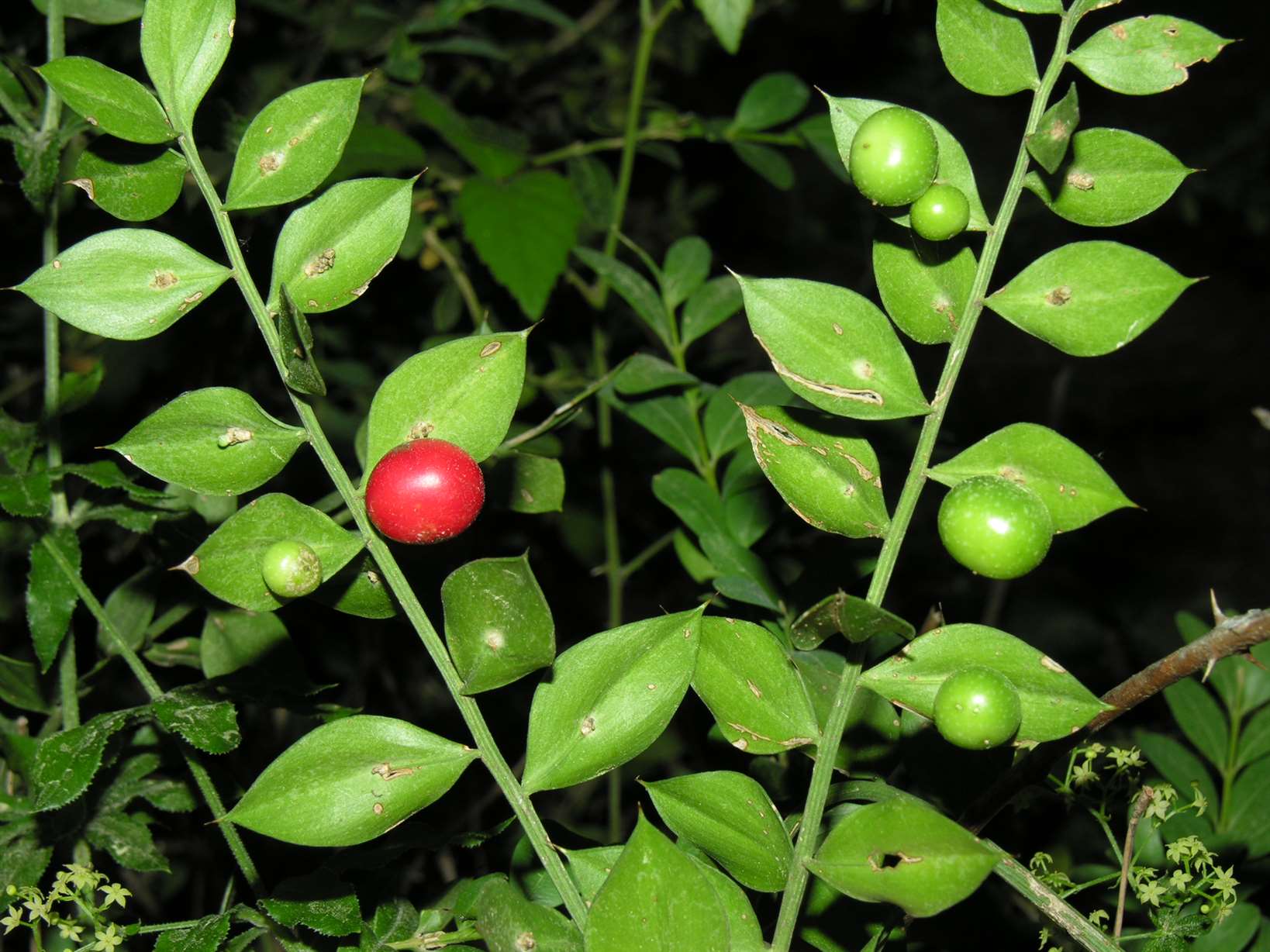
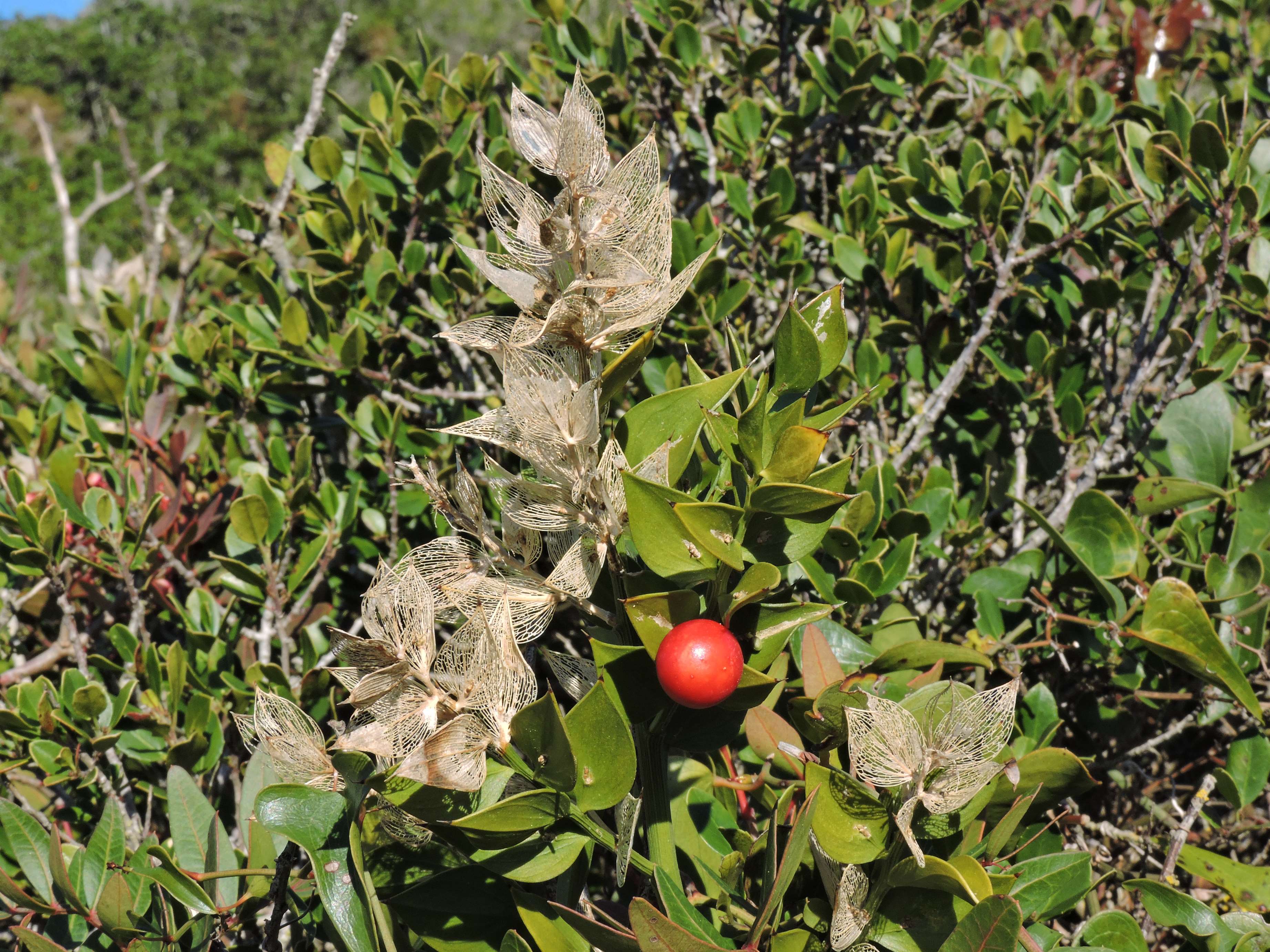
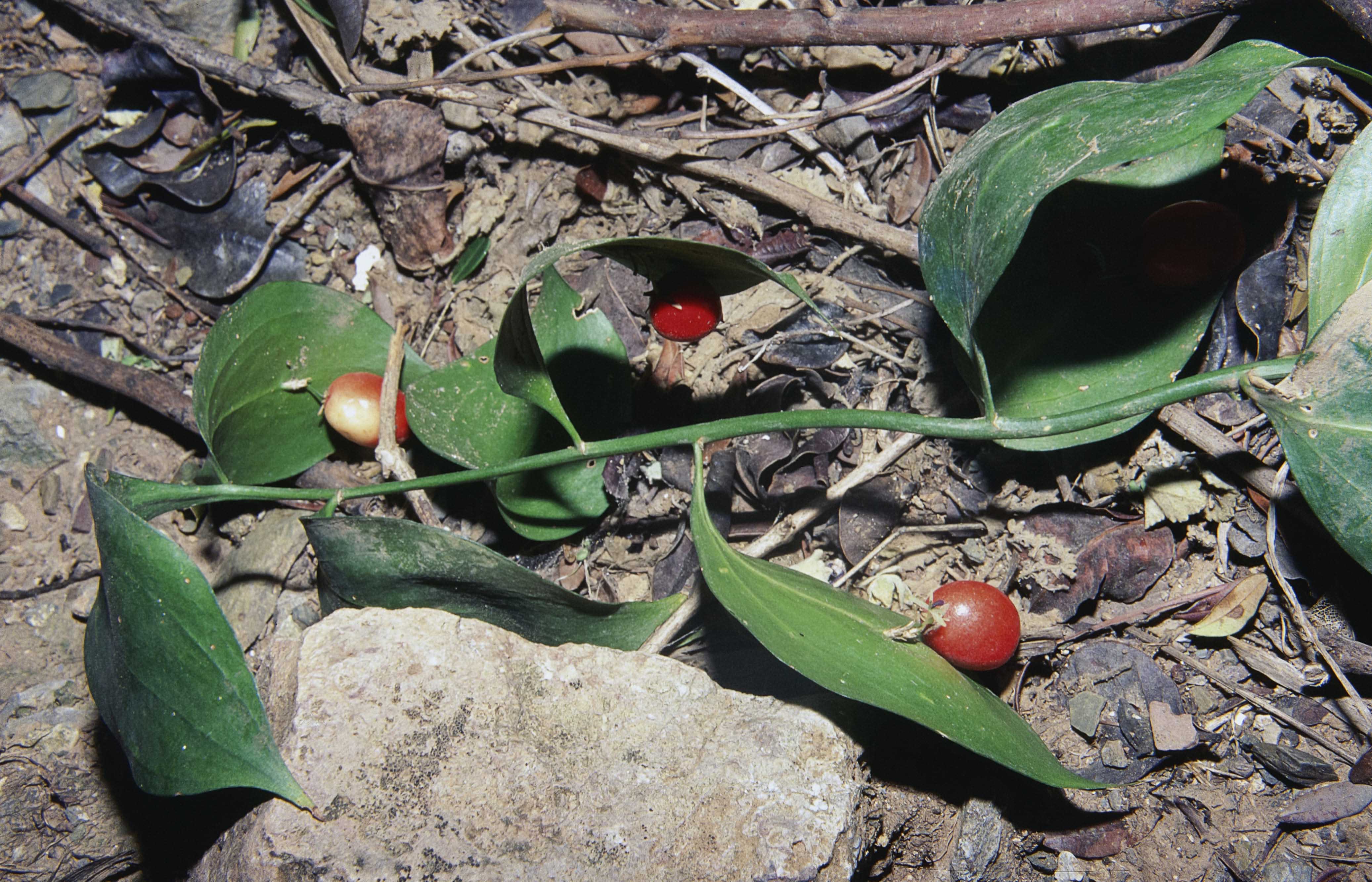
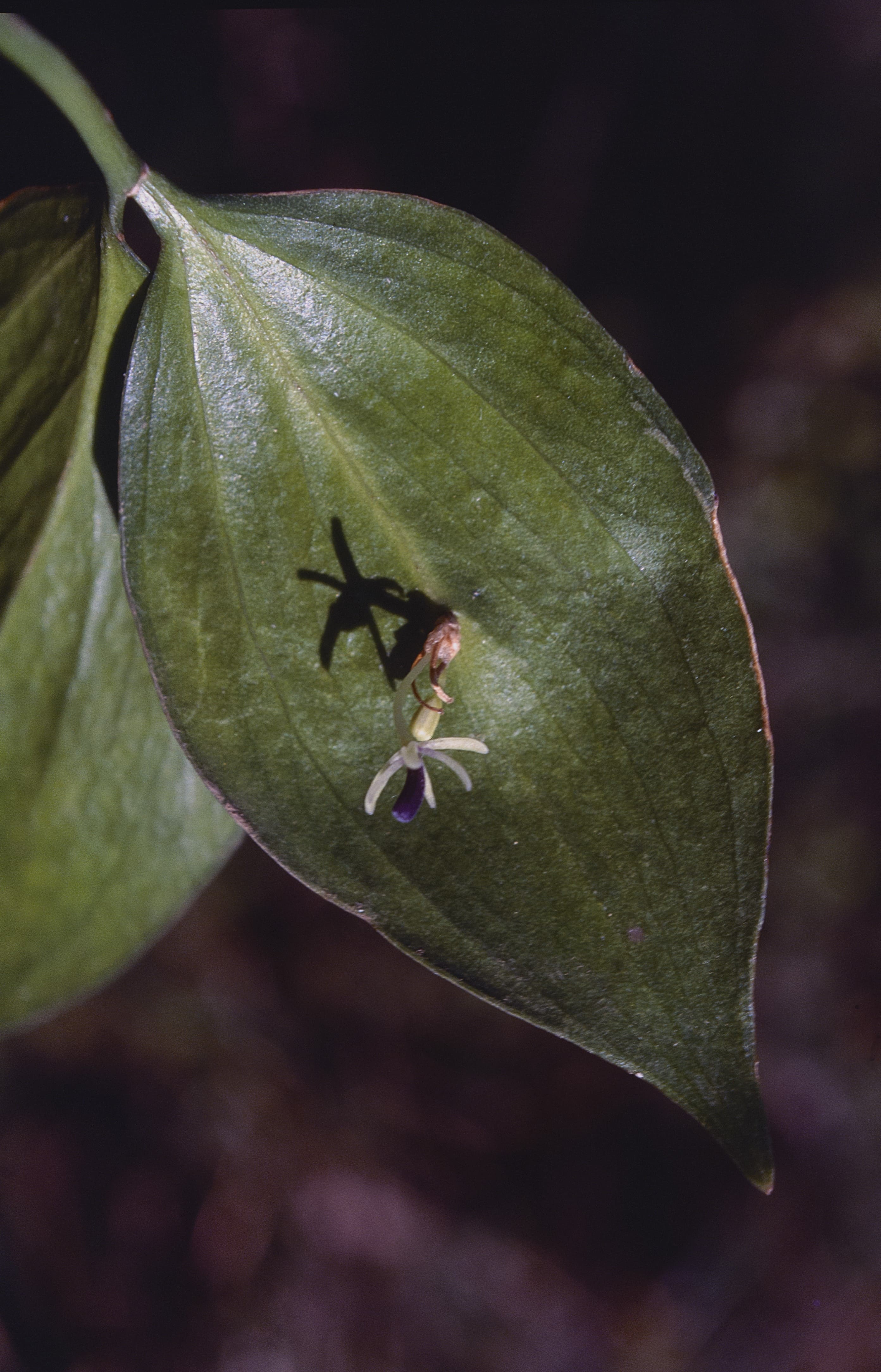
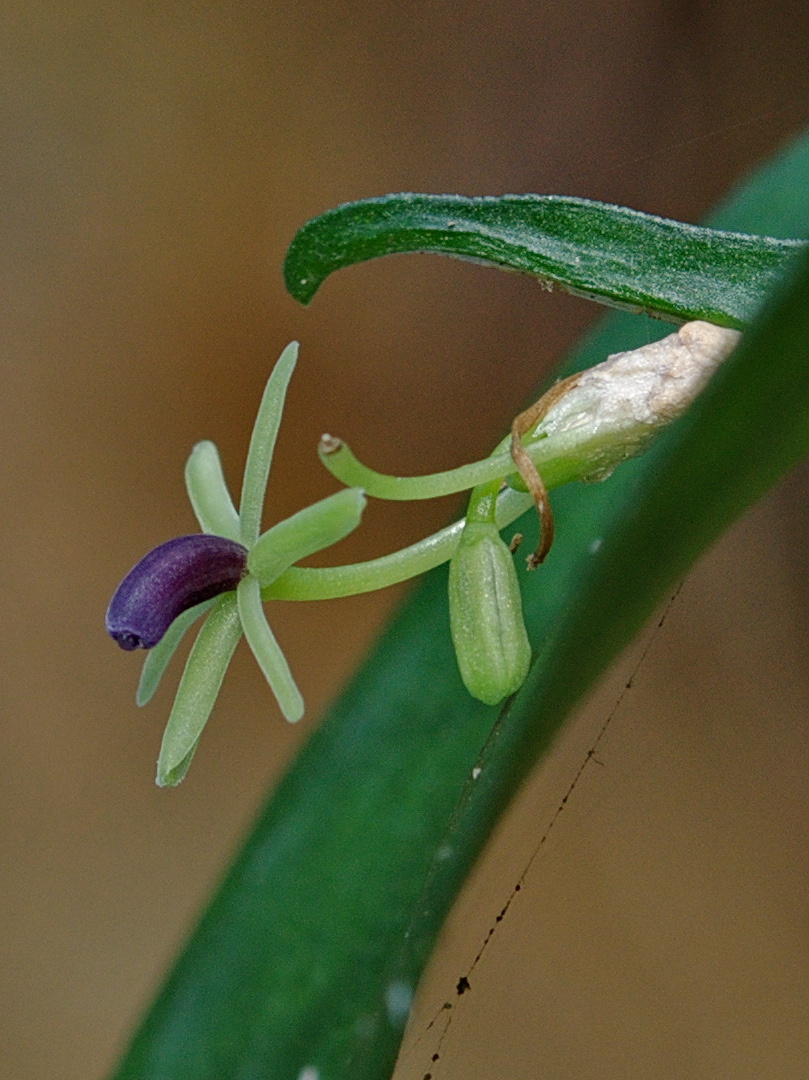
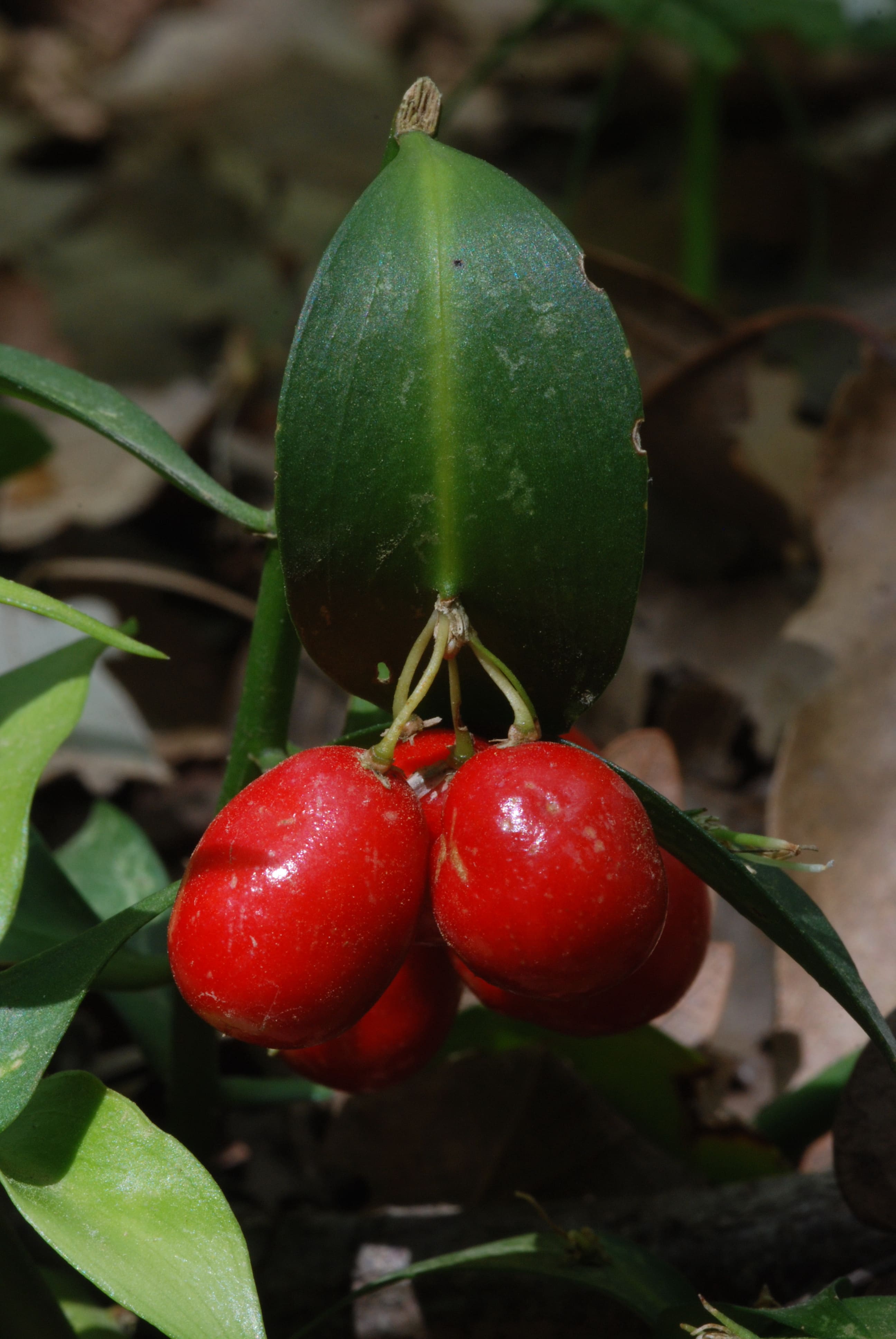
Perennial plant, evergreen, dioecious, with woody, rigid, green stems, up to 1 m long, arising from a long-lived rhizome. Leaves minute membranous bracts, triangular to lanceolate, very small (4-10 mm). Phylloclades, a type of false leaf, 1-2 × 2-4 cm, born from leaf axils, ovate to oblong, finishing in a pointed tip; green, rigid and prickly. These phylloclades, which are nothing more than flattened branchlets with a leafy appearance, serve the function of true leaves. Flowers are born solitary or in pairs (rarely 3) in the centre of phylloclades, in the axil of a small whitish and membranous bract; perianth consists of 6 tepals, greenish-whitish, external ones elliptic, internal ones linear-lanceolate. Male flowers have 3 stamens fused at the filaments. Female flowers have a rounded or ovoid pistil. Fruit, a globose red berry from 1 to 1.5 cm in diameter, which has inside 1 single seed, sometimes 2, rarely up to 4.
Flowering:
February to April.
Fruiting:
September to December.
Habitat:
Indifferent to the type of substrate, it is a typical plant of shady areas in oak woodlands (Quecus suber and Q. ilex). In areas of subhumid to hyperhumid bioclimate, thermomediterranean to supramediterranean floors.
Distribution:
Mediterranean region and Central Europe. In North Africa it is distributed in almost all the non steppic western Mediterranean area. A large population is also found in NE Libya (Akhdar mountains).
Observations:
The other species of the genus in the region is R. hypophyllum L., which is easily differentiated by its non-woody nor rigid stems and larger phylloclades (7-10 × 4-6 cm), not rigid nor prickly. It grows in wetter forests in the north of the Mediterranean region.
Conservation status:
R. aculeatus is a common species and R. hypophyllum is rarer but none are considered threatened. In the IUCN Red List of Threatened Species they are not evaluated. In the Livre Rouge de la flore vasculaire du Maroc (Fennane, 2021), both have been considered as Least Concern (LC).