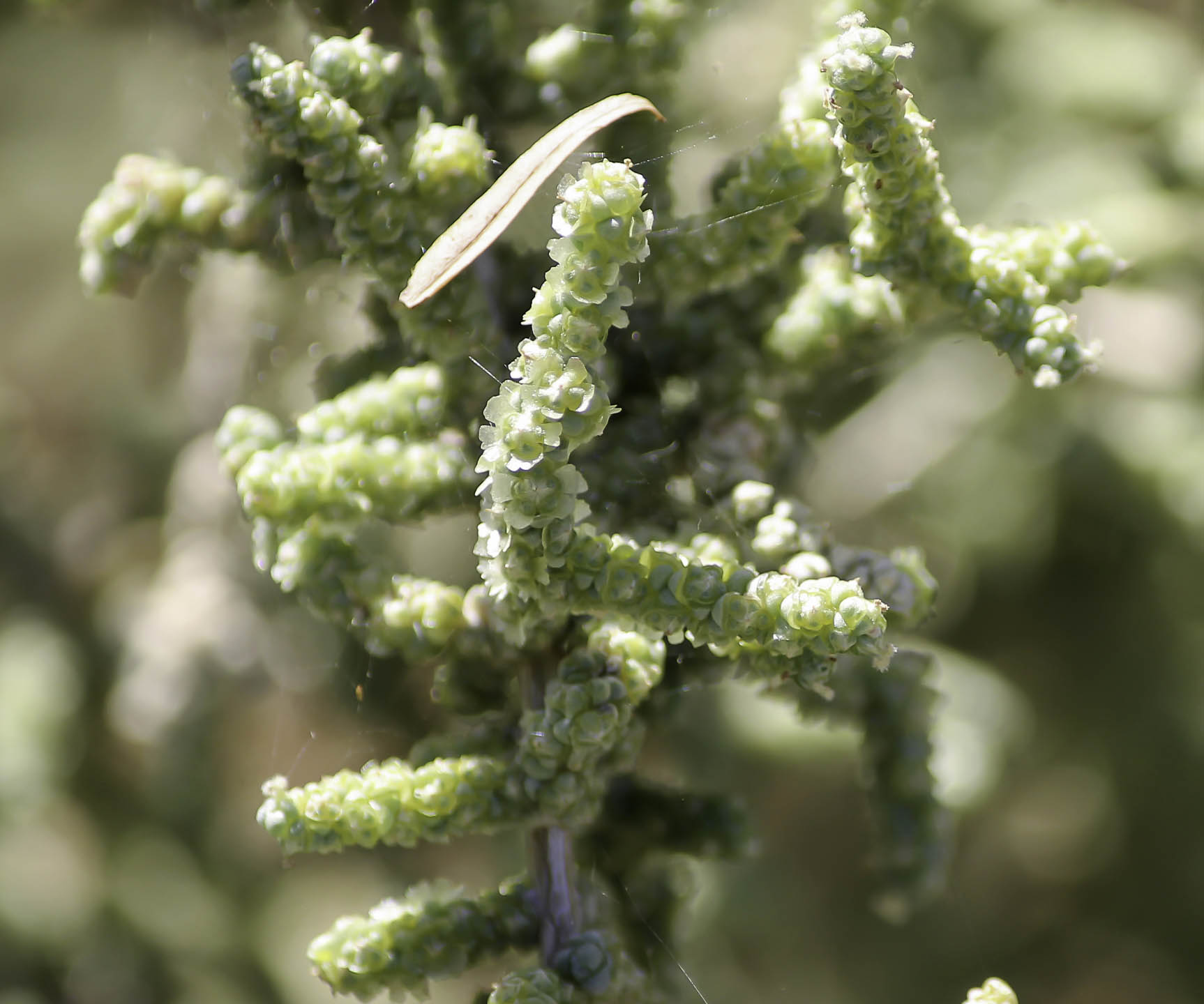
Salsola imbricata Forssk.
S. baryosma (Schult.) Dandy, S. foetida Delile ex Spreng., Caroxylon imbricatum (Forssk.) Akhani & Roalson.
Eng.: Saltwort. Spa.: Salado. Fre.: Soude. Ara.: Rhassel, rhacel, ara ressal, khariet (Egypt), deberrah, mulli (last 2 in Sudan). Tamahaq: Êchim, issin.
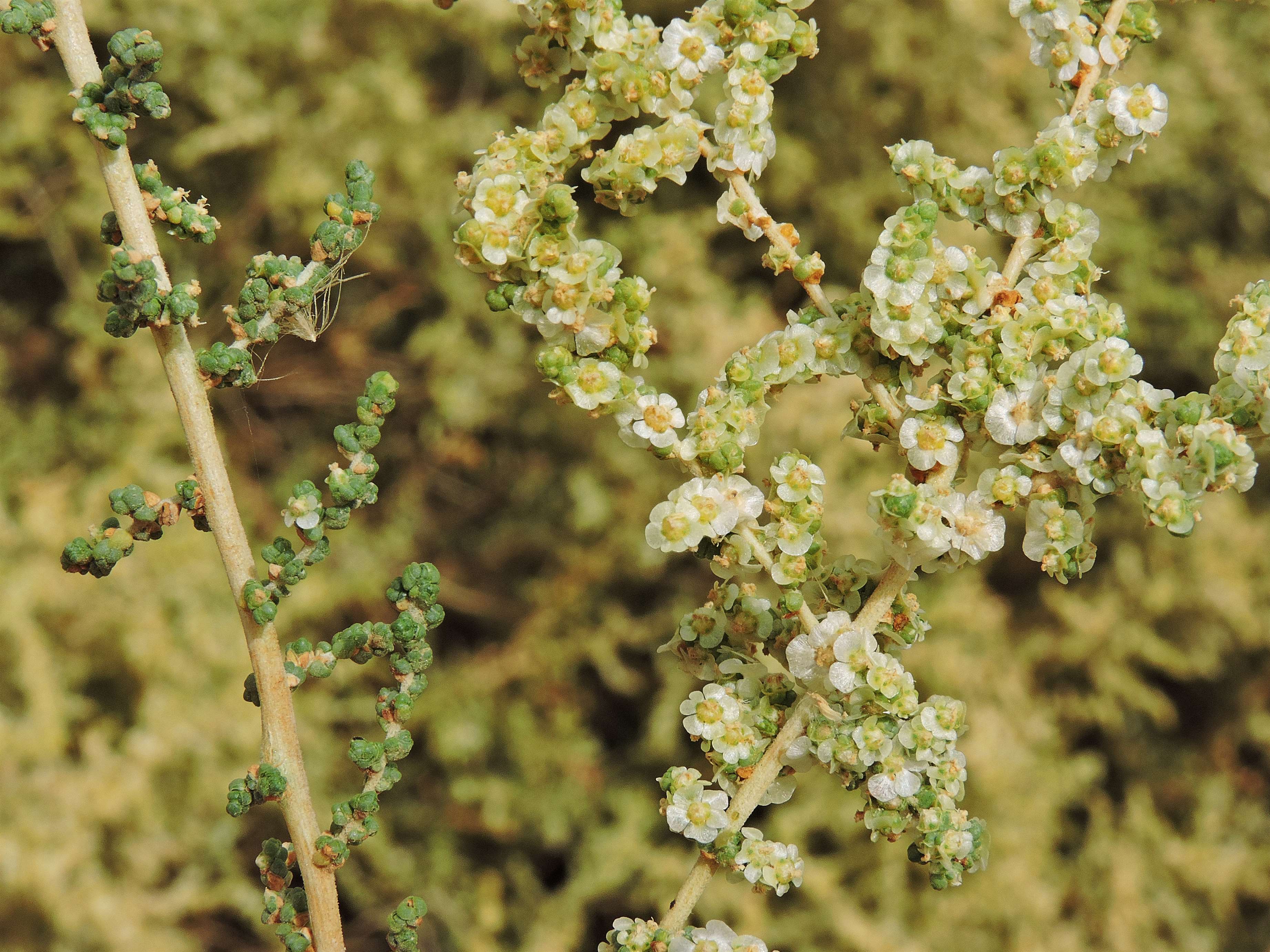
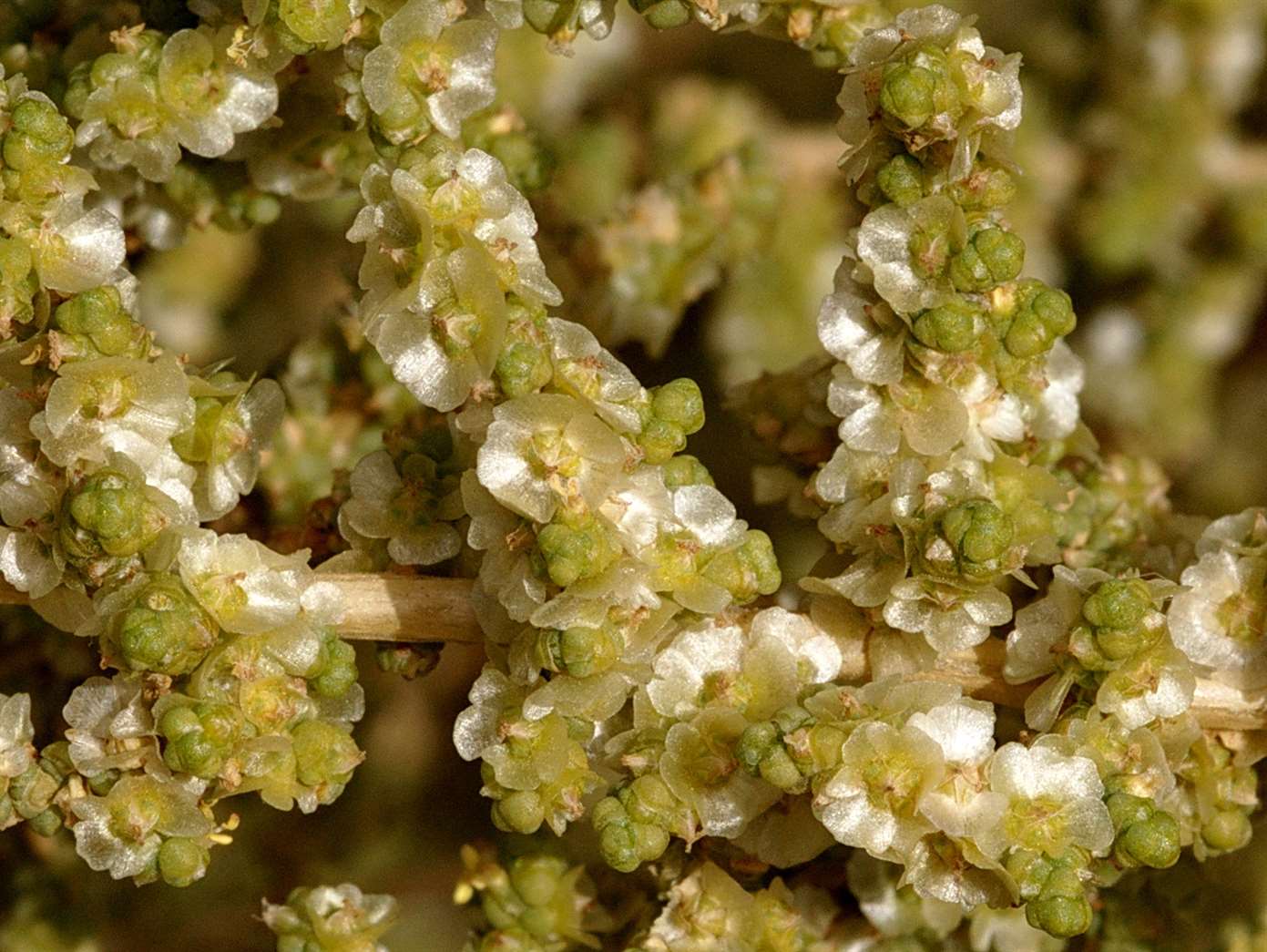
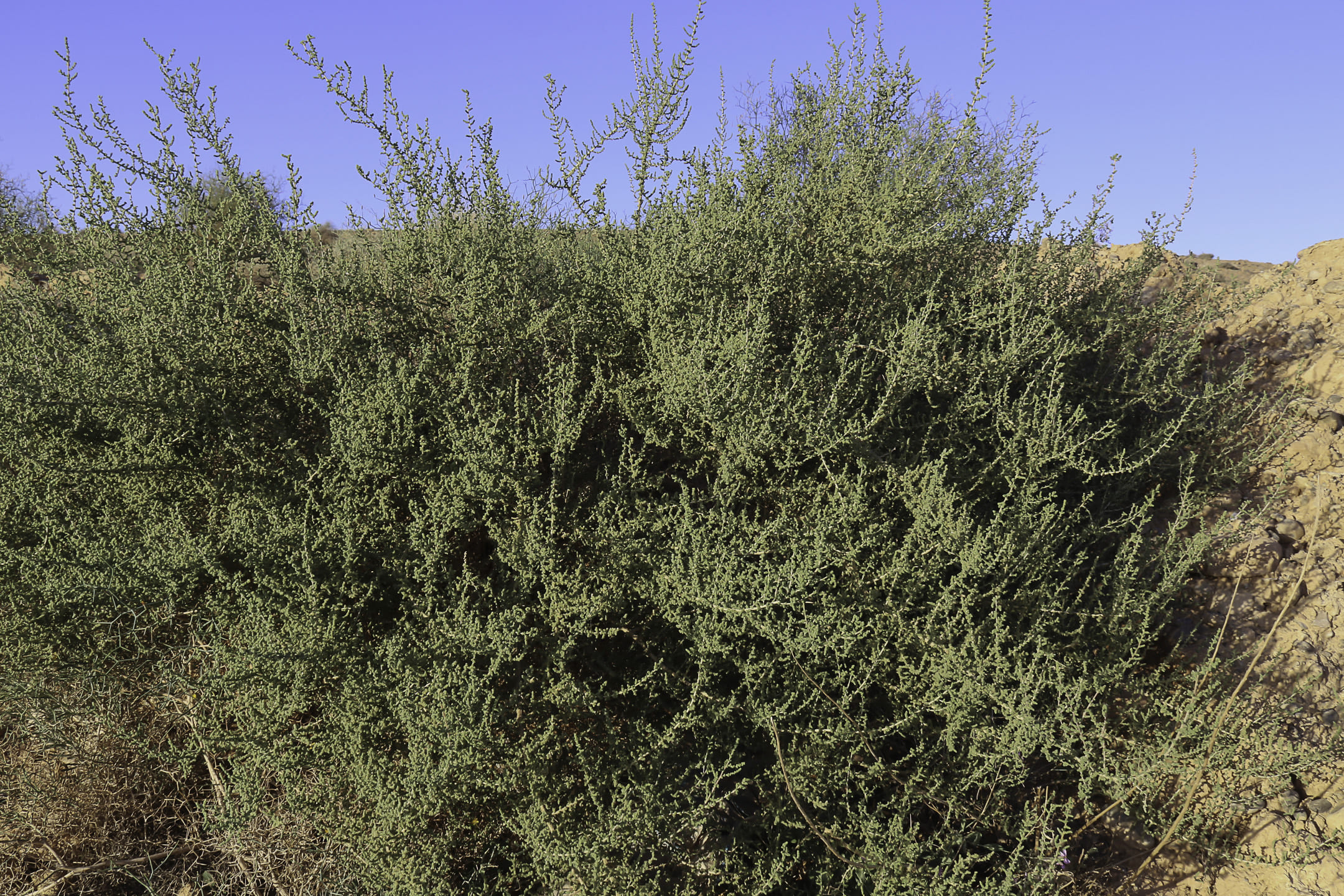
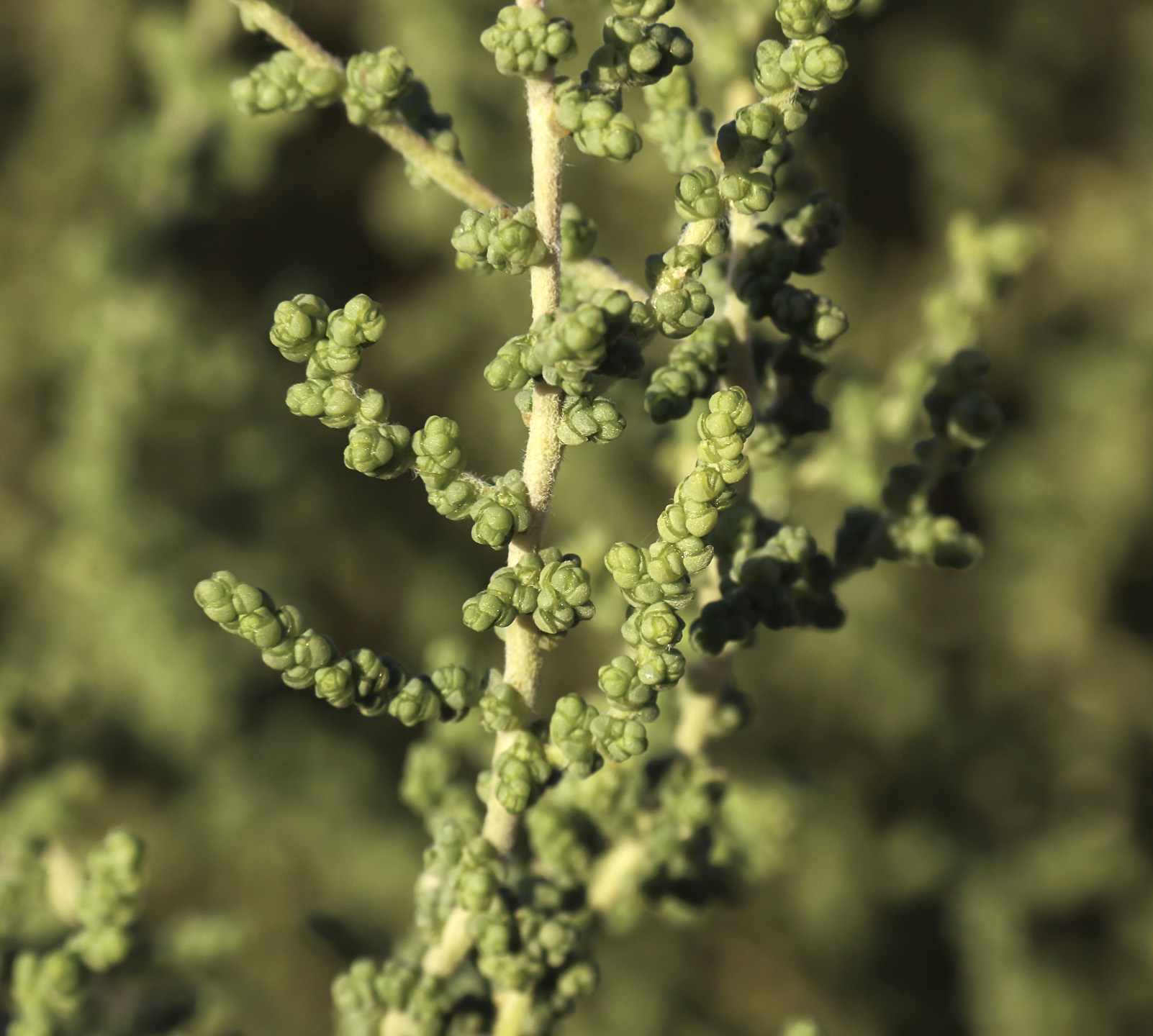
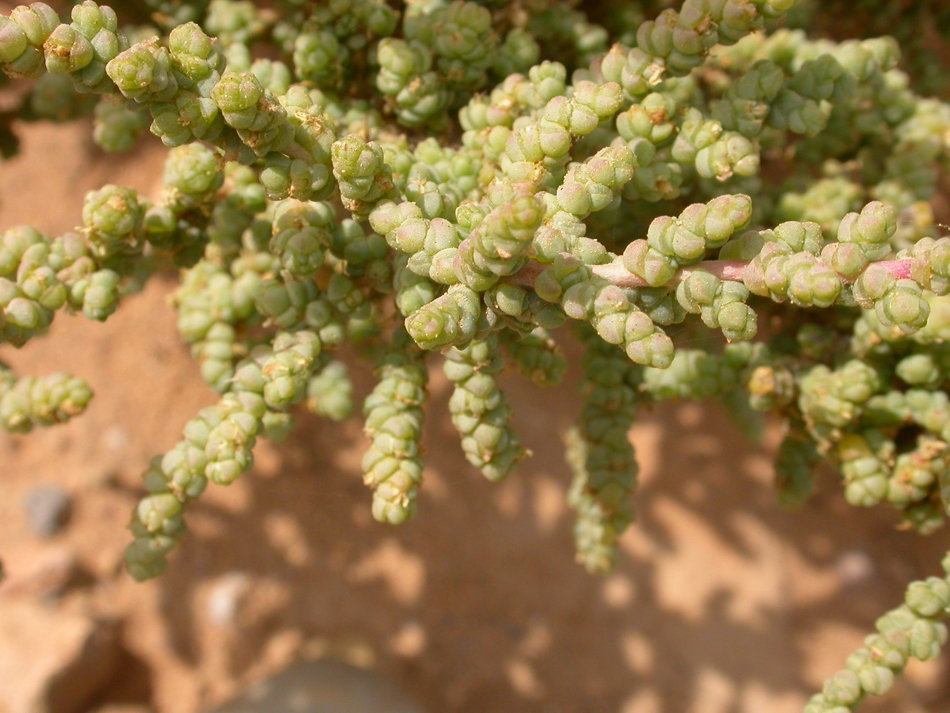
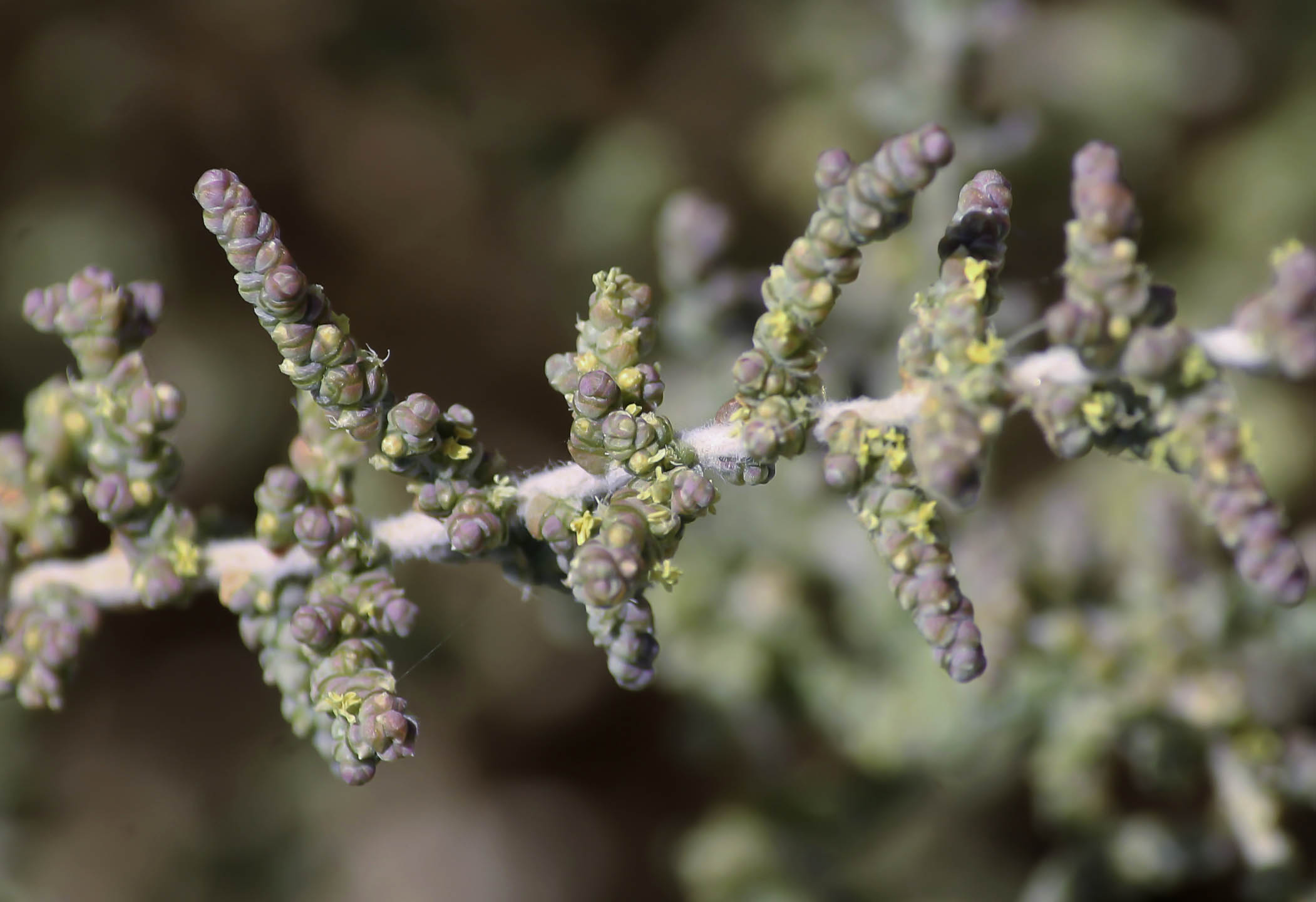
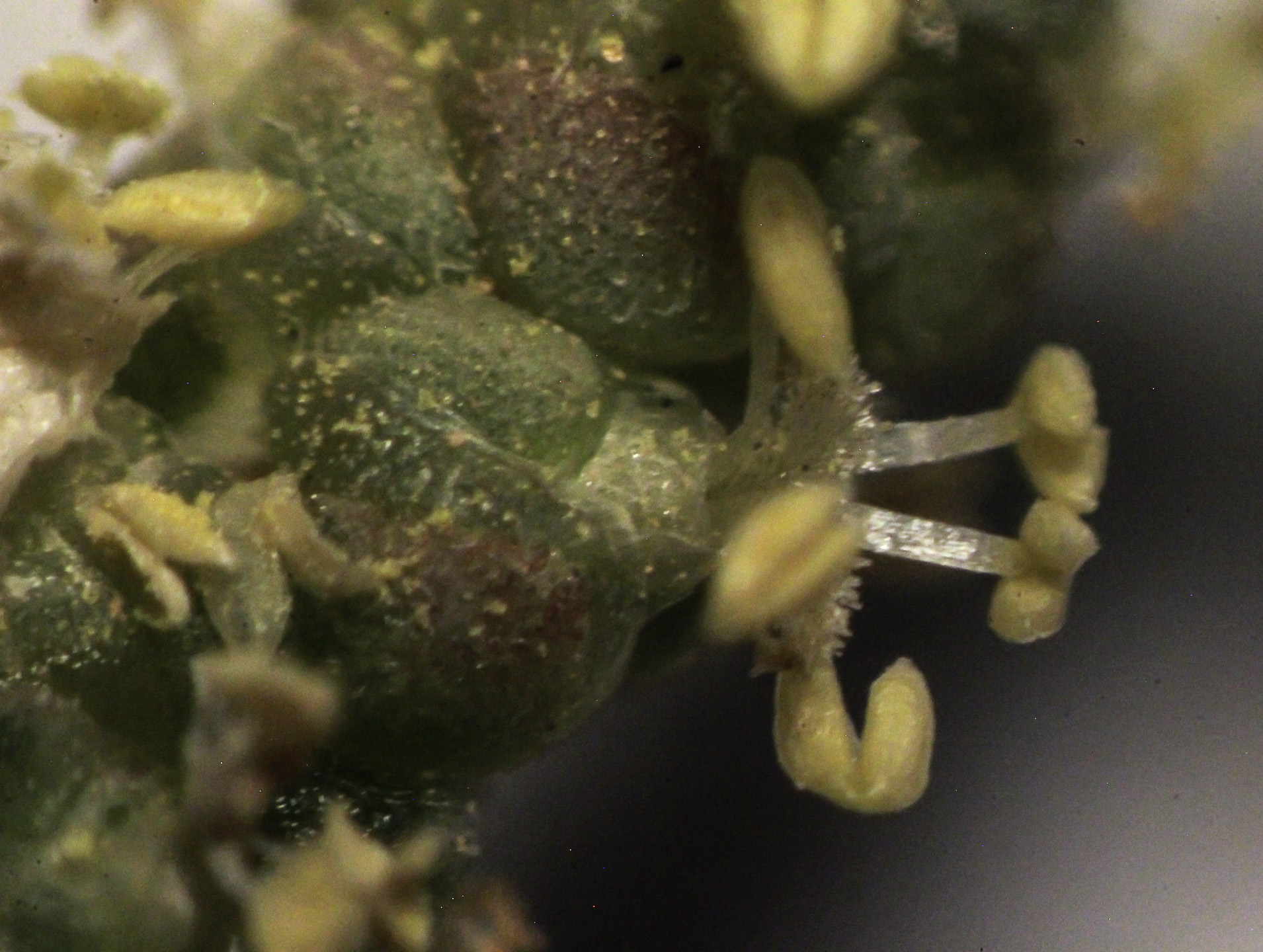
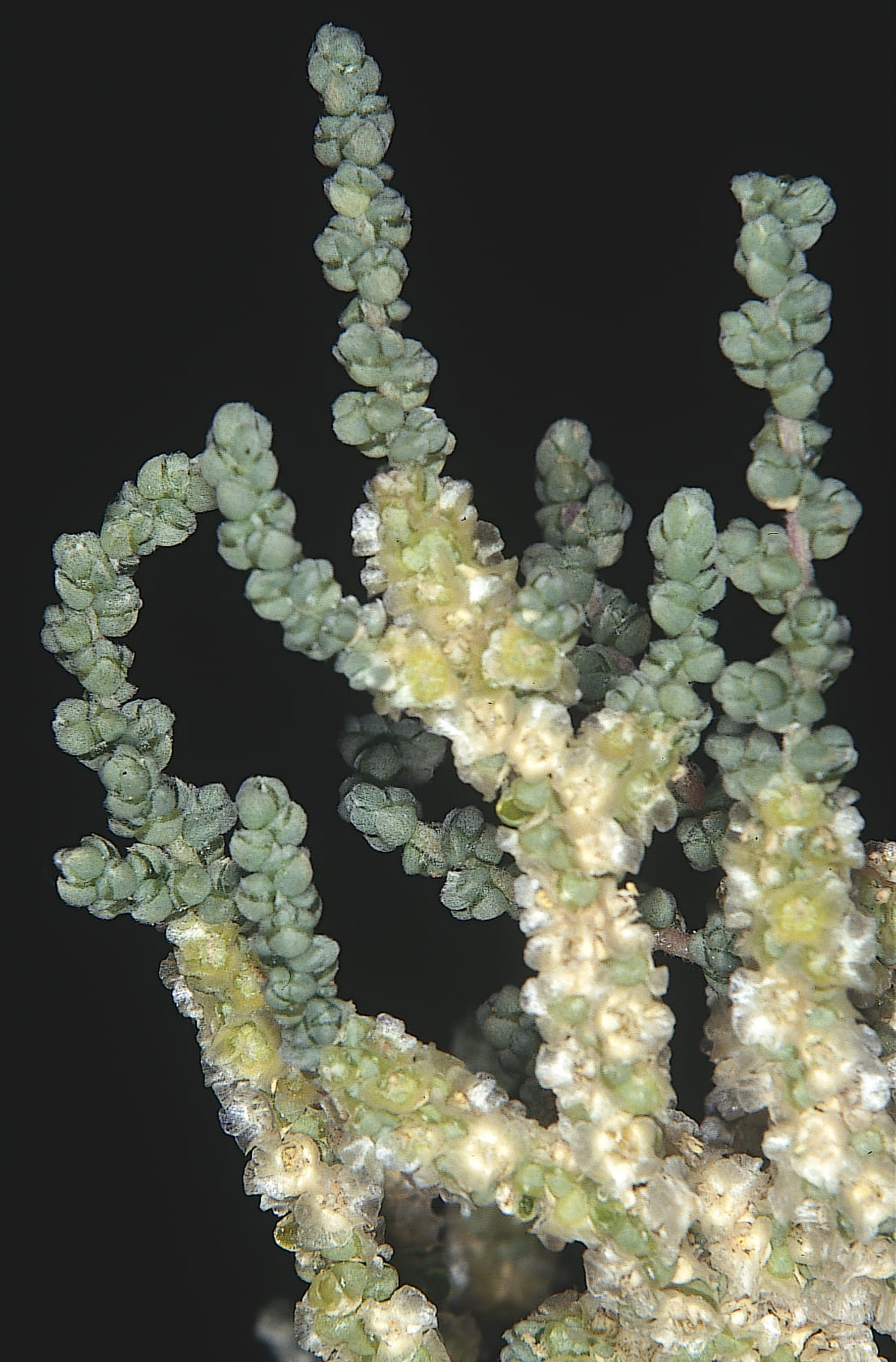
Shrub up to 1.5 m in height, greyish-green, very ramose, ± upright, with trunk and main branches covered by a greyish-brown fissured bark. Young plants with reddish stems and leaves linear, hairy and deciduous. Branchlets whitish, ± villous, with soft or crispate hairs, whitish or yellowish. Mature leaves up to 2-5 × 1.5-2 mm, alternate, imbricate, sessile, ovate-orbicular, succulent, obtuse, with a narrow scarious margin, concave on the upper side and convex on the underside. Flowers always hermaphrodite, solitary at the leaf axil, in short and dense spikes. Perianth with 5 herbaceous parts, connivent, obtuse, up to 5.5 mm in diameter, including the wings. Stamens 5. Fruit an achene surrounded by the 5 hardened perianth parts, each relatively small, with a dorsal whitish wing, finely striated.
Flowering:
September to November.
Fruiting:
December to February.
Habitat:
Rocky-sandy, sandy and silty terrains in desert areas.
Distribution:
In North Africa (most of the Sahara and the Sahel) and western Asia.
Observations:
A close species is S. gaetula (Maire) Botsch. [S. foetida var. gaetula Maire, Caroxylon gaetulum (Maire) Akhani & Roalson, Nitrosalsola gaetula (Botsch.) Theodorova], that currently is usually considered as S. imbricata subsp. gaetula (Maire) Boulos, with a wide distribution along North Africa (from Senegal to NE Egypt and the Sinai Peninsula). Its leaves, bracts, bracteoles and dorsal side of the perianth segments are villous, with long and curved white or yellowish hairs.
Conservation status:
These species are somewhat common but in principle none are considered threatened. Currently, they have not been assessed at a global level on the IUCN Red List of Threatened Species. In the updated red list of Egypt (Shaltout & Bedair, 2023) it has been considered as Least Concern (LC).