Lycium schweinfurthii Dammer
Eng.: Boxthorn. Spa.: Cambronera. Fre.: Lyciet. Ara.: Auçedj, awsag, ghardeq, r’ardâq. Tam.: Inzzriki, ossis.
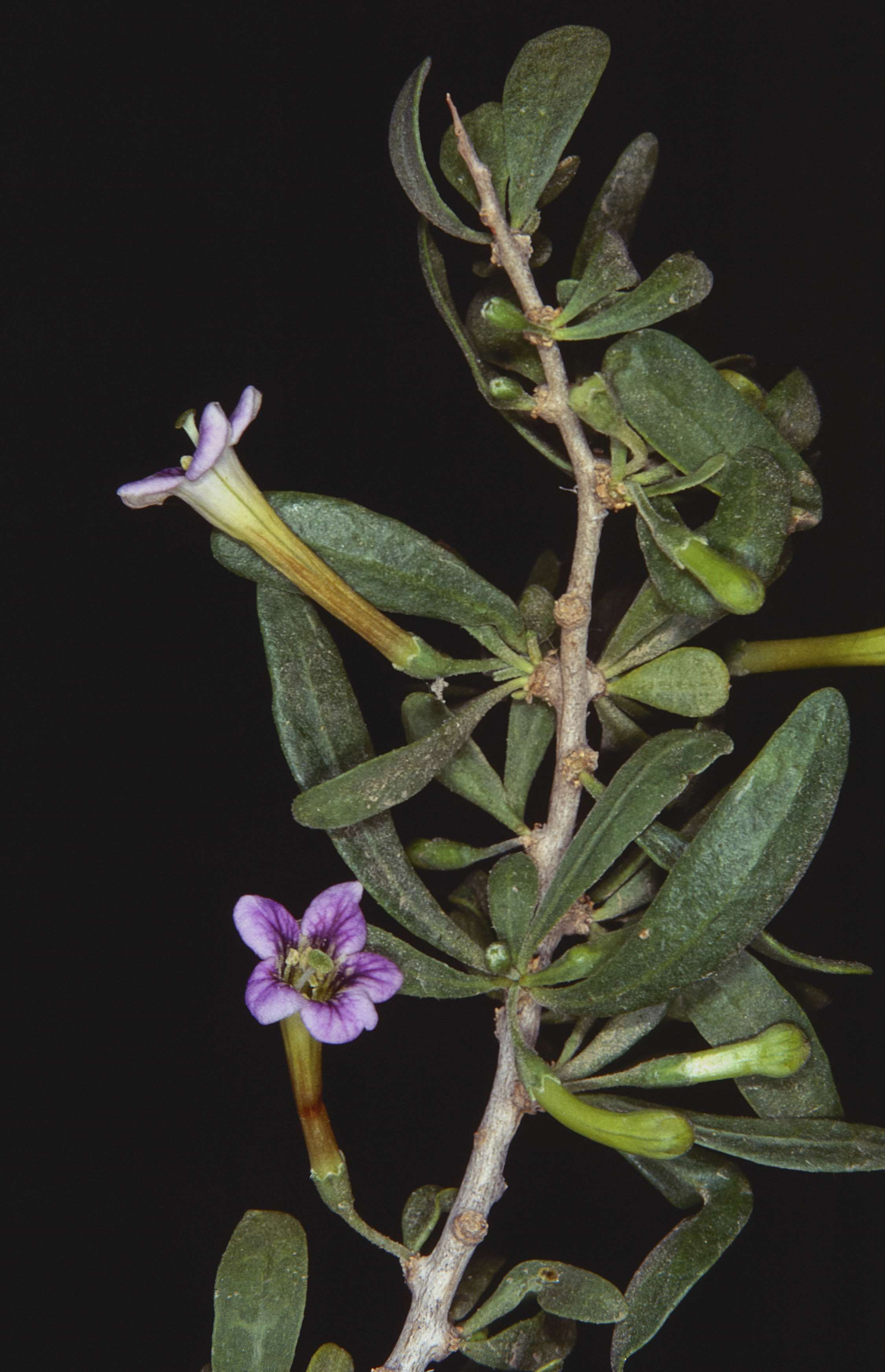
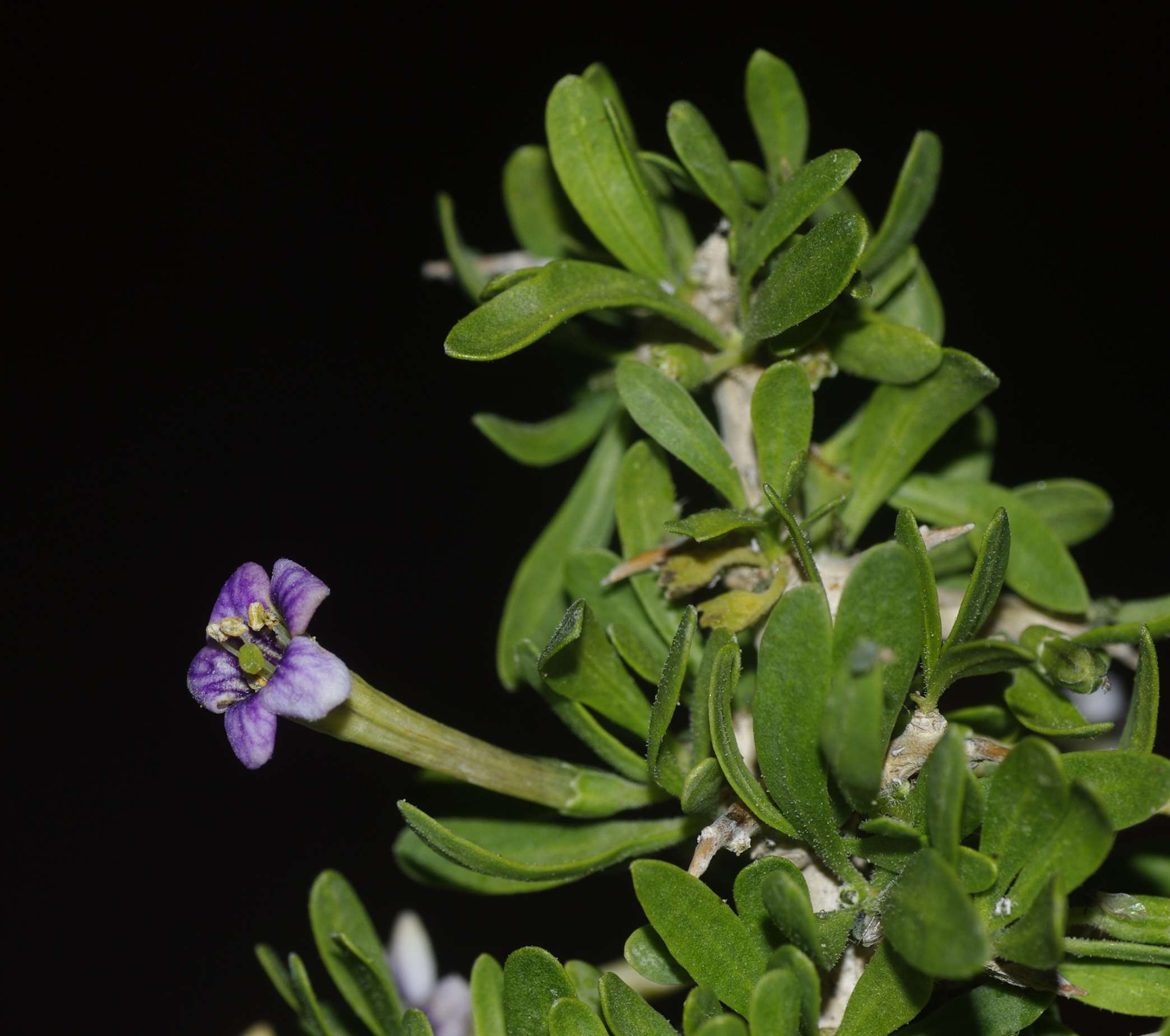
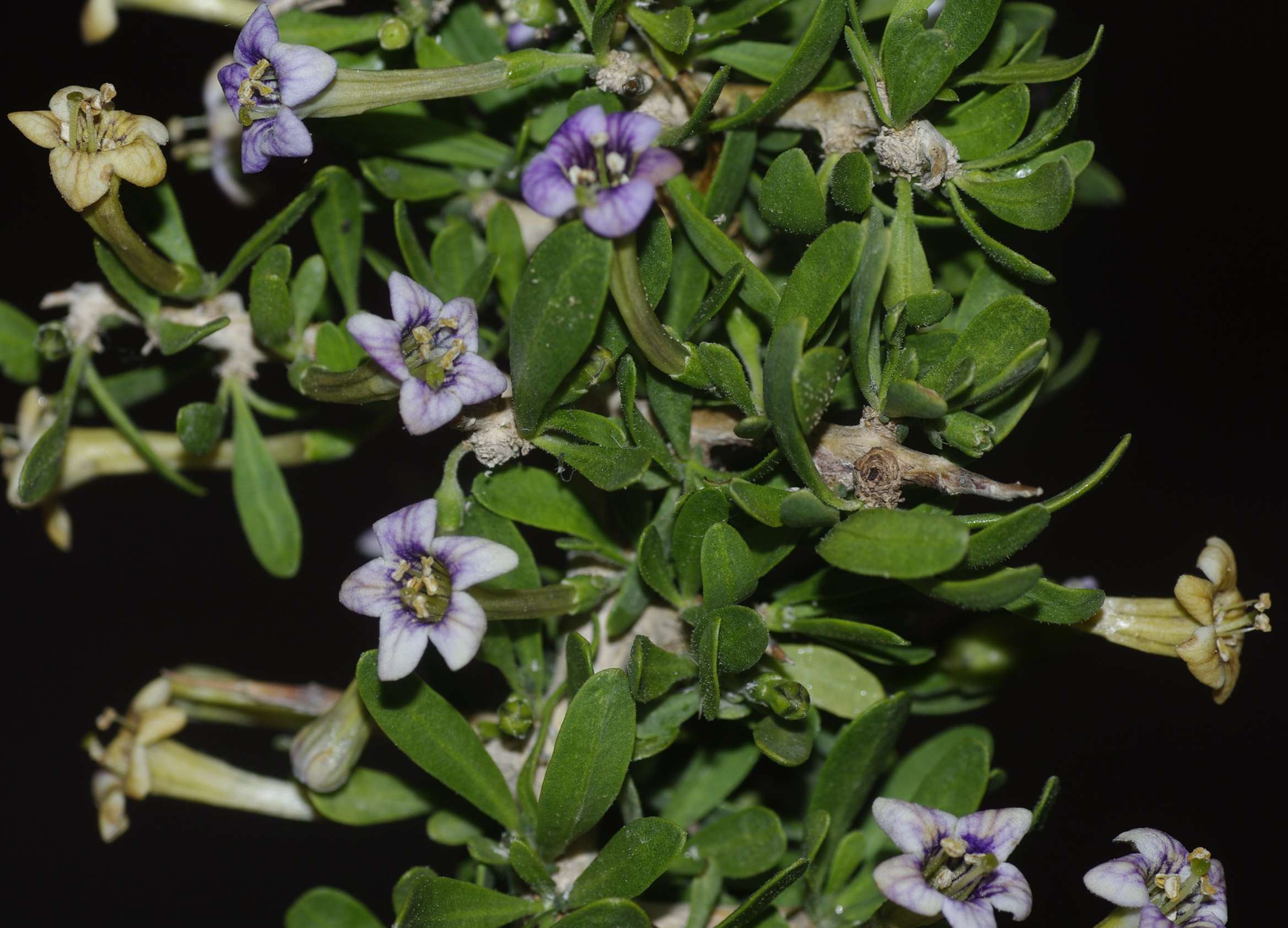
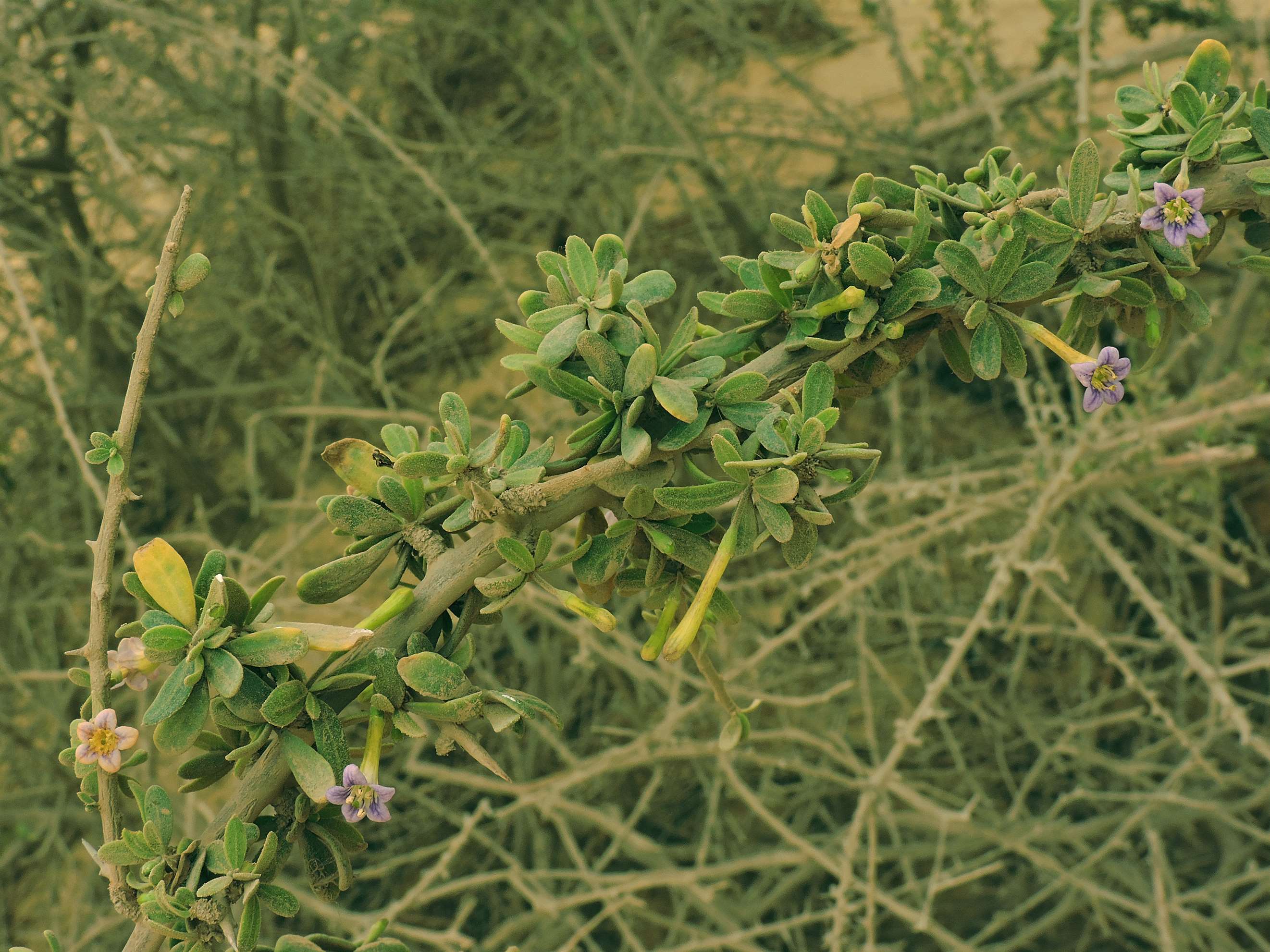
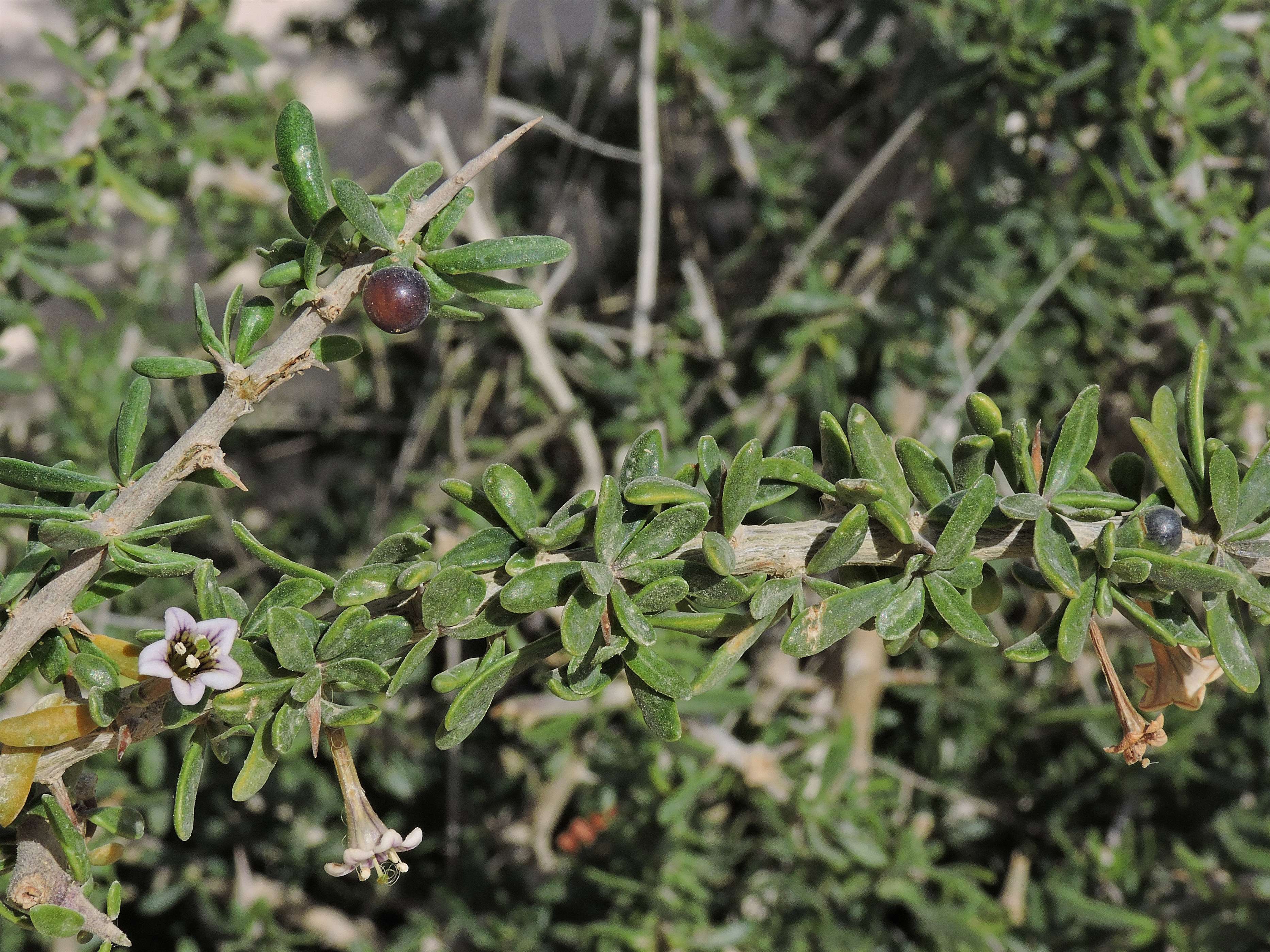
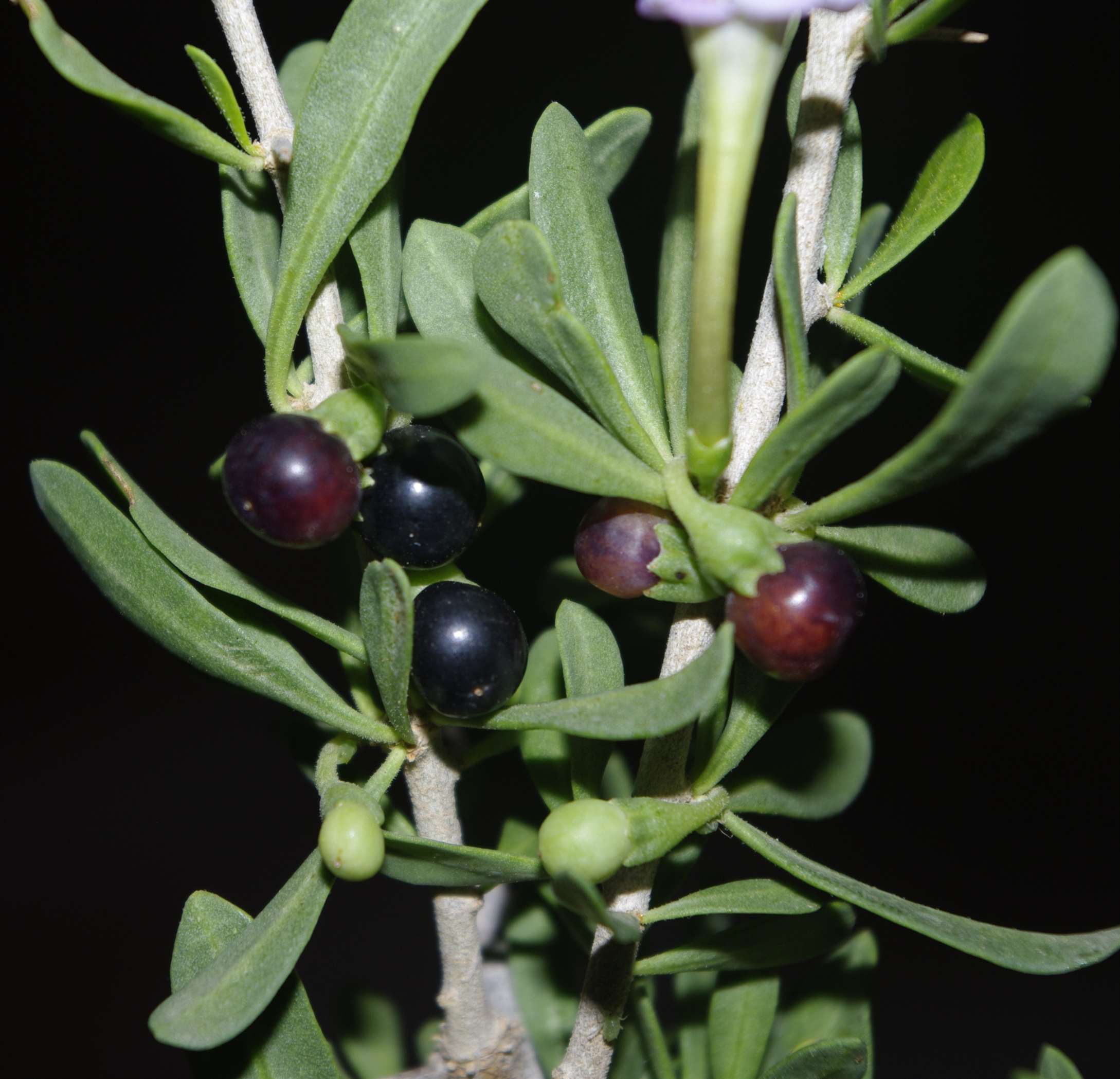
Shrub, spiny, deciduous, up to 3 m in height, with thick stems densely branched and sometimes curved. Young branches from whitish to pale brown, glabrous, with spines 5-10(15) mm, thick, densely arranged, without leaves; older branches dark brown, glabrous, with spines 15-35 mm, with leaves. Leaves on the older stems and spines in dense fascicles of 3-15 leaves, subsessile or petiole up to 2 mm, 12-20(25) × 2-4(8) mm, narrowly obovate or obovate, sometimes elliptical, acute or subobtuse, succulent, glabrous, dark green. Flowers solitary, with pedicel 2-4(5) mm. Calyx 1-1.5 × 1-1.5 mm, campanulate, with 5 teeth (0.4-0.5 mm), triangular, acute, erect. Corolla with 5 fused petals, 11-15(18) mm, white-creamy with lilac teeth, narrowly infundibuliform, with tube glabrous both on the outside and inside, rarely slightly hairy in the insertion of the stamens, with teeth 2-2.5 × 2.5-3 mm, broadly suborbicular, patent. Stamens included or slightly exserted, inserted 7-10 mm from the base of the corolla tube, with glabrous filaments. Fruit a black berry, 4-5 mm, spherical or slightly ovoid. Seeds c. 2 × 1.5 mm, ovate.
Flowering:
Almost throughout the year.
Fruiting:
1-2 months after flowering. Flowers and mature fruits can be seen at the same time.
Habitat:
Semiarid coastal plains, on calcareous soils.
Distribution:
Endemic to the central and eastern Mediterranean region; in North Africa it extends from W Algeria to the Sinai Peninsula.
Observations:
In several reference material about North Africa, this species is confused with other native species (L. shawii Roem. & Schult.) or with other cultivated and naturalised species (L. afrum L.); and among other erroneous facts, there are claims that its fruit is red.
Conservation status:
Rare but widely distributed species. Currently, it has not been assessed at a global level in the IUCN Red List of Threatened Species. In the updated red list of Egypt, Shaltout & Bedair (2023) accept 2 varieties and, following the IUCN categories, L. schweinfurthii Dammer var, schweinfurthii has been considered as Endangered (EN) and L. schweinfurthii var. aschersonii (Dammer) Feinbrun as Vulnerable (VU).