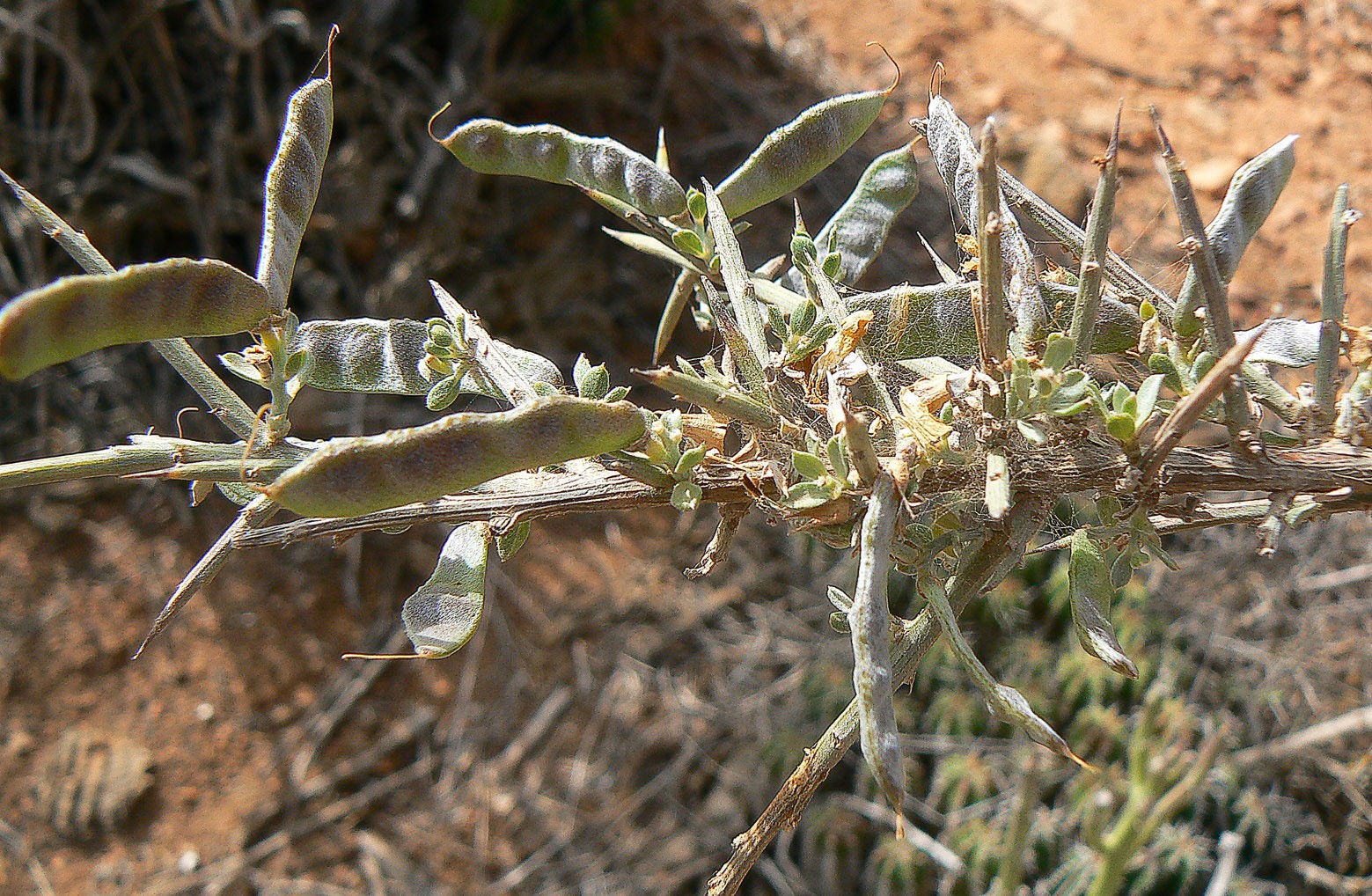
Genista tamarrutii Caball.
G. ifniensis A. Caball., G. ferox var. ifniensis (Caball.) Font Quer, G. ferox var. microphylla Ball, G. ferox subsp. microphylla (Ball) Font Quer
Spa.: Aliaga, genista. Fre.: Genêt. Ara.: Guendul.
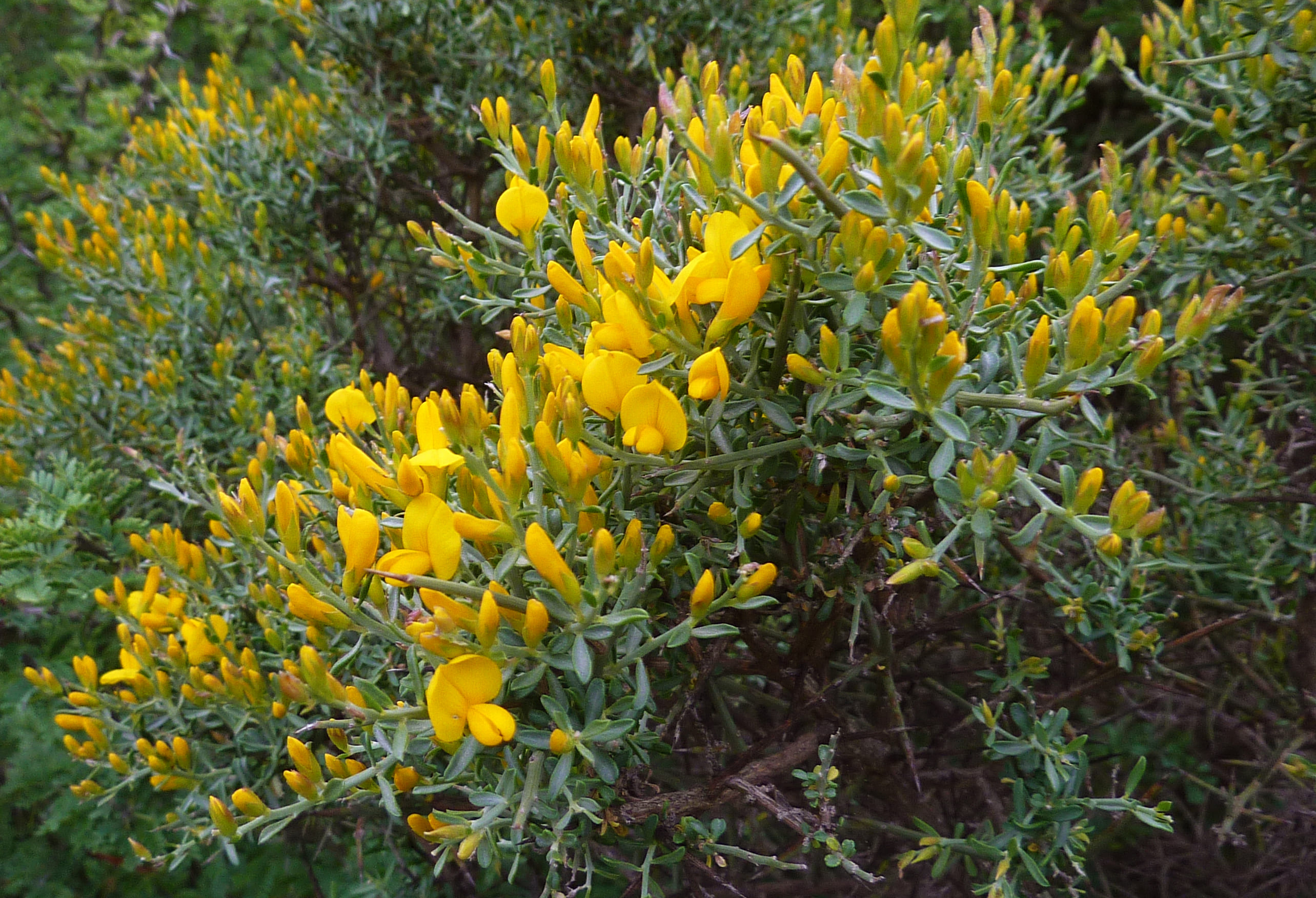
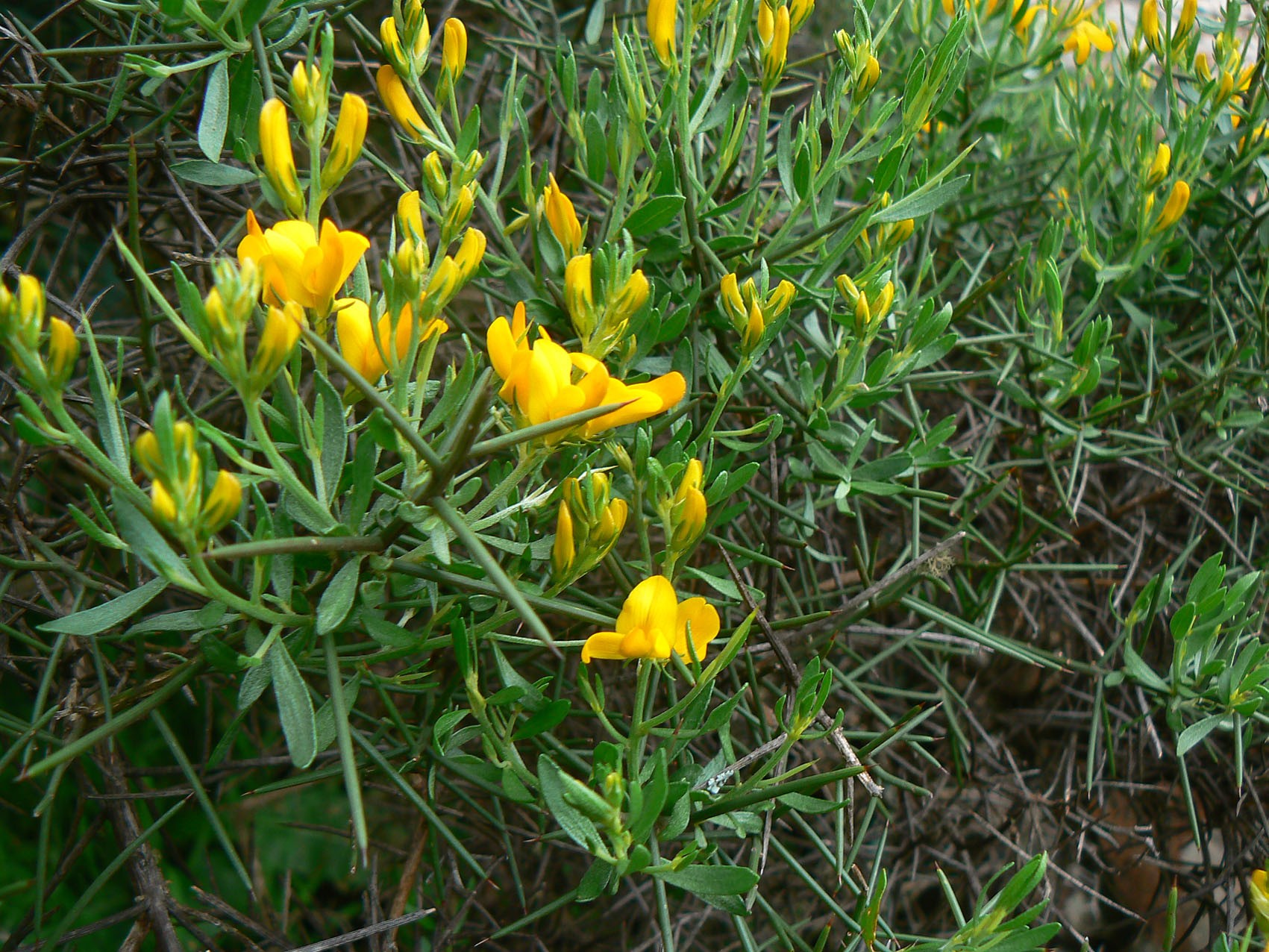
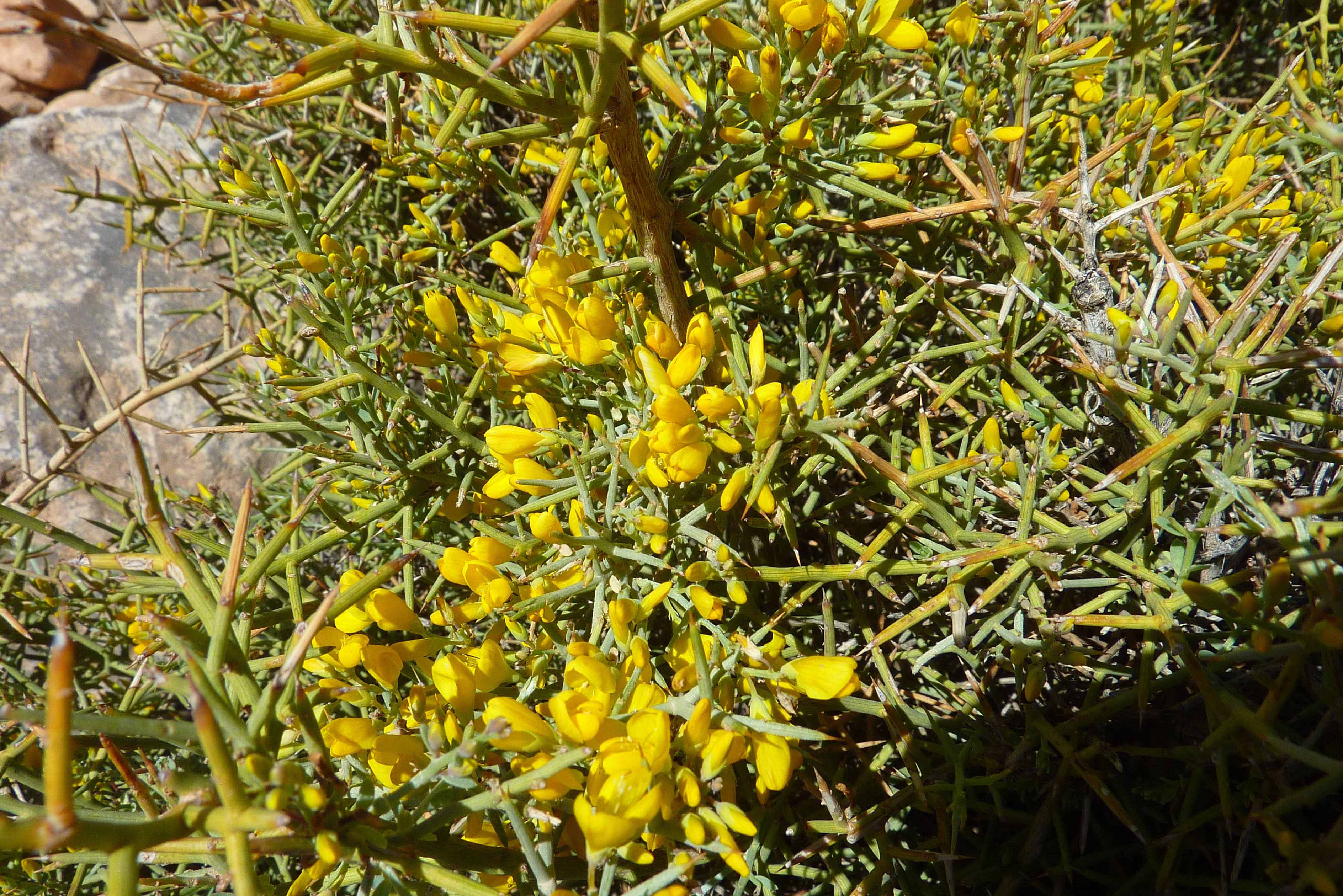
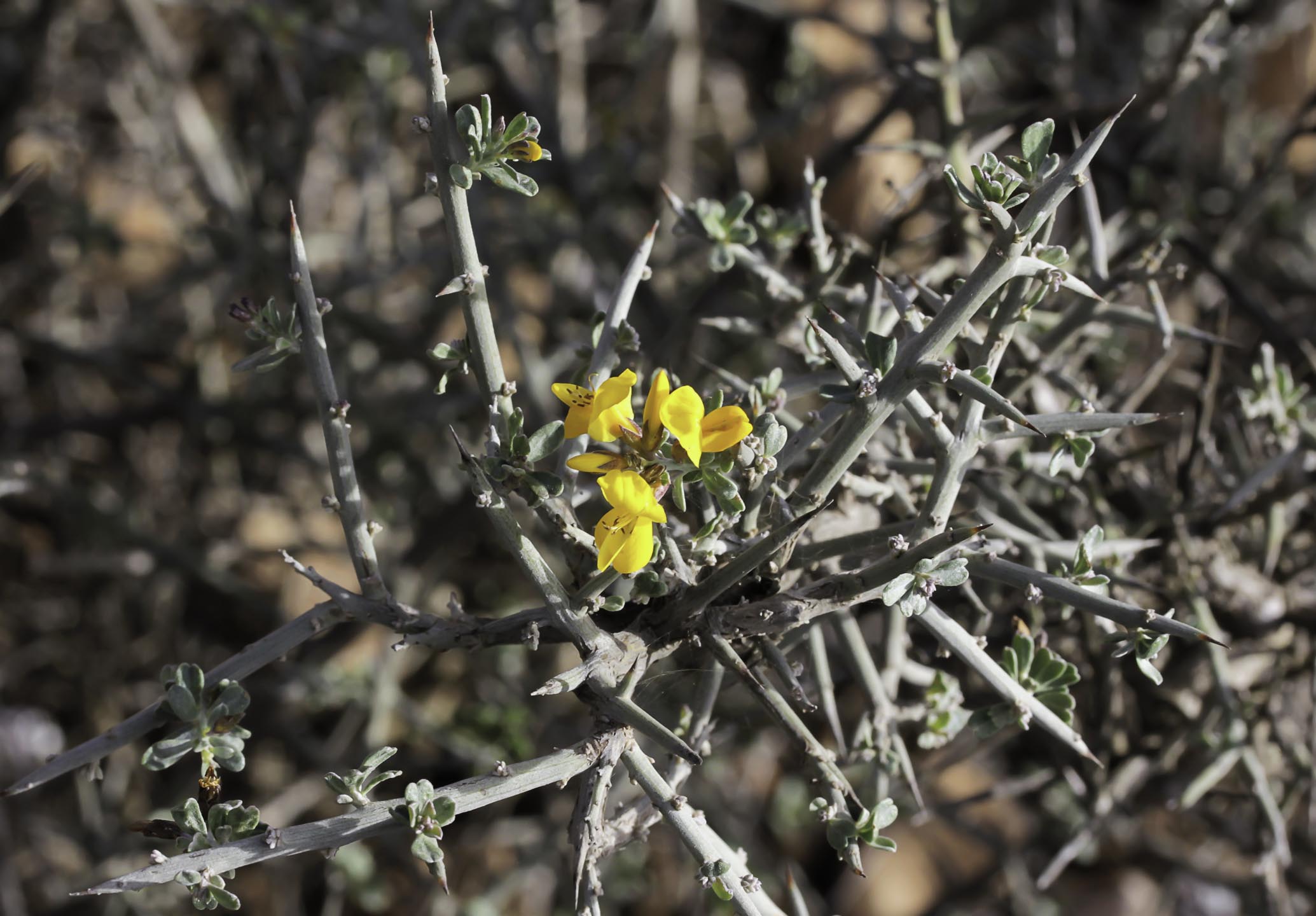
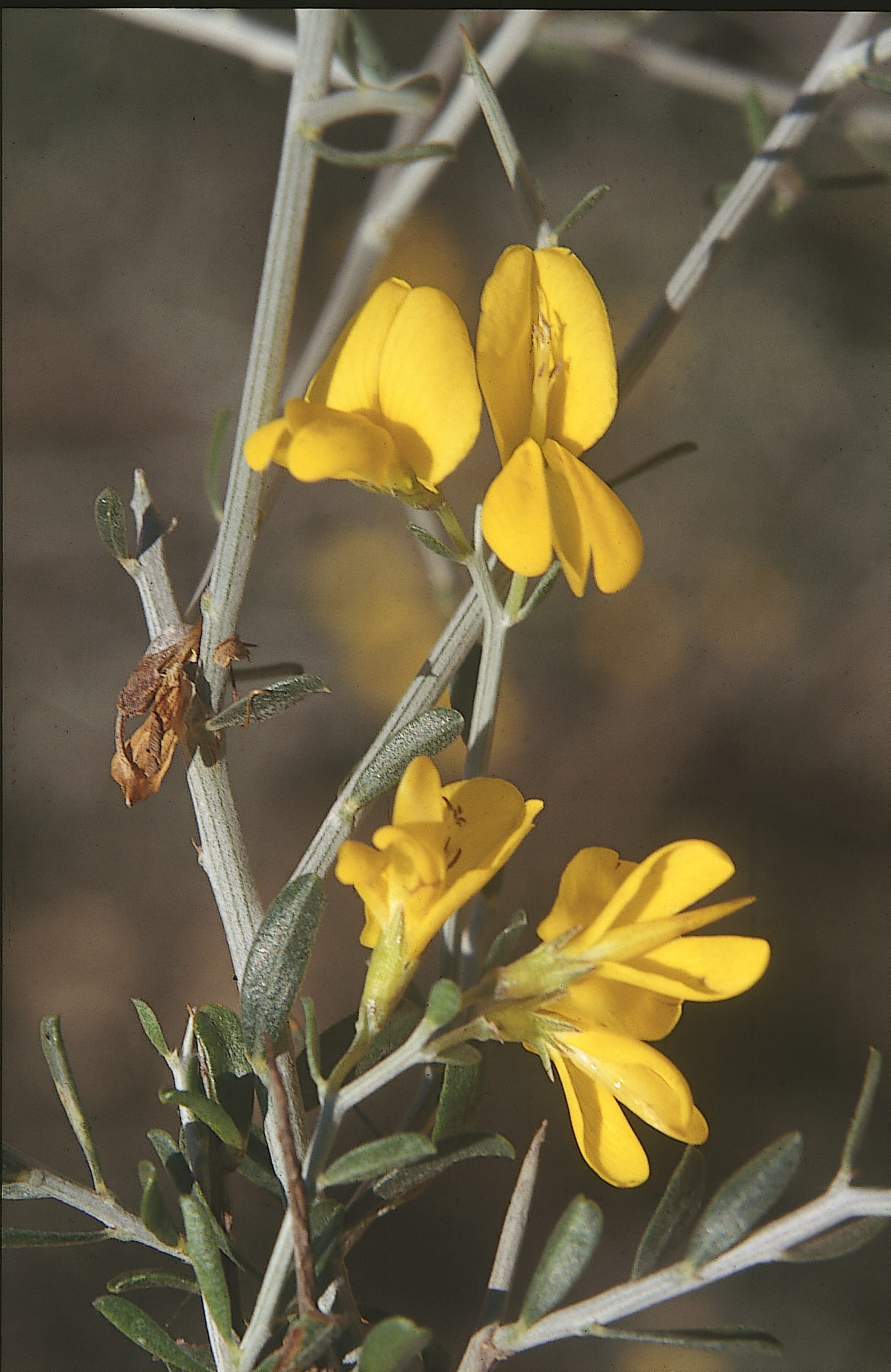
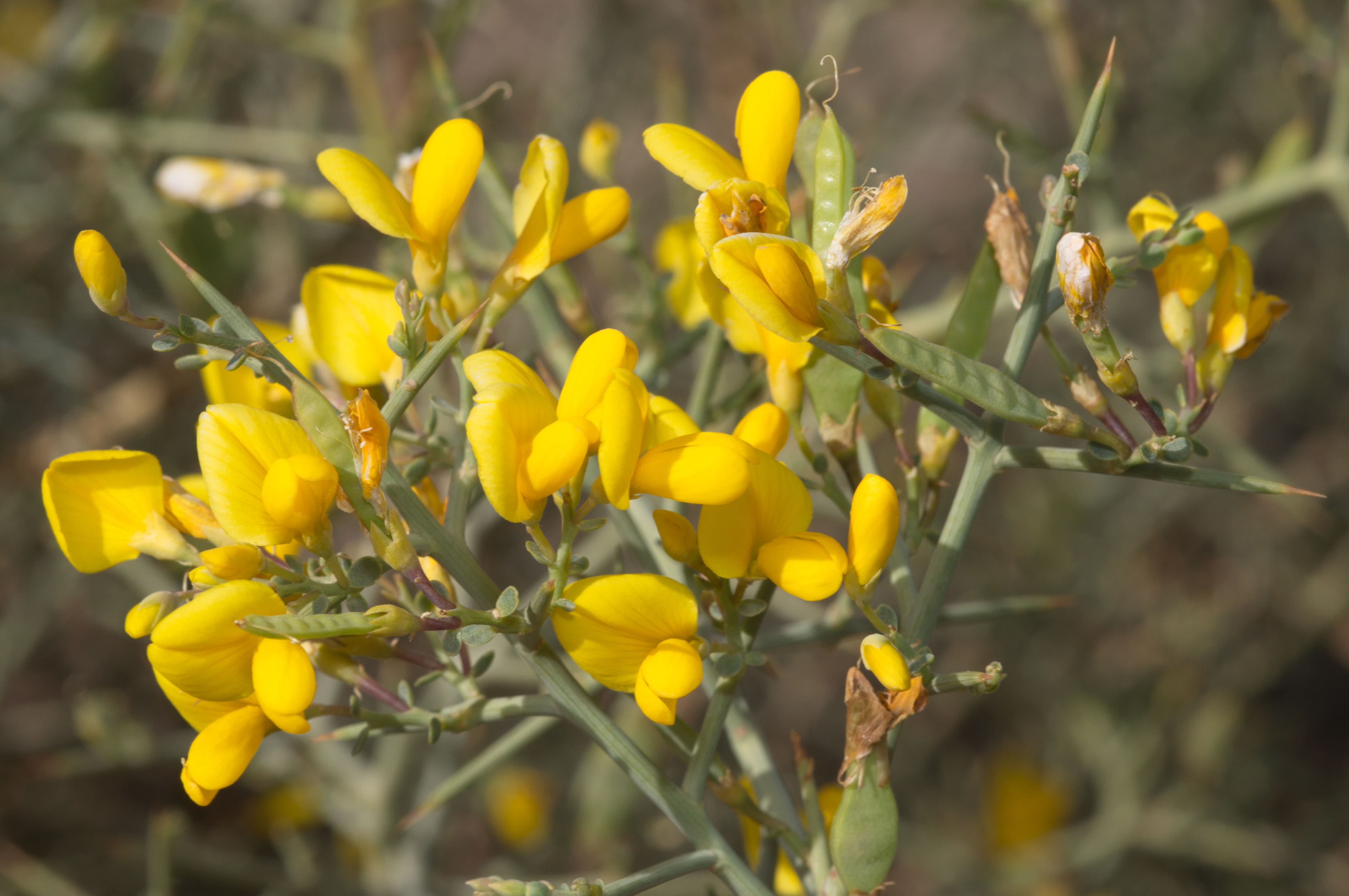
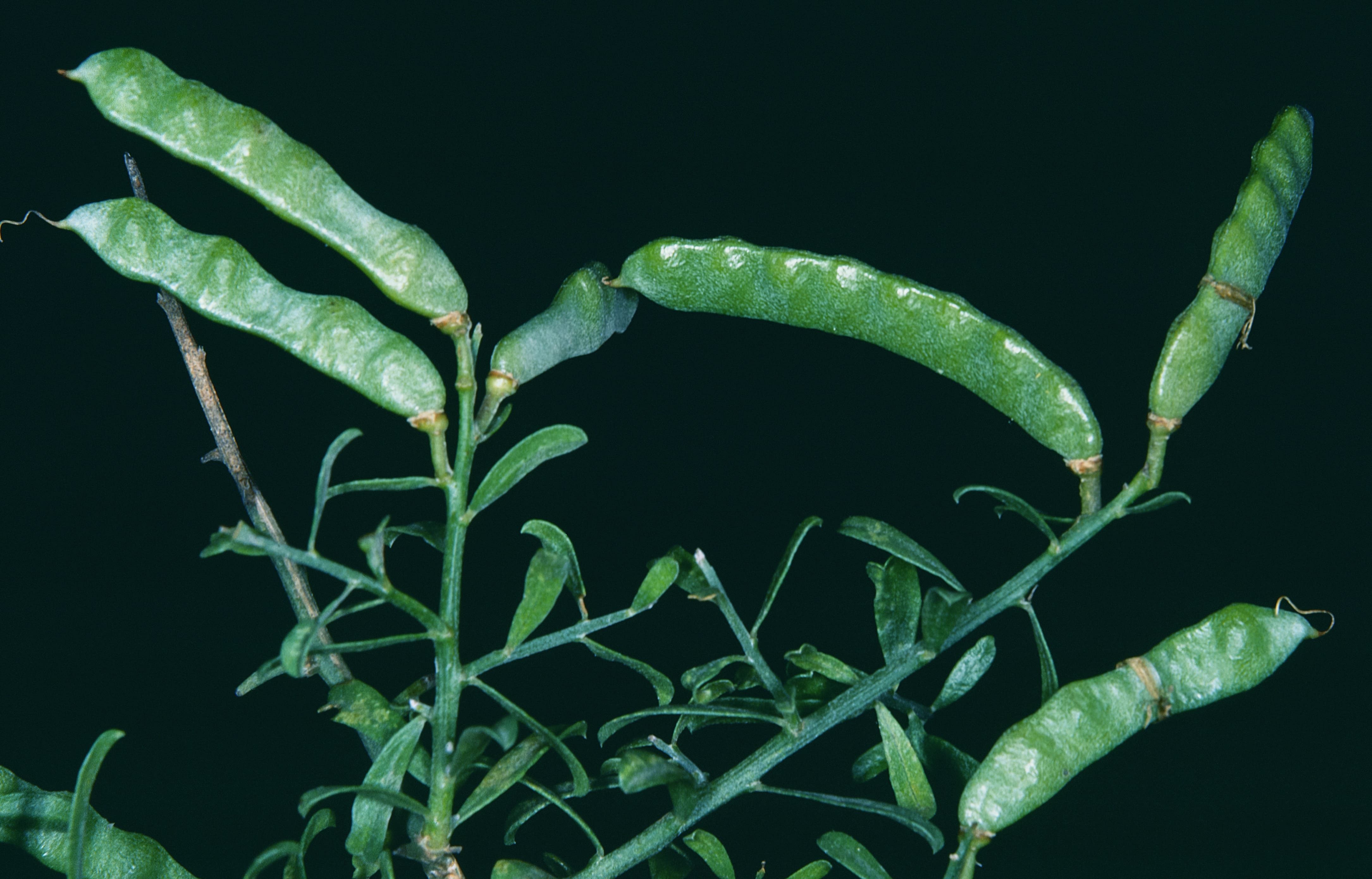
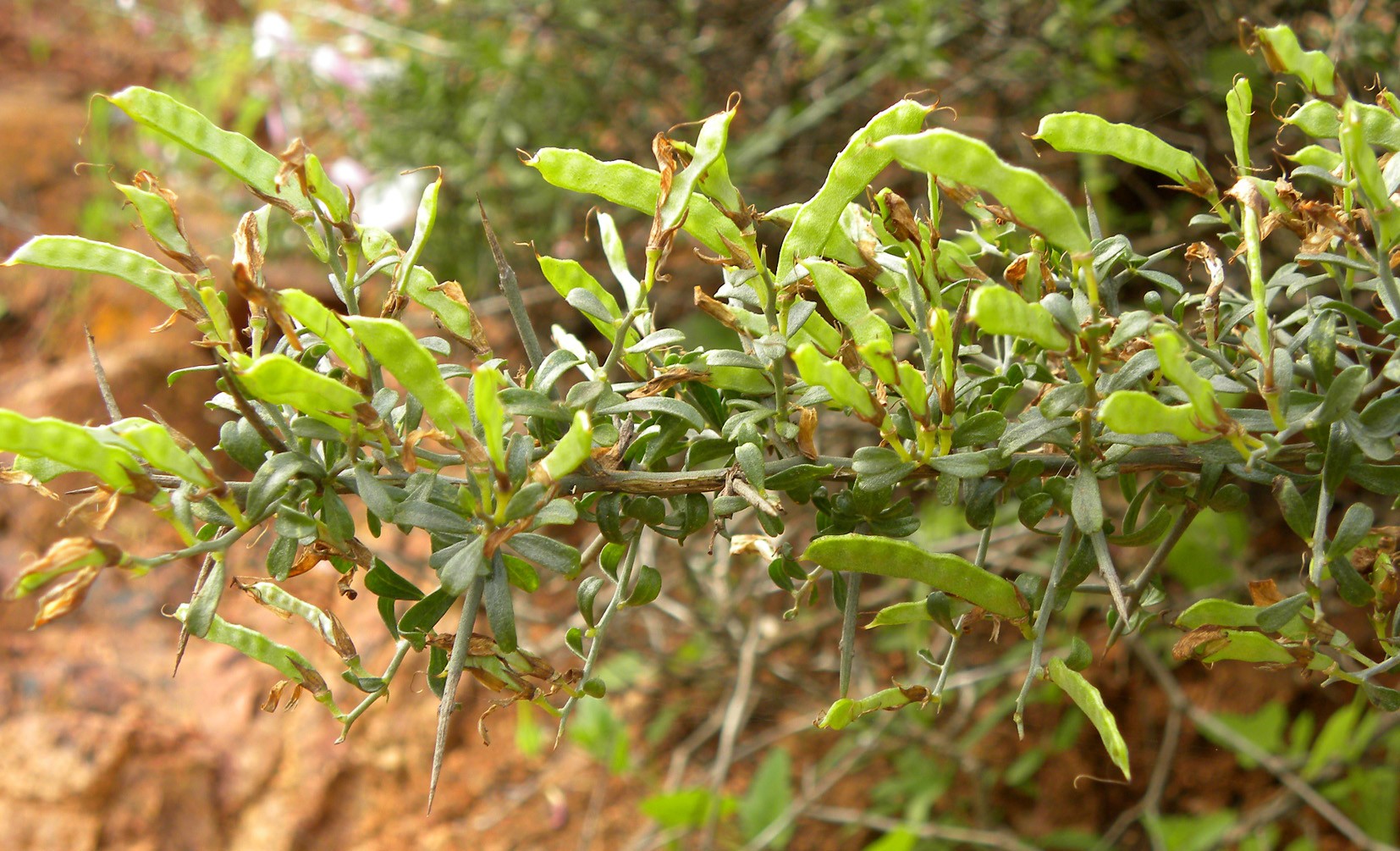
Shrub up to 1(1.5) m high, very spiny, hermaphrodite, highly branched, with intricate stems, little foliose. Stems and old branches with bark grayish-brown, longitudinally fissured, glabrous or subglabrous at the end. Young branchlets striated longitudinally, greyish-sericeous, spiny. Leaves alternate, all unifoliolate, subsssile, usually less than 6-11 mm × 2-3 (3.5) mm, with spiny stipules up to 1.5 mm, linear, linear-lanceolate or obovate, obtuse and mucronulate or emarginate at the apex, attenuated at the base, green or greenish-whitish, hairy on both sides. Racemiform inflorescences, axillary, lax, with 1-2(4) pedicellate flowers with pedicels up to 5 mm, sericeous. Calyx 5-6 mm, glabrescent, split into 2 lips, usually sub-equal and similar in size to the tube, the upper one bipartite into triangular segments, the lower one tridentate almost halfway or more. Corolla 10-12 mm, papilionoid, yellow, with the standard ovate, emarginated at the apex, glabrous, longer than the wings and keel. Androecium monadelphous, with 10 stamens. Hairy ovary. Pod 23-35 × 4-5 mm, linear-oblong, straight or subfalciform, strongly compressed and subtorulous, hairy, with 3-7 seeds. Seeds c. 3 × 2.3-2.7 mm, ovoid, compressed, smooth, brown, without aril.
Flowering:
February-April.
Fruiting:
April-June.
Habitat:
Forests and bushes of SW Morocco, in the argan and thuja area, in a warm semi-arid environment.
Distribution:
It is endemic to Morocco along the littoral and sublittoral regions of the western High Atlas, the Sus Valley and the western Anti-Atlas, reaching towards the S up to the Tan-Tan Mountains.
Conservation status:
Species with a small distribution area but in principle it is not considered threatened. Currently, it has not been assessed at a global level in the IUCN Red List of Threatened Species. In the Livre Rouge de la flore vasculaire du Maroc (Fennane, 2021) it has been considered as Least Concern (LC).