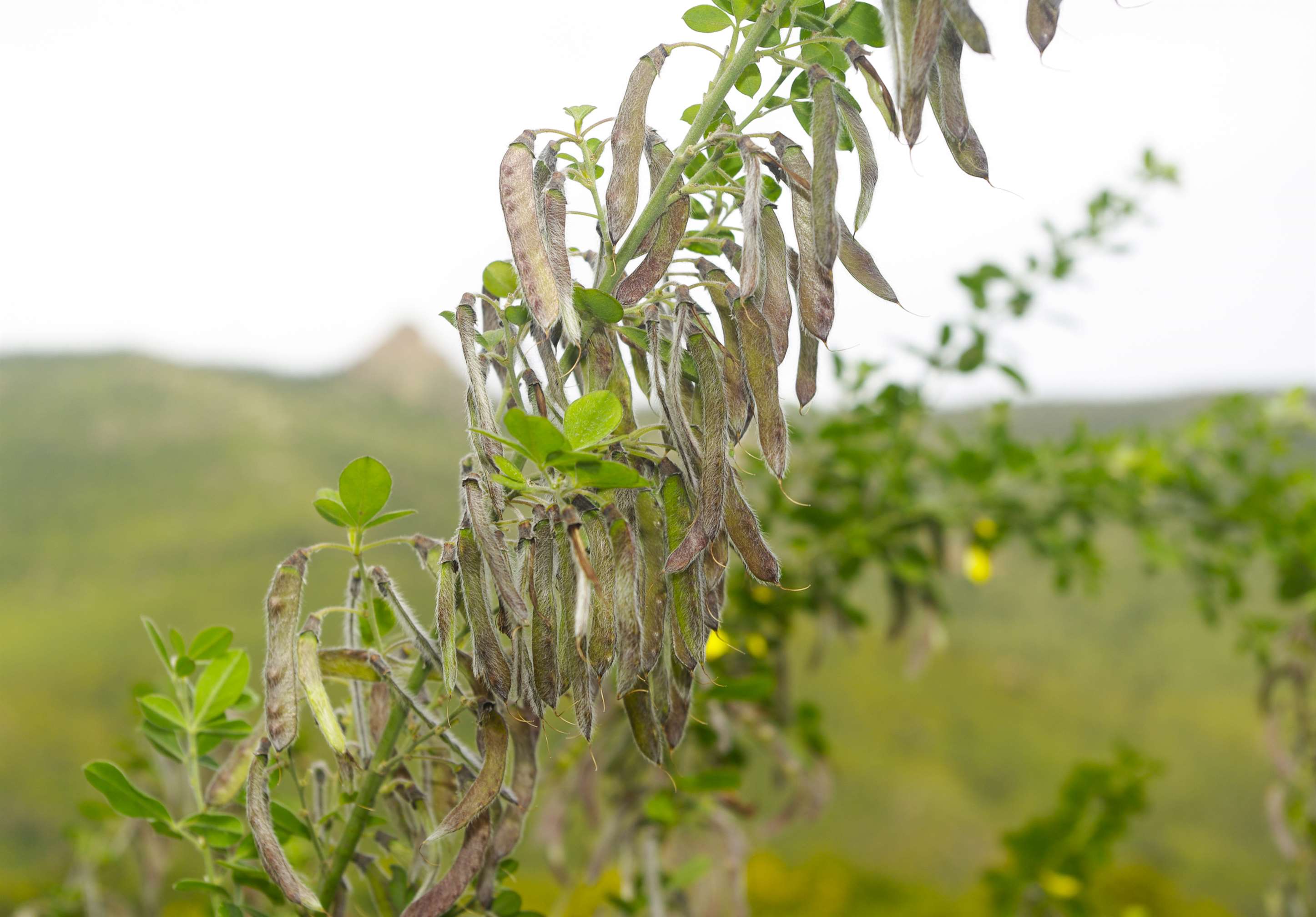
Cytisus villosus Pourr.
Genista triflora Rouy, C. triflorus var. bidentatus Chab., C. triflorus L’Hér.
Eng.: Hairy broom. Spa.: Escoba, escobón. Fre.: Cytise à trois fleurs. Ara.: Gikio, buharis, qitis, dhibene. Tam.: Tilluzit, hugli, tilqi, hilgui, tulgit, timechrirate, mersir’id.
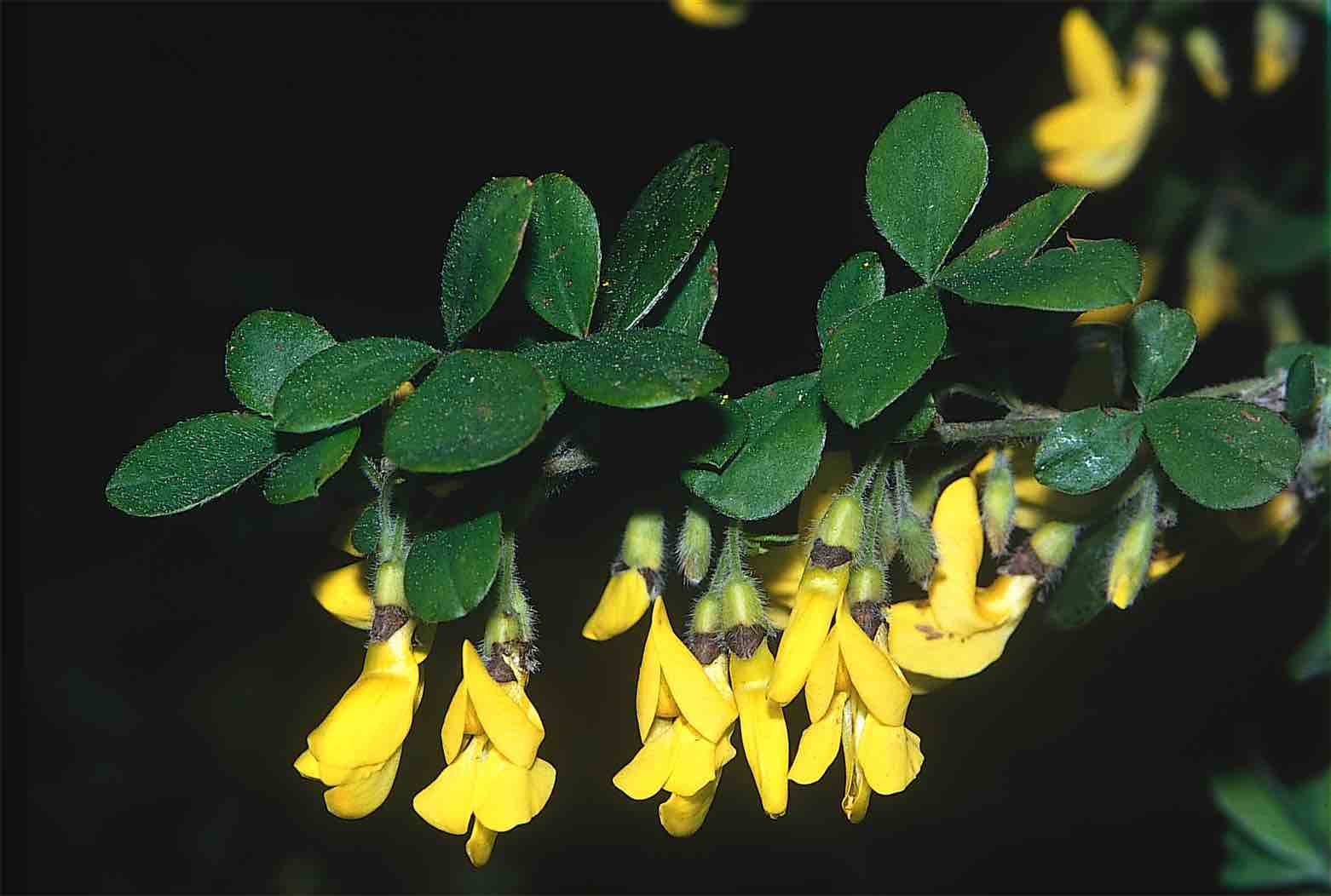
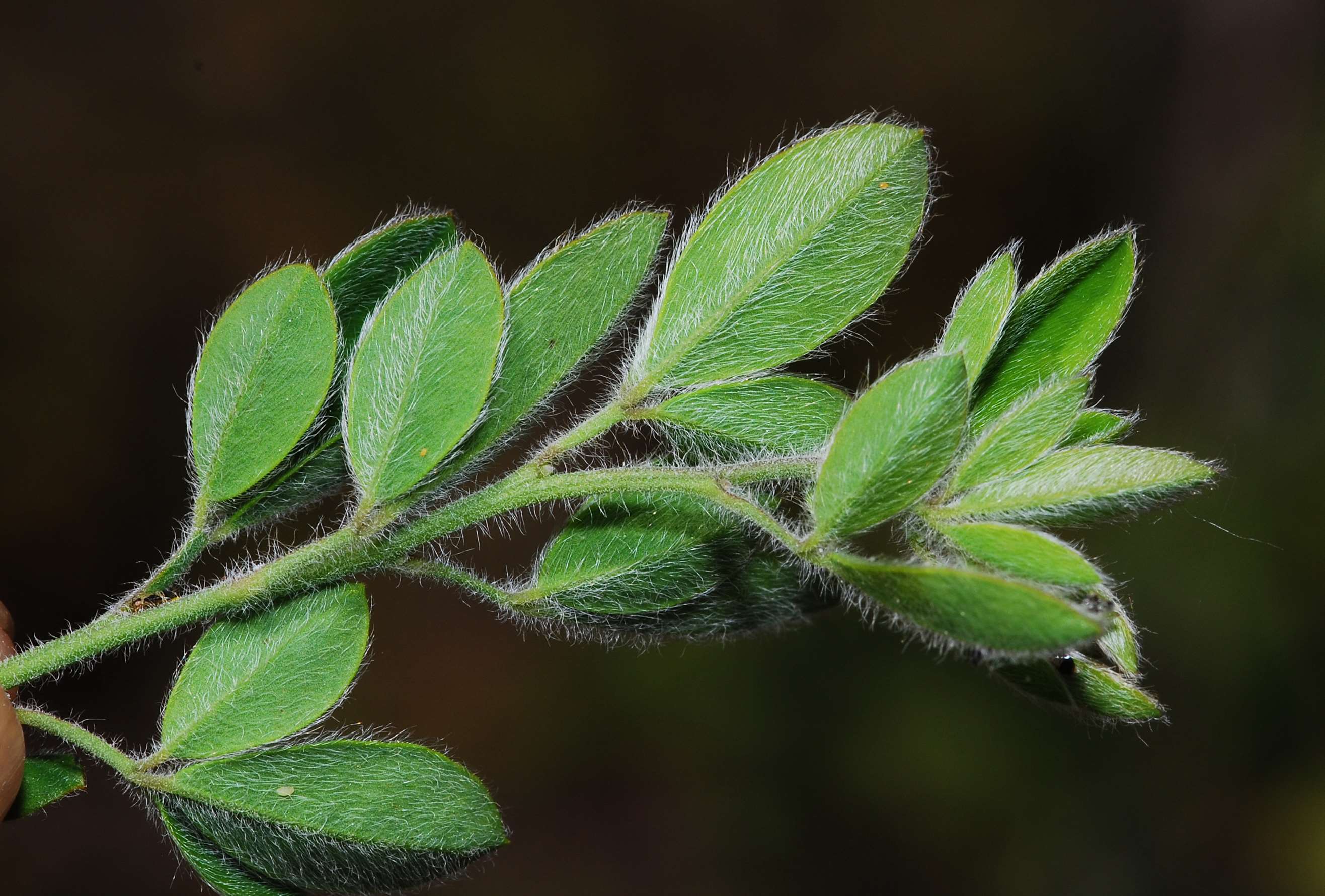
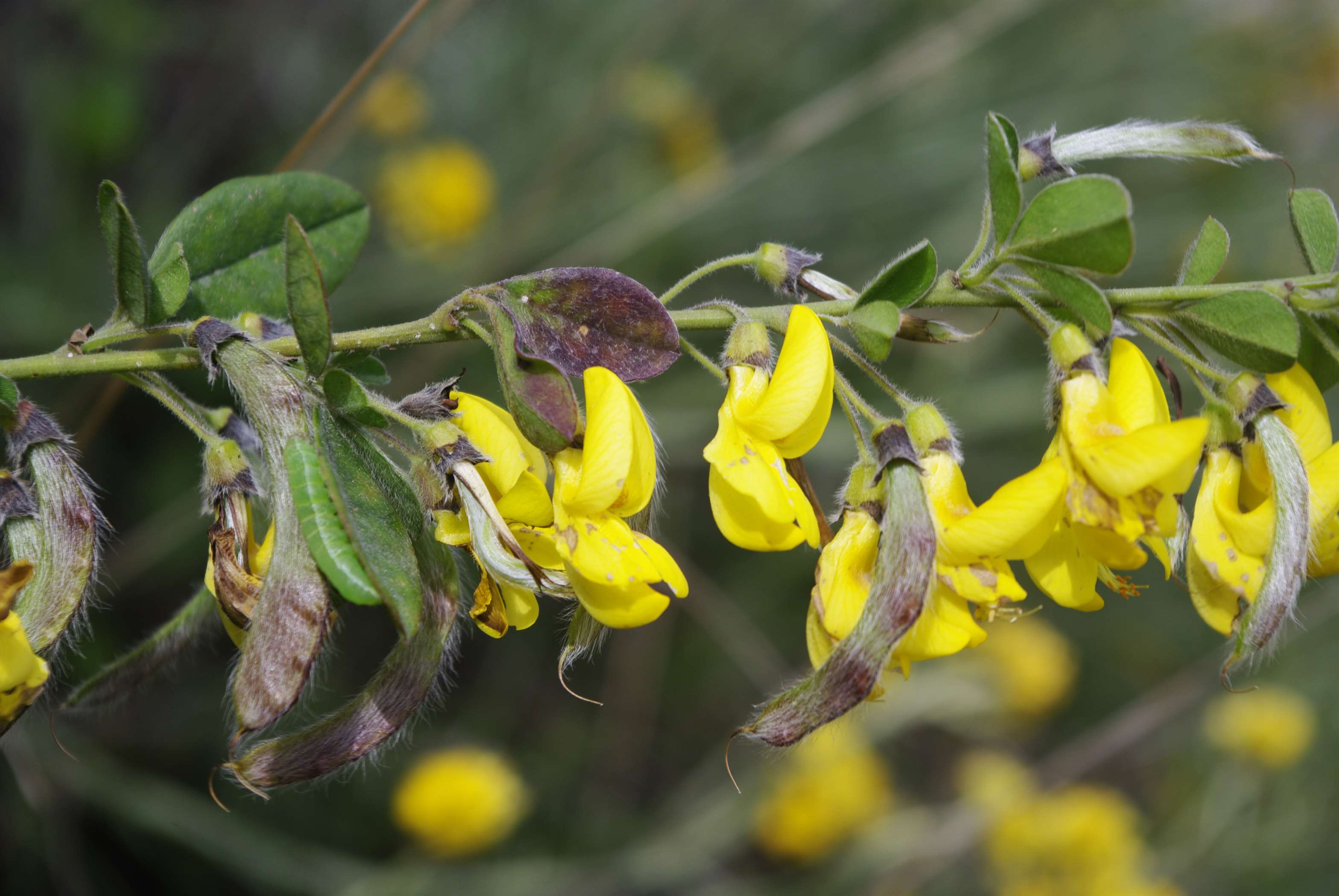
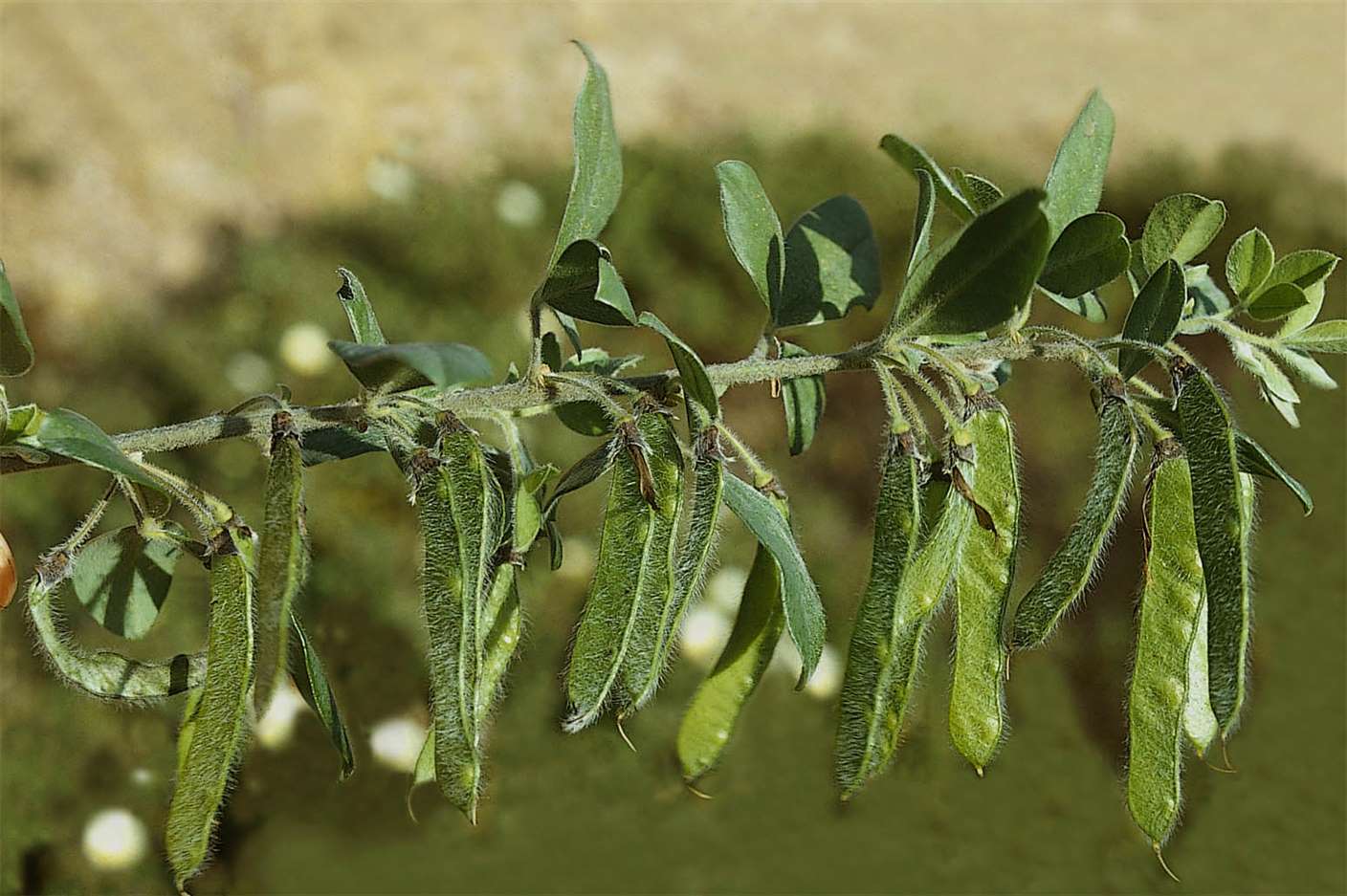
Shrub or subshrub up to 2.5(3) m in height, unarmed, hermaphrodite, highly branched, with upright stems, not sharp, and leaves almost persistent. Stem and old branches with bark longitudinally fissured, brownish or greyish-brown, glabrous. Young branchlets ridged longitudinally, with 5 semicylindrical and distant ribs, with double indumentum, with hairs 0.5-1.5 mm, straight and patent, and smaller crisped or uncinate hairs along the valleys. Leaves all trifoliolate —upper leaves are rarely bifoliolate—, without stipules, with petiole 6-17 mm, and unequal leaflets, the central leaflet larger (10-47 × 5-20 mm), obovate or oblong-obovate, obtuse —sometimes mucronate—, attenuated at base, subsessile, sericeous on both sides, green. Flowers solitary or in groups of (2)3(4) on young branches, with pedicel 6-18 mm, with double indumentum, sometimes with 1-3 bracteoles halfway along the pedicel. Calyx 5-6.5 mm, campanulate, villous, green at first and then brownish-black, bilabiate, with shortly dentate lips, the upper lip with 2 teeth and the lower lip with 3 and slightly larger. Corolla 17-22 mm, papilionoid, yellow, with an ovate-rhomboid standard, glabrous, longer than the wings and the keel, keel falcate. Androecium monadelphous, with 10 stamens. Ovary hairy, and stigma elongated. Pod 35-50 × 5-6 mm, linear-oblong, highly compressed, green at first and then black, sparsely villous but turning glabrescent, with 4-11 seeds. Seeds 2.2-3 mm, ovoid or ellipsoid, compressed, smooth, brown.
Flowering:
March to May.
Fruiting:
May to July.
Habitat:
Forests and thickets from sea level up to the mid mountain, on calcareous and siliceous soils, in subhumid and humid bioclimate.
Distribution:
Southern Europe and NW Africa (Morocco, Algeria and Tunisia).
Conservation status:
A relatively common and widely distributed species, it is not considered threatened. Currently, it has not been assessed at a global level in the IUCN Red List of Threatened Species. In the Livre Rouge de la flore vasculaire du Maroc (Fennane, 2021) it has been considered as Least Concern (LC).