Cytisus scoparius subsp. maurus (Humbert & Maire) Talavera
C. maurus Humbert & Maire, Sarothamnus maurus (Humbert & Maire) Raynaud, Cytisus grandiflorus subsp. maurus (Humbert & Maire) Auvray
Eng.: Scotch broom. Spa.: Escoba, escobón, retama de escobas, hiniesta, retama negra.
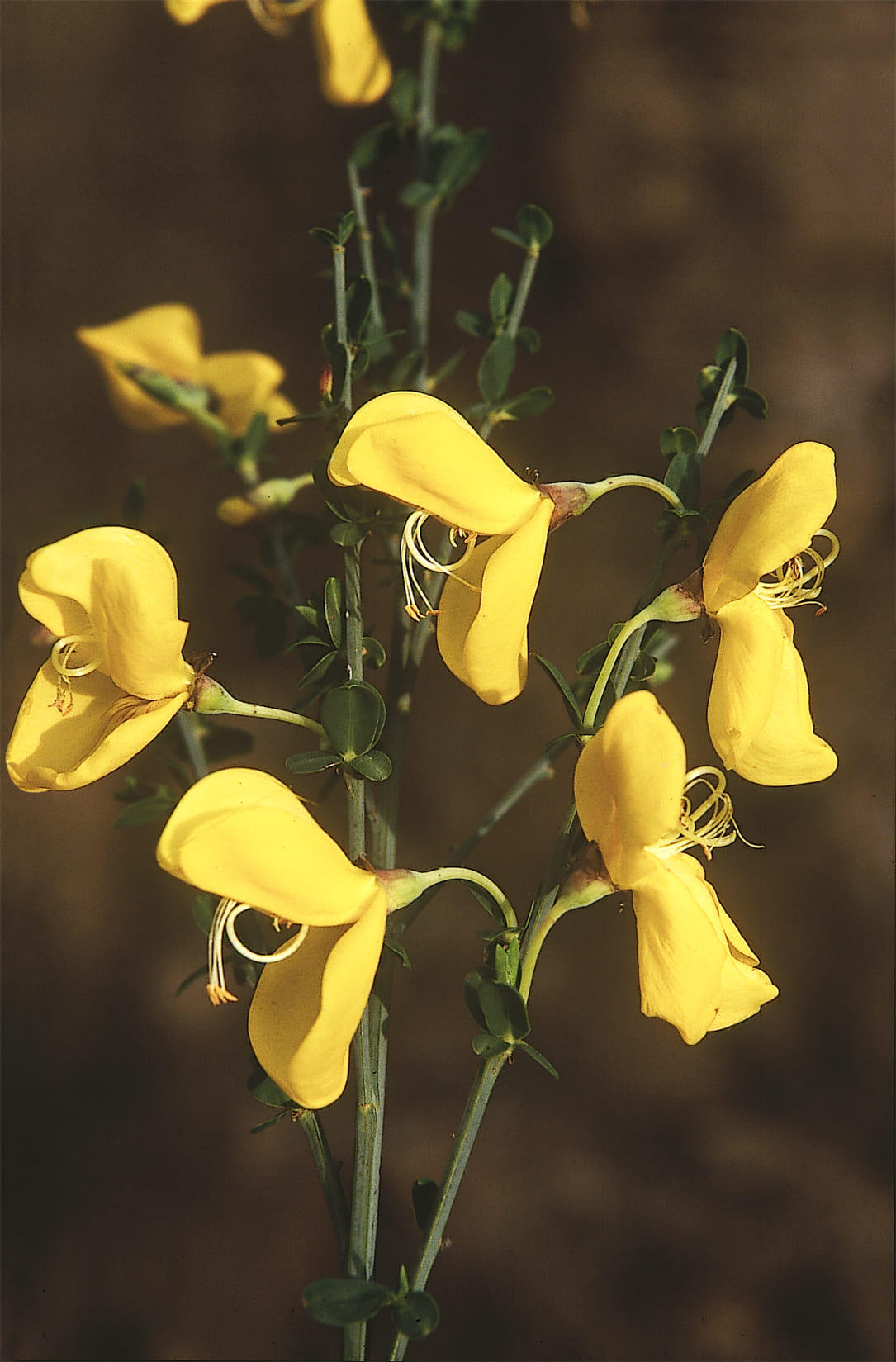
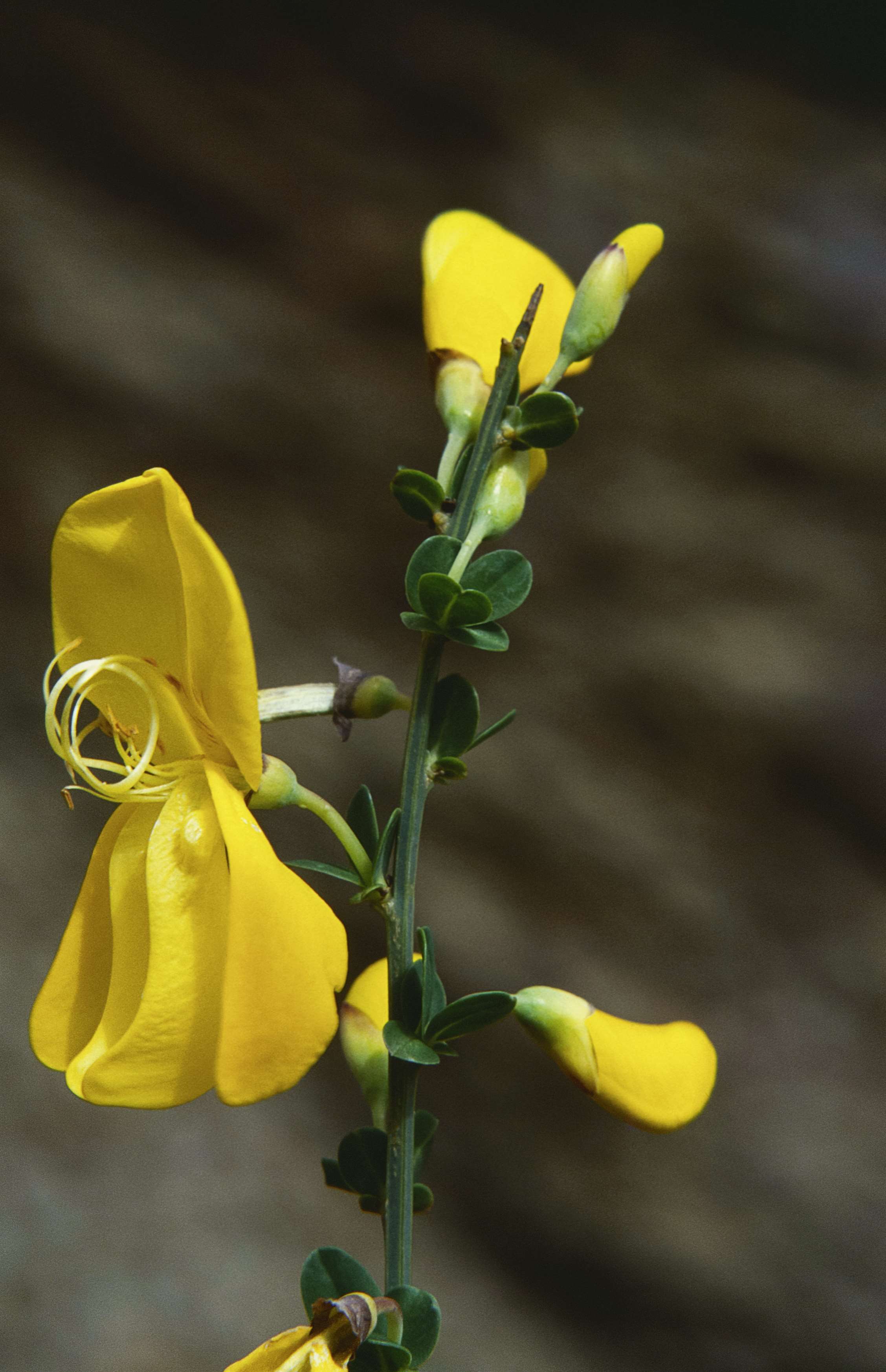
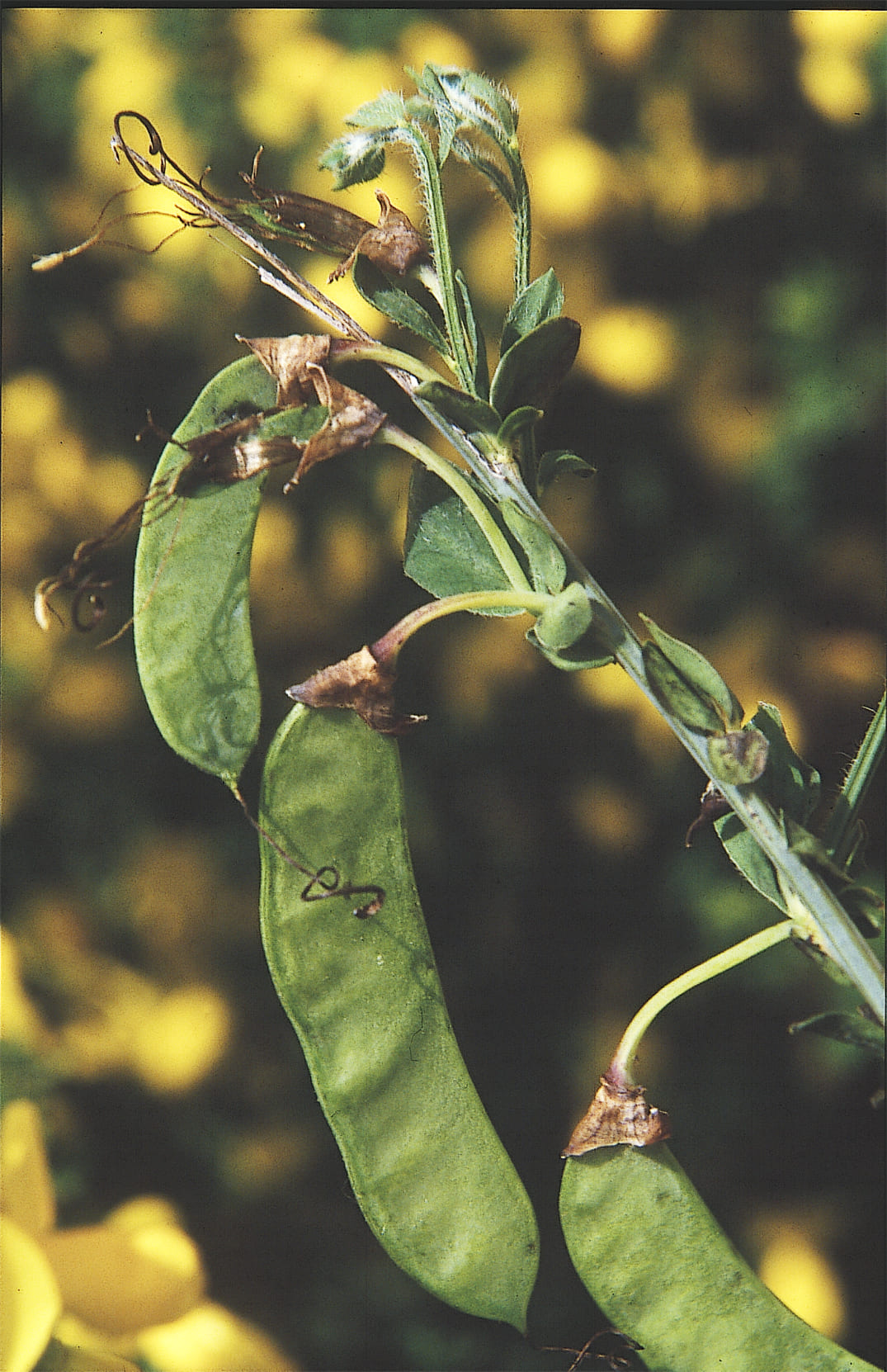
Shrub, up to 2 m in height or taller, unarmed, hermaphrodite, deciduous, highly branched from the base, with erect stems. Stems and older branches with bark fissured longitudinally, brownish, glabrous. Young branchlets striated longitudinally, with 5 triangular ribs, sharp, green, somewhat villous or then silky. Leaves unifoliolate in young branchlets and in the upper part of old branches, with sessile or subsessile leaflet; the rest of the plant with trifoliolate leaves. Petiole 6-13 mm, flat. Stipules not differentiated. Leaflets from obovate to oblanceolate, glabrescent on the upper side and ± hairy on the underside, green. Flowers solitary or geminate, borne on the leaf axils or on pulvini of the previous year, on a long pedicel 6-12 mm, glabrous, with 2 very small bracteoles towards halfway. Calyx 6-7 mm, campanulate, membranous, green at first, then brown-blackish, bilabiate: the upper lip with 2 small teeth at the tip, the lower lip with 3 teeth. Corolla 18-22 mm, papilionoid, yellow, glabrous, with suborbicular standard, slightly emarginate at the apex and cordiform at the base, with wings and keel slightly larger; keel with the tip somewhat curved upwards. Androecium monadelphous, with 10 stamens. Ovary glabrous, style slightly or not hairy, inrolled into 1 or more circles. Pod c. 3.5 × 0.9 cm, oblong-linear, highly compressed, green at first, then blackish, glabrous except along the ciliate suture line. Seeds 6-10, ovoid, compressed, from brownish to greenish, smooth.
Flowering:
February to July.
Fruiting:
April to August.
Habitat:
Common in cedar and oaks (Quercus ilex) forests in mid-mountain, between 1,300 and 2,000 m above sea level, on siliceous substrates and dry to humid bioclimate.
Distribution:
Endemic to Morocco, from the central Rif and western Middle Atlas, reaching towards the S to the mountains near Khenifra. The other 2 recognised subspecies are C. scoparius (L.) Link subsp. scoparius, and C. scoparius subsp. reverchonii (Degen & Hervier) Rivas Goday & Rivas Mart. (Sarothamnus scoparius subsp. reverchonii Degen & Hervier), both not represented in North Africa.
Conservation status:
A relatively common and widely distributed species, not considered threatened. Currently, it has not been assessed at a global level in the IUCN Red List of Threatened Species. The subsp. maurus, although highly localised, is also relatively common.