Calobota saharae (Coss. & Durieu) Boatwr. & B.-E. van Wyk
Genista saharae Coss. & Durieu, Spartidium saharae (Coss. & Durieu) Pomel
Fre.: Genêt du Sahara. Ara.: Murkh, merkh, lilga. Tam.: Tilzgit, tellegit.
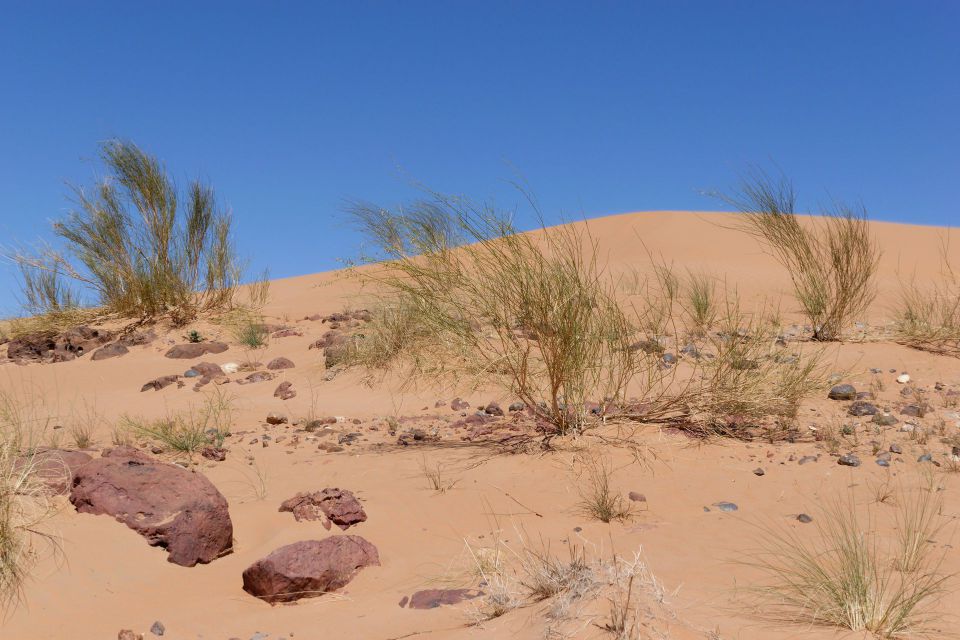
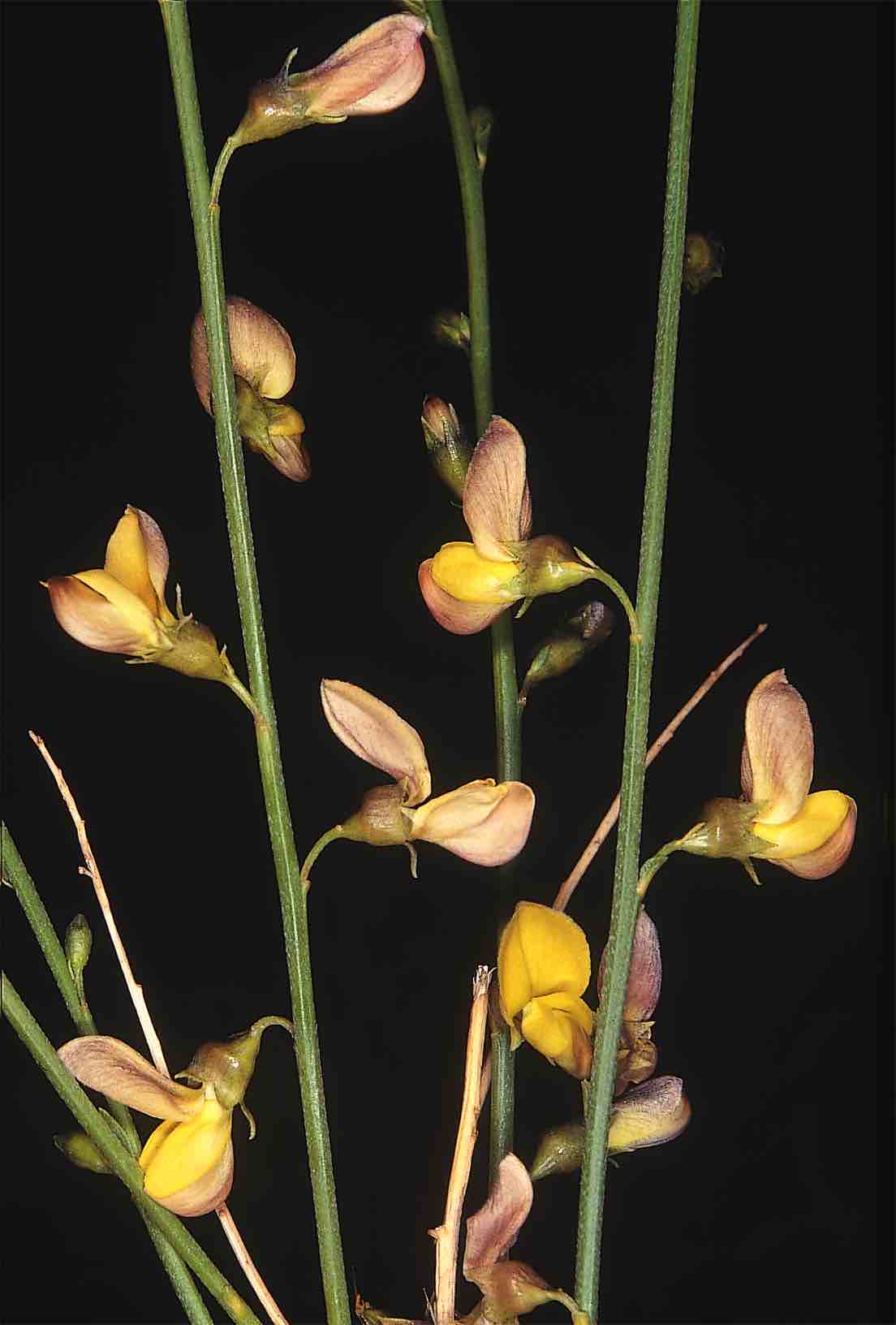
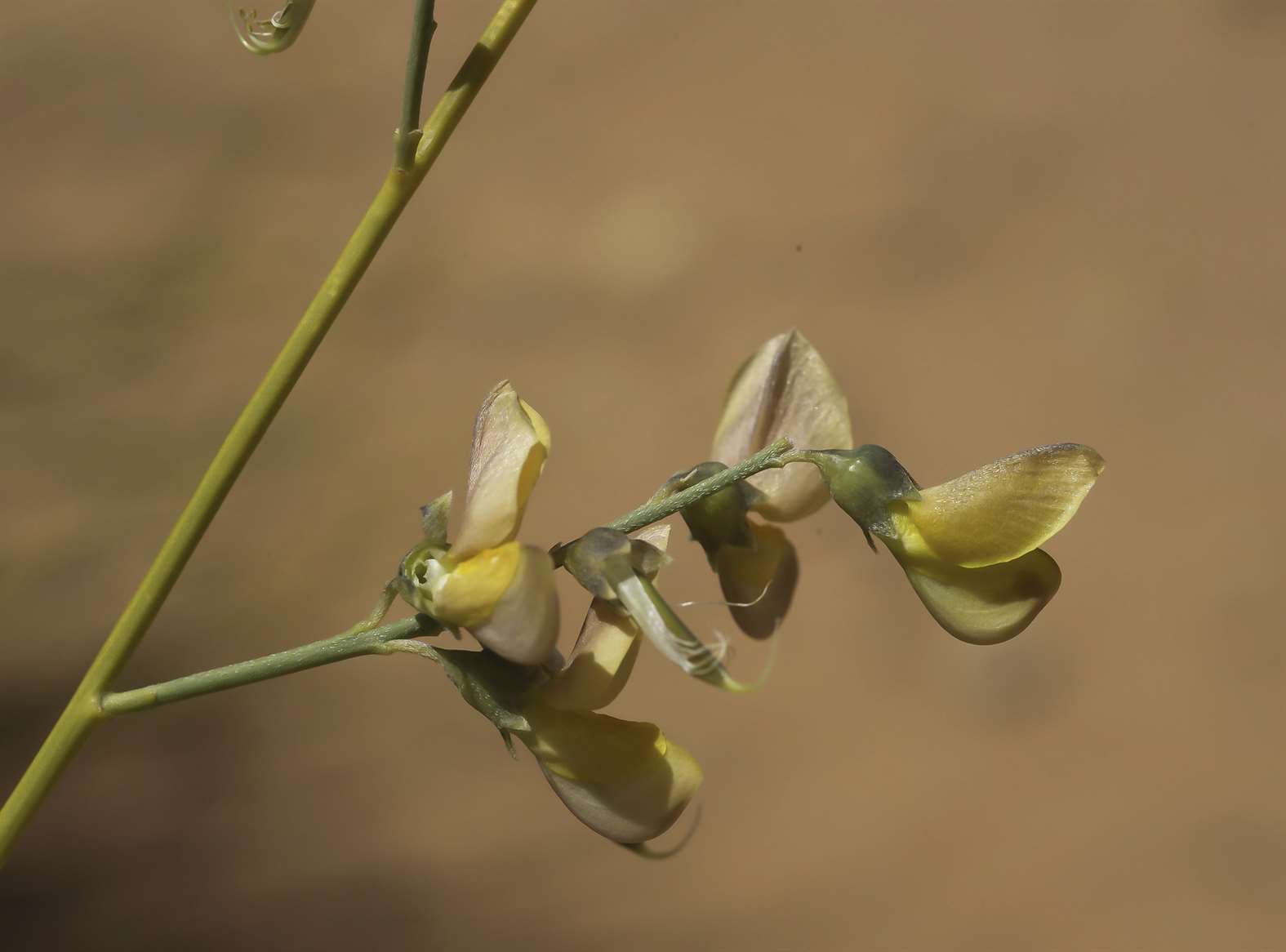
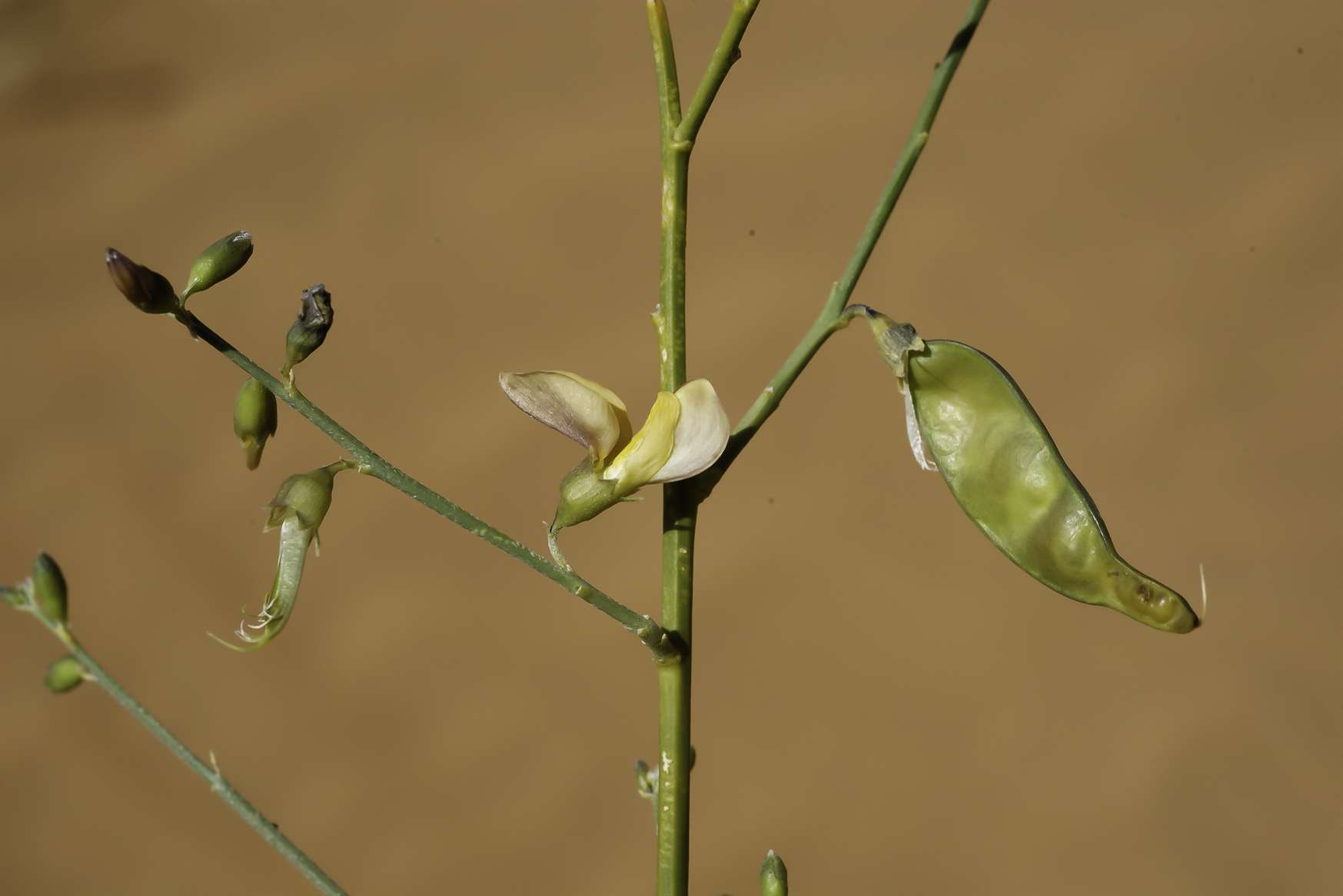
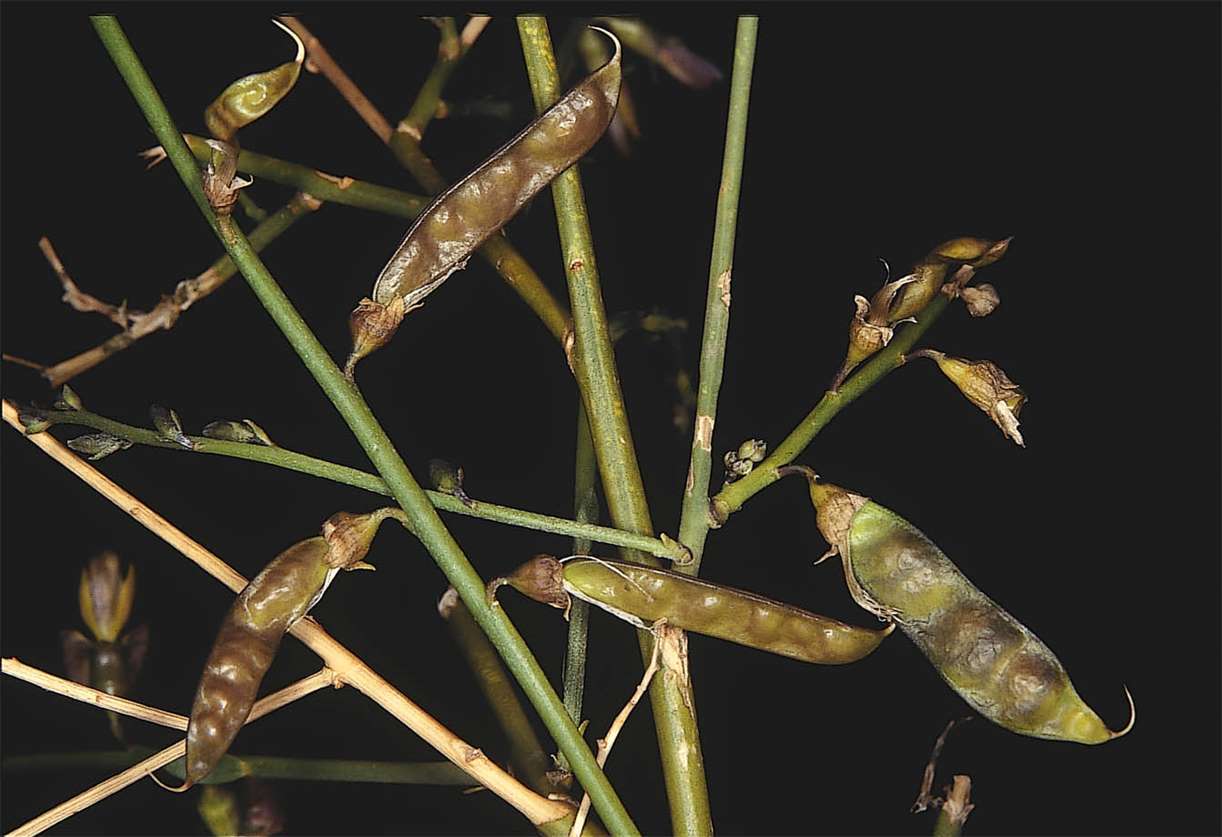
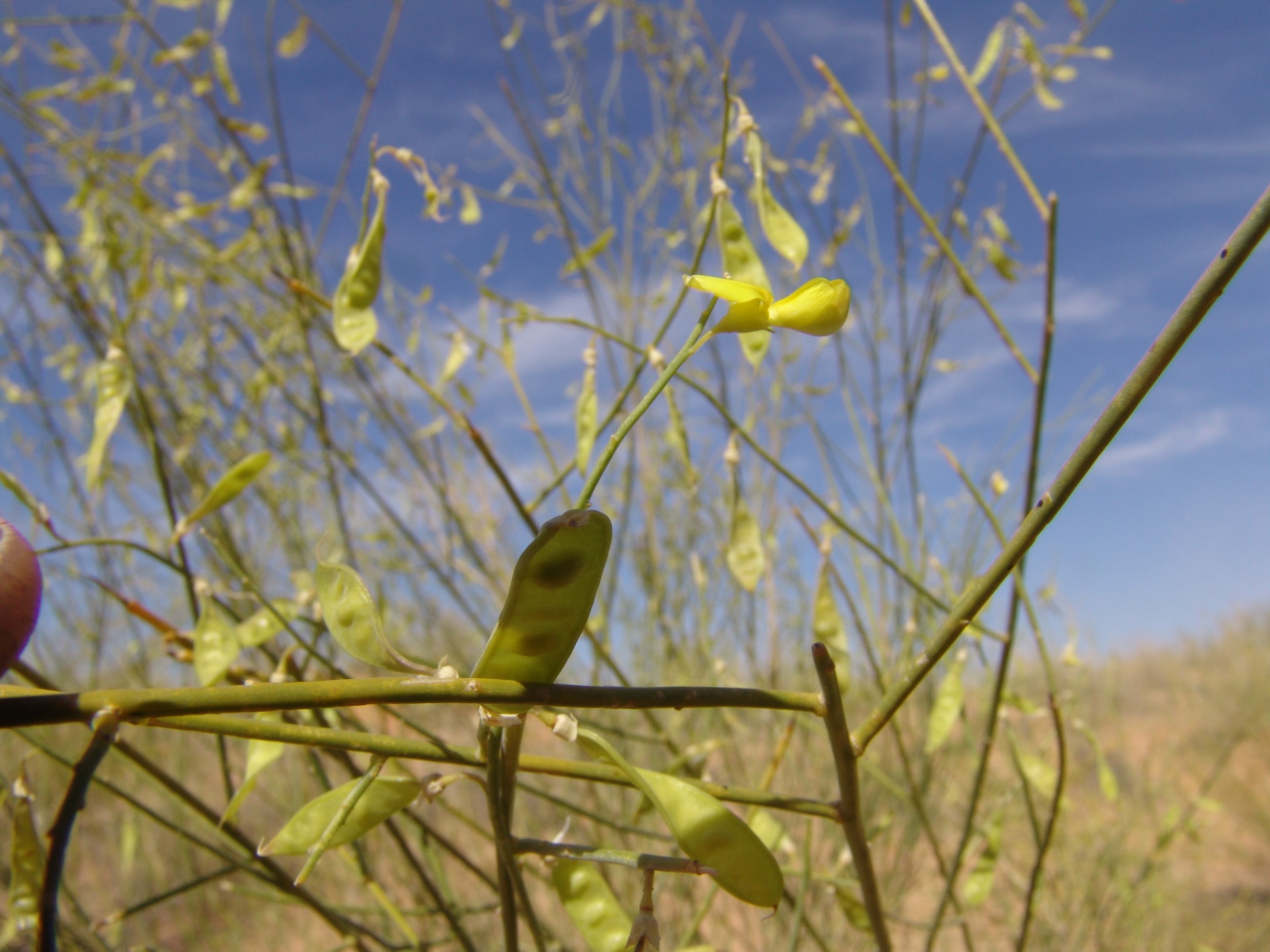
Shrub up to 1.5(2) m in height, unarmed, broom-like, hermaphrodite, deciduous, branched from the base, with stems slender and erect. Stems and old branches with reddish-brown bark, slightly fissured longitudinally. Young branchlets erect or erect-patent, somewhat angular and often leafless, green, sericeous at first and then glabrous. Leaves alternate, unifoliolate, sessile, without stipules, promptly deciduous, with linear-oblong leaflet, subacute, attenuated at the base, entire, glabrous on the upper side and sericeous on the underside. Inflorescences racemose, terminal, lax, longly pedunculate, with 3-9 pedicellate flowers, with pedicel 3-4 mm, somewhat hairy, with 2 bracteoles. Calyx c. 5 mm, only just bilabiate, cupuliform-campanulate, with 5 triangular subequal teeth, green, loosely hairy. Corolla c. 10 mm, papilionoid, predominantly yellow, with a triangular-ovate standard, ± purple and hairy on the dorsal side, wings a little shorter than the banner, glabrous, and keel also glabrous, roughly the same length as the standard. Androecium monadelphous, with 10 stamens. Ovary glabrous, and capitate stigma. Pod 25-50 × 5-10 mm, stipitate, oblong, compressed, apiculate —with a persistent style—, attenuated at the base, papery, glabrous, green at first and then brown-blackish, with persistent calyx at the base, and 2-7 seeds very pronounced externally. Seeds 2-3 mm, reniform, compressed, smooth, brown.
Flowering:
December to April.
Fruiting:
May to July.
Habitat:
Dunes and in general in all kinds of sandy soils, in desert regions.
Distribution:
Endemic to the northern Sahara (Morocco, Algeria, Tunisia and Libya), reaching towards the S to the Tademaït (Algeria).
Conservation status:
A rare but widely distributed species. Currently, it has not been assessed at a global level in the IUCN Red List of Threatened Species. In the Livre Rouge de la flore vasculaire du Maroc (Fennane, 2021) it has been considered as Vulnerable (VU). In Algeria it is included as Genista saharae in its List of protected non cultivated flora (Executive Decree 12-03 on 4-Jan-2012). In Tunisia it is included as G. saharae in its List of native species that are rare and threatened with extinction (Order of the Ministry of Agriculture and Water Resources, 19-July-2006).