Berberis hispanica Boiss. & Reut.
B. vulgaris subsp. australis (Boiss.) Heywood
Eng.: Spanish barberry. Spa.: Agracejo, arro. Fre.: Épine-vinette. Ara.: Bu semam, ksila, zerchoq, berbaris, amirbaris. Tam.: Izzirki, irghiss, argis, tazzguart, darrhis, arrhis, atezar, aizara, usmiche.
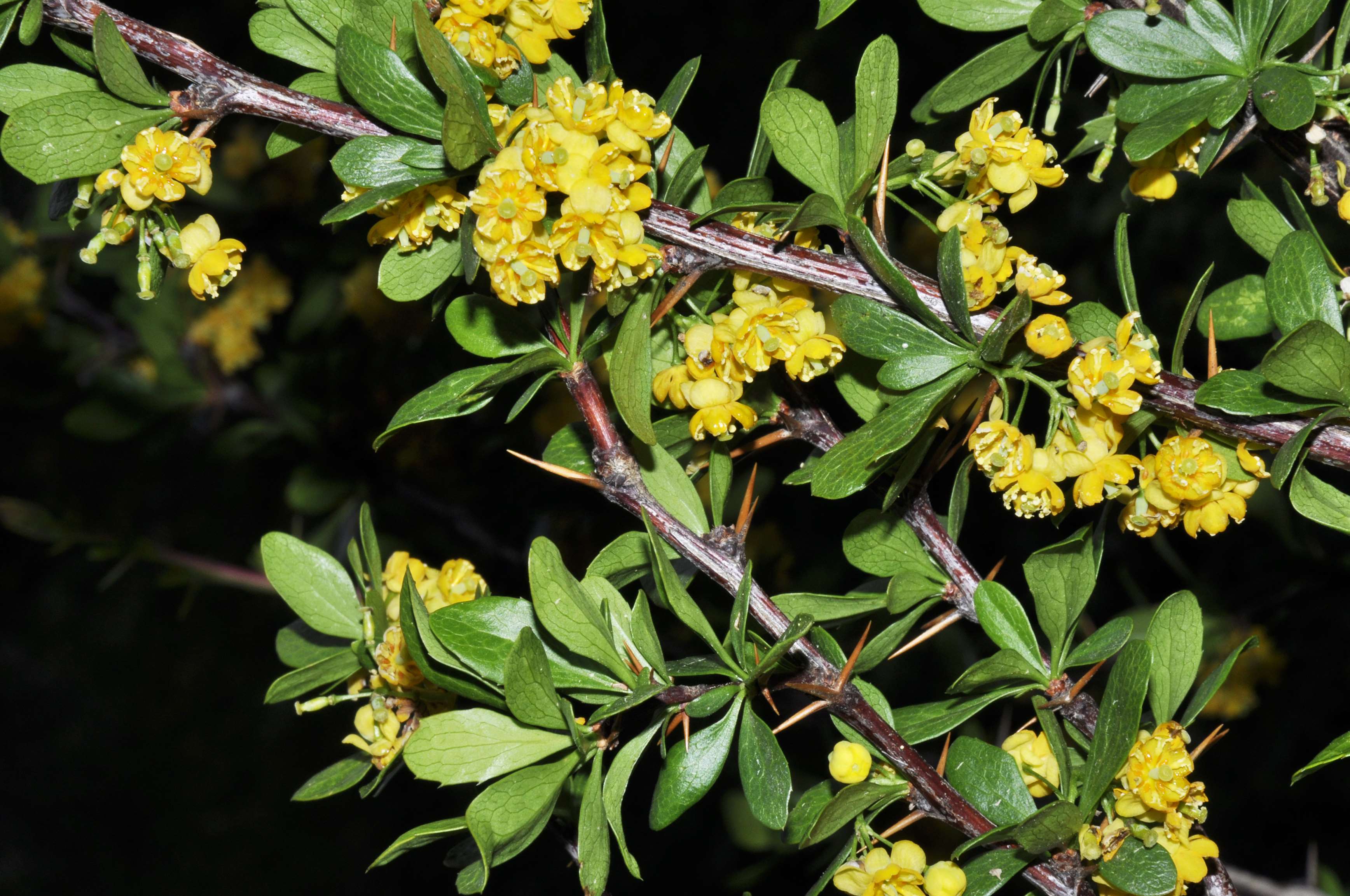
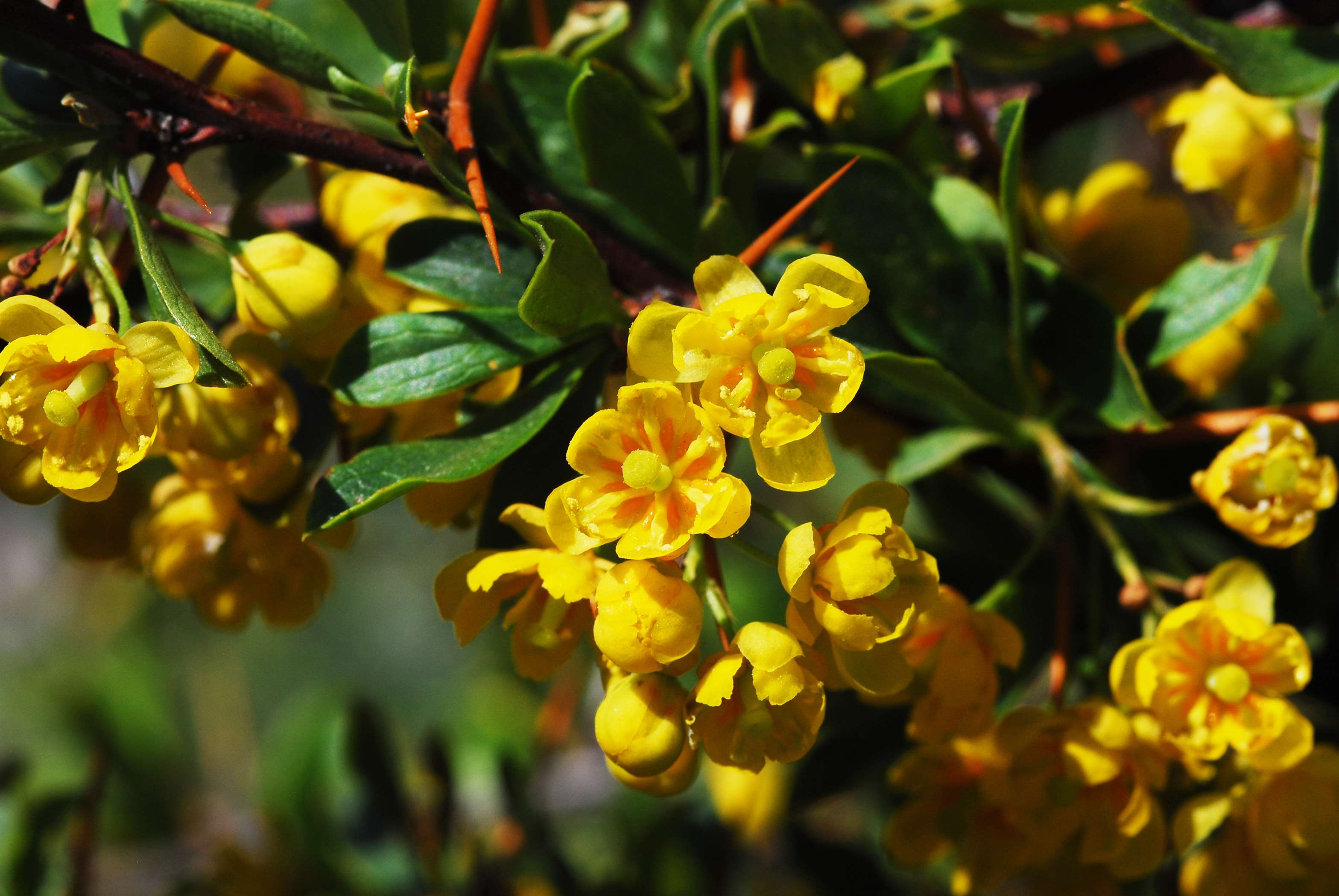
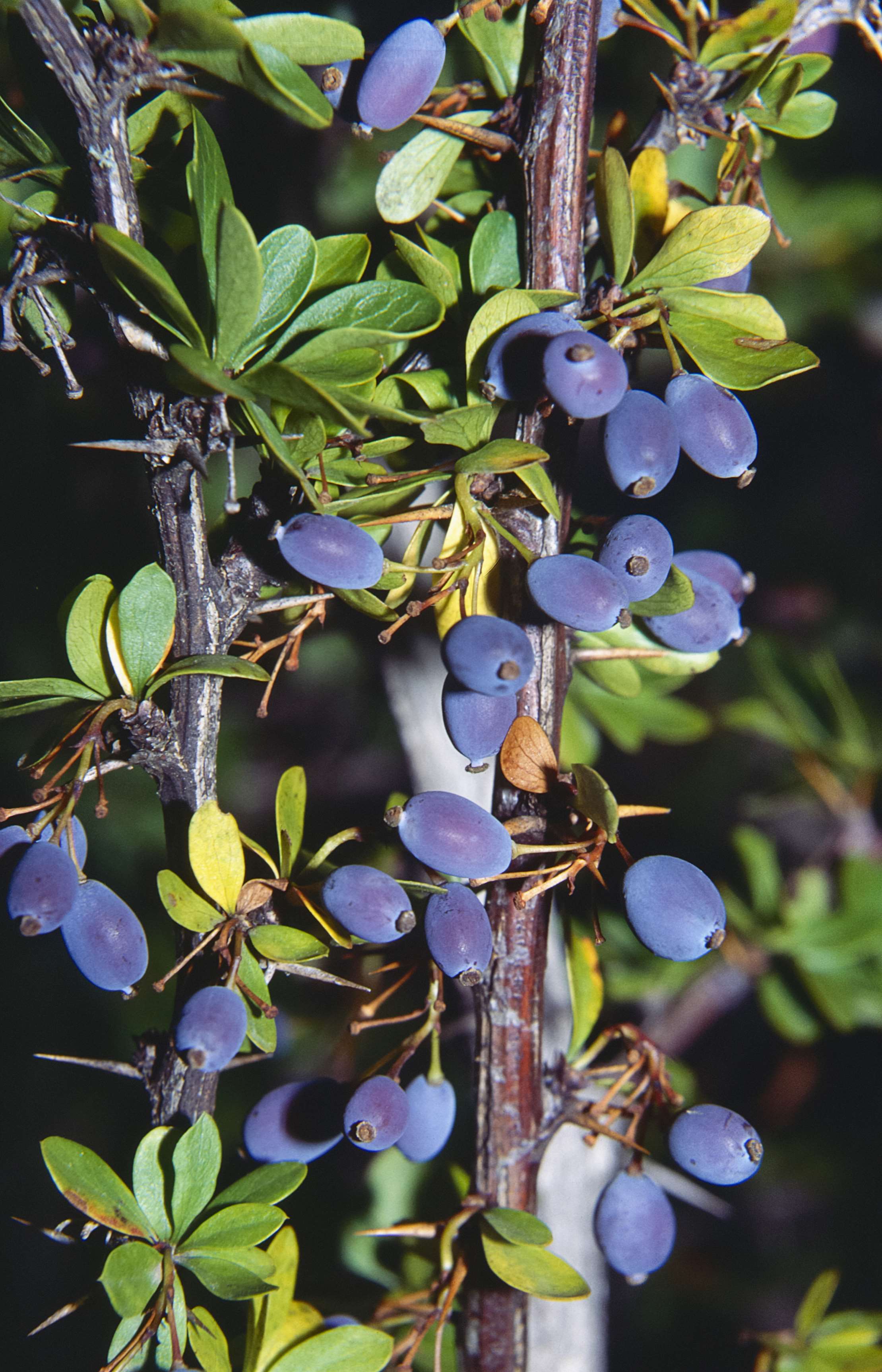
Deciduous thorny shrub, hermaphrodite, up to 3 m in height, sometimes with very dense foliage, with greyish bark. Old branches straight or slightly curved, often tangled. Young branchlets (of 1 year) dark purple in colour, angular and striated. Thorns born in threes, the middle one a little longer, intense yellow in colour. Leaves (5-40 × 2.5-15 mm), somewhat coriaceous, entire or with a few teeth, oval or oval-lanceolate, approximately the same size as the spines, subsessile or with a short petiole (1.4 mm). Flowers 4-6 mm in diameter, yellow, 6 internal oval sepals, entire, 6 petals narrower, lanceolate, notched, slightly shorter than sepals. Stamens 6. Fruit an ellipsoid berry (7-9 mm), blue-black, usually covered in a bluish-white waxy powder.
Flowering:
March to June.
Fruiting:
July to September.
Habitat:
Forests and thickets of medium and high altitude (1,300-3,200 m), sometimes on skeletal soils. It can withstand cold and drought. In areas with semiarid to humid bioclimate, mesomediterranean to oromediterranean floors.
Distribution:
Endemic to the S of Spain and NW Africa. In the latter region it grows in the Rif [reaching up from the E to the Jebel Tendri (between Ain-Zorah and Mazguitam)], Middle Atlas, High Atlas, central Tellian Atlas, Mounts Hodna, Belezma and Aures, and western Saharan Atlas.
Conservation status:
Not a common species but does not seem threatened. Currently, it is not assessed at a global level in the IUCN Red List of Threatened Species. In the Livre Rouge de la flore vasculaire du Maroc (Fennane, 2021) it has been considered as Least Concern (LC).