Bauhinia rufescens Lam.
Eng.: Silver butterfly tree. Fre.: Arbre aux orchidées, plume africaine, bois de boeuf rouge. Ara.: Handar, nder, kulkul, kharub, ndern, adirnaya (the last 2 in Niger). Tamahaq: taedaeyni, addaeny, tadenay.
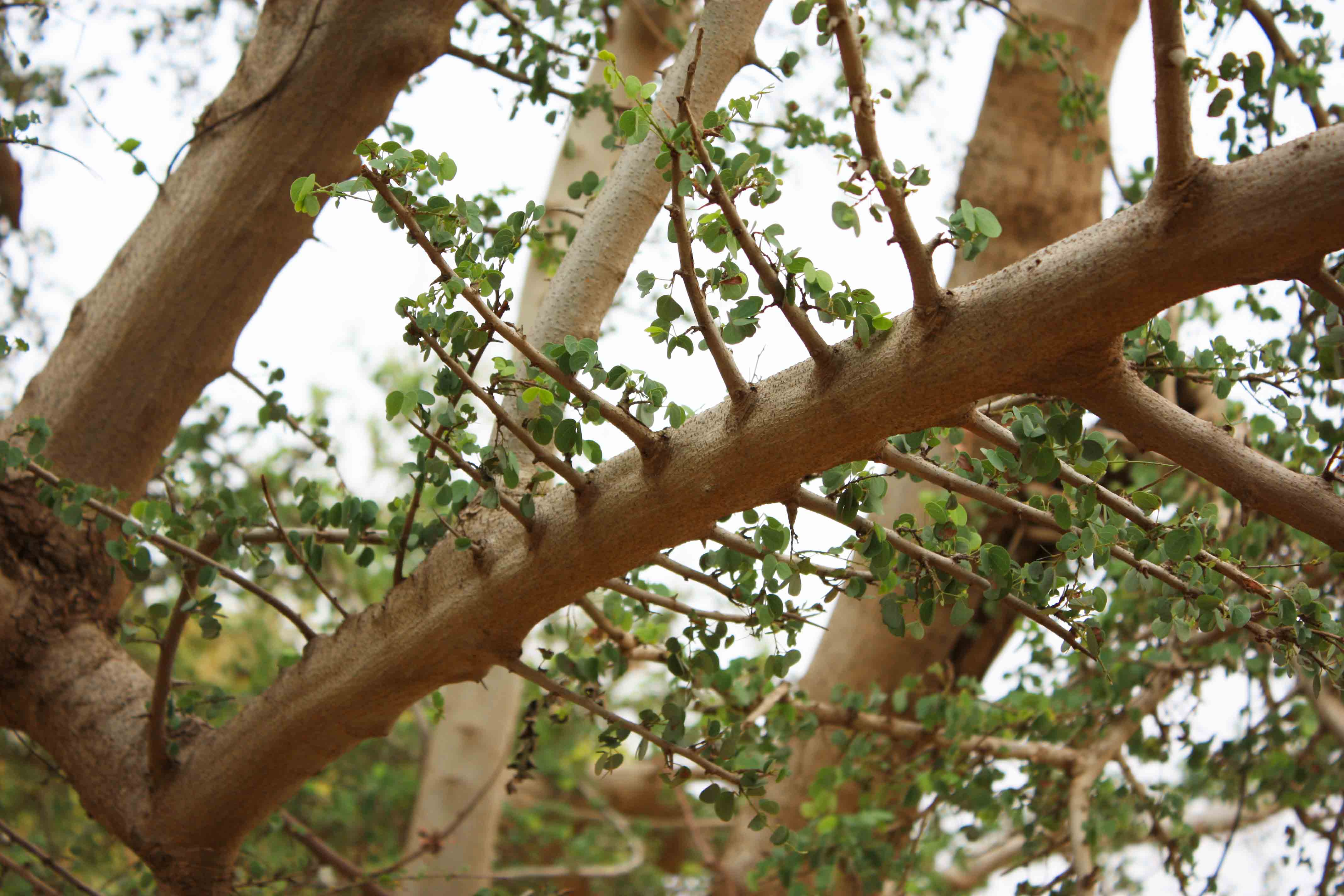
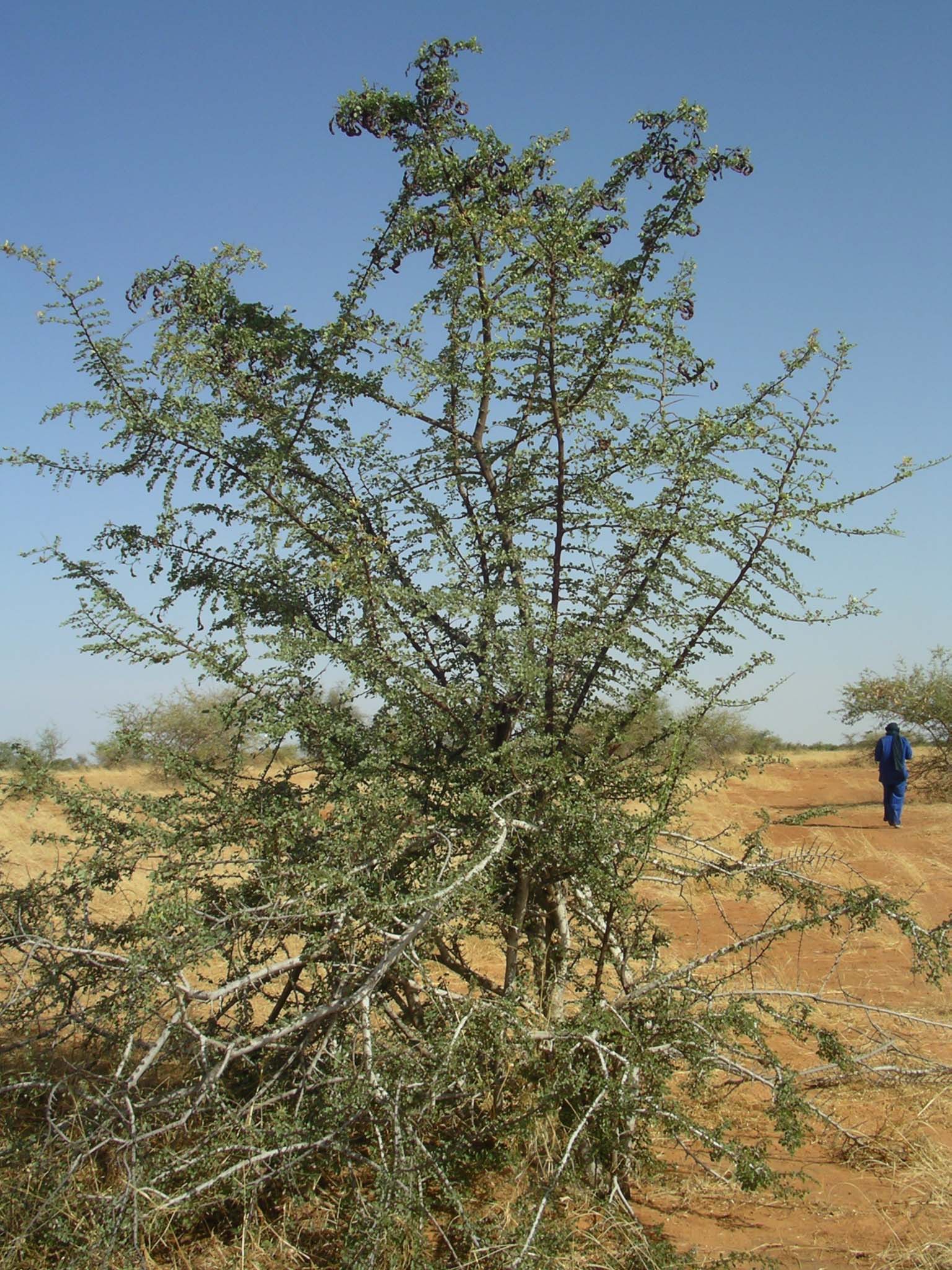
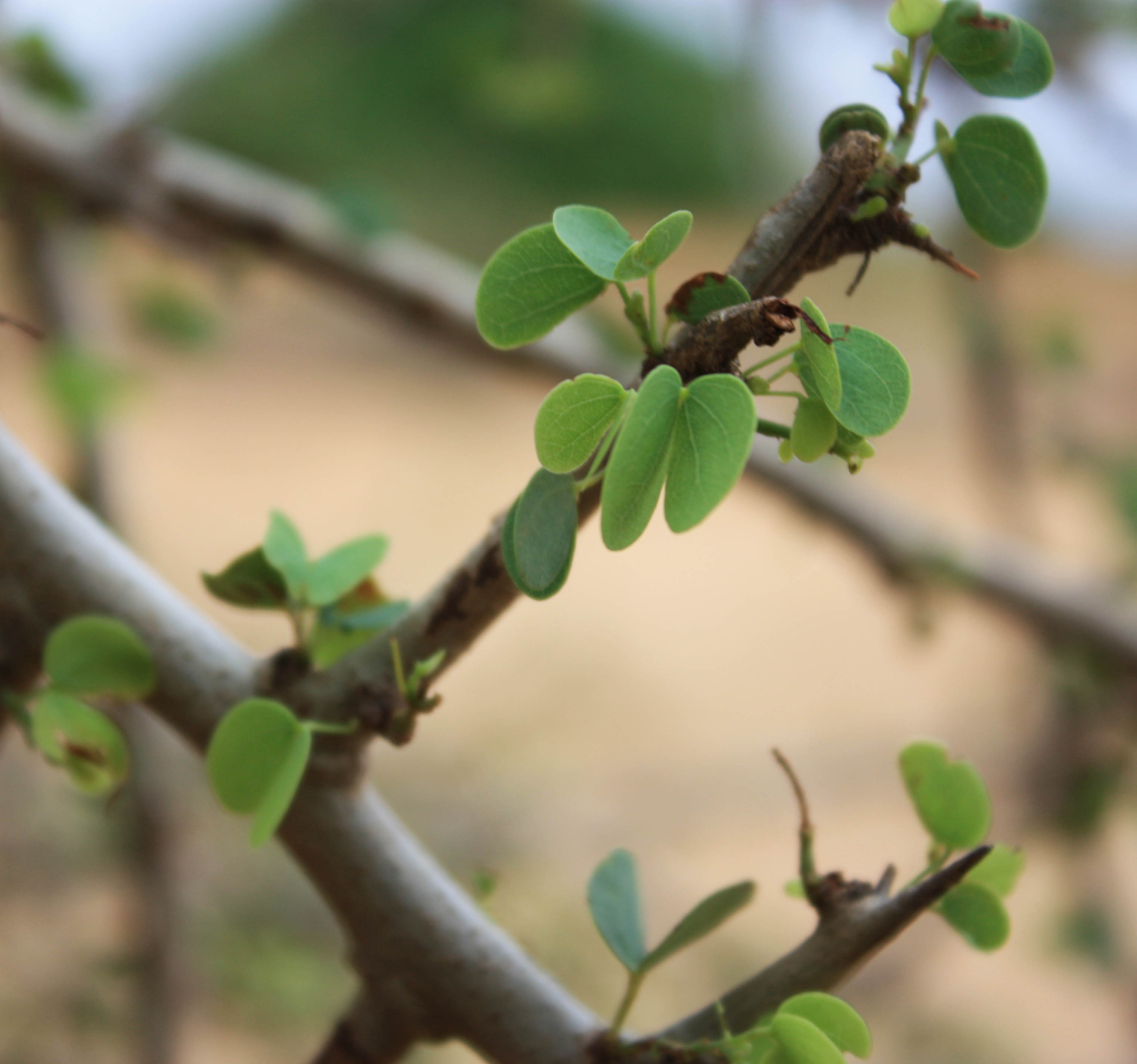
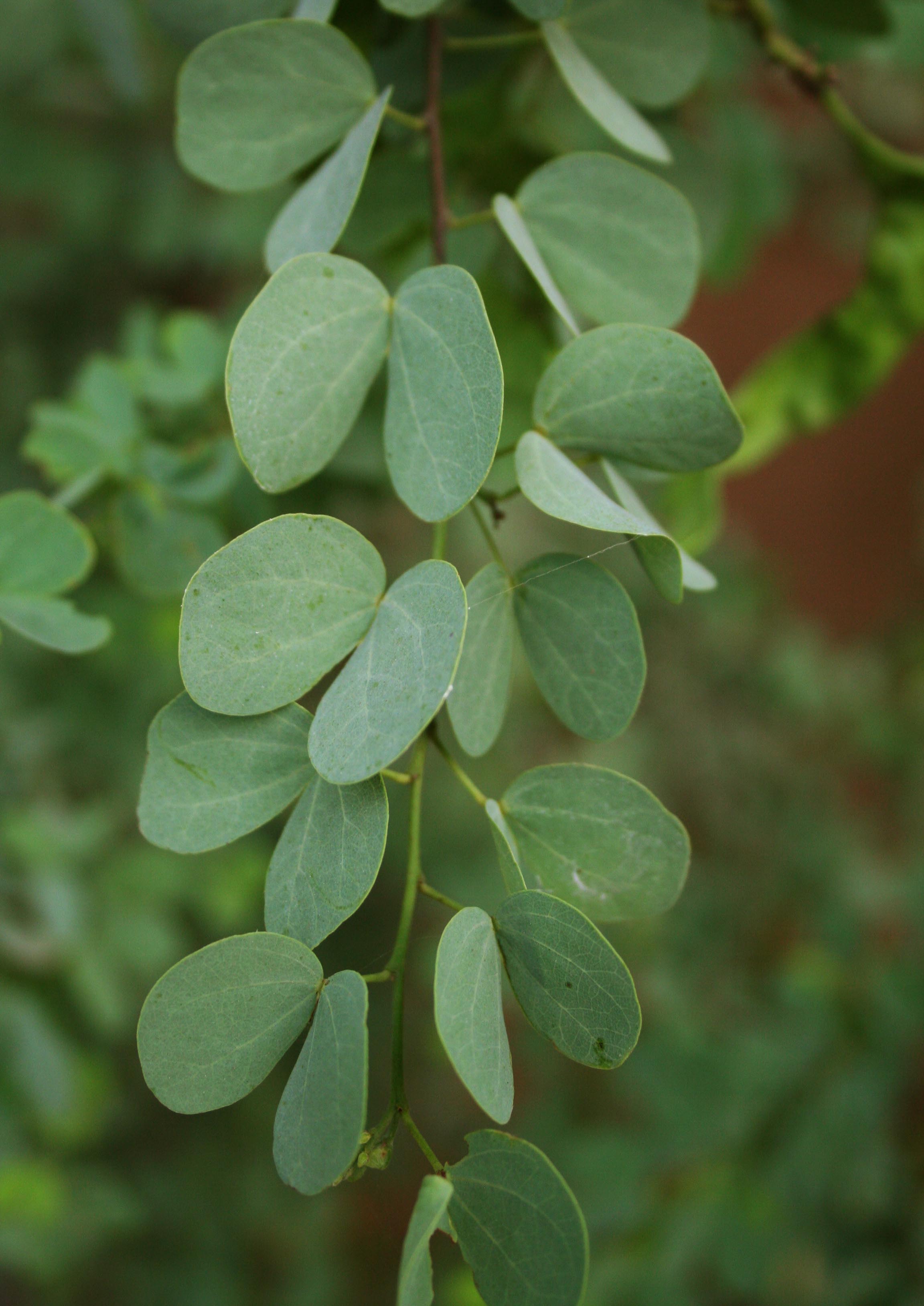
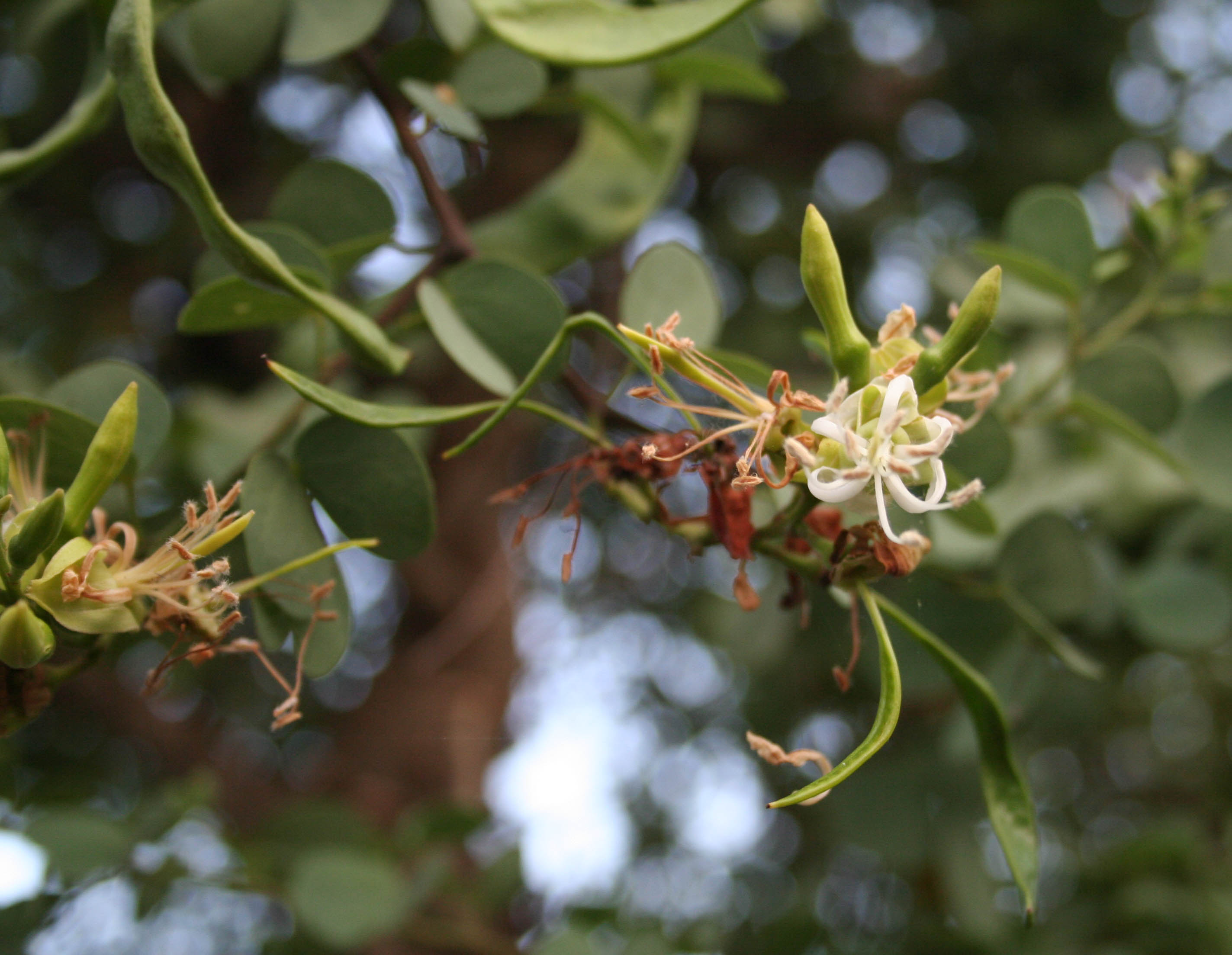
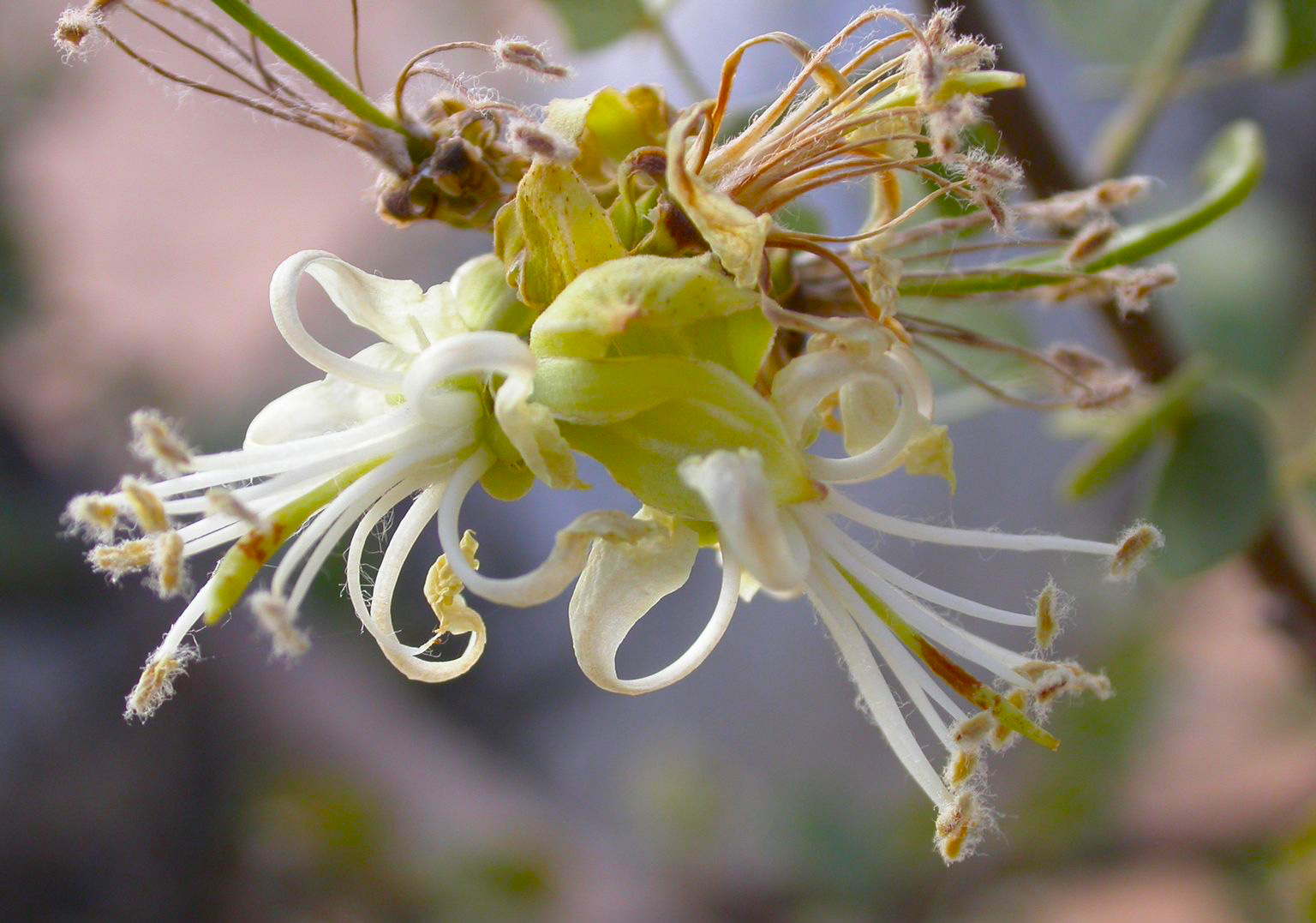
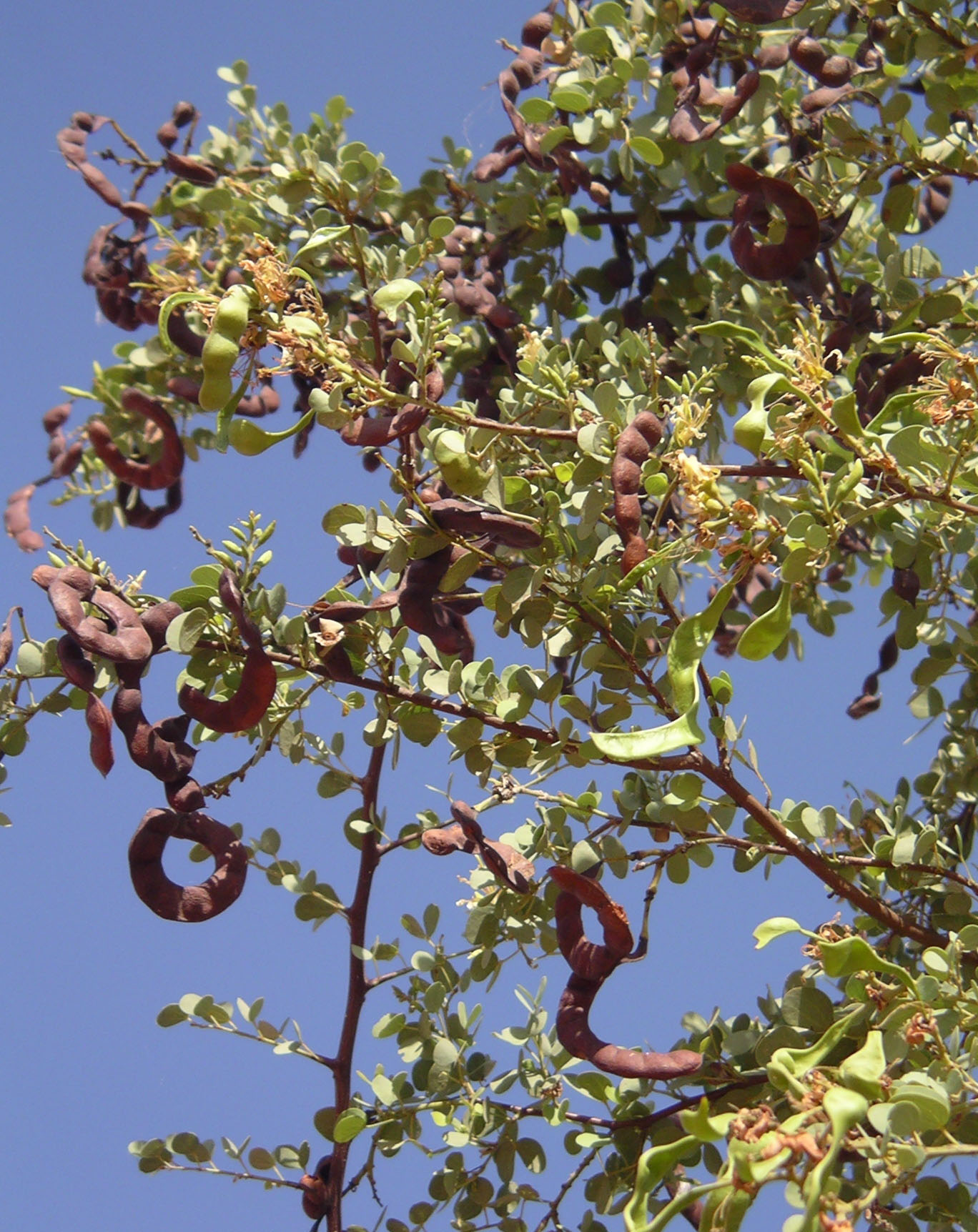
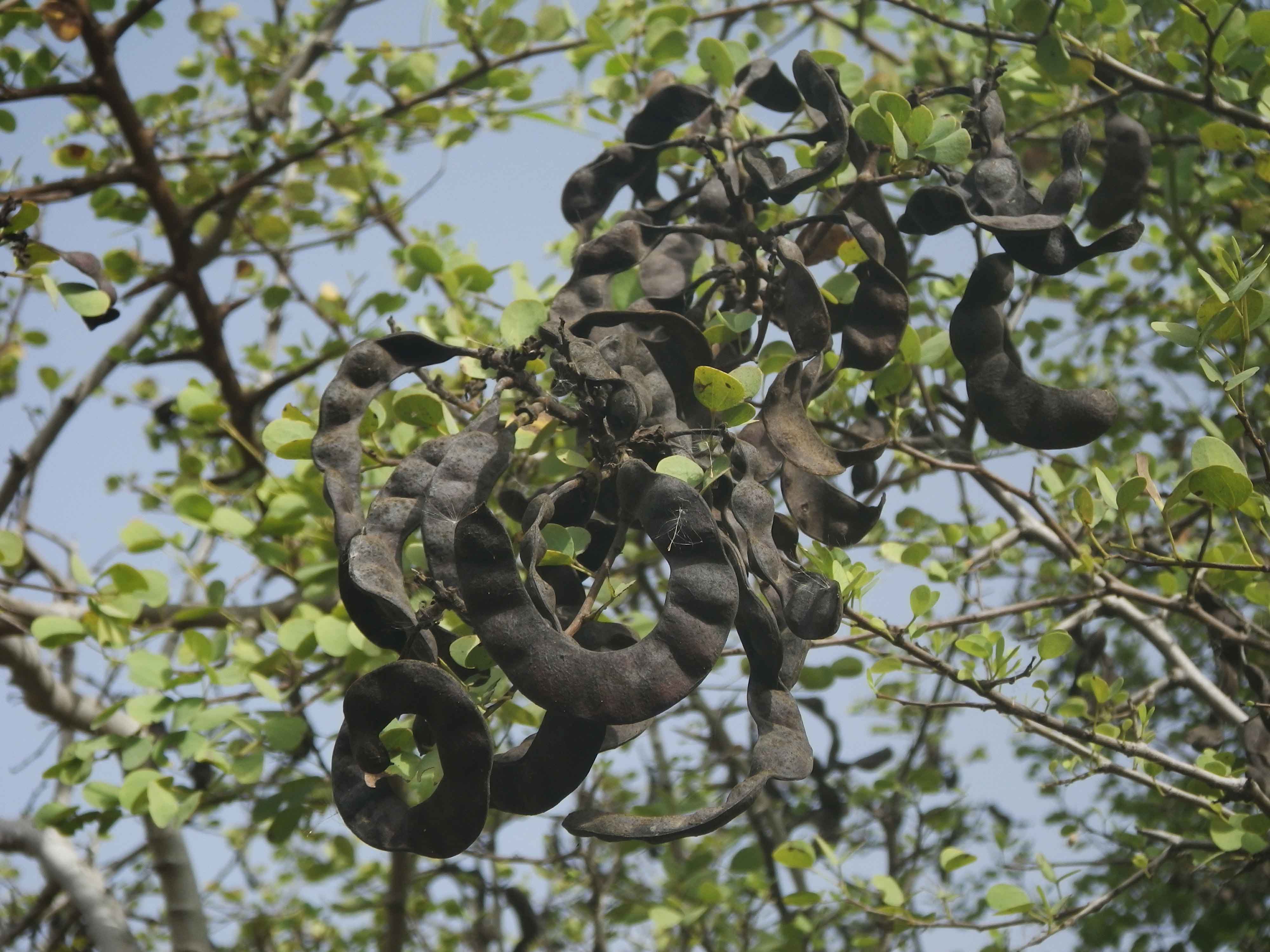
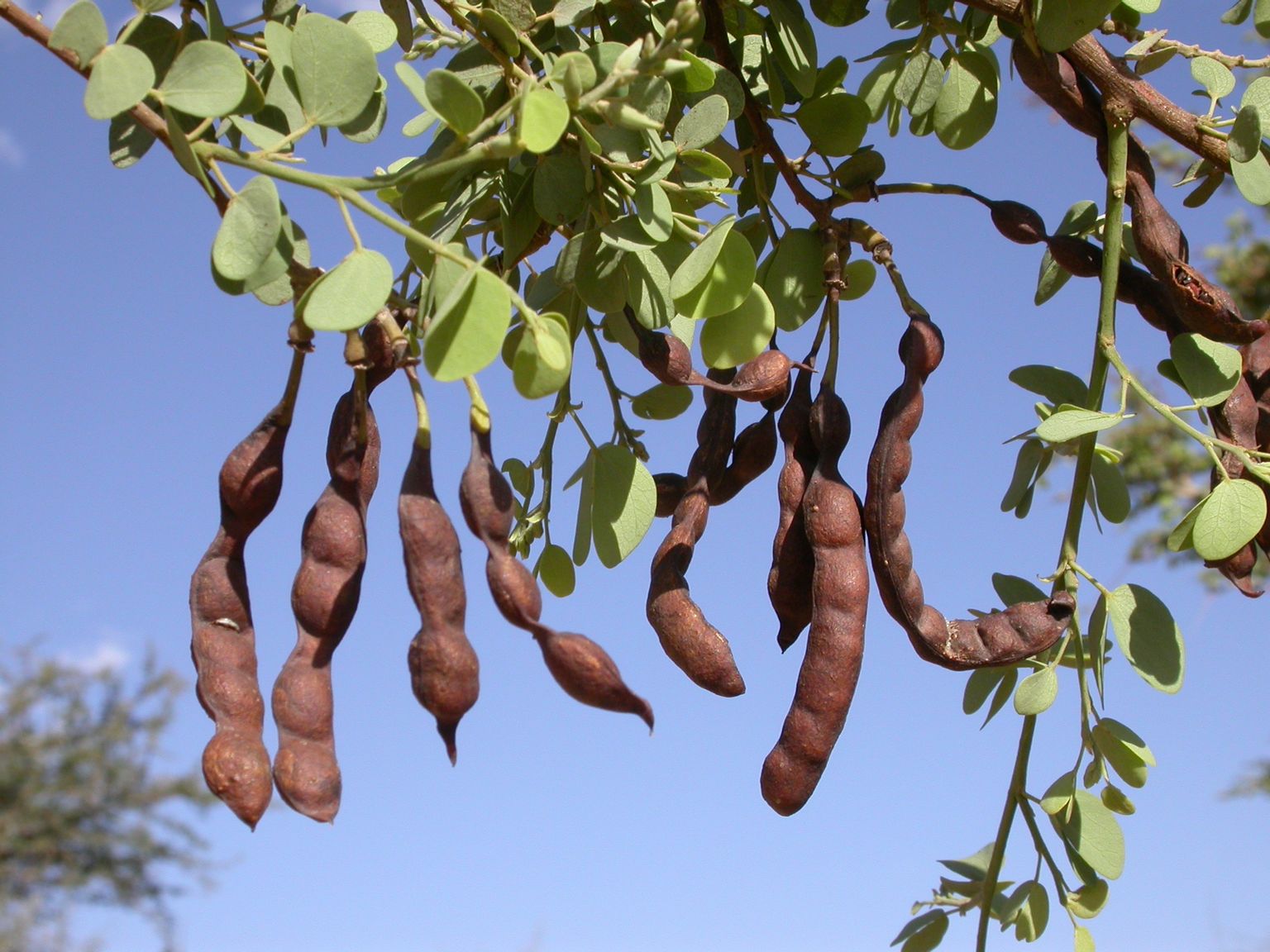
Shrub or tree up to 3(8) m in height, spiny, hermaphrodite, evergreen or deciduous, highly branched, with the branches arranged in one plane. Stems and older branches with greyish-brown or whitish-grey bark, smooth at first, turning fibrous or flaky later, glabrous, younger branches greenish, glaucous, pubescent. Cauline spines, up to 10 cm, very robust. Leaves 0.6-2.3(4) × 0.6-2.3 cm, alternate, with very small stipules, promptly caducous and petiole up to 1.2(3) cm, hairy, with coriaceous leaf blade, bipartite into 2 ovate or semicircular lobes almost to the base, with 3 veins, a greyish-green, glabrous on the upper side and slightly pubescent on the underside. Inflorescences racemiform, arranged in terminal clusters or opposite to the leaves, erect, with 10-25 flowers, pedicellate, with pedicels up to 12 mm, pubescent. Calyx campanulate, with 5 sepals c. 10 mm, spatulate, fused at the base into a basal tube of 3-4 mm, ± reflexed at anthesis even though some remain connected at the tip. Corolla with 5 petals of 15-20 mm, spatulate or linear-lanceolate, white, whitish-yellow or pink, glabrous, arched-reflexed at anthesis. Stamens 10, free, all fertile, c. 10 mm, with anthers c. 3 mm, linear-oblong, sagittate, hairy, and filament hairy at the base. Ovary glabrous. Pod (5)8-11 × 0.8-1 cm, pendulous, linear-oblong, often curved or spiral, compressed, rounded at the apex and attenuated at the base, densely reticulate, ± coriaceous and with pronounced seeds, reddish-brown or nearly black at maturity, glabrous, dehiscent with 4-10 seeds separated by septa. Seeds c. 6 × 4.5 mm, ovoid, compressed, smooth, black, glabrous.
Flowering:
In the Sahara after the winter rains (usually from January to March), in tropical areas after the summer rains (usually July-August).
Fruiting:
Between 1-2 months after Flowering. The fruits stay for a long time on trees.
Habitat:
Deserts and savannahs, often in ravines, along valleys and close to waterways.
Distribution:
Tropical Africa, but missing from the dense Equatorial forests. In North Africa, mainly in the Sahel and southern Sahara. Also in the extreme S of Algeria and in central and southern areas of Mauritania, Mali, Niger, Chad and Sudan.
Observations:
Under high humidity conditions the leaves stay on the plant all year round, but in dry conditions it behaves like a deciduous plant.
Conservation status:
A relatively common and widespread species, not considered threatened. In the IUCN Red List of Threatened Species, it is listed as Least Concern (LC) at global level.