Avicennia marina (Forssk.) Vierh.
Eng.: Gray mangrove, grey mangrove, white mangrove. Spa.: Mangle. Fre.: Palétuvier gris, manglier gris. Ara.: Shora, shura.
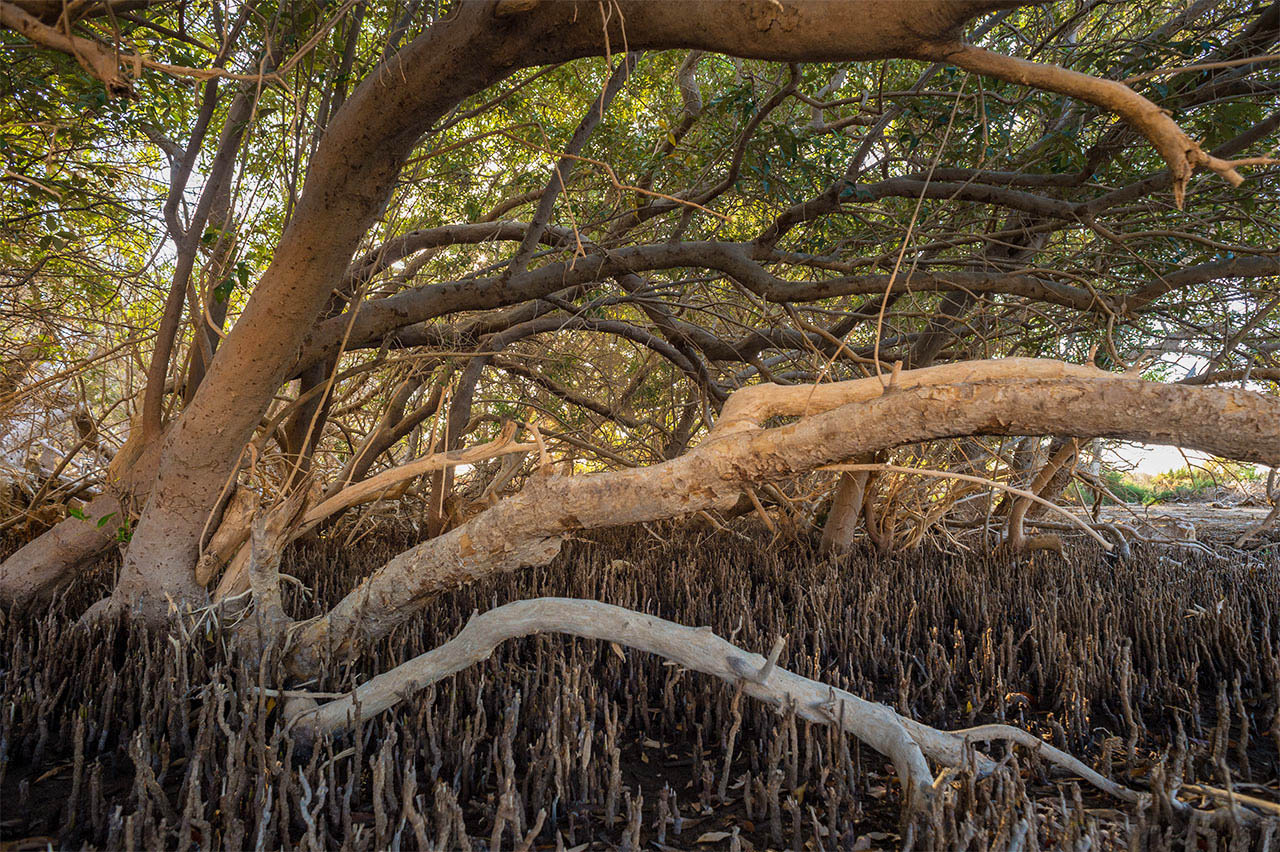
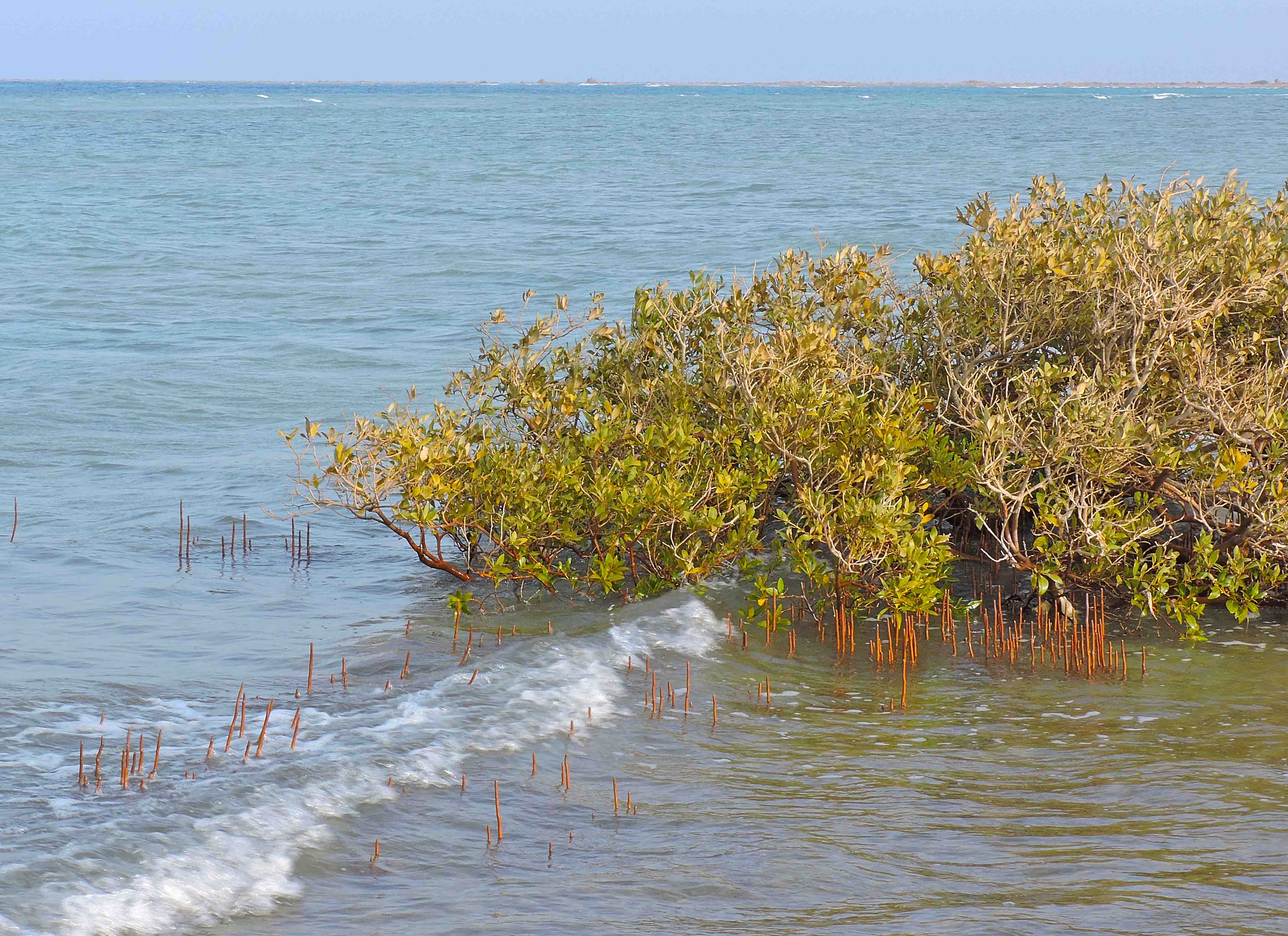
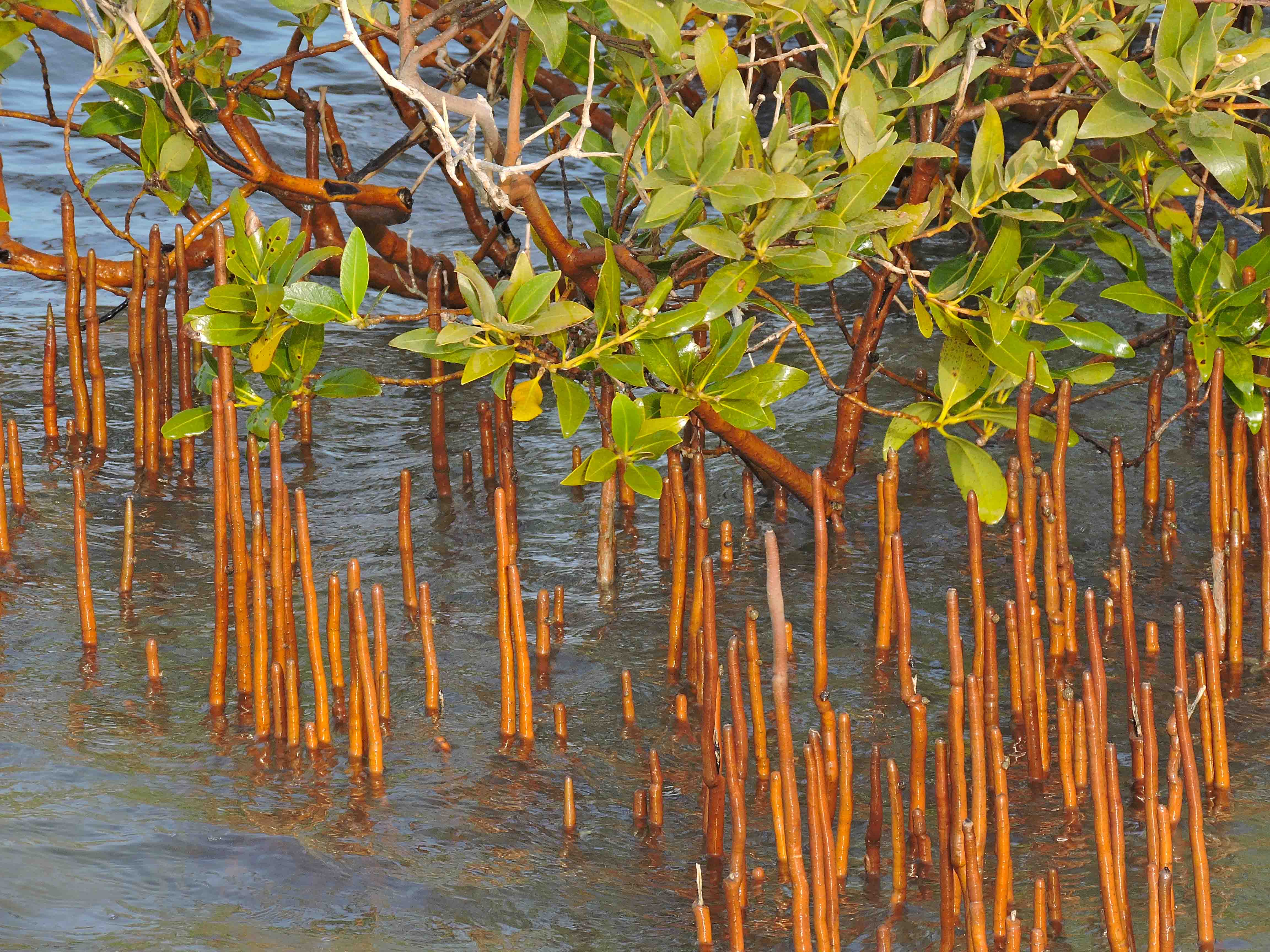
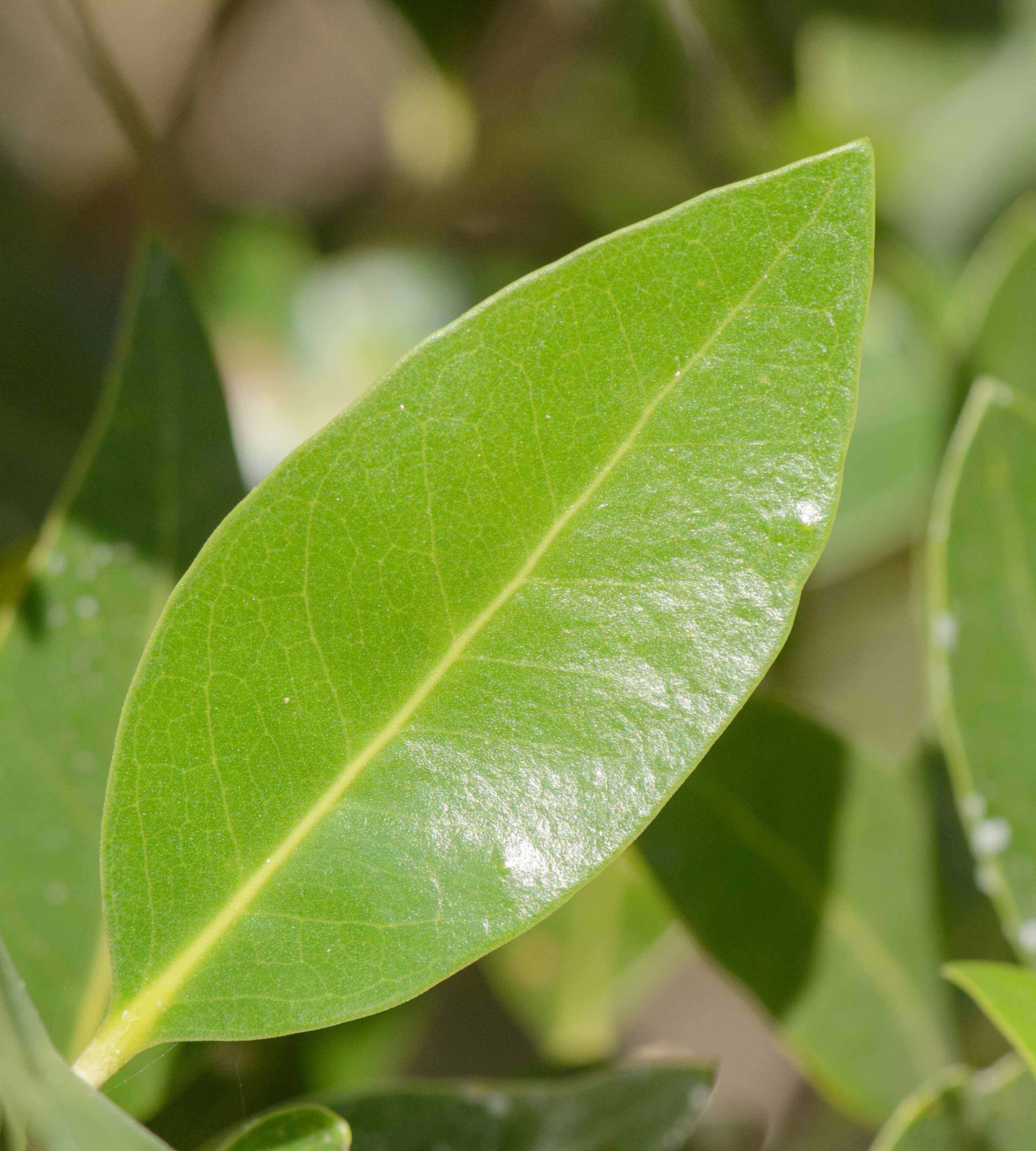
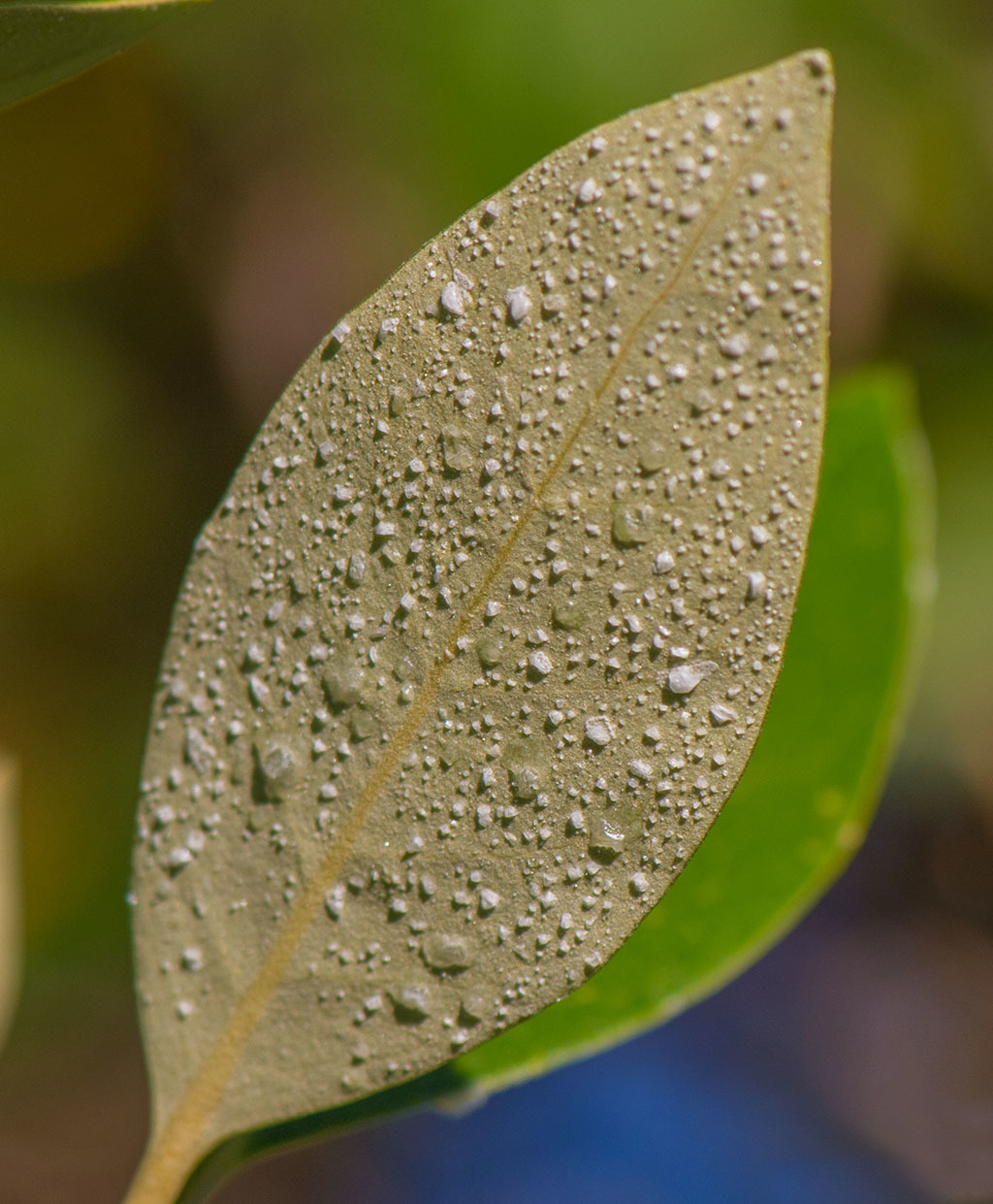
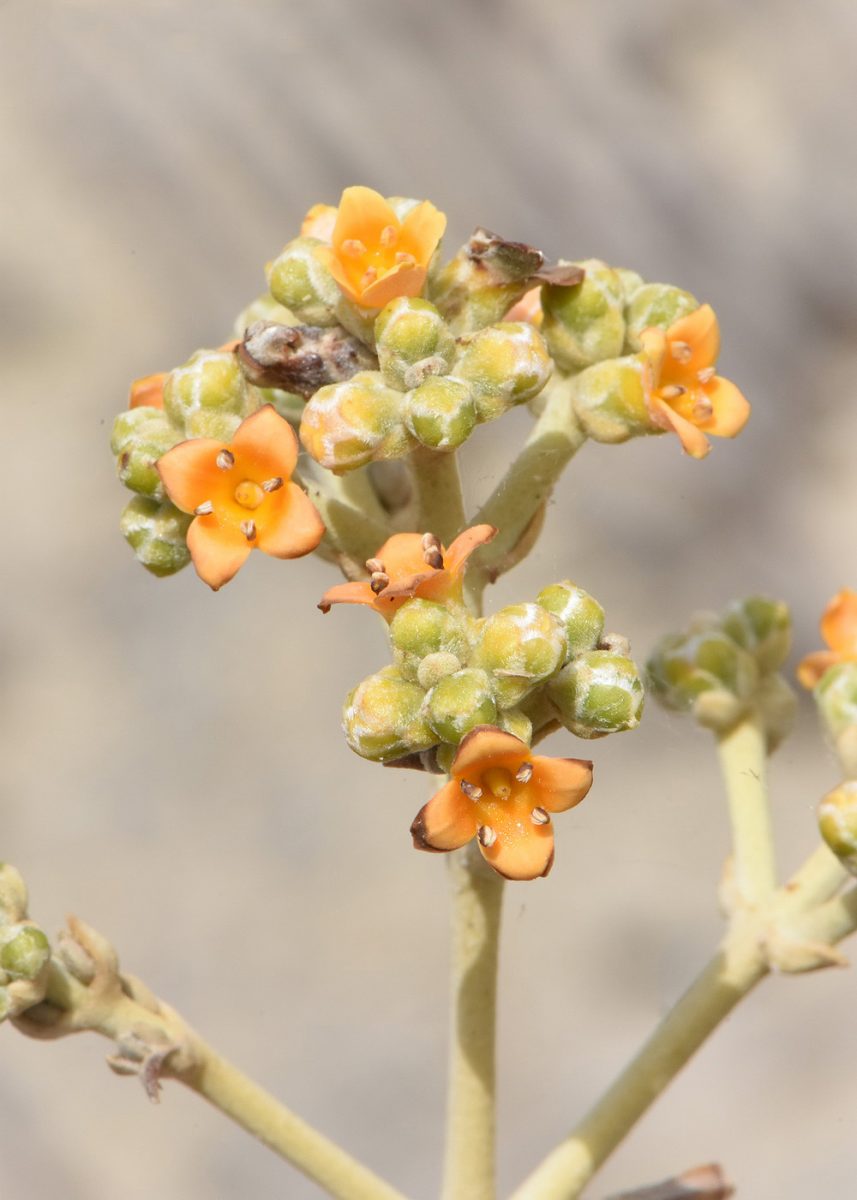
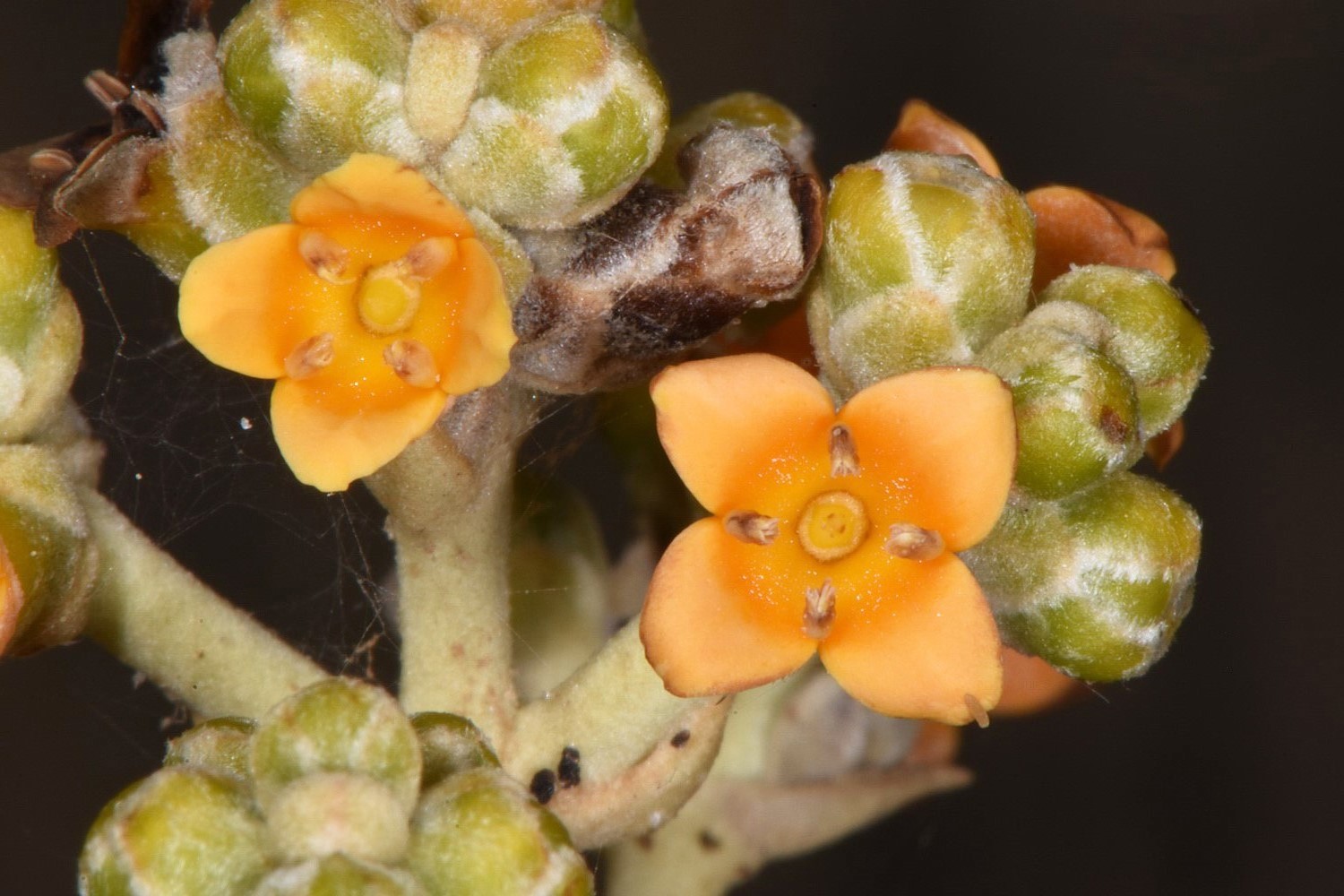
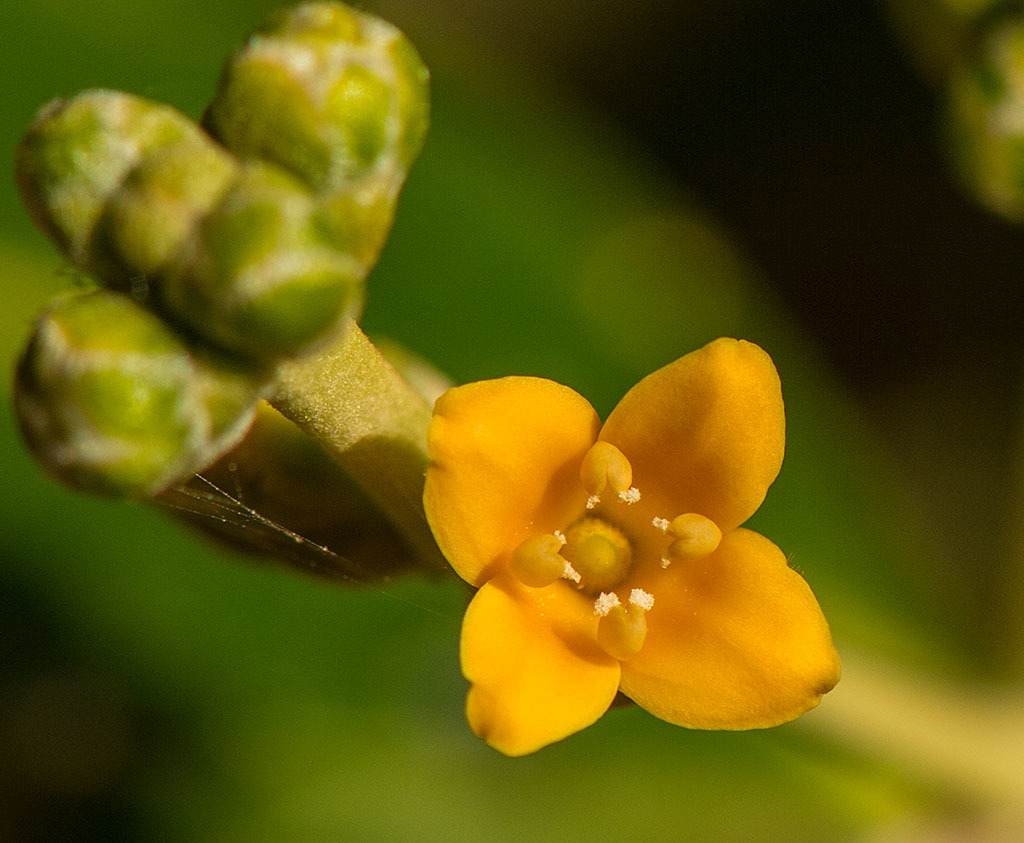
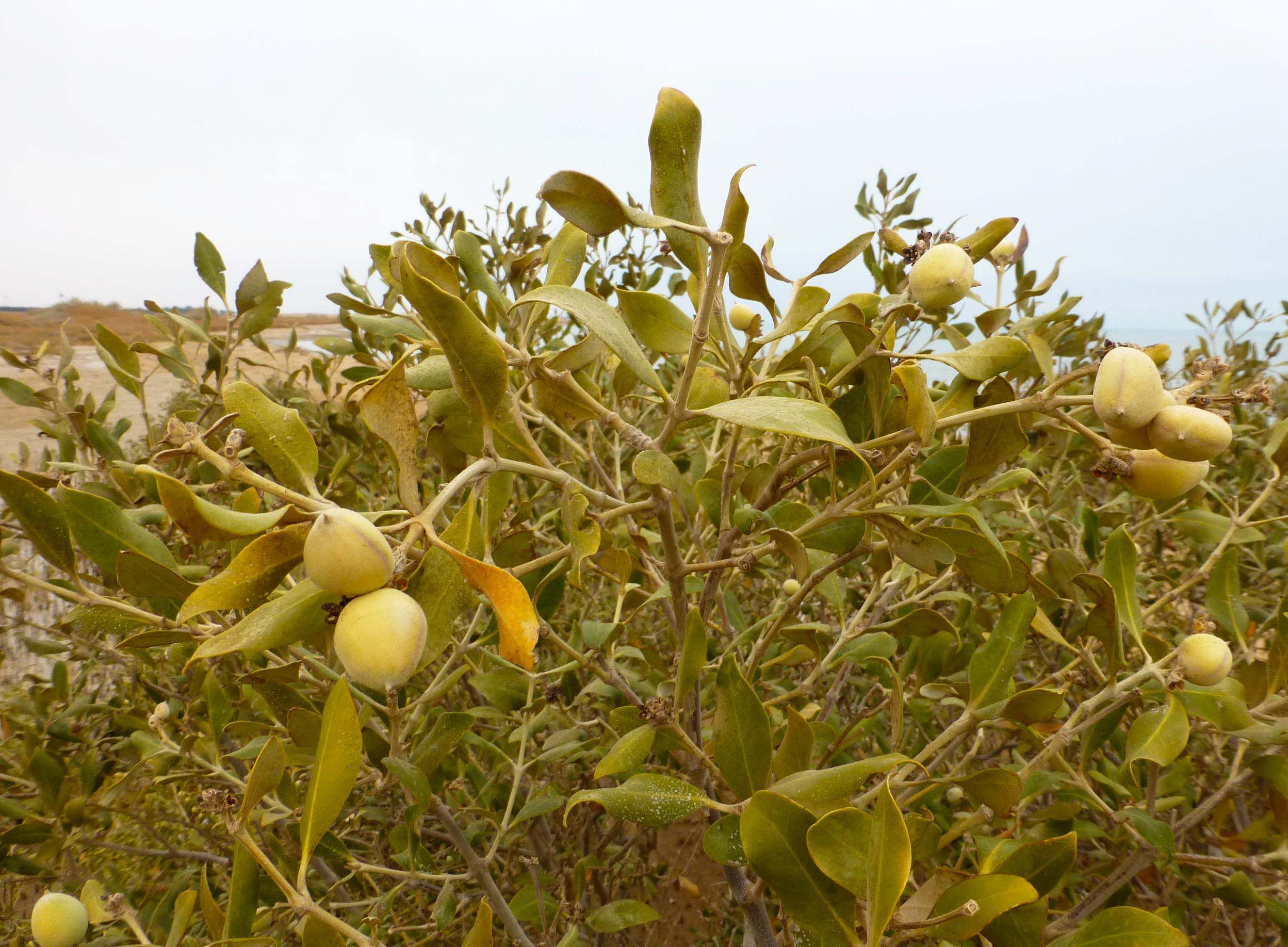
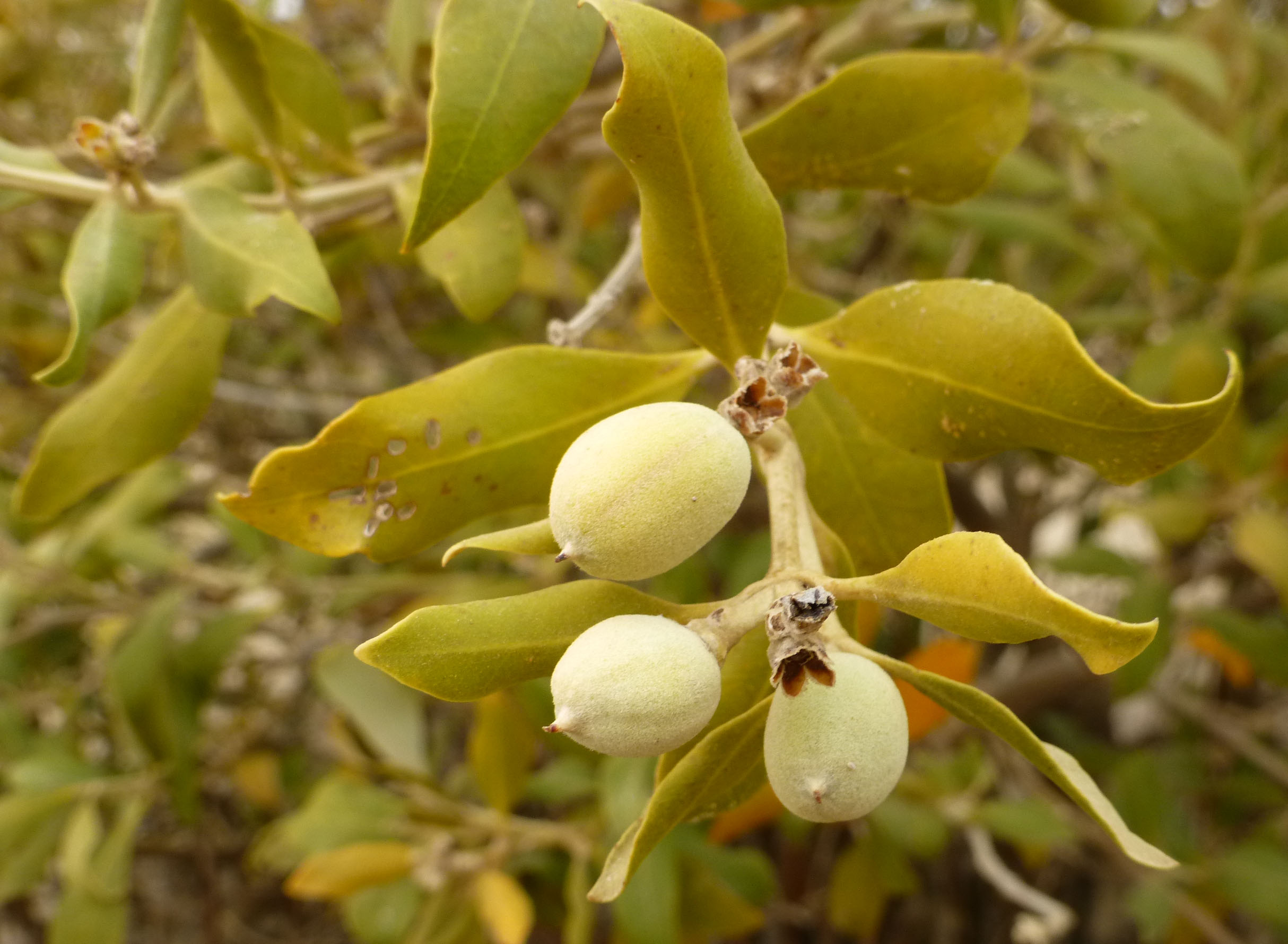
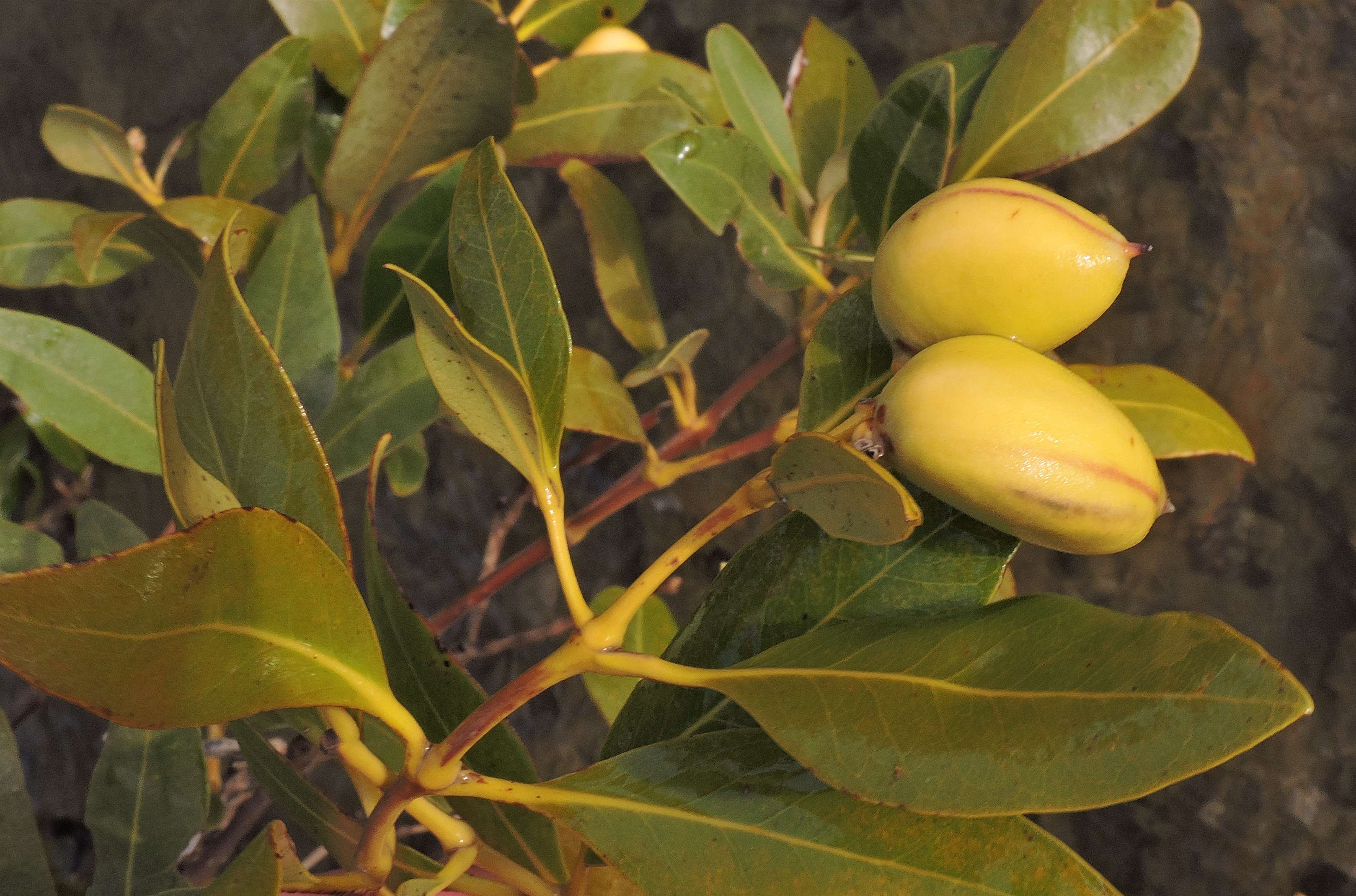
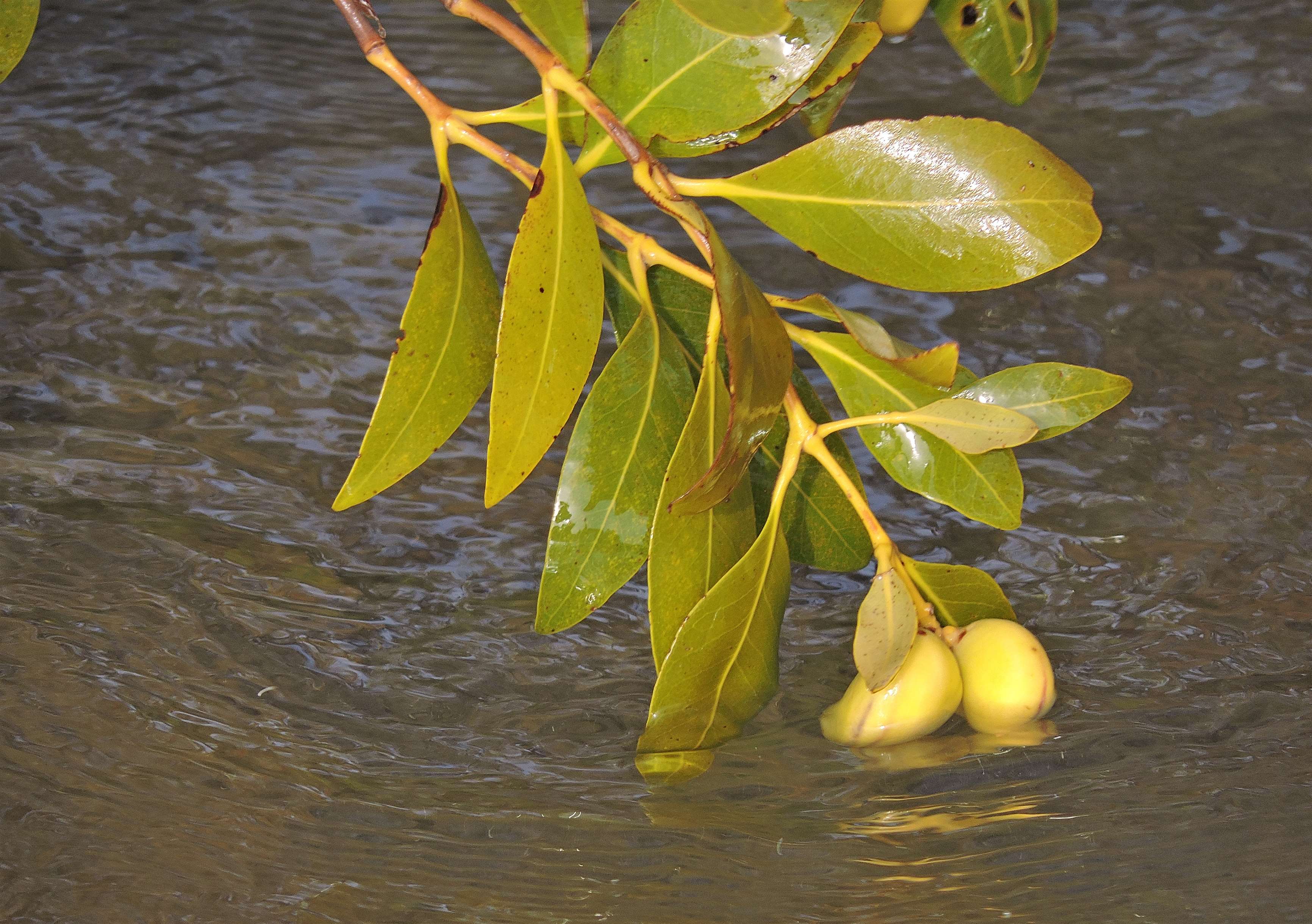
Shrub or tree, hermaphrodite, small, 3-11 m in height, straight trunk and highly branched, rounded crown, with green-brown yellowish bark and punctate, with abundant slender respiratory roots up to 90 cm height. Leaves opposite, coriaceous, shortly petiolate, with leaf blade (3)5-8(10) × (1)1.5-4 cm, lanceolate, elliptical or oblanceolate, acute or obtuse, gradually tapered at the base, entire, glabrous and bright on the upper side and densely grey-tomentose on the underside. Inflorescences in dense and globose axillary cymes, with 2-12 flowers and quadrangular peduncle. Flowers 5-6 mm, yellow-creamy, actinomorphic; calyx with 5 sepals, orbicular or broadly ovate, concave, hirsute and ciliate; corolla with tube somewhat longer than the sepals and 4 ovate lobes; androecium with 4 stamens inserted at the throat of the tube alternating with corolla lobes, with short filament; ovary with 2 carpels, unilocular, hairy. Fruit in capsule, with 2 valves, with a single seed that germinates before the fruit falls.
Flowering:
December to February.
Fruiting:
Depending on the areas, fruits can be seen on the trees almost all year round.
Habitat:
Estuaries of rivers and streams, in sandy-clayey soils with abundant salinity, in the intertidal zone, as part of the mangrove vegetation in the tropical coastal areas.
Distribution:
Widely distributed in coastal areas of eastern Africa, Arabian Peninsula, southern Asia, Melanesia, Australia and New Zealand. In Africa it is found through tropical areas, both along the Atlantic, reaching its northernmost limit between Senegal and Mauritania, and along the Indian Ocean, where it is found further N (Sudan and Egypt up to the Sinai Peninsula) due to the warmer waters of the Red Sea.
Conservation status:
This species is becoming less common and more threatened because coastal areas are under increasing urban development pressure. In the IUCN Red List of Threatened Species, it is listed as Least Concern (LC) at global level (Duke et al., 2010). In the updated red list of Egypt (Shaltout & Bedair, 2023) it has been considered as Vulnerable (VU).