Amelanchier ovalis Medik.
Mespilus amelanchier L., A. vulgaris Moench., A. rotundifolia Lam. ex K. Koch.
Eng.: Snowy mespilus, service berry. Spa.: Guillomo. Fre.: Amélanchier. Ara.: Mechtehi, zaârur. Tam.: Asrharsif buzeru, larar.
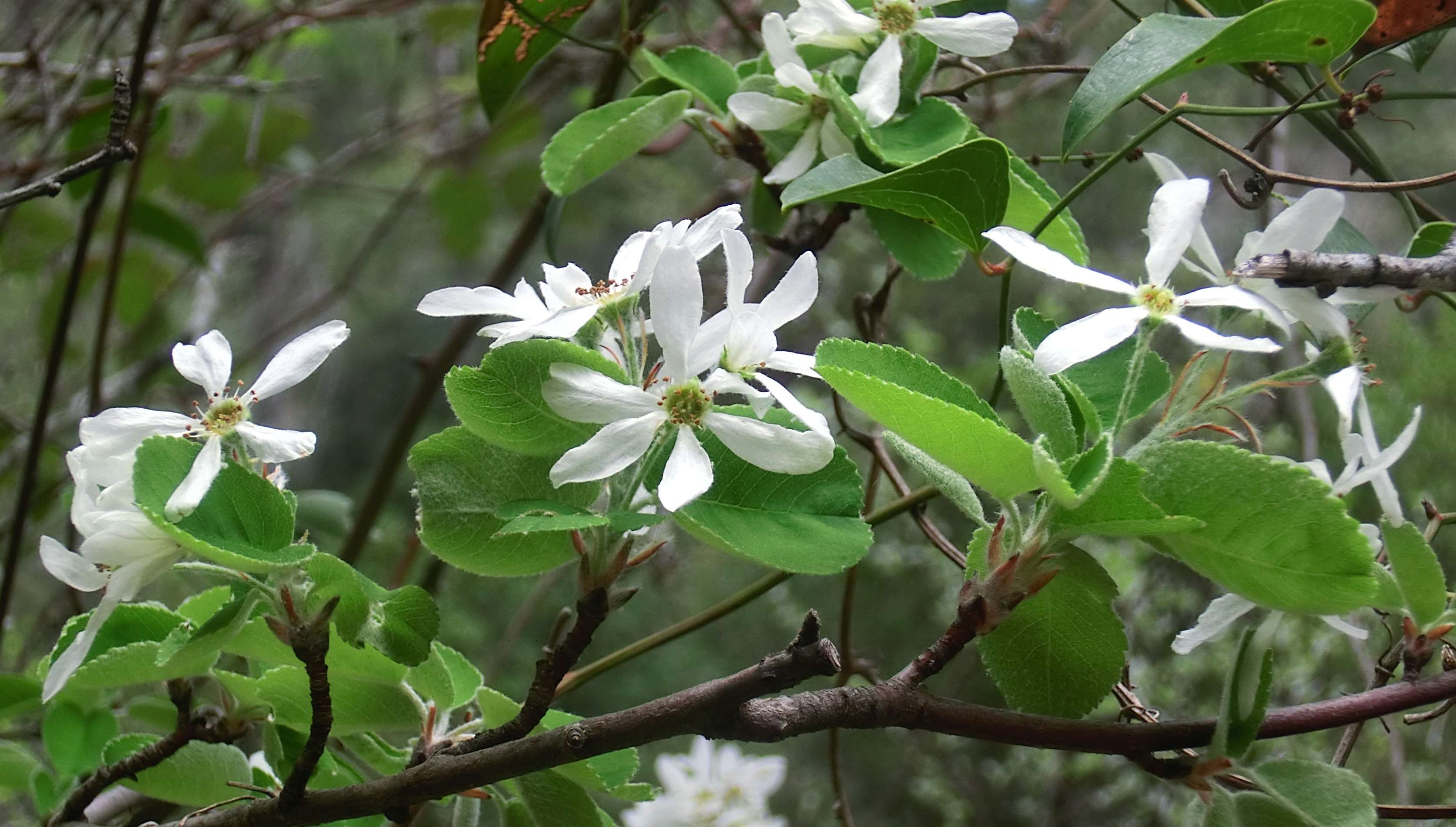
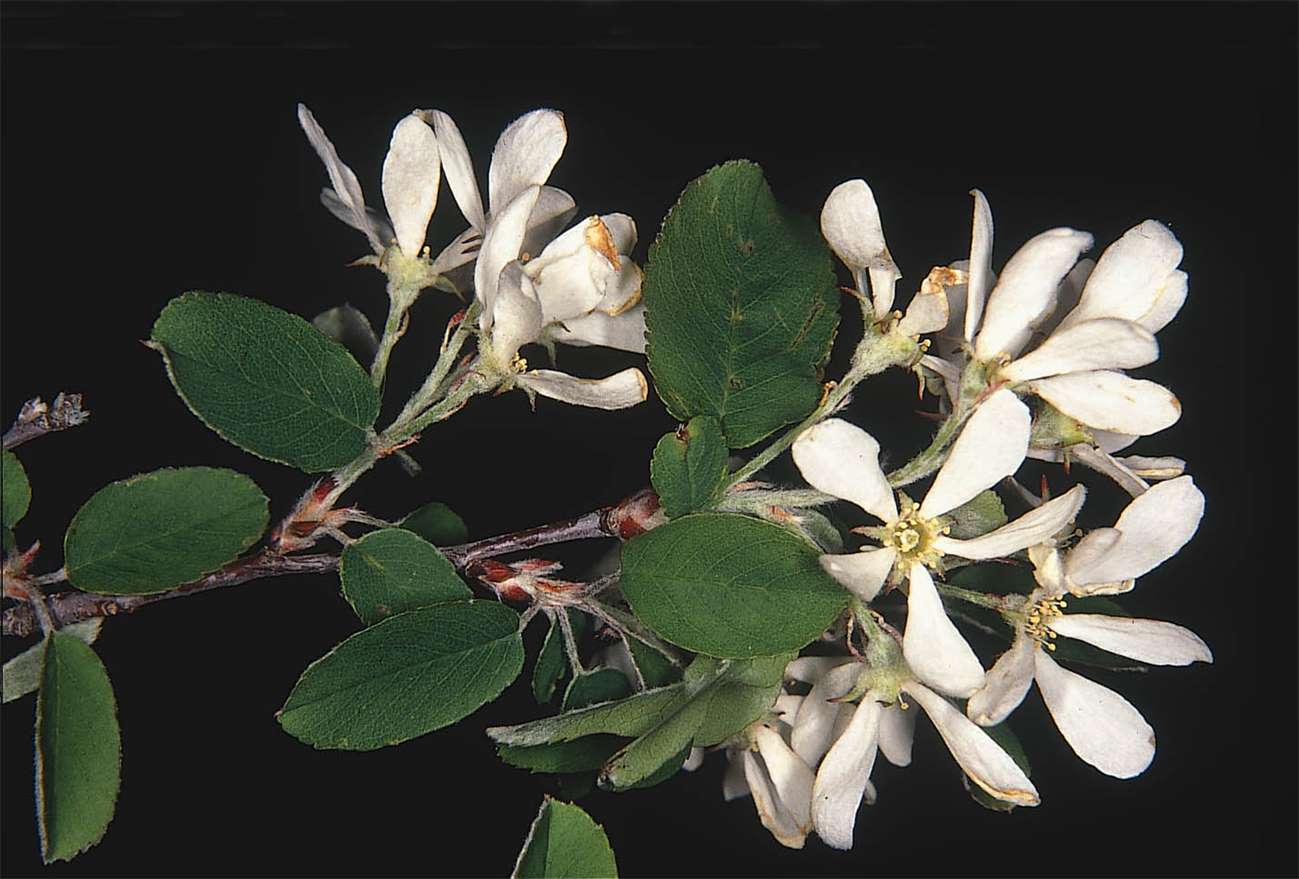
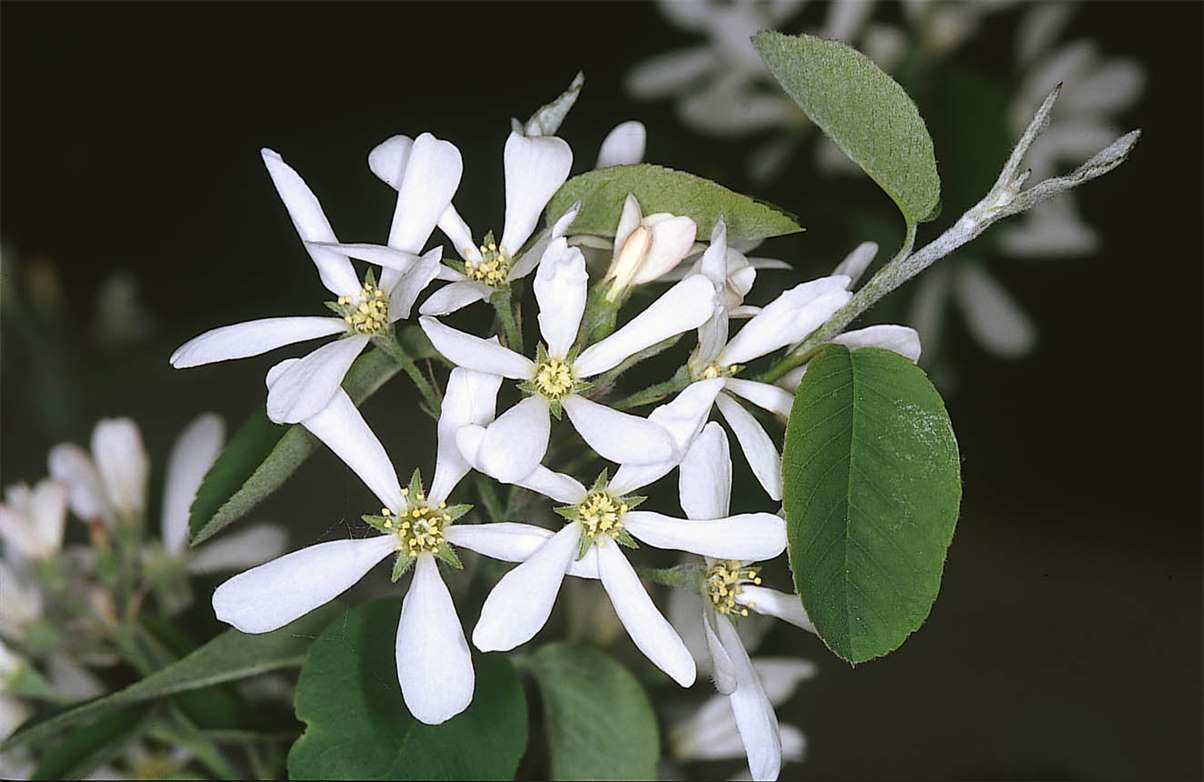
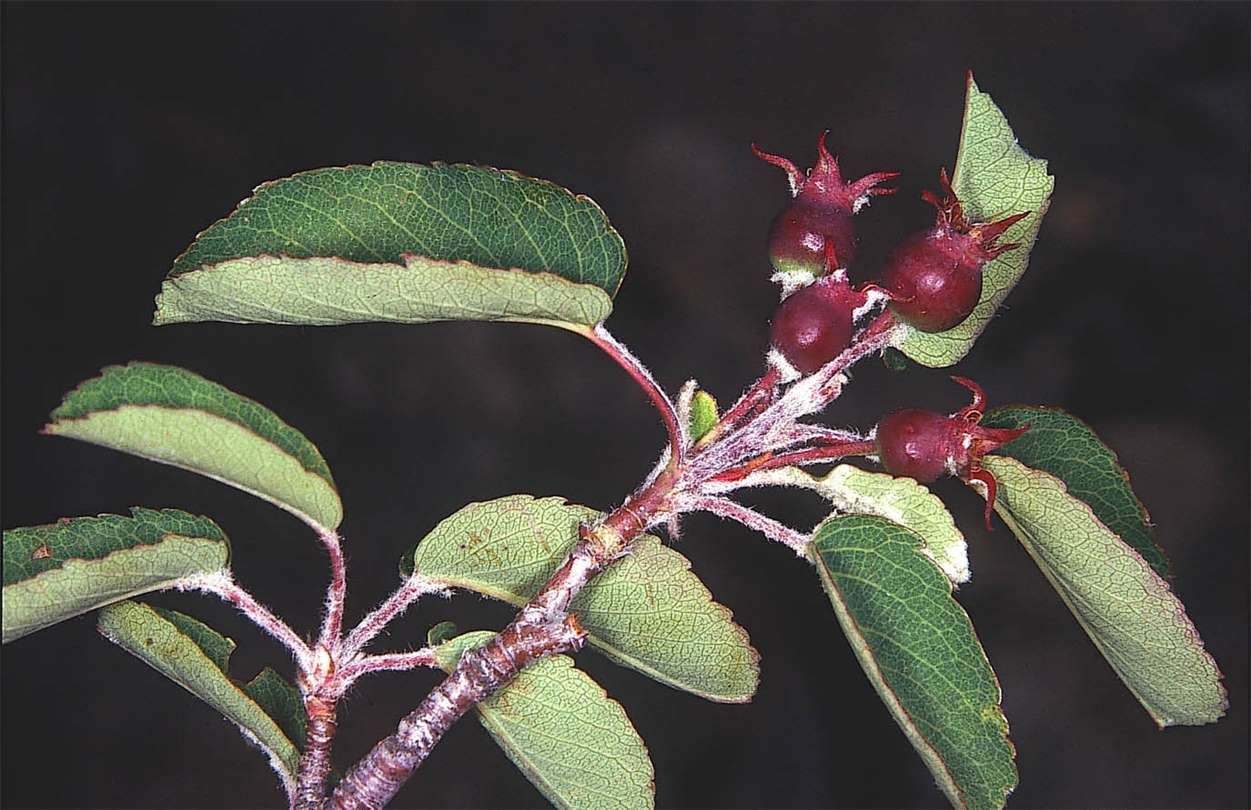
Shrub, deciduous, hermaphrodite, up to 2.5(3) m in height, ramose. Trunk poorly defined, with long and flexuous branches, reddish-brown or blackish-purple, older branches glabrous, younger branches covered with a villous-lanate indumentum, cottony, white, which flakes off. Leaves (2-5 × 2-3.5 cm) alternate, suborbicular, oval-elliptic or broadly oblong, rounded or slightly emarginate at the tip, rounded at the base, finely serrated or dentate margin, glabrous and bright green on the upper side, villous-lanate and whitish on the underside. Petiole well developed (5-15 mm), villous-lanate. Inflorescence terminal, in corymbiform racemes of 2-6 flowers each, with villous-lanate peduncles, whitish. Calyx with 5 sepals, triangular-lanceolate, 3-4mm long, tomentose. Corolla with 5 petals, narrowly obovate-lanceolate, 8-15 mm long, white, glabrous above and tomentose beneath. Stamens 20, with yellow-orange anthers. Fruit a subglobose pome, about 8-10 mm in diameter, red at first and finally blackish-blue, very characteristic for being crowned by persistent sepals. Seeds 5-10.
Flowering:
April to May.
Fruiting:
August to October.
Habitat:
Forests, thickets and rocky areas in medium and high altitude (1,000-2,900 m), on calcareous or siliceous terrain. In semiarid (then in shady or along waterways) to humid bioclimate, on mesomediterranean and supramediterranean floors.
Distribution:
Mediterranean region and Caucasus. In North Africa it is a rare species, although locally it can become slightly common. Distributed in Morocco (Middle Atlas and High Atlas) and in Algeria (eastern Tellian Atlas and Aures Massif).
Conservation status:
Rare but widely distributed species. Currently, it has not been assessed at a global level in the IUCN Red List of Threatened Species. In the Livre Rouge de la flore vasculaire du Maroc (Fennane, 2021) it has been considered as Least Concern (LC).