Erica ciliaris Loefl. ex L.
Eng.: Dorset heath. Spa.: Argaña, brezo de trampal. Fre.: Bruyère.
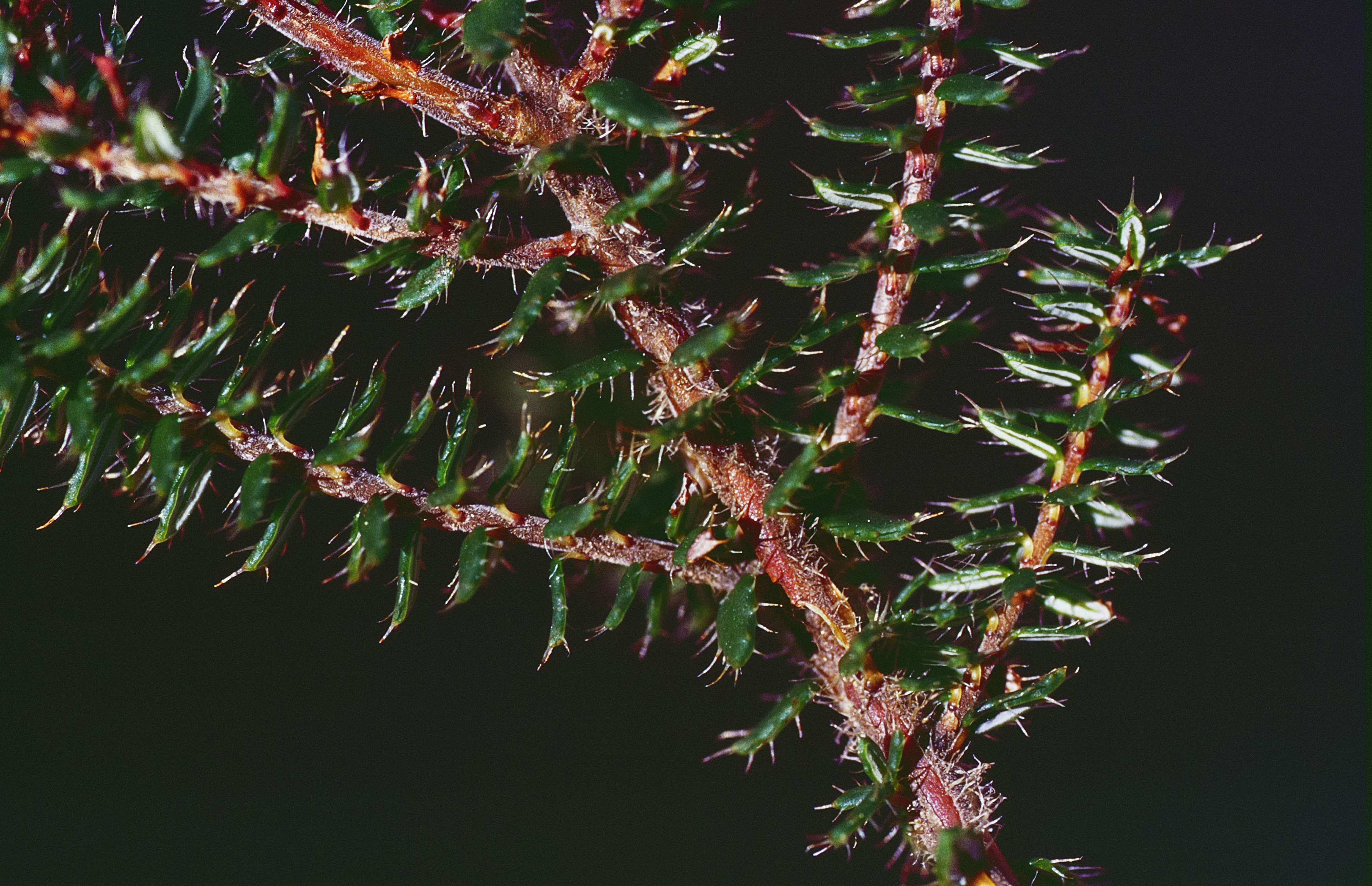
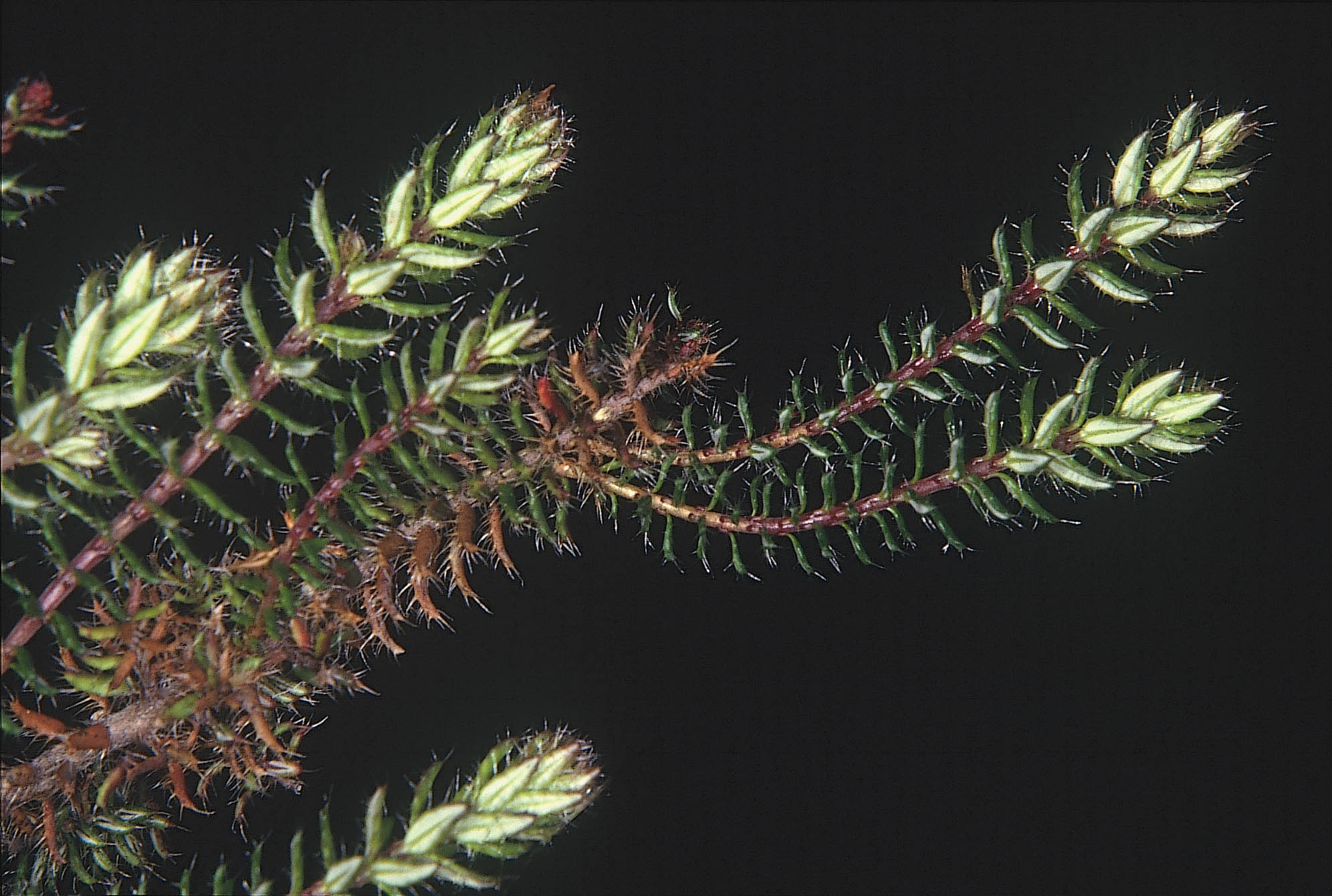
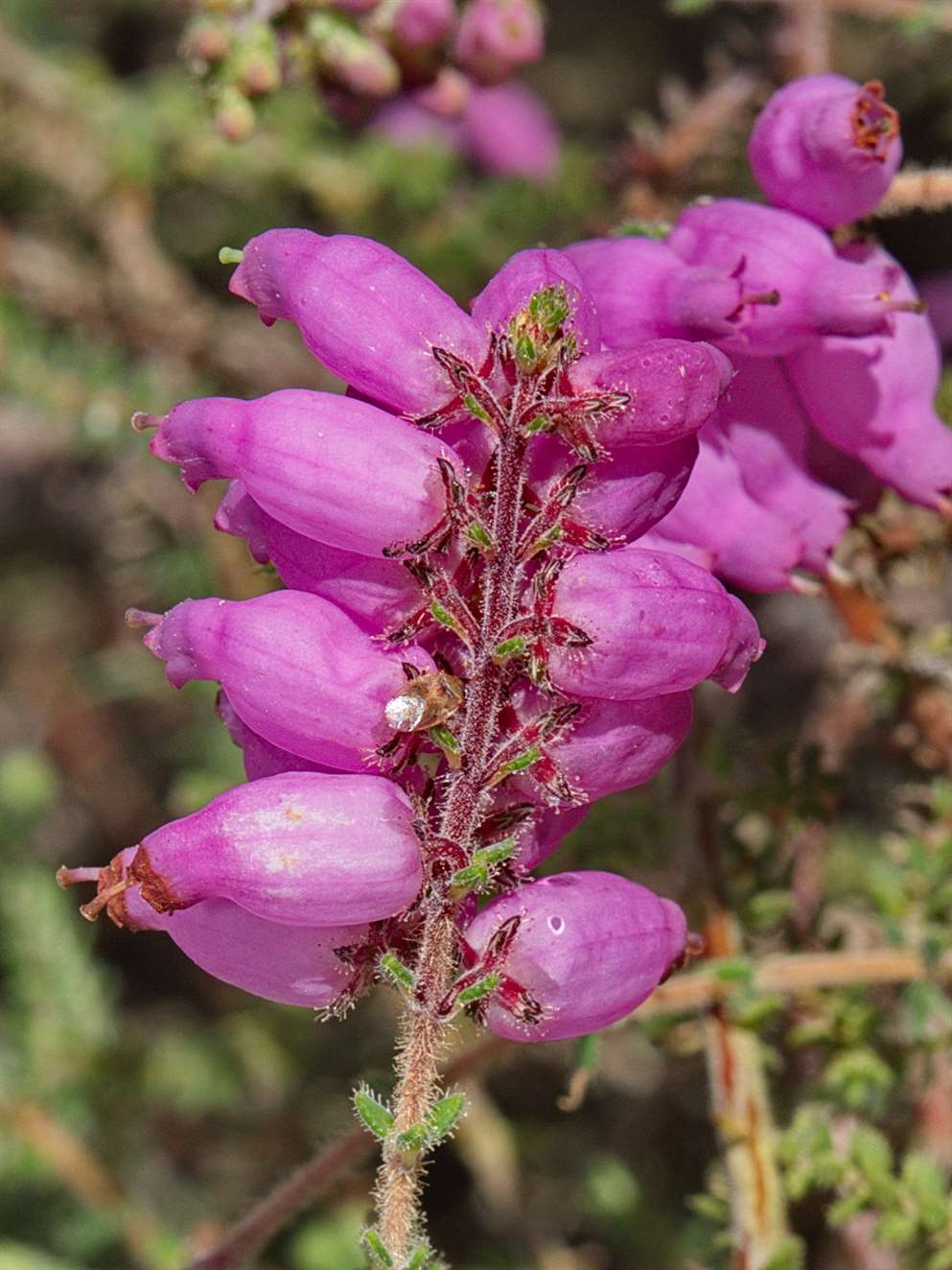
Evergreen shrub, hermaphrodite, up to 1 m in height and even taller, of irregular shape, very ramose. Branches upright, with greyish bark, younger branches ± angular. Branchlets reddish-brown, ± covered with short hairs, simple or with a gland at the apex, sometimes with long glanduliferous erect hairs. Leaves (2-5 × 0.8-2.5 mm), in whorls of 3-4, shortly petiolated, from lanceolate to ovate, rigid, with long hairs (cilia), simple or glanduliferous, up to 1 mm long, with slightly revolute margin, revealing a white band on the underside, dull green on the upper side and greenish-whitish on the underside. Inflorescence in spiciform lateral racemes, with numerous flowers, elongated, tenuously tapering towards the apex. Pedicel shorter than the corolla, villous, reddish, with 2 bracteoles on the upper half. Flowers with free sepals, ovate-lanceolate (1.5-4 mm long), greenish, villous (with simple or glanduliferous cilia) or glabrescent. Corolla from pink to purple, 6-13 mm, tubular, but with slightly widened base, slightly curved, tapered at the apex, with lobes slightly recurved backwards at the apex. Anthers included, without appendages. Fruit a subspherical capsule, 2.2-3 mm, glabrous, dehiscing in 4 valves. Seeds (0.4-0.5 mm), with very finely reticulated surface.
Flowering:
May to October.
Fruiting:
June to October.
Habitat:
Forests and thickets, heaths of heather and gorse (heathland), on acid soils, sometimes sandy or humid and peaty, always in humid environment, with mild winters; from sea level to about 1,800 m. It requires high edaphic moisture, therefore it will always grow on ± deep and moist soils, or in bare terrain close to rivers, streams, springs and other wetlands of ± permanent waters.
Distribution:
Western Europe and NW area of Morocco (most humid mountains of the Tingitana Peninsula).
Conservation status:
Common and widespread species, although in North Africa it is very rare. Currently, it has not been assessed at a global level in the IUCN Red List of Threatened Species. In the Livre Rouge de la flore vasculaire du Maroc (Fennane, 2021) it has been considered as Vulnerable (VU).