Malva stenopetala (Coss. & Durieu ex Batt.) Soldano, Banfi & Galasso
Lavatera stenopetala Batt., M. stenopetala (Batt.) Valdés
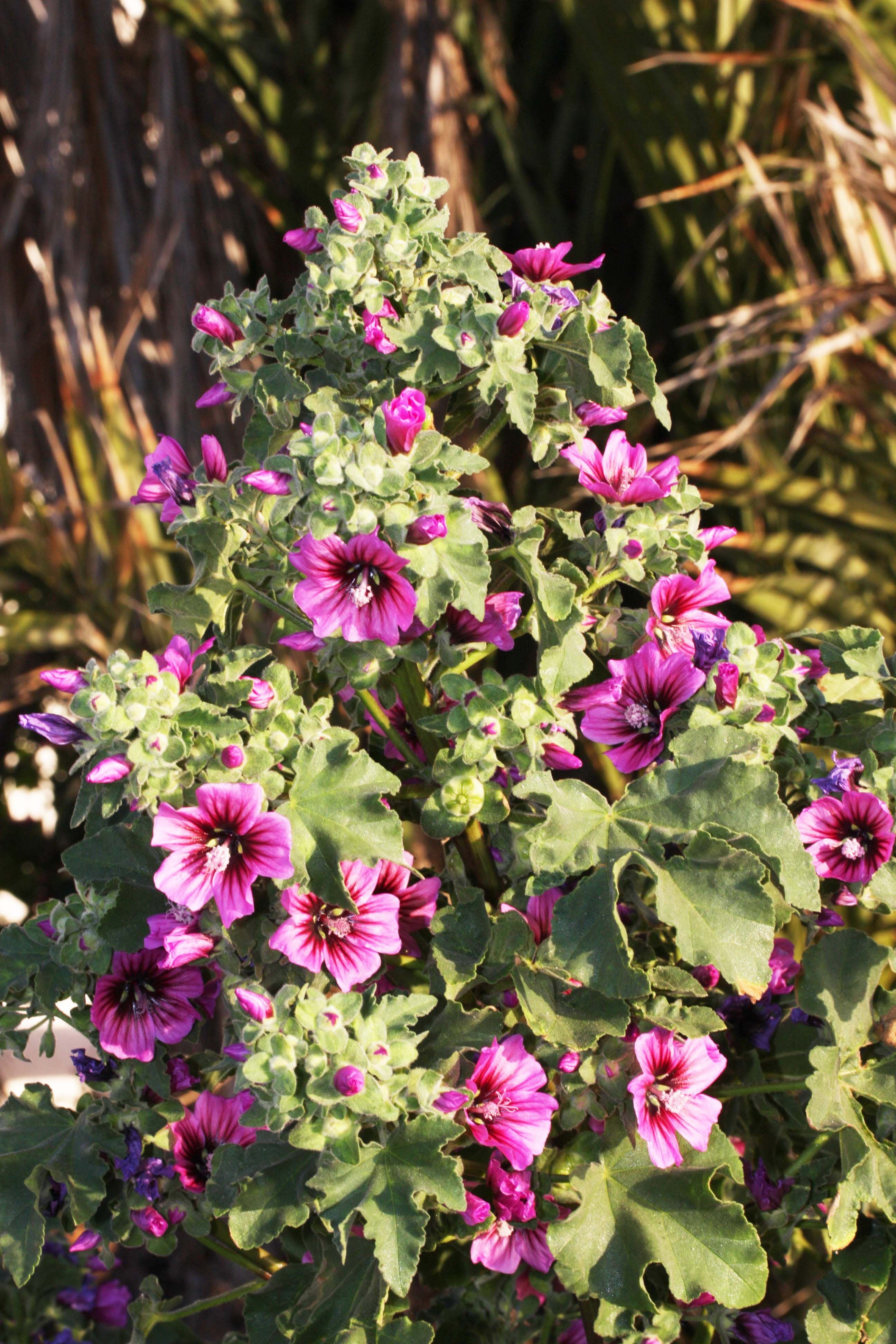
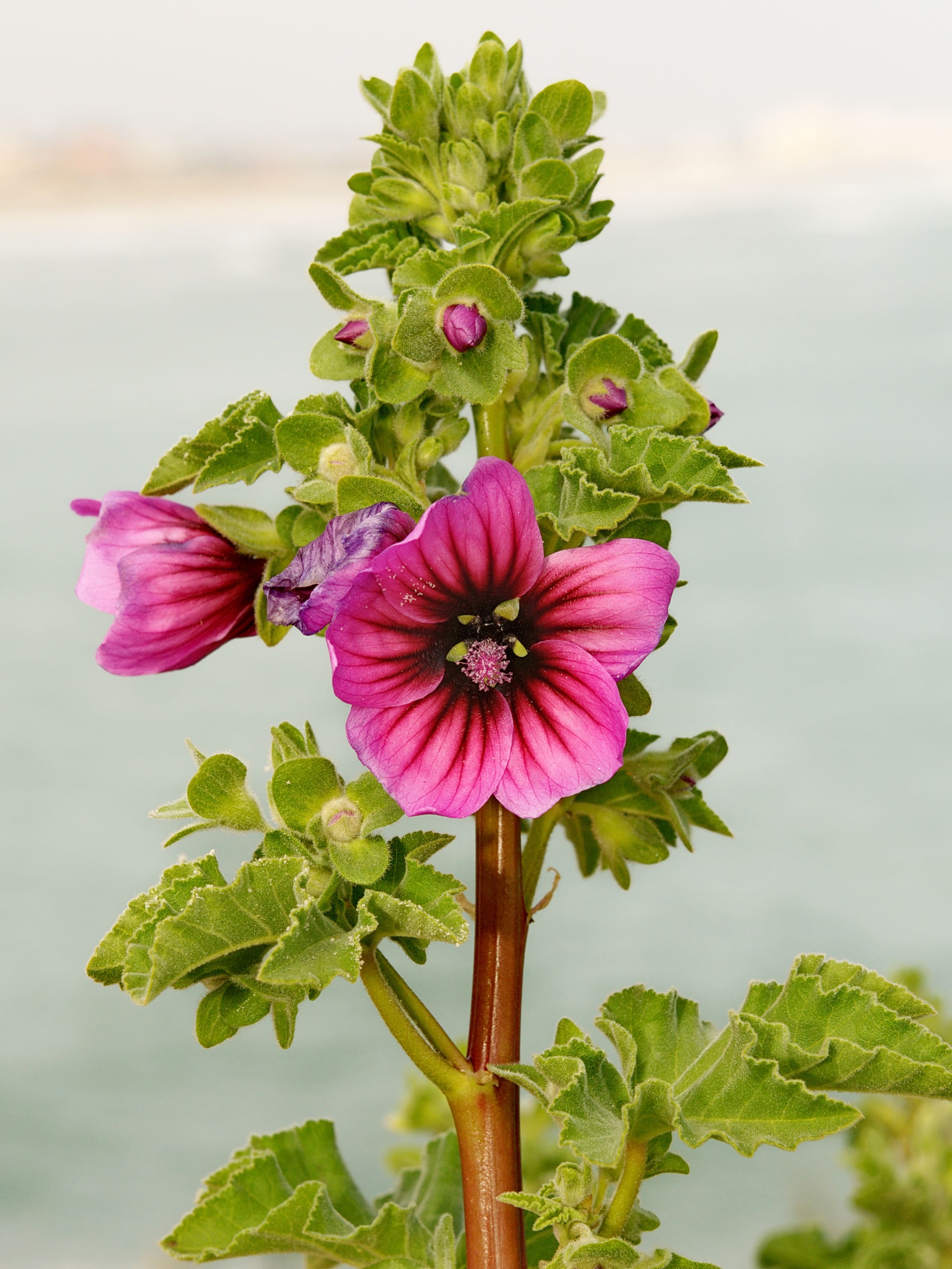
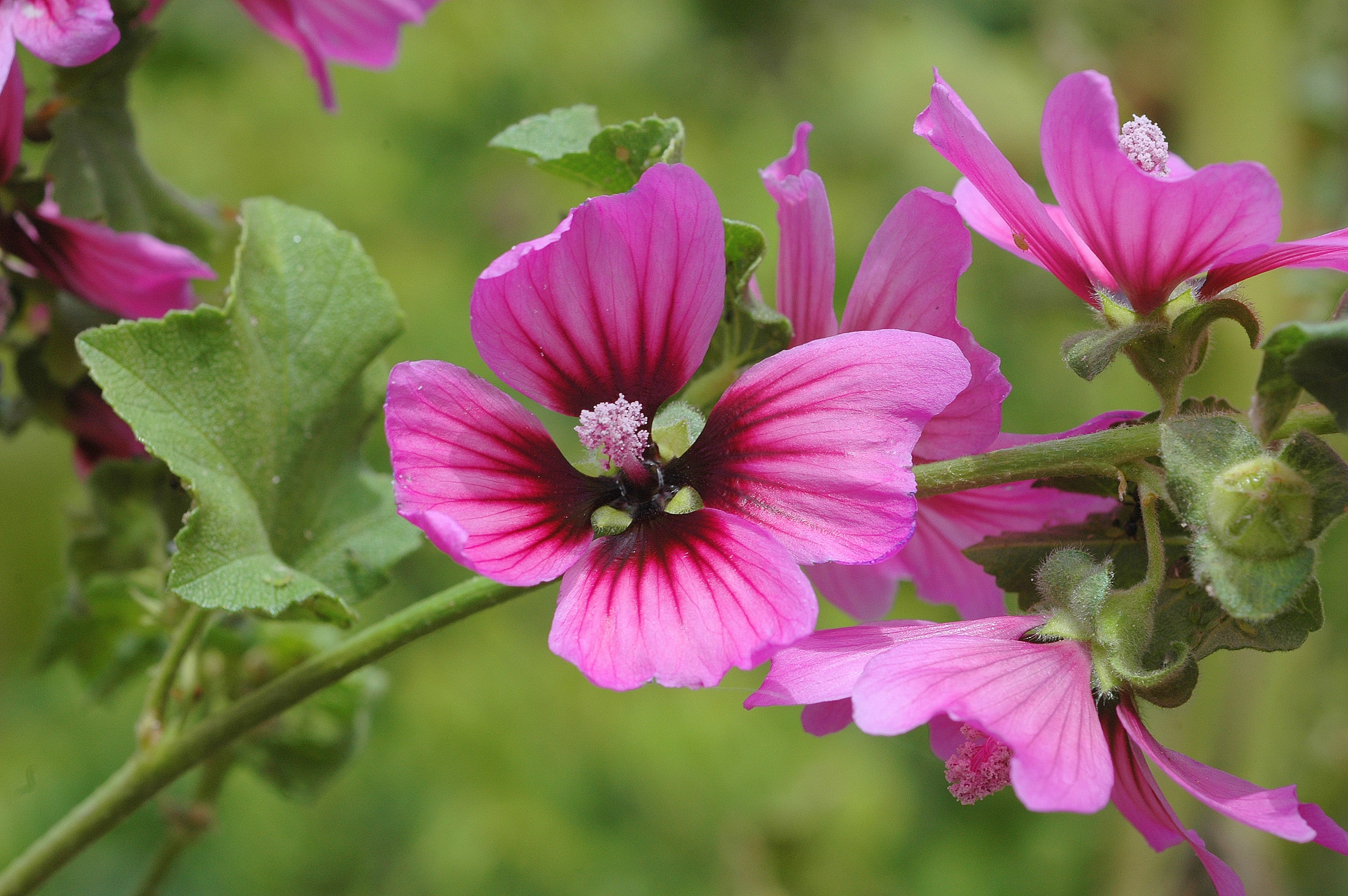
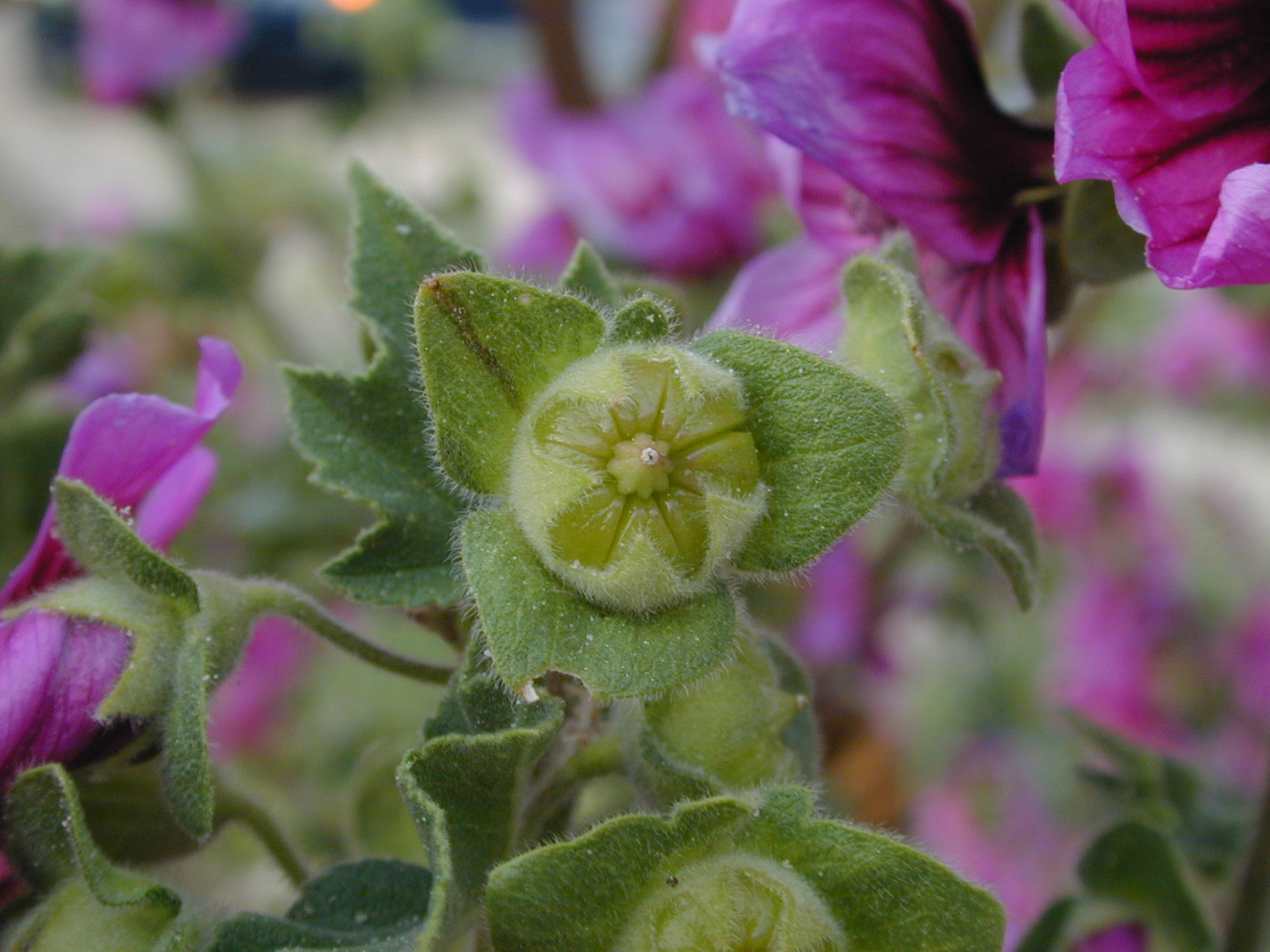
Perennial herb or suffrutex, up to 2 m in height, lignified at the base, branched, slightly pubescent. Leaves of 2 types: leaves in the middle area of the stems with ovate leaf blade, 3-5 lobed, crenate to dentate, cordate, pubescent on both sides, 4-13 × 4-12 cm; upper leaves with leaf blade smaller than that of the middle leaves, with 3 lobes (central lobe longer than the lateral lobes), subcordate to subcuneate; all leaves with petiole longer than leaf blade. Inflorescence in racemes. Flowers solitary or arranged in racemes of 2-4 flowers, pedicellate; bract 1, caducous. Epicalyx cup-shaped, with 3 parts, 3-3.5(4) mm, long, ovate, obtuse at the apex, pubescent. Calyx larger than the epicalyx (3-4 times), with 5 sepals, 9-11(12) mm long, with triangular lobes, fused in their lower third. Petals bilobed, cuneate at the base, (2)4-6 cm long, dark pink, claws pink. Anthers reniform. Pollen whitish. Staminal column pubescent, pinkish to whitish. Styles smooth with pink stigmas. Schizocarp with 12-18 mericarps, glabrous, smooth, from striate to verrucose and with very thin lateral walls; mericarps completely enclose the seed and, at maturity, they separate from the fruit axis, leaving 1 membrane between each pair of mericarps. Seed from brown to black, 1.8 × 2.8 mm, smooth to minutely punctate, reniform.
Flowering:
February to June.
Fruiting:
April to August.
Habitat:
April to August.
Distribution:
Algerian-Tunisian endemic, found on clayey soils S of the humid mountains of the Blida Atlas and Kabilia Atlas, in Algeria, and in the Jebel el Mellaha (near Menzel Burguiba) in Tunisia.
Observations:
A further large-sized species in North Africa is M. arborea (L.) Webb & Berthel. (Lavatera arborea L.); a perennial plant with slightly or not lignified stems, but large in size, up to 2(3) m in height, leaves with 5-7 lobes, epicalyx parts longer than the calyx and violet flowers in groups of 2-8, with peduncles slightly shorter than the petiole of the leaf; in North Africa it grows in the littoral and sublittoral zones of Algeria, in the E of Algiers and in the N corner of Tunisia.
Conservation status:
Fairly rare species but widely distributed. Currently, they have not been assessed at a global level in the IUCN Red List of Threatened Species.