Quercus afares Pomel
Q. castaneifolia Coss. ex J. Gay var. algeriensis (C.A. Mey.) Bean, Q. castaneifolia subsp. afares (Pomel) Maire
Eng.: Afares oak. Spa.: Roble afares. Fre.: Chêne afarès. Ara.: Afares, ezzen el maklub. Tam.: Afares, techt, test.
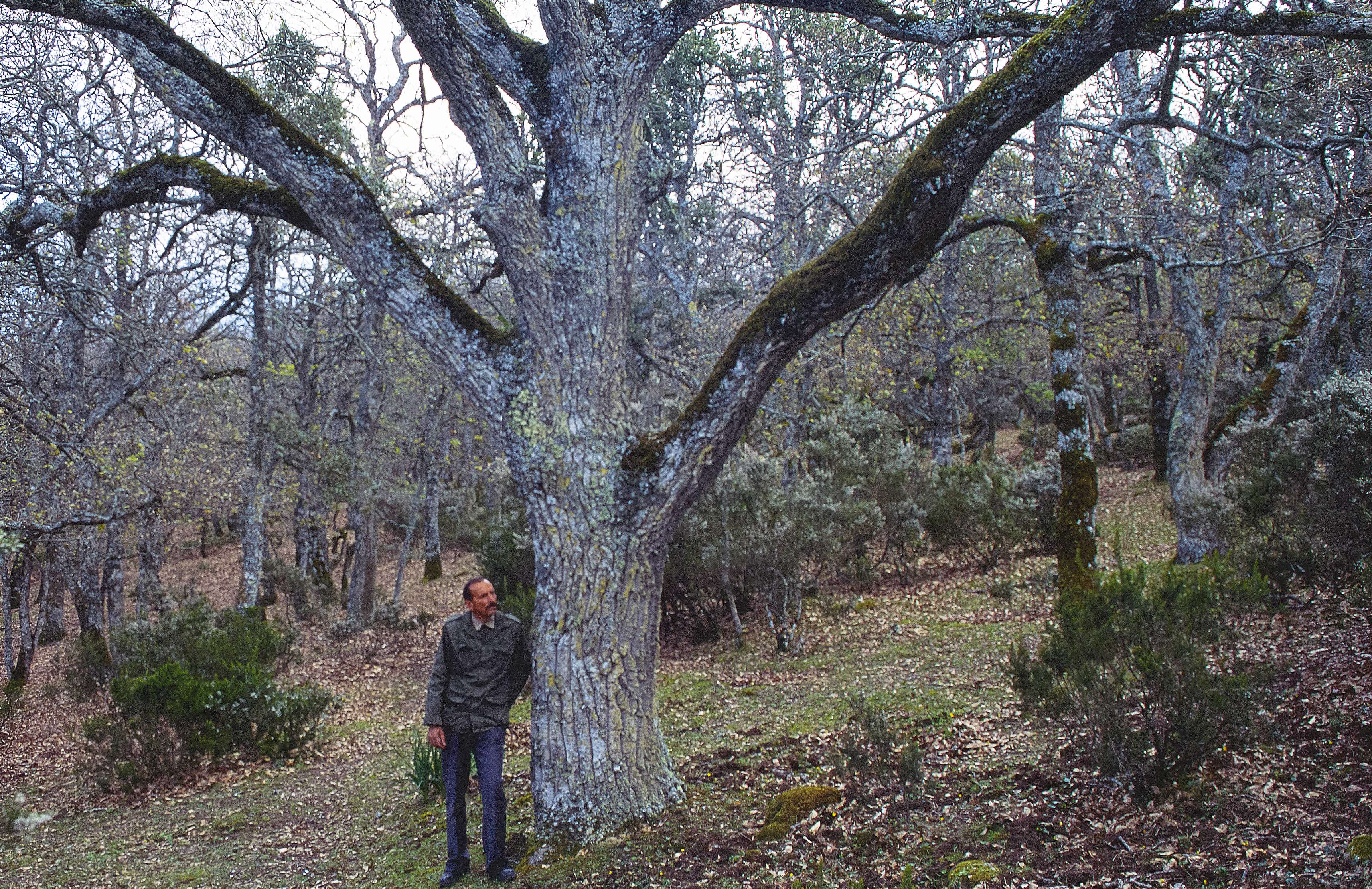
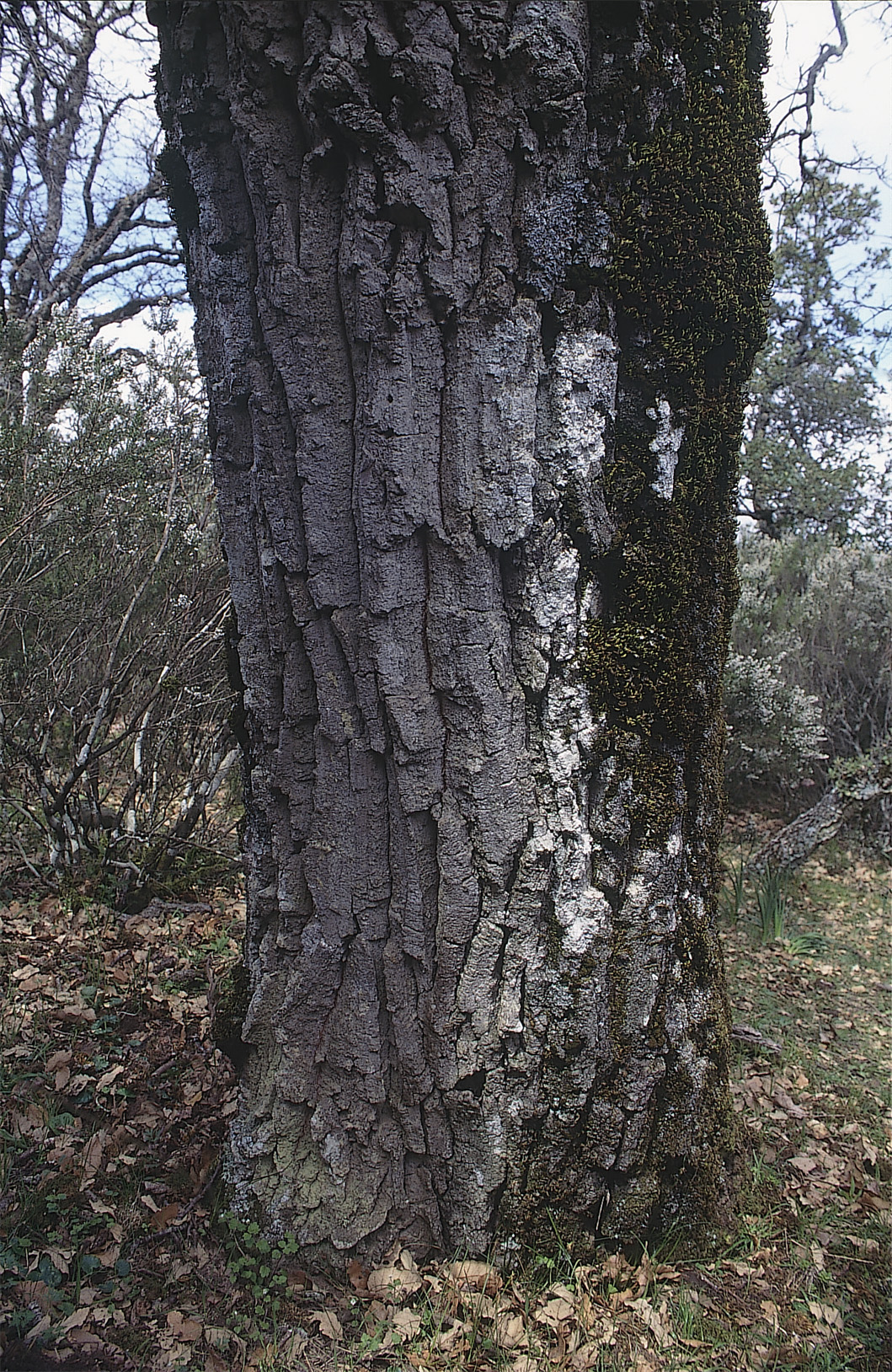
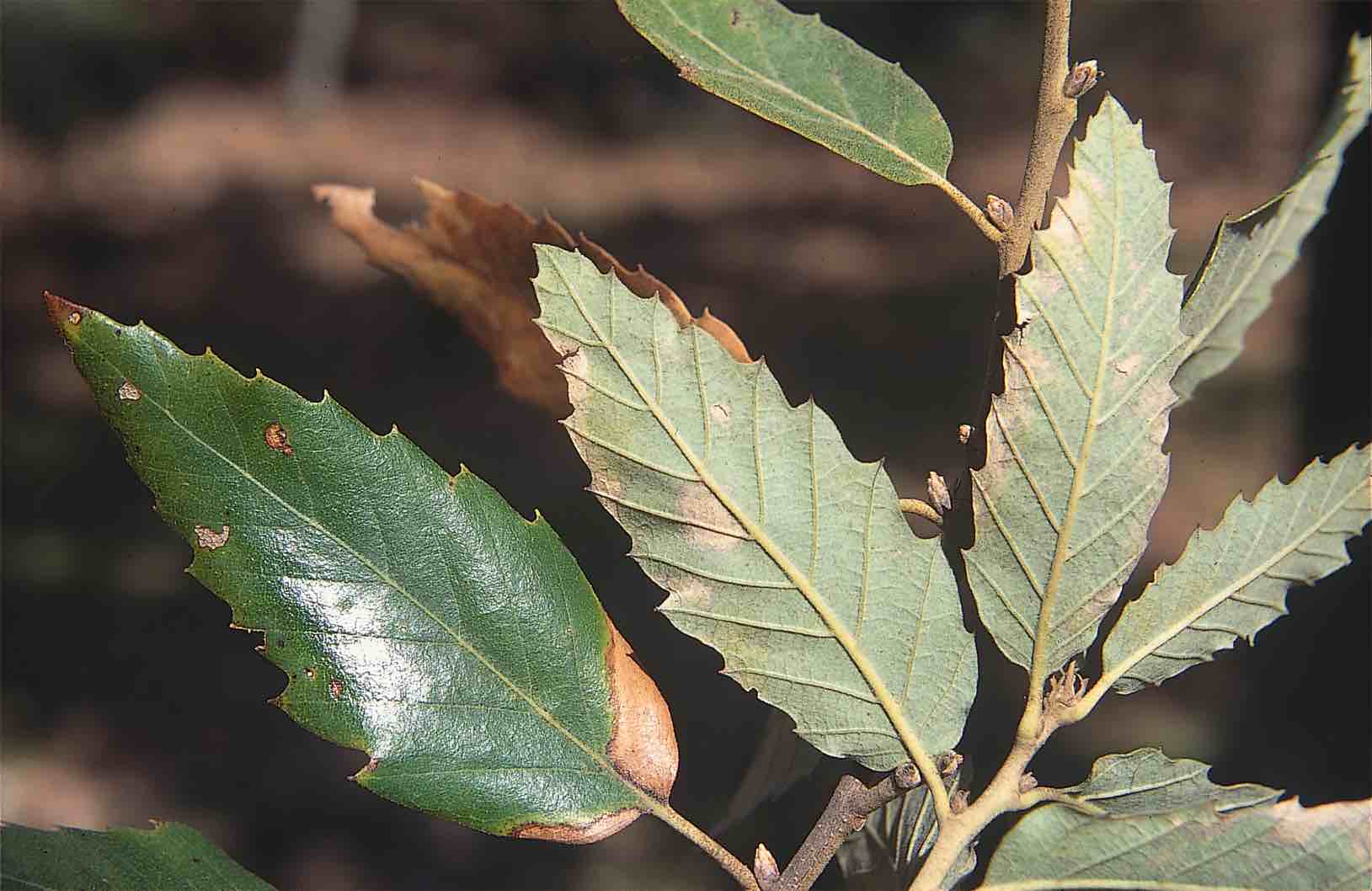
Deciduous tree, monoecious, up to 25(30) m in height, pyramidal in overall appearance and trunk up to 1 m in diameter, red-brown bark fissured longitudinally. Branches generally extended at first, then upright. Branchlets brown-blackish, tomentose when younger. Leaves (5-19 cm × 1.4-9), alternate, deciduous, ± oval-lanceolate, with serrated margin, leaves similar to the chestnut, ± coriaceous, dark green and bright on the upper side and finely tomentose-whitish on the underside, with tomentose petiole 0.5-2 cm. Male flowers in orange and pendant catkins, 5-7 cm, numerous. Female inflorescences on short spikes, erect, with 7-9 flowers. Fruit (the acorn) an ovoid achene, in groups of 2-5 on a peduncle thicker than the adjacent branchlets, with chestnut-reddish nut and cupule covered by oval or oblong scales, tomentose, very elongated (up to 12 mm ), imbricated, lower scales only oppressed, the other scales ± upright, protruding significantly above the edge of the cupule.
Flowering:
April to June.
Fruiting:
October to November of the second year.
Habitat:
Siliceous mountains in humid and subhumid bioclimate, 200-1,600 m. It forms somewhat pure forests at 1,200-1600 m; below this altitude it grows mixed in with Q. suber, with which it hybridises frequently.
Distribution:
Endemic to Algeria and Tunisia, growing in the mountains of the coastal regions, fragmented from the Djurdjura Massif to the mountains of Aïn Draham.
Conservation status:
Rare species, with a small distribution area. Currently, it has not been assessed at a global level in the IUCN Red List of Threatened Species. In Algeria it is included in the List of protected non cultivated flora (Executive Decree 12-03 on 4-Jan-2012). In Tunisia it is included in its List of native species that are rare and threatened with extinction (Order of the Ministry of Agriculture and Water Resources, 19-July-2006).