Chamaebuxus balansae (Coss.) Stapf
Polygala balansae Coss., Polygaloides balansae (Coss.) O. Schwarz
Eng.: Thorny milkwort. Spa.: Polígala espinosa. Fre.: Polygale épineuse. Ara.: Tmeur el rhorab, igyi. Tam.: N’lifa, tansil.
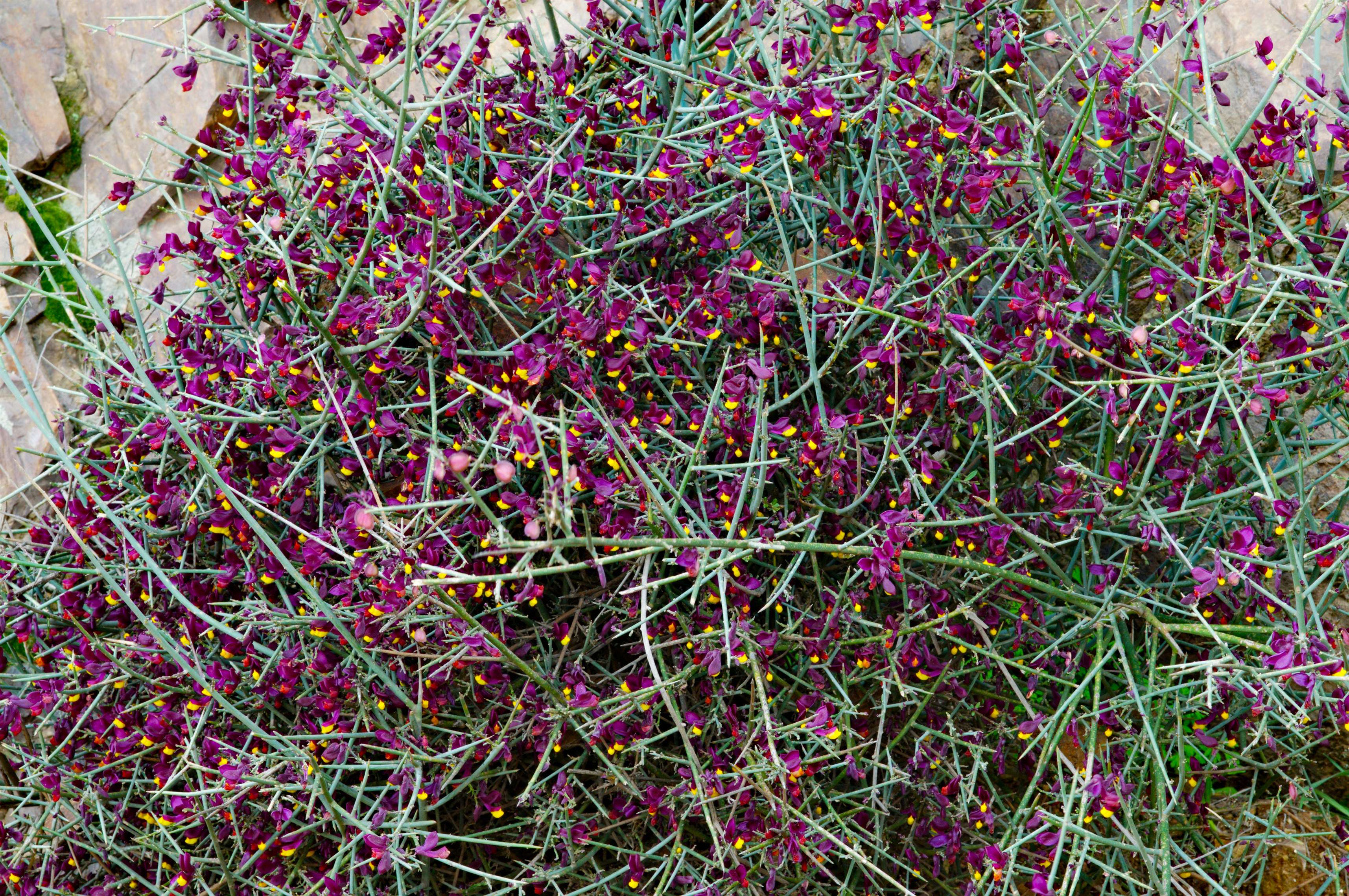
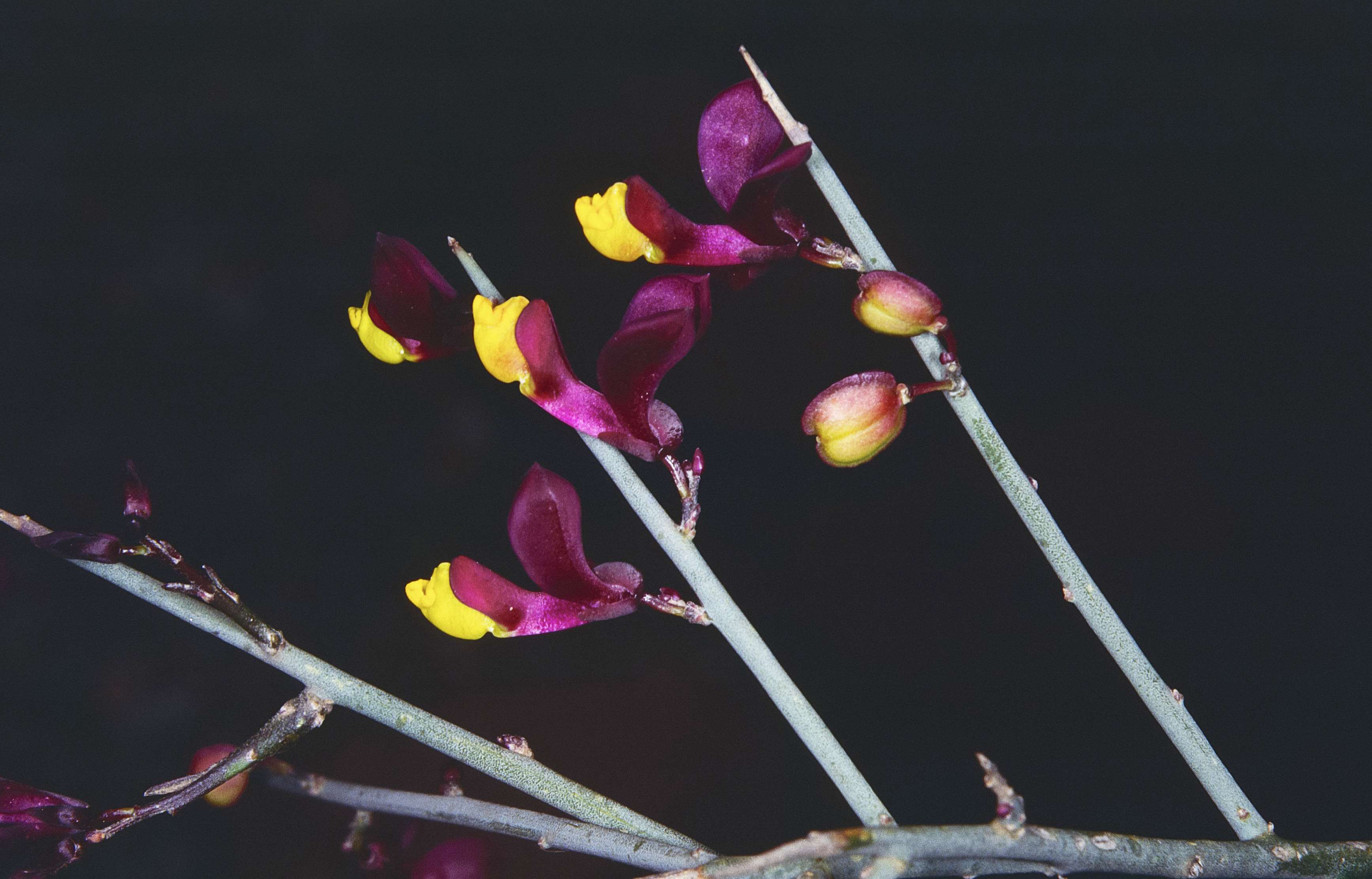
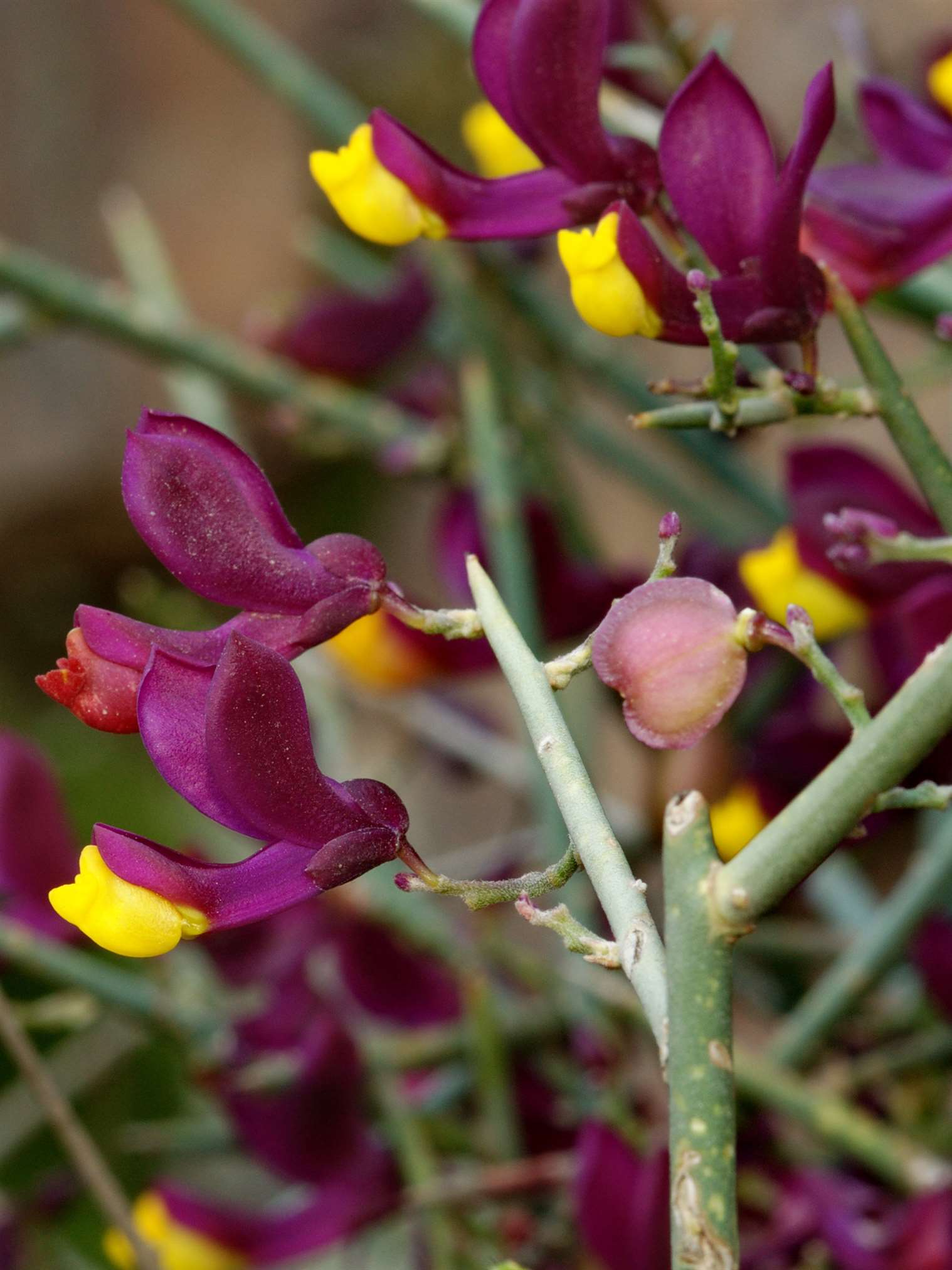
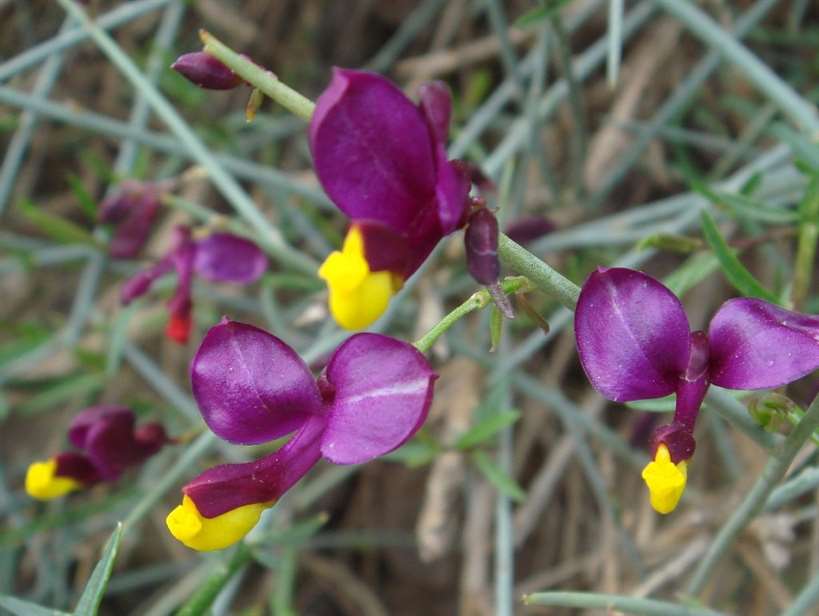
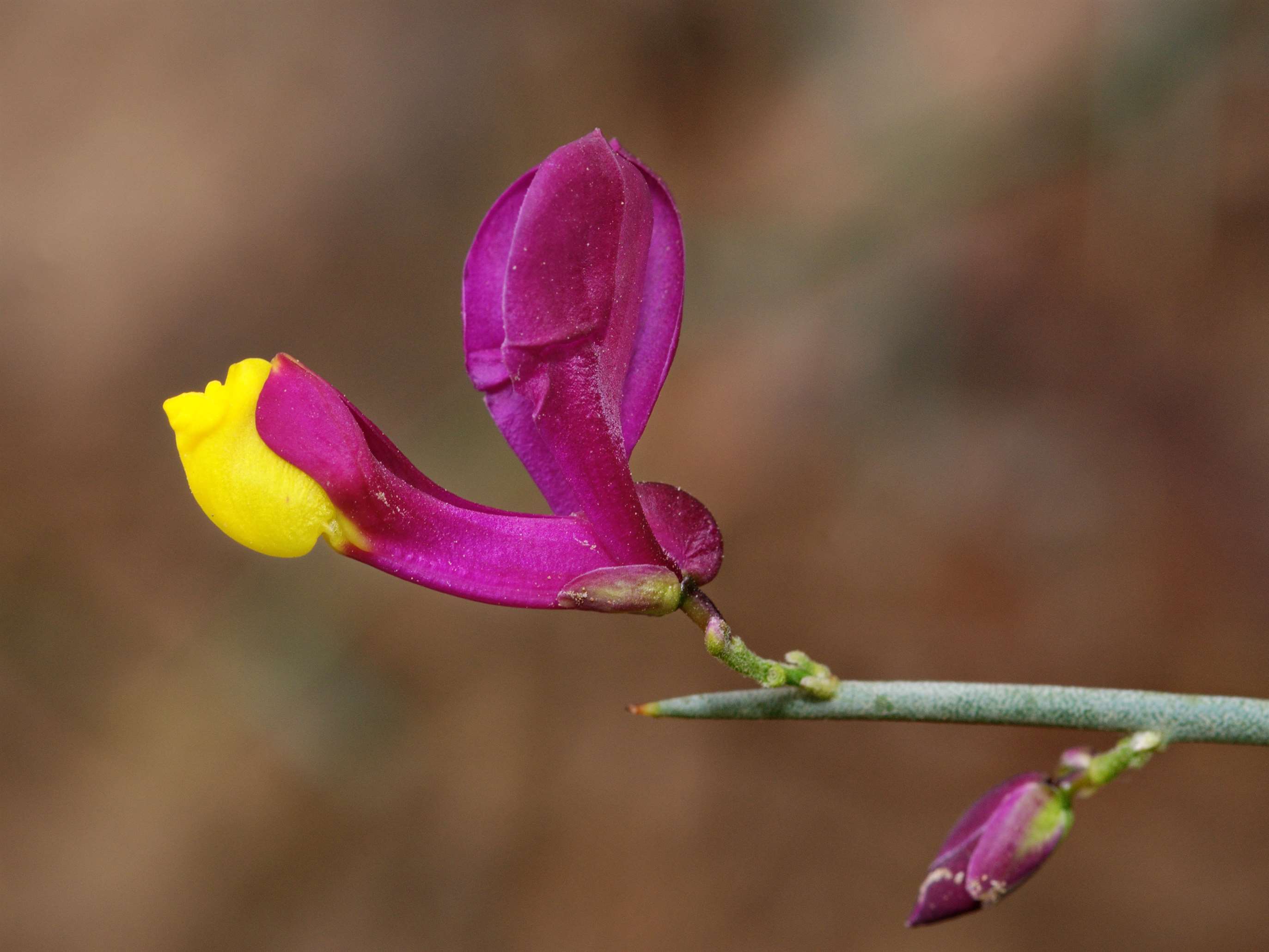
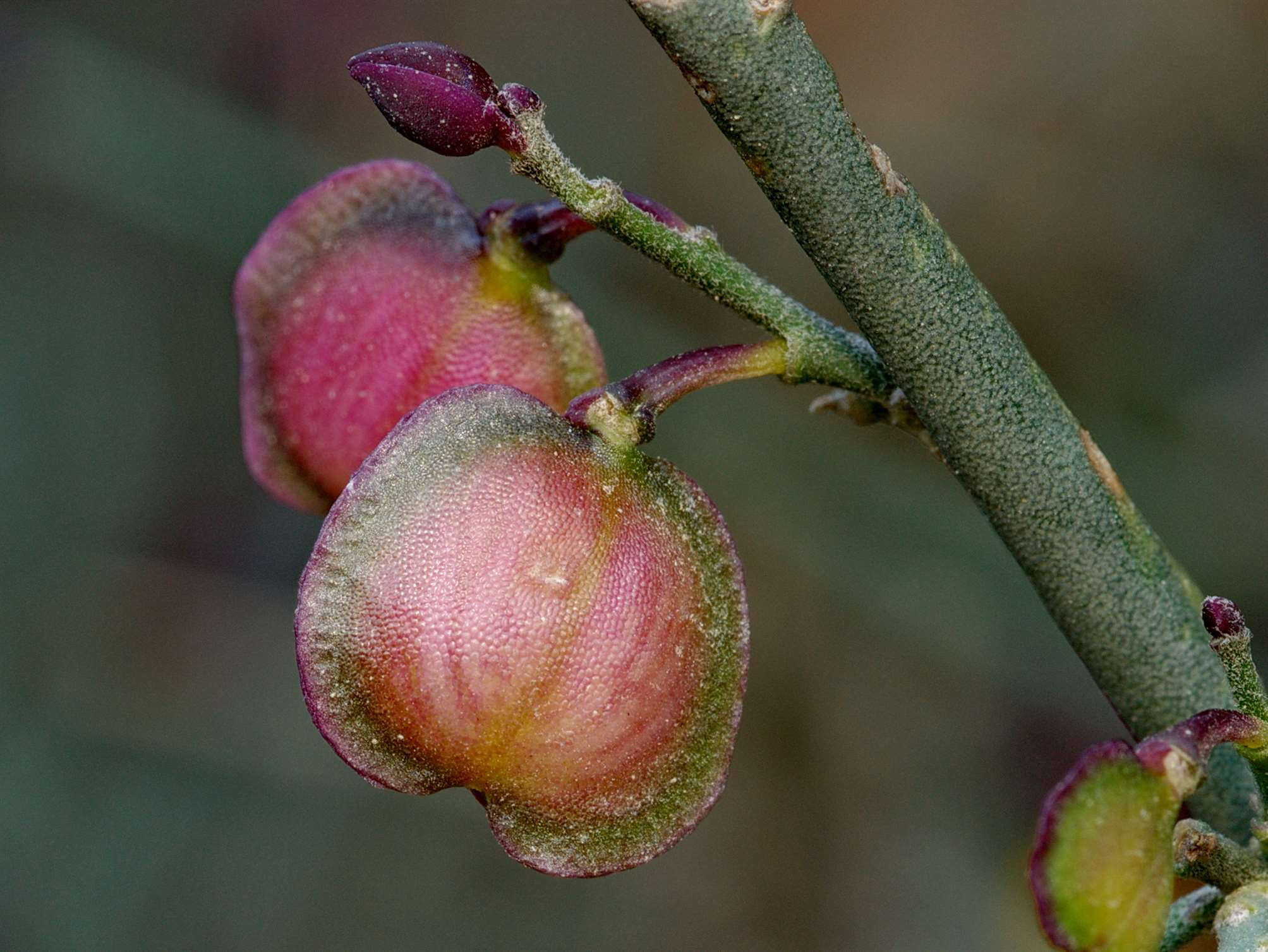
Spiny subshrub up to 0.8(1.5) m in height, ± erect, very ramose, with branching usually intricate. Trunk woody, branched from the base. Branches woody, rigid, glabrous, greenish-whitish or greenish-blueish, with rigid lateral and terminal spines, strong and sharp, pulverulent. Leaves small, oblong-linear, concave, coriaceous, glabrous, deciduous. Inflorescence in terminal and lateral racemes, with a spinescent axis, with up to 4 flowers, but frequently solitary or in pairs. Calyx with 5 caducous sepals: 3 outer sepals smaller than 2 inner ones which are petaloid (wings). Corolla intensely dark purple in colour; appears butterfly-shaped, with 3 petals, keel wide with yellow apex; upper petals smaller than the keel and fused to the base of staminal tube; crest, characteristic of the genus, is underdeveloped. Fruit a glabrous and fleshy capsule, suborbicular, highly compressed, with narrow wing, membranous and emarginate, green at first, then turning brown-purple; capsules emerge and mature at the bottom of the raceme, while the raceme is still flowering towards the top.
Flowering:
March to June.
Fruiting:
April to July; from April to June flowers and ripe fruits can be seen in the same raceme.
Habitat:
Cleared forests, thickets and rocky outcrops in low and medium mountains (300-1,800 m). In semiarid to subhumid bioclimate, on inframediterranean and thermomediterranean floors.
Distribution:
Southern Spain (Coast of Almuñécar, Granada) and SW Morocco. High Atlas, western Anti-Atlas (Num River, S of Ifni) and mountains of Sus, reaching from the NE in the Middle Atlas (near Uauizert) and from the SW to the mountains close to the lower Drâa.
Conservation status:
A uncommon species, but it is not considered threatened. Currently, it has not been assessed at a global level in the IUCN Red List of Threatened Species. In the Livre Rouge de la flore vasculaire du Maroc (Fennane, 2021) it has been considered as Near Threatened (NT).