Coriaria myrtifolia L.
Eng.: Mediterranean coriaria, redul. Spa.: Emborrachacabras, garapalo, redor. Fre.: Corroyère, redoul. Ara.: Ruida, redul. Tam.: Aruz, ruiza, aruaz, arwaz.
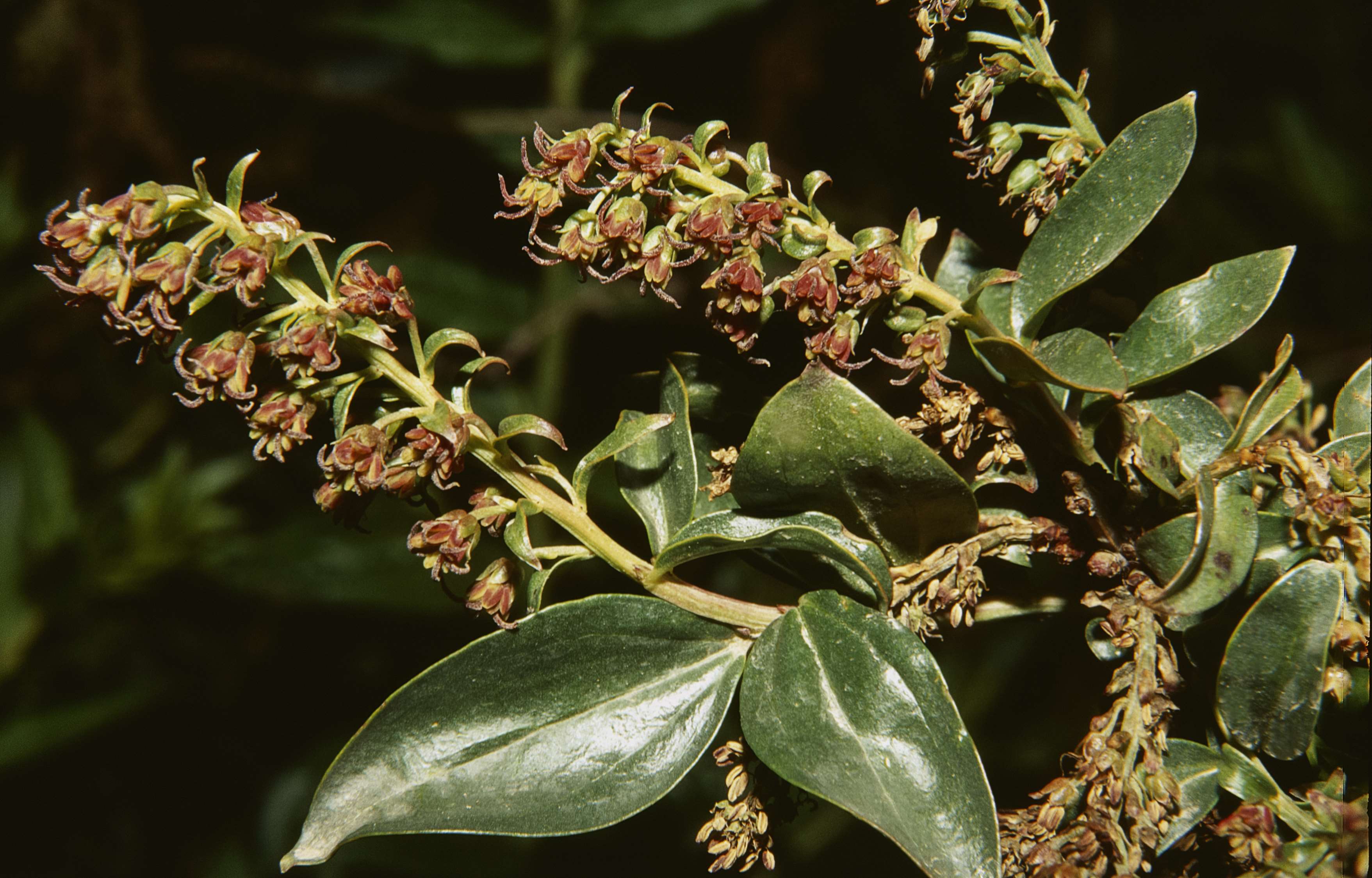
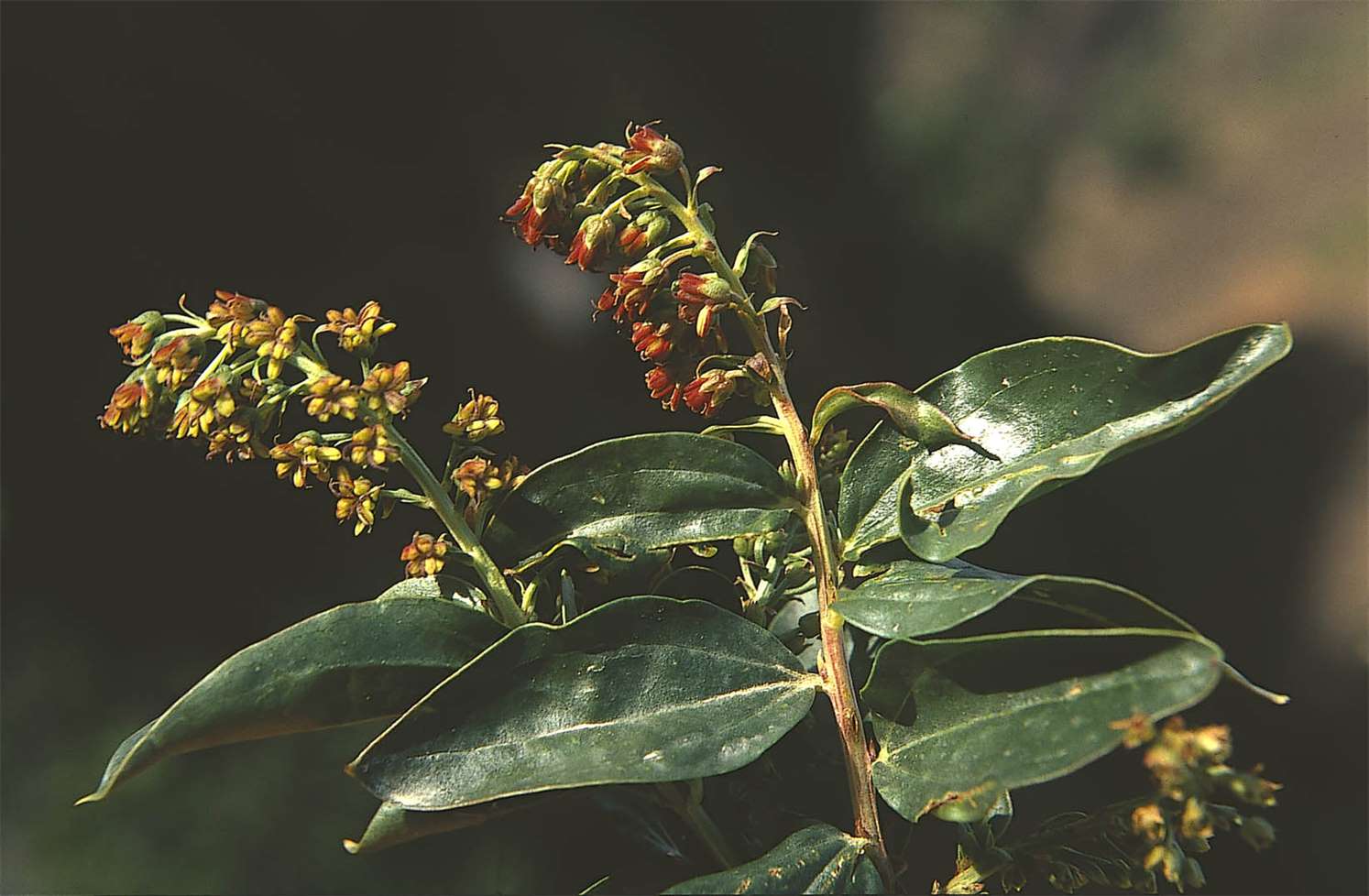
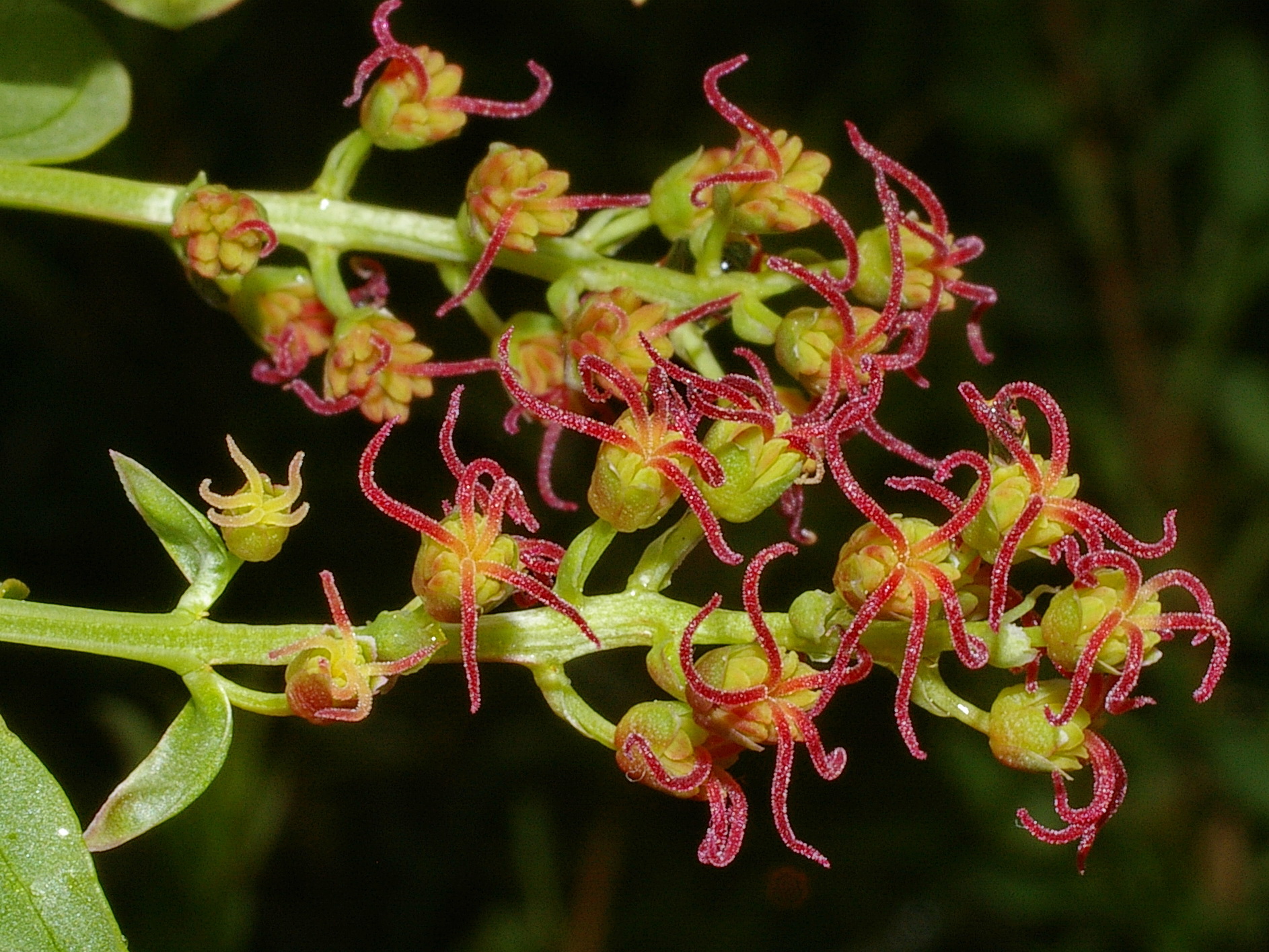
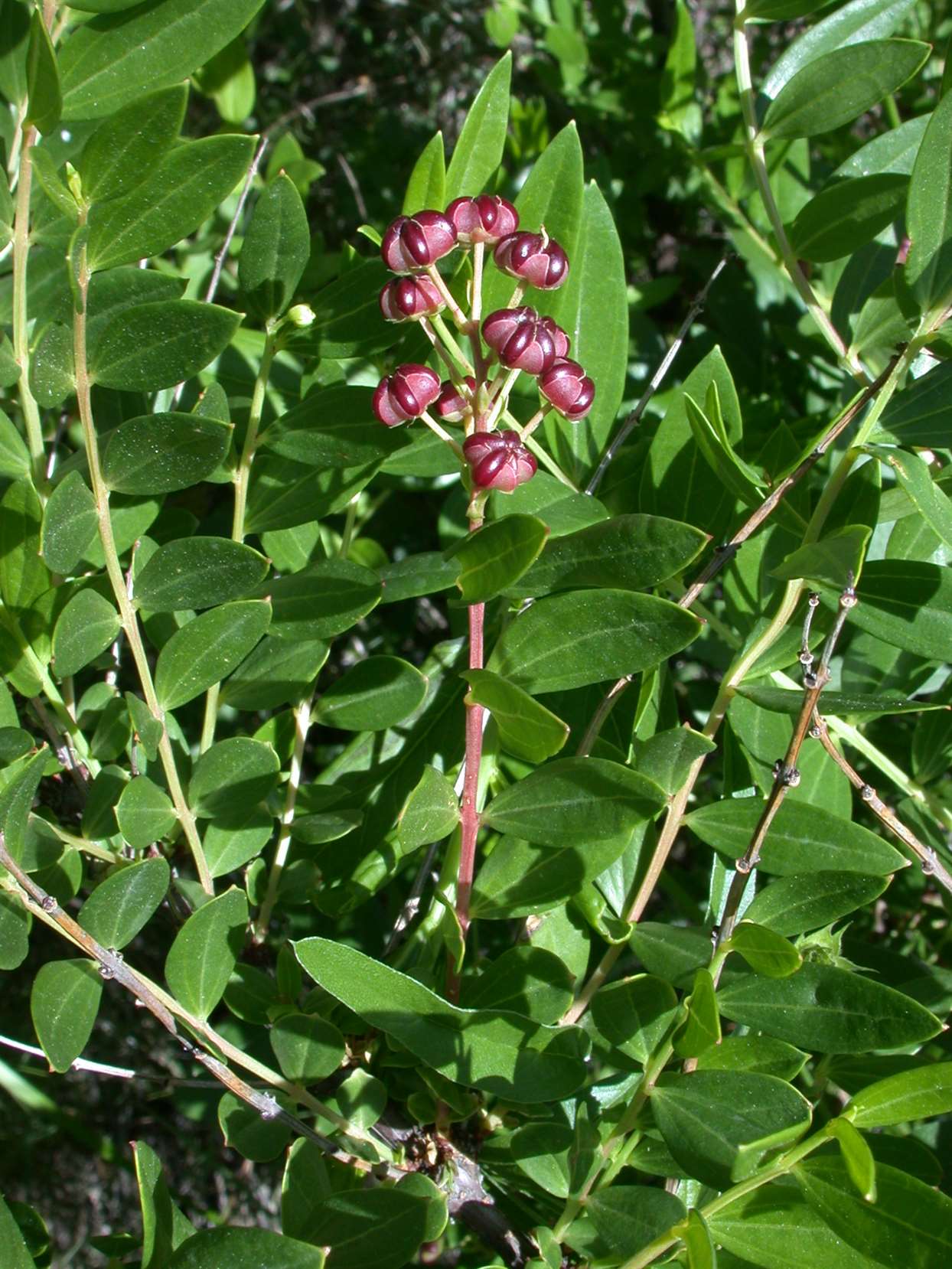
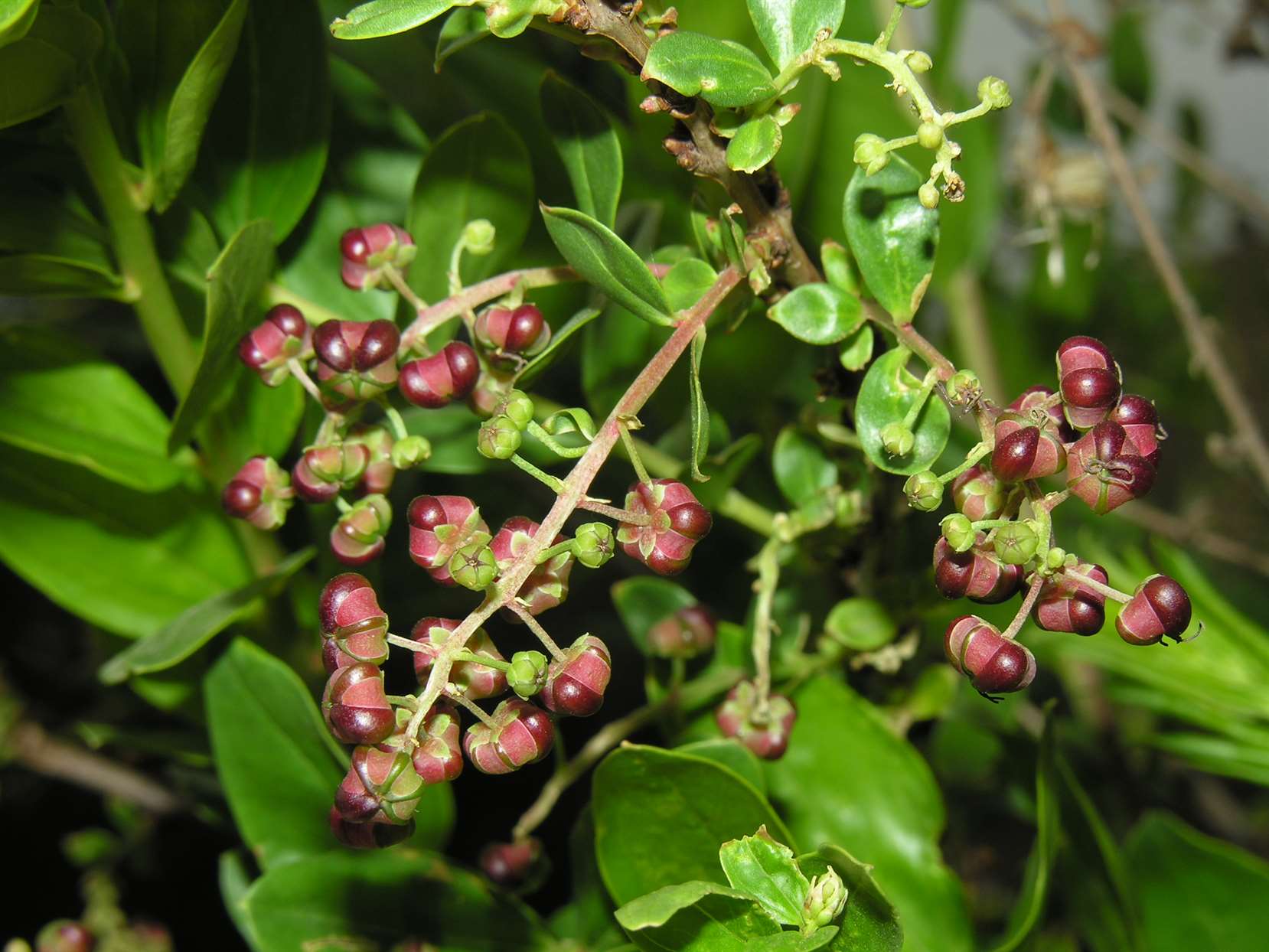
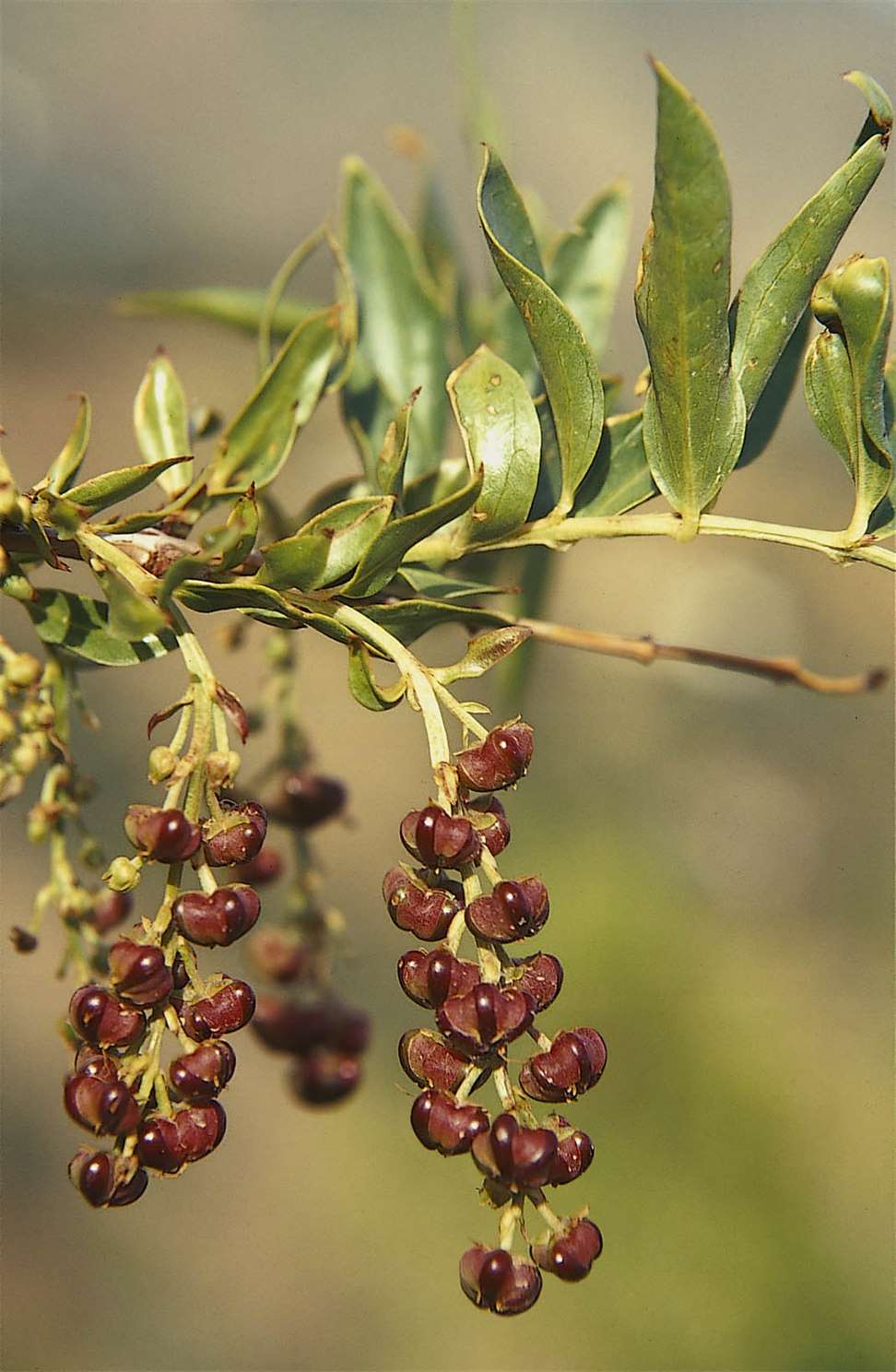
Evergreen shrub, trimonoecious, with unisexual and hermaphrodite flowers on one or separate plants. Up to 2 m in height, very ramose with dense foliage and flexible branches, pendulous. Stems and older branches with greyish-brown bark, slightly fissured. Young branches with 4 longitudinal ribs that make them appear almost subtetragonal, grey, branches from the current year greenish. Leaves opposite or in whorls of 3-4, simple (3-8 × 1-3.5 cm), ovate-lanceolate, acute, with a short petiole, with an entire margin and 3 main nearly parallel veins, coriaceous, hairless, intense green on both sides; without stipules. Inflorescence racemiform and terminal. Flowers pentamerous, unisexual or hermaphrodite, with a long peduncle. Calyx with 5 sepals, free, oval-lanceolate, green with reddish tints. Corolla with 5 petals slightly shorter than the sepals, oval-oblong, green in the centre, with a red margin. Stamens 10, anthers reddish. Gynoecium of 5 free carpels, with 5 reddish very long and colourful stigmas. Fruit consists of 5 black achenes enclosed by the sepals and petals, which have grown, have become fleshy and embrace the fruit as fluted ribs; these contrast sharply with the black colour of the achenes: they are first green, then violet and finally bright red. The mechanism of seed dispersal is most curious: each achene contains a single seed that gets expelled several meters after the suddenly opening.
Flowering:
March to June.
Fruiting:
August to September.
Habitat:
Forests and thickets with very humid soil generally close to water courses. In semiarid (in which case close to water) to humid bioclimate, and in mesomediterranean and thermomediterranean floors.
Distribution:
Central-western Mediterranean region. In North Africa it has a restricted distribution and is rare: central-western Rif (from Targuist and Bured to the Tingitana Peninsula) and central-eastern Tellian Atlas (Algiers region and Small Kabylia).
Conservation status:
Relatively rare but widely distributed species, not considered threatened. Currently, it has not been assessed at a global level in the IUCN Red List of Threatened Species.