Salix eleagnos Scop.
S. incana Schrank, S. angustifolia Poir.
Eng.: Bitter willow, olive willow, hoary willow, rosemary willow. Spa.: Sauce, sarga, sargatillo. Fre.: Saule à feuilles étroites.
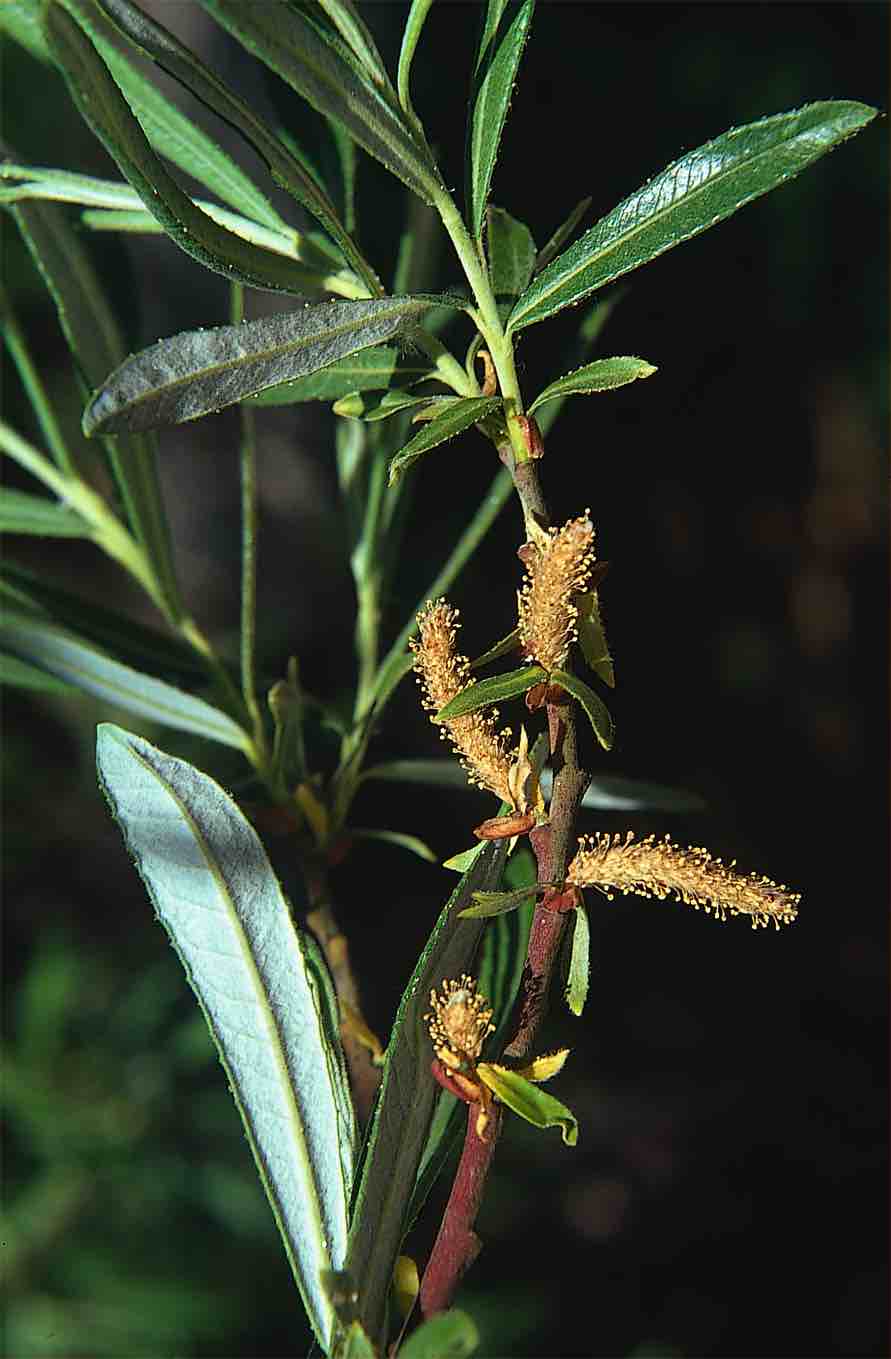
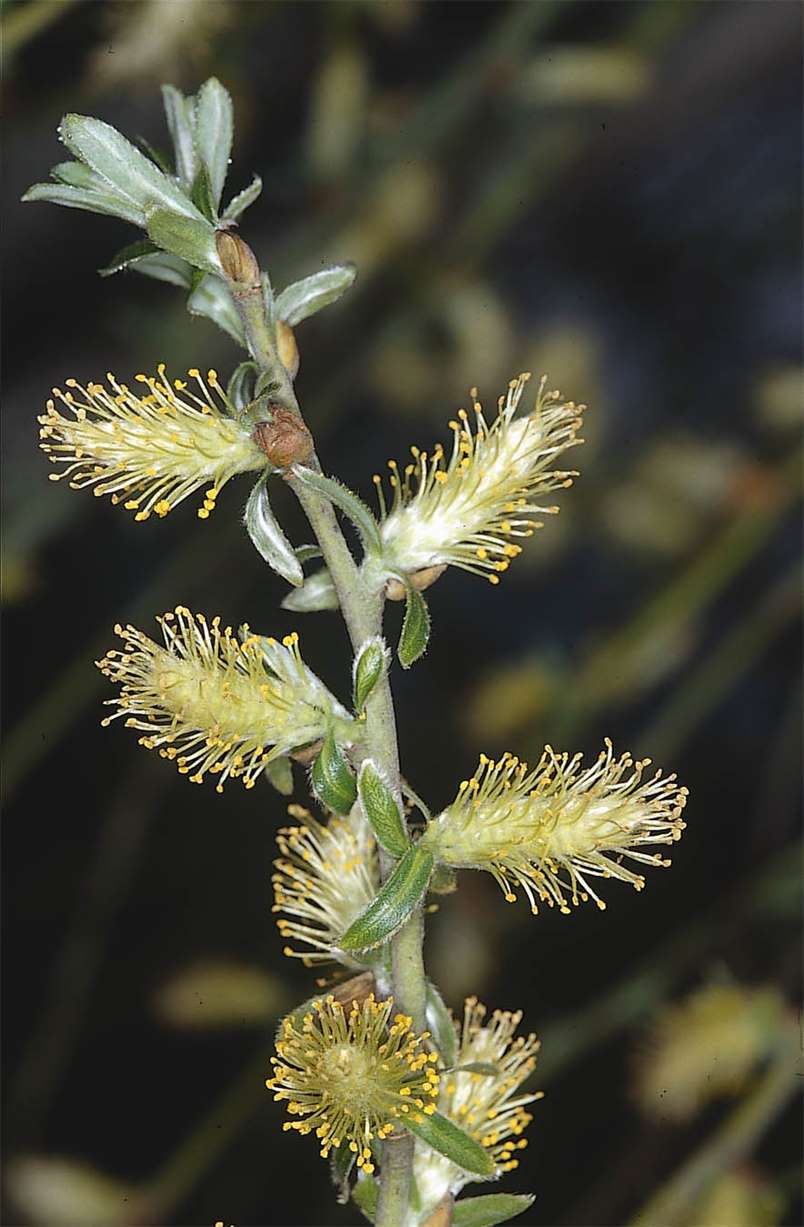
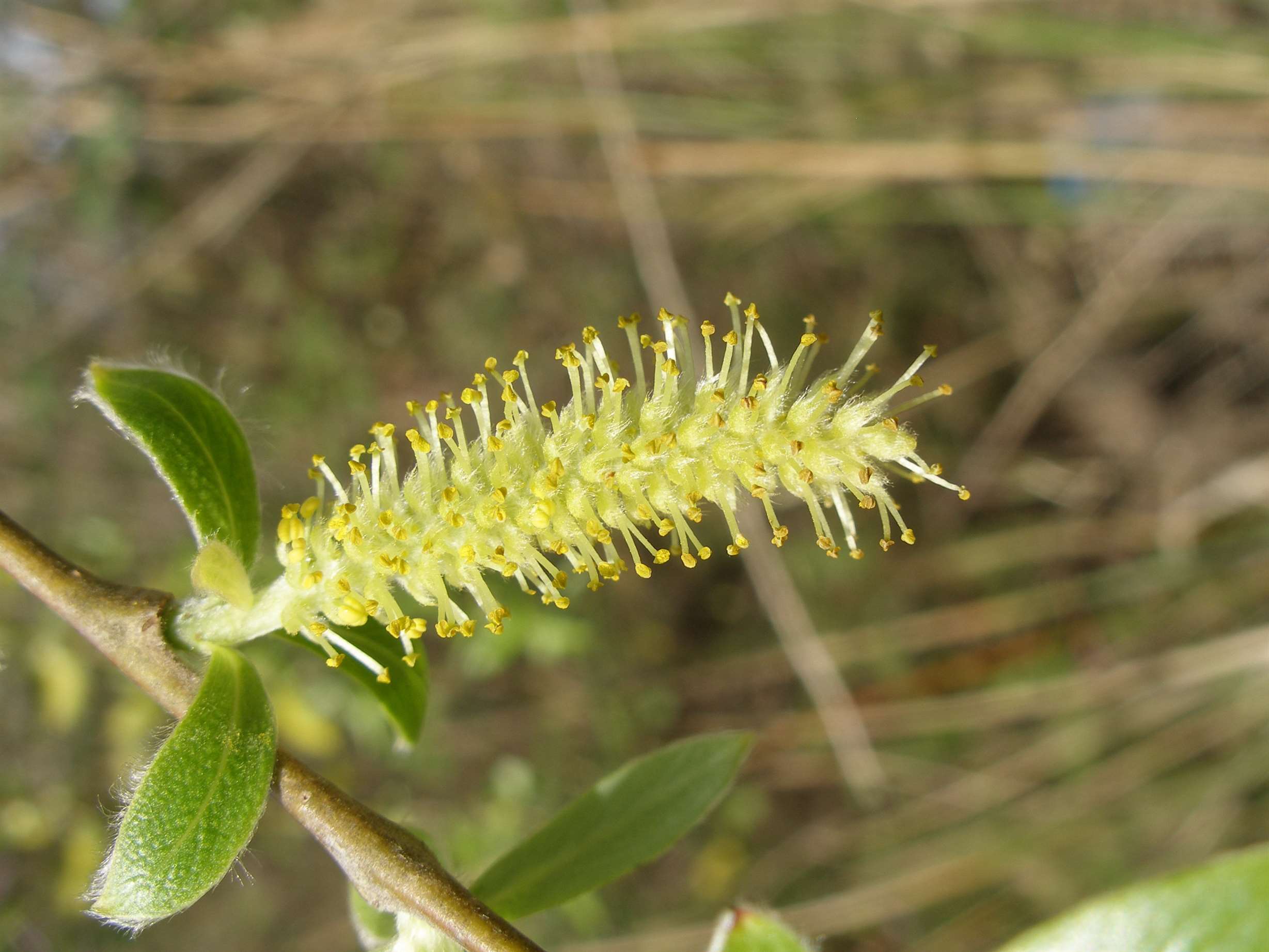
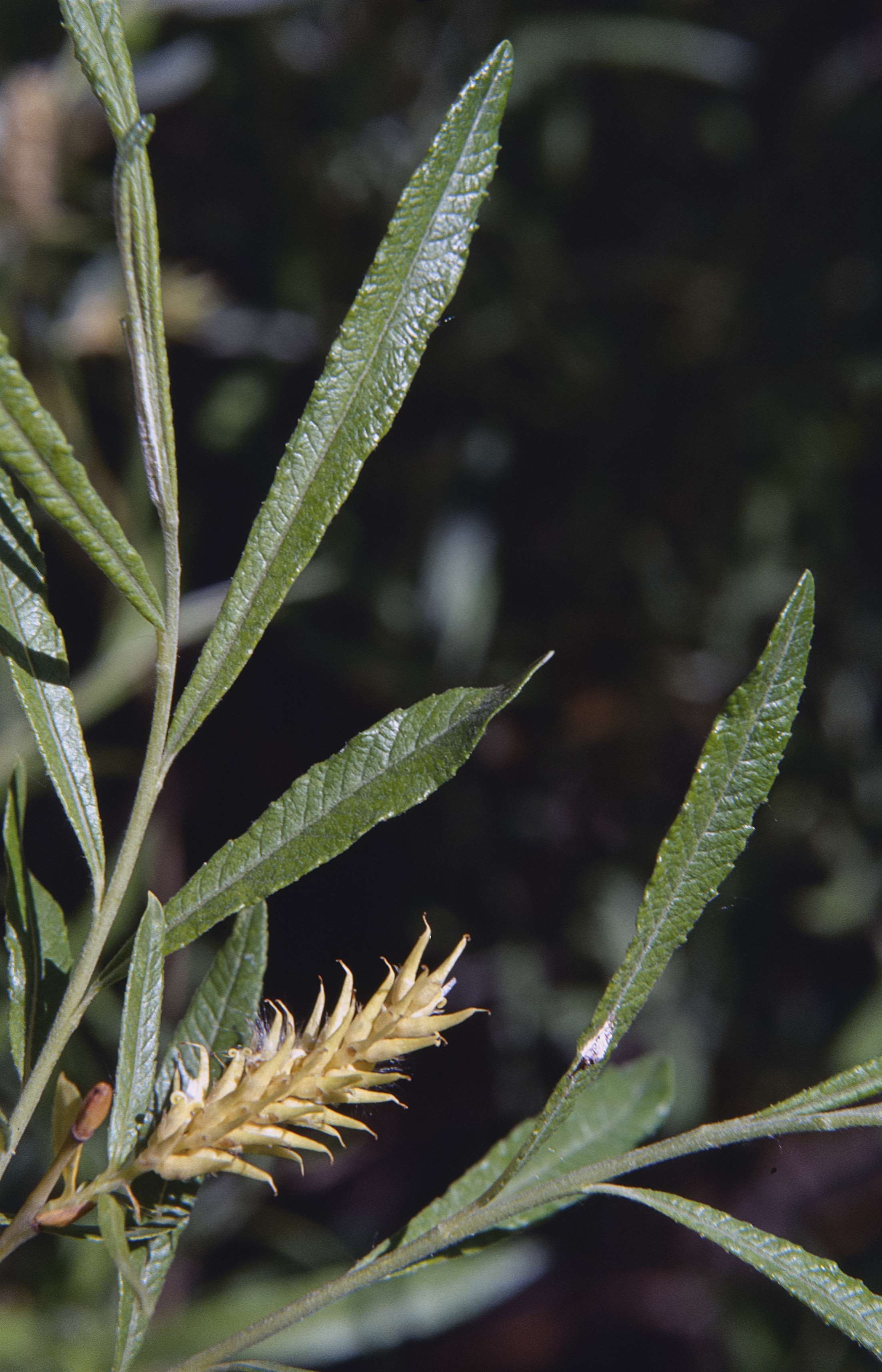
Deciduous shrub, dioecious, 1-6 m in height, very ramose, ± upright. Stems with brown-blackish bark, becoming more fissured with old age. Branches and older branchlets reddish-brown. Young branchlets pubescent or glabrescent, completely glabrous at maturity. Buds red-brown to orange, pubescent at first, then glabrous. Leaves 2-16 × 0.2-1.2 cm, alternate, deciduous, linear or linear-lanceolate, with an acute tip and margin revolute, finely serrated-glandular; tomentose when born, glabrescent at maturity and green matt on the upper side, and tomentose-whitish on the underside. Petiole very short, 2-5 mm, hairy. Without stipules or reduced to glands. Inflorescence in erect aments, alternate, coeval or subcoeval (developing sometimes just before the leaves), sessile or subsessile, rachis ± hairy and bracts of a single colour. Male flowers with 1 nectary and 2 stamens with fused filaments in the lower third. Female flowers with 1 nectary, ovary subsessile, glabrous, and with a persistent bract. Fruit an oblong-conical capsule, glabrous, dehiscent in 2 valves. Seeds with numerous cottony white hairs. 2n = 38.
Flowering:
February to April.
Fruiting:
March to May.
Habitat:
Banks of rivers and streams in humid and subhumid mountains, often in whitewaters with pebbles and gravel with carbonated substrate. Supramediterranean and mesomediterranean bioclimatic floors.
Distribution:
Central and southern Europe, western Asia. In North Africa it is very rare, known only from a few locations in the chalky western Rif (Beni Sedjel at 1,500 m, Kudia Tirgassine at 1,650 m) and the Middle Atlas (Sufulud River between 2,000 and 2,200 m).
Conservation status:
Relatively common and widespread species. It is not considered threatened at a global level but in North Africa it has a restricted distribution with very few specimens. Currently, in the IUCN Red List of Threatened Species it is evaluated as Least Concern (LC) at a global level (Beech, Harvey-Brown & Barstow, 2018). In the Livre Rouge de la flore vasculaire du Maroc (Fennane, 2021) it has been considered as Vulnerable (VU).