Suaeda monoica Forssk. ex J.F. Gmel.
Salsola monoica (Forssk. ex J.F. Gmel.) Poir.
Eng.: Sea-blite. Spa.: Sosa, almajo. Fre.: Soude molle. Ara.: Asal, soweid.
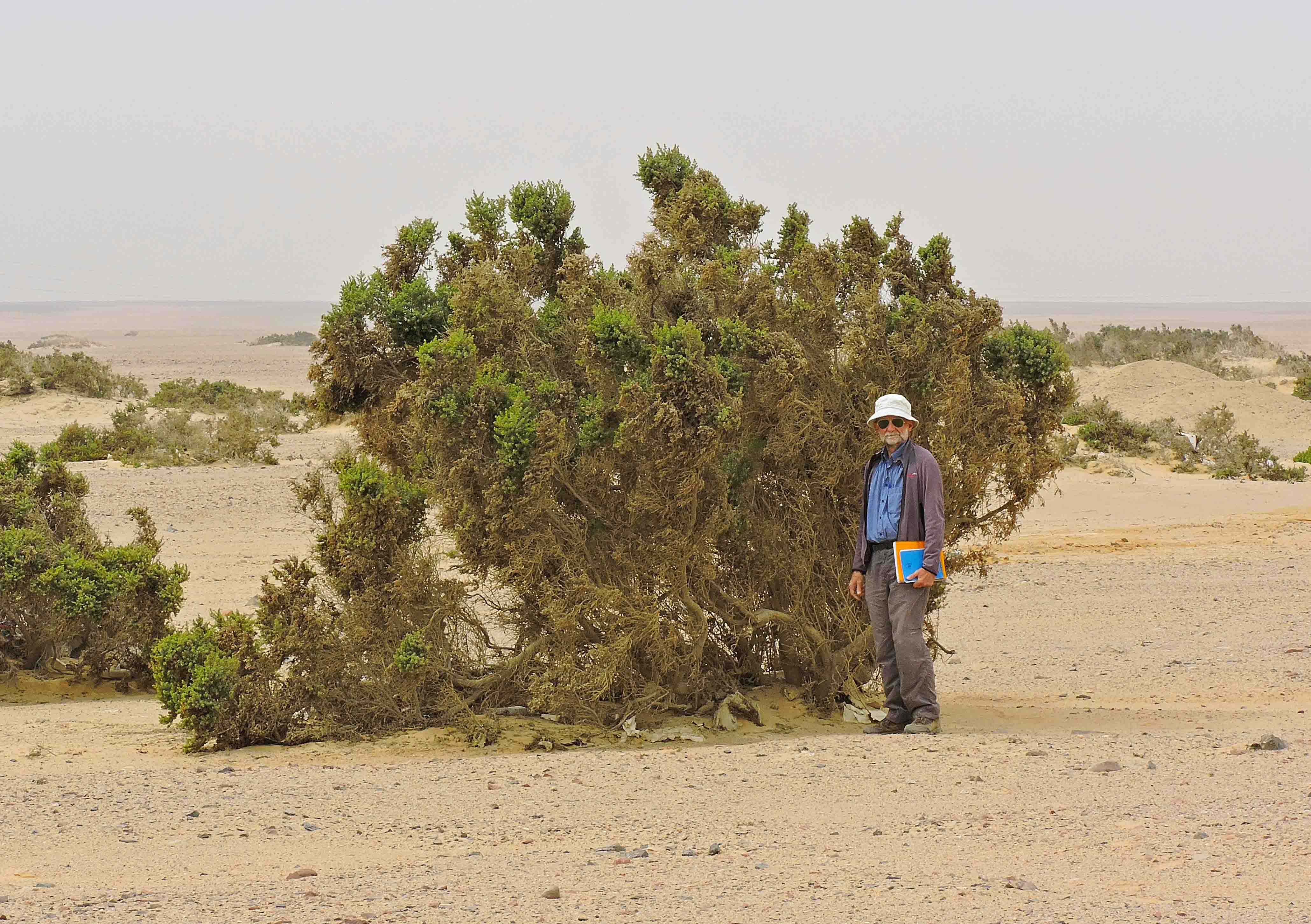
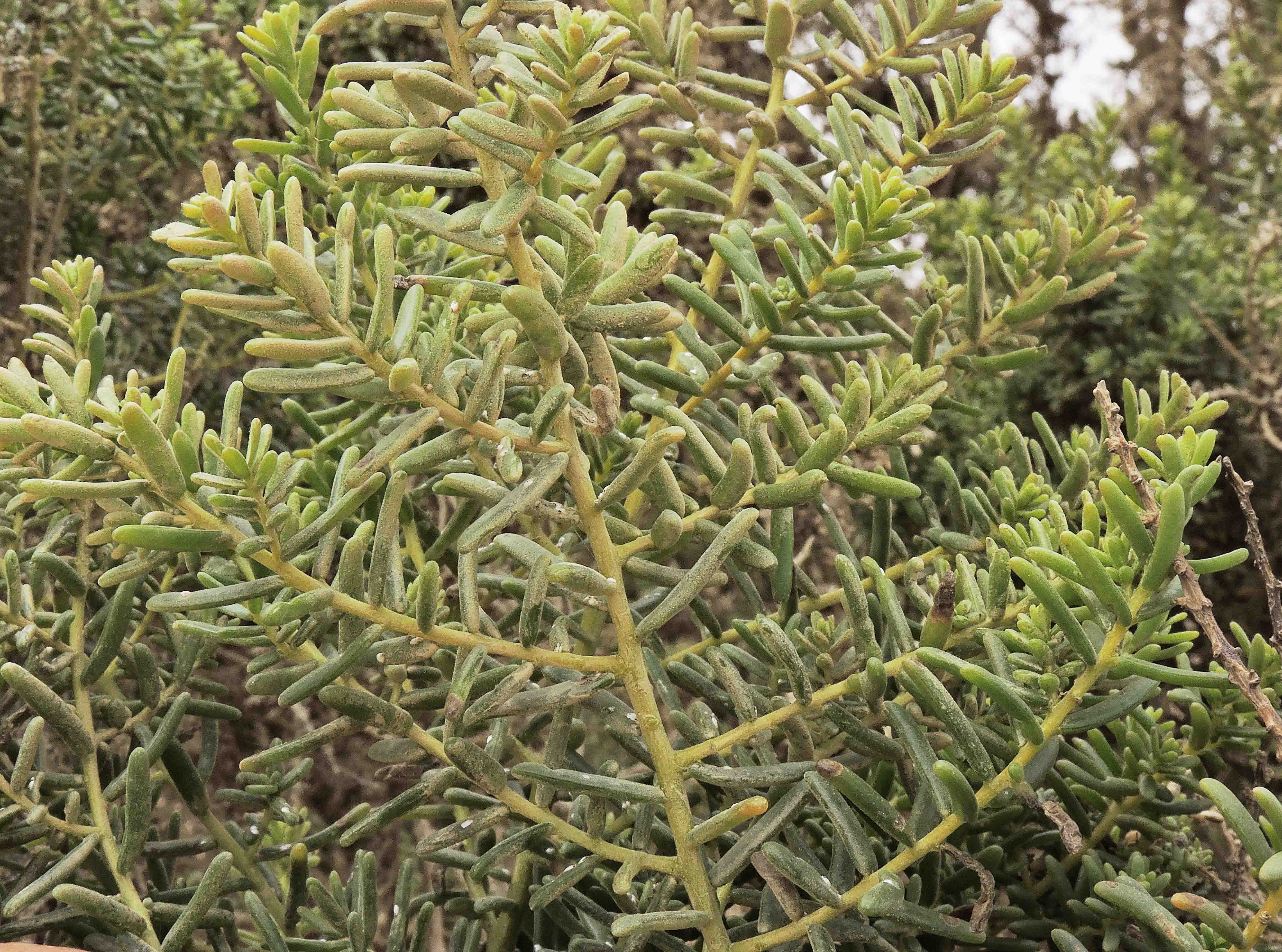
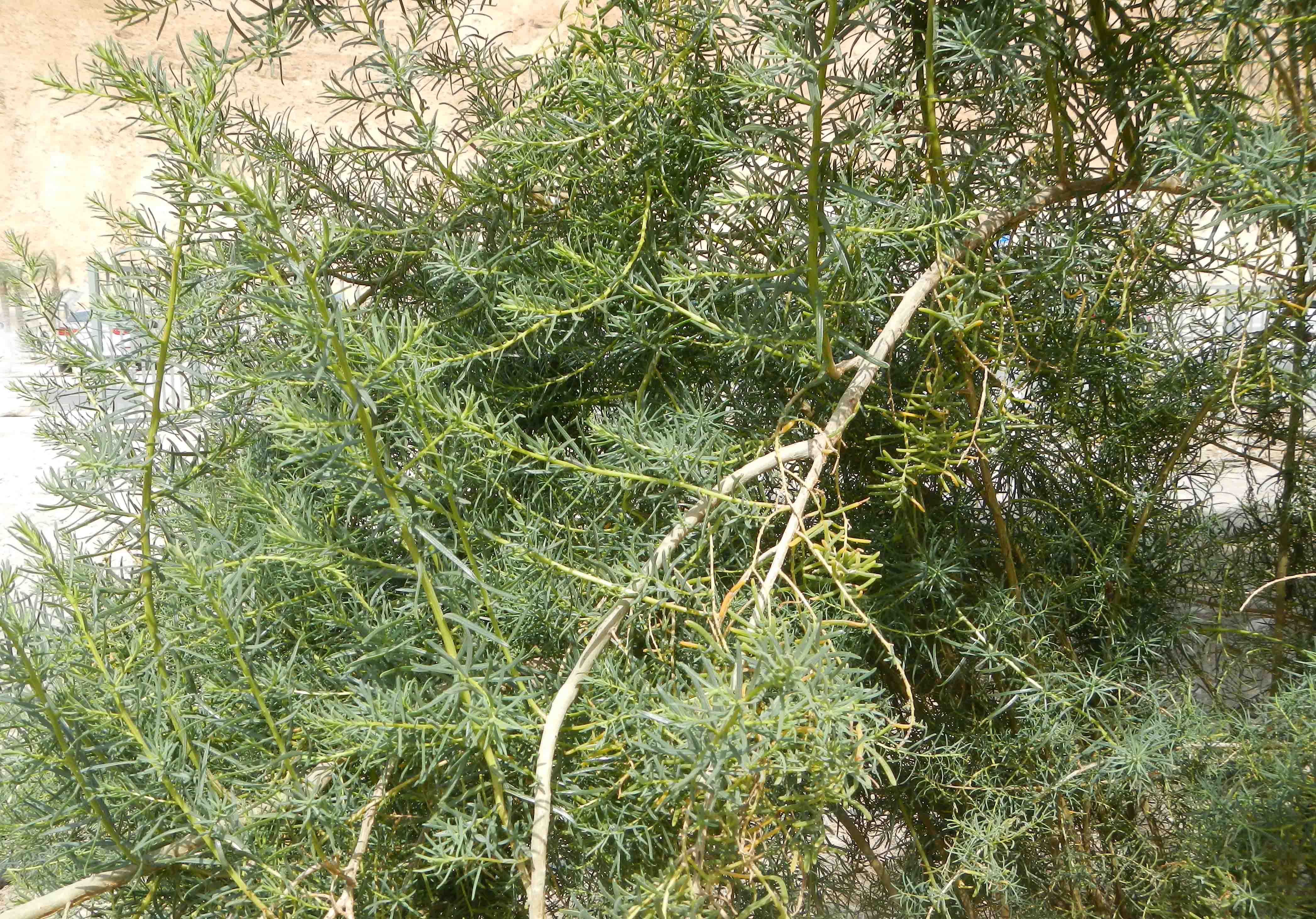
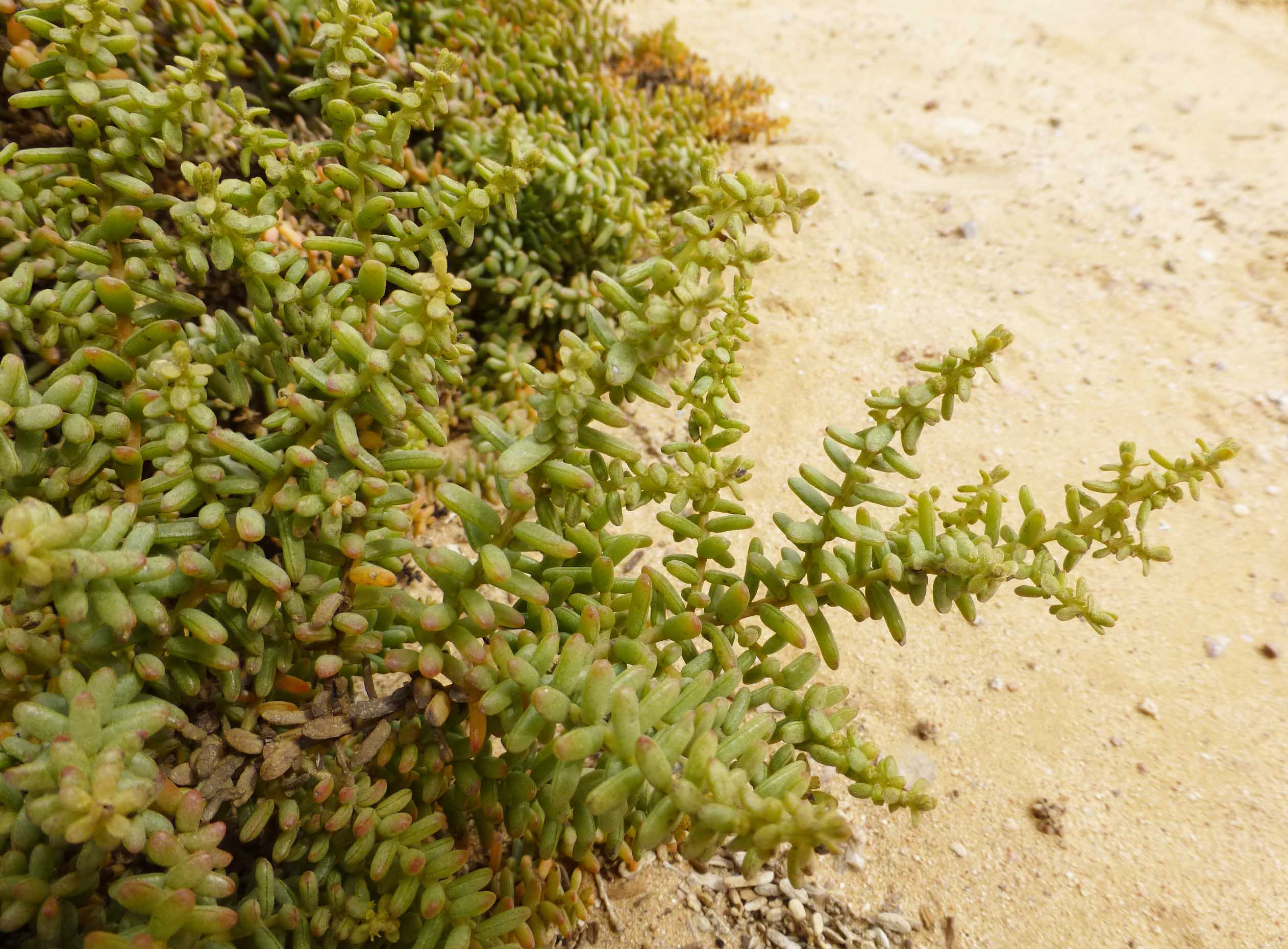
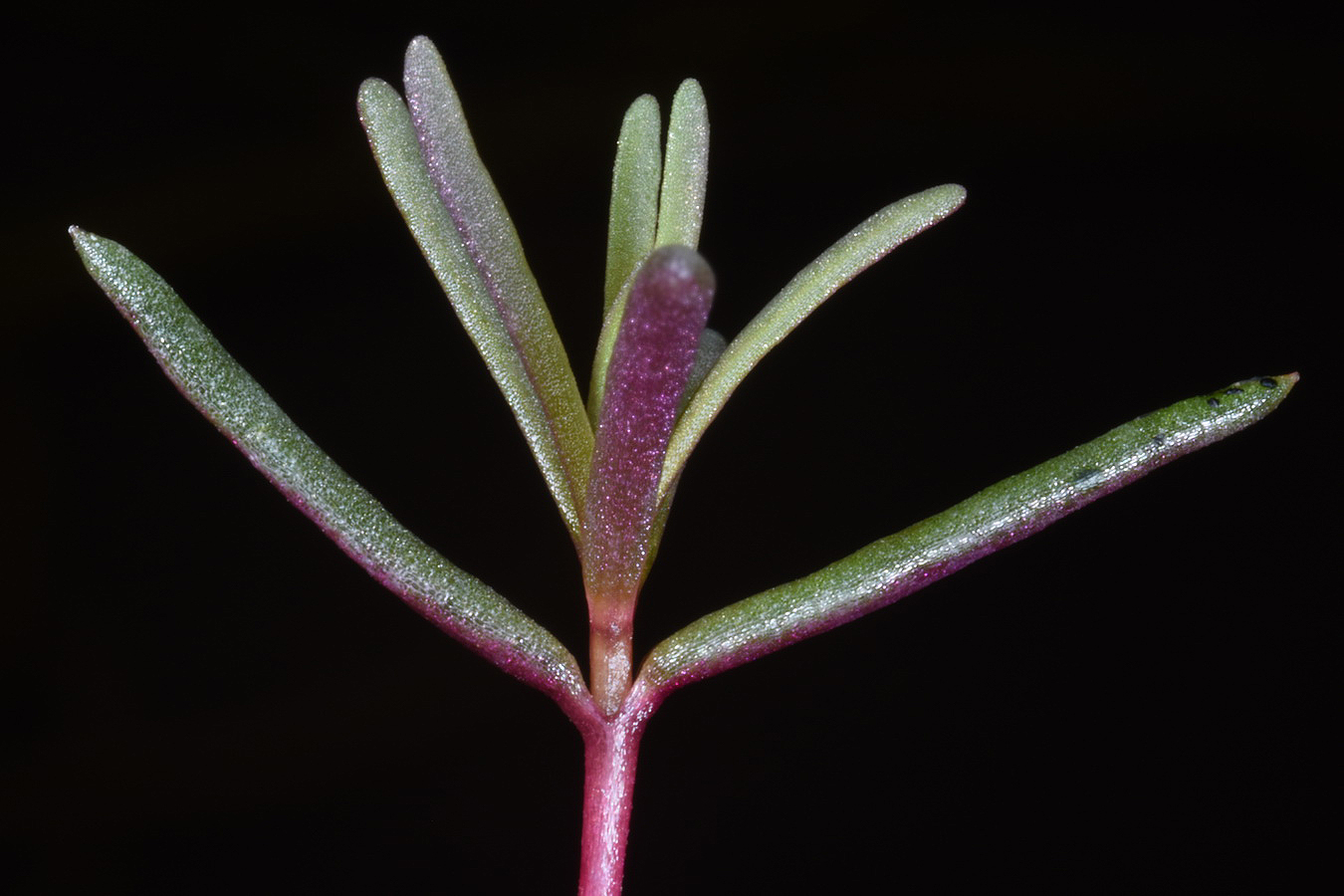
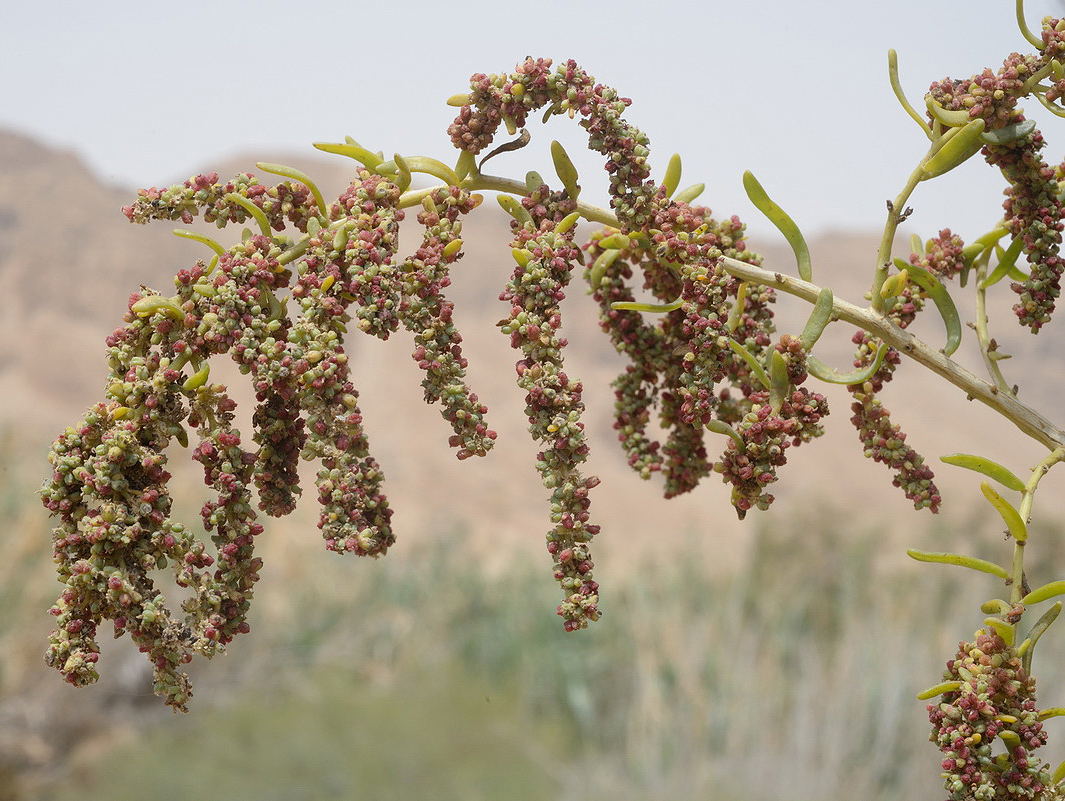
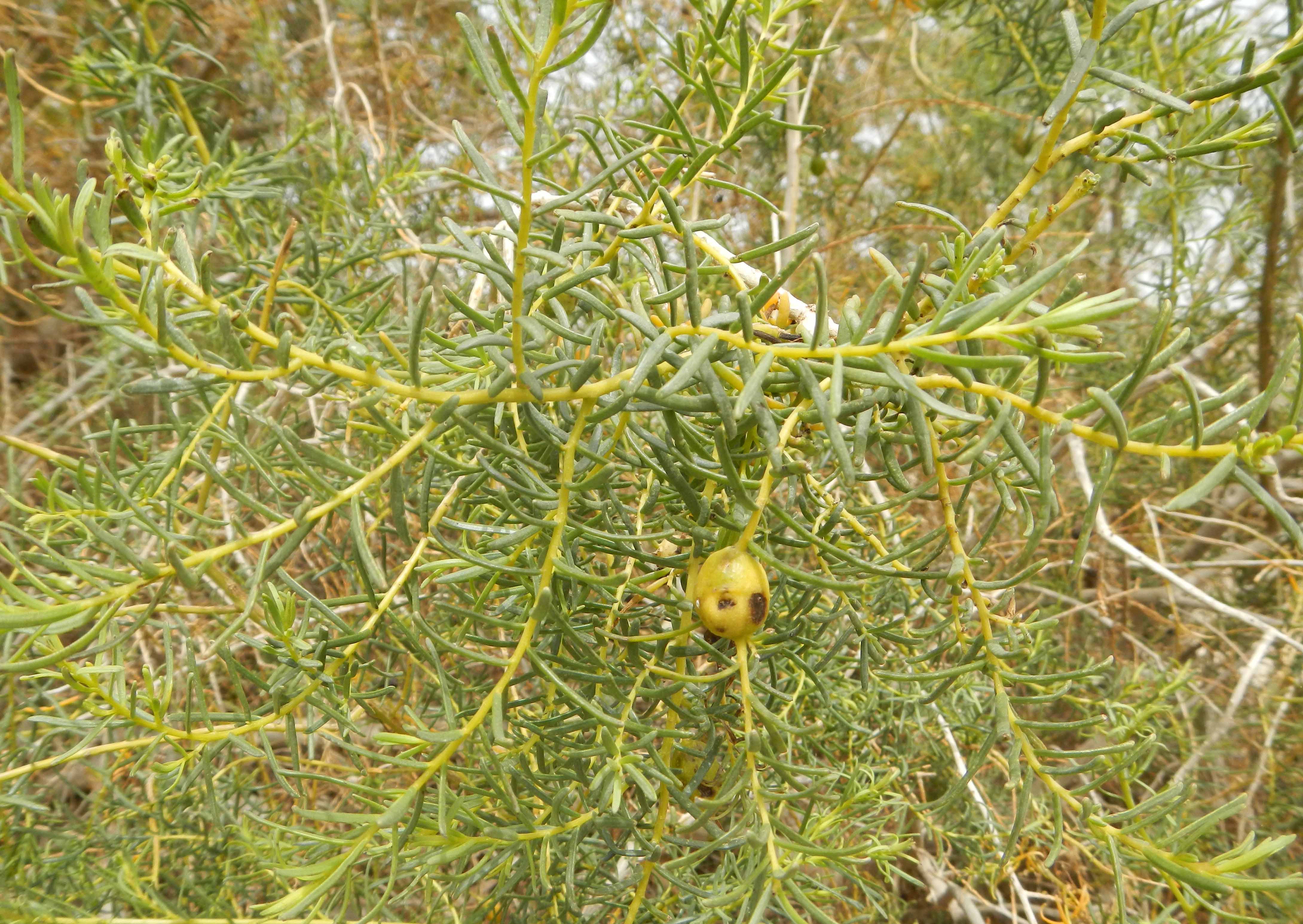
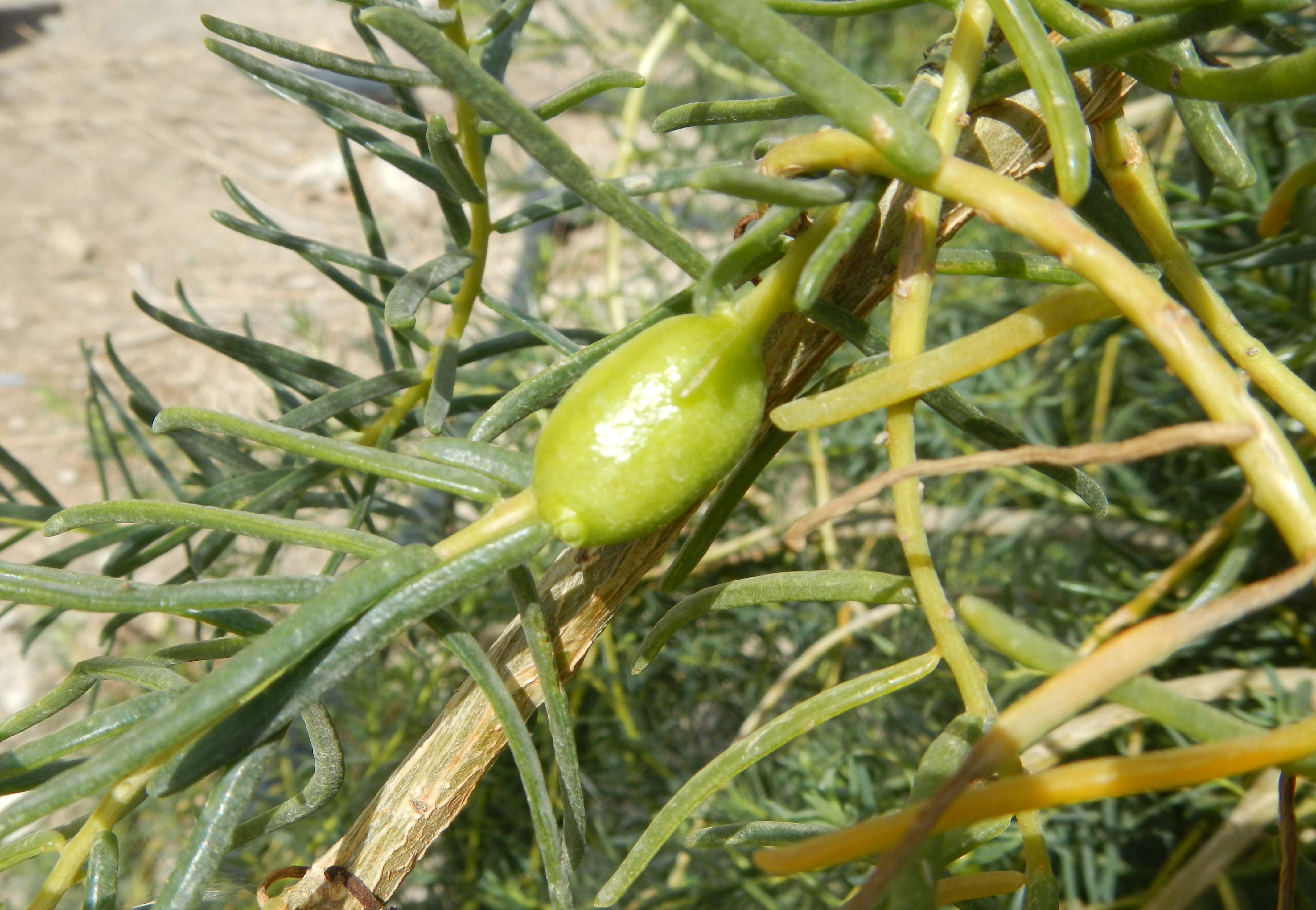
Small tree or shrub 2-3(6) m in height, with trunk up to 25 cm in diameter at the base, very ramose and with a broad crown, with frequent galls caused by insects. Glaucous plant with a fleeting indument in young organs. Branches divaricate. Leaves linear oblong to linear, flattened, slightly or very succulent, 1-2.5 × 0.1-0.3 cm, attenuate at the base, sessile or shortly petiolate, usually with a conspicuous hyaline line at the margins and apex obtuse to subacute. Flowers unisexual. Inflorescences in axillary spikes in groups of 2-6, sometimes solitary, usually with female flowers at the base and male towards the apex. Bracts 8(15) × 1.5-2 mm, linear to oblong, and bracteoles 1 mm, membranous, ovate-deltoid, ciliate. Male flowers develop first, in occasions hermaphrodite, 2.5-3 mm with funnel shaped perianth and fused parts a third from the base, of cucullate apex, with 5 stamens, filaments 1.2-1.5 mm and anthers 1-1.5 mm and with a rudimentary ovary. Female flowers are smaller, 1-2 mm, cylindrical to globose, with fused perianth almost to the apex and ovoid ovary, 3(4) stigmas of less than 1 mm and with small staminoids. Fruit 1.5-2 mm encased in the membranous perianth. Seeds vertical compressed 1.5-1.75 mm, with a short beak, black, shiny and smooth. Variable species relative to the size of the plant and leaves.
Flowering:
August to October.
Fruiting:
No data for this region
Habitat:
Dry sandy or clay soils in areas with some groundwater flow, like in seasonal river courses, salty edges of marshes.
Distribution:
Eastern Africa, from Egypt to Mozambique, and central-western Asia, reaching India to the E.
Conservation status:
It is a common and even locally abundant species. It is not considered threatened. Currently, it has not been assessed at a global level in the IUCN Red List of Threatened Species. In the updated red list of Egypt (Shaltout & Bedair, 2023) it has been considered as Least Concern (LC).