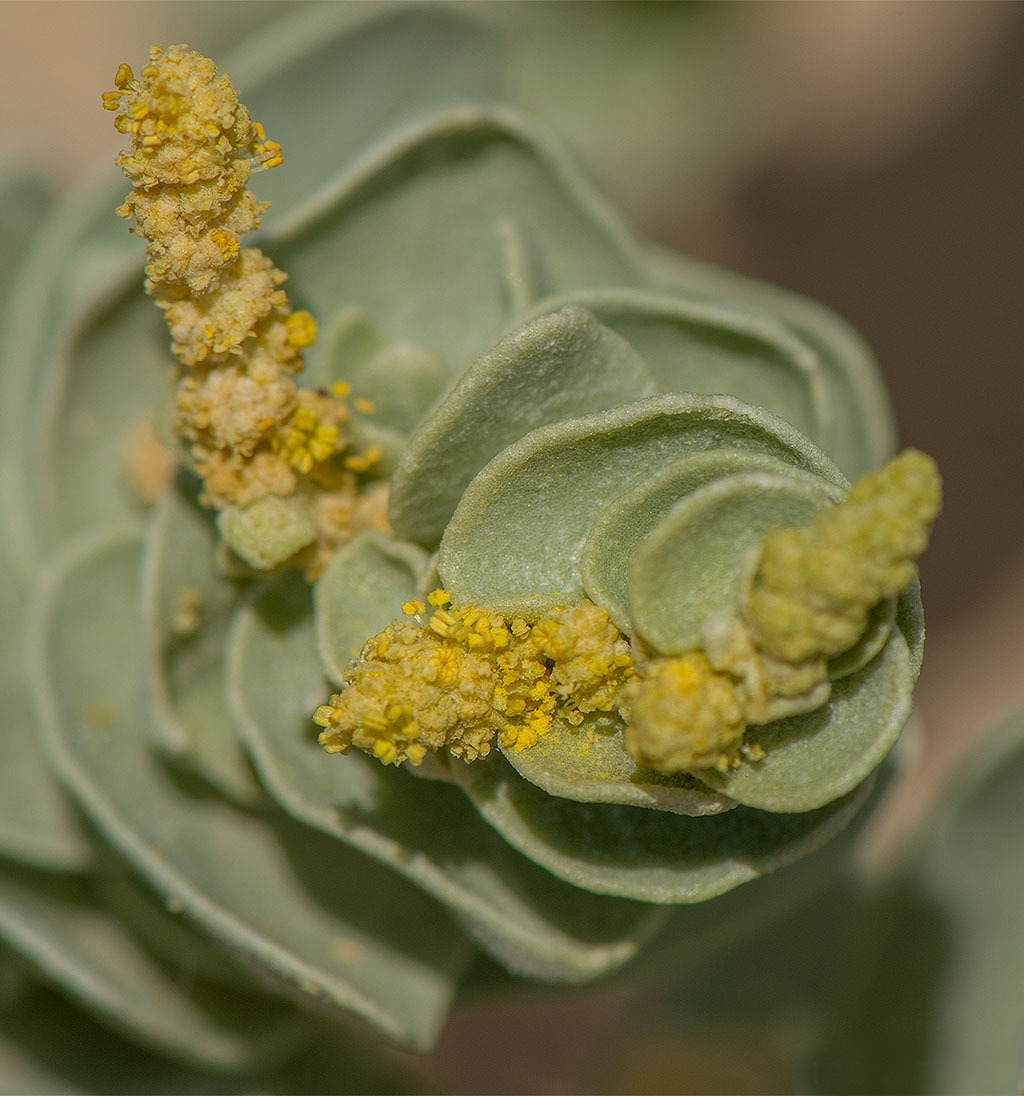
Atriplex farinosa Forssk.
Eng.: Orache. Spa.: Armuelle. Fre.: Arroche tendre. Ara.: Osfai, waadah, hawwa.
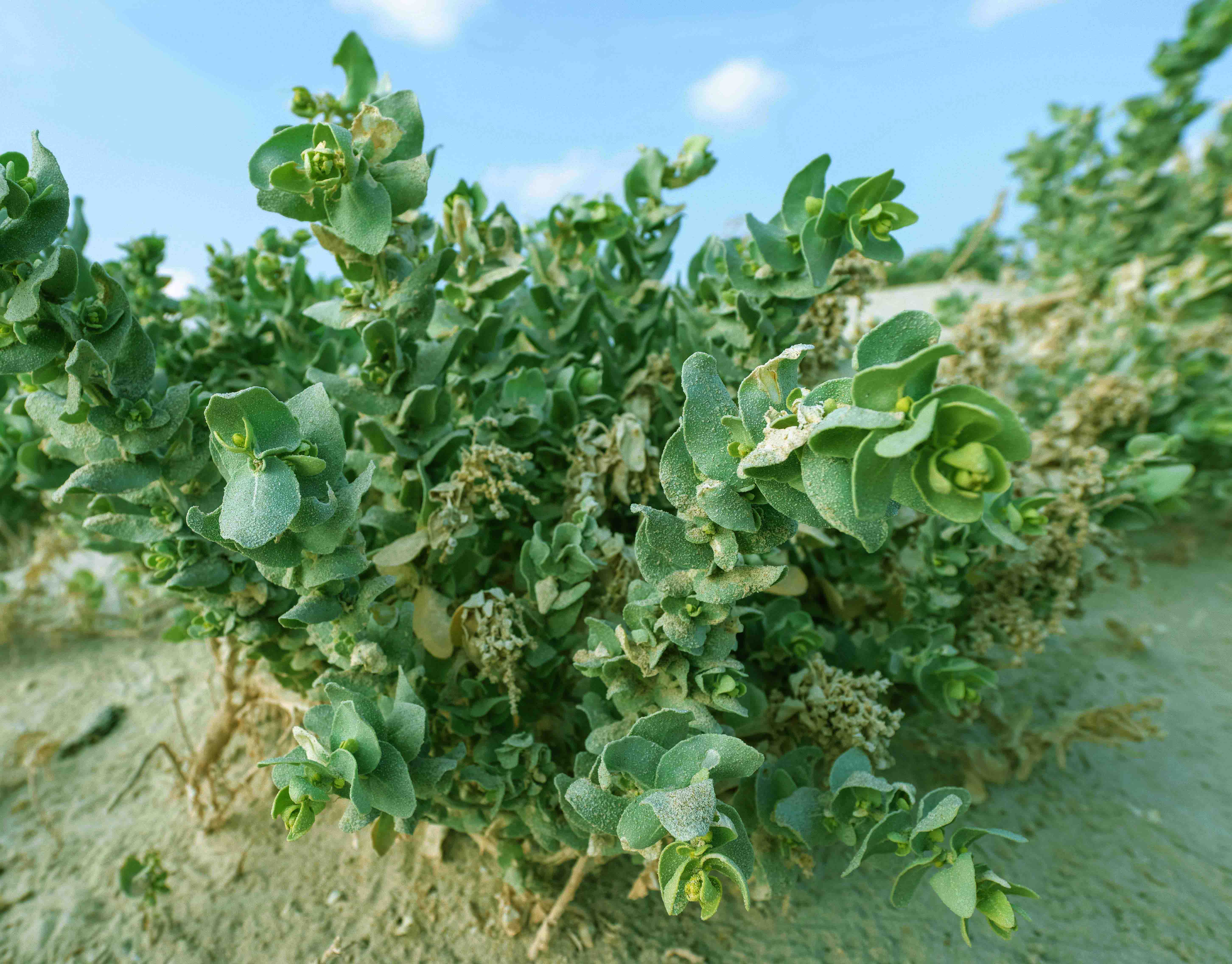
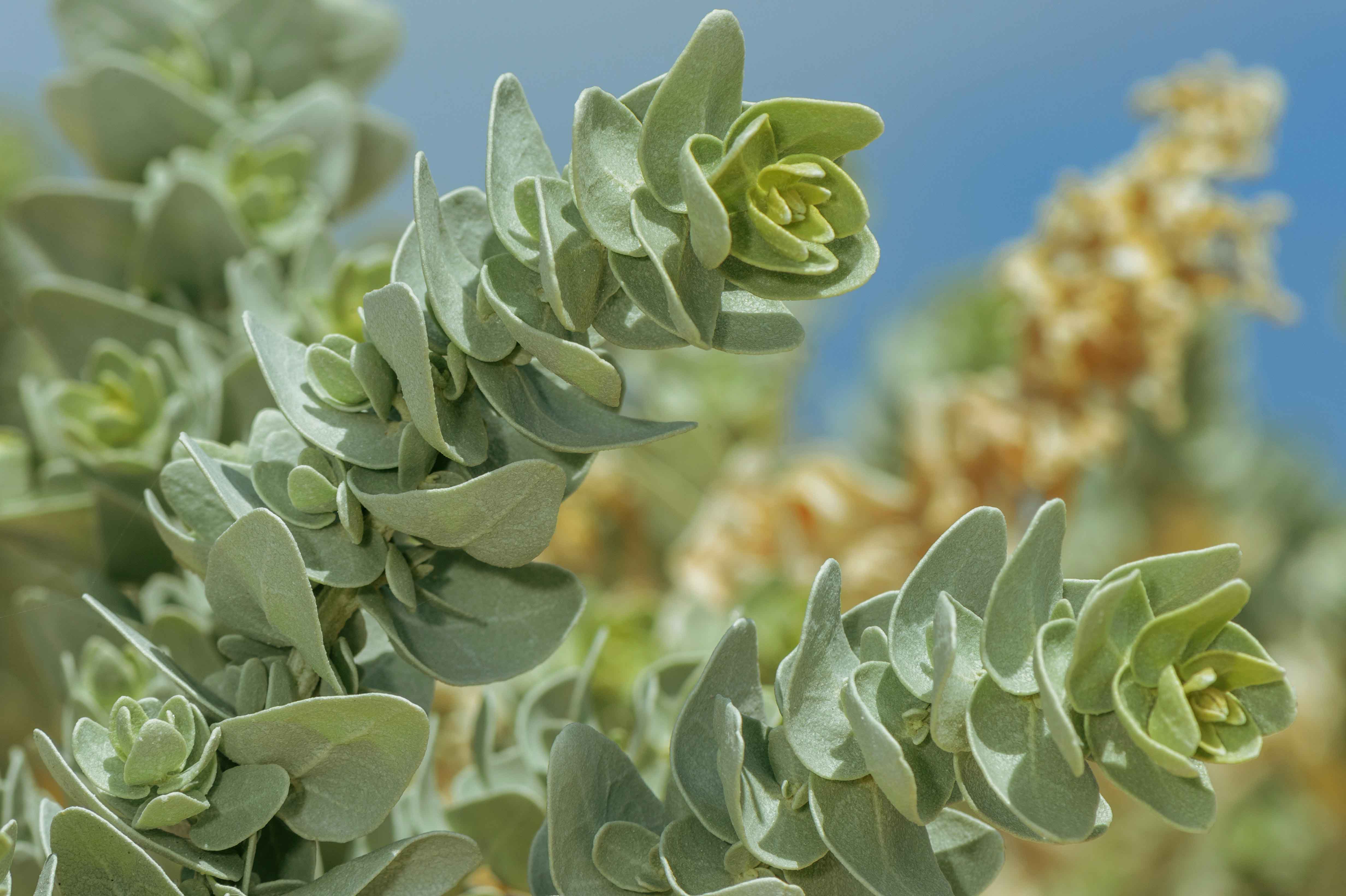
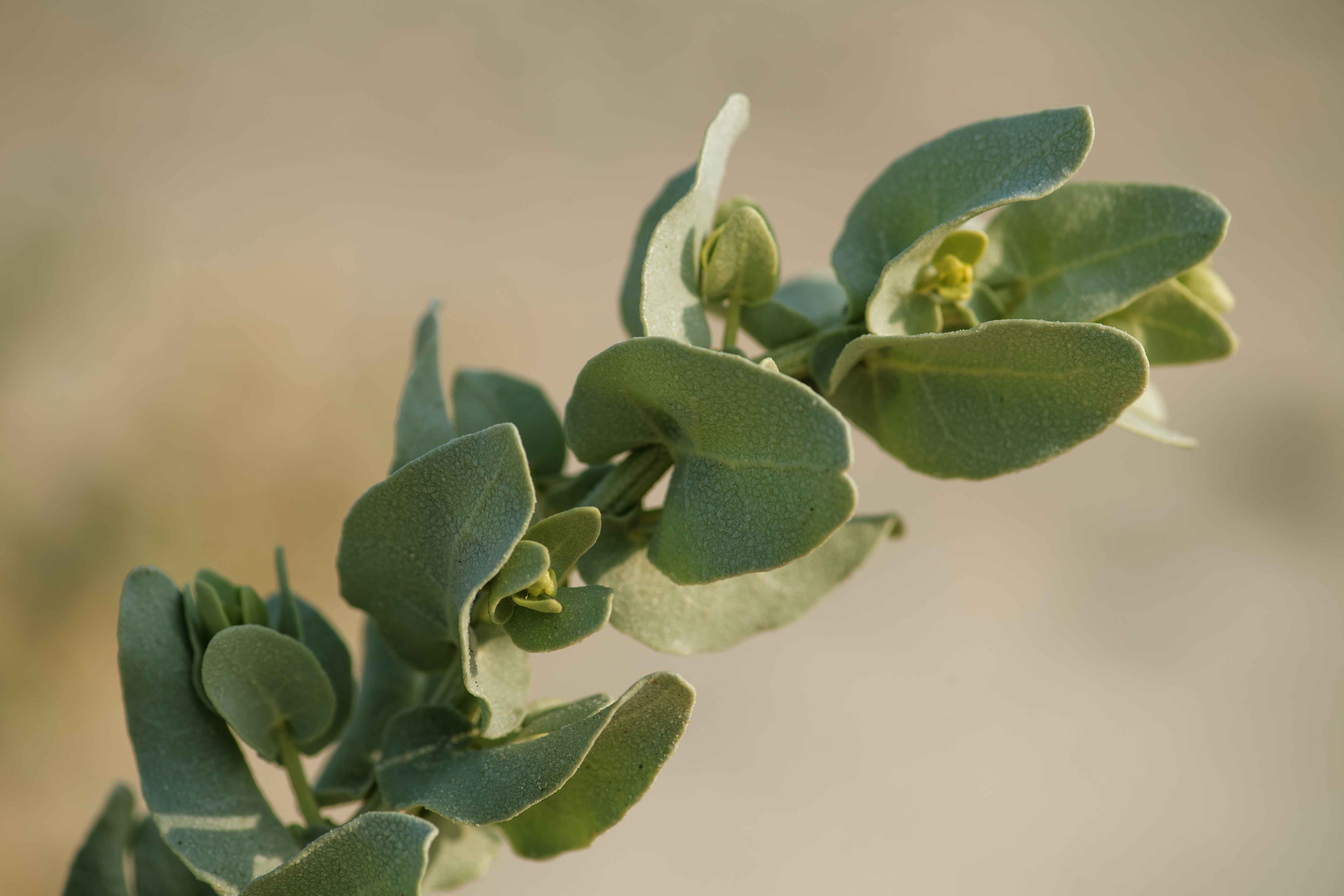
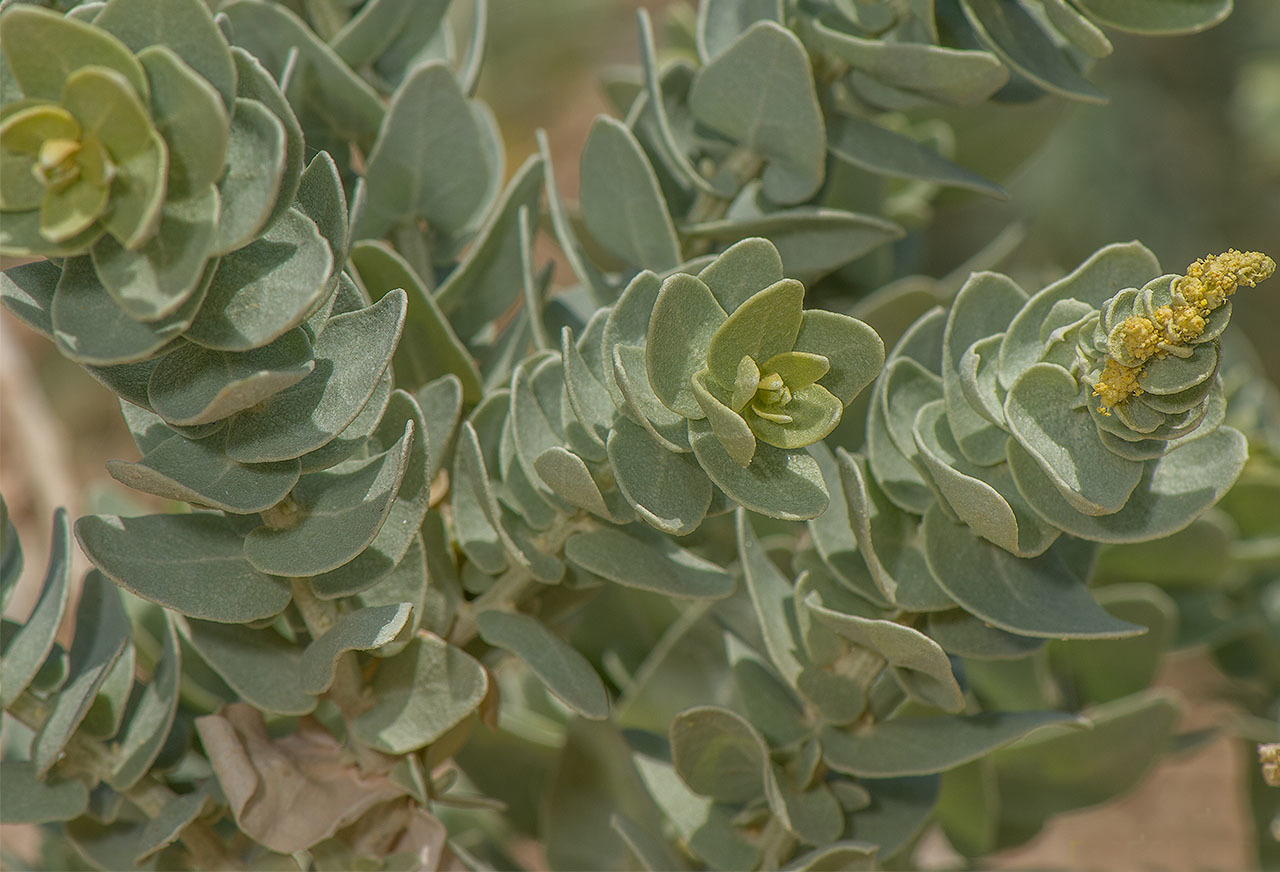
Perennial subshrub, very ramose from the base, 0.5-1.2(2) m in height. Branches and branchlets usually erect, slender. A general whitish-grey (mealy) appearance because it is covered in all its parts with a dense indumentum. Leaves alternate, glabrous and glaucous, petiolate (petiole 1-5 mm long), ovate-elliptic, 1.5-4(6) × 2-1(3) cm, entire and obtuse apex, cordate or auriculate at the base. Lower leaves smaller, narrowly cordate, frequently acute. Inflorescence in terminal yellow panicles, slightly branched, leafless. Flowers in sessile racemes, densely grouped into spikes. Bracteoles subsessile, which in fruiting are obconic to broadly elliptic, 4-7 × 3-6(7.5) mm, entire and fused at the base.
Flowering:
March to September.
Fruiting:
No data for this region
Habitat:
Coastal sand.
Distribution:
Coastal areas of the Red Sea and the Indian Ocean in East Africa and the Arabian Peninsula. In Africa from NE Egypt (and the Sinai Peninsula) up to the coastal sand dunes of Kenya.
Conservation status:
It is a common and locally abundant species. It is not considered threatened. Currently, it has not been assessed at a global level in the IUCN Red List of Threatened Species. In the updated red list of Egypt (Shaltout & Bedair, 2023) it has been considered as Least Concern (LC).