Clematis flammula L.
Eng.: Flagrant clematis, virgin’s-bower. Spa.: Clemátide, vidraria, vidarra, muermera. Fre.: Clématite brûlante. Ara.: Cebenq, sebenq, anesera, nar beurd (cold fire), nar ibarda, kâmus. Tam.: Tuzimt, tuqerroqerane, azenzu.
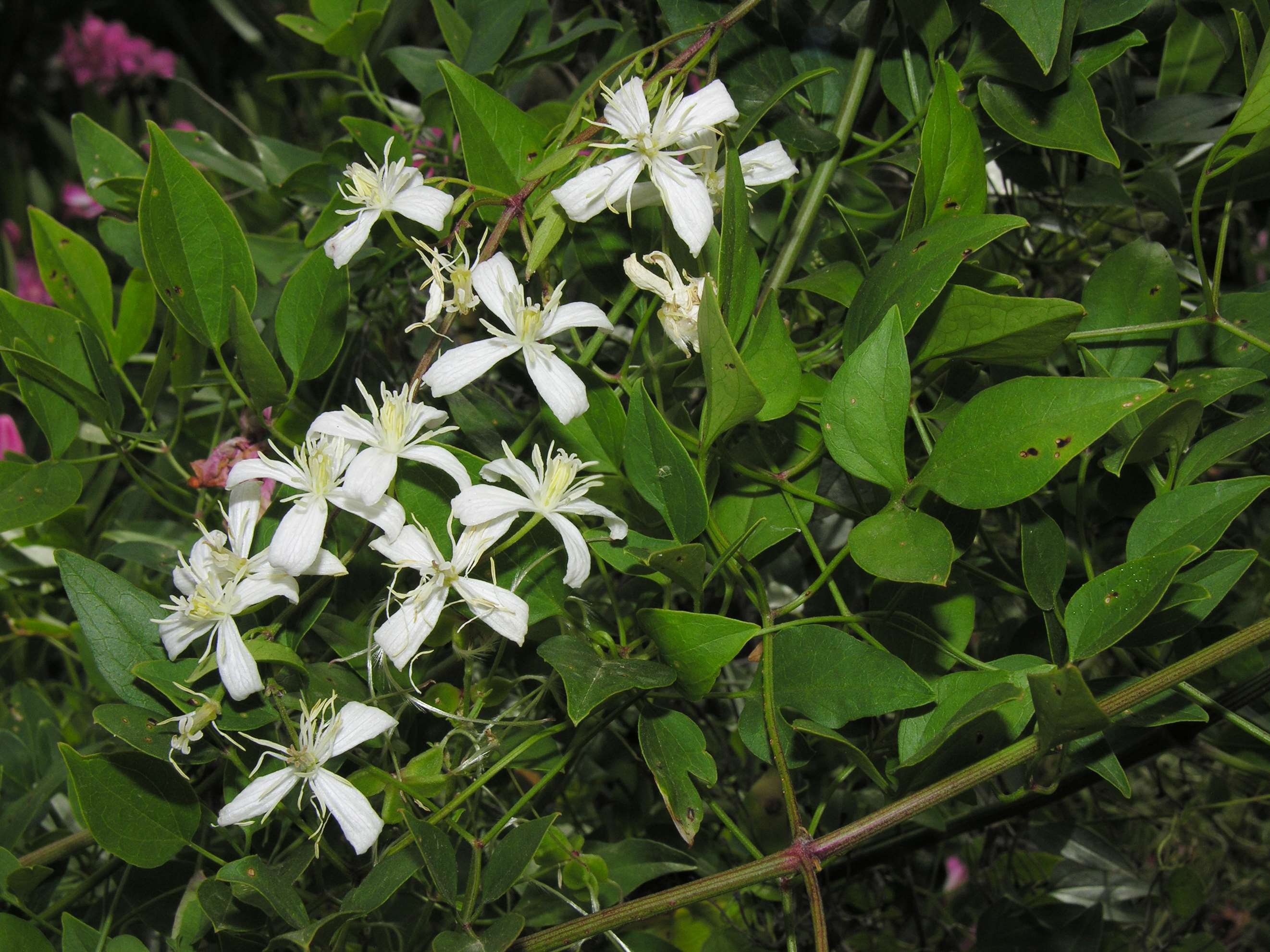
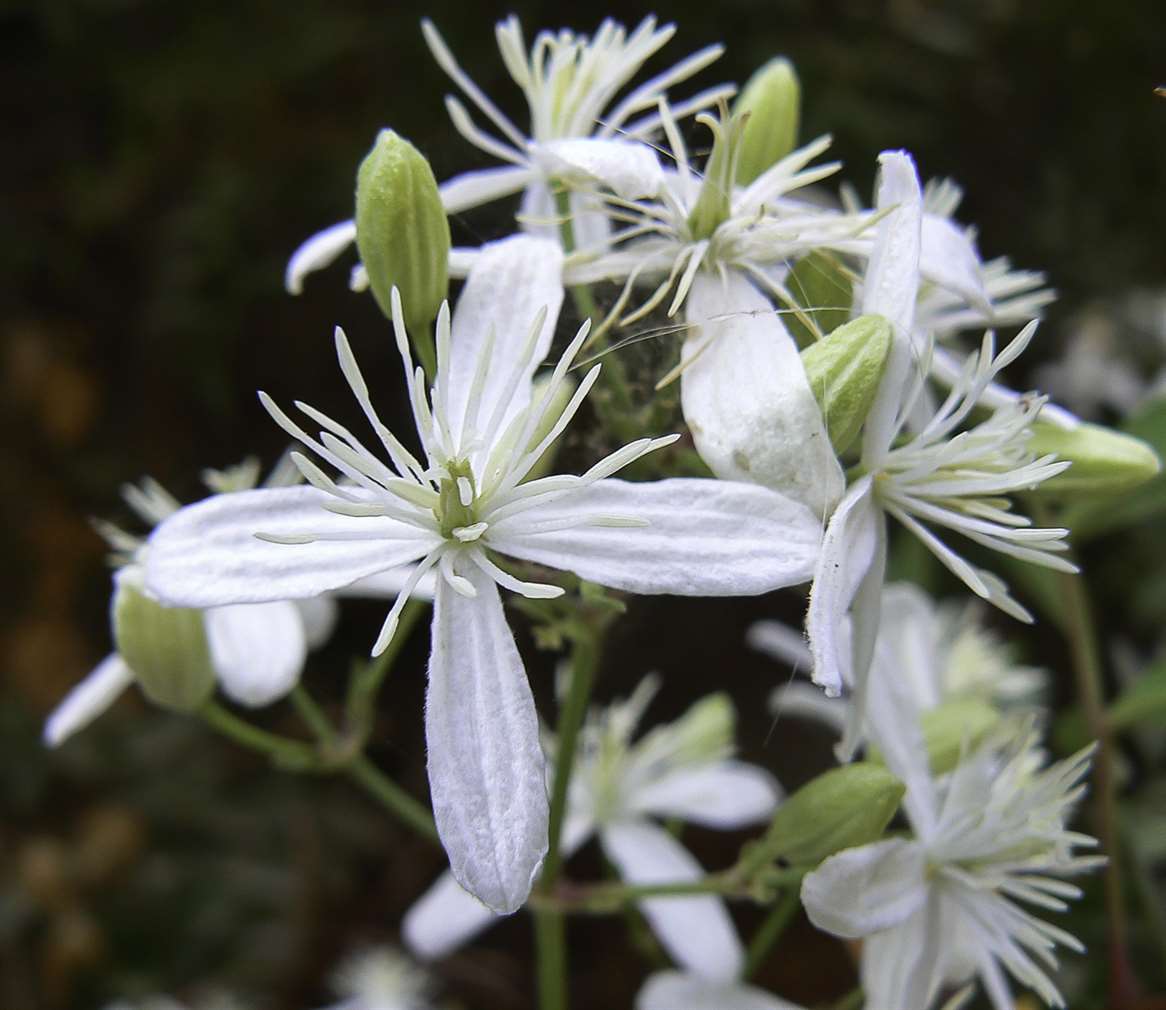
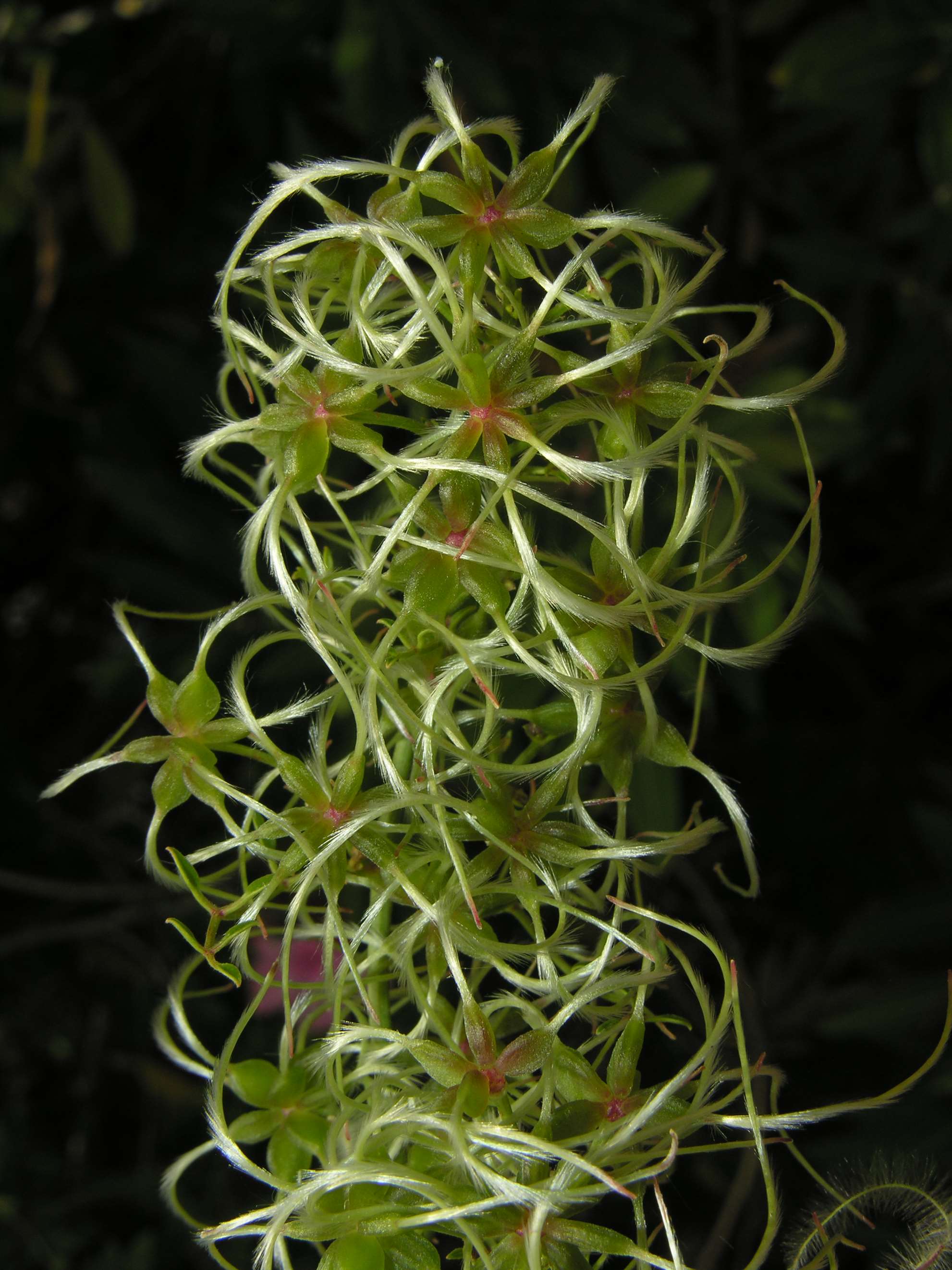
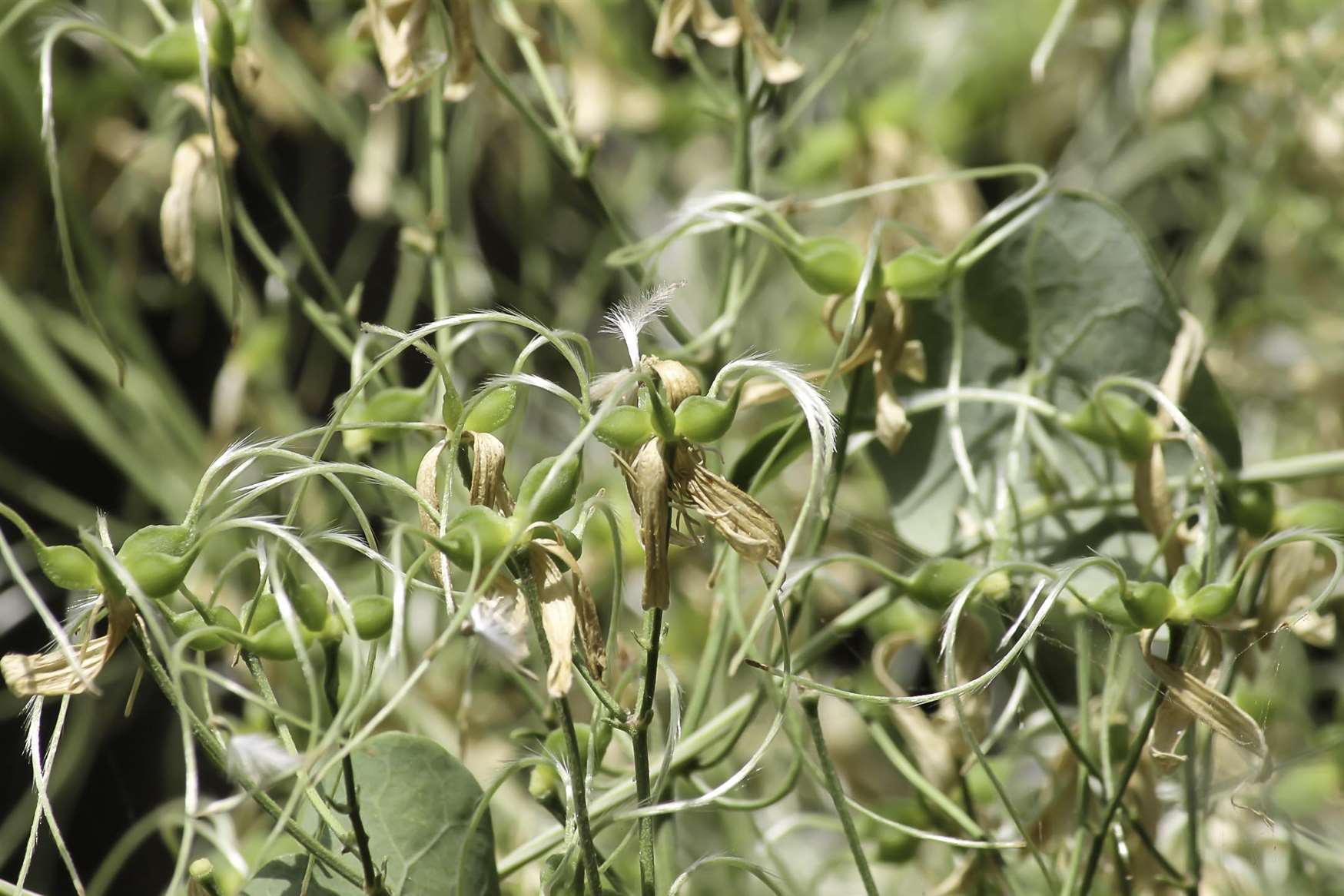
Climbing plant, deciduous, hermaphrodite, which can reach up to 10 m on trees, walls or other object that serves as support. Stems woody, sarmentose, with fissured greyish-brown bark that peels in longitudinal strips. Branches green, somewhat pubescent in youth, then glabrous. Leaves opposite, double pinnate, usually with leaflets grouped in 3 (2-6 cm long), oval, lanceolate, linear or with intermediate forms, margin usually entire, rarely with 2-3 lobes. Flowers (10-35 mm diameter) grouped in paniculiform cymes, with a long pedicel born in the leaf axils, slightly pubescent, with a single whorl comprising 4-5 petaloid parts, highly elongated (4-18 mm), white, glabrous or just pubescent on the underside. Stamens numerous, villous, white. Fruit (2.5-5 mm) an achene not too compressed, oval, pubescent, prolonged in a feathery style up to 3.5 cm.
Flowering:
April to August.
Fruiting:
In autumn.
Habitat:
Forests, thickets, rocky outcrops and maritime dunes in regions with cool and humid to hot and semiarid climates. Present from the sandy coast to the predesert midmountain.
Distribution:
Mediterranean region, Macaronesian region and western Asia. In North Africa it is common in all non-steppic areas, where it becomes rare, disappearing in the desert. It grows, though more rarely, in the Anti-Atlas, Saharan Atlas (Morocco), Ahaggar Massif (Algeria) and Mount Akhdar (Libya).
Conservation status:
Rare but widely distributed species, it is not considered threatened. Currently, it is not assessed at a global level in the IUCN Red List of Threatened Species. In the Livre Rouge de la flore vasculaire du Maroc (Fennane, 2021) it has been considered as Least Concern (LC).