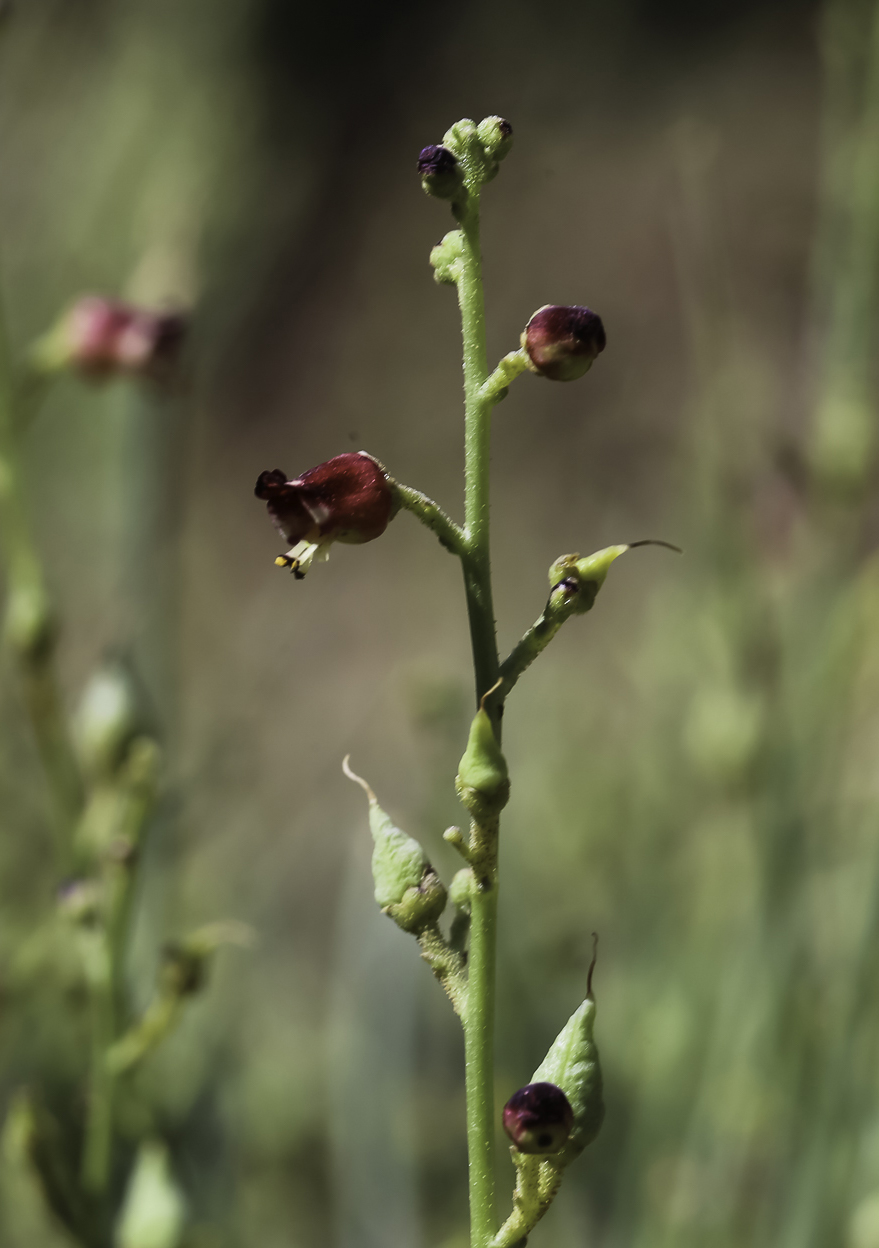
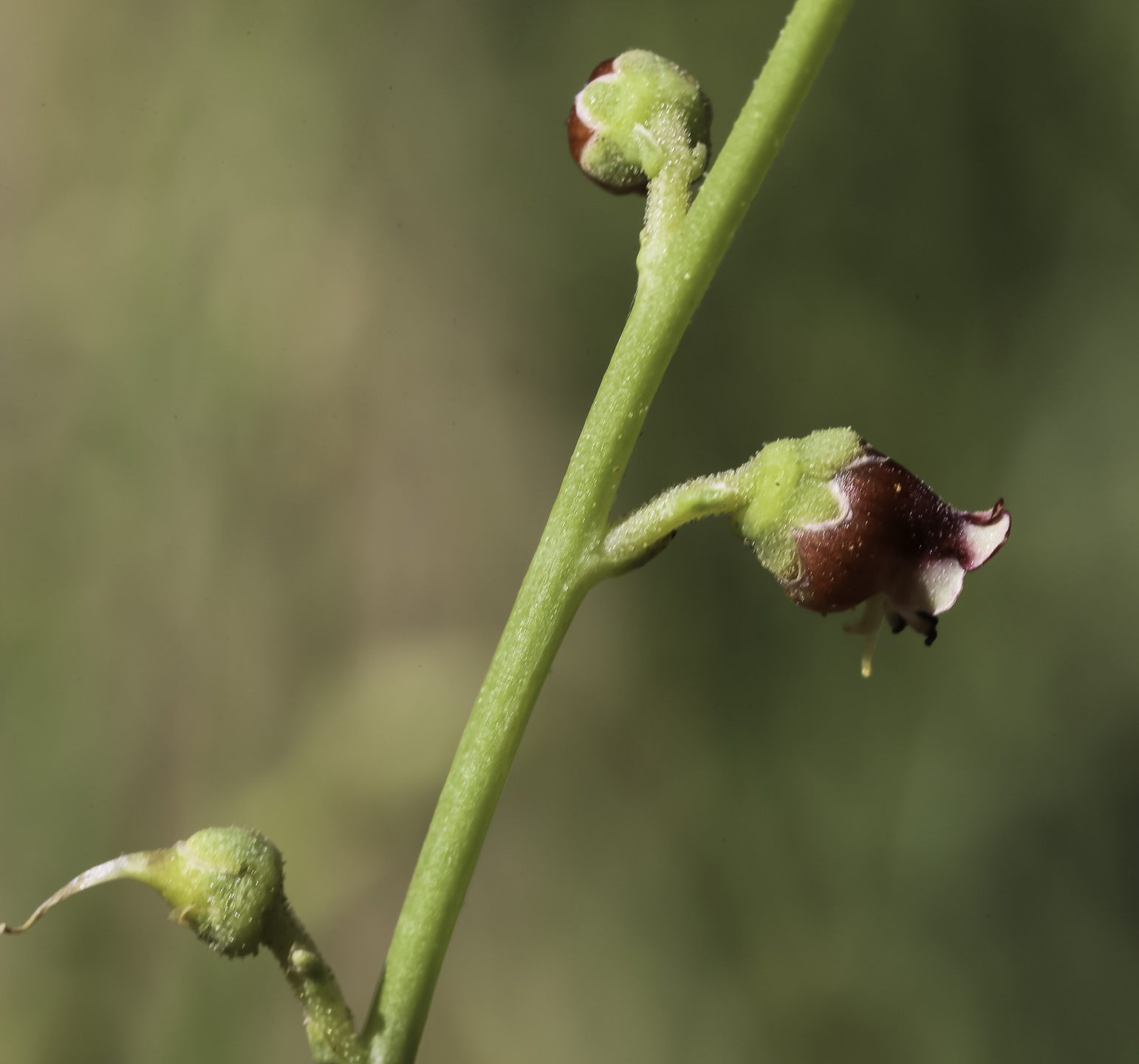
Scrophularia L.
Genus composed of about 86 shrubby and herbaceous species, distributed mainly through temperate areas of the northern hemisphere. In North Africa it is represented by 18 species, some completely herbaceous (such as S. arguta), but mostly perennial and ± woody at the base species, though only one (S. canina) can be considered shrubby. Among the other species with slightly lignified stems, the following 4 stand out for their greater size.
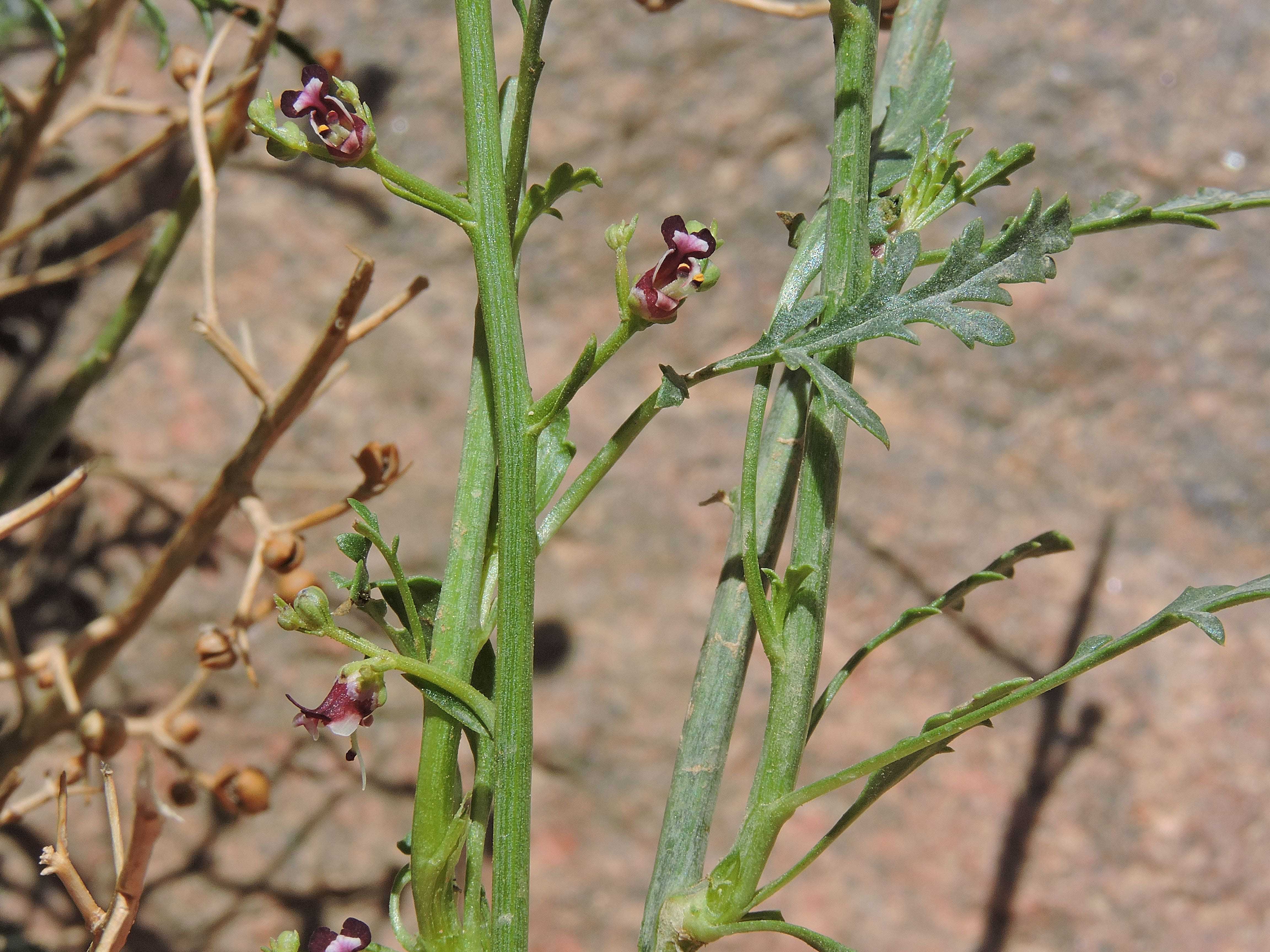
S. xanthoglossa Boiss. (Ara.: Qartam, berwek) is very similar to S. canina, with base of stems somewhat lignified and it can reach up to 80 cm in height. It differs from it by having bipinnatisect leaves and ± orbicular staminode. Its range is mainly SW Asia, and, in North Africa, it is found only E of the Nile.
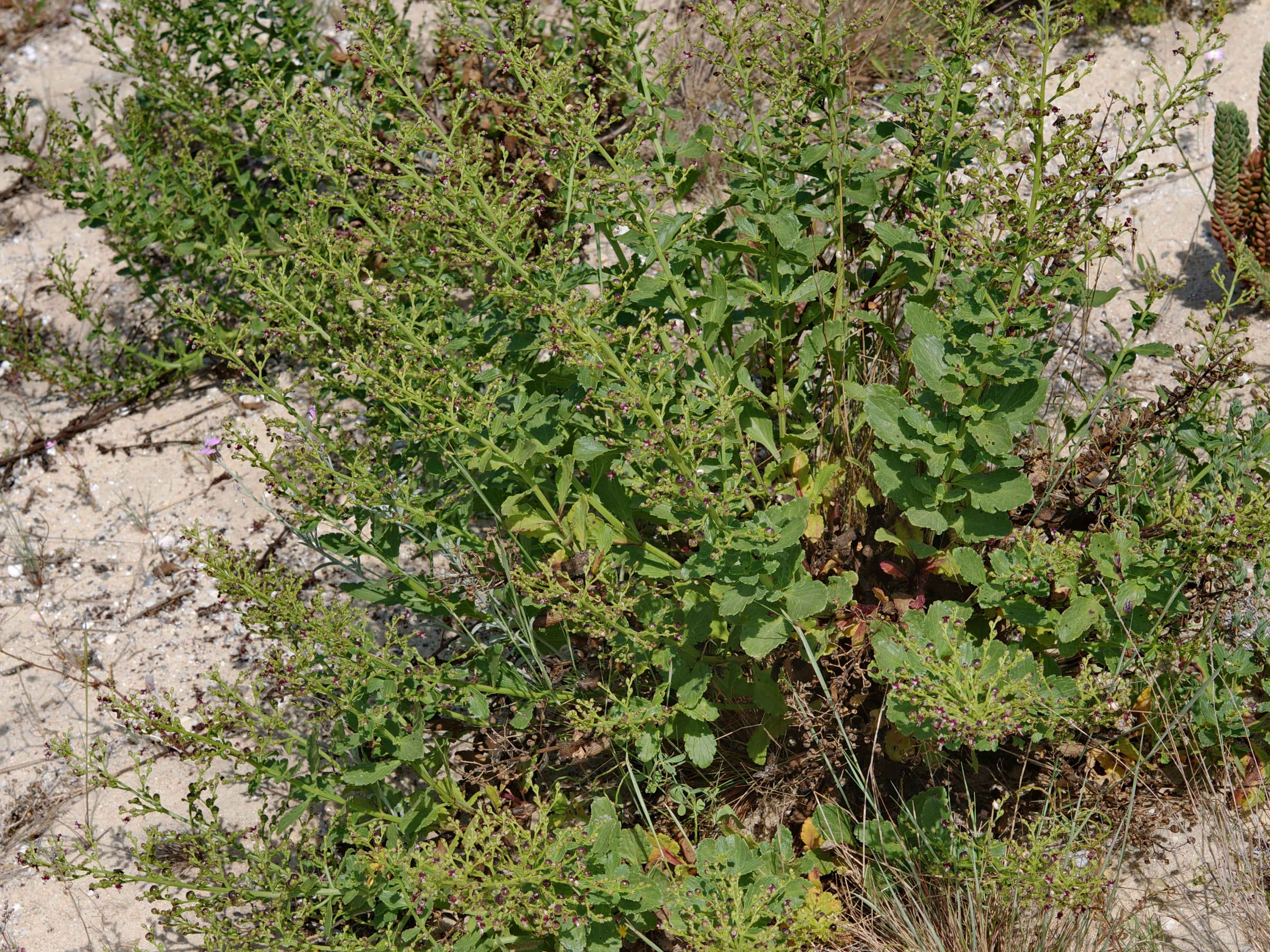
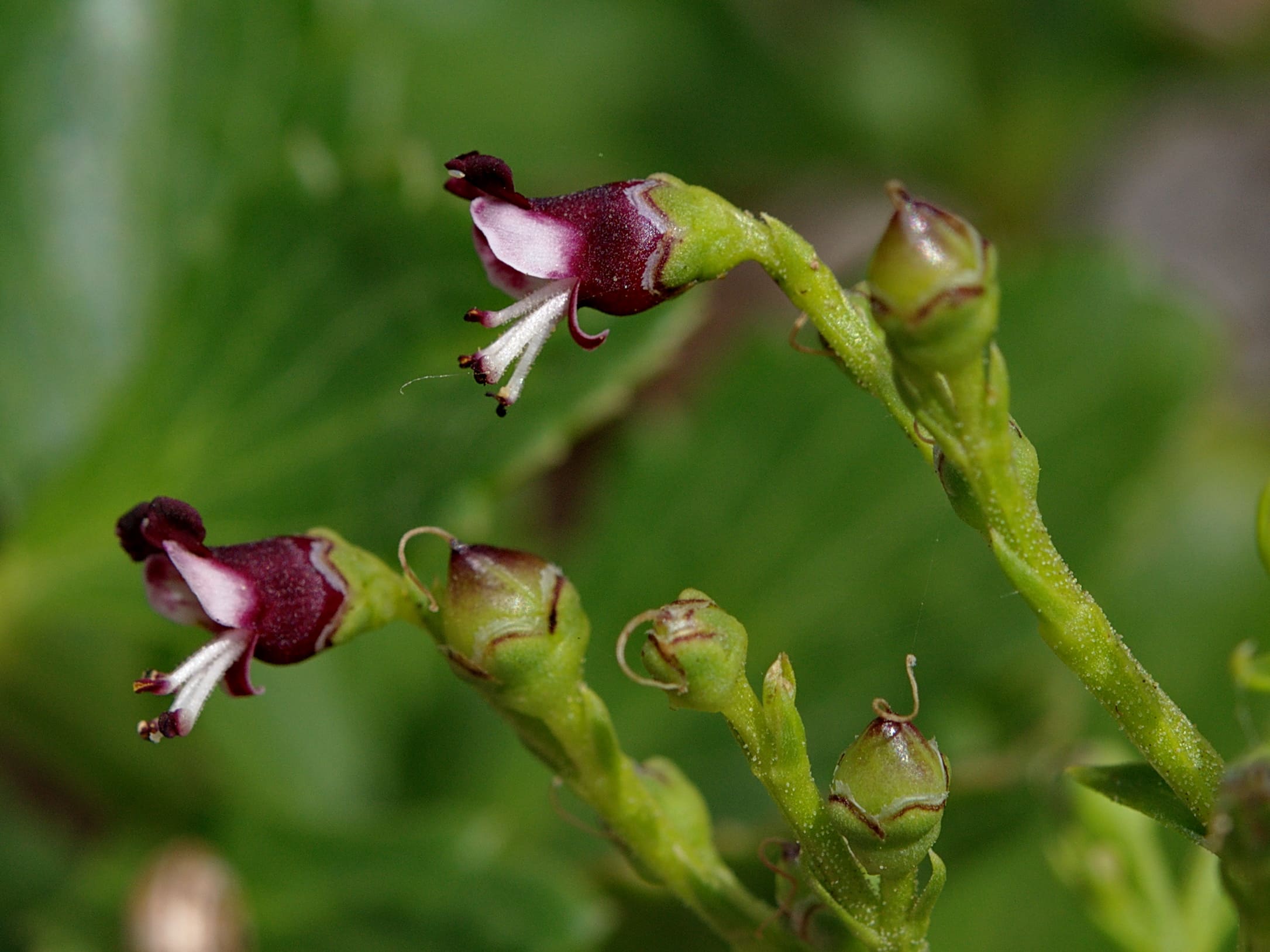
S. frutescens L. is a subshrub that can reach 70 cm in height; with linear staminode and divisions of the calyx with wide membranous and dentate margin as in S. canina, with thicker leaves, entire, except for the lower leaves that are pinnatifid. It grows in dunes and sandy soils of the southern Iberian Peninsula and the Atlantic coastal areas of Morocco.
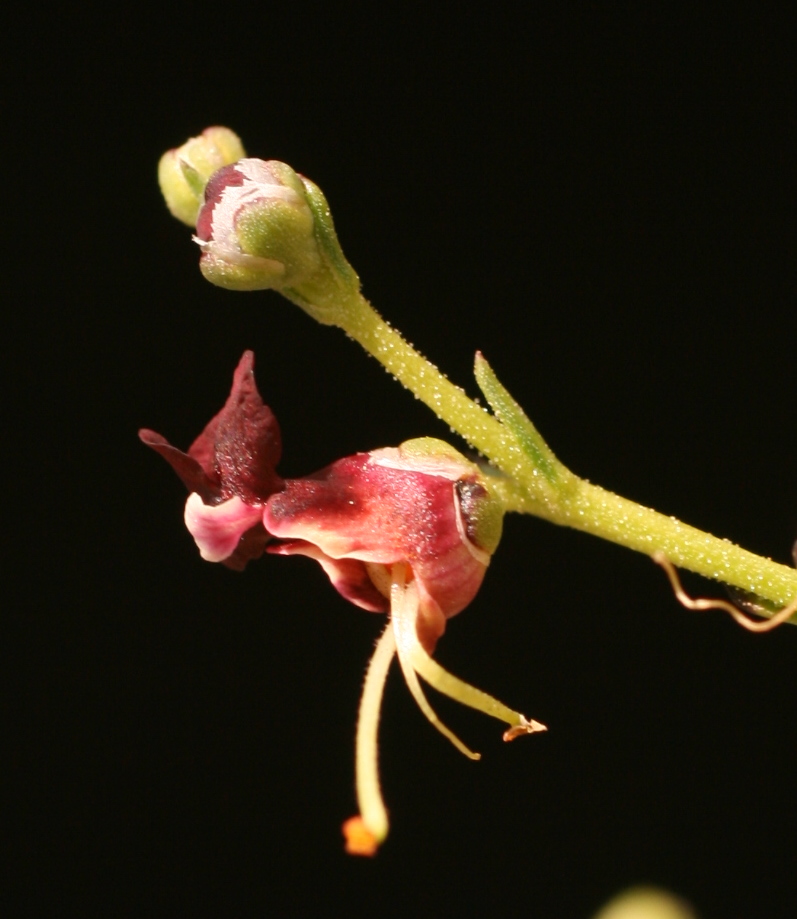
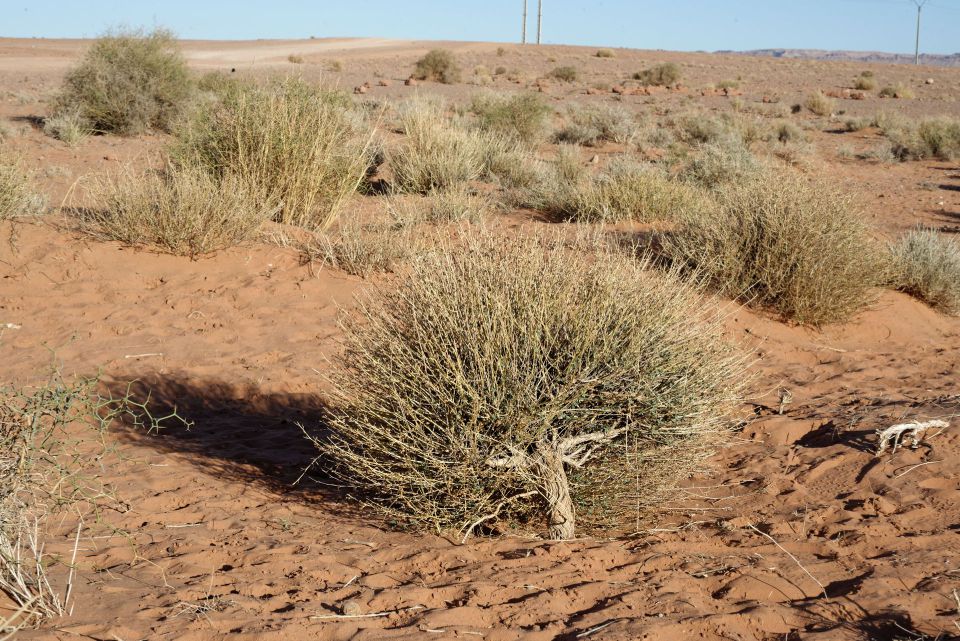
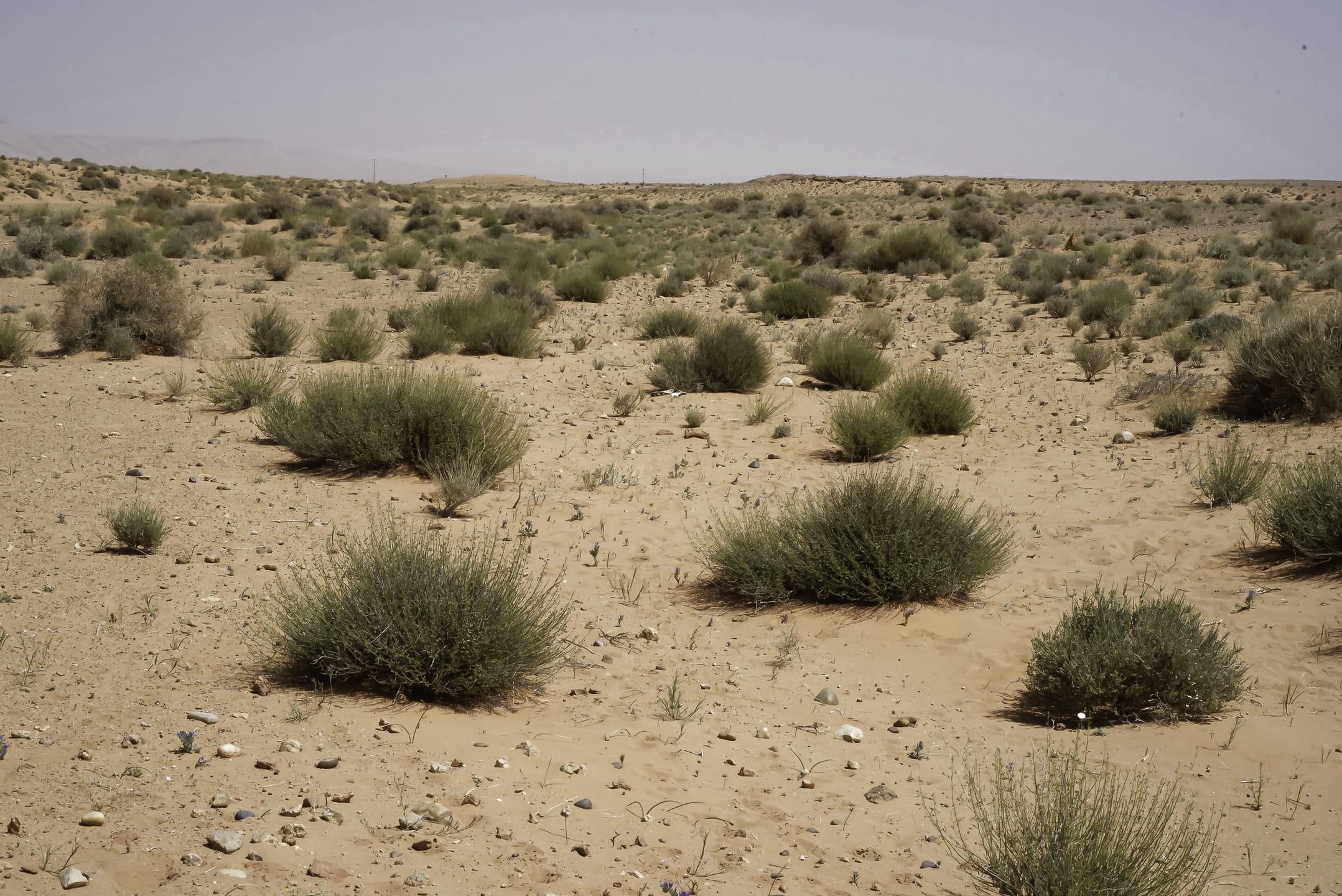
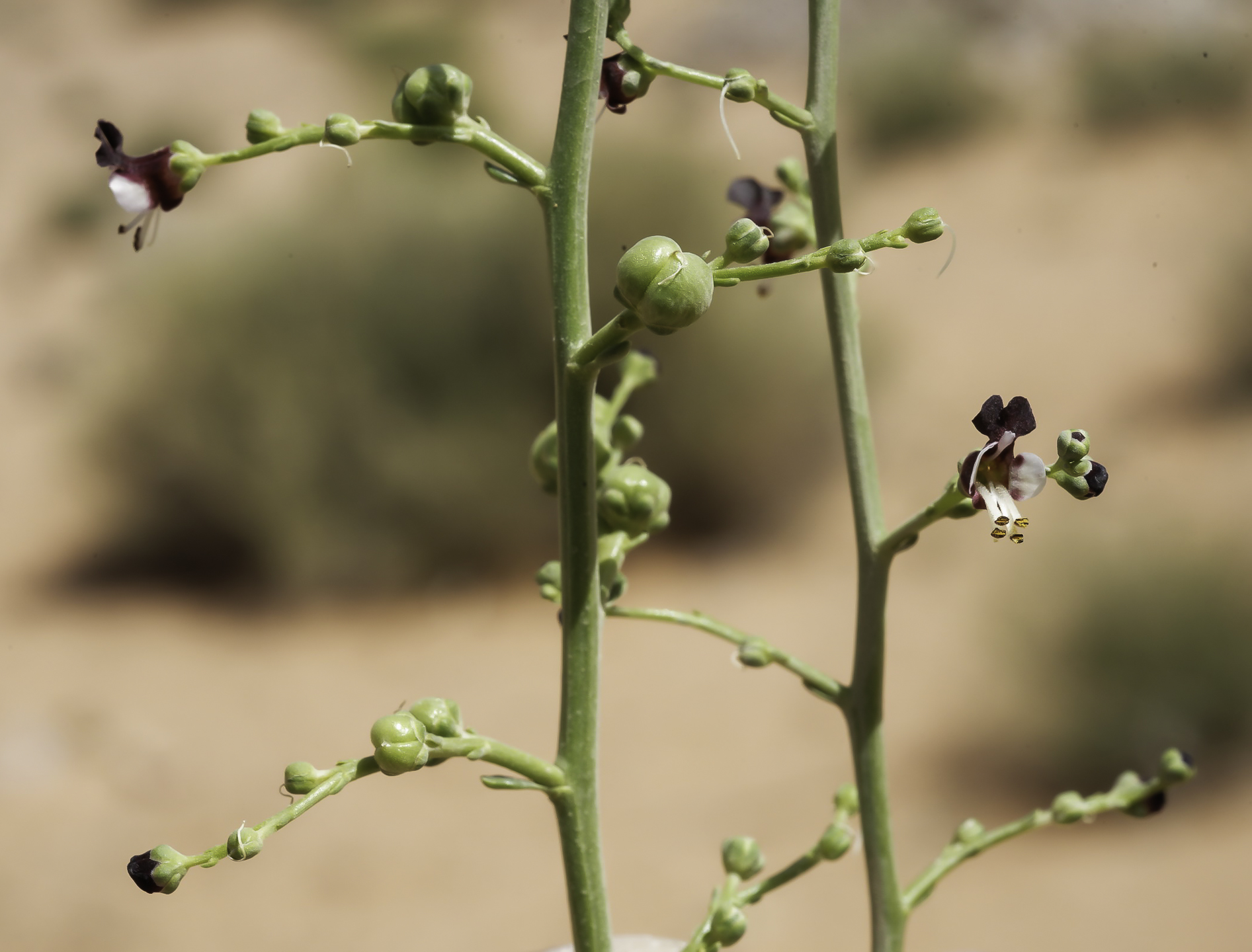
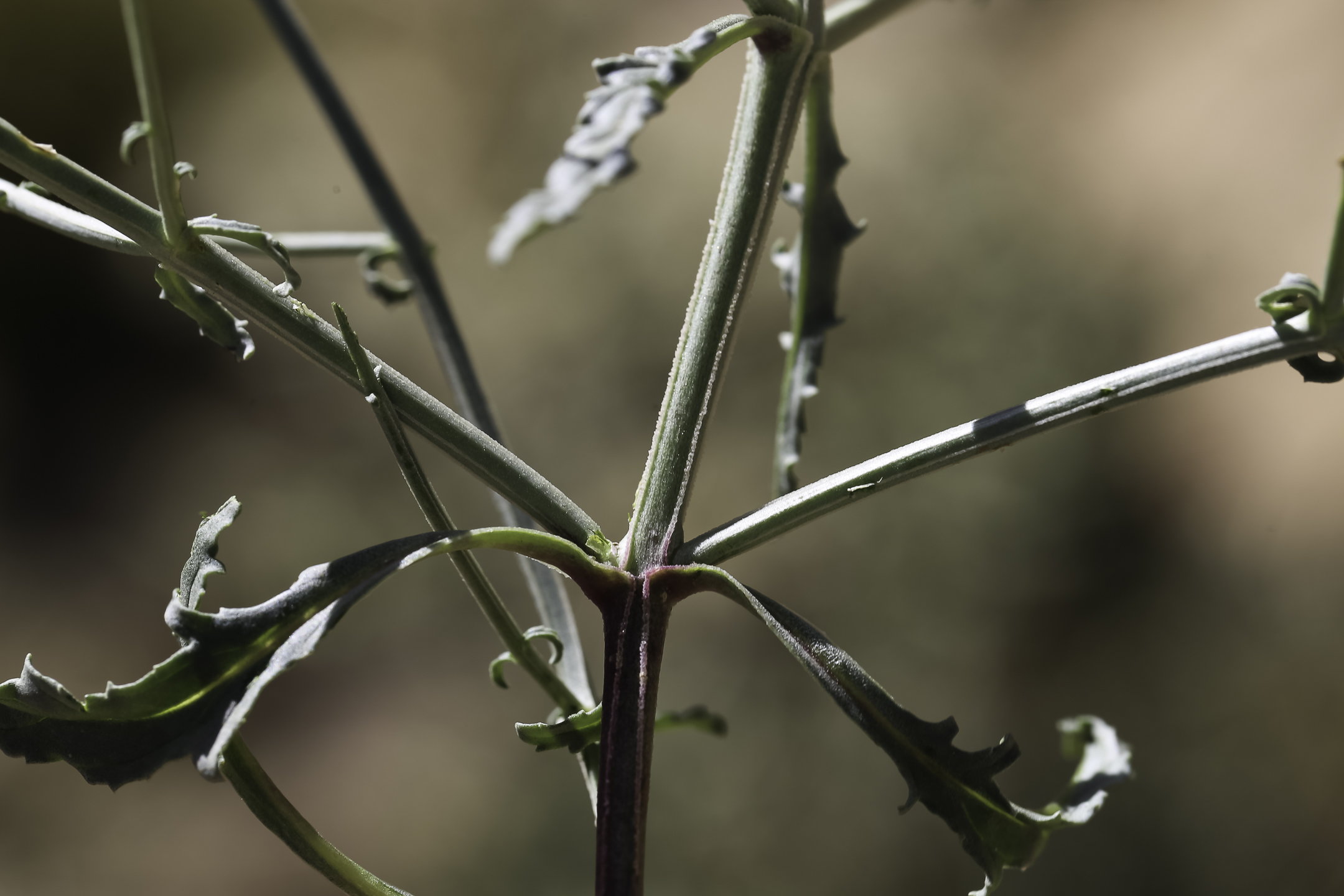
S. syriaca A.DC. [S. saharae Batt., S. hypericifolia auct., non Wydler] and S. macrorrhyncha (Humbert, Litard. & Maire) Ibn Tattou are subshrubs that barely reach 50 cm in height. Also both with linear staminode, sometimes subovate in the former species, but with calyx lobes with narrow scarious and entire margin. In S. syriaca the corolla is brownish and 4-5 mm and capsules 3-4 mm, while in S. macrorrhyncha the corolla is red-purple and somewhat larger (5-6 mm) and also with larger capsules (6-8 mm); the former is a plant from the Saharan-Arabian region, found in dry and desert areas of North Africa, while the latter is endemic to Morocco, with a range extending from the Anti-Atlas to the NE of the country.
Rare species common and with small distribution areas. Currently, none have been assessed at a global level in the IUCN Red List of Threatened Species. In the Livre Rouge de la flore vasculaire du Maroc (Fennane, 2021) S. macrorrhyncha has been considered as Vulnerable (VU).
Updated by: B. Valdés & J. Charco.