Lavandula dentata L.
Eng.: Toothed lavender. Spa.: Espliego dentado, lavanda dentada. Fre.: Lavande dentée, lavande à feuilles dentées. Ara.: Djaïda, liazir, helhal. Tam.: Amezzur.
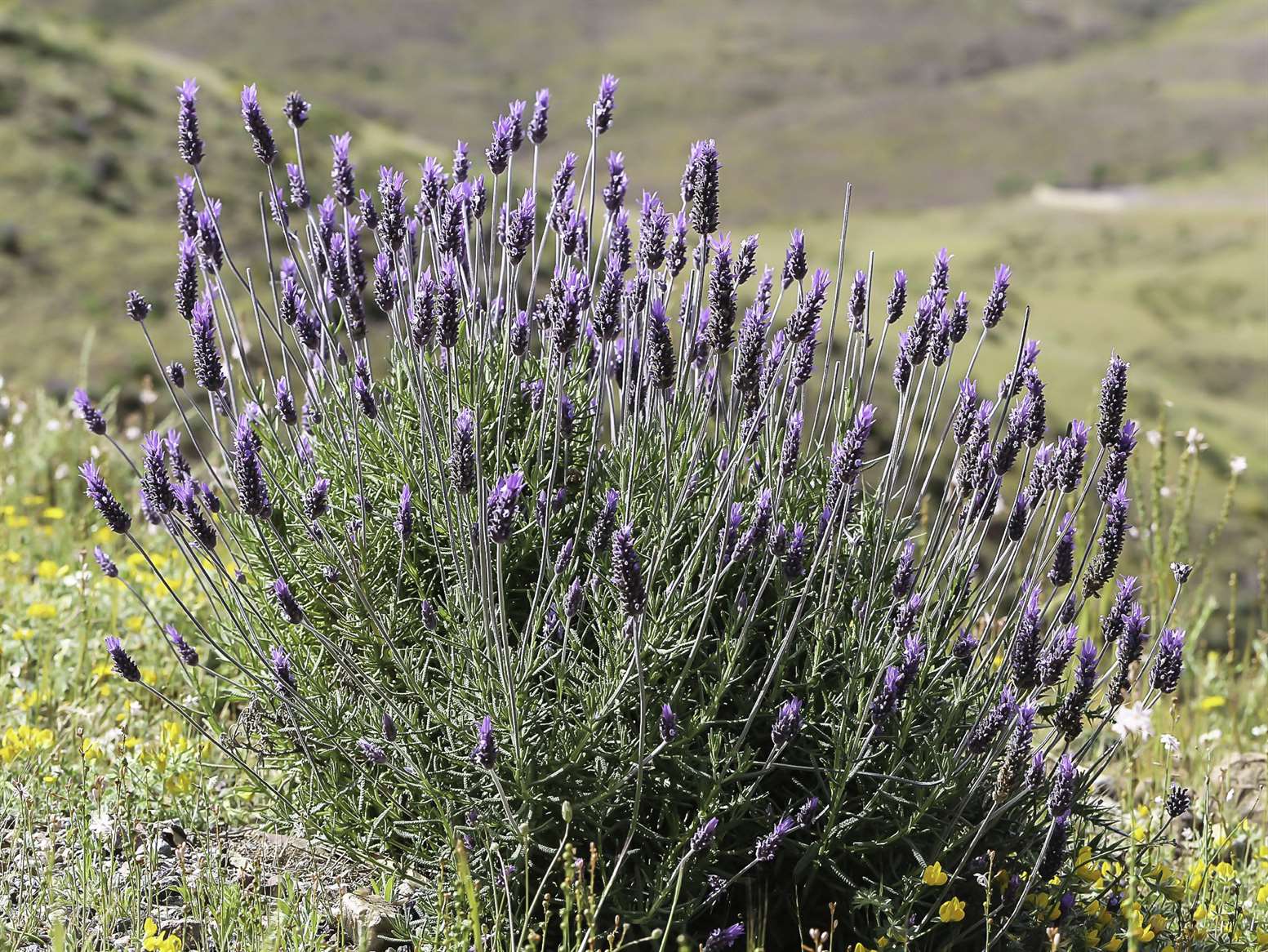
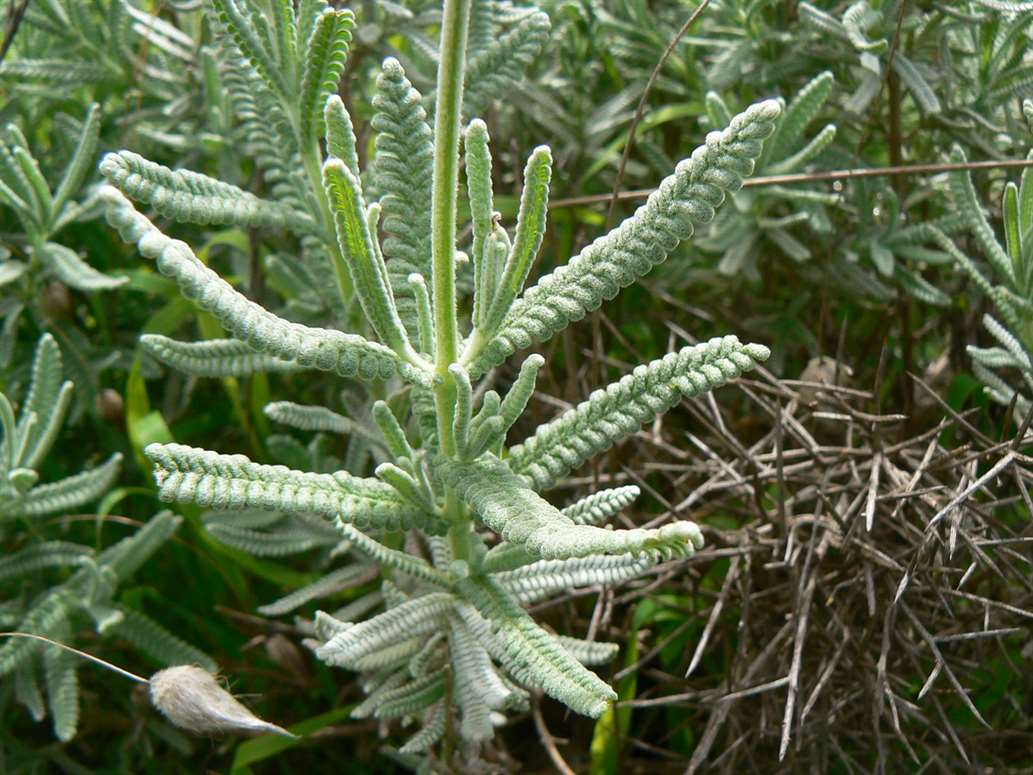
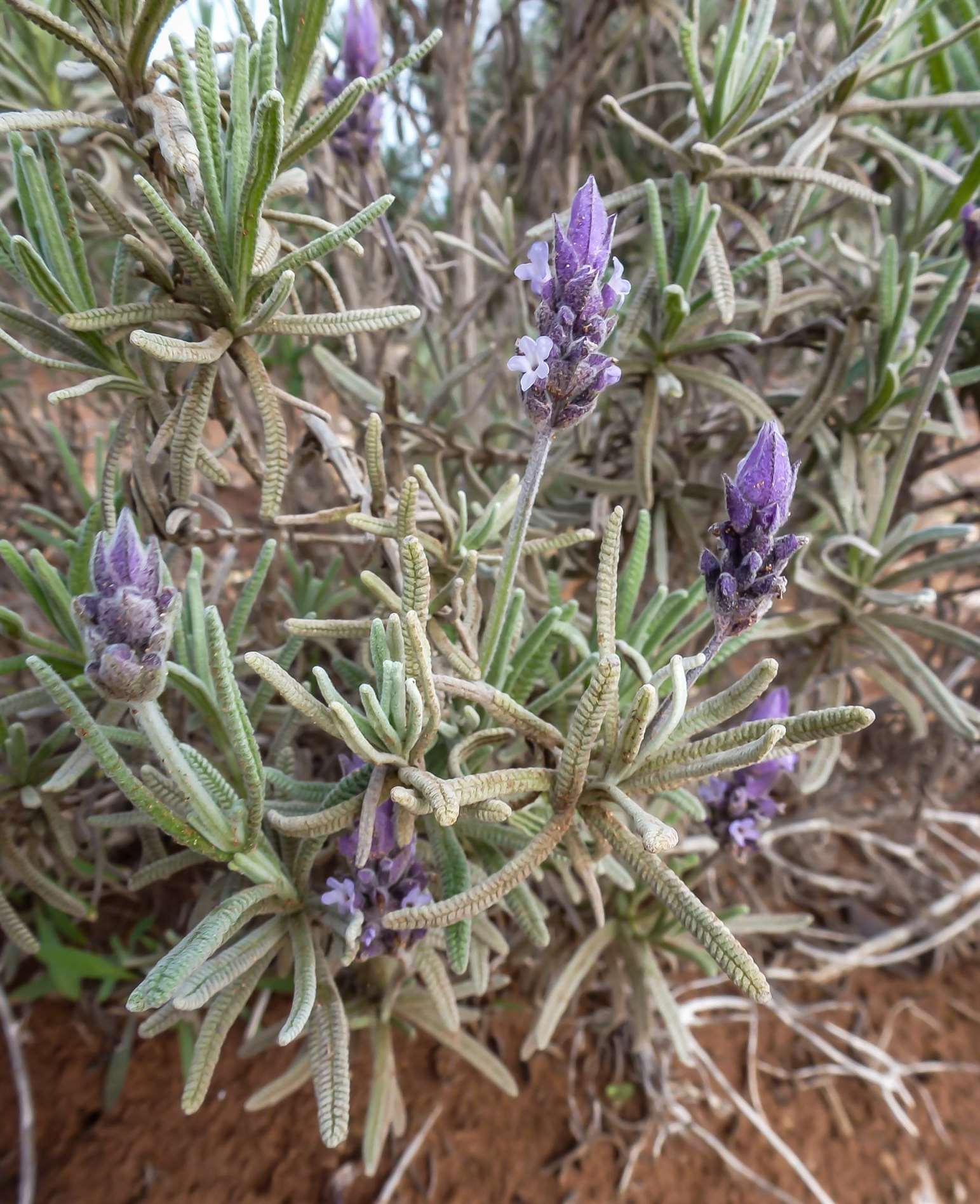
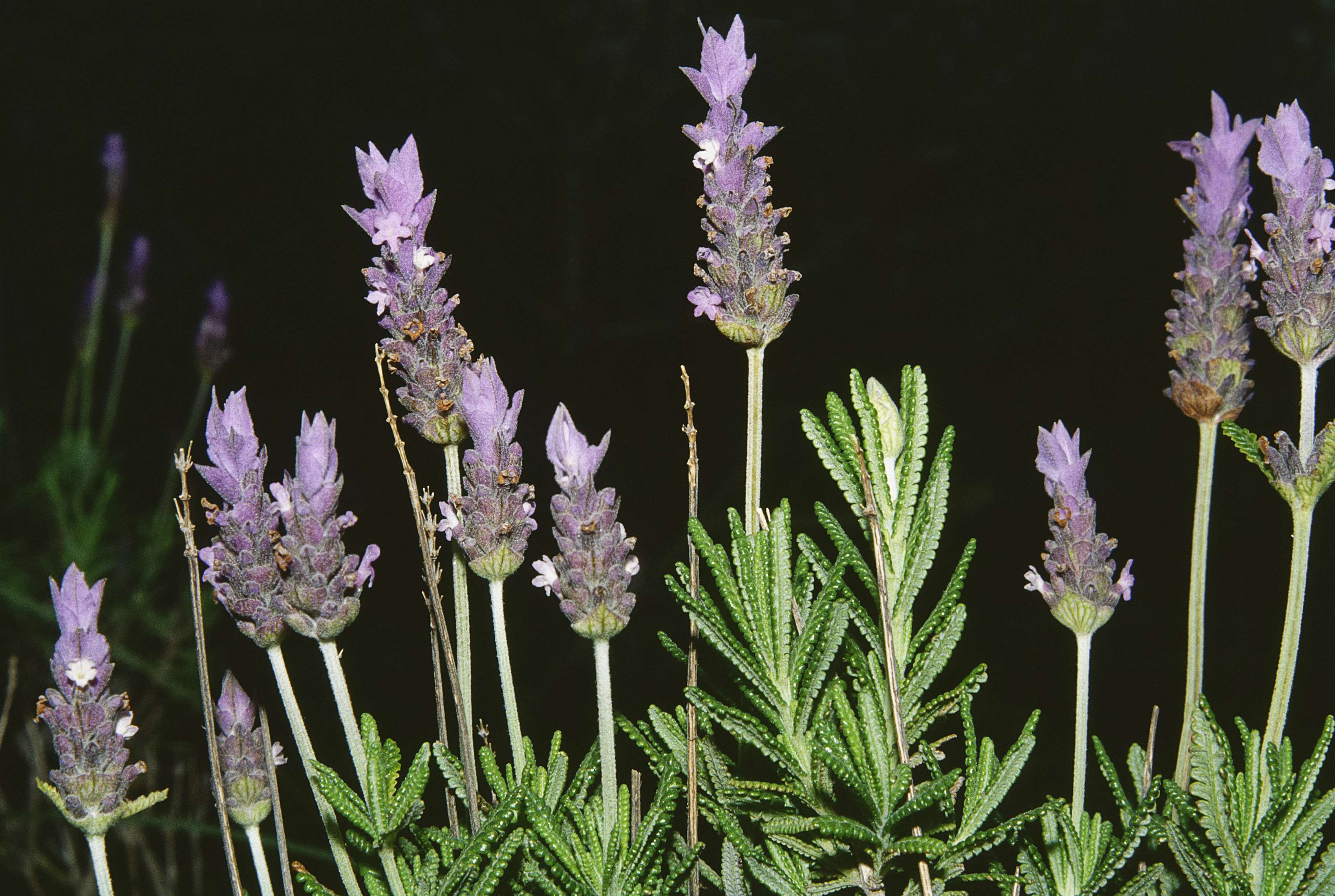
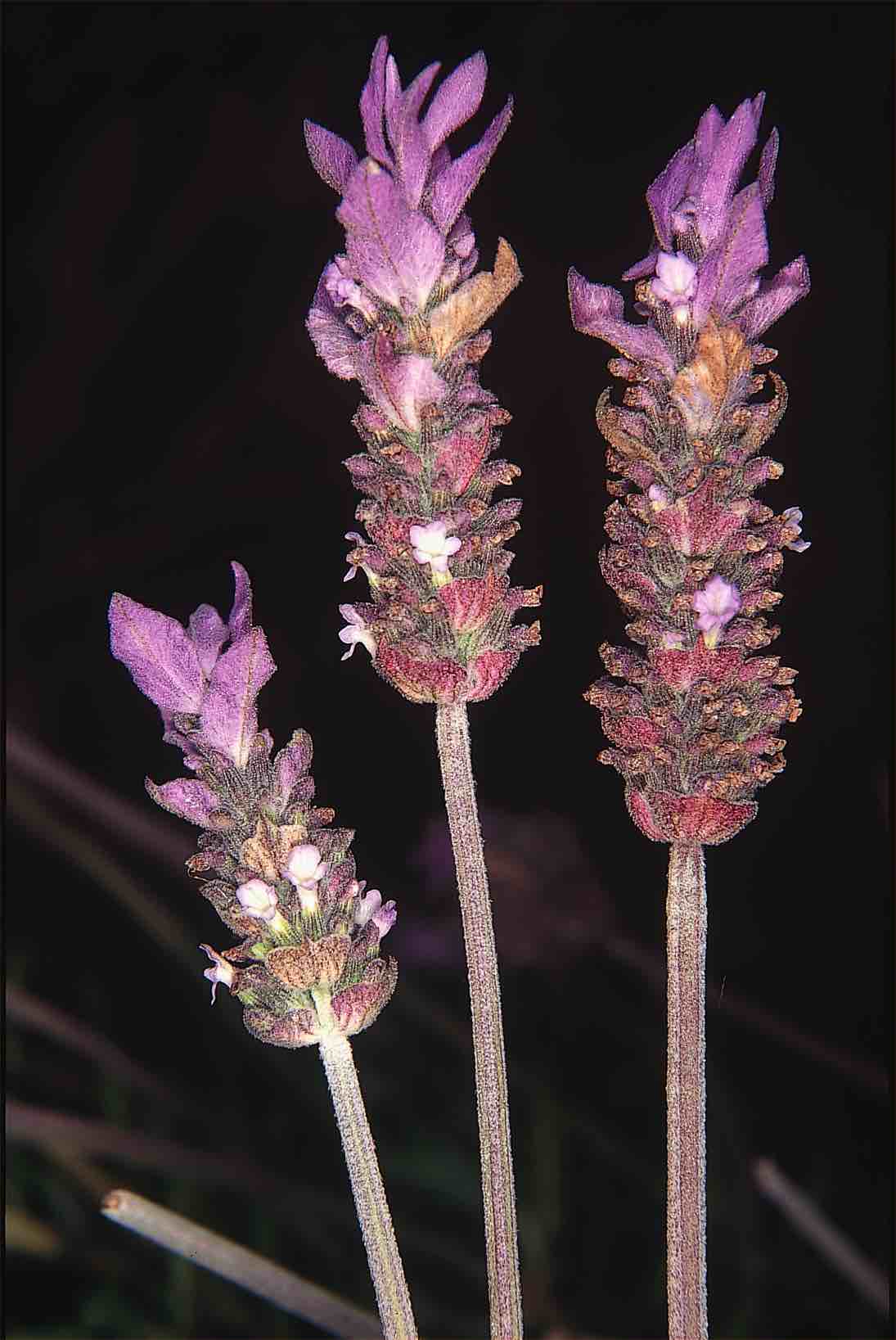
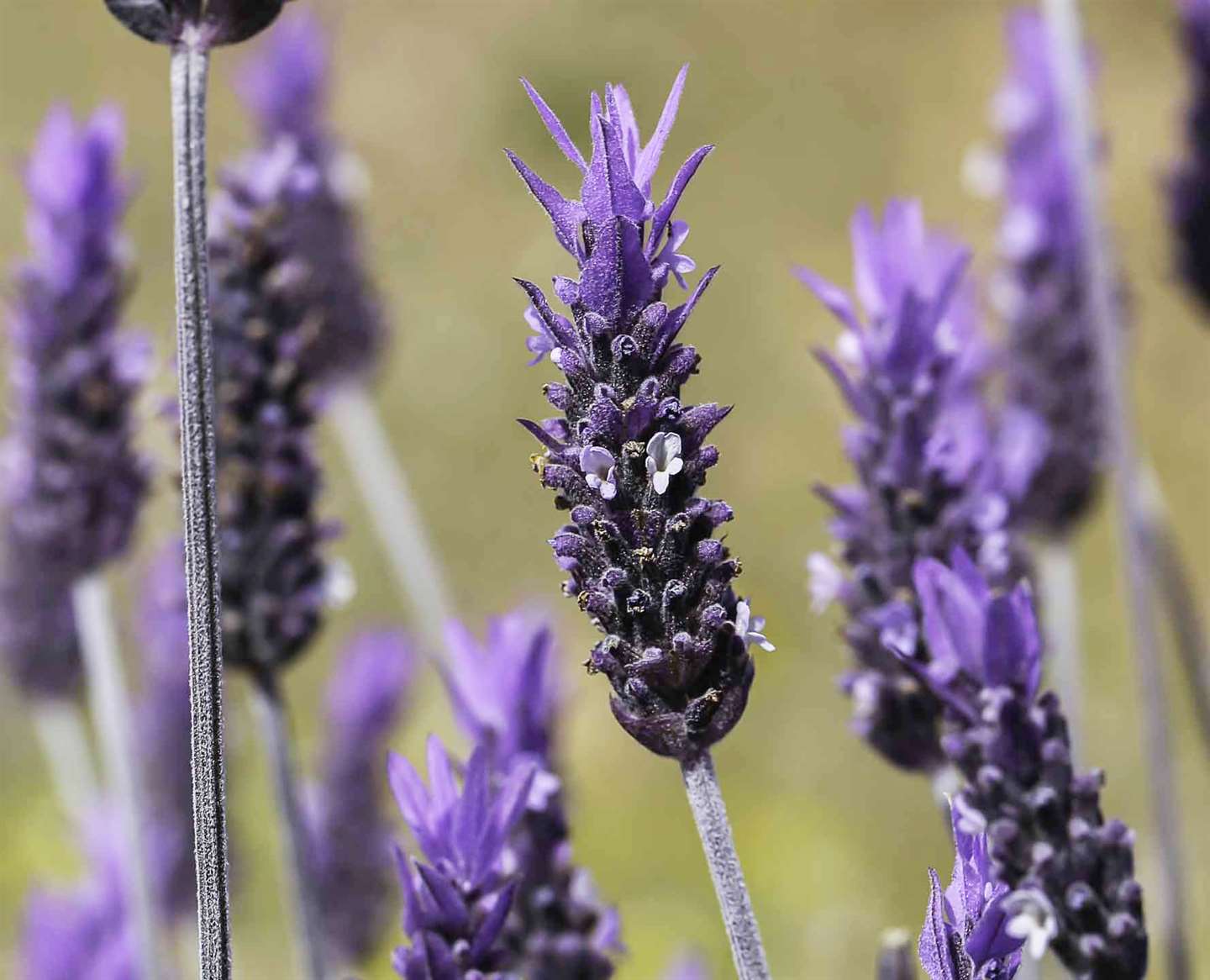
Shrub or subshrub, evergreen, hermaphrodite, up to 1.5(1.8) m in height, erect, ramose. Stems and older branches brown-greyish, fissured longitudinally. Young branches tetragonal, sometimes very angular, green, but appearing whitish because of being covered with a dense tomentum of white hairs. Leaves (1.5-4 × 0.2-0.7 cm), very numerous (so that in young branches only the floral stem or peduncle of the spike is visible), linear or linear-lanceolate, with margin deeply crenate-dentate and revolute, obtuse, sessile, glabrescent and bright green on the upper side, villous and whitish on the underside. Inflorescence in terminal spikes ± circular in cross section, with a tuft of petaloid bracts at the top, darker than the flowers (sometimes this tuft is very small or even non-existent). Calyx ovoid-tubular, with 5 small teeth. Corolla pinkish, purplish or bluish, rarely whitish; ovoid, tubular, bilabiate, with 5 lobules open in the shape of a star. Fruit is very small and included in the persistent calyx tube.
Flowering:
March to June.
Fruiting:
May to August.
Habitat:
Open forests, thickets, preferably on calcareous soils. From semiarid to subhumid bioclimate, on inframediterranean and thermomediterranean floors.
Distribution:
Western Mediterranean and Macaronesian islands. In North Africa it is widely distributed throughout the Mediterranean region of Morocco (including the Anti-Atlas) and NW Algeria. In NE Algeria this species is very rare. Its presence in Tunisia is doubtful.
Conservation status:
Common and widespread species. Currently, it has not been assessed at a global level in the IUCN Red List of Threatened Species. In the Livre Rouge de la flore vasculaire du Maroc (Fennane, 2021) it has been considered as Least Concern (LC).