Sideritis incana L.
Spa.: Rabogato. Fre.: Crapaudine. Tam.: mejjo.
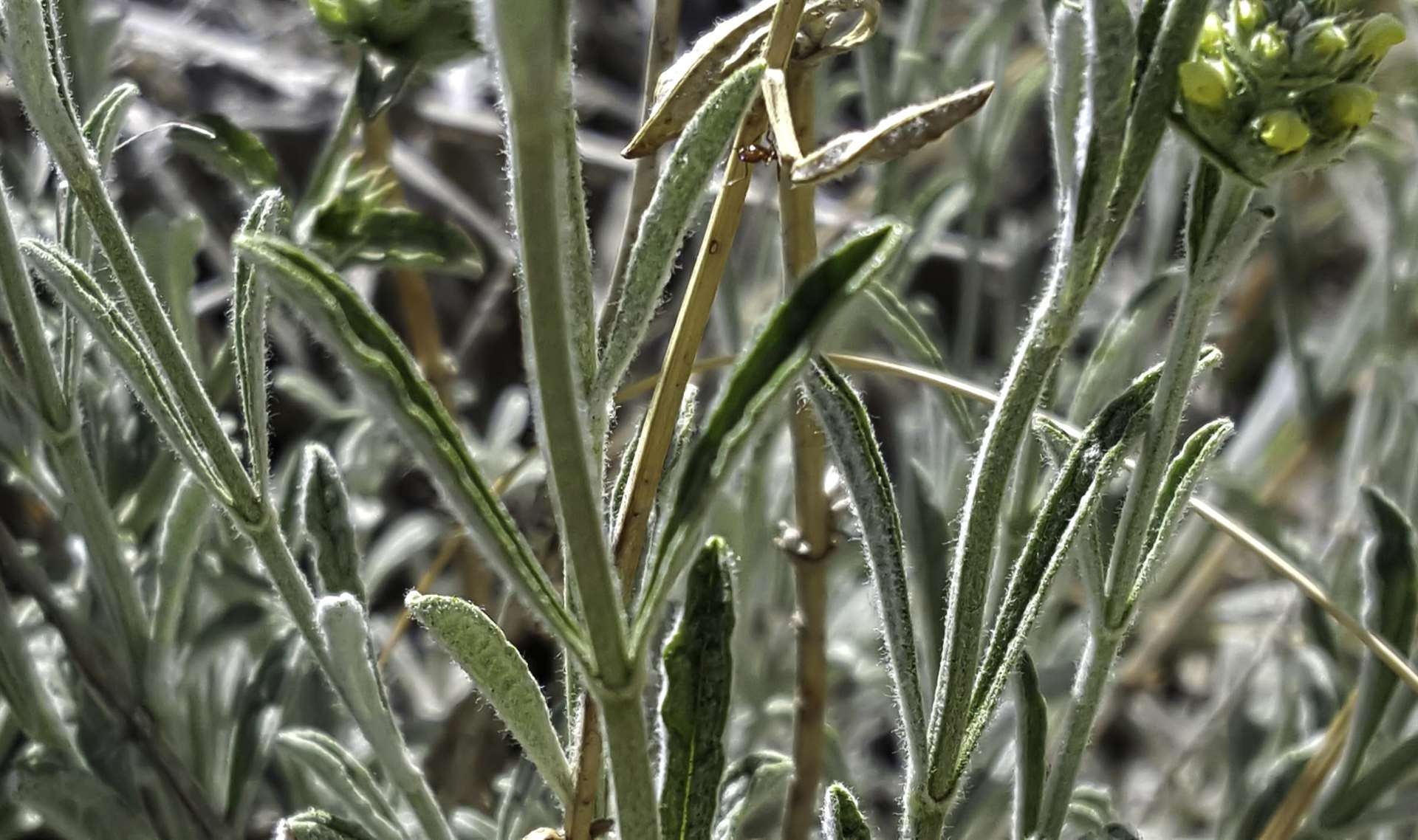
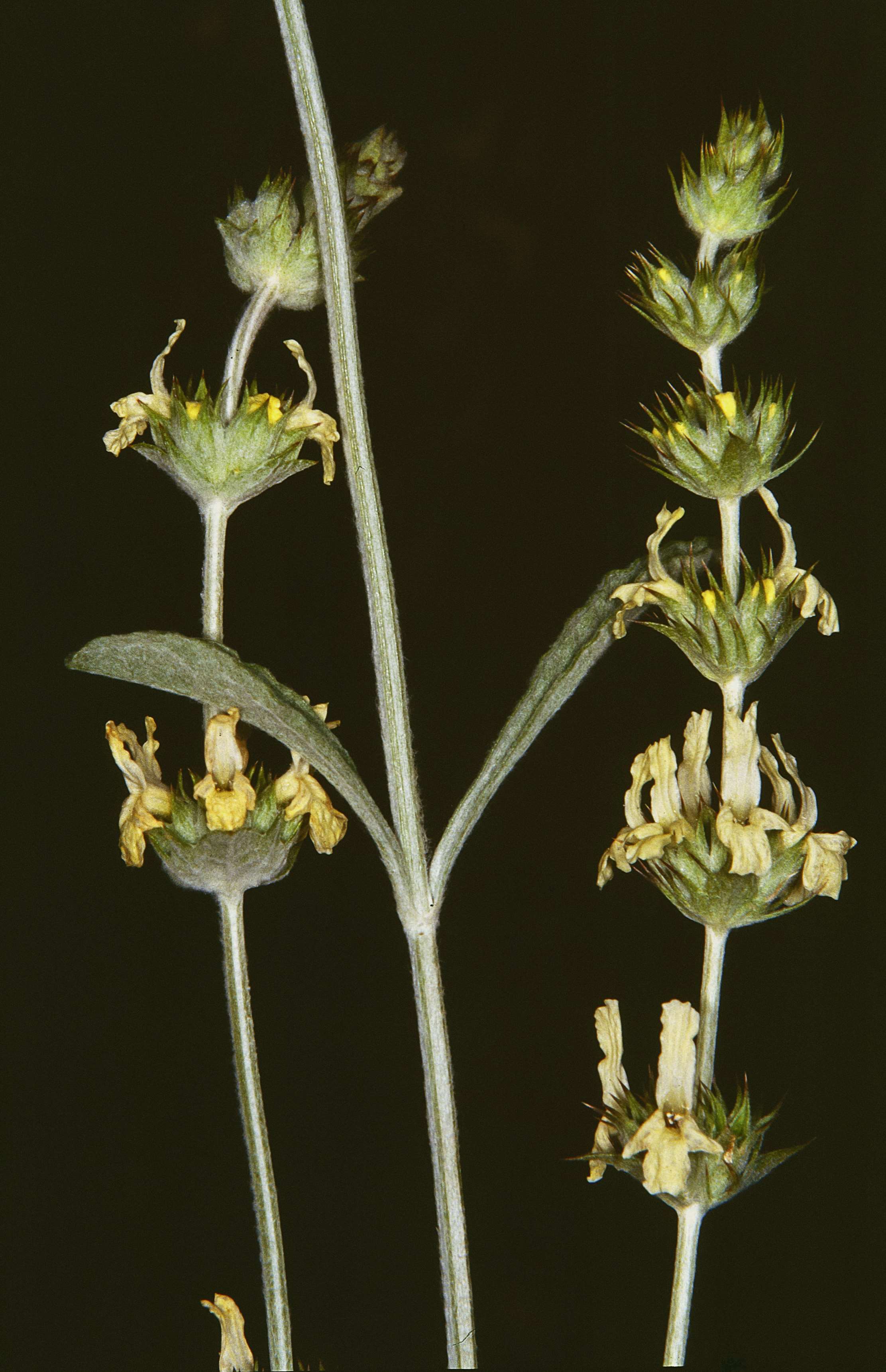
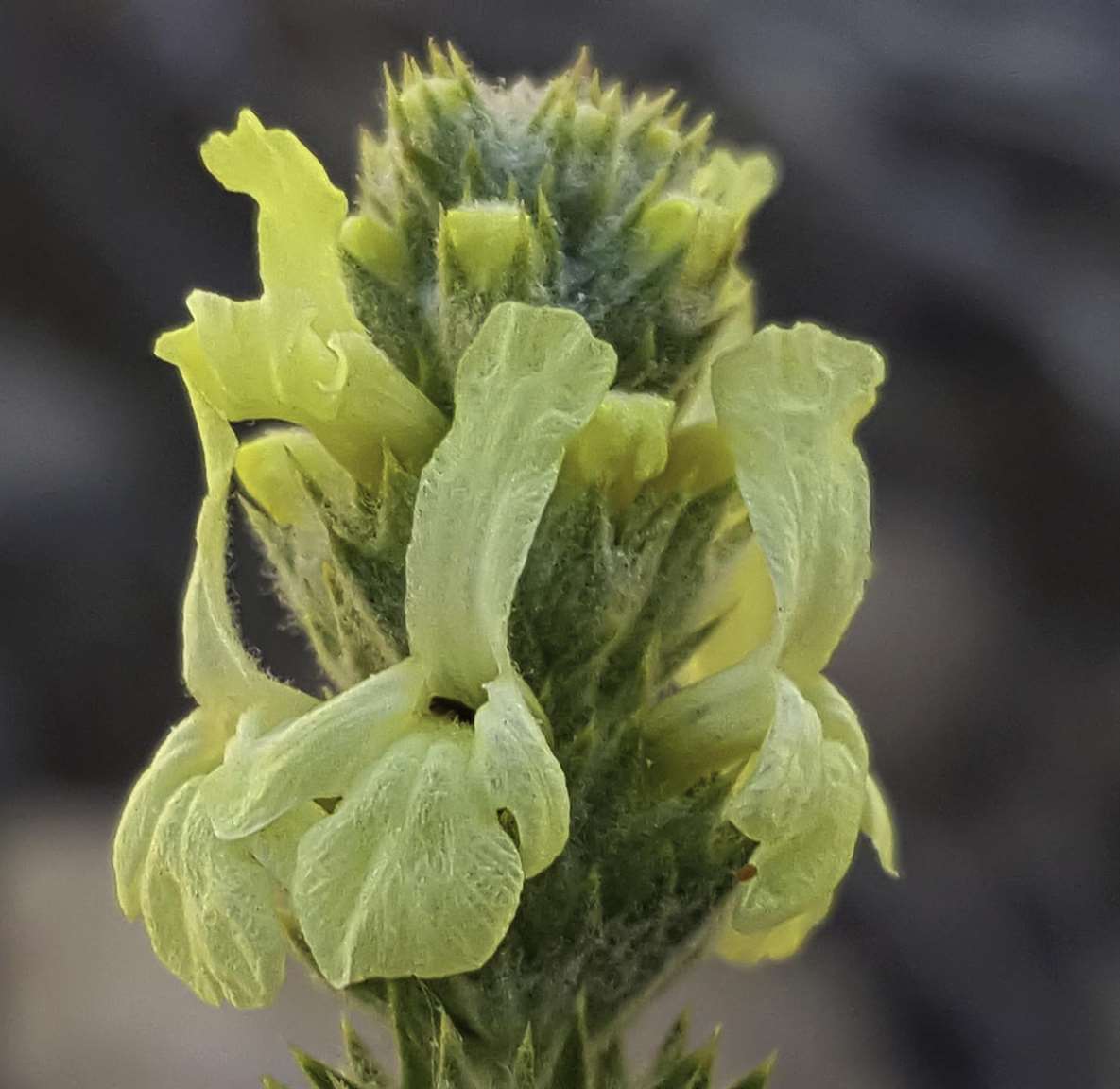
Woody plant, up to 40 (60) cm in height. Base of the stems densely and uniformly covered with undulate hairs turned upwards or downwards, with ribbon-shaped cells, without glands or glandular hairs. Lower leaves 13-22 × 2-4 mm, without petioles, entire, linear-spatulate, obtuse, covered with hairs. Inflorescences cylindrical, 2-15 cm, with 3-10 verticillasters, each with 6 flowers, axis covered with undulate hairs, without glands or glandular hairs. Bracts of central verticillasters 3-5 × 6-8 mm, with 3-4 teeth on each side, with undulate hairs. Calyx urceolate or campanulate, 5-7 mm, with 5 teeth (1-3 mm), ending in spines (0.9-1.1 mm), without hairs or with very few hairs in the throat of the calyx. Corolla 8-12 mm, upper and lower lips yellow. Style 2-3 mm. Fruits ovoid, 1.8-2.2 mm.
Flowering:
May to July.
Fruiting:
May to July.
Habitat:
Small, sparse thickets dominated by Thymus spp. and larger denser thicket formations from almost sea level to about 2,000 m in altitude.
Distribution:
Endemic to the western Mediterranean. In North Africa, in the Mediterranean areas of Morocco, Algeria and Tunisia.
Observations:
Polymorphic species of which several subspecies, varieties and forms, have been described, many of them not clearly defined. Currently (Index SFAN, 2012) there are 3 subspecies accepted in North Africa. Subsp. incana distributed in Morocco, Algeria and Tunisia; subsp. matris-filiae (Emb. & Maire) Fennane, endemic to Morocco; and subsp. tunetana Murb., endemic to Tunisia.
Conservation status:
Rare but widely distributed species. Currently, it has not been assessed at a global level in the IUCN Red List of Threatened Species. In the Livre Rouge de la flore vasculaire du Maroc (Fennane, 2021) it has been considered as Least Concern (LC).