Saccocalyx satureioides Coss. & Durieu
Fre.: Sariette indigène. Ara.: Zaater, zaatar armel. Tam.: Azir el ibel.
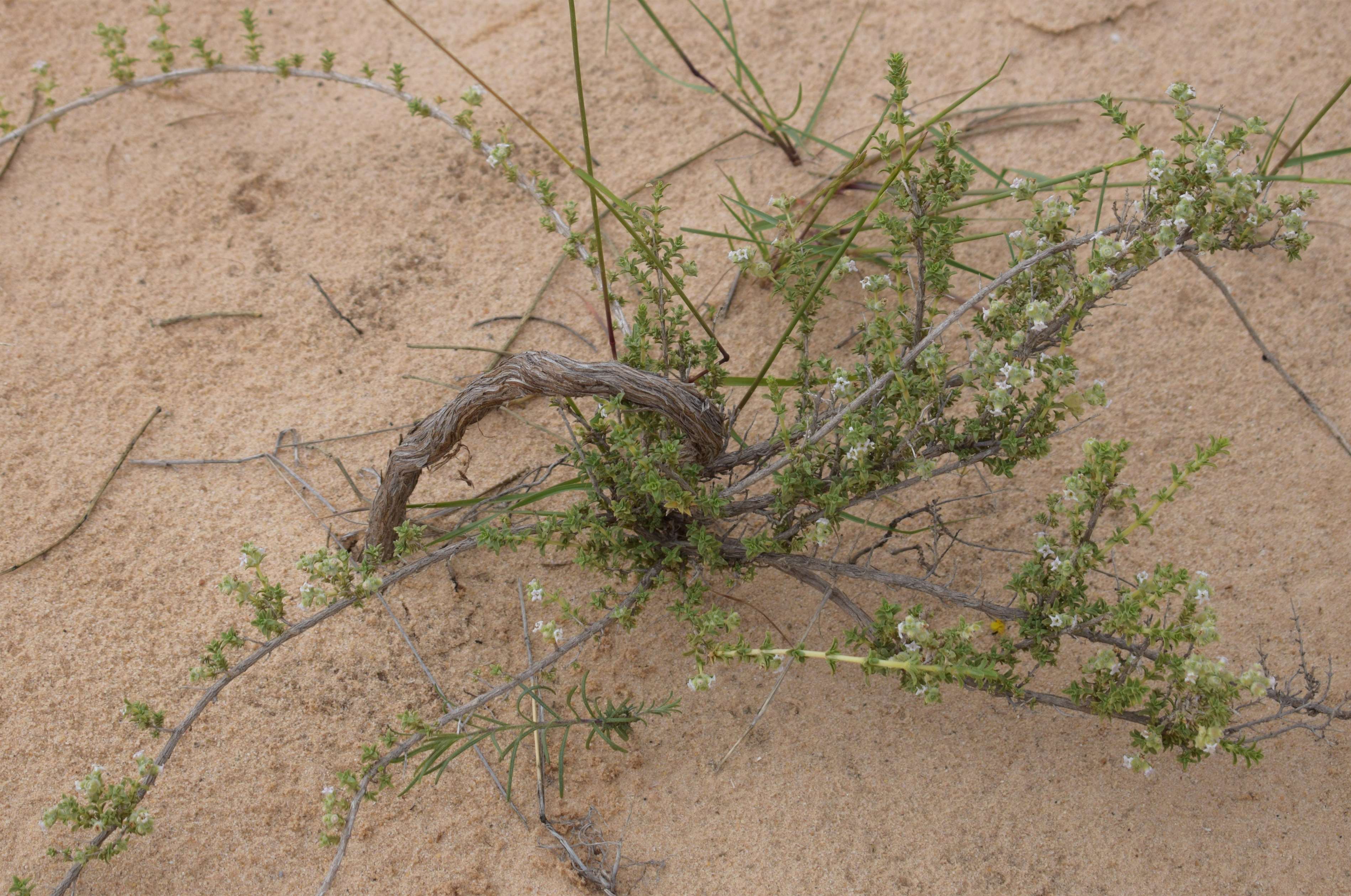
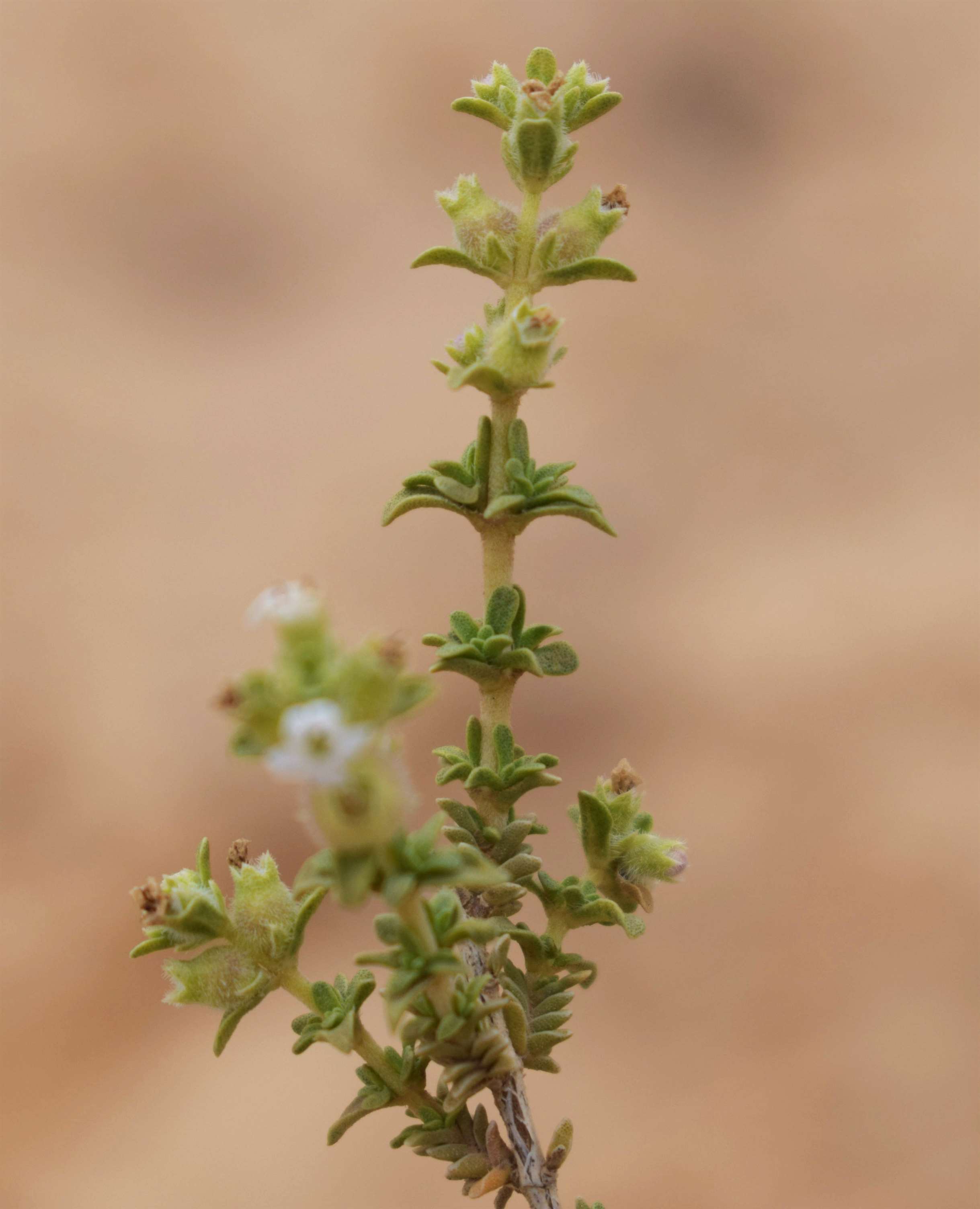
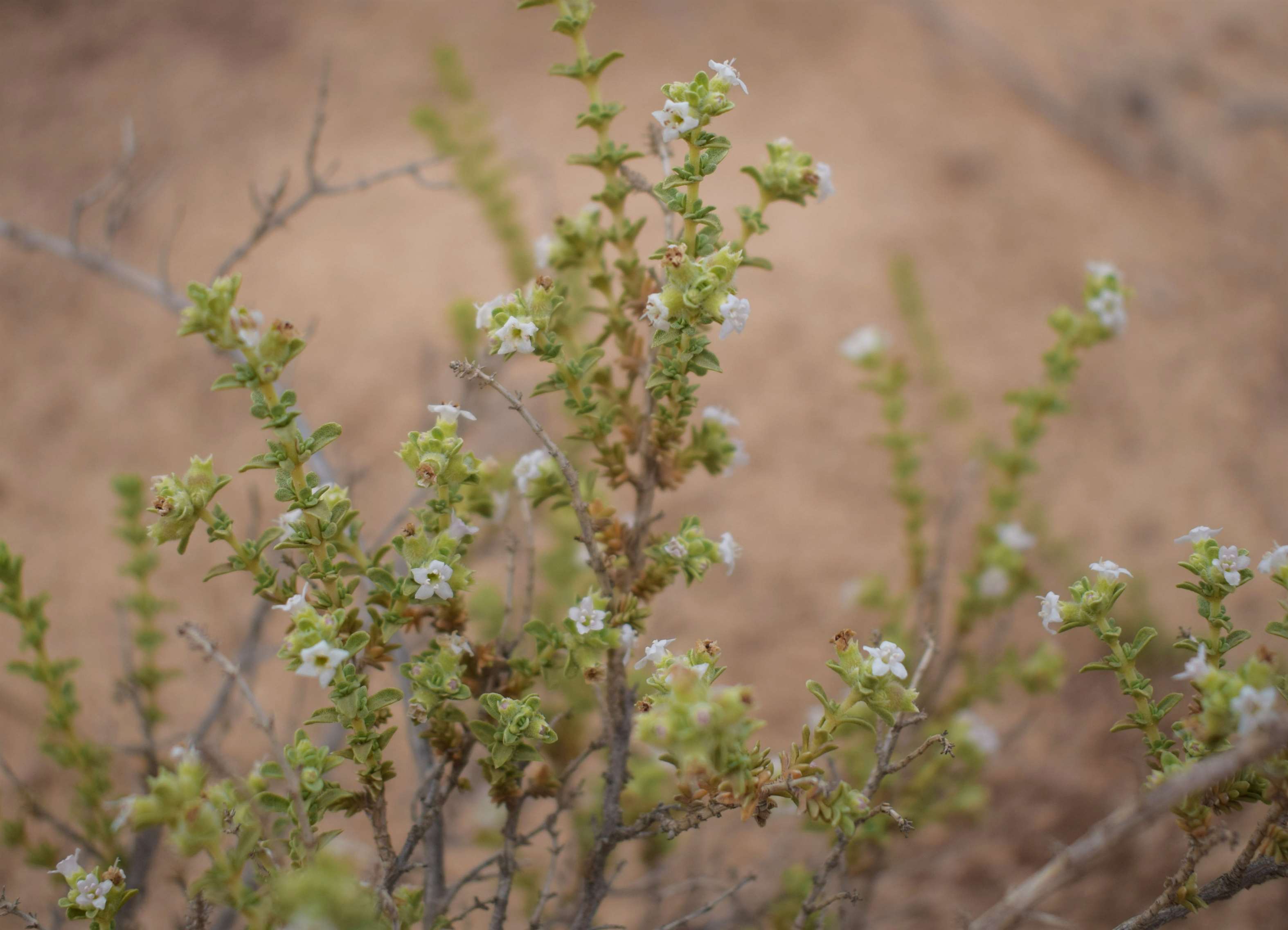
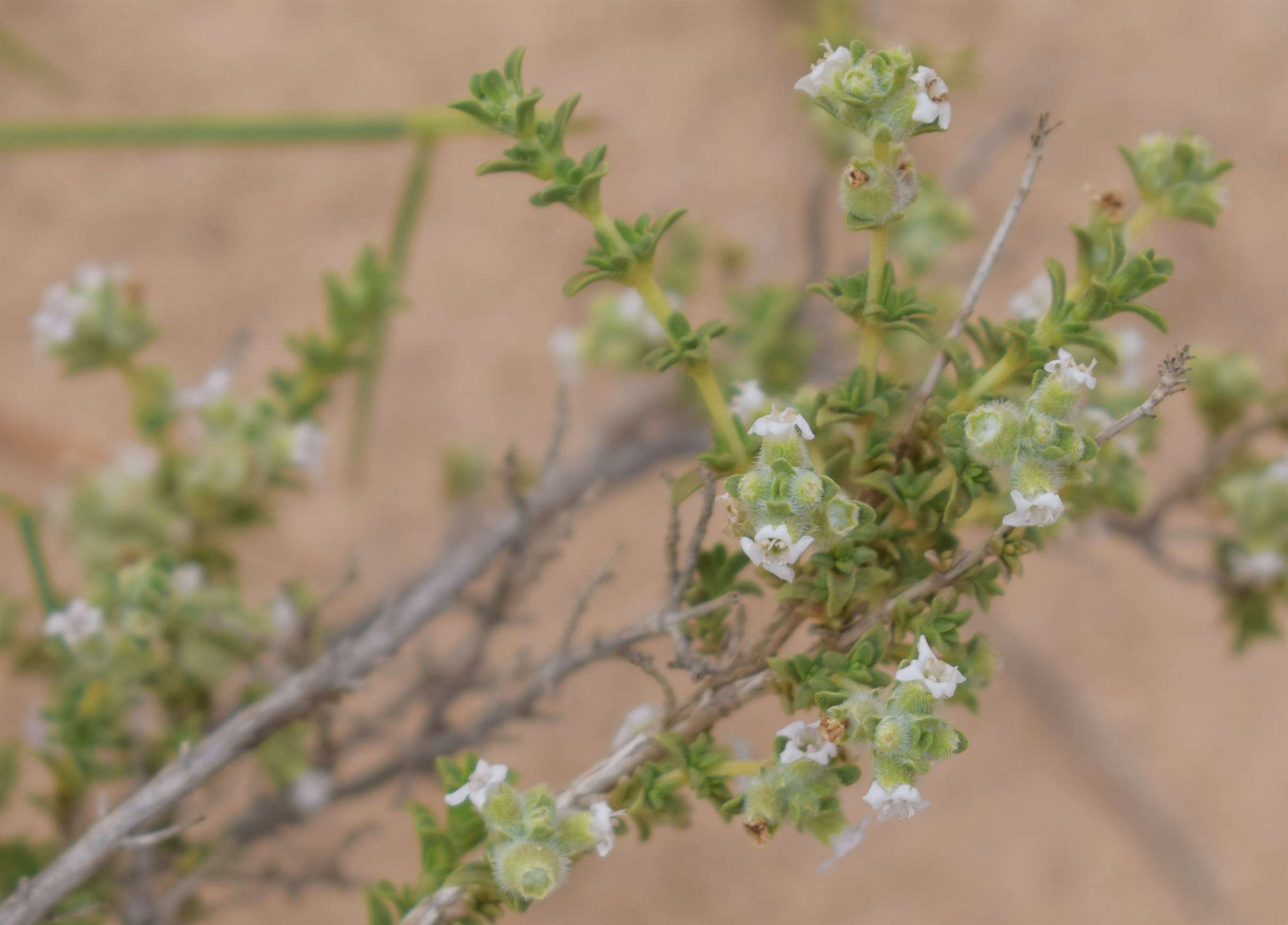
Shrub or subshrub, hermaphrodite, up to 1.2 m in height, aromatic, old branches usually decumbent and rooting, and young branchlets erect. Leaves in small fascicles at each node, sessile, 6-7 mm, linear-oblong, linear or spatulate, densely glandular, ciliate at the base. Inflorescence in spike of lax verticillasters, with 4-6 flowers in each verticillaster. Calyx c. 3 mm, campanulate, with tube with 15-20 veins and 5 short and straight teeth, accrescent to c. 8 mm and becoming globose during fruiting, completely enclosing the nutlets. Corolla white, pinkish or purple, with tube c. 3 mm, somewhat longer than the calyx and with 4 patent lobes, obtuse; the upper lobe emarginate. Androecium with 4 stamens, with ± the same length, slightly exserted. Style with 2 stigmatic subequal branches. Nutlets oblongish, smooth.
Flowering:
March to June.
Fruiting:
May to July.
Habitat:
Sand dunes and rocky subdesert terrain.
Distribution:
Its range is limited to the subdesert high plateaux of NE Morocco and NW Algeria, Saharan Atlas and to a lesser extent also in the northern Algerian Sahara.
Conservation status:
Rare species with a small distribution area. Currently, it has not been assessed at a global level in the IUCN Red List of Threatened Species. In the Livre Rouge de la flore vasculaire du Maroc (Fennane, 2021) it has been considered as Critically Endangered (CR). In Algeria it is included in its List of protected non cultivated flora (Executive Decree 12-03 on 4-Jan-2012).