Erica scoparia L.
Eng.: Besom heat, green heath. Spa.: Brezo de escobas. Fre.: Bruyère à balais. Ara.: Chanddaf, chendek, hellala, jerjir, meslah, khlenj.
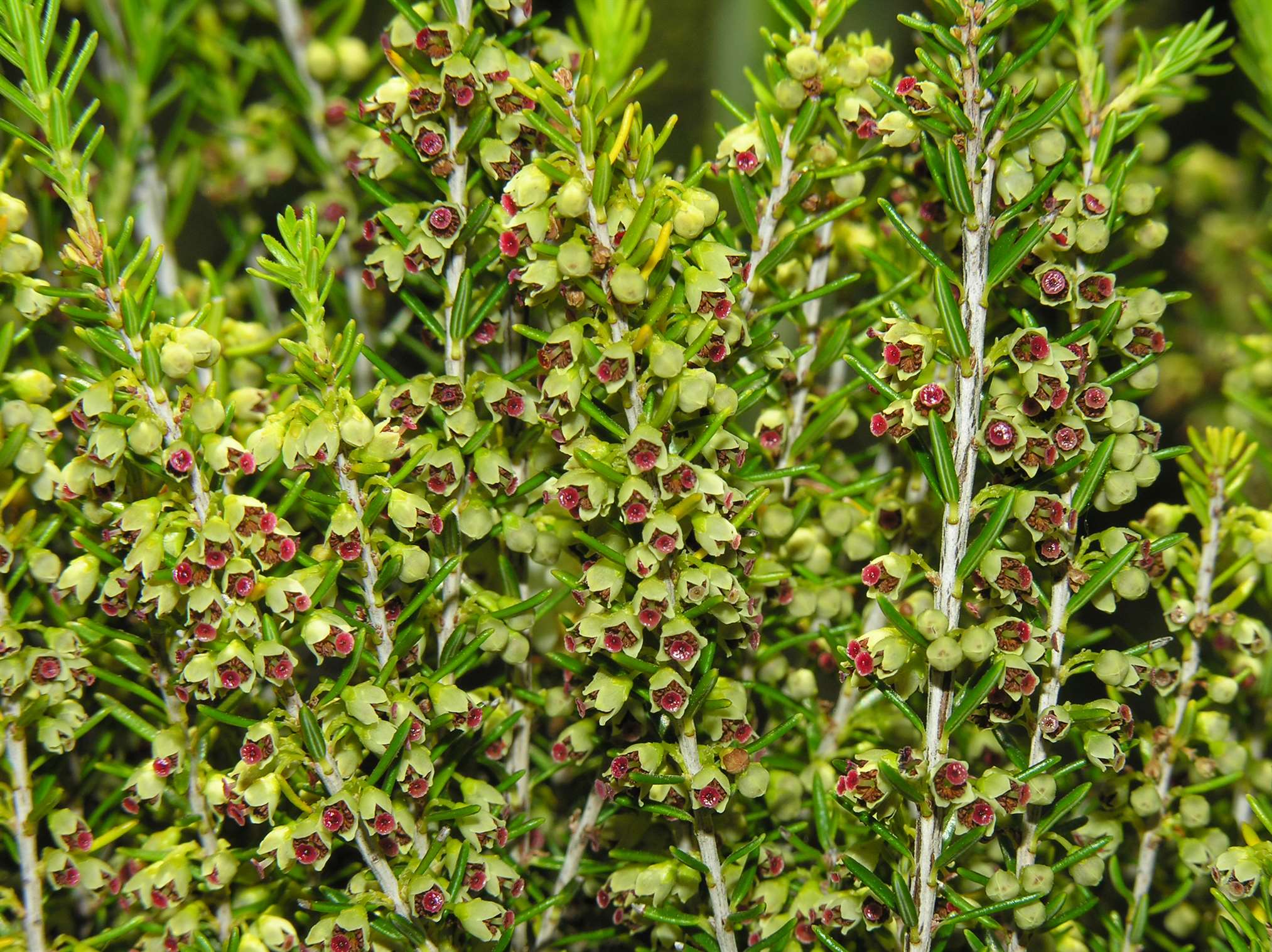
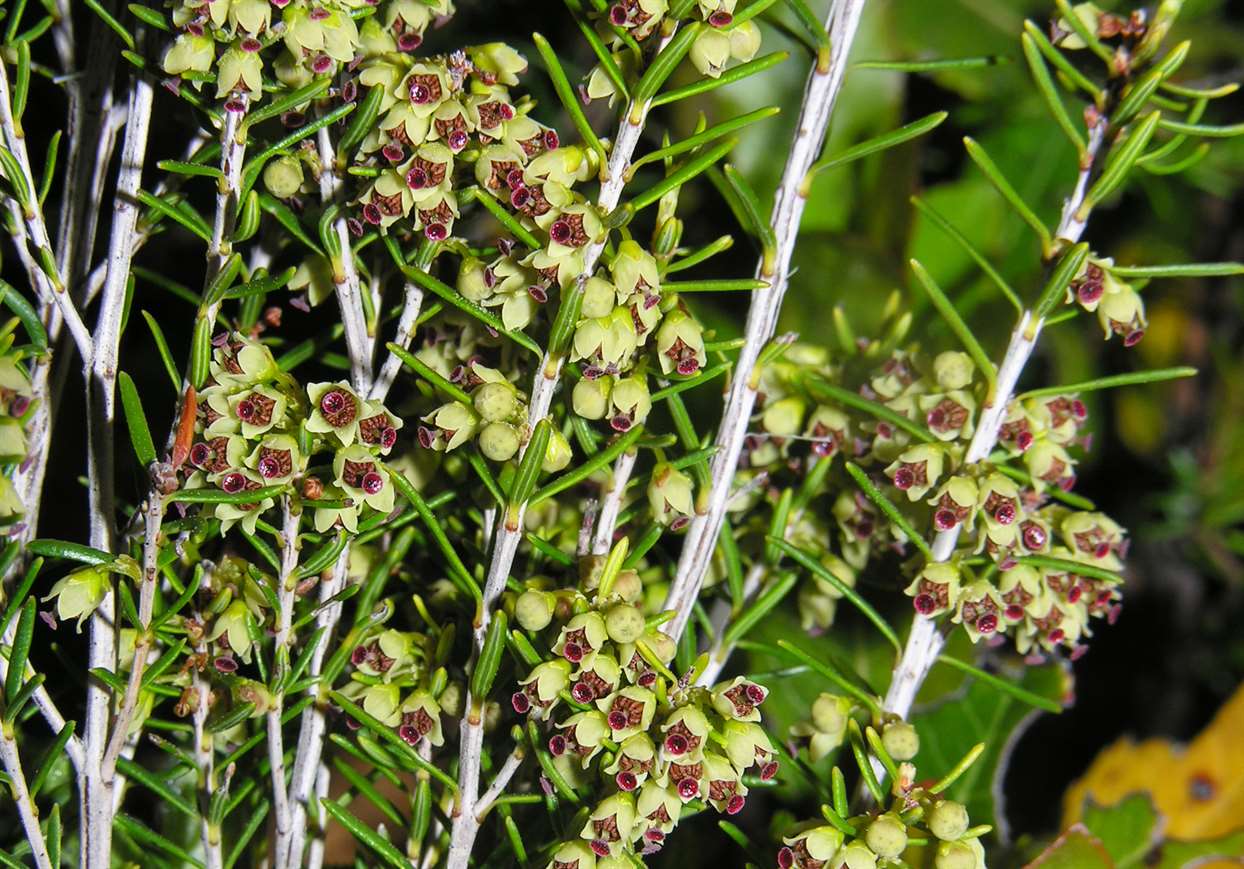
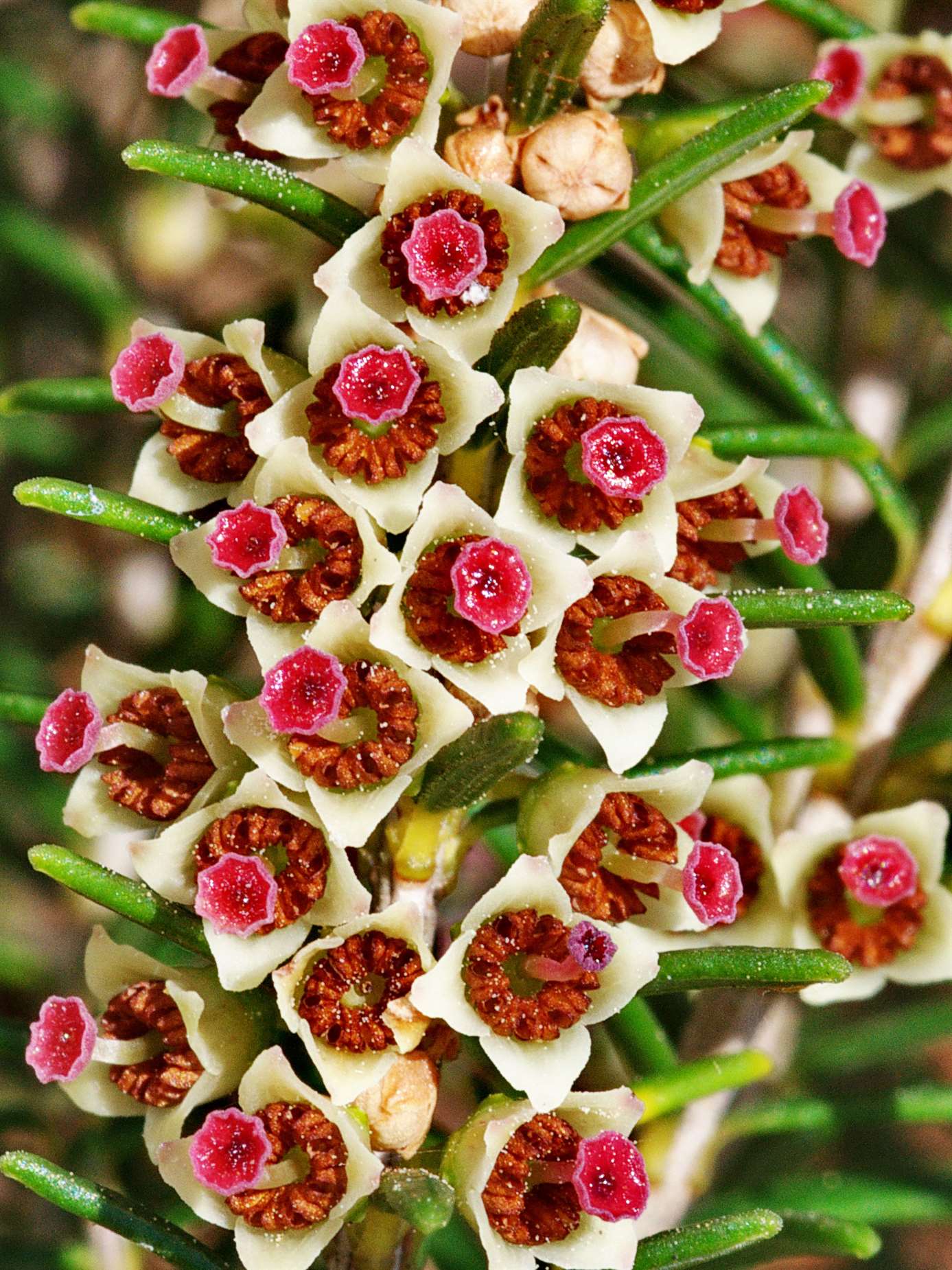
Evergreen shrub, hermaphrodite, up to 3 m in height —in the Canary Islands some specimens reach up to 20 m—, upright and very ramose. Stem and main branches somewhat tortuous, with blackish-brown bark. Branchelts greyish or whitish, glabrous or glabrescent. Leaves (3.5-10 × 0.6-1.1 mm) in whorls of 3-4, linear, shortly petiolated, rigid, ending in an obtuse tip, glabrous, with very revolute margin hiding the underside. Inflorescences in terminal racemes of up to several tens of flowers, in groups of 1-3. Flowers with involucre of basal bracteoles. Pedicel of the same length as the flowers or slightly longer, ± glabrous. Sepals ovate (1-1.3 mm), fused together, green and ± glabrous. Corolla from greenish to yellowish (2-2.5 mm), bell-shaped, with very pronounced, acute and not recurved lobes. Anthers ± included, without appendages. Fruit an ellipsoid capsule, 1.3-1.8 mm, glabrous, dehiscing in 4 valves. Seeds very small (0.4-0.6 mm), ± ellipsoid, with reticulate-alveolate surface.
Flowering:
April to July.
Fruiting:
June to September.
Habitat:
Calcifuge species, growing in very diverse siliceous terrain. Plains and low mountains in coastal and subcoastal regions. From subhumid to humid bioclimate, on mesomediterranean and supramediterranean floors, with ± mild winters.
Distribution:
Western Mediterranean region and Macaronesian region. In North Africa it grows in 2 separate areas: from the Tingitana Peninsula (where it reaches towards the S to the forest of Mamora) to the mountains of Beni Snassen (in Morocco); and a broader area with discontinuous distribution from Kabylia (Algeria) to the eastern coast of Tunisia.
Conservation status:
E. scoparia is a common and widespread species. Currently, it has not been assessed at a global level in the IUCN Red List of Threatened Species. In the Livre Rouge de la flore vasculaire du Maroc (Fennane, 2021) it has been considered as Least Concern (LC).