Erica arborea L.
E. arborea var. mauritanica Sennen & Mauricio
Eng.: Tree heath. Spa.: Brezo blanco. Fre.: Bruyère arborescente, bruyère blanche. Ara.: Cherdef, chendef, ariga, bu-heddad. Tam.: Akhelendj, akhludj, hlenj, numicha, malaz.
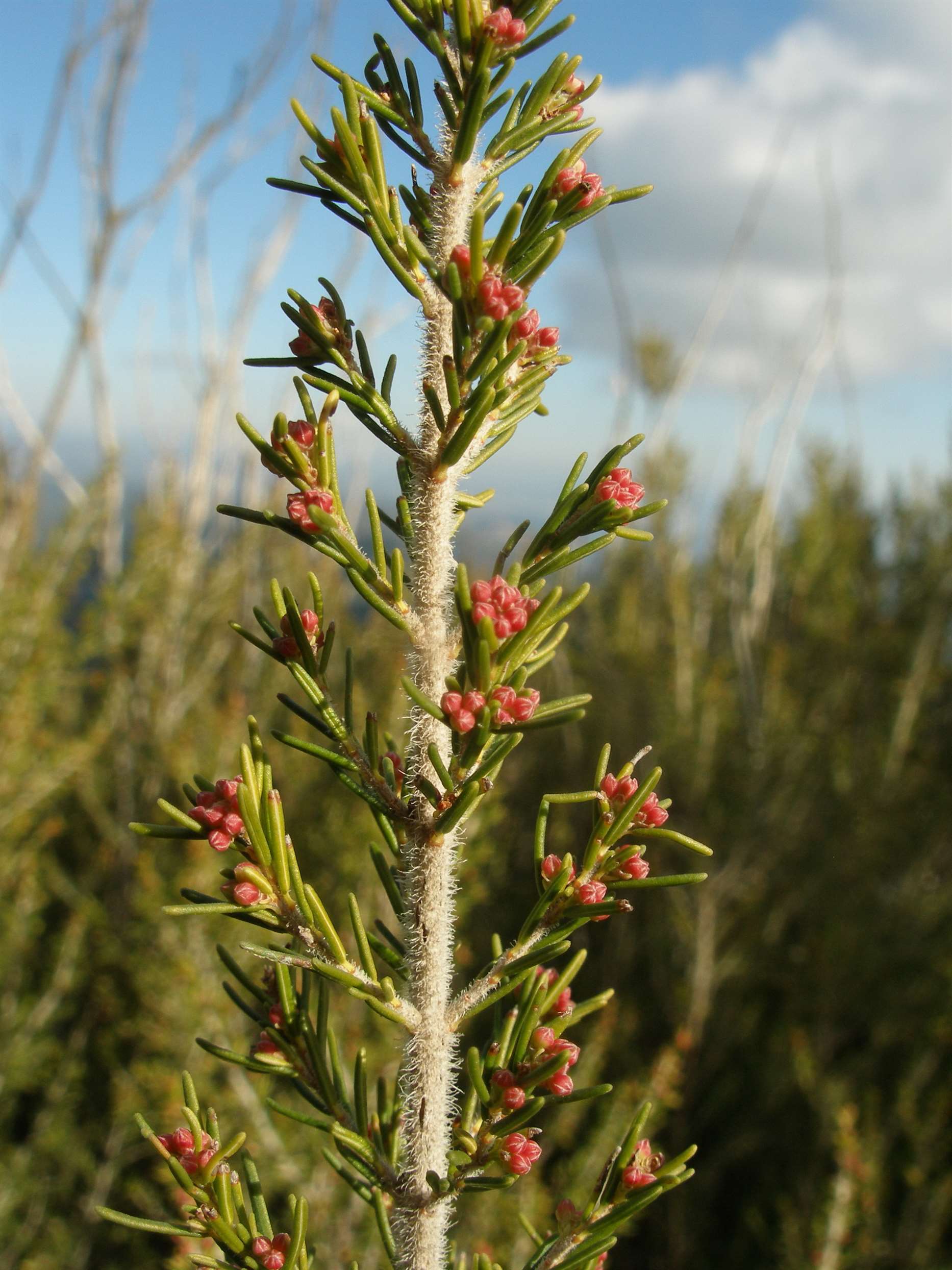
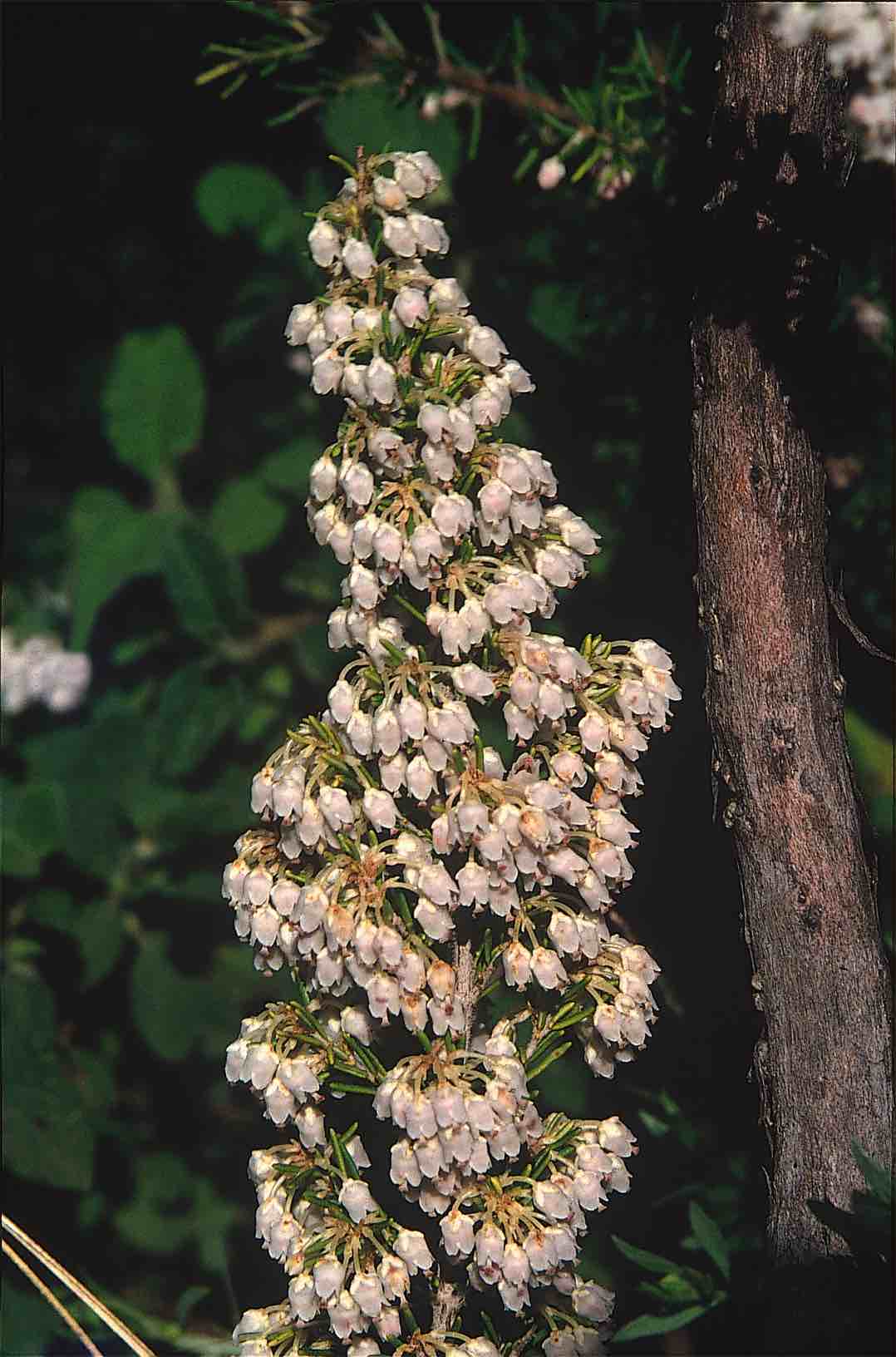
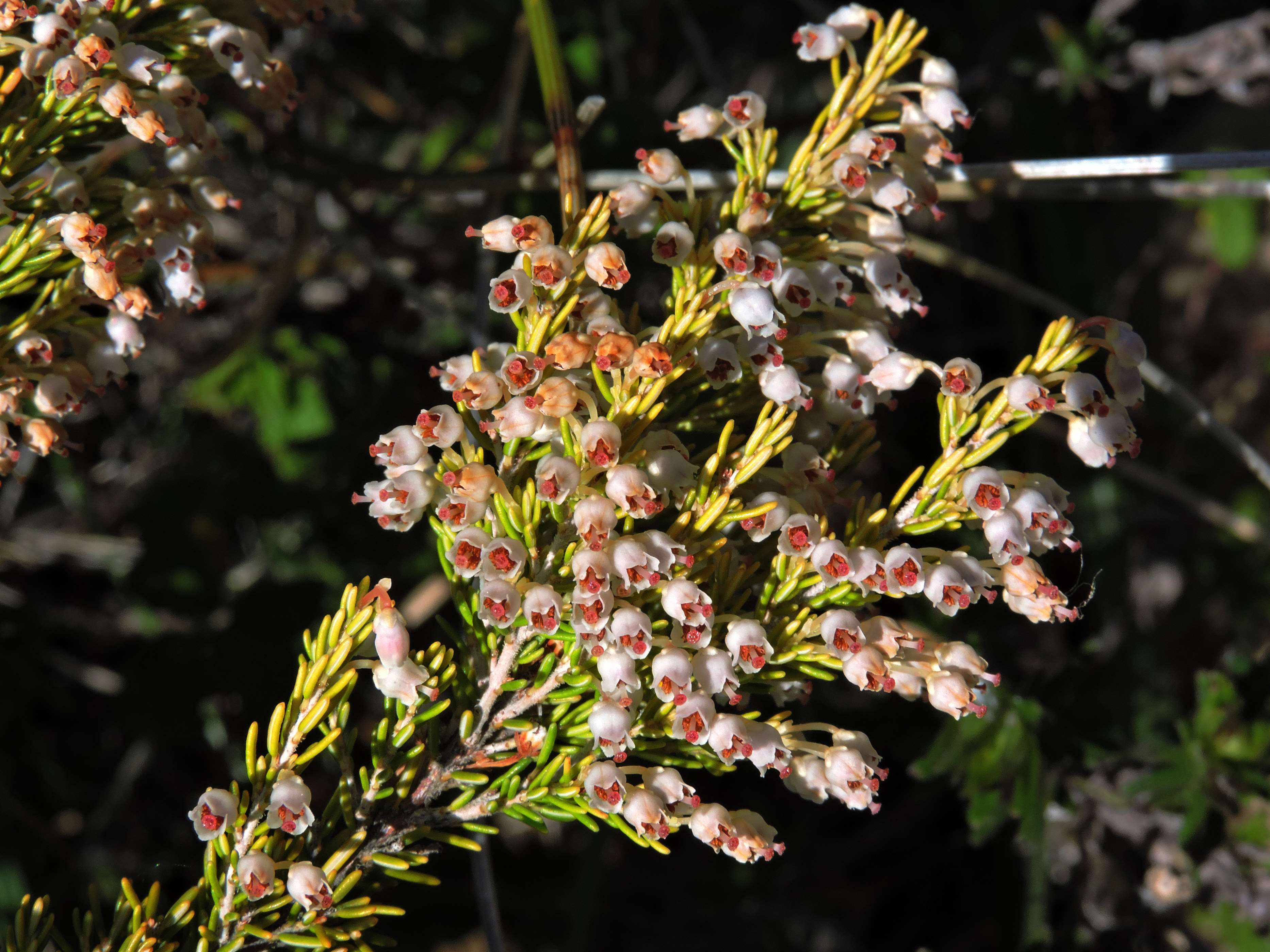
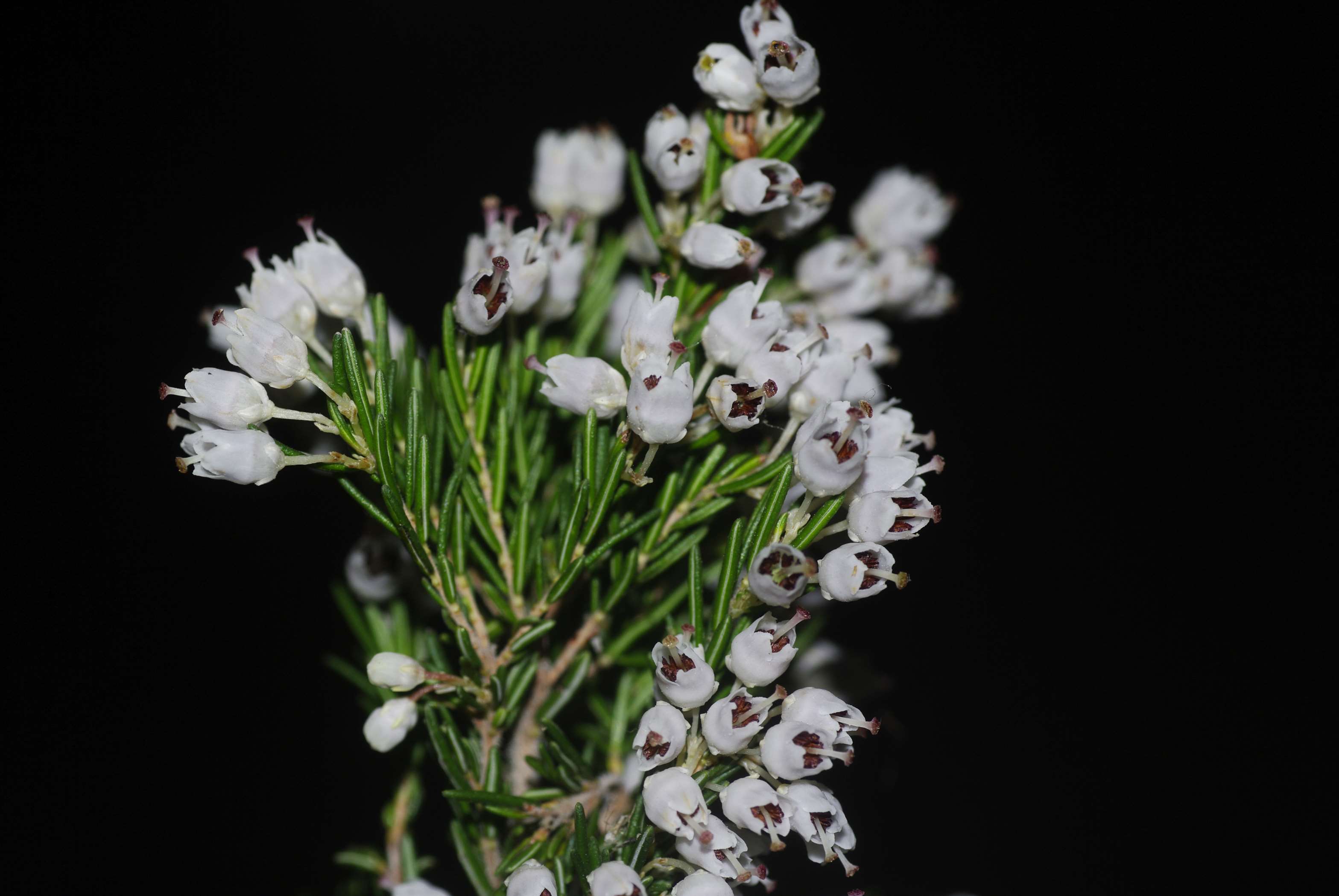
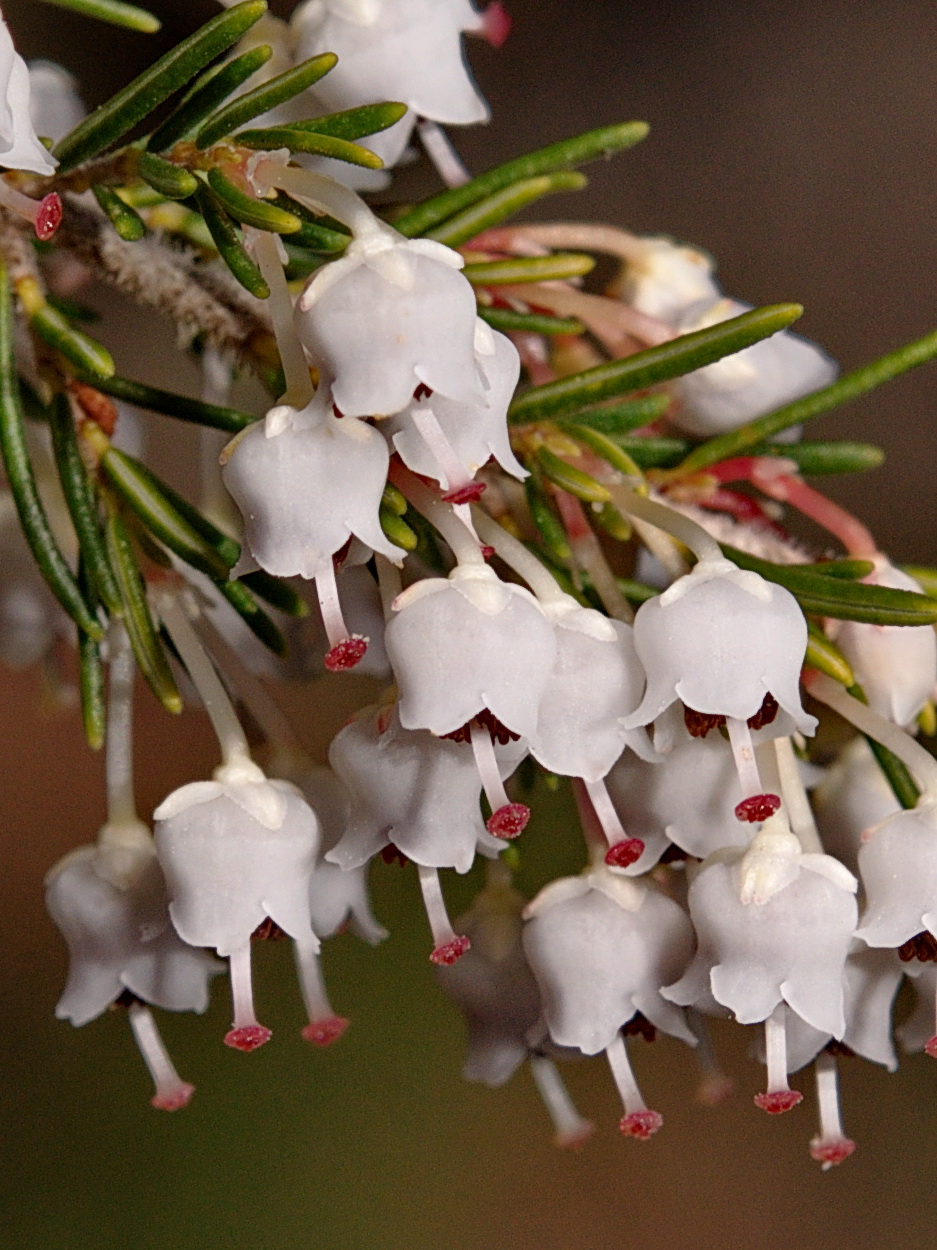
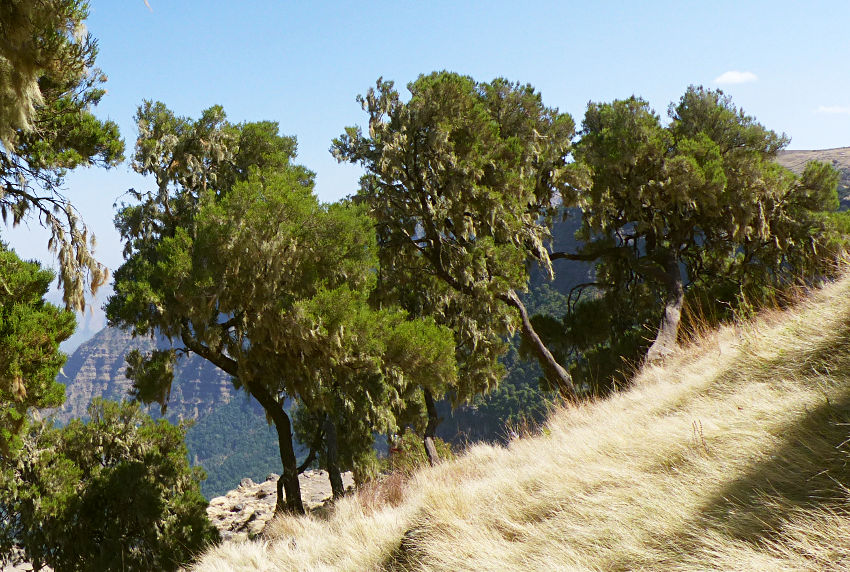
Shrub or small tree, evergreen, hermaphrodite, up to 7 m in height. In the Canary Islands it can reach up to 20 m, however in the African continent, it usually does not to exceed 3 m. Erect and very ramose. Stem and main branches somewhat tortuous, with blackish-brown bark. Branchlets yellowish-brown or reddish-brown, densely covered with white hairs, which gives them a whitish appearance. Leaves (3-9 × 0.4-0.7 mm) in whorls of 3-4, linear, ending in an obtuse tip, glabrous or villous. Margin very revolute completely hiding the underside. Inflorescences umbelliform, very abundant, composed of 1-3 flowers. Flowering branches form a characteristic pyramidal panicle. Flowers with involucre of basal bracteoles. Pedicels slightly longer than the corolla. Sepals ovate-lanceolate (1.2-1.8 mm), whitish and glabrous. Corolla white (2-4 mm), bell-shaped, with lobes straight, not revolute. Anthers included, with 2 denticulate appendages. Fruit a subglobose capsule (1.8-2.5 mm), glabrous, dehiscing in 4 valves. Seeds very small (0.4-0.6 mm), ellipsoid, yellowish-brown, with finely striated surface.
Flowering:
February to July.
Fruiting:
April to September.
Habitat:
Usually a calcifuge species, growing in varied terrain. From subhumid to humid bioclimate, on thermomediterranean and mesomediterranean floors, in mild winters. From sea level to about 1,800 m. It is a common species in Quercus suber forests.
Distribution:
Mediterranean and Macaronesian regions, and eastern Africa. In North Africa it is a widely distributed species from the Atlantic coasts of N Morocco, through Algeria to N Tunisia. Towards the S it reaches the northern Middle Atlas (Jebel Tazekka), the western Saharan Atlas and the Aures Massif. There is a central Saharan relict population with great biogeographic interest, in the summits of Emi Koussi (Tibesti Massif, Chad).
Conservation status:
Common and widespread species. Currently, in the IUCN Red List of Threatened Species it is evaluated as Least Concern (LC) at a global level (Harvey-Brown & Barstow, 2017). In the Livre Rouge de la flore vasculaire du Maroc (Fennane, 2021) it has been considered as Least Concern (LC).