Grewia tenax (Forssk.) Fiori
G. populifolia Vahl, Chadara tenax Forssk., G. betulifolia Juss.
Eng.: Small-leaved white raisin, white cross-berry. Ara. (Hassanía): Burchaga, (Niger): ligilayaya, (Sudan): gaddeita, gadem, um ageda, basham, (Egypt): keisa, tamoaat. Tamahaq: Tekarab, tereket, terkoet, tarakat.
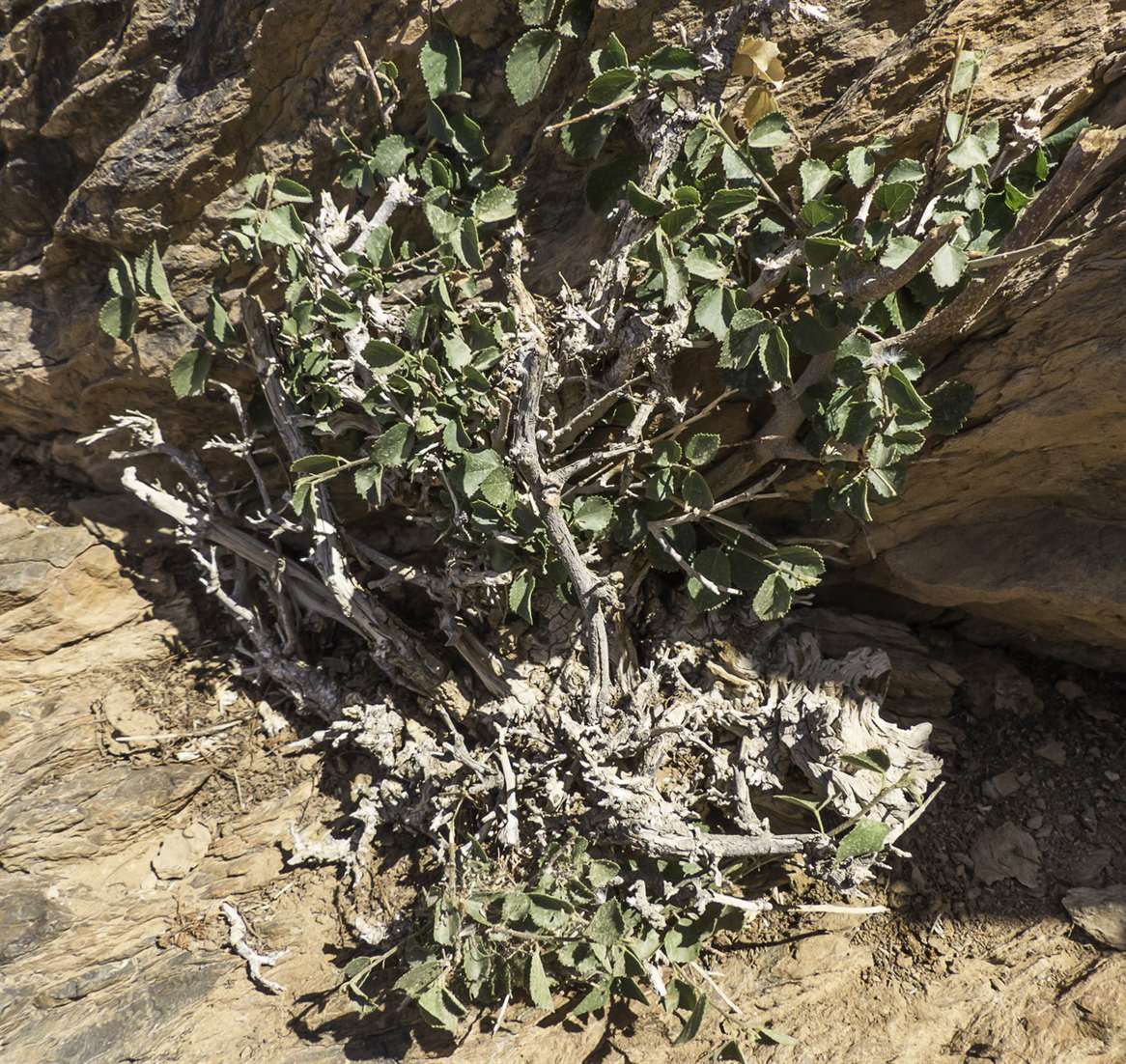
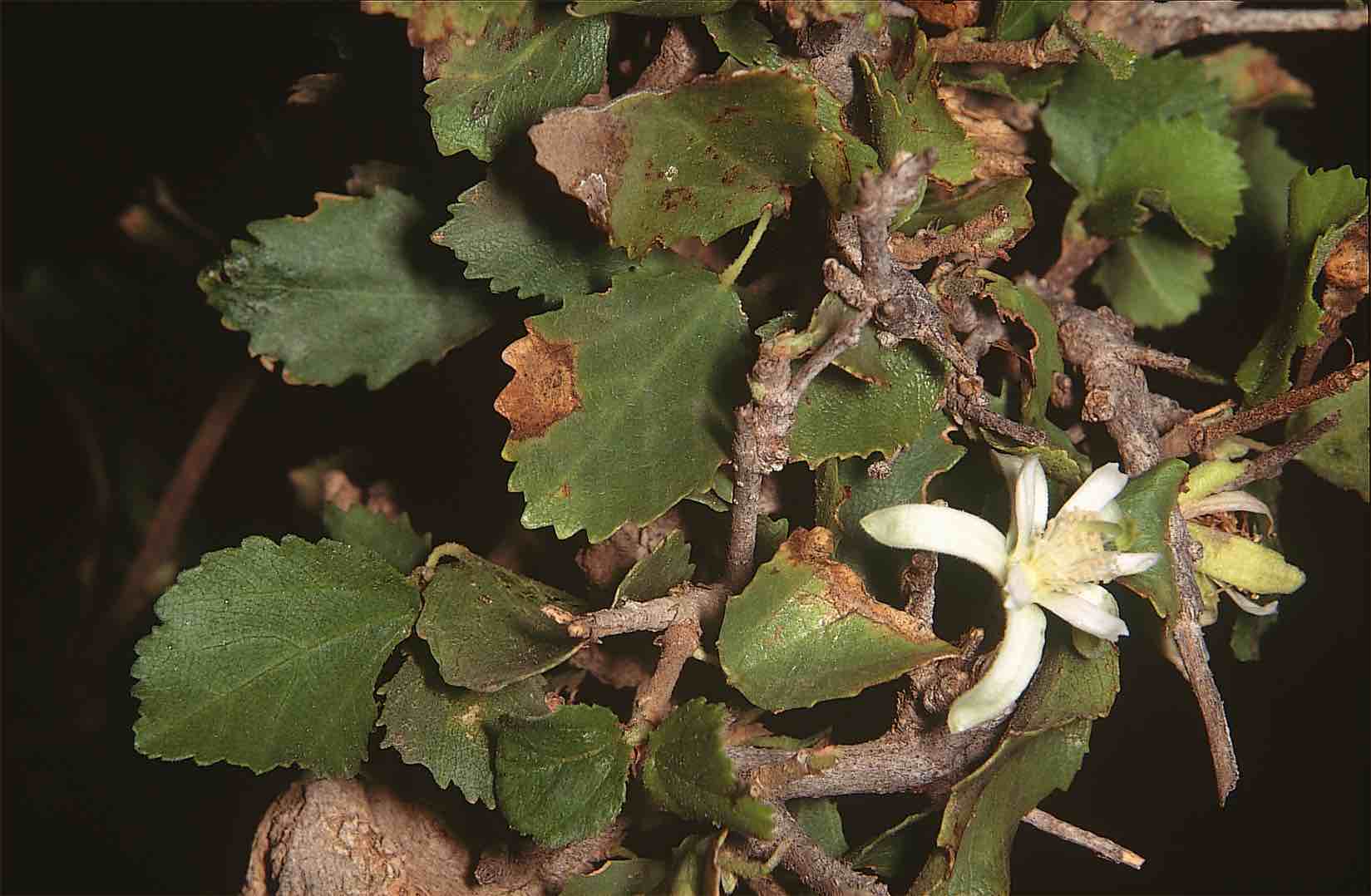
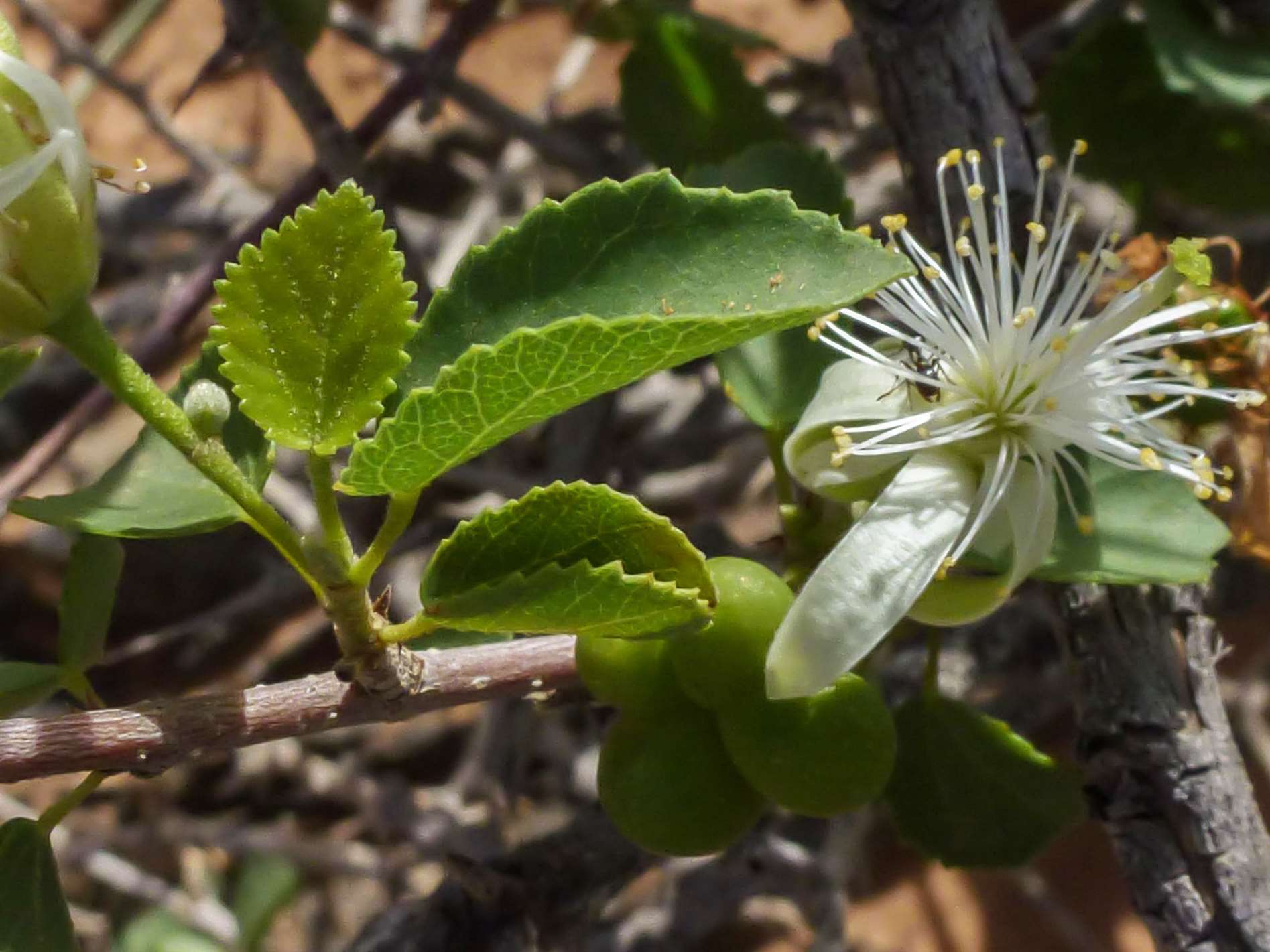
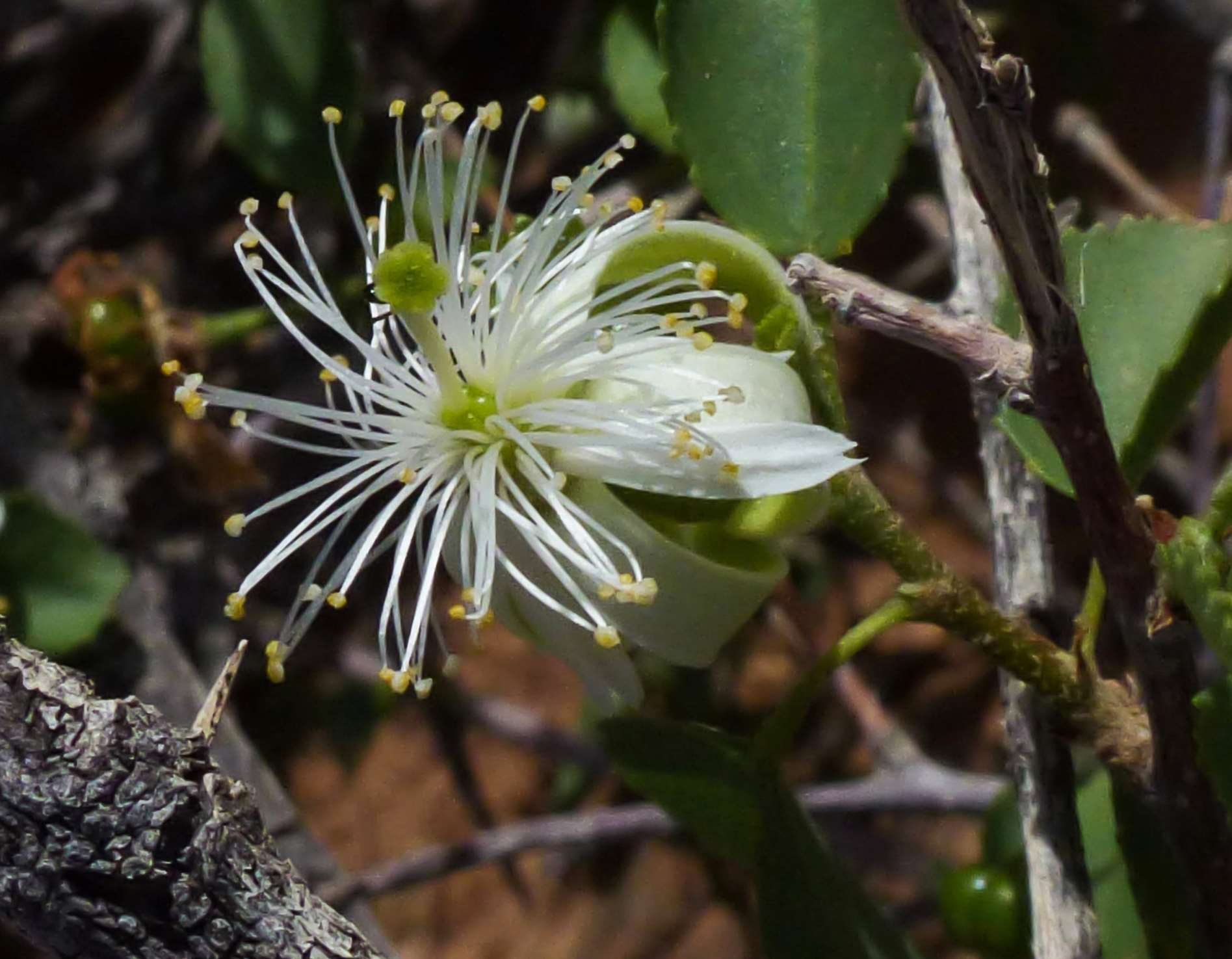
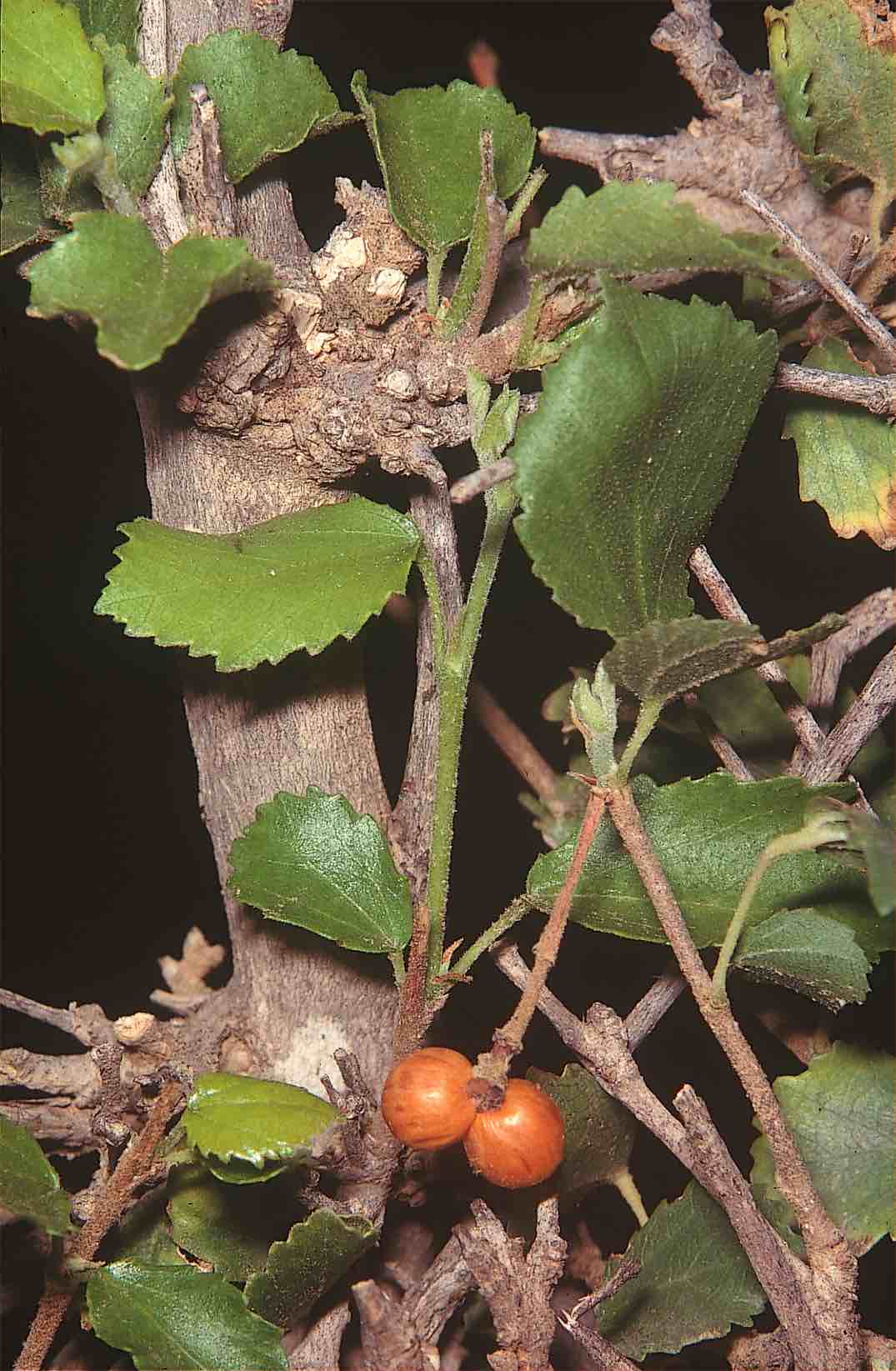
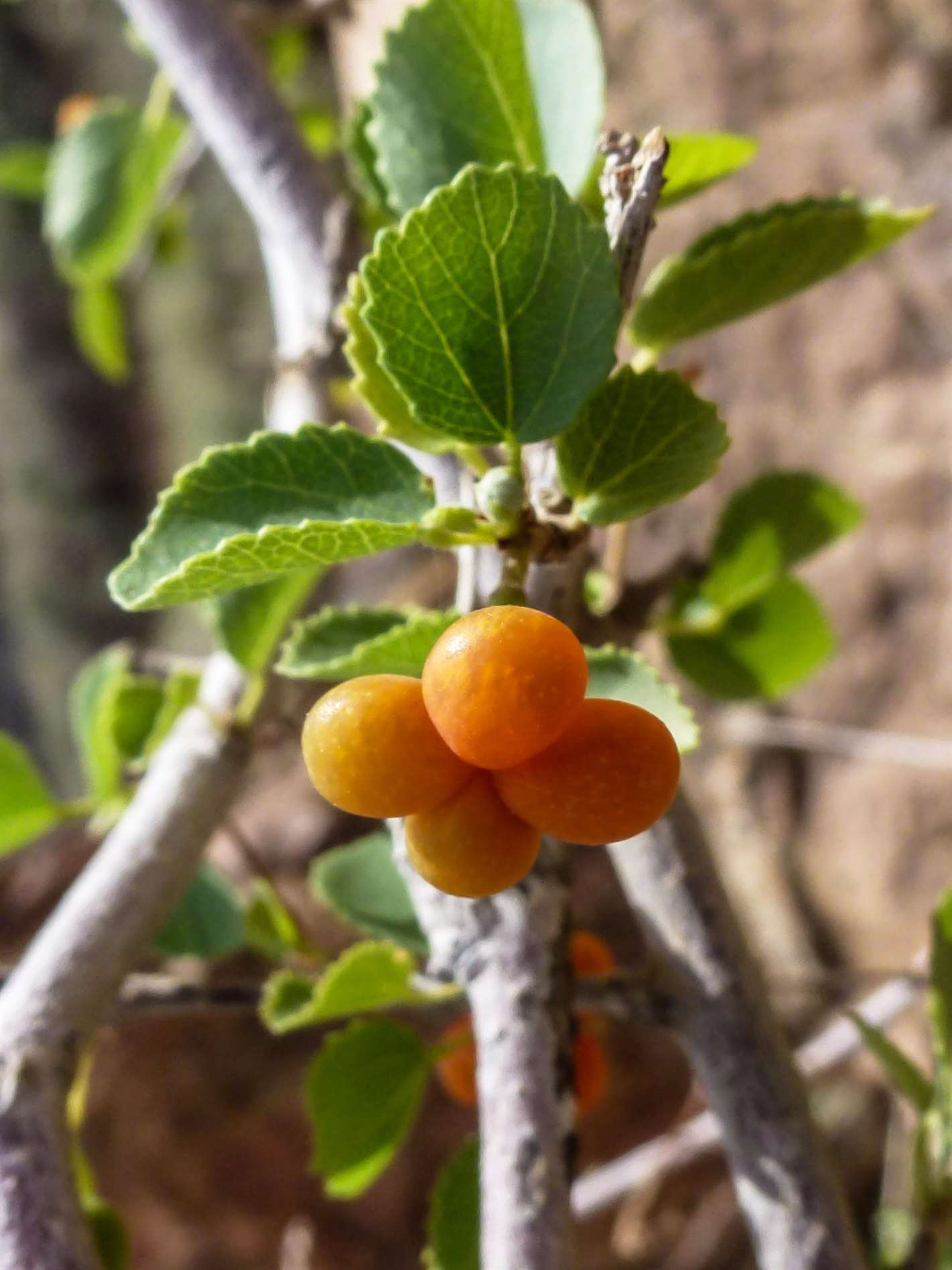
Subtropical shrub up to 6 m in height, irregular in shape, often very tortuous, even creeping, due to the harsh edaphic-climatic conditions in which it lives. Stems and old branches with greyish-brown bark; younger branches greenish. Leaves (1.5-4.5 × 1.3-3.5 cm), ± suborbicular; on the same plant there may be broadly ovate or obovate leaves, sometimes slightly wider than long; tip acute or very rounded, slightly undulate, dentate margin, glabrescent, deep green on the upper side and slightly lighter on the underside. Petiole 4-10 mm. Flowers solitary or in pairs. Calyx with 5 sepals oblong, acute, coriaceous, white. Corolla with 5 oblong petals, with emarginate apex, slightly less coriaceous than the calyx, white, shorter than the sepals. Stamens numerous, anthers pale yellow. Ovary with 2 locules, with 4 ovules in each one; stigma with 4 wide lobules. Fruit drupaceous, with 1-4 lobules (usually 2), 3-6 mm in diameter, subglobose, orange.
Flowering:
After rainfall, usually between winter and summer in western Sahara and in autumn-winter in areas close to the Red Sea.
Fruiting:
From autumn to summer.
Habitat:
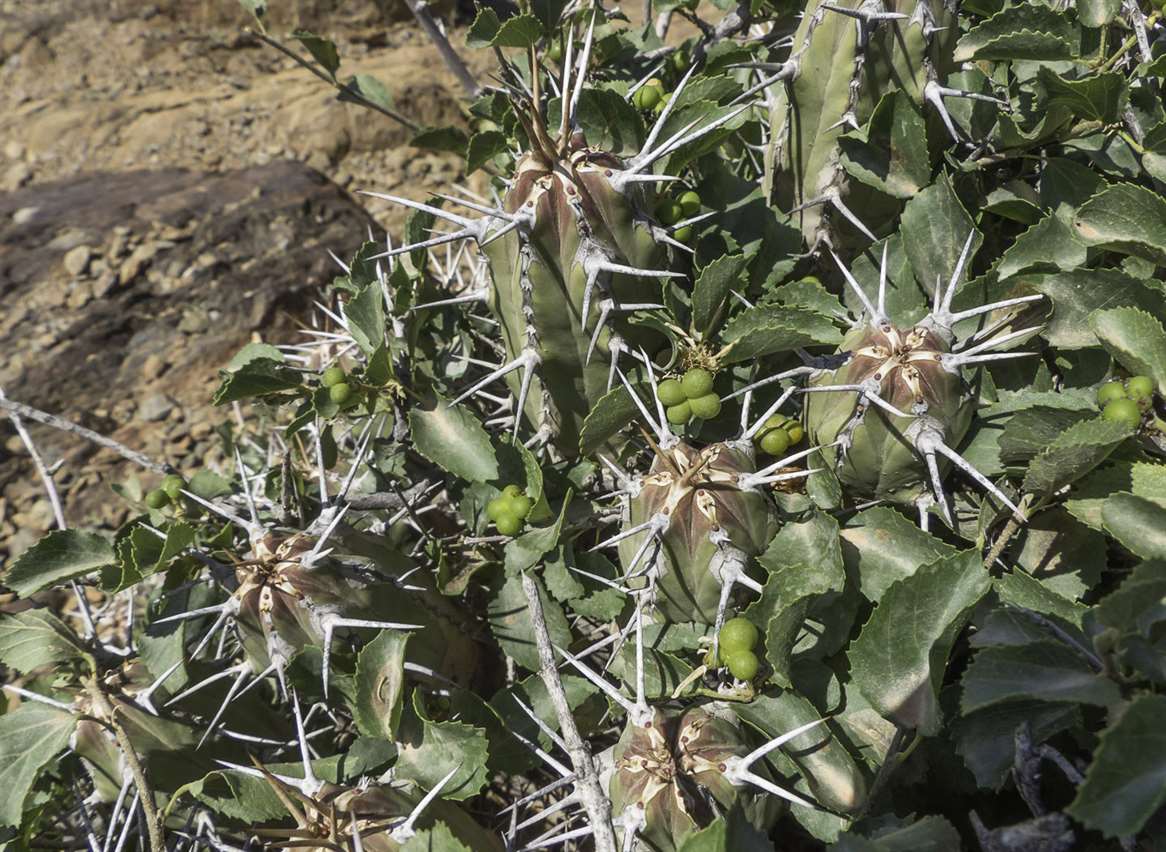
Thickets, steppes and rocky outcrops of desert and predesert areas. In volcanic lava, sandy soils, depressions in clayey-sandy soil. From sea level to 1,600(1,800) m in altitude.
Distribution:
From tropical Africa to India. In North Africa it is distributed through almost all the southern Sahara, central Sahara (Tefedest, Tassili-n-Ajjer), reaching in the N to the SW of Morocco [mountains between Guelmim and the Drâa River (Jebel Guir, Jebel Taissa, Al Aaiun of the Drâa, etc.)] and the Egyptian area east of the Nile, including the Sinai Peninsula.
Conservation status:
Fairly rare species, but widely distributed. Currently, in the IUCN Red List of Threatened Species it is evaluated as Least Concern (LC) at a global level (Botanic Gardens Conservation International (BGCI) & IUCN SSC Global Tree Specialist Group. 2019).. In the Livre Rouge de la flore vasculaire du Maroc (Fennane, 2021) it has been considered as Vulnerable (VU). In the updated red list of Egypt (Shaltout & Bedair, 2023) it has been considered as Vulnerable (VU).