Grewia villosa Willd.
G. echinulata Delile, G. orbiculata G. Don, G. corylifolia A. Rich.
Eng.: Mallow-leaved cross-berry. Ara. (Sudan): Abu khalafof, diwab, gereigdan, gereighan, layug, mutrak, tamr el abid, tukkn, tukku, (Egypt): diwal, kataat. Tamahaq: Agiersêmmi, aegaersimi.
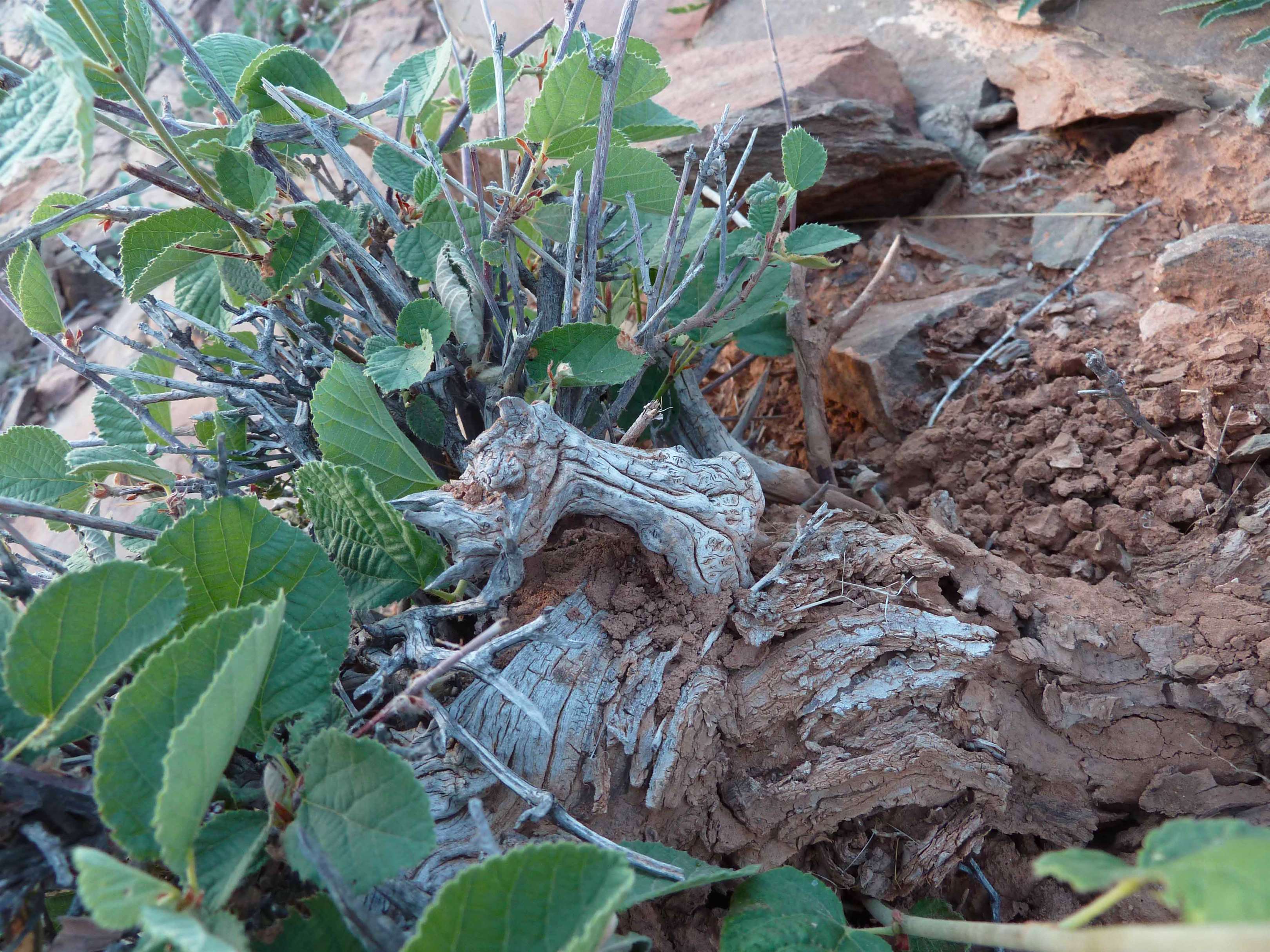
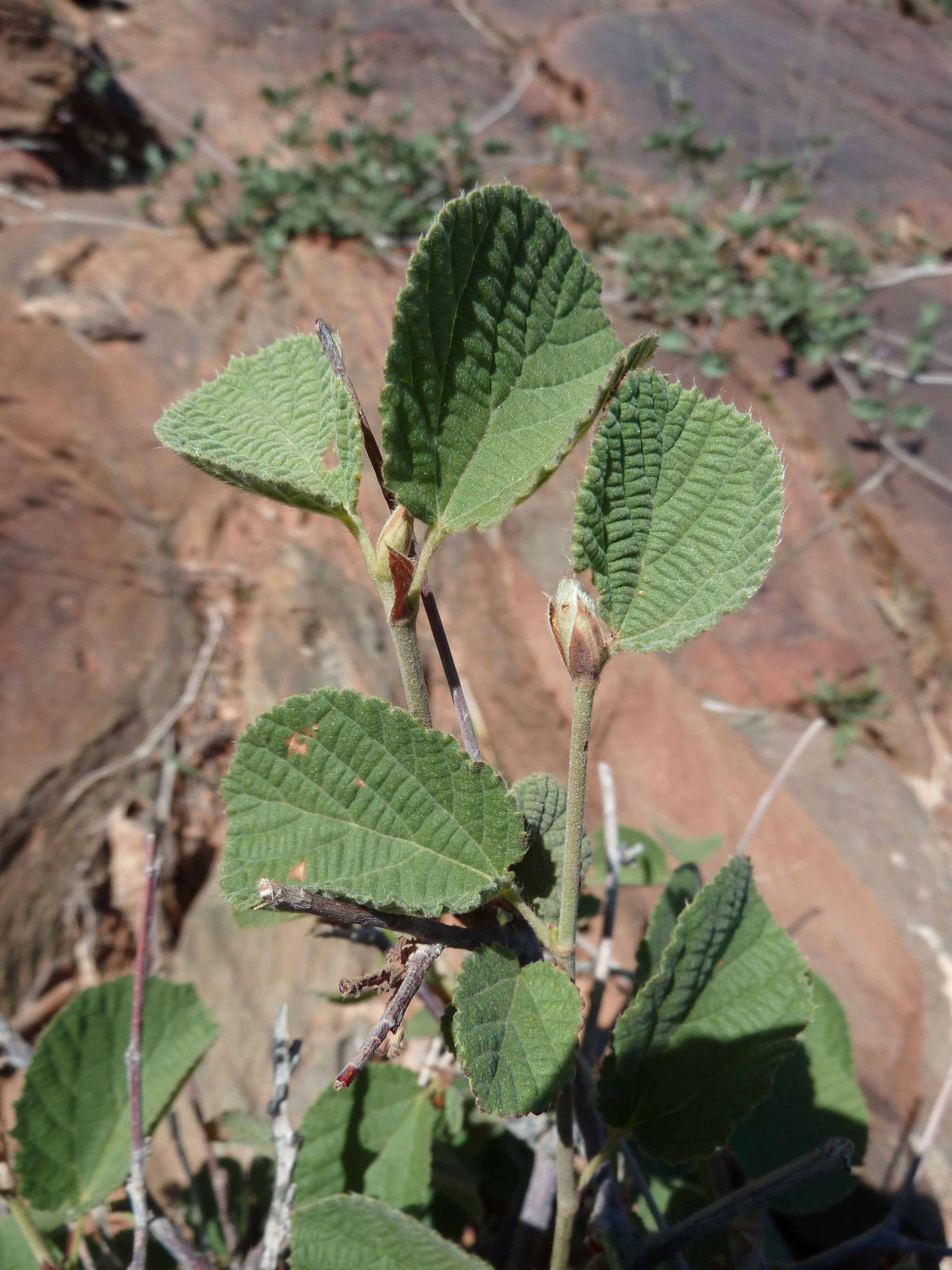
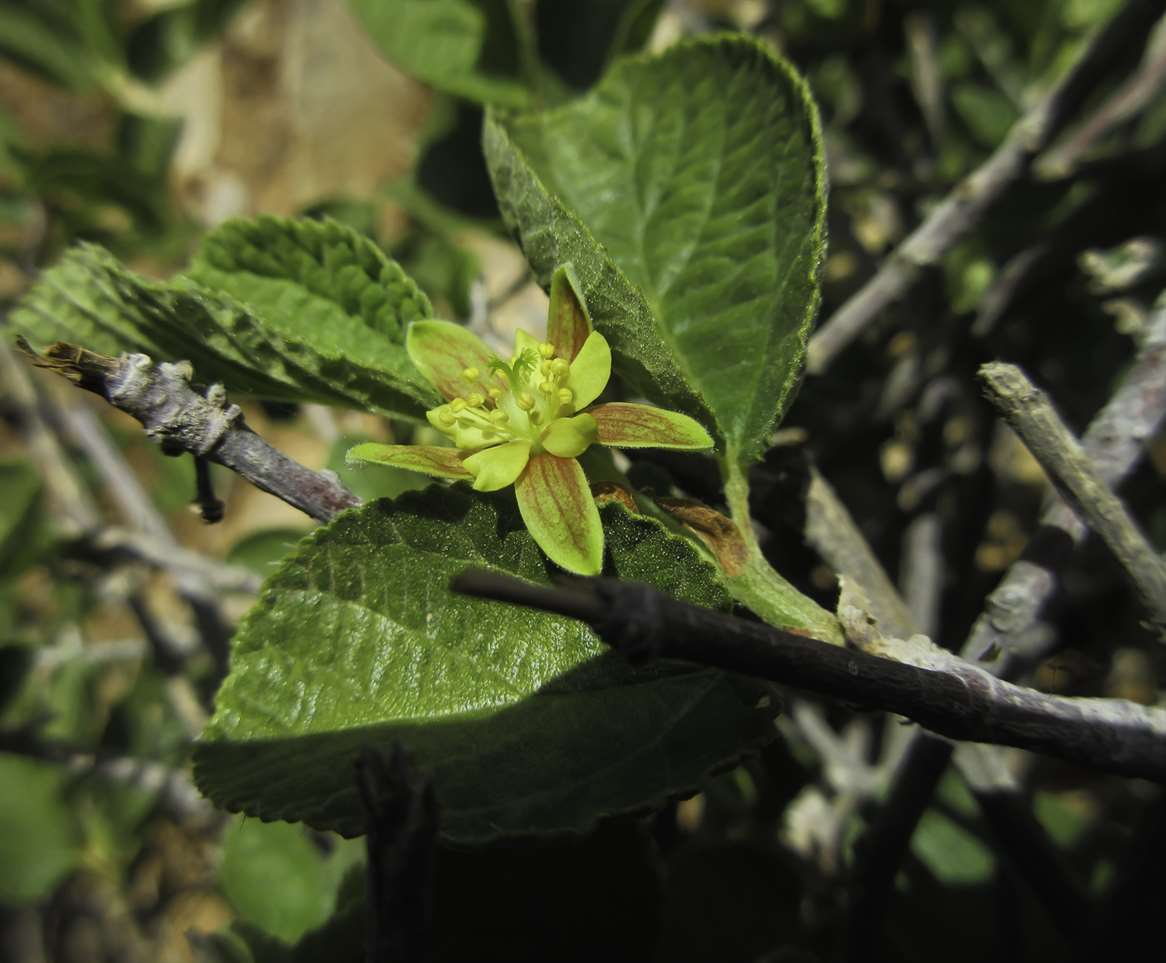
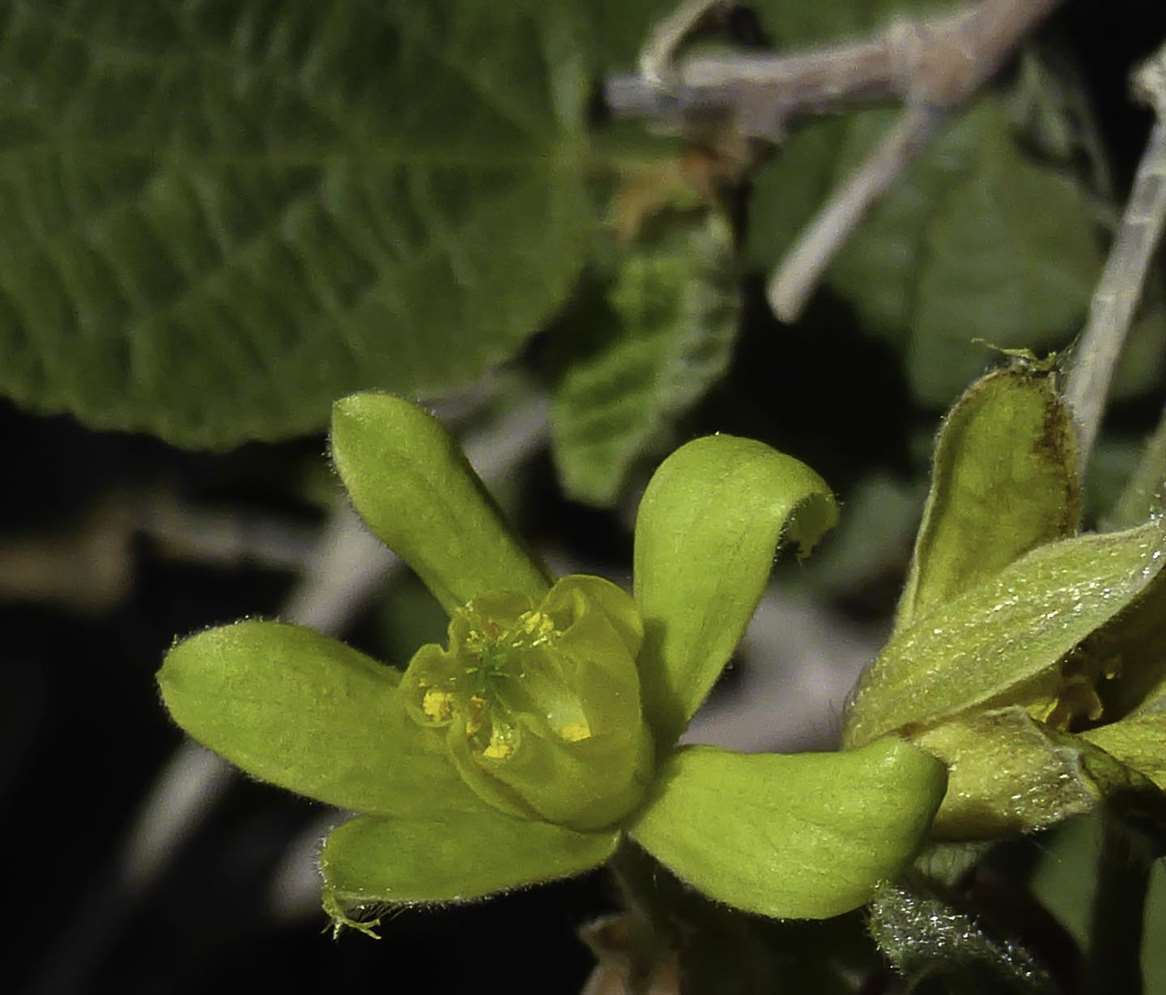
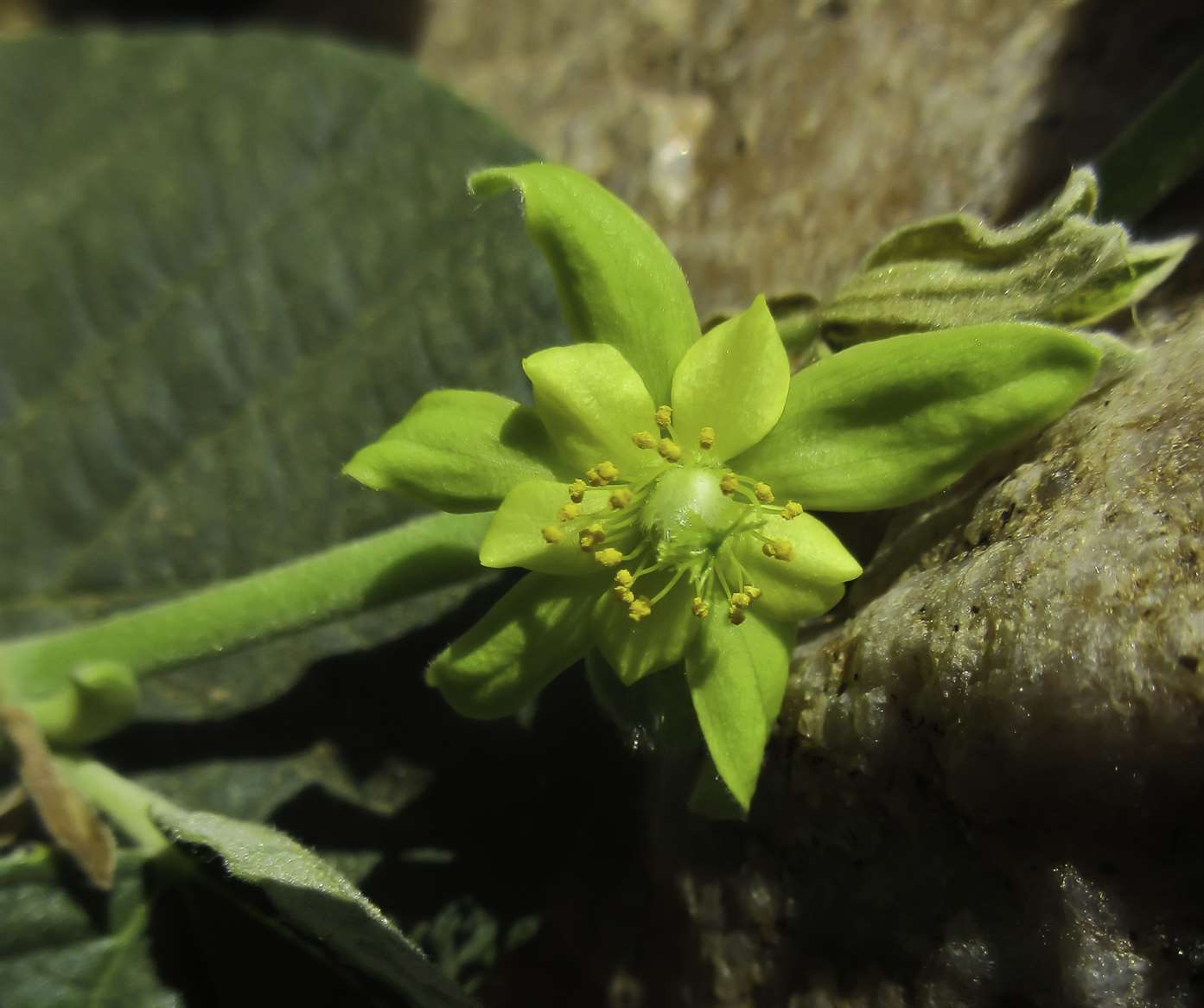
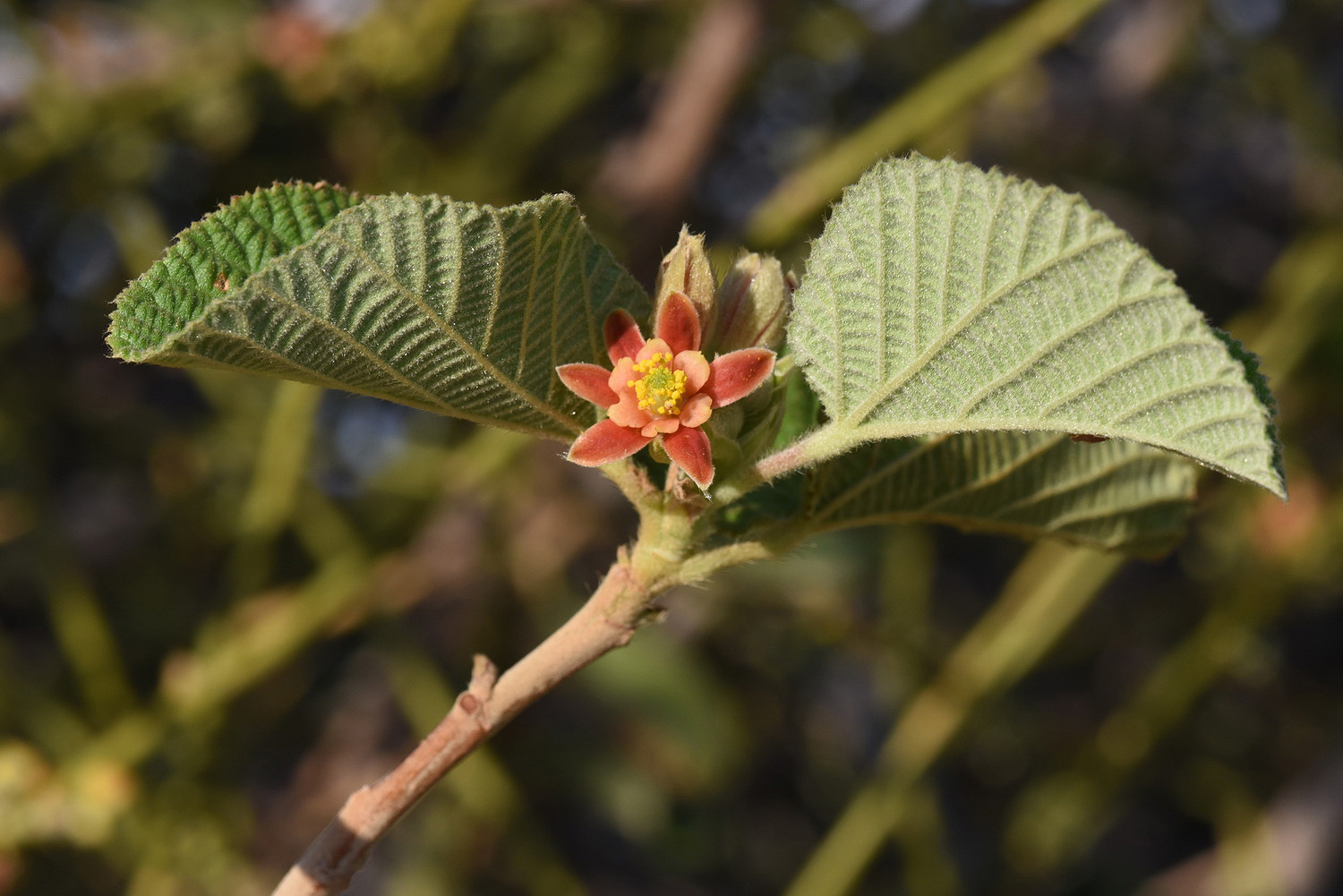
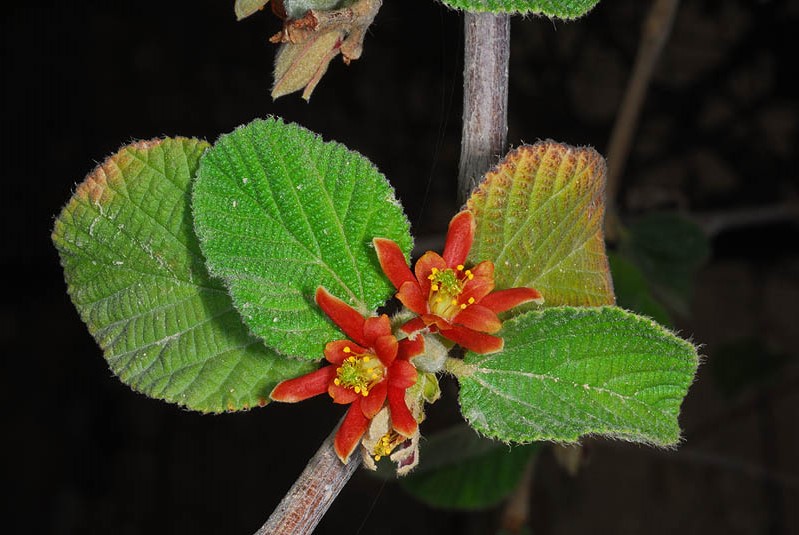
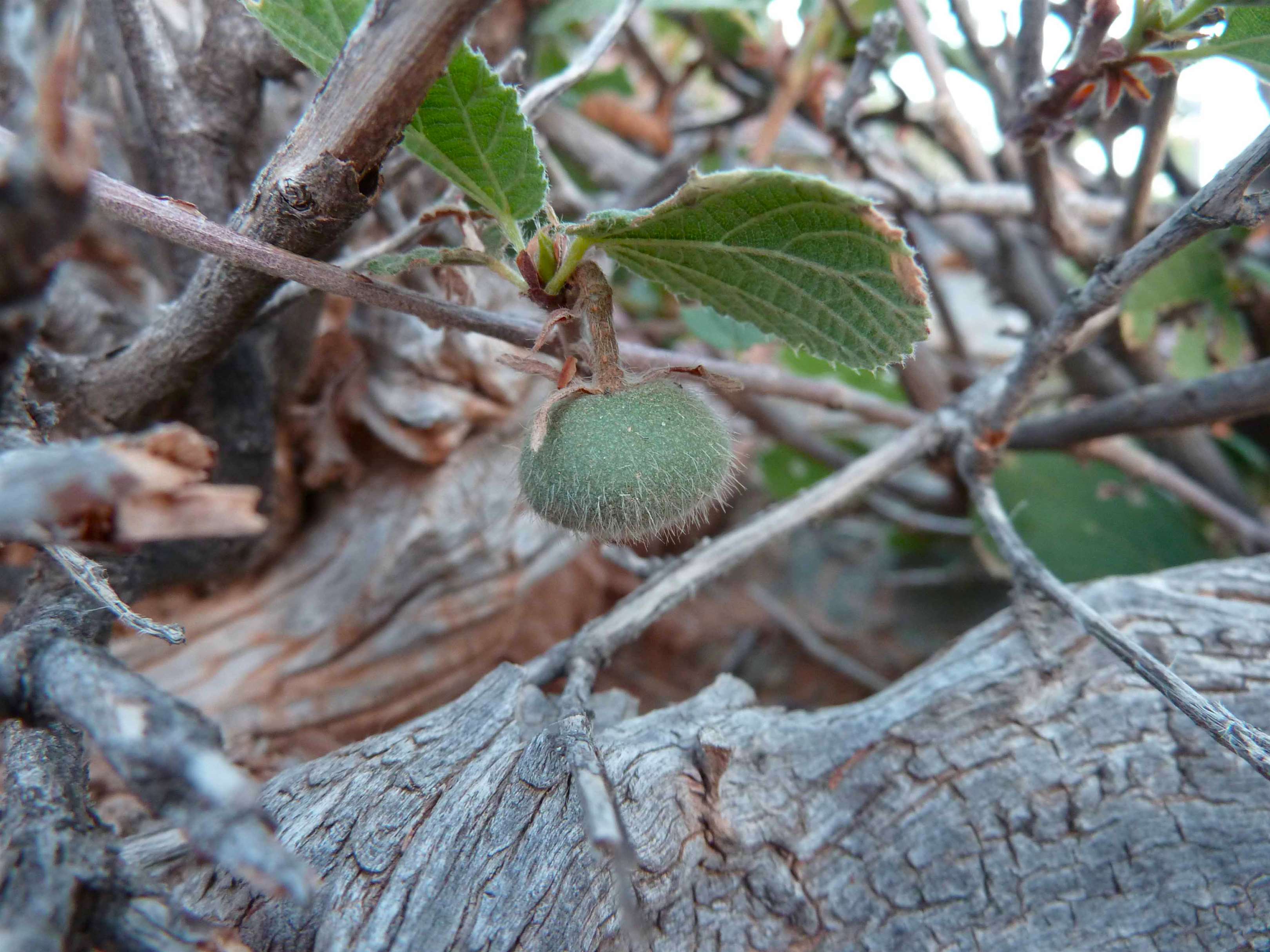
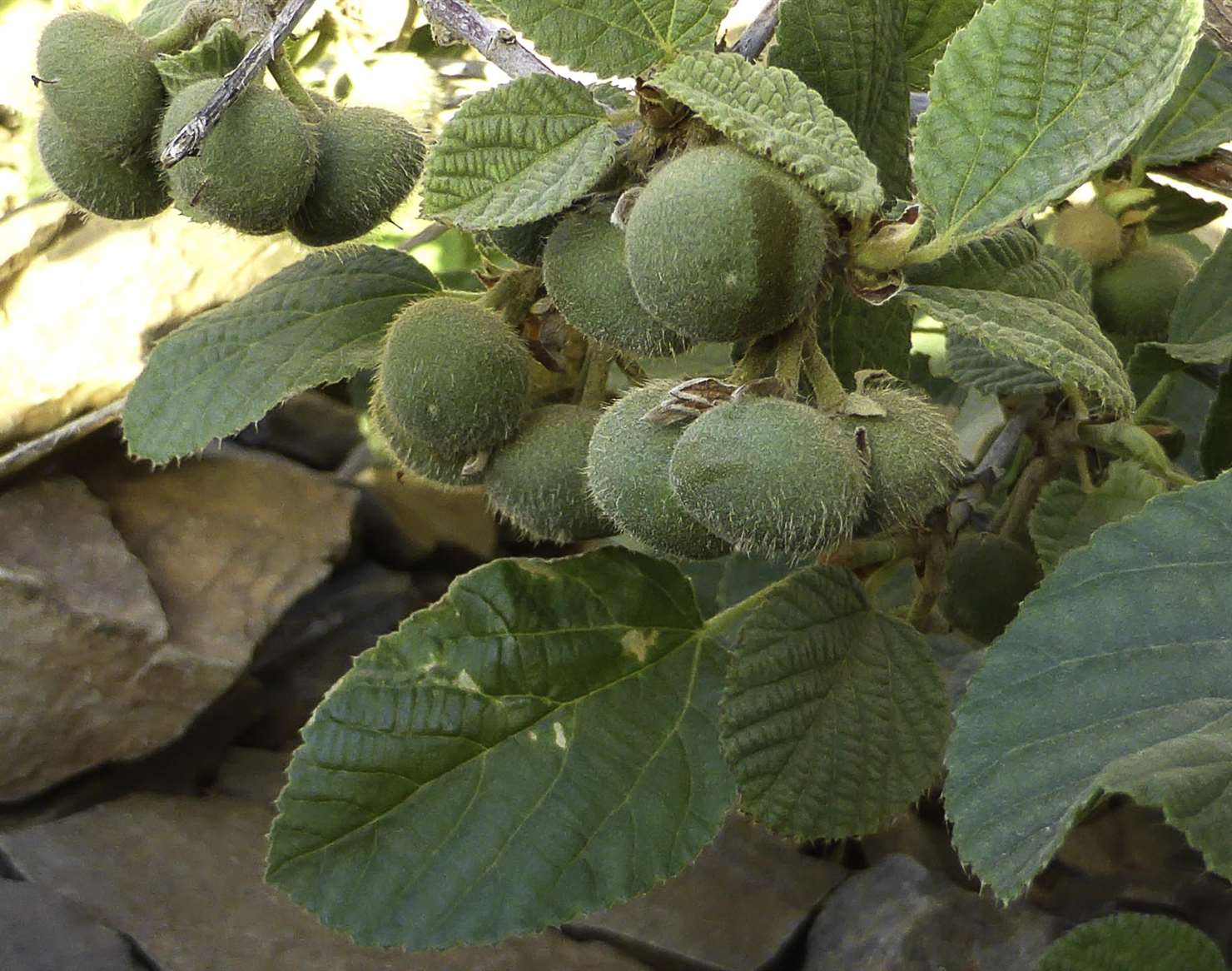
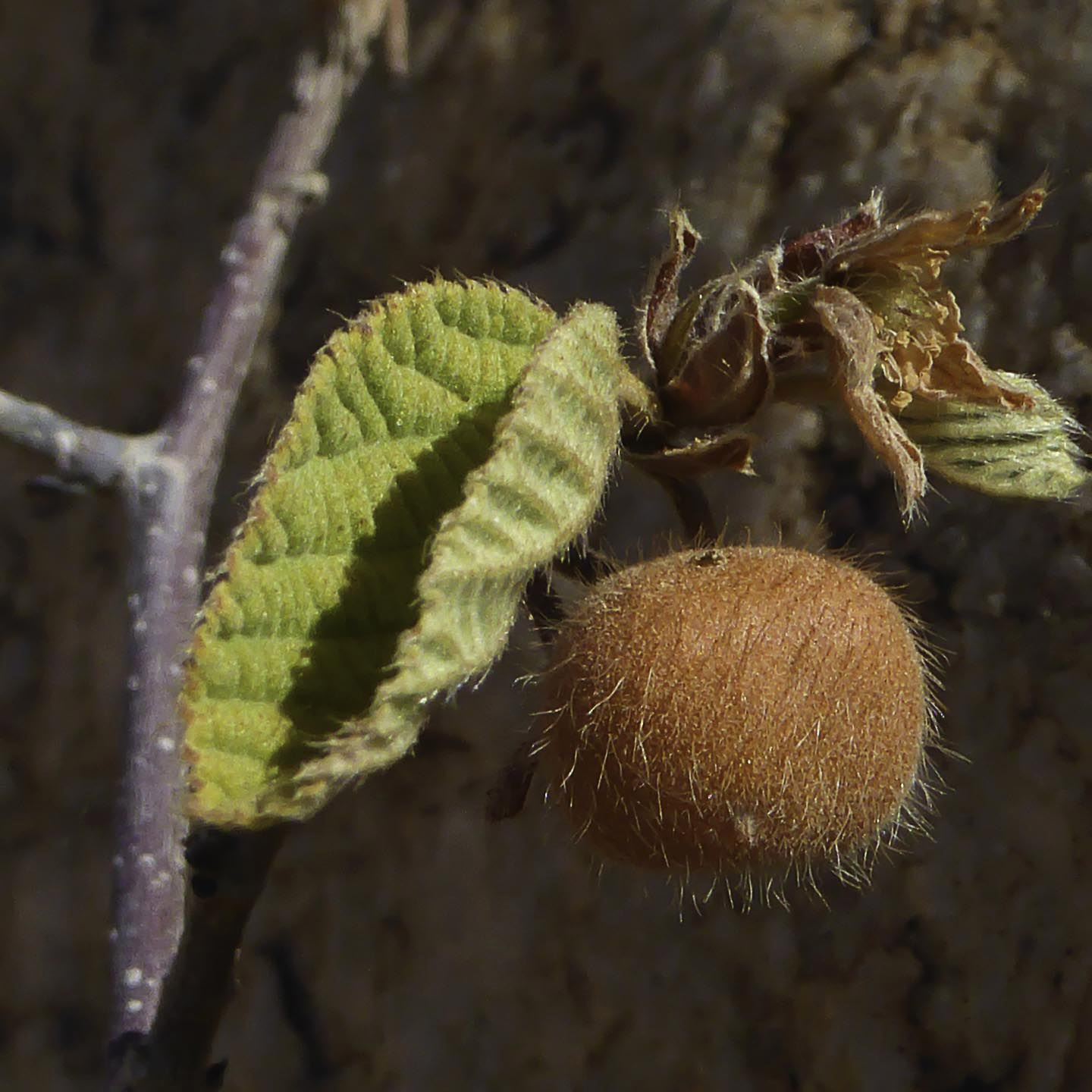
Shrub 2-3 m in height or, rarely, a tree up to 5 m. Stands found in the S of Morocco do not usually exceed 1 m in height due to grazing. Stems with grey bark, branchlets covered with dense stellate hairs. Leaves 2-7 × 1.5-7 cm, ± orbicular, pubescent on the upper side, villous on the underside, crenate-serrate margin, apiculate apex, cordate base. Petiole 0.5-2 cm, villous. Stipules 0.5-1.2 × c. 0.3 cm, foliaceous, brownish, villous. Flowers 1.8-2 cm in diameter, in axillary cymes with short peduncles; bracts 6-8 mm, lanceolate, pilose-stellate. Calyx with sepals 0.8-1 × 0.25 cm, villous, brownish. Corolla with petals c. 5 × 2 mm, greenish-yellowish. Stamens numerous, filaments c. 5 mm. Ovary globose, pilose; divided into 2 locules with 4(6) ovules in each one; style 3-4 mm, pilose-stellate; stigmas with 4 laciniate lobules. Fruit in drupe, 12-15 mm, not lobulate, subglobose, densely villous, green at first and reddish when mature.
Flowering:
After rainfall, usually between winter and summer in the western Sahara and in autumn-winter towards the coast of the Red Sea.
Fruiting:
From winter to summer.
Habitat:
In very diverse terrains, such as rocky, sandy, clayey-silty, etc., in desert and subdesert areas. From sea level to 1,800 m in altitude.
Distribution:
Dry tropical areas, from the Cape Verde islands to India. In Africa, it reaches Namibia towards the S. In North Africa its northern limit seemed to be in the littoral and sublittoral mountains of the Red Sea, possibly reaching in N to the Jebel Elba, but recently, Annie Garcin has found it (see photographs) in SW of Morocco (between the Draa and Chebika rivers).
Conservation status:
Fairly rare species, but widely distributed. Currently, in the IUCN Red List of Threatened Species it is evaluated as Least Concern (LC) at a global level (Oldfield, 2020). In the Livre Rouge de la flore vasculaire du Maroc (Fennane, 2021) it has been considered as Critically Endangered (CR). In the updated red list of Egypt (Shaltout & Bedair, 2023) it has been considered as Endangered (EN).