Cistus varius Pourr.
C. pouzolzii Delile, C. × varius Pourr.
Spa.: Jara. Fre.: Ciste.
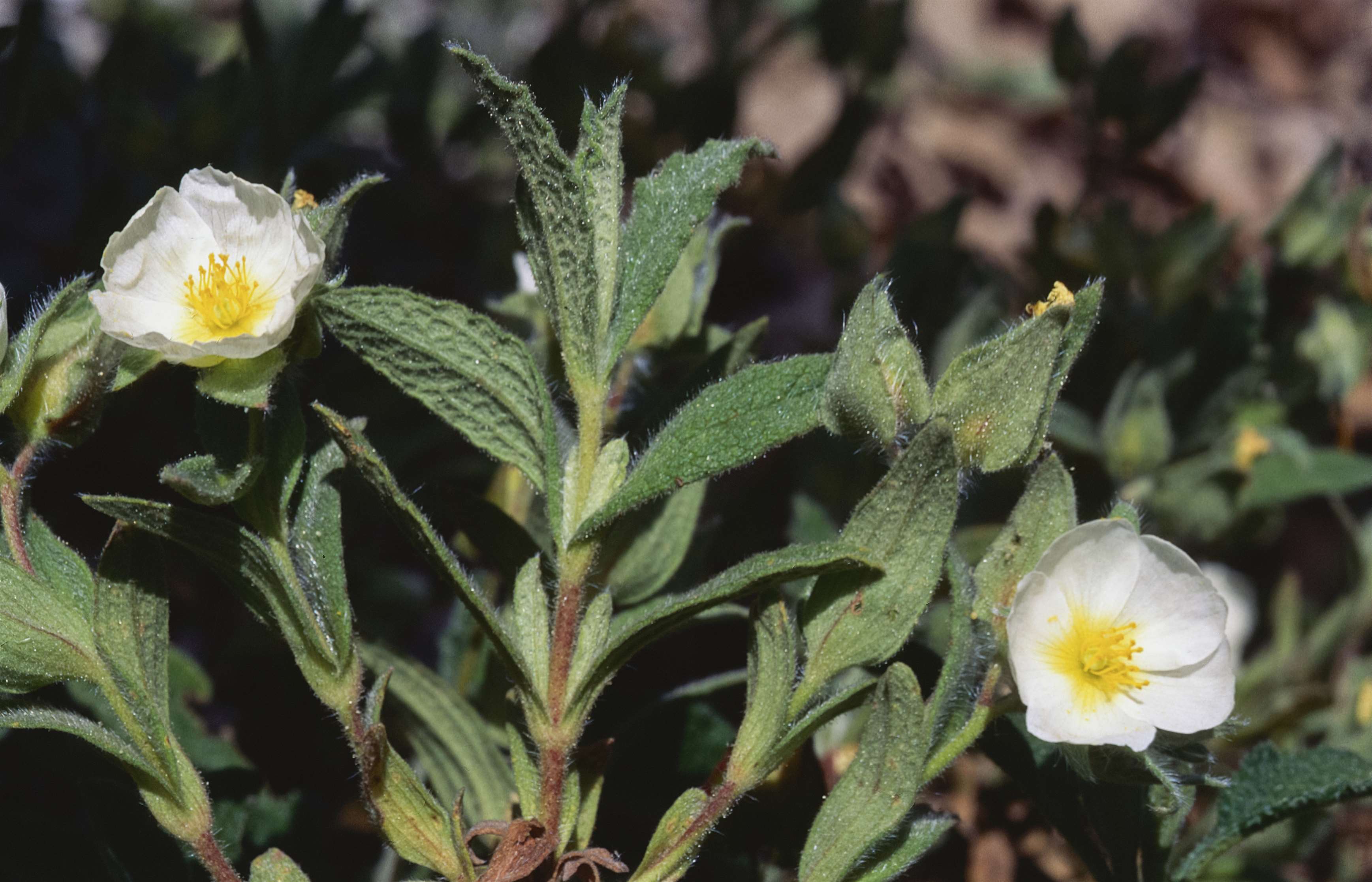
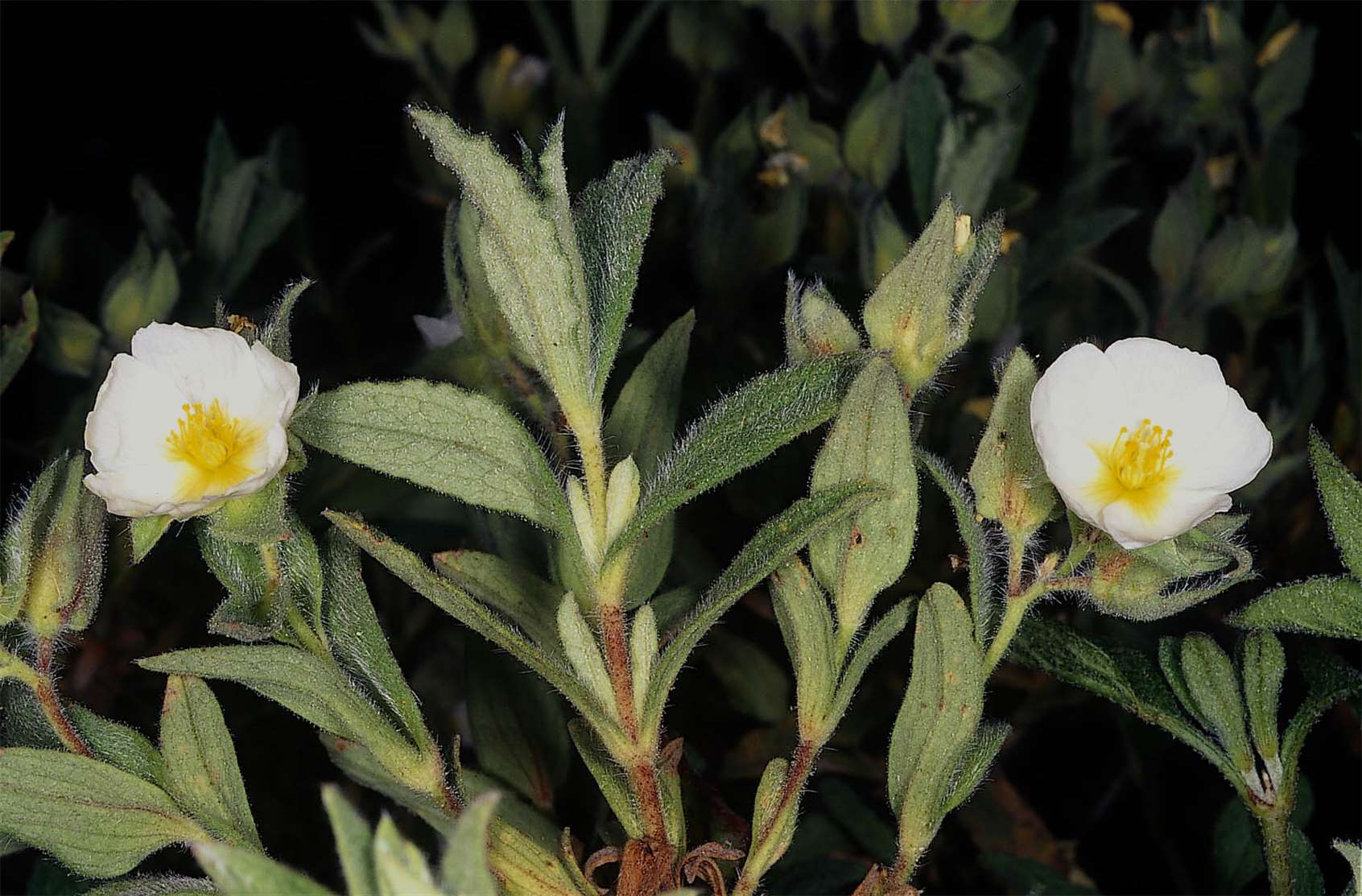
Evergreen shrub, hermaphrodite, 20-60 cm in height, irregular in shape but ± hemispherical, with slightly erect branching. Stems with brown-greyish bark. Young branchlets green or reddish, covered with a dense tomentum of simple and stellate hairs. Leaves opposite, ovate-lanceolate, undulate-crispate, rugose, covered on both sides with a tomentum similar to that of the branches, with 3 clearly marked longitudinal veins; sessile or subsessile, semiamplexicaul. Flowers small, 1.8-2.5 cm in diameter. Calyx with 3 sepals, and epicalyx with 3 bracts, all ovate-cordiform, tomentose, epicalyx slightly larger. Corolla with 5 white petals, with base tinted yellow. Fruit a rounded capsule, tomentose, 2 times shorter than the calyx, with 5 incomplete valves. Seeds are the largest in the genus.
Flowering:
March to May.
Fruiting:
May to July.
Habitat:
Forests and thickets on diverse terrains, but always on soils poor in calcium, with a temperate and humid climate. From subhumid to humid bioclimate, on thermomediterranean and mesomediterranean floors. Generally in low and medium mountains (up to 1,500 m).
Distribution:
Western Mediterranean, always very rare. In North Africa it is very localised, scattered throughout cool and humid zones of northern Morocco and in the Algerian mountains located to the S and SW of Blida.
Conservation status:
A rare species but it does not seem threatened. Currently, it has not been assessed at a global level in the IUCN Red List of Threatened Species.