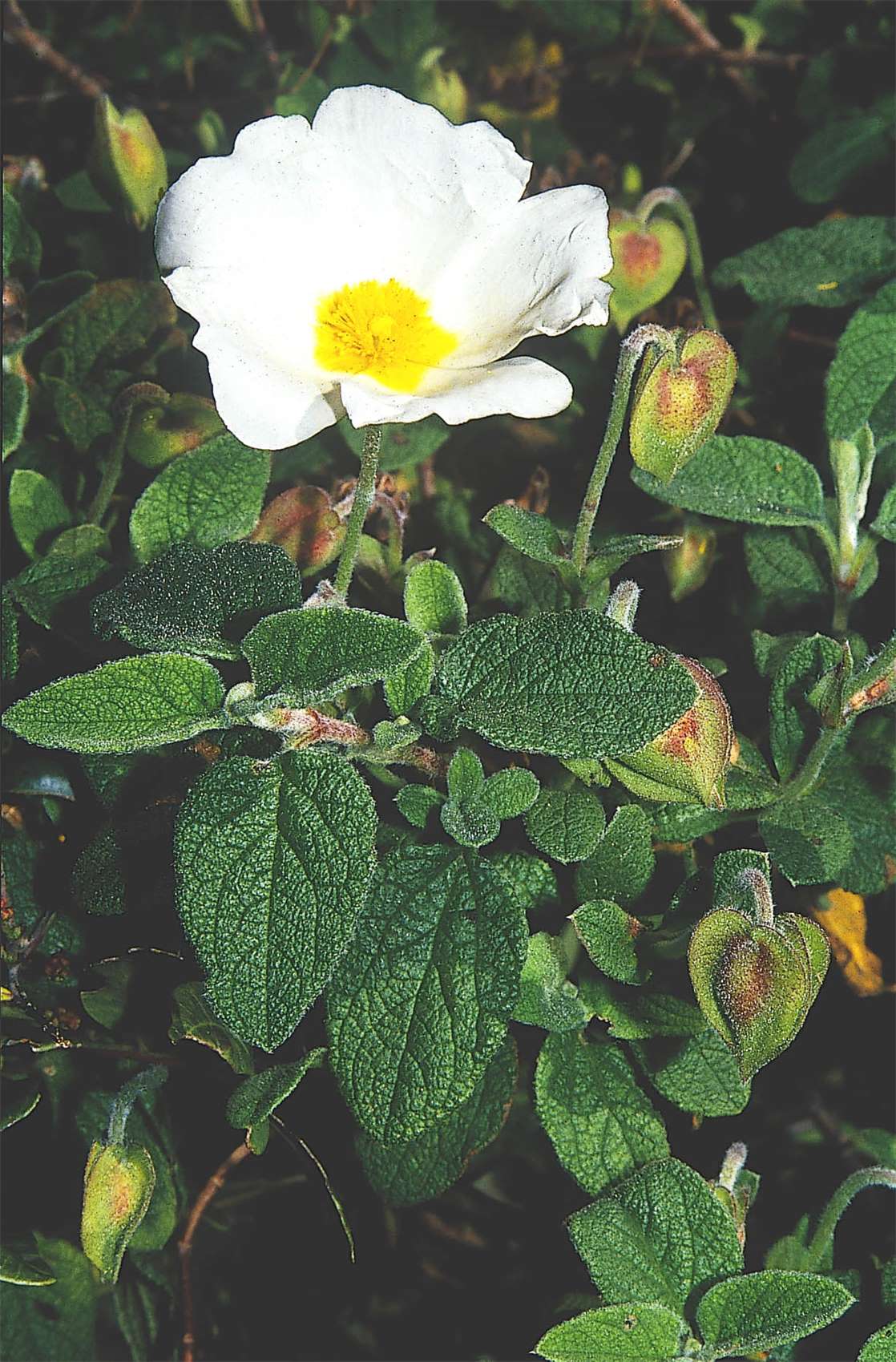
Cistus salviifolius L.
Eng.: Sage-leaved rock-rose. Spa.: Estepa borrera, estepa negra, jaguarzo vaquero. Fre.: Ciste à feuilles de sauge. Ara.: Cfeira, chettaba, chahmet el atrus. Tam.: Tuzzalt, irgel.
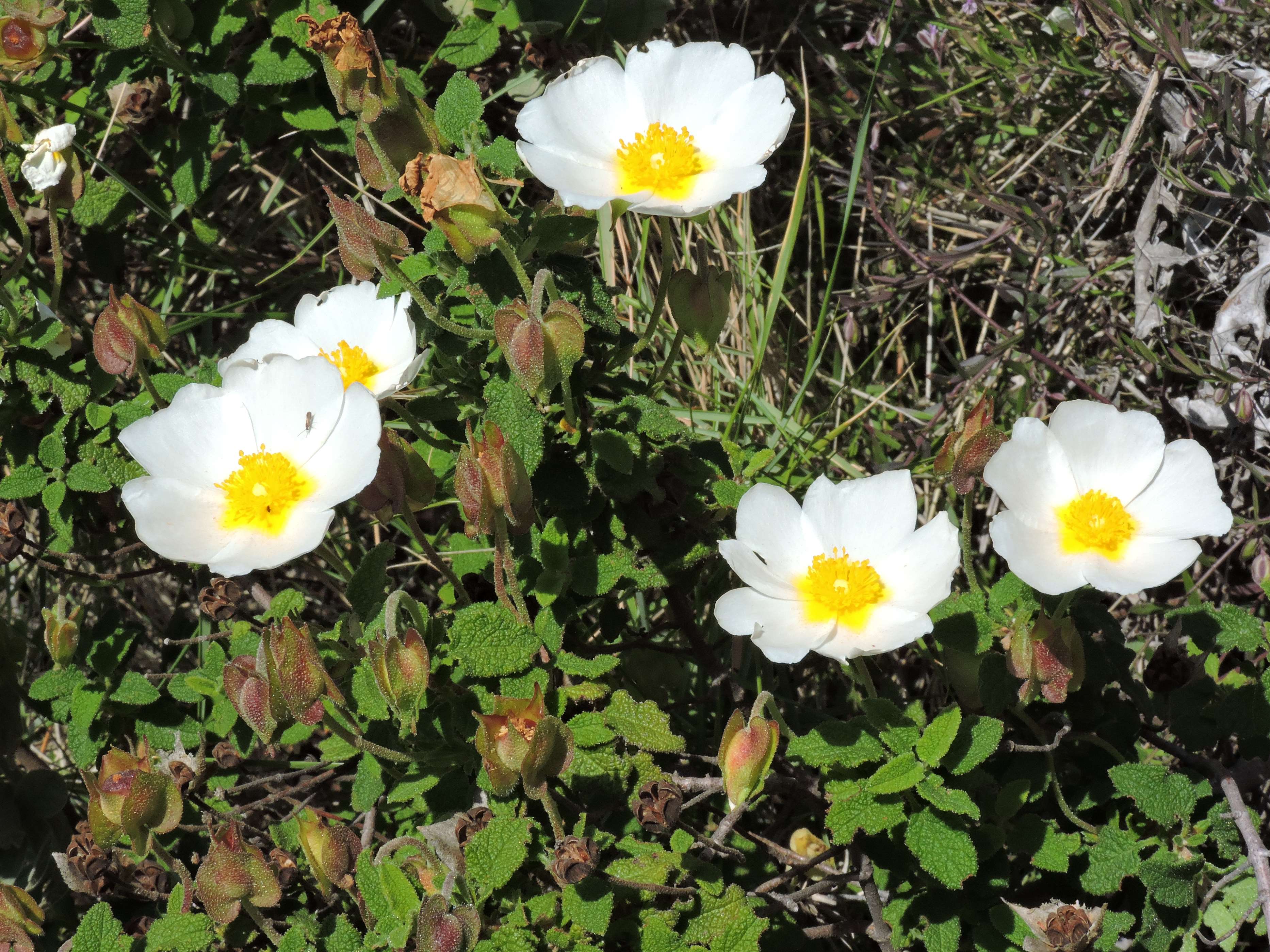
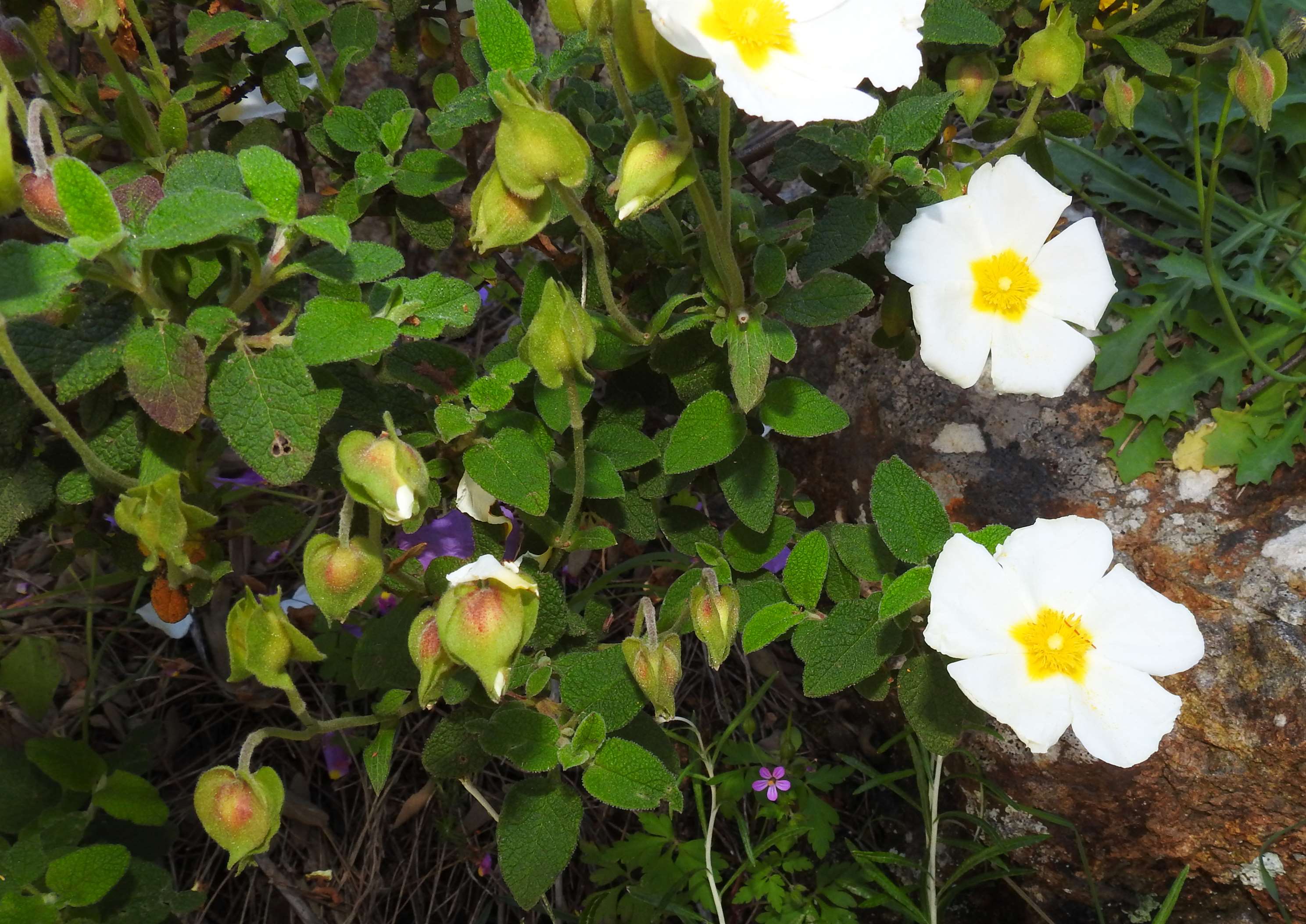
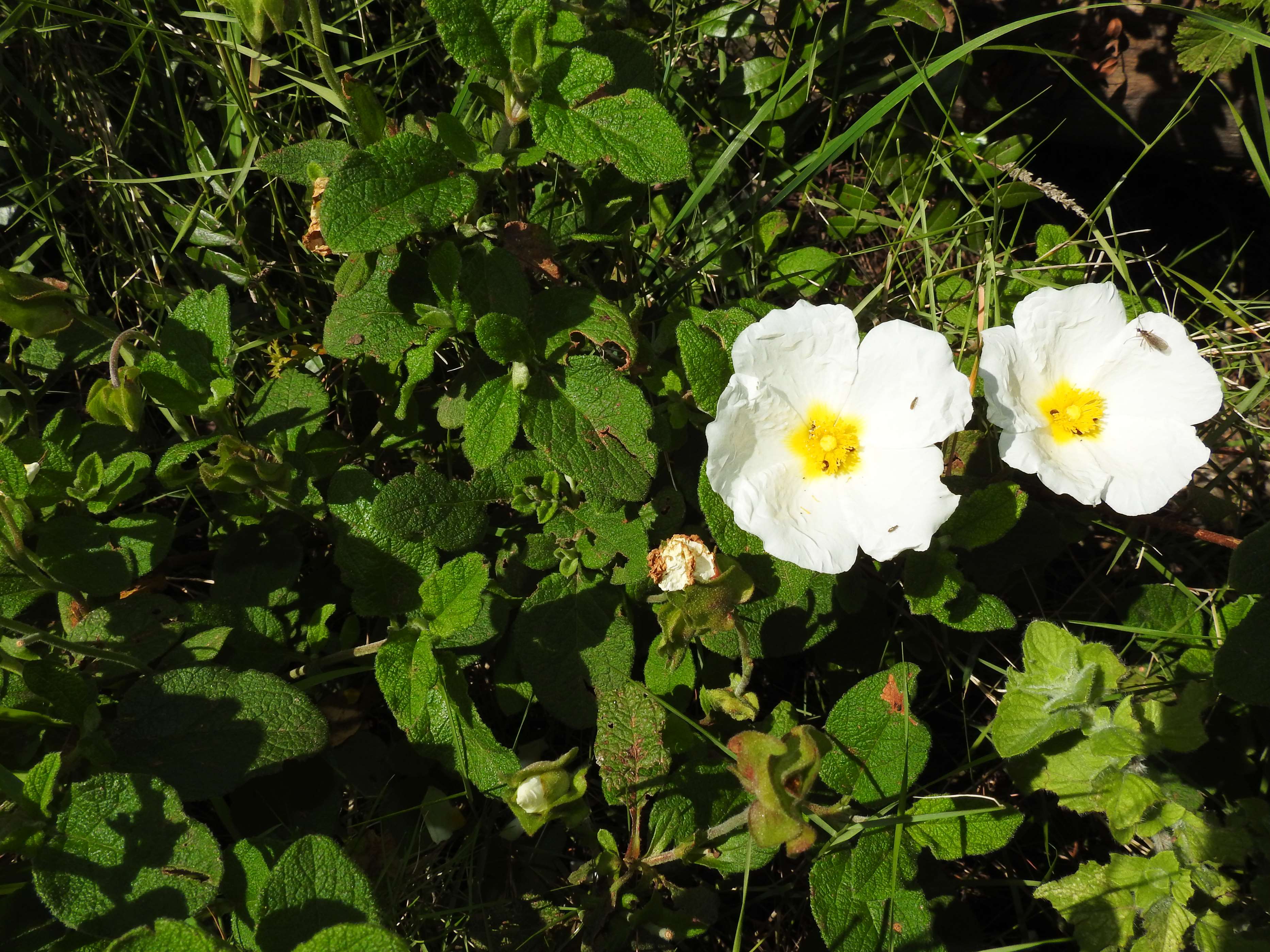
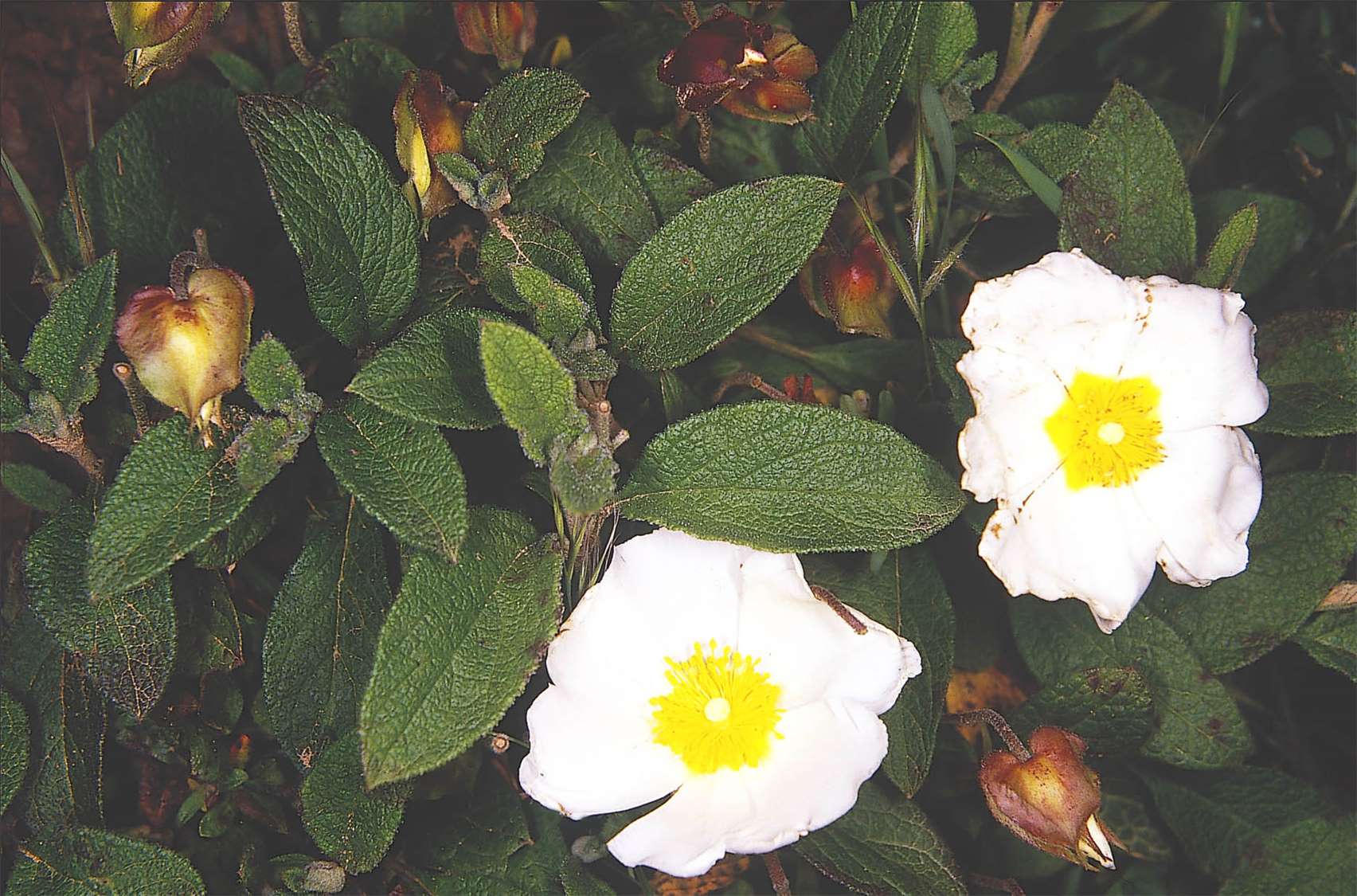
Evergreen shrub, hermaphrodite, up to 1 m in height, irregular in shape, somewhat stunted, highly ramose, deep green, neither smelly nor viscous. Branches extended-erect, with brown-grey to blackish bark. Branchlets brown-greyish, finely tomentose, with stellate hairs. Leaves 0.8-4.5 × 0.7-3 cm, opposite, clearly petiolate, ovate to obovate-oblong, ± cordate, with margin not revolute, slightly or not at all undulate; with a single longitudinal vein; deep green, rugose and with tomentum of stellate hairs on the upper side; lighter, reticulated and with subfasciculated hairs on the underside. Inflorescences in cymes of 1-3 flowers, with peduncle and pedicels densely tomentose, with stellate hairs. Flowers small, 3.5-5 cm in diameter, calyx with 5 sepals, outer 2 sepals larger than the inner 3 sepals, all heart-shaped, acuminate, pubescent, rarely glabrous. Petals 5, 14-20 × 12-16 mm, white, with a small yellow mark at the base. Fruit in globose-pentagonal capsule, 5-7 mm, dehiscent in 5 valves. Seeds minute, subspherical, with reticulated surface. 2n = 18.
Flowering:
March to June.
Fruiting:
April to August.
Habitat:
Forests and thickets on silicate, stony, sandy or clayey soils, rarer in ± decarbonated limestone soils, therefore it cannot be considered strictly a calcifuge species. From semiarid to humid bioclimate, on inframediterranean to supramediterranean floors. This species is a fundamental part of the Mediterranean thickets in almost all dry to humid areas, and in subhumid areas with cold or mild winters. It reaches up to 2,100 m in altitude.
Distribution:
Mediterranean region. In North Africa is the most common rockrose, found in all less dry areas of Mediterranean influence, reaching the Anti-Atlas to the S.
Conservation status:
Common species that can become locally abundant. Currently, it has not been assessed at a global level in the IUCN Red List of Threatened Species. In the Livre Rouge de la flore vasculaire du Maroc (Fennane, 2021) it has been considered as Least Concern (LC).