Salvadora persica L.
Eng.: Toothbrush tree, mustard tree. Spa.: Árbol cepillo de dientes, árbol de mostaza, árbol del arak. Fre.: Arbre brosse à dent, arbre de peelu. Ara.: Araak, irak, rak, ork, ark, lirak, irakaya, kbats, redif, siwaak, suek, suak, miswaak, aferchi, avrechi (Hassanía). Tamahaq: Teqi, tihaq, tidjat, adju, abisga, abesgen, ami, oïu, babul, aebizgîn, taezâk, tihok, téhok, ntikoêt.
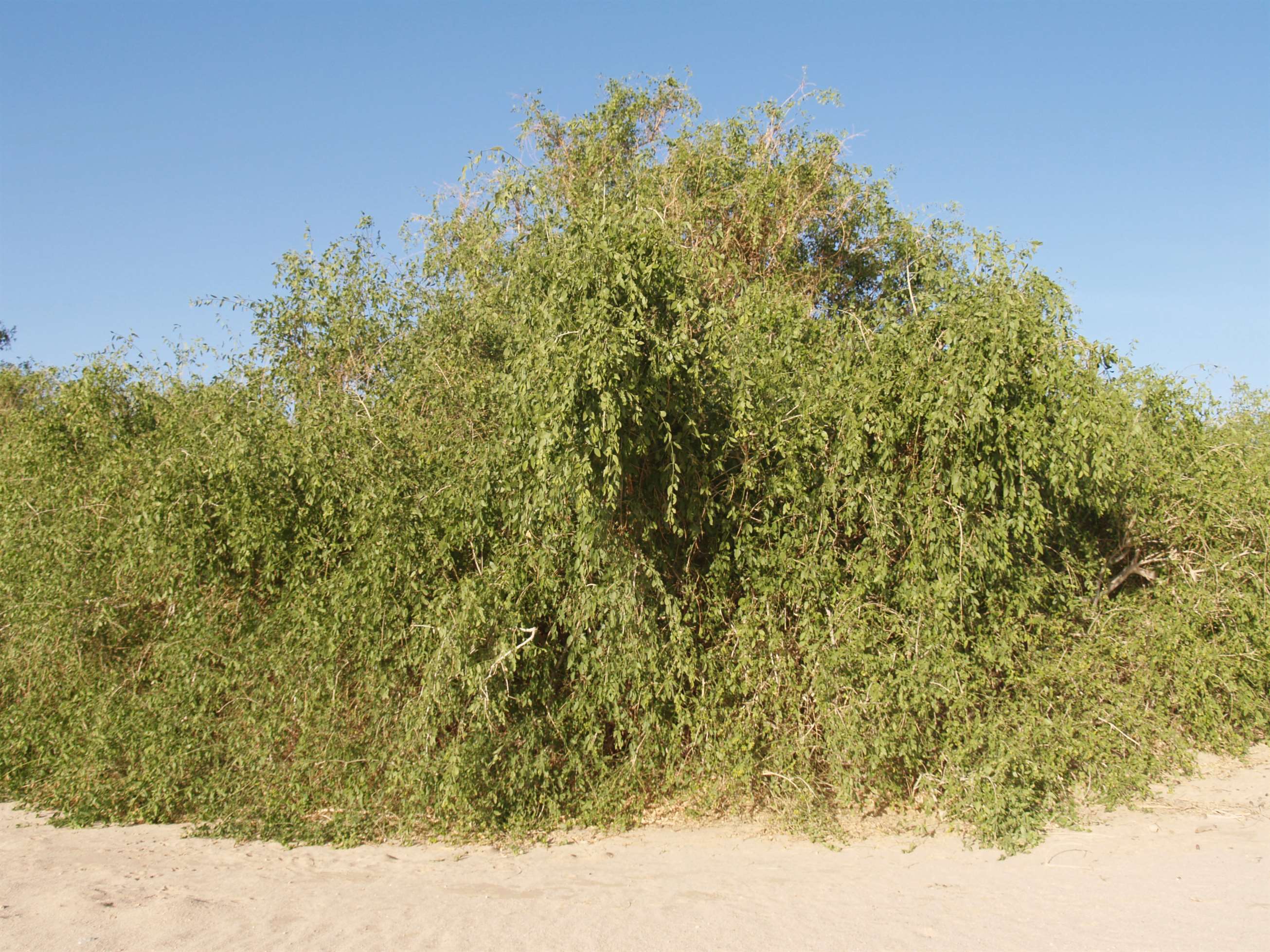
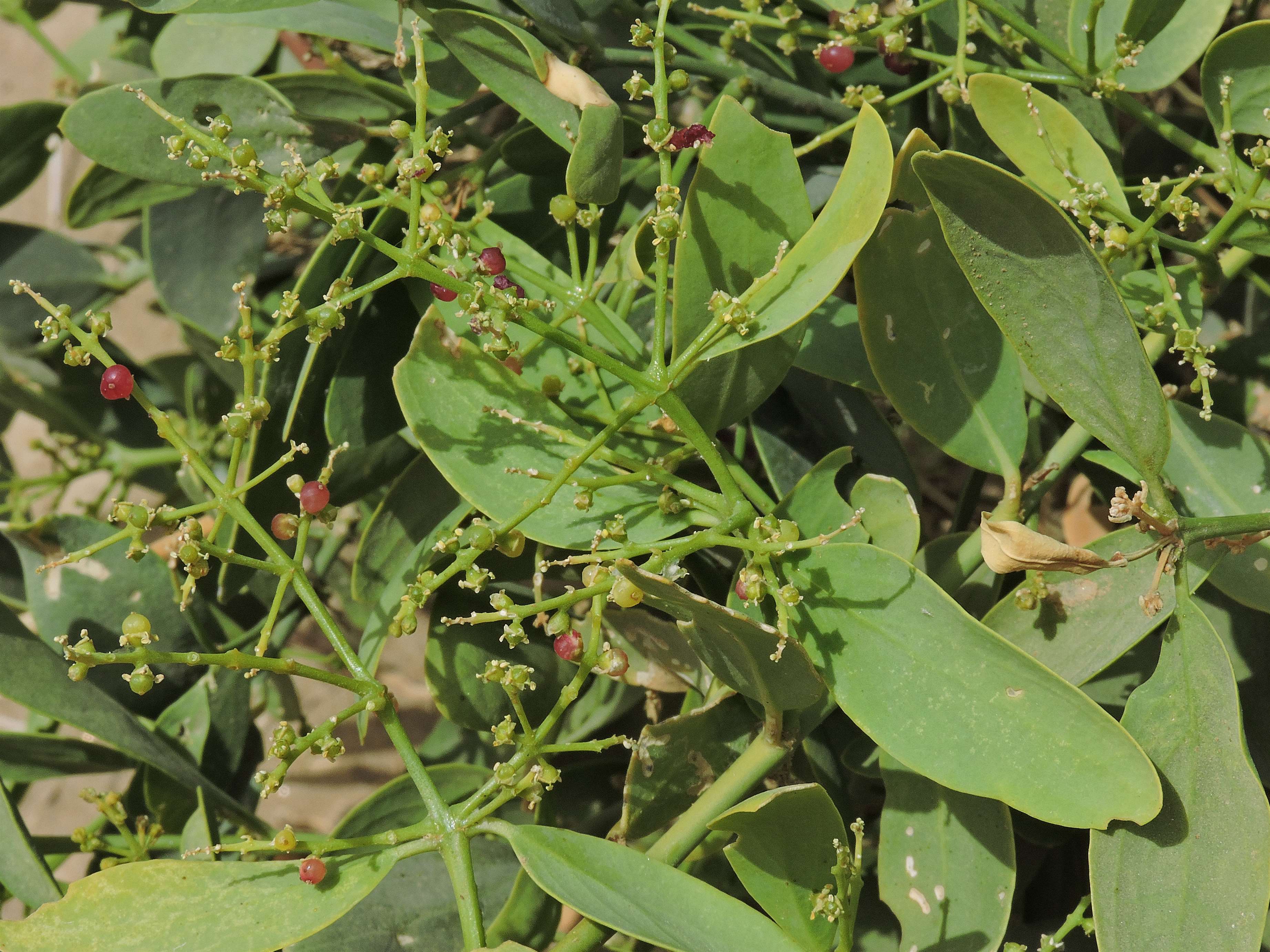
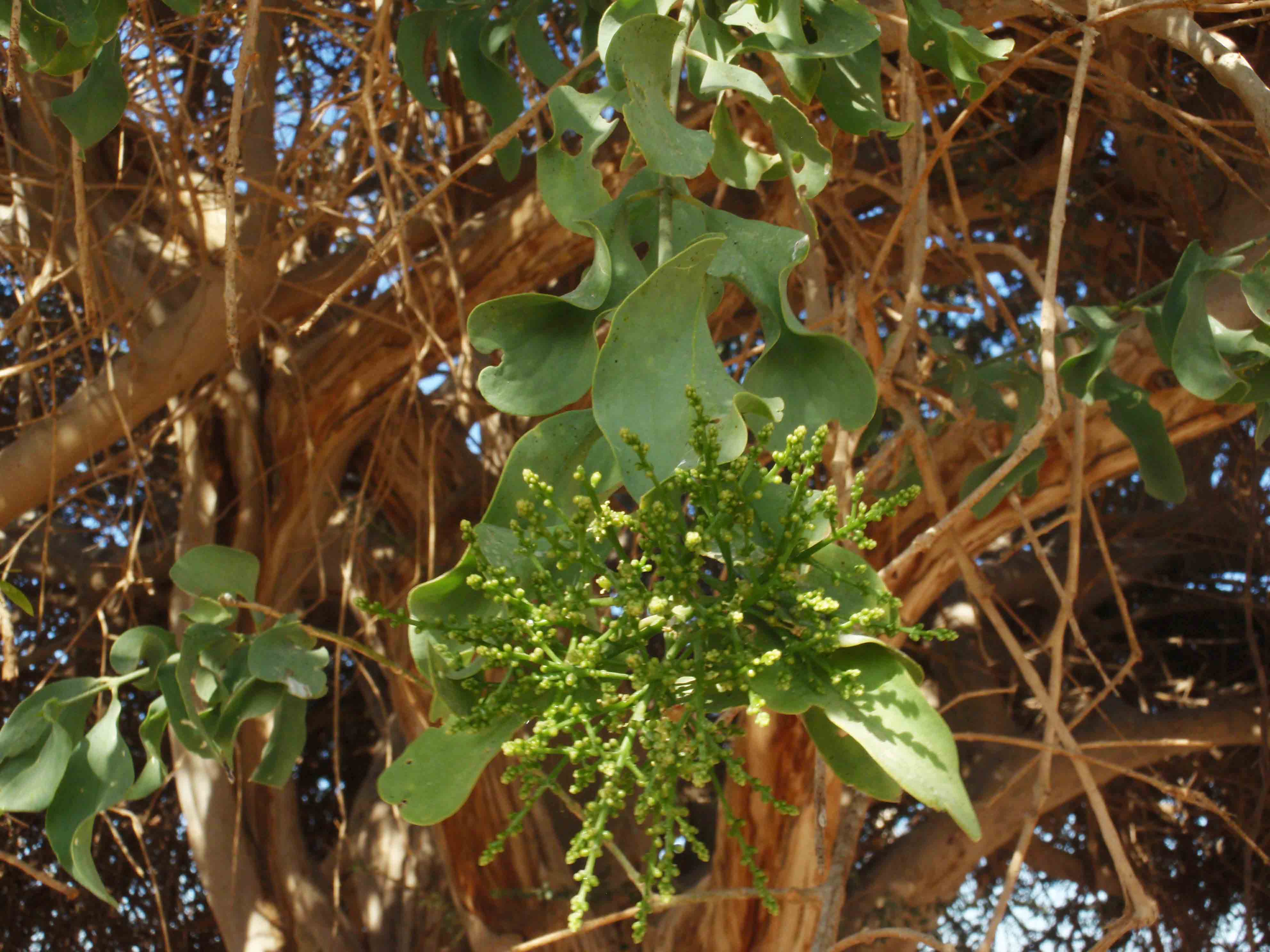
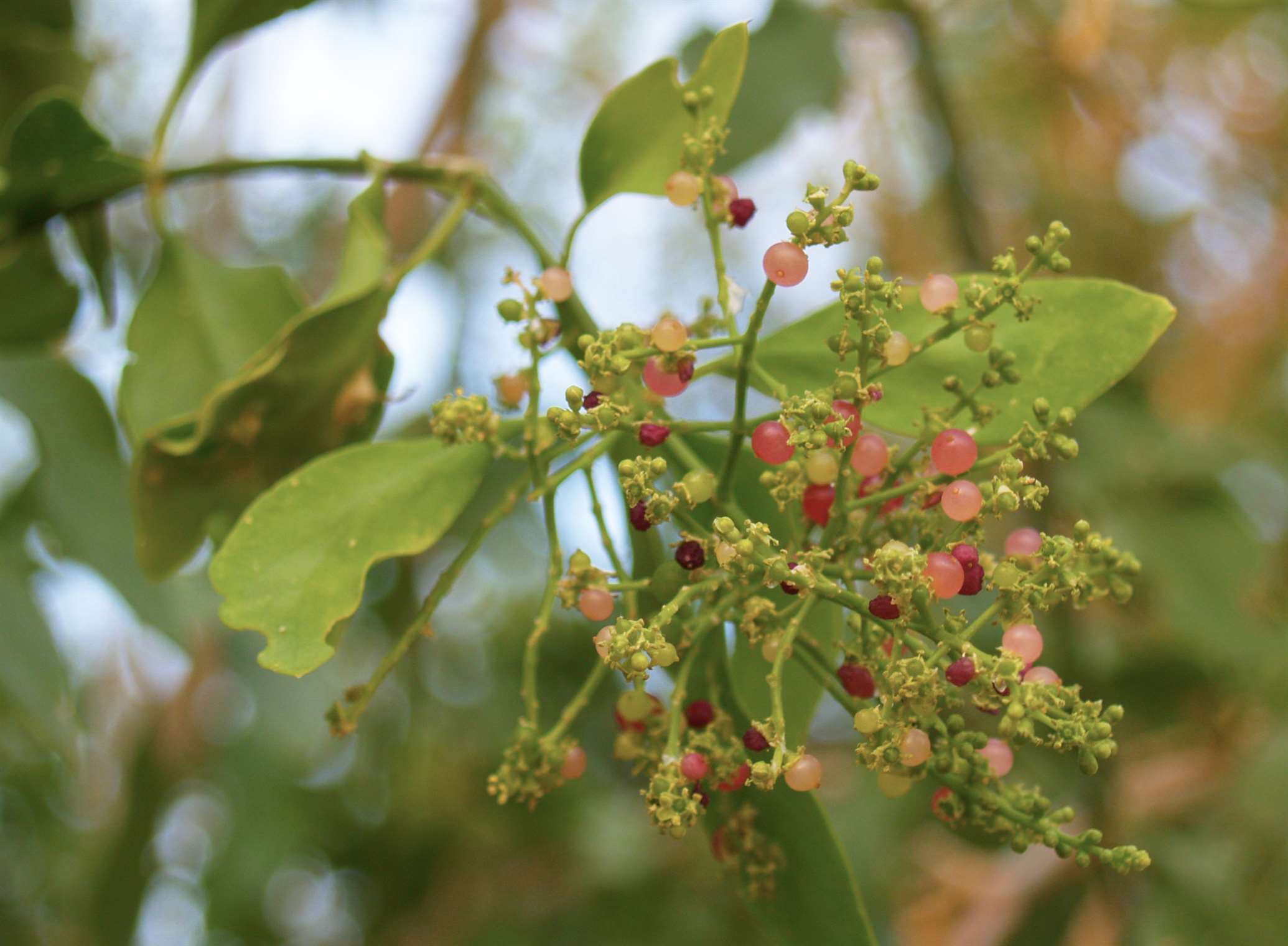
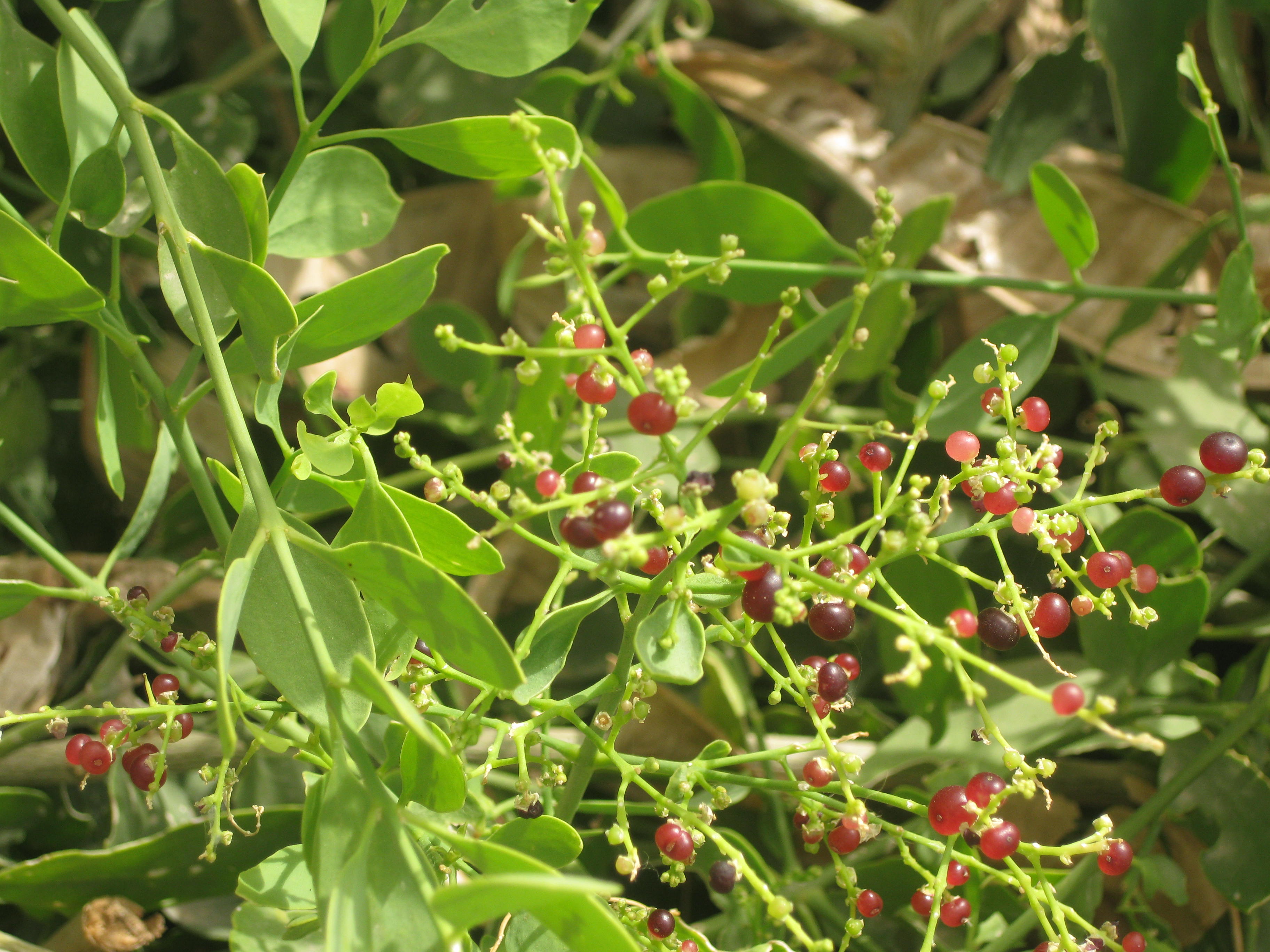
Tree or shrub, 1-3(4) m in height, intricate, glabrous. Branches opposite, repeatedly branched, cylindrical, pendulous, whitish. Leaves (2)4-6 × 1.5-3 cm, petiole 1.5-5 cm long; coriaceous, lanceolate, ovate-oblong or rarely suborbicular, cuneate at the base, usually obtuse at the apex, although some may be acute, entire, light green. Stipules small, linear-lanceolate and caducous. Flowers in spiciform racemes, axillary or terminal, highly branched, forming a panicle with scattered bracts. Pedicels 1-2 mm. Flowers tetramerous, greenish, about 3 mm, with persistent campanulate calyx, which has 4 lobes imbricated in the bud. Corolla twice longer than the calyx, with 4 revolute and imbricate teeth. Stamens 4, inserted into the corolla tube and with free filaments. Ovary unilocular, with 1 ovule, very short style and capitate stigma. Fruit a small drupe, which resembles a berry, globular or piriform, 4-8 mm, fleshy, surrounded by the calyx, which is persistent and somewhat accrescent.
Flowering:
From January to April.
Fruiting:
March to June.
Habitat:
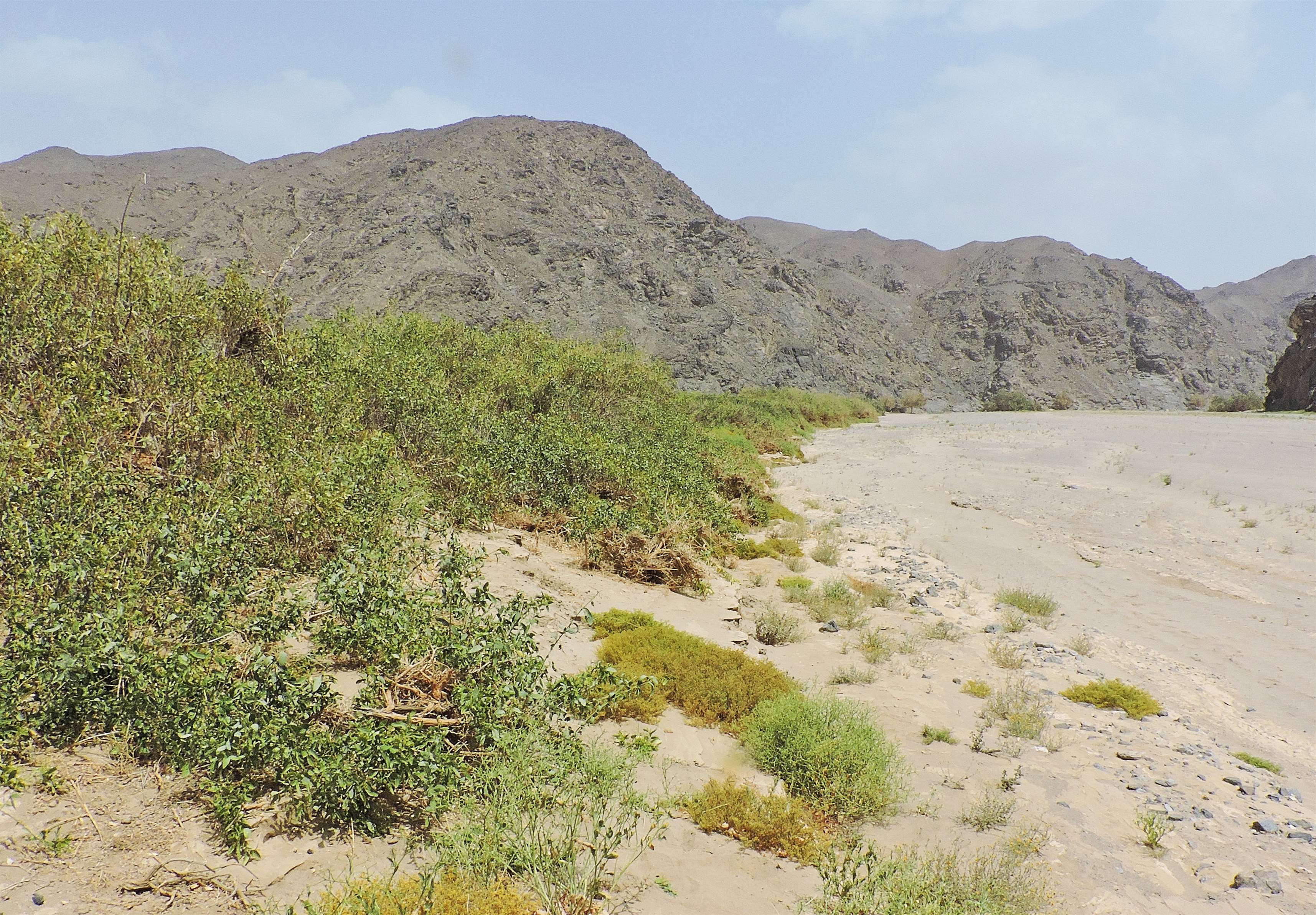
Wetlands in warm deserts; usually in humid soils, even in saline soils.
Distribution:
Palaeotropical, from the coast of E Africa to Madagascar and India; towards the N it reaches western Sahara, S slopes of the mountains of the central Sahara (Ahaggar, Tassili, etc.), E of Libya and S of Egypt.
Observations:
There are 2 varieties, apparently with little taxonomic value, depending on whether the branches, leaves and inflorescences are almost glabrous (var. persica) or pubescent (var. pubescens Brenan).
Conservation status:
Rare but widely distributed species. Currently, in the IUCN Red List of Threatened Species it is evaluated as Least Concern (LC) at a global level [Botanic Gardens Conservation International (BGCI) & IUCN SSC Global Tree Specialist Group. 2019]. In the updated red list of Egypt (Shaltout & Bedair, 2023) it has been considered as Least Concern (LC).