Boscia senegalensis Lam. ex Poir.
Eng.: Aizen. Spa.: Aizen. Fre.: Boscia du Sénégal. Ara.: Mukheit, mukhet, um kheit, aizen, aïznaya, aïzoen, tundub, aizenayé (Hassanía), zzen, hanza, shagara al muknet, moheb, makhei, hemmet, bokkhelli, hemet, moheb, makhei (last 3 Choua) tsuh; the fruit: kursan. Tamahaq: Taedaent, tedent, taddant.
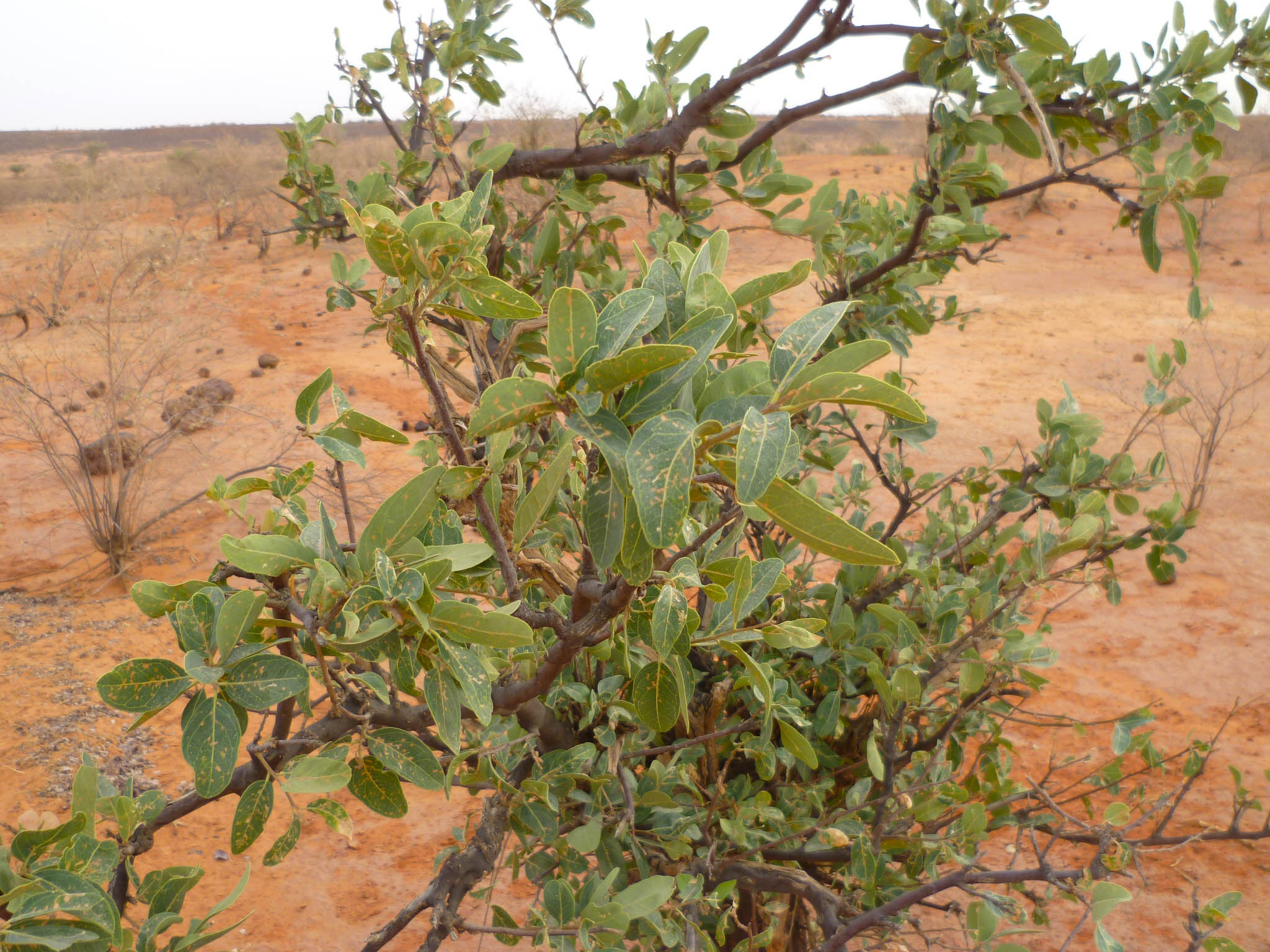
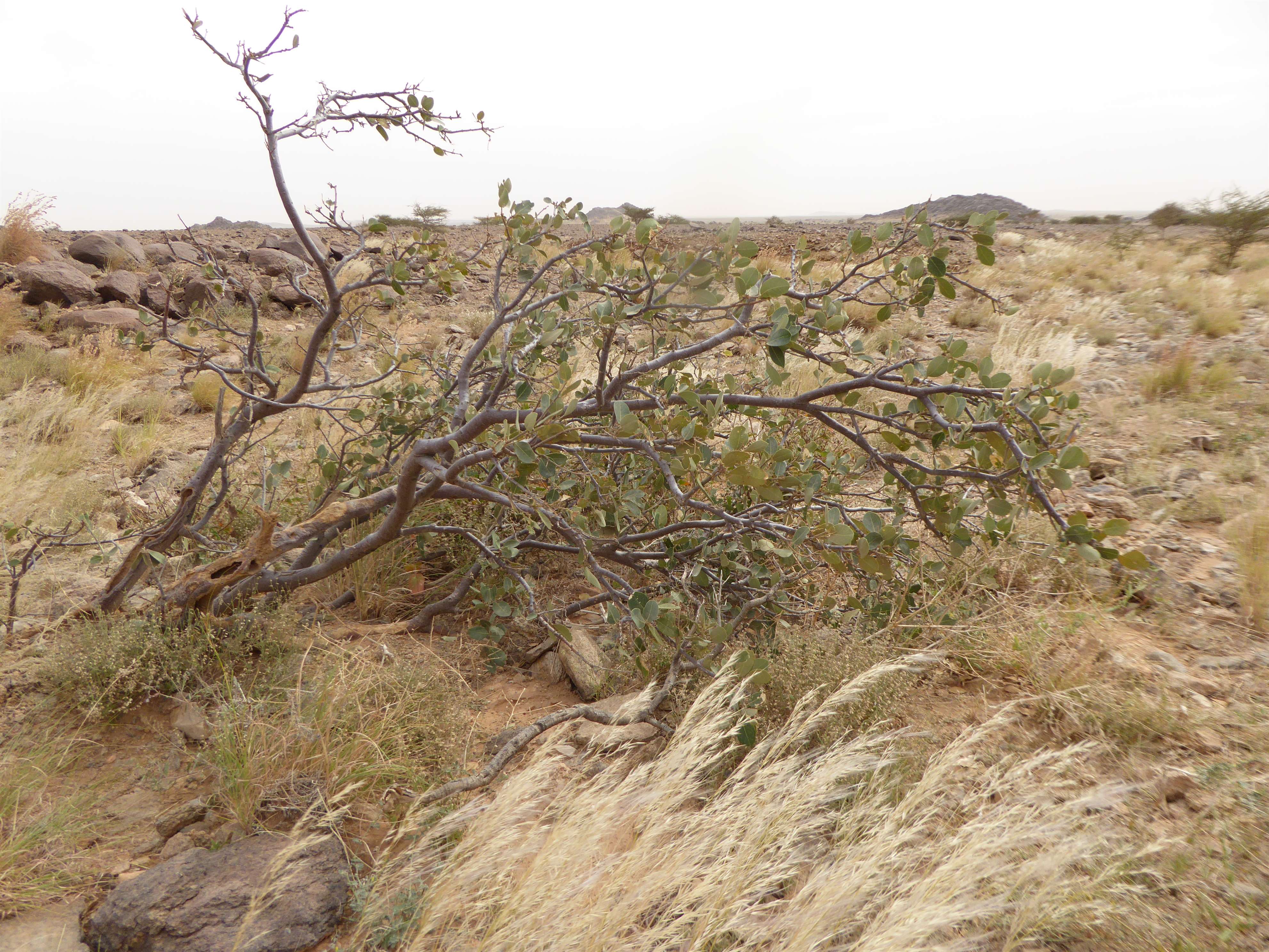
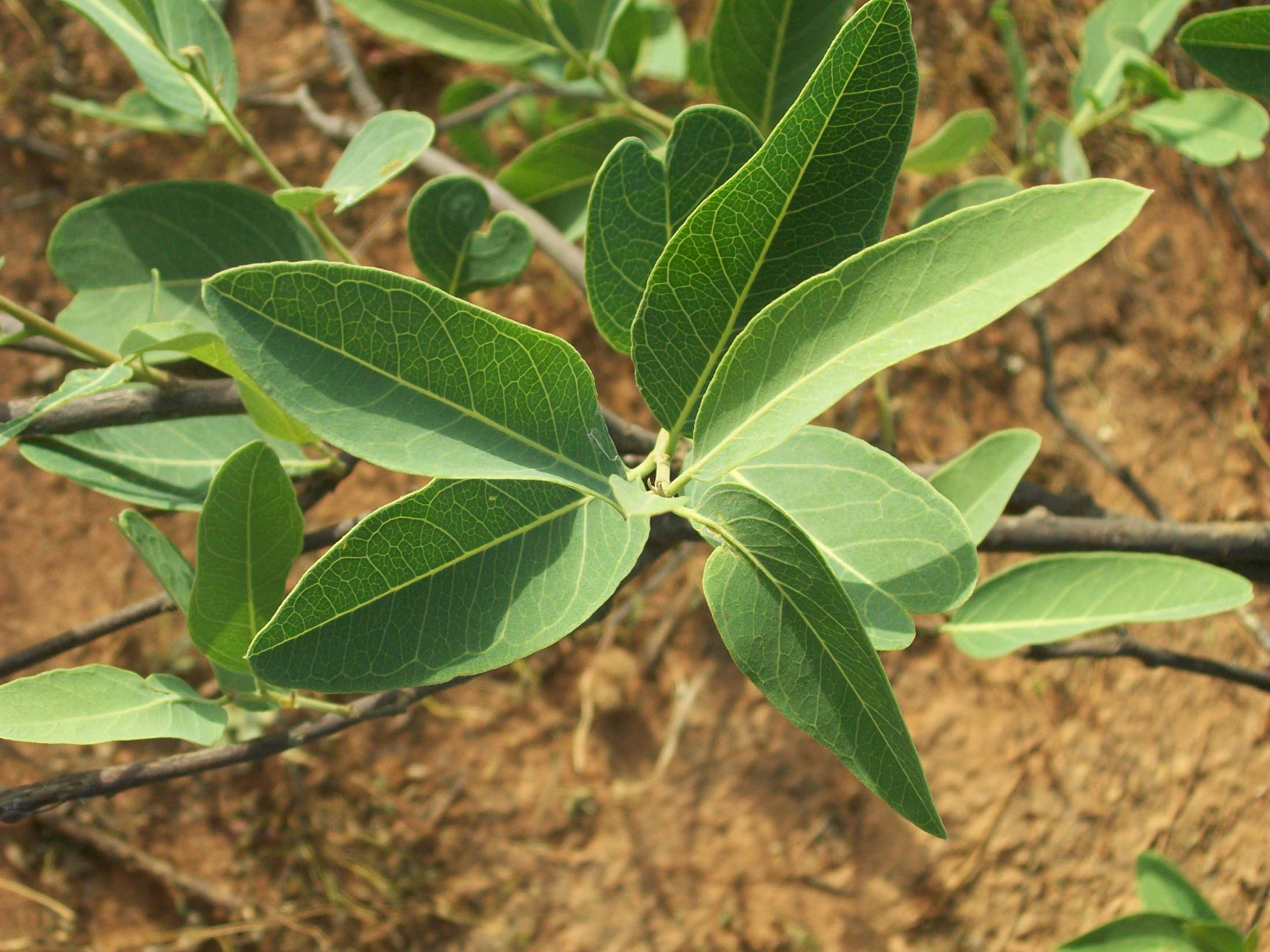
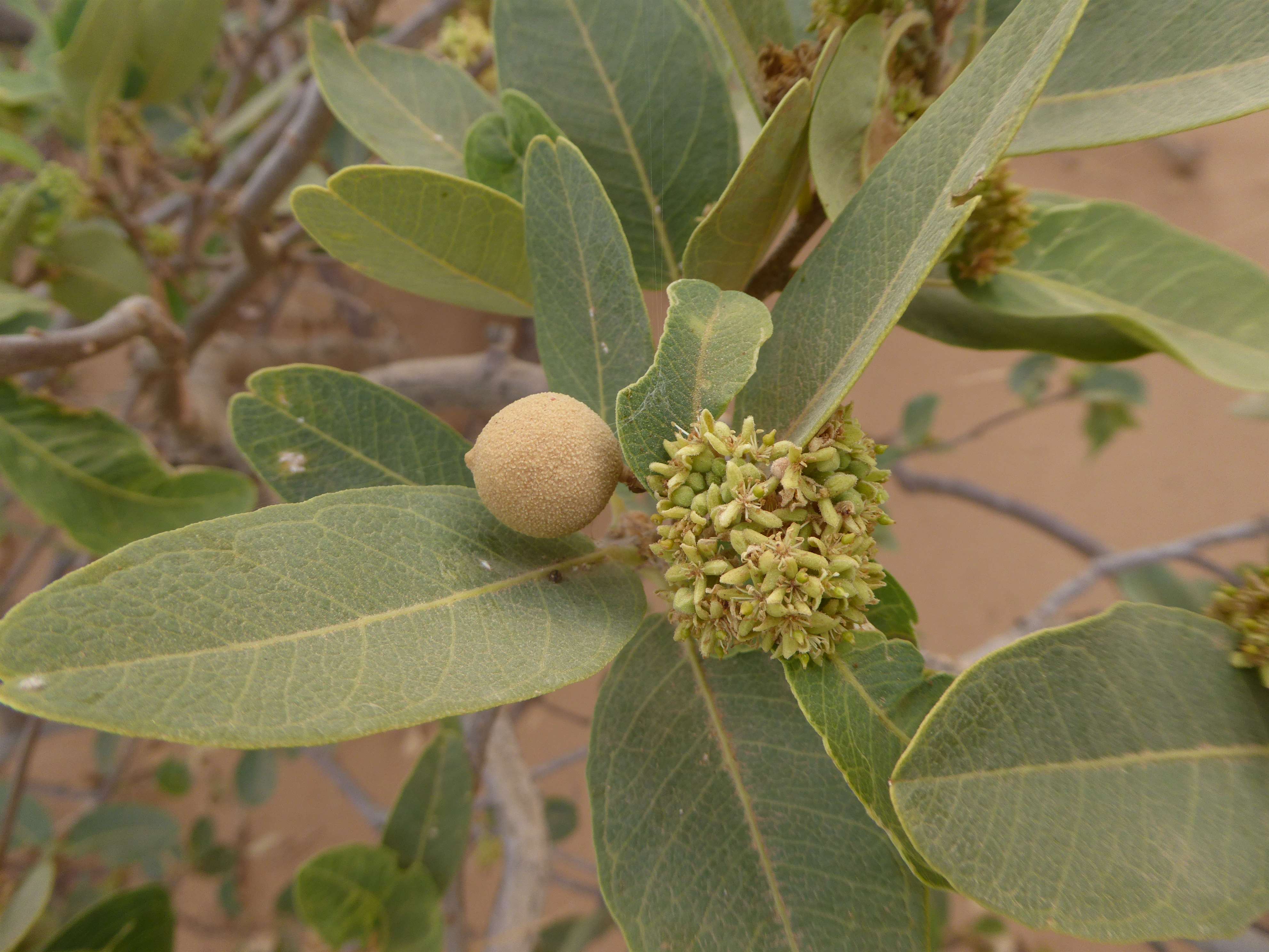
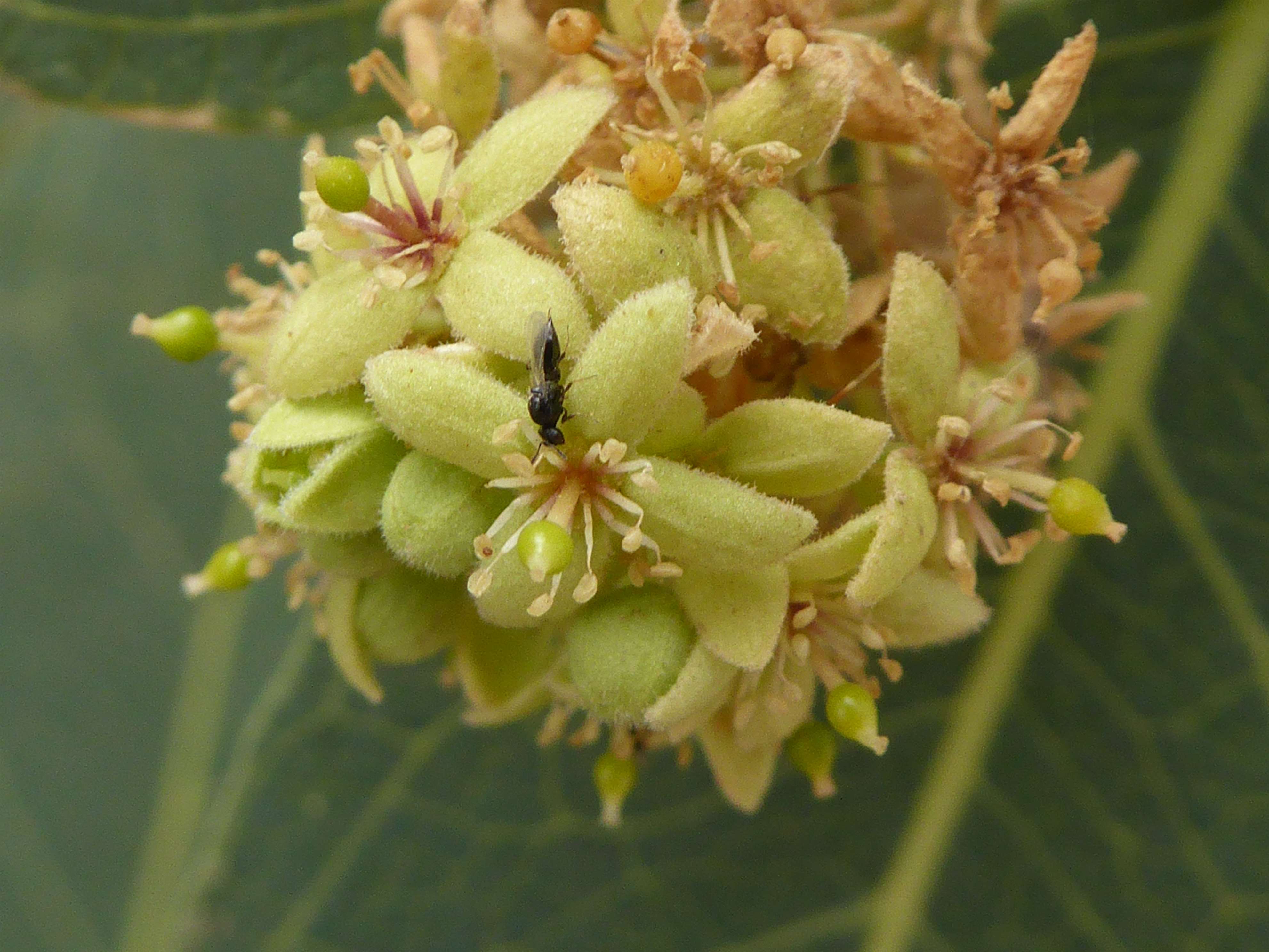
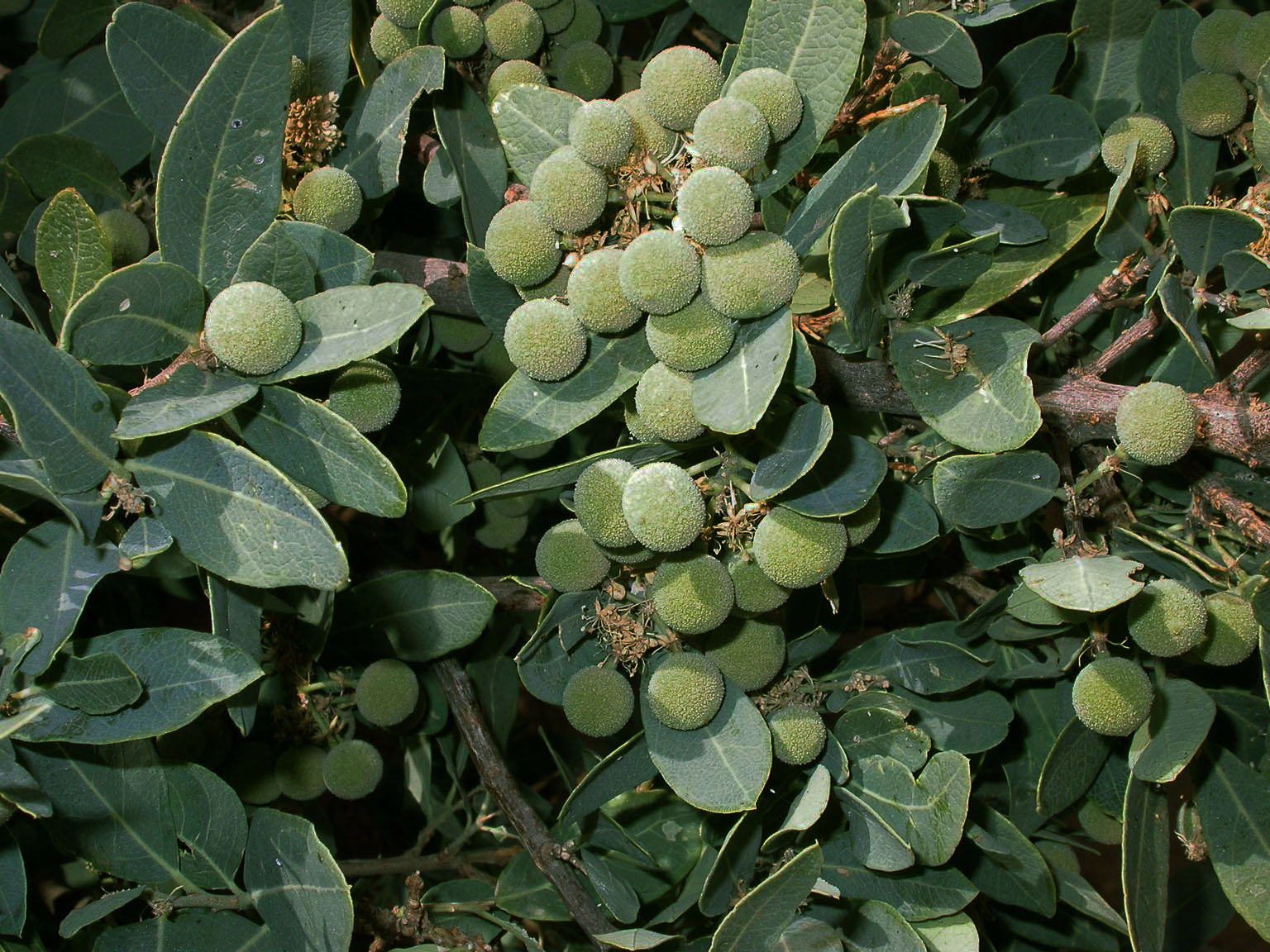
Shrub or small tree, 3-5(7) m in height, evergreen. Young branches cylindrical, pubescent. Leaves elliptic to ovate-elliptic, 3-7(12) × 2.4 cm, alternate, simple, entire, coriaceous, glabrous or finely pubescent, scabrid along the margin, obtuse or mucronate, reticulated, with pinnate venation, with 5-6 lateral veins that are pronounced on both sides. Petioles densely pubescent 3-8 mm. Stipules very small, submembranous, linear-subulate, brown and ± caducous. Inflorescences terminal, corymbiform. Flowers greenish, odorous, actinomorphic, minute, 3-5 mm. Pedicels glabrous or villous, longer than the flowers. Petals 0. Sepals 4, ovate, about 4 mm, briefly ciliate along the margin, stamens 8-20, exserted, 2-3 mm, longer than the gynophore. Fruit an edible nutlet, globose [0.8-1.5(2) cm], pustulate, somewhat tomentose; it contains a sugary pulp difficult to separate from the seeds. Seeds (1-4) greenish when ripe.
Flowering:
February to March.
Fruiting:
February to March.
Habitat:
Stony places, fissures of rocks.
Distribution:
Mainly Sahelian distribution, reaching towards the N to the western Sahara, the mountains of central Sahara (Ahaggar) and SE of Egypt.
Observations:
The fruits and seeds (similar to chickpeas) are edible and nutritious (with carbohydrates and proteins).
Conservation status:
Rare but widely distributed species. Currently, in the IUCN Red List of Threatened Species it is evaluated as Least Concern (LC) at a global level (Oldfield, 2020). In Algeria it is included in the List of protected non cultivated flora (Executive Decree 12-03 on 4-Jan-2012). In the updated red list of Egypt (Shaltout & Bedair, 2023) it has been considered as Endangered (EN).