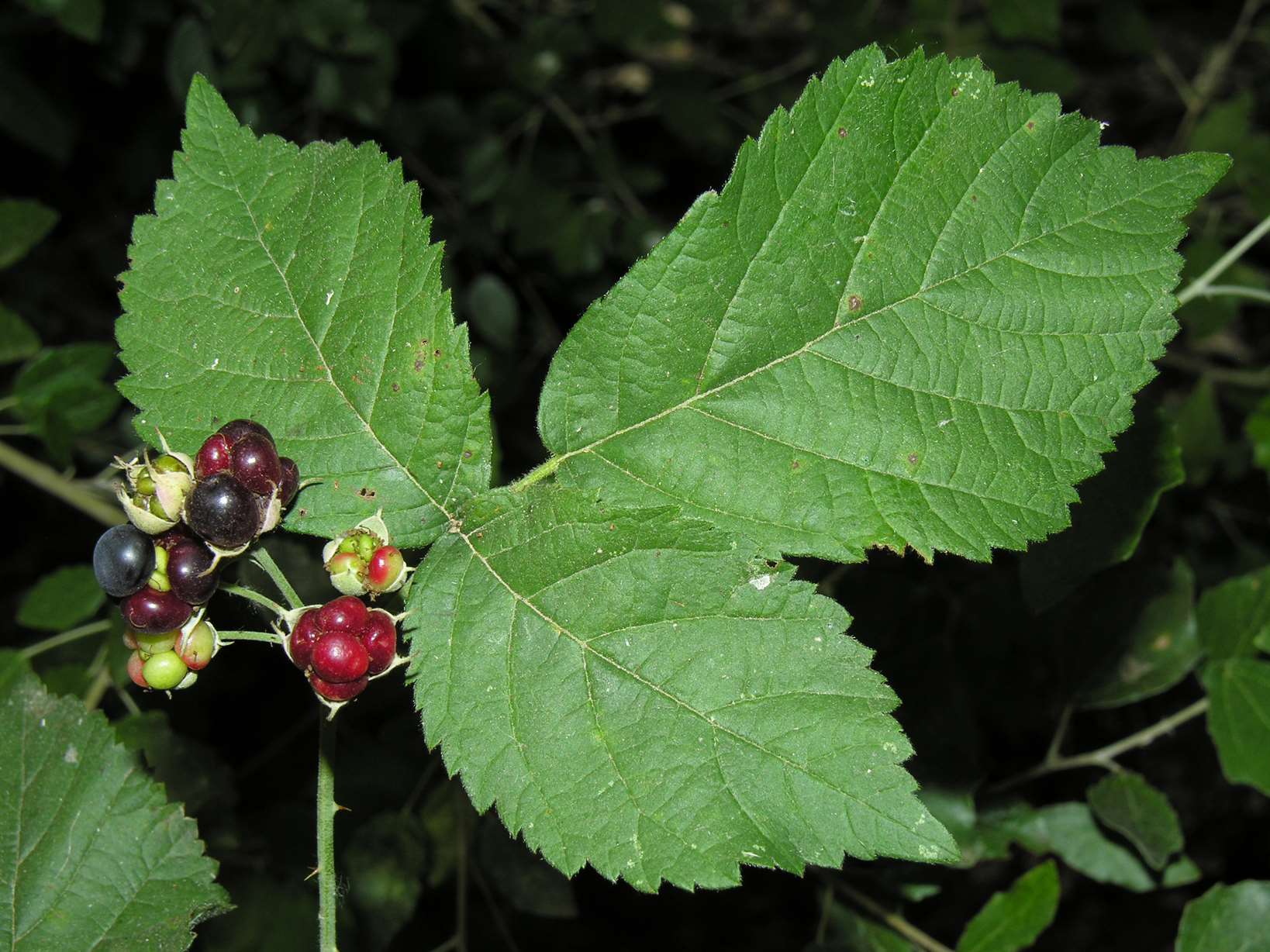
Rubus caesius L.
R. herbaceus Pau
Eng.: Bramble, dewberry. Spa.: Zarza macho. Fre.: Ronce bleue. Ara.: El klil, allaïq, ullayq, leudj, aullaque
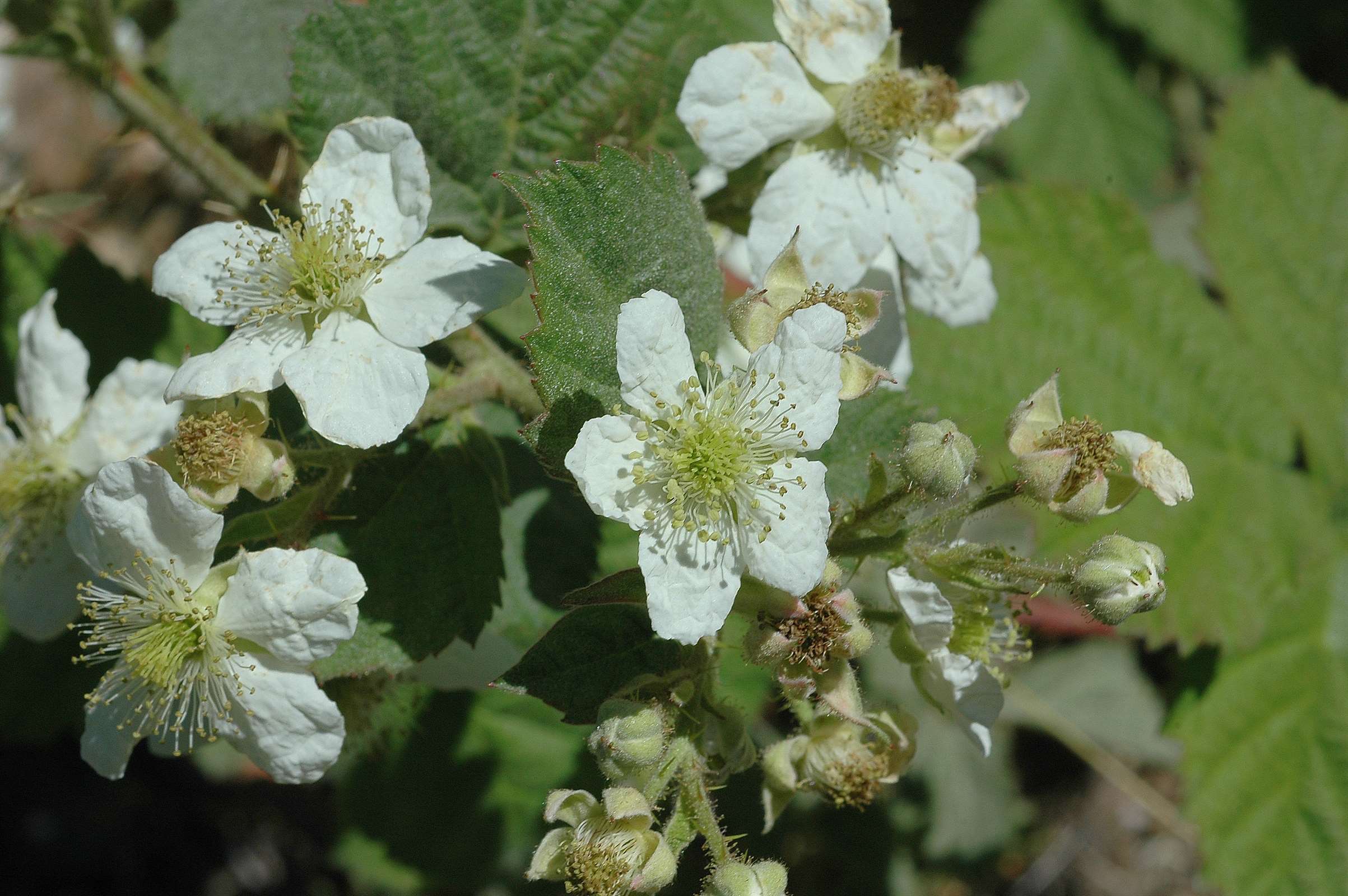
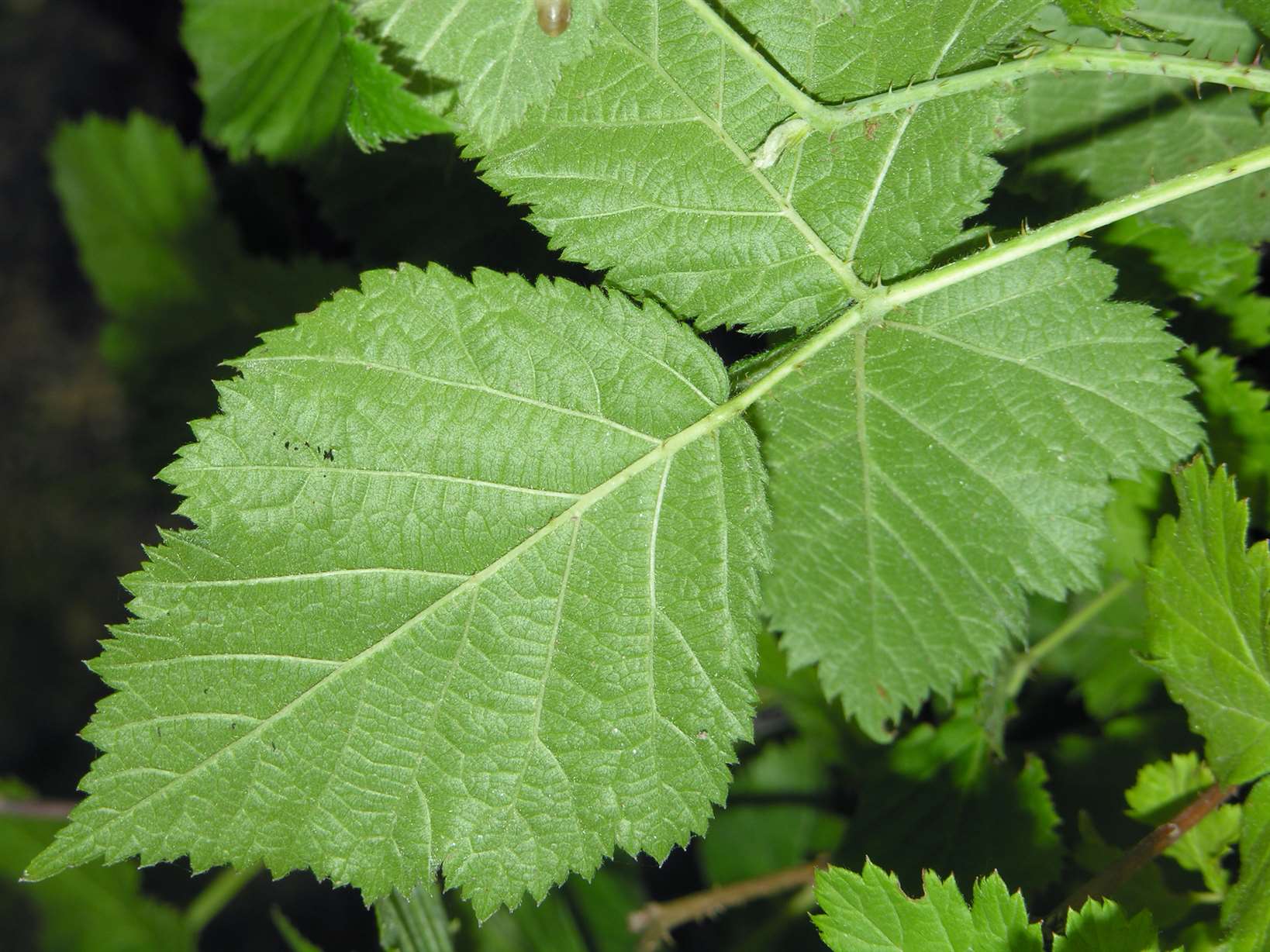
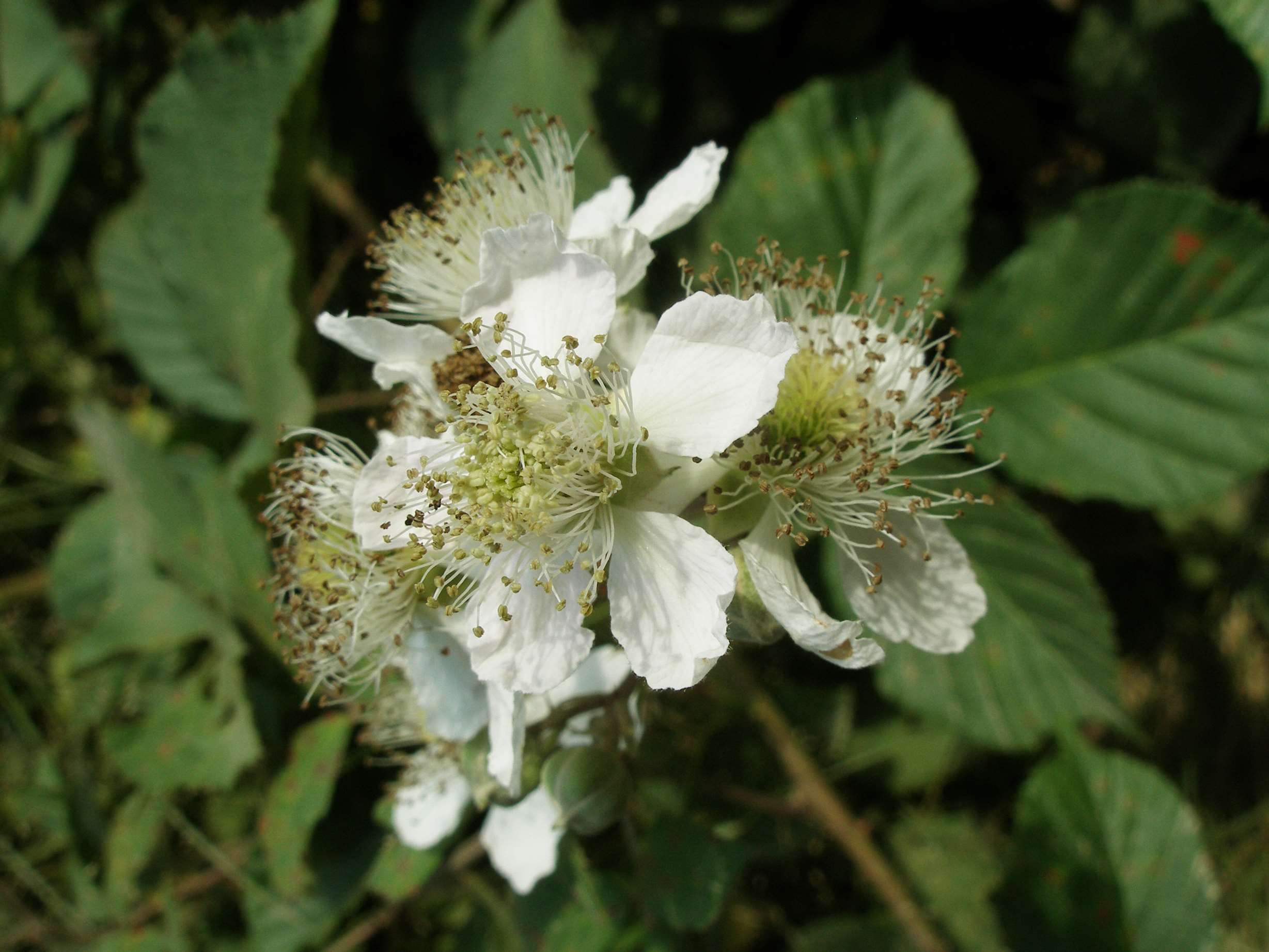
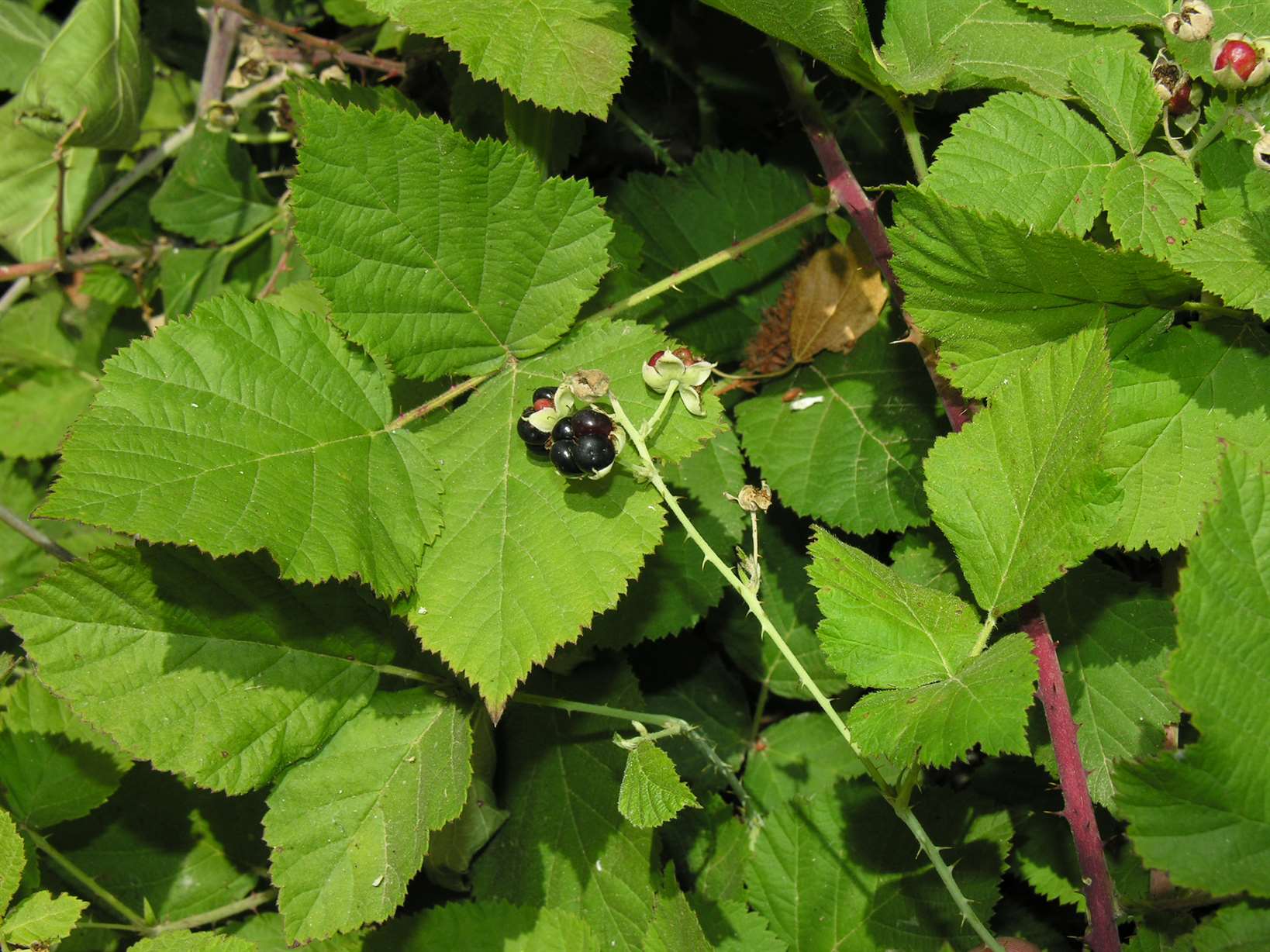
Shrub, evergreen, hermaphrodite, spinescent, up to 1.5(2) m in height. Turions curved-decumbent or decumbent, slender (generally not more than 5 mm in diameter), circular in cross section, green or bluish and pruinose —in sunny locations also reddish—, glabrous, sometimes green-tomentose; few to numerous stipitate glands, short (0.25-0.5 mm); prickles variable in number, 1-2.5(3.5) mm, fine, straight, patent or inclined, generally reddish. Leaves with 3 leaflets, glabrous on the upper side (except in very sunny locations) and subglabrous or with numerous simple hairs on the underside; petiole with few simple hairs, with few stipitate glands or without, and with 15-20 prickles, patent or somewhat curved; lanceolate stipules; terminal leaflet ovate-triangular or rhomboid, often trilobed, with cordate base and subulate apex, shortly petiolulate; basal leaflets often bilobed, subsessile or with petiole 1-2 mm. Inflorescence with trifoliolate leaves almost to the apex, usually with few flowers and located only towards the apex; main axis glabrous or subglabrous, pruinose, with stipitate glands generally short and sparse, and prickles variable in number, 1-3 mm, thin; pedicels 15-30 mm, pruinose, tomentose, greyish-whitish, with stipitate glands variable in number, very short and often reddish, and with 0-20 prickles, 1-3 mm, thin, weak (sometimes looking like bristles), patent or somewhat curved. Sepals green-tomentose, unarmed, often prolonged into a narrow and ± long tip, erect or patent, with few or abundant stipitate and short glands. Petals 8-13 × 7-14 mm, broadly ovate or suborbicular, white. Stamens similar in length or longer than the styles. Fruit a black-green drupe, pruinose.
Flowering:
May to September.
Fruiting:
No data for this region
Habitat:
Humid mountain ravines. In subhumid to humid bioclimate, on mesomediterranean and supramediterranean floors.
Distribution:
Europe, Caucasus, W Siberia, central Asia, Iran, Anatolia. It is a very rare species in North Africa; it is only known in Algeria, around Ighzer Amenouar stream, on Mount Chelia in the Aures Massif. Its presence is doubtful in Morocco.
Conservation status:
Rare but widely distributed species, particularly rare in the North Africa. Currently, it has not been assessed at a global level in the IUCN Red List of Threatened Species.