Indigofera oblongifolia Forssk.
I. lotoides Lam., I. paucifolia Delile, I. desmodioides Baker
Eng.: Indigo. Spa.: Índigo. Fre.: Indigotier. Ara. (Hassanía): Tufel henné, (Egypt): dahseer.
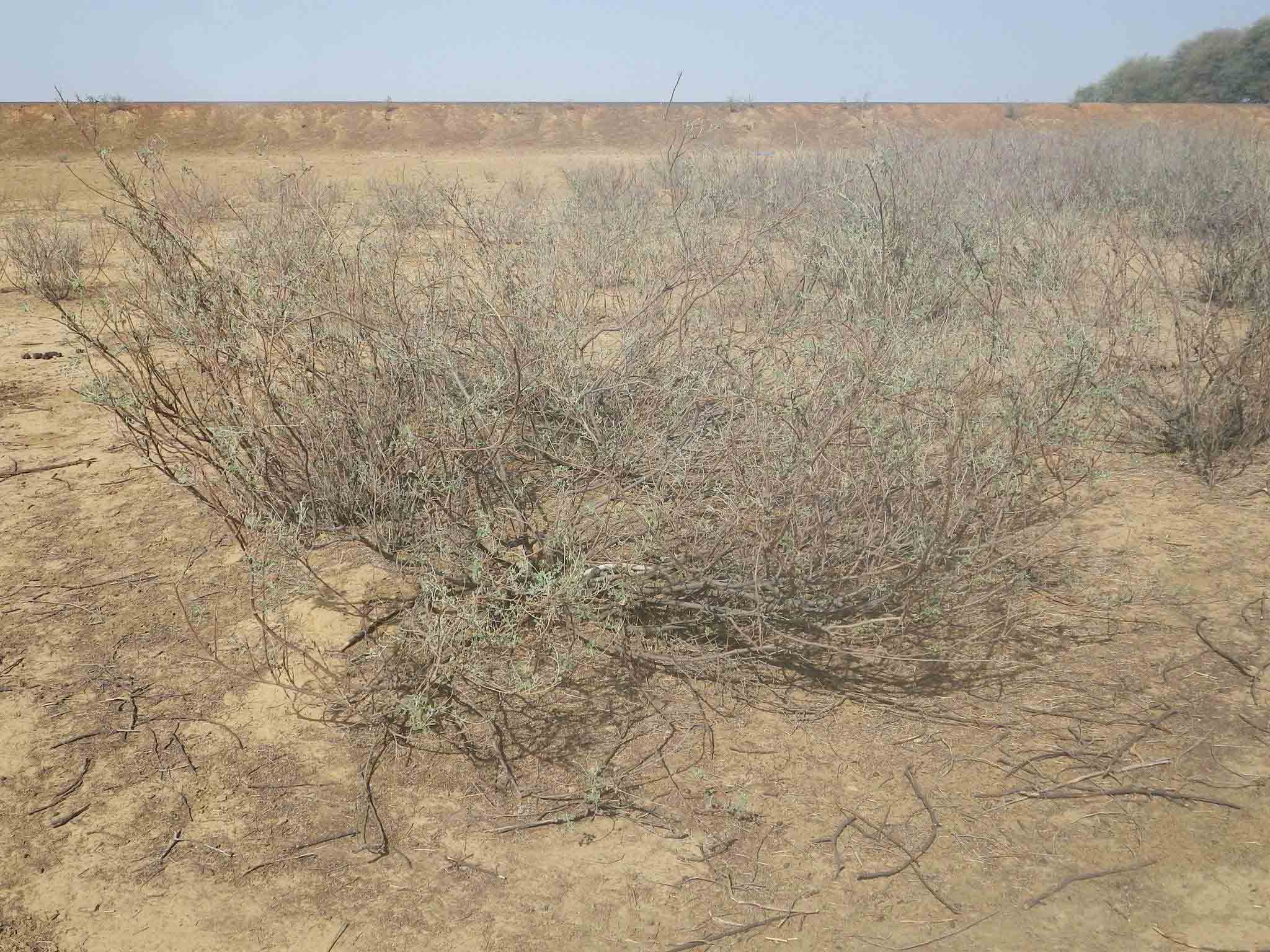
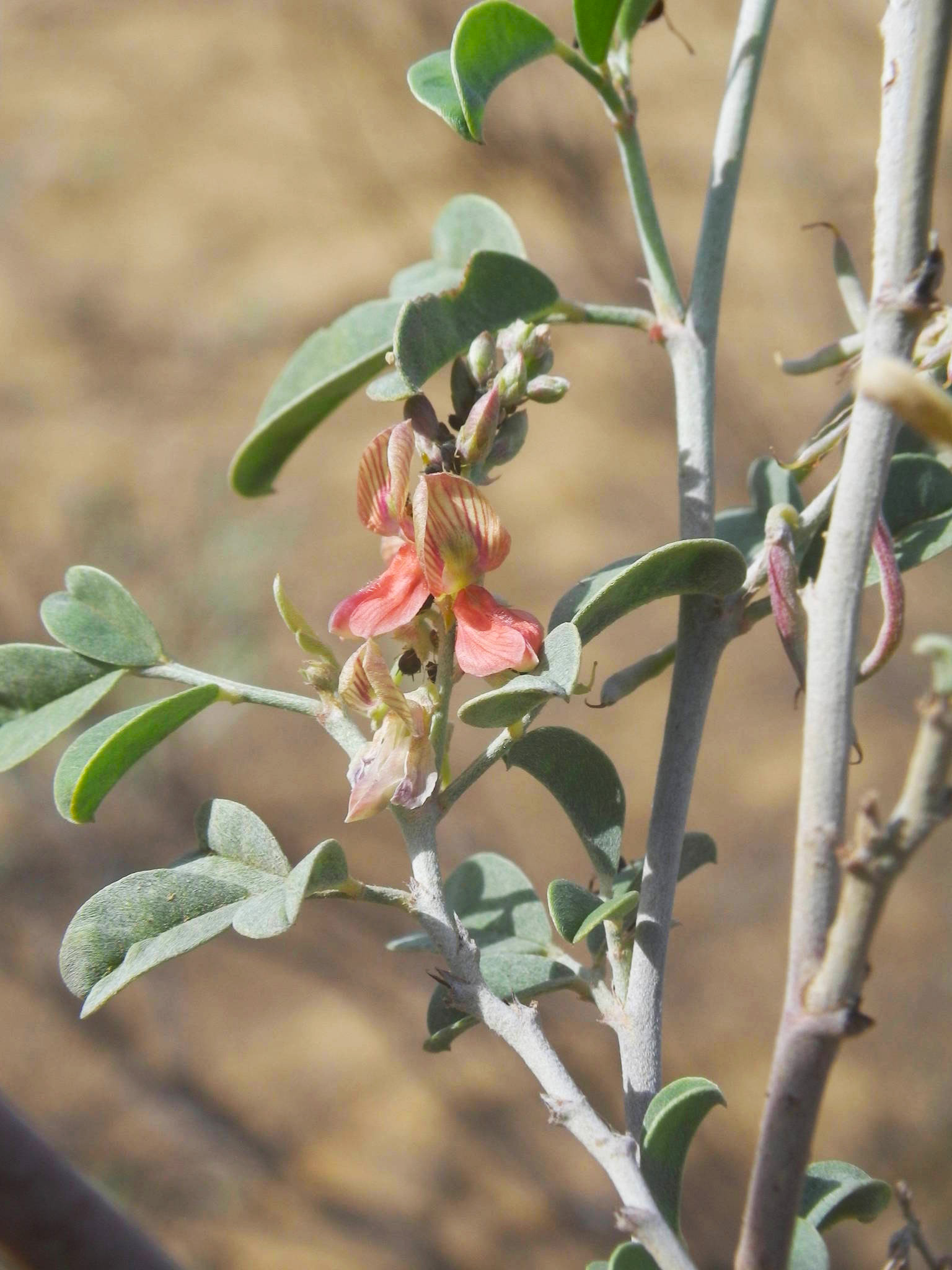
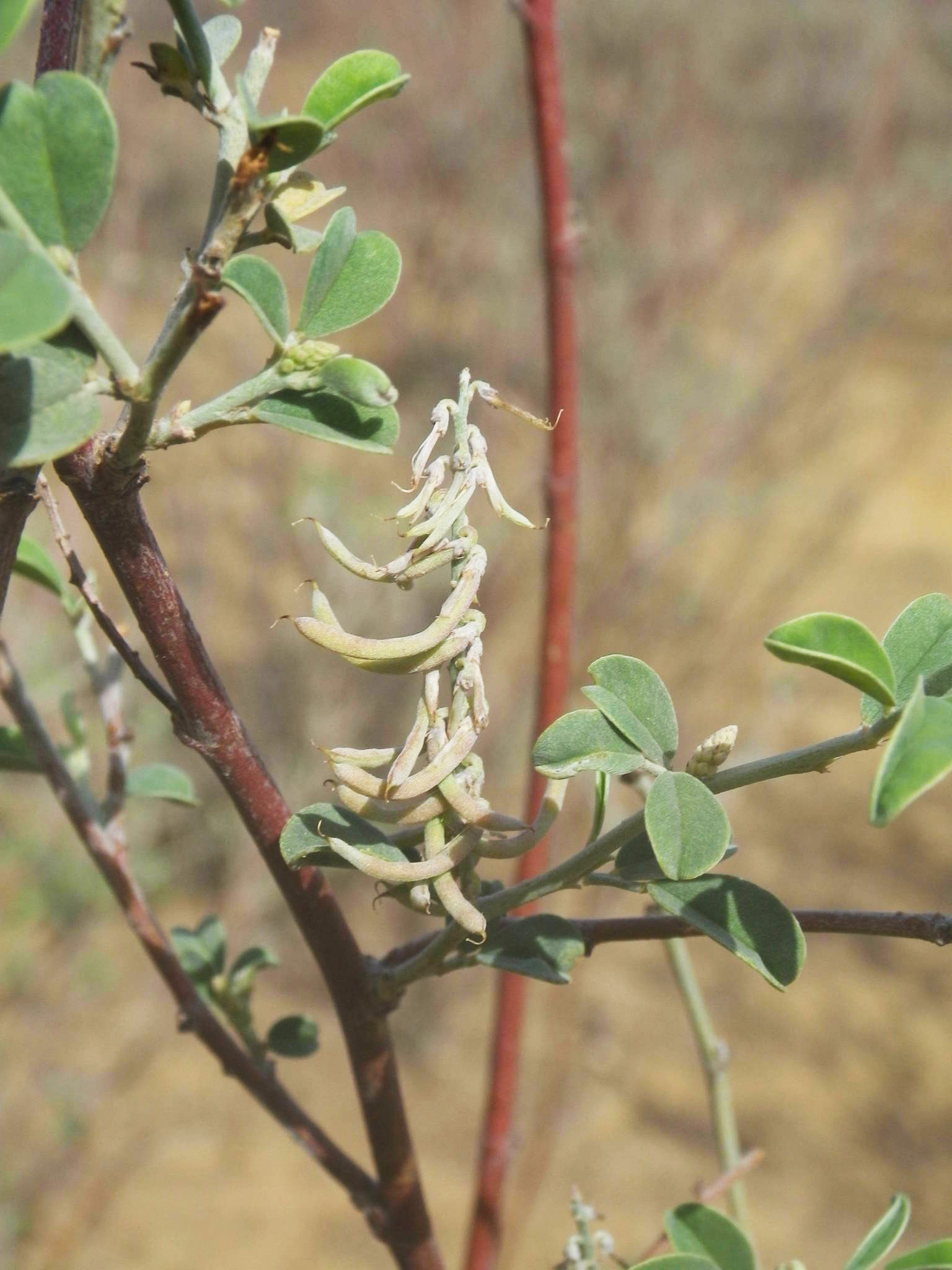
Shrub 1-1.5 m in height, highly branched and generally intricate, with silvery pubescence. Leaves alternate, imparipinnate, petiole 0.5-1 cm, with rachis 1-2 cm, and with (1)2-7 leaflets, 1.5-3.5 × 0.4-0.8 cm, alternate, oblong, pubescent-rough on both sides. Inflorescences in axillary racemes of many flowers. Calyx 2-3 mm, with triangular teeth of the same length as the tube. Corolla 4-5 mm, papilionoid, purple, with standard pubescent on the outside. Androecium diadelphous. Pod 1.2-1.8 × 0.2 cm, curved, lomentaceous, with rough pubescence and 5-8 seeds.
Flowering:
March to April.
Fruiting:
May to July.
Habitat:
Cleared forest in somewhat dry tropical areas, savannahs and deserts.
Distribution:
Tropical areas of Africa and Asia, from Mauritania to Indonesia. In North Africa it is found in the southern Sahara and the Sahel, reaching towards the NE up to the N of Egypt.
Conservation status:
A relatively common and widespread species, not considered threatened. In the IUCN Red List of Threatened Species it is listed as Least Concern (LC) at global level (Groom, 2012). In the updated red list of Egypt (Shaltout & Bedair, 2023) it has been considered as Least Concern (LC).