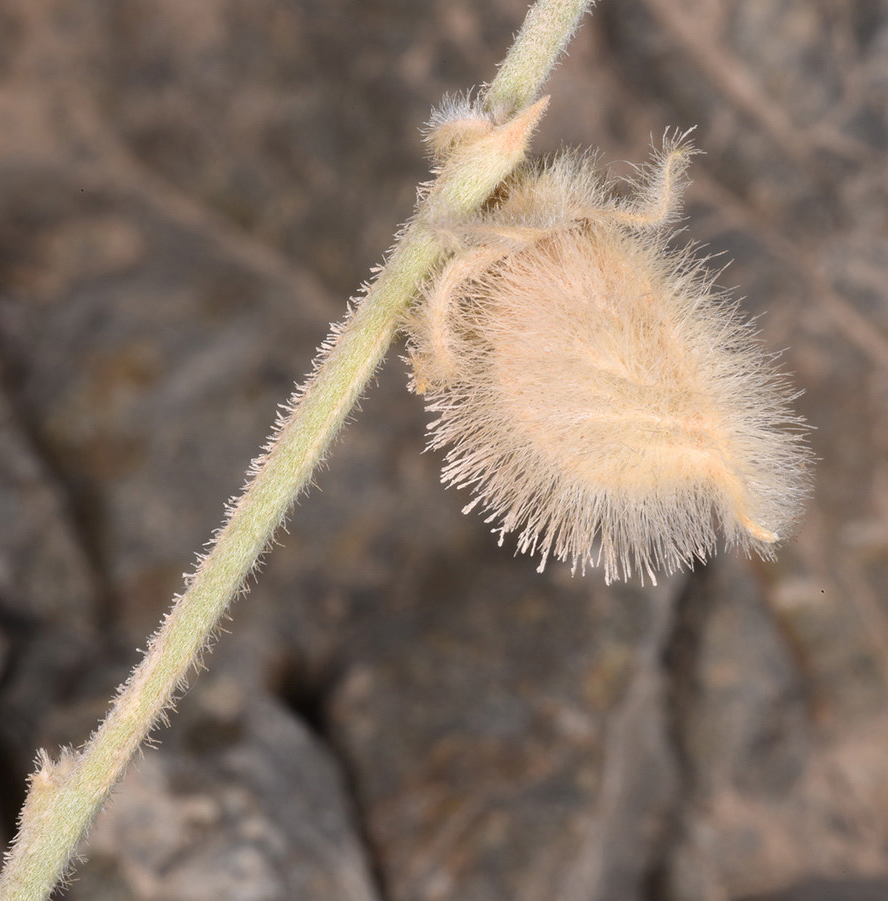
Tephrosia nubica (Boiss.) Baker
Pogonostigma nubicum Boiss., P. abyssinicum Jaub. & Spach
Ara.: Shama haneit, haneit. Tamahaq: Âgestin, isarn, sargha.
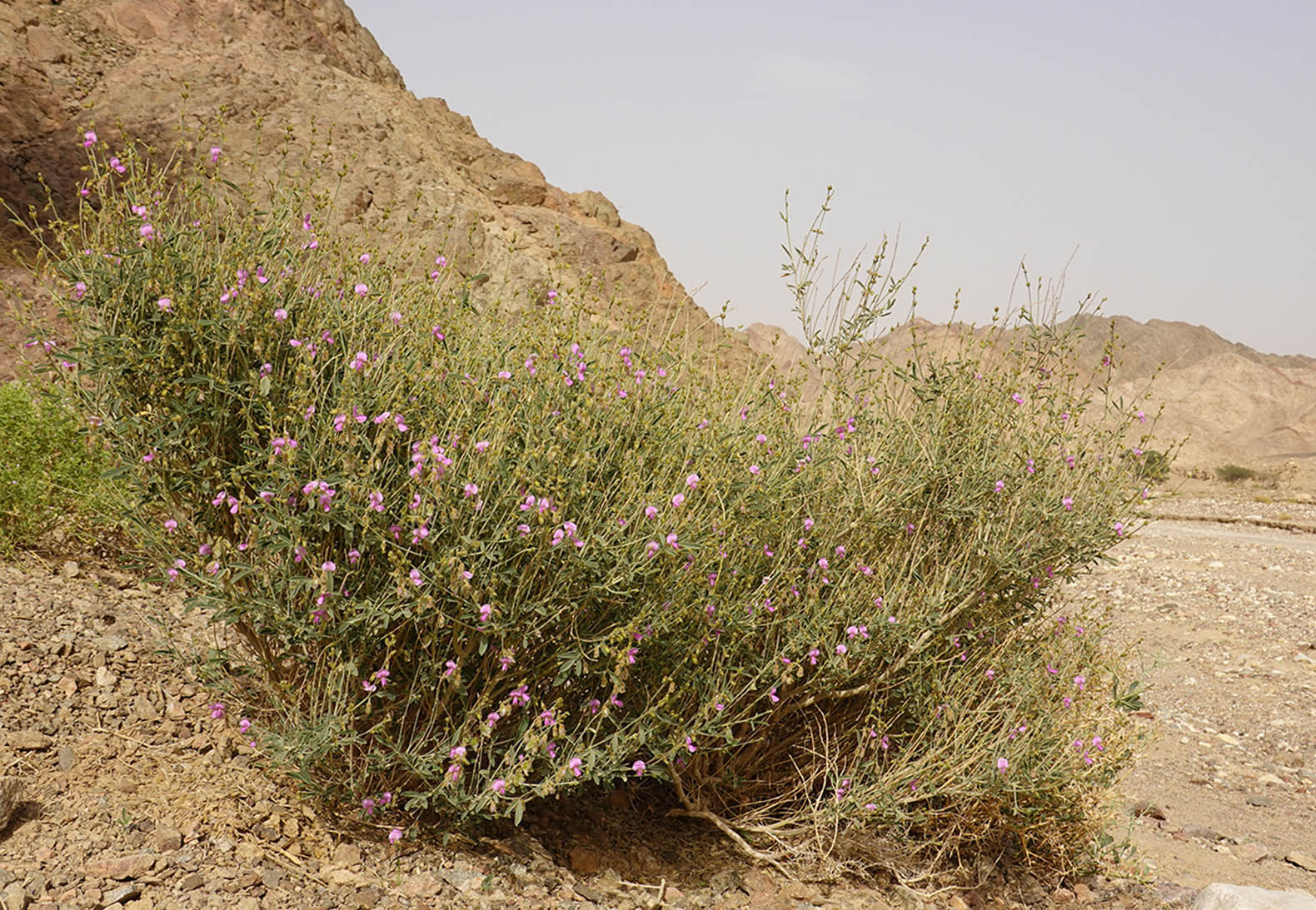
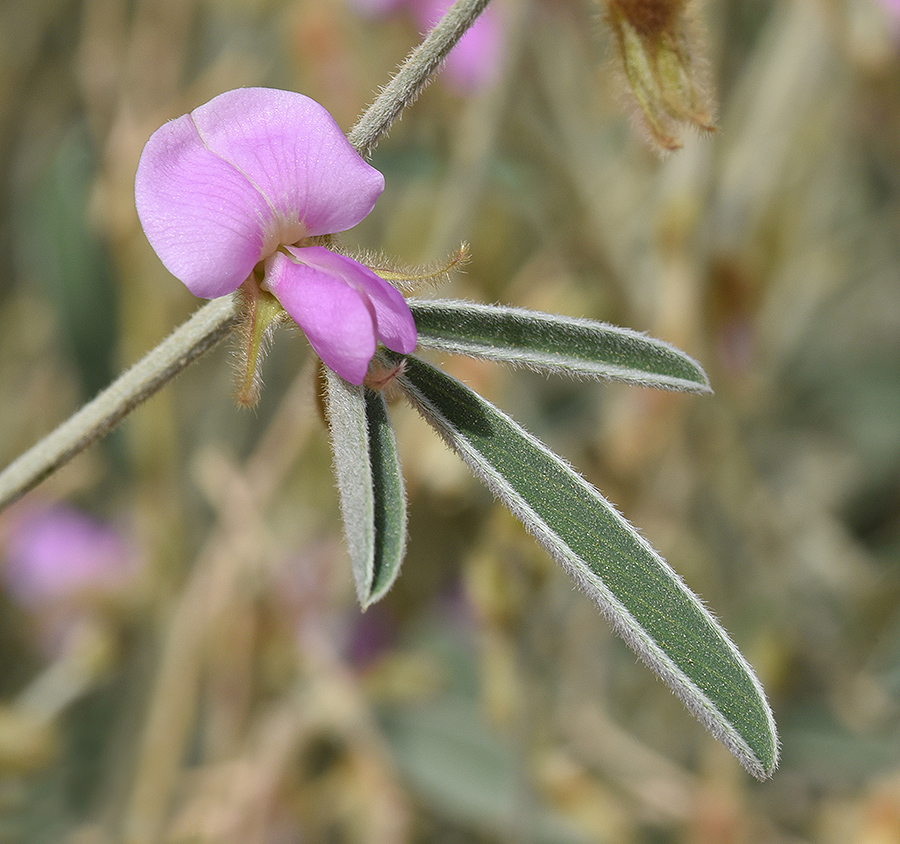
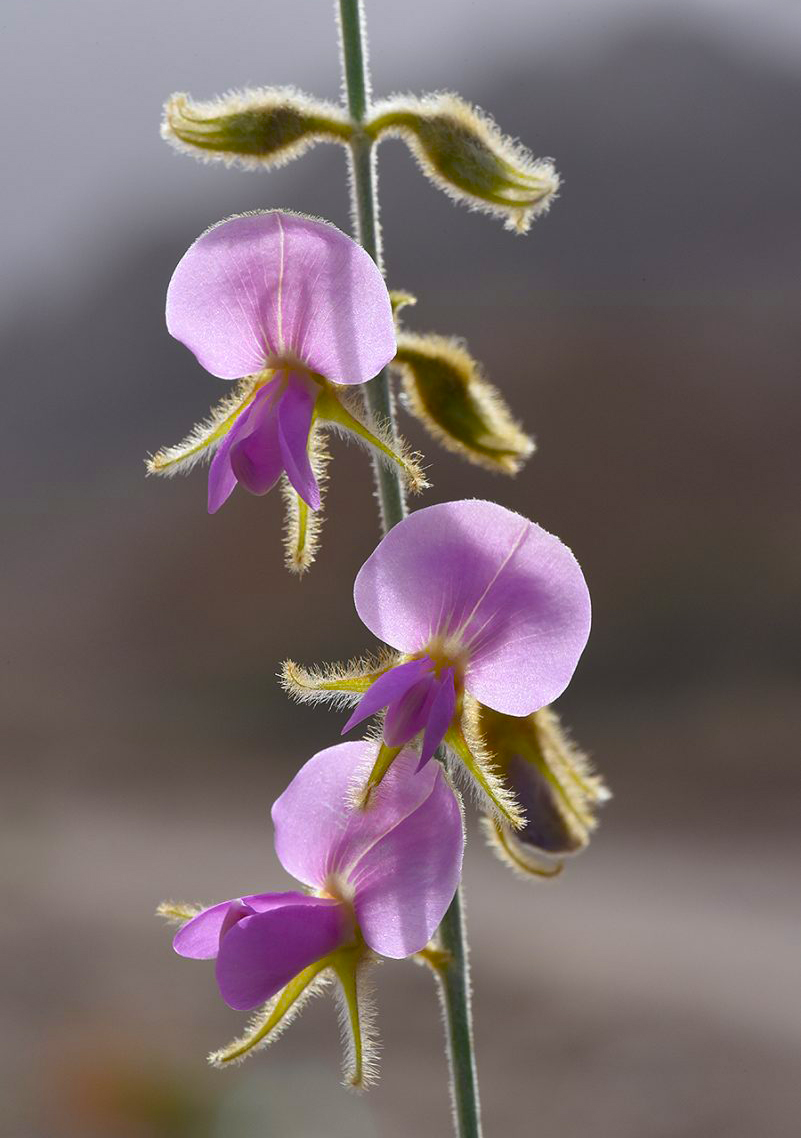
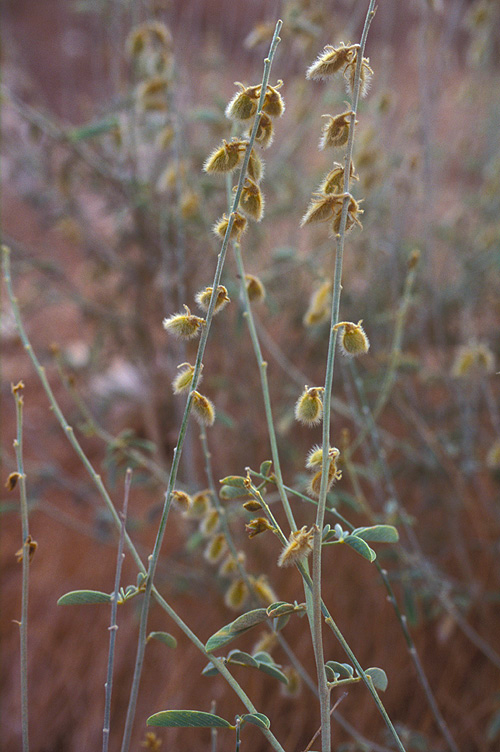
Subshrub or perennial herbaceous plant, ± lignified at the base, 40-80 cm in height, grey-tomentose, with highly branched erect stems. Leaves alternate, imparipinnate, with stipules subulate 2.5-4 mm, and with 5-9 leaflets 1.5-4 × 0.3-0.8 cm, oblanceolate, with applied hairs on the upper side and densely tomentose on the underside, Flowers grouped in axillary or terminal racemes. Calyx c. 1.2 cm, with deep and acute teeth (1 cm), villous. Corolla c. 1.2 cm, papilionoid, purple, with villous standard. Pod 1-1.2 × 0.6 cm, with a peduncle c. 5 mm, ovoid, very villous. Seed 1, 4-5 × 3 mm.
Flowering:
February to April, although there may be flowers in other times of the year, depending on rainfall.
Fruiting:
About 2 months after Flowering. Sometimes the same plant can have flowers and mature pods at the same time.
Habitat:
Desert and subdesert grasslands. Rocky and sandy wadis.
Distribution:
Southern Sahara and Sahel. It extends north to southern Morocco, southern Libya, and southeastern Egypt.
Conservation status:
T. nubica, T. uniflora y T. villosa subsp. ehrenbergiana are relatively common and widely distributed, and are not considered threatened. In contrast, T. kassasii is rarer and has a much smaller range; its status should be studied. Currently, in the IUCN Red List of Threatened Species only T. villosa is evaluated, as Least Concern (LC) at a global level (Groom, 2012). In the Red List of vascular plants of Egypt (Flora Aegyptiaca Vol 1, 2000) T. kassasii was listed as “Extinct”.