Stauracanthus spectabilis Webb
S. genistoides subsp. spectabilis (Webb) Rothm.
Eng.: Gorse. Spa.: Tojo. Fre.: Ajonc. Ara.: Chebroq.
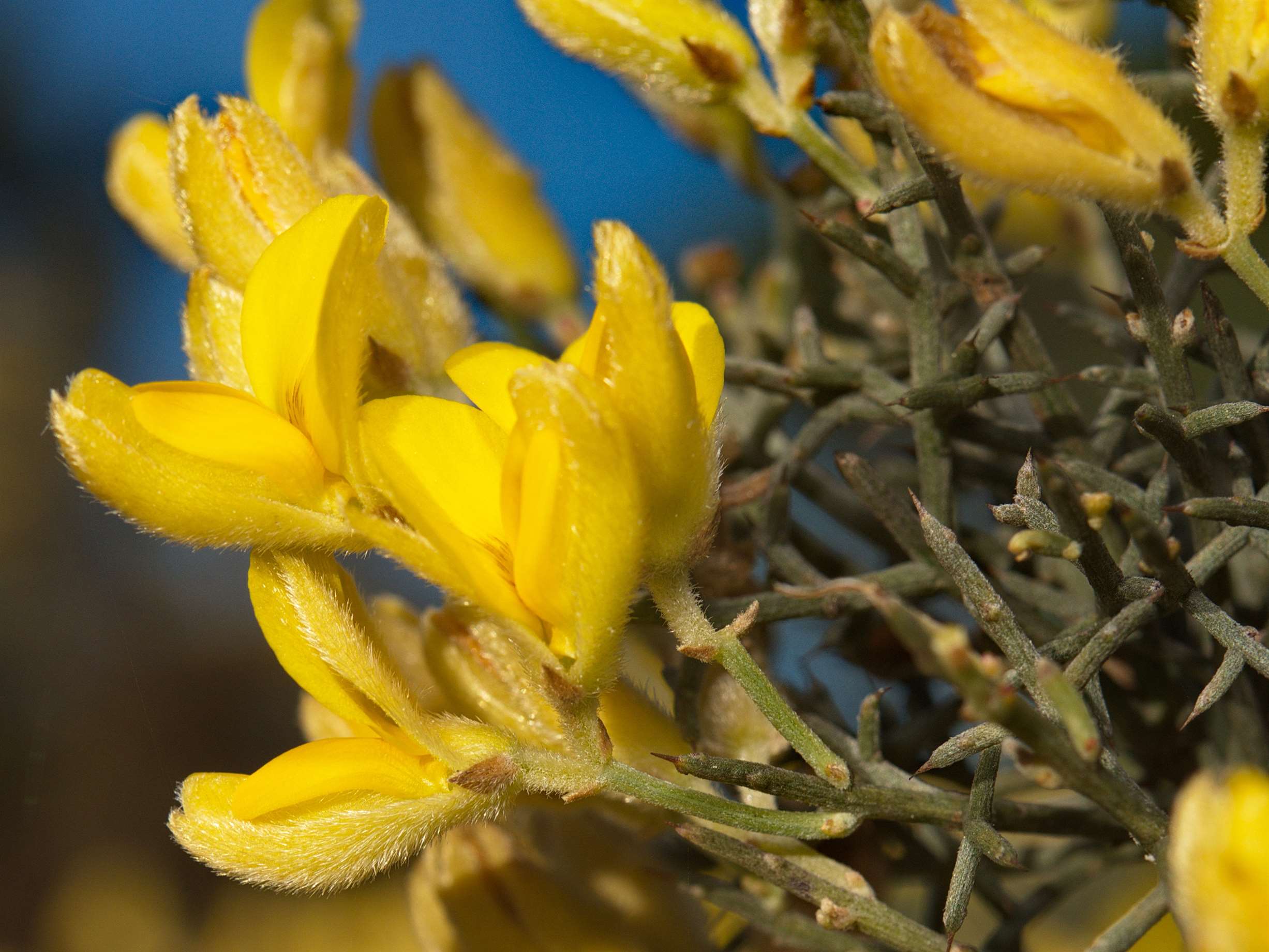
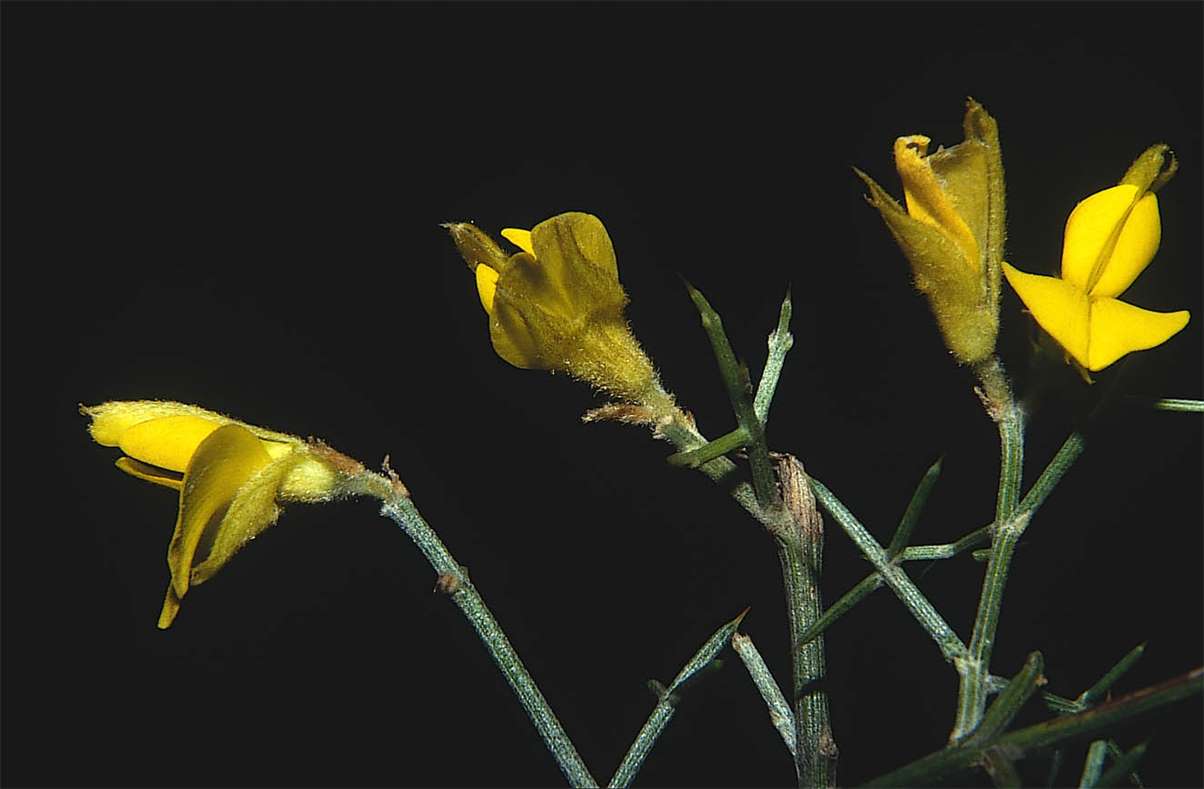
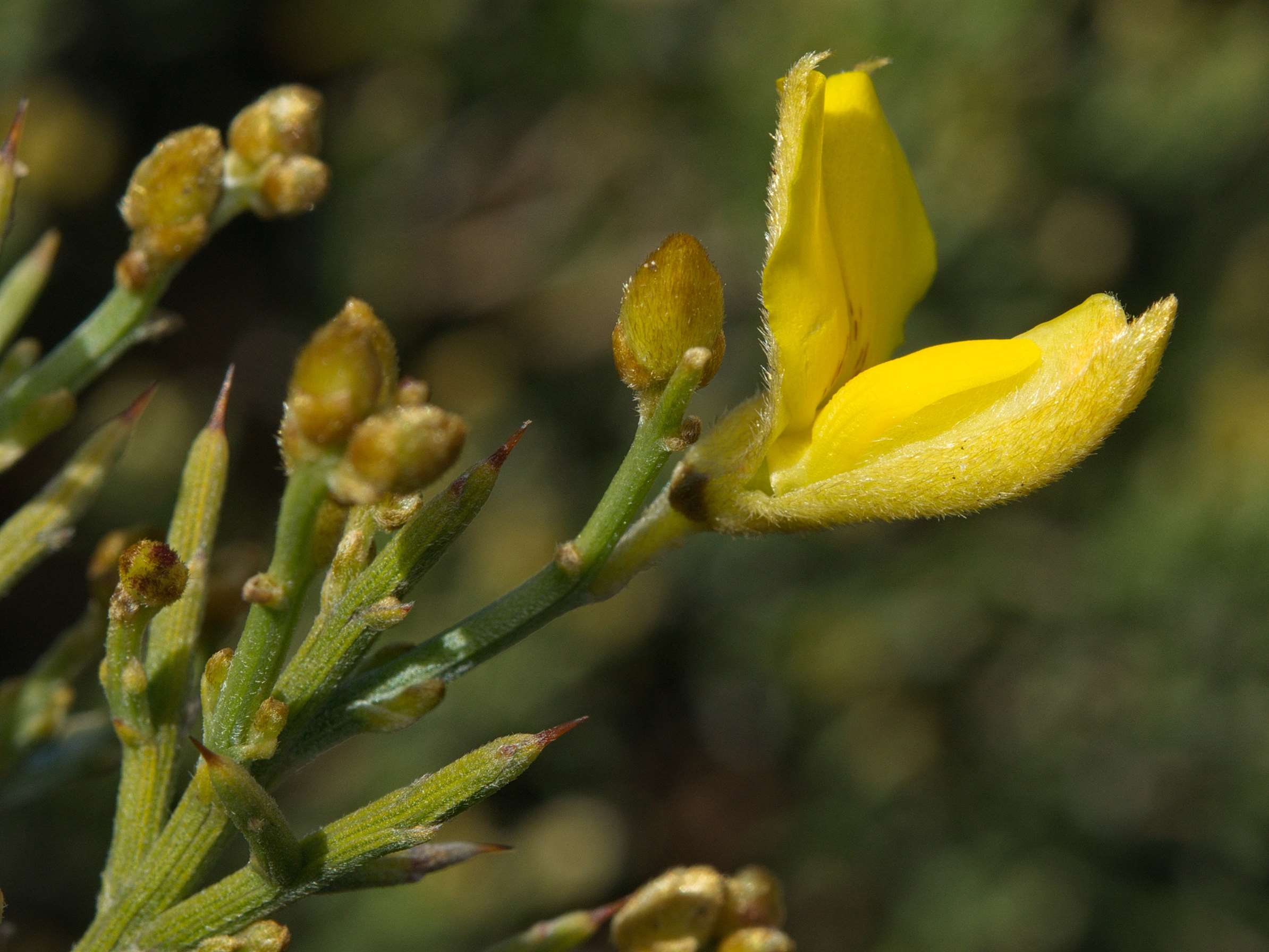
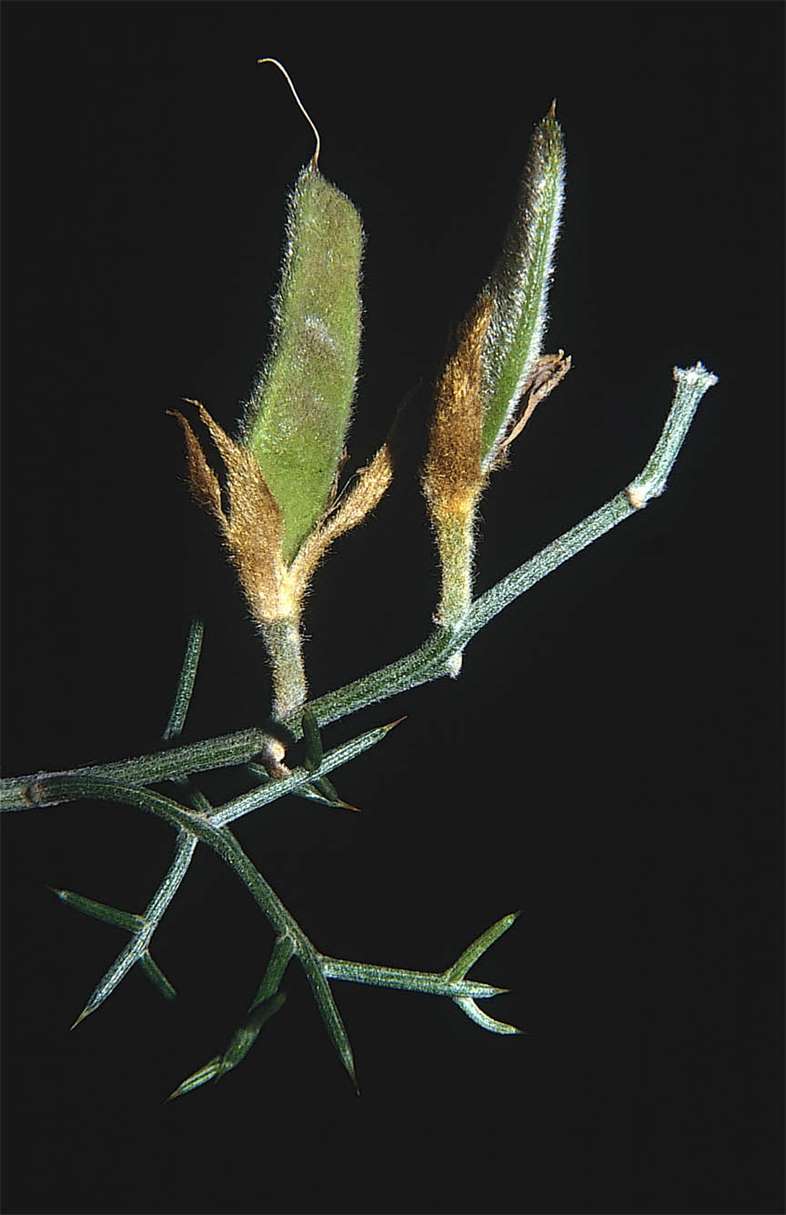
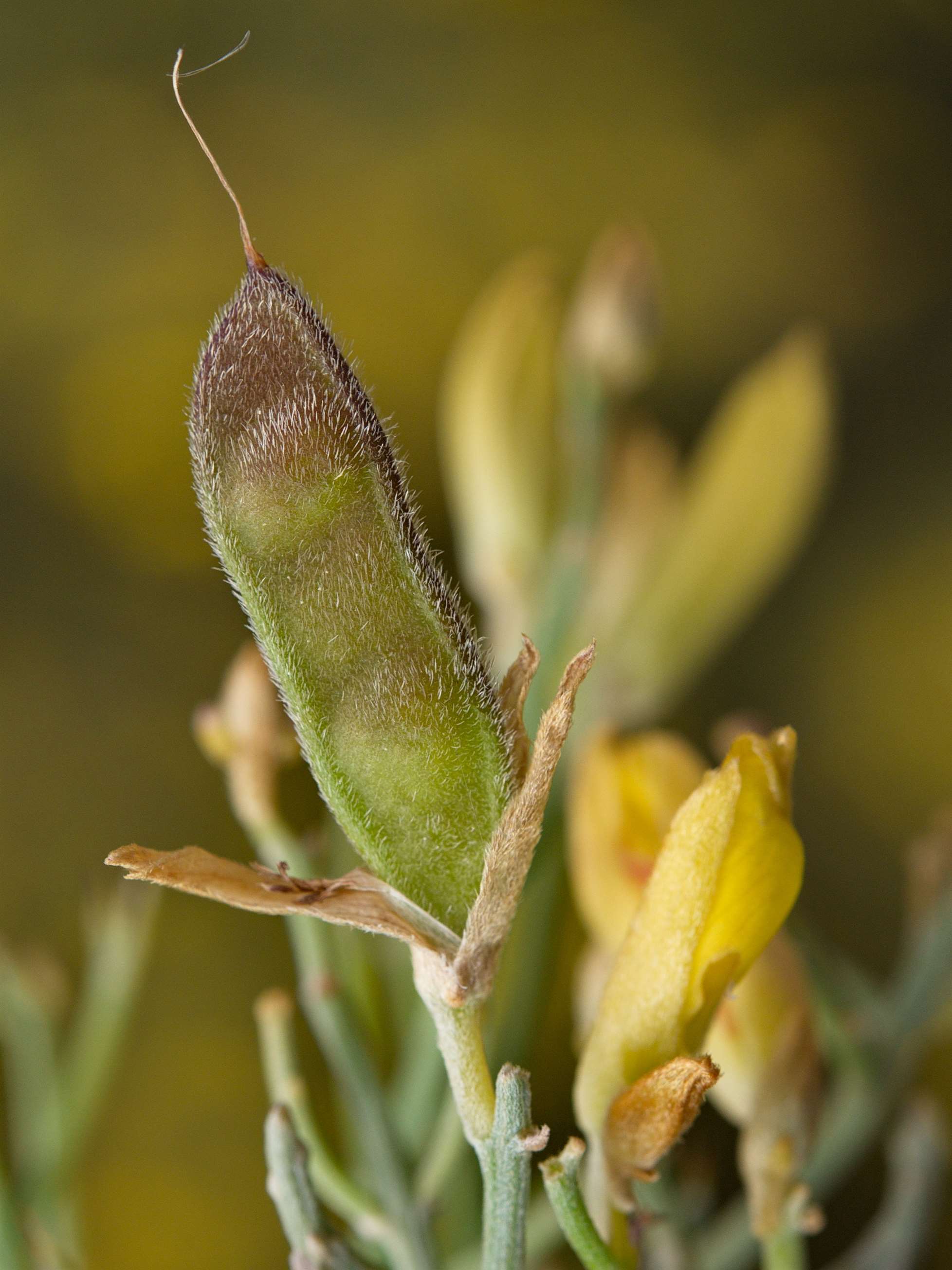
Shrub up to 0.5-1.3 m in height, very ramose and spiny hermaphrodite. Branches opposite, subopposite and alternate, with 8 closely spaced T-shaped ribs, marking out very narrow valleys; when young usually opposite and sericeous, then rounded, not angular. Phyllodes 0.8-1.5 × 0.7-0.8 mm, opposite, subopposite or alternate, triangular, muticous, sericeous, with 3 ribs. Inflorescences racemiform, with 6-7 flowers, pedicellate, pedicel 2-3 mm, puberulous; bracts 2-2.5 × 1-2 mm, villous and bracteoles 3.5-4(6) × (1)2.5-4.5 mm, suborbicular, ovate or triangular-ovate, villous. Calyx 11-14 mm, bilabiate, densely sericeous, often with yellowish hairs; tube 3-3.5 mm; the upper lip 7-8 × 3.2-3.5 mm, split up to halfway of the calyx; the lower lip trifid with straight teeth 3.5-4 mm long. Corolla 12-15 mm, papilionoid, yellow; standard elliptic, emarginate at the apex, attenuated at the base, only just slightly sericeous on the upper half of the dorsal side; wings shorter than the standard and the keel; keel sericeous only along the lower margin and the upper portion of the dorsal side, the same length or slightly shorter than the standard. Androecium monadelphous. Ovary hairy. Pod 15-25 mm, ellipsoid, compressed, villous, with seeds that stand out, dehiscent, with 4-6 seeds. Seeds 2.3-2.4 × 2.3-2.4 mm, ovoid, brownish, with yellowish-white strophiole.
Flowering:
Almost throughout the year, but mainly from March to May.
Fruiting:
April to June.
Habitat:
Coastal forests and thickets on stabilised dunes with fine grain, in humid and subhumid bioclimate, sometimes in areas somewhat drier but with a coastal fog. On thermomediterranean floor with very dry summers.
Distribution:
It grows in the humid forests of Quercus suber, along Atlantic littoral and sublittoral areas of SW Portugal and NW Morocco (forests of Mamora, Temara and surrounding areas).
Conservation status:
A species with a small distribution area but in principle it is not considered threatened. Currently, it has not been assessed at a global level in the IUCN Red List of Threatened Species. In the Livre Rouge de la flore vasculaire du Maroc (Fennane, 2021) it has been considered as Vulnerable (VU).