Adenocarpus anagyrifolius Coss. & Balansa
Spa.: Codeso. Fre.: Adénocarpe. Ara.: Urziz, auzzir, agultín.
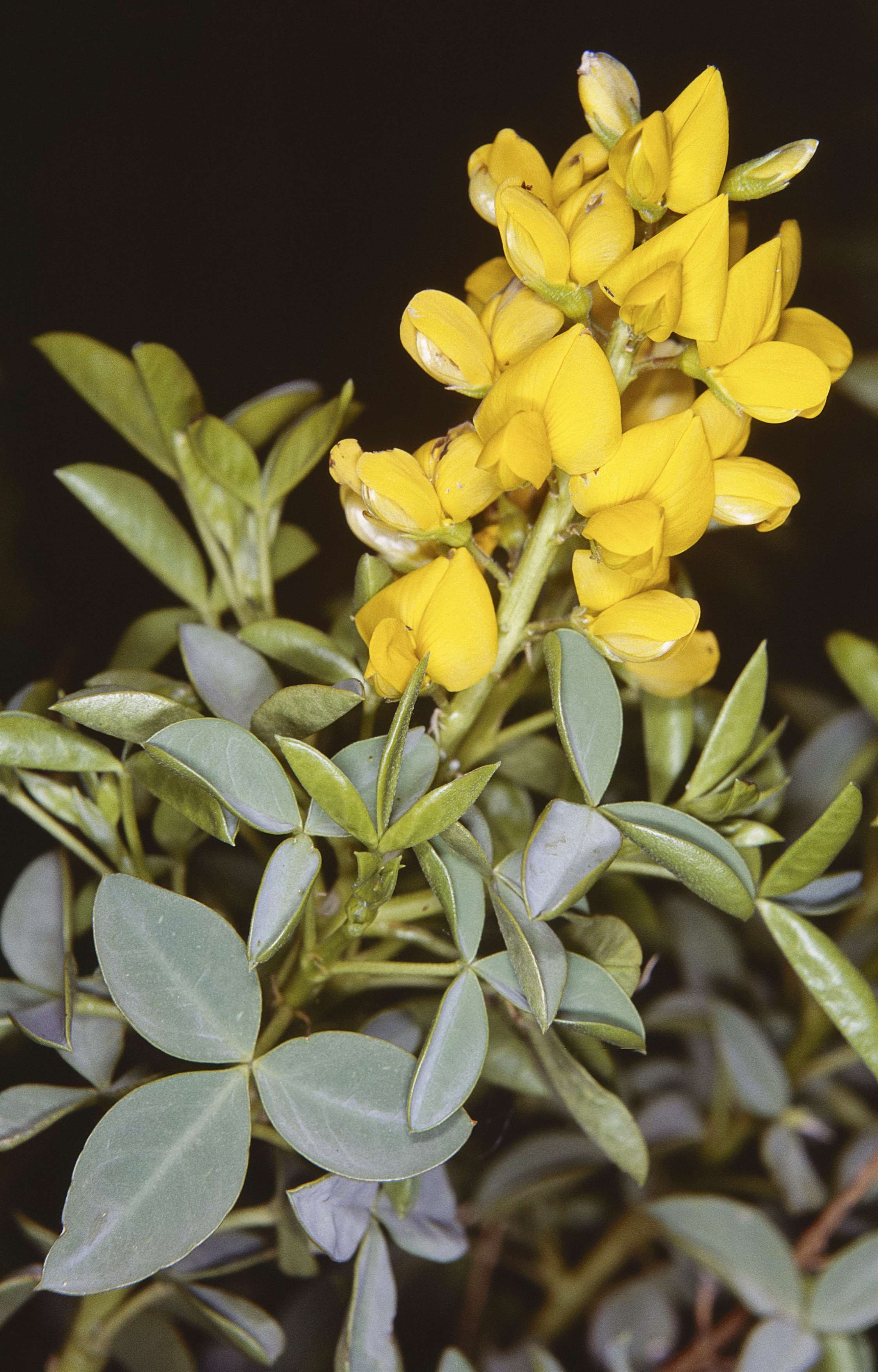
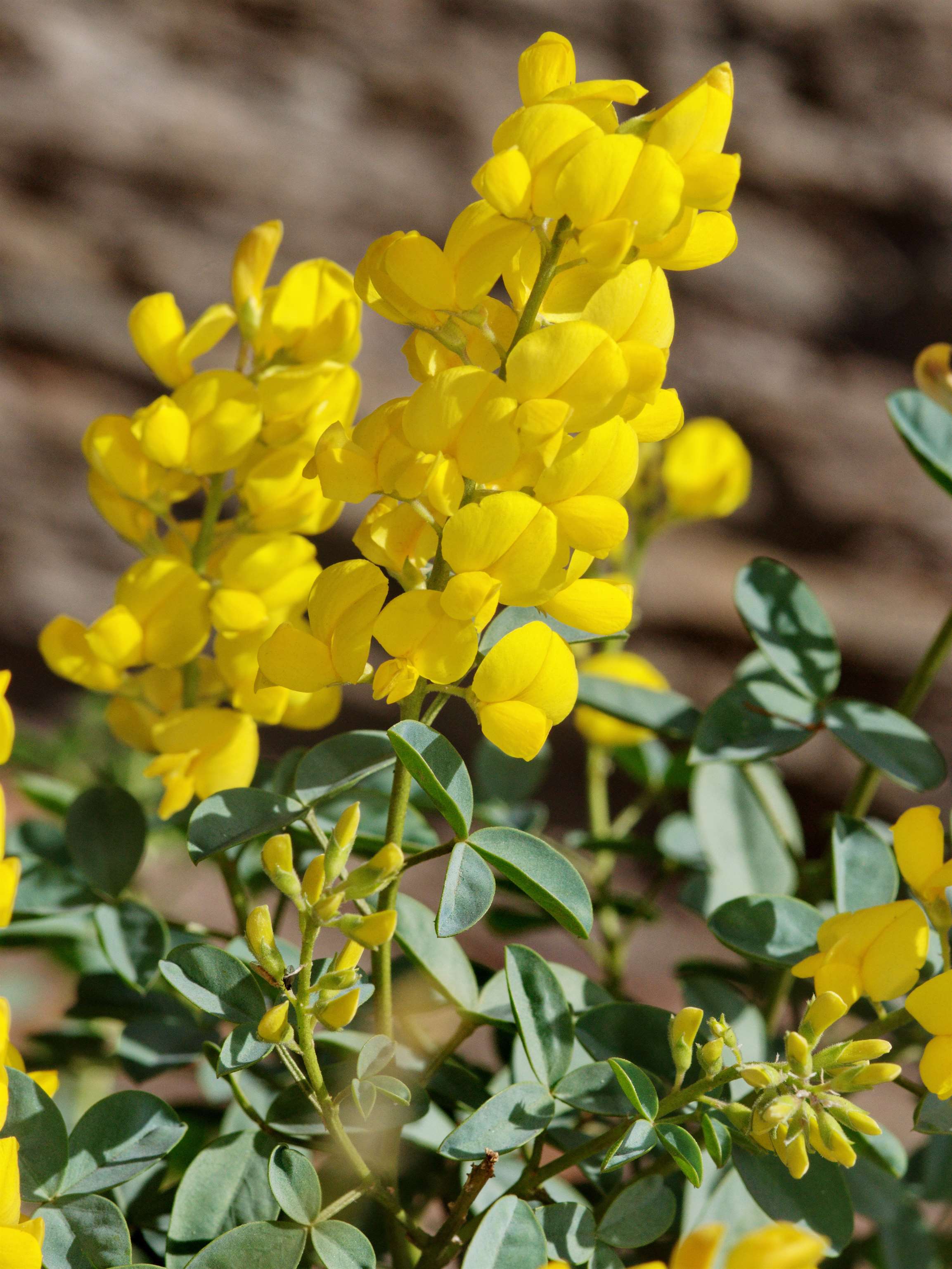
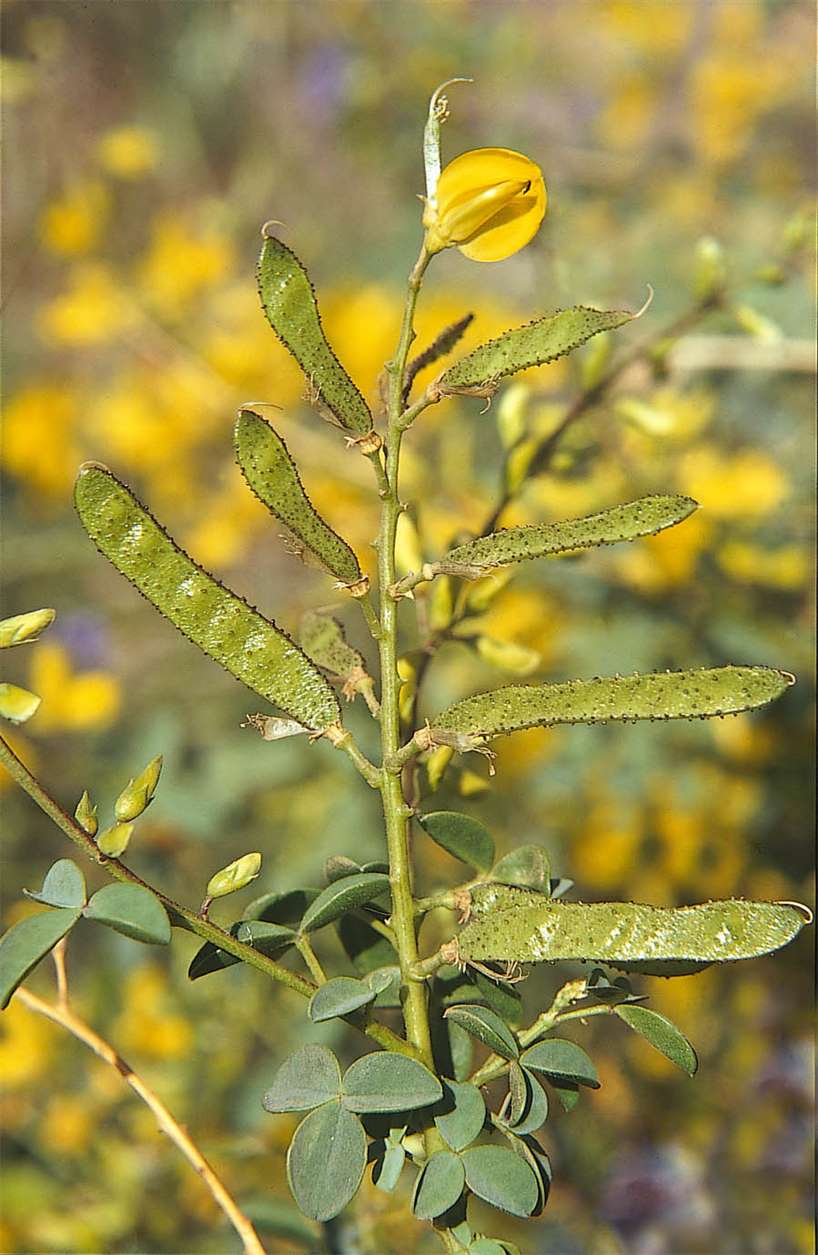
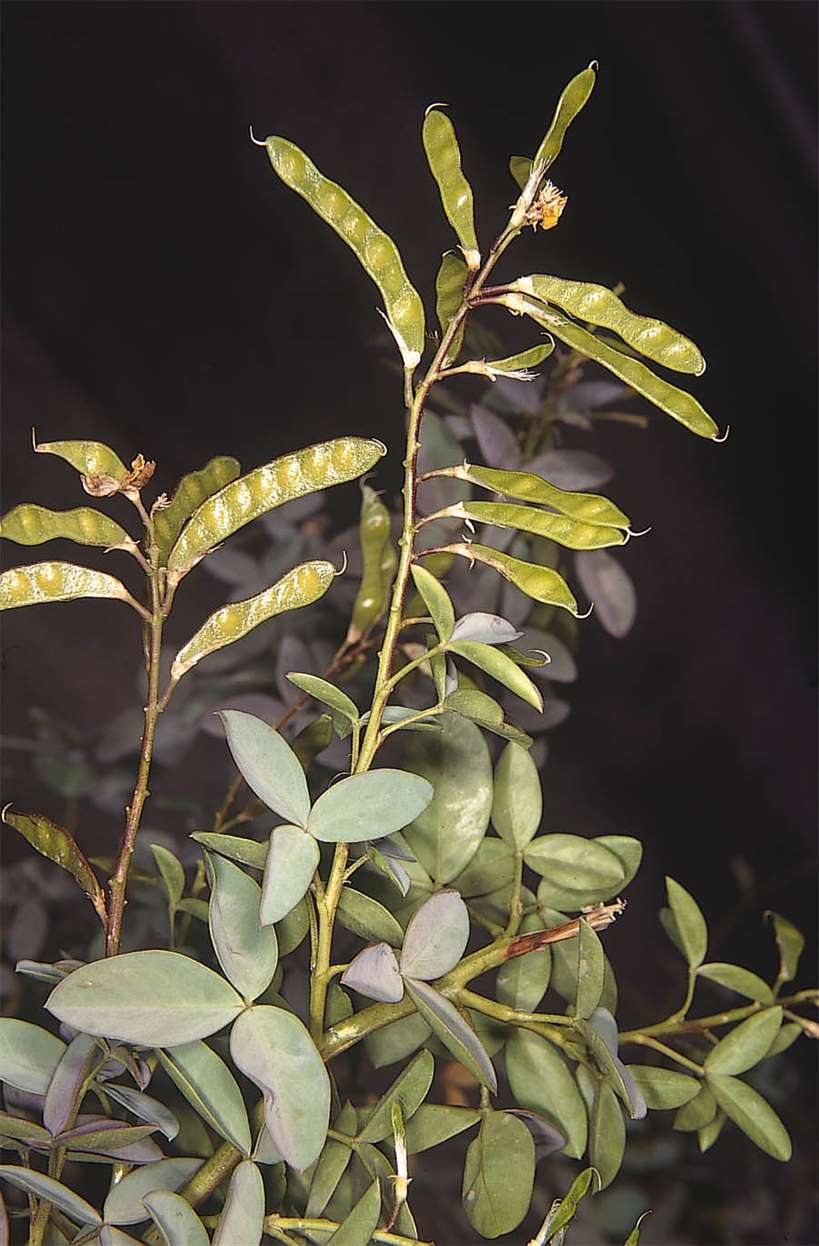
Shrub, up to 2.5 m in height, evergreen, hermaphrodite, very ramose from the base, with upright branching, overall appearance glaucous. Trunk and older branches with ± greyish-brown bark, which peels off into longitudinal strips. Branchlets brown-greenish, the younger ones green, glabrous or with some hairs promptly caducous. Leaves alternate, trifoliolate, with leaflets 1.5-3.5 × 0.8-1.7 cm, subequal, elliptic, obtuse, mucronate, with attenuated base, sessile, with entire margin, not involute; mature leaflets ± flat, glabrous and glaucescent on both sides —when young they can be villous—, sometimes with violet tones. Inflorescence in terminal racemes, ± dense (5-30 flowers), up to 15 cm long, with peduncle and pedicels with appressed hairs initially but then glabrous. Calyx c. 3 mm, campanulate, bilabiate, glabrous or glabrescent, not glandular; the upper lip divided up to the base into 2 elliptic-triangular, acuminate laciniae; the lower lip longer, divided almost halfway into 3 linear-subulate teeth. Corolla papilionoid, yellow, with standard silky-pubescent on the dorsal side; wings slightly shorter, glabrous, and keel the same length as the standard, pubescent at the base. Androecium monadelphous, with 10 stamens. Pod 2.5-5 × 0.5-0.6 cm, linear-oblong, compressed, with or without glandular tubercles, dehiscent. Seeds 2-8, ovoid, compressed, dark brown and smooth.
Flowering:
May to July.
Fruiting:
July to September.
Habitat:
Mountain forests and thickets, in semiarid to subhumid bioclimate, mainly on mesomediterranean floors. Sometimes in areas with extreme continental climate.
Distribution:
Endemic to Morocco: western-central and southern Middle Atlas, High Atlas and NW Anti-Atlas (Jebel Kest, Jebel Fidoust and Sirwa Massif).
Conservation status:
A relatively common species but with a small distribution area. Currently, it has not been assessed at a global level in the IUCN Red List of Threatened Species. In the Livre Rouge de la flore vasculaire du Maroc (Fennane, 2021) it has been considered as Least Concern (LC).