Adenocarpus bacquei Batt. & Pit.
A. hispanicus auct. non DC.
Spa.: Codeso. Fre.: Adénocarpe. Ara.: Urziz, auzzir, agultín, agutlem, guetaf en-naâma.
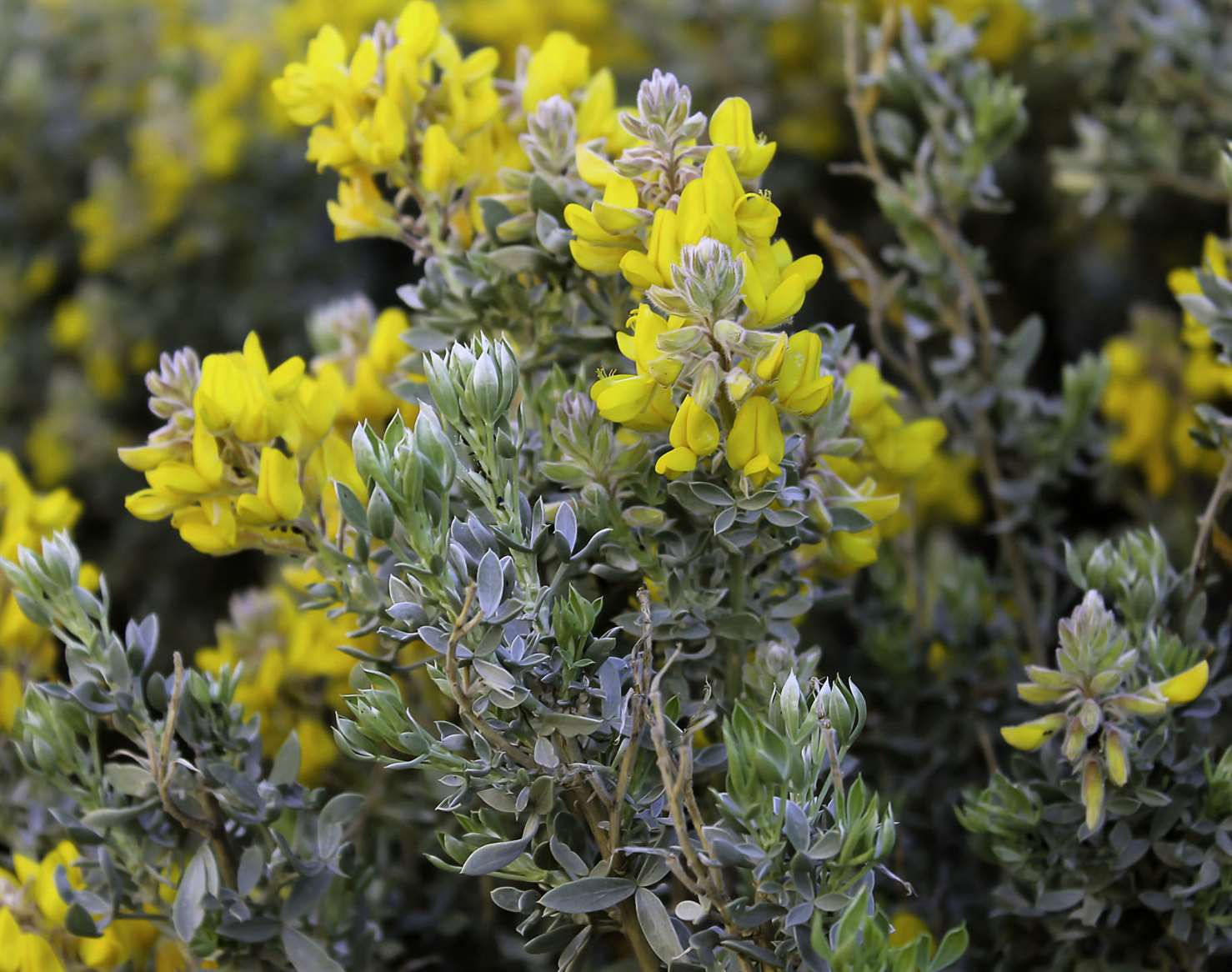
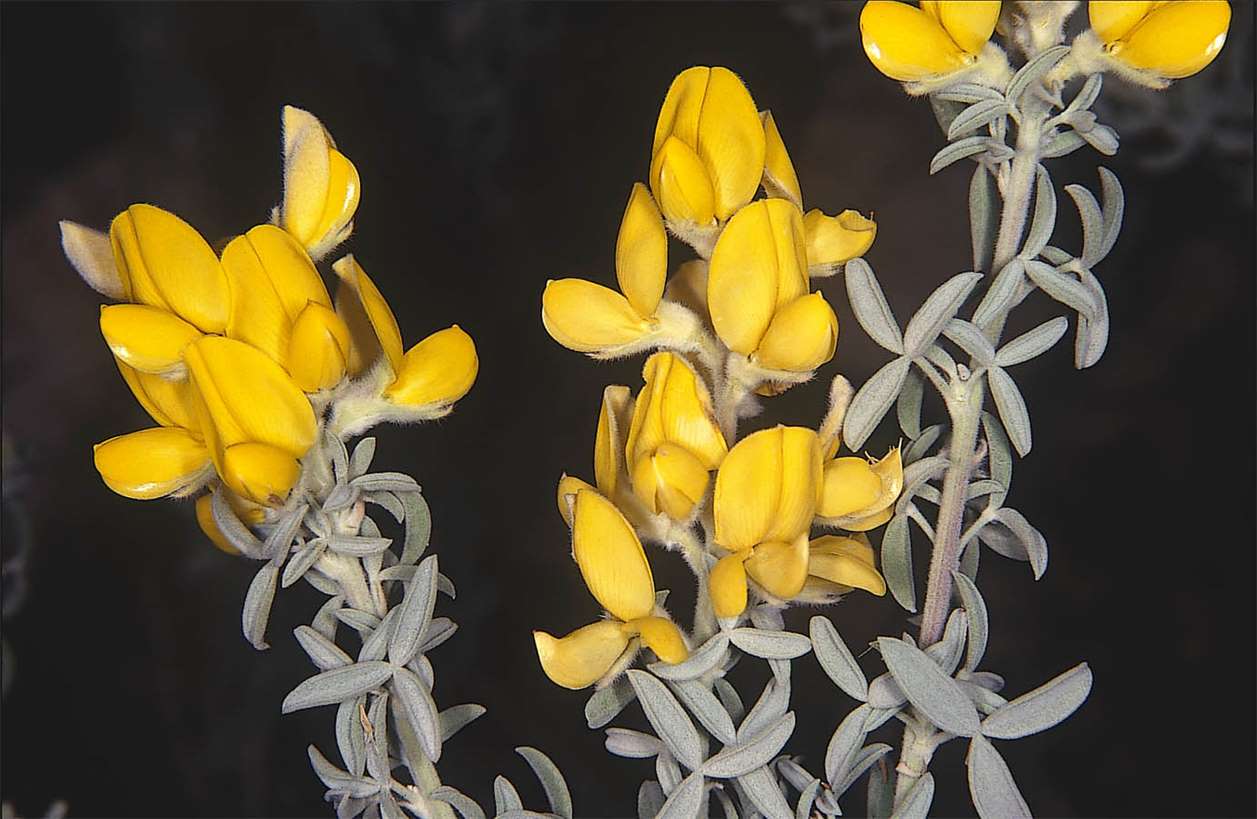
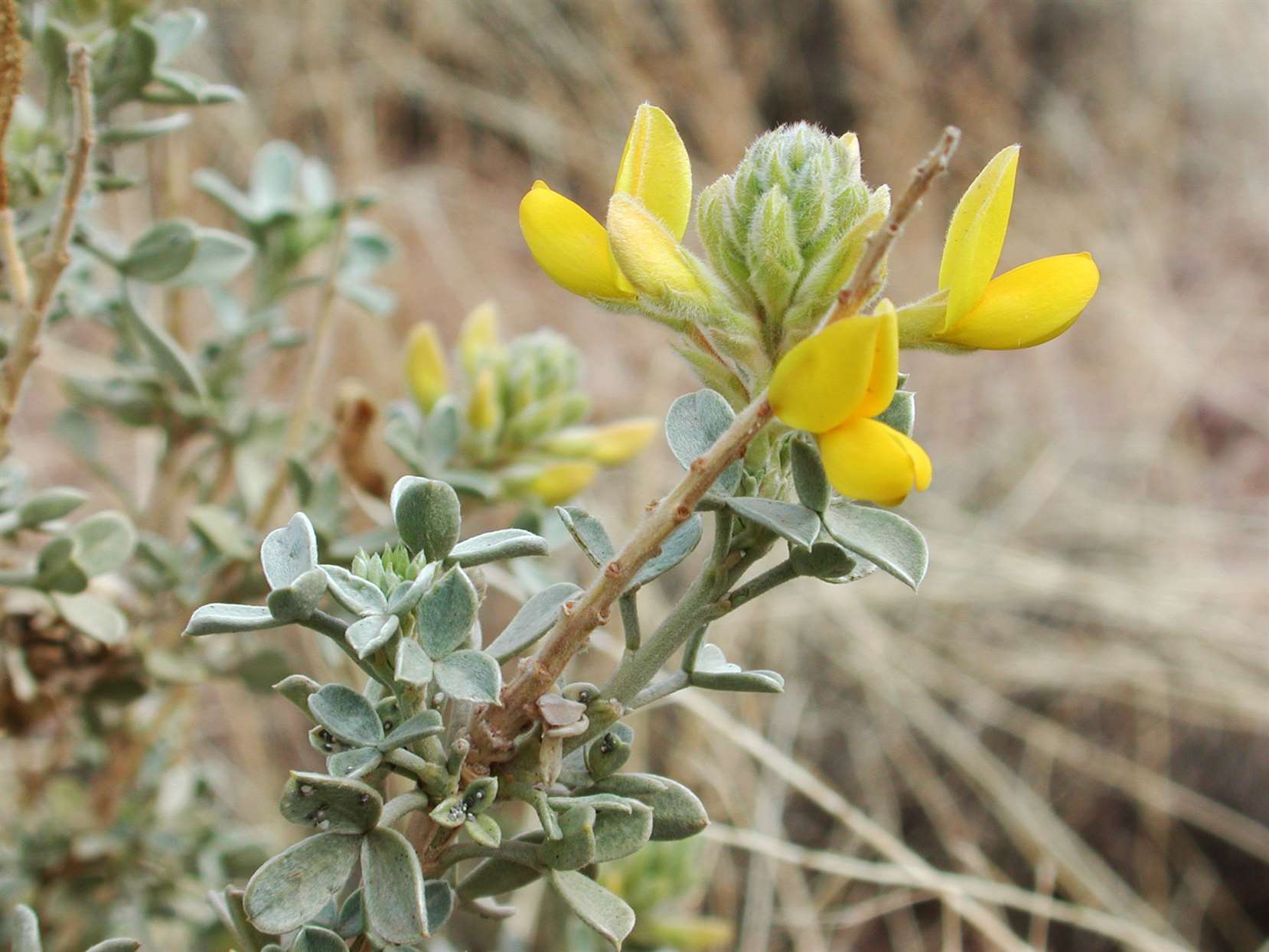
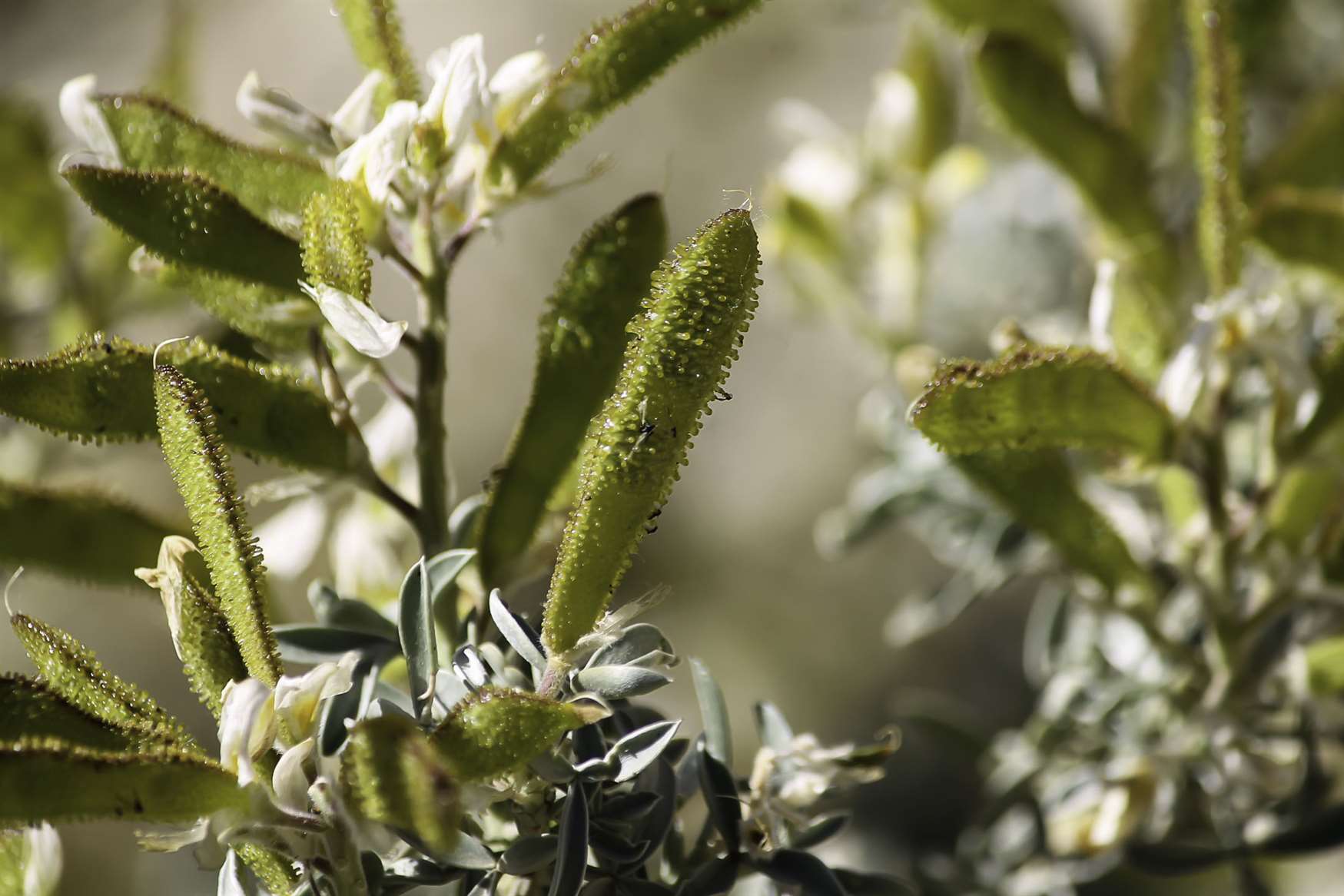
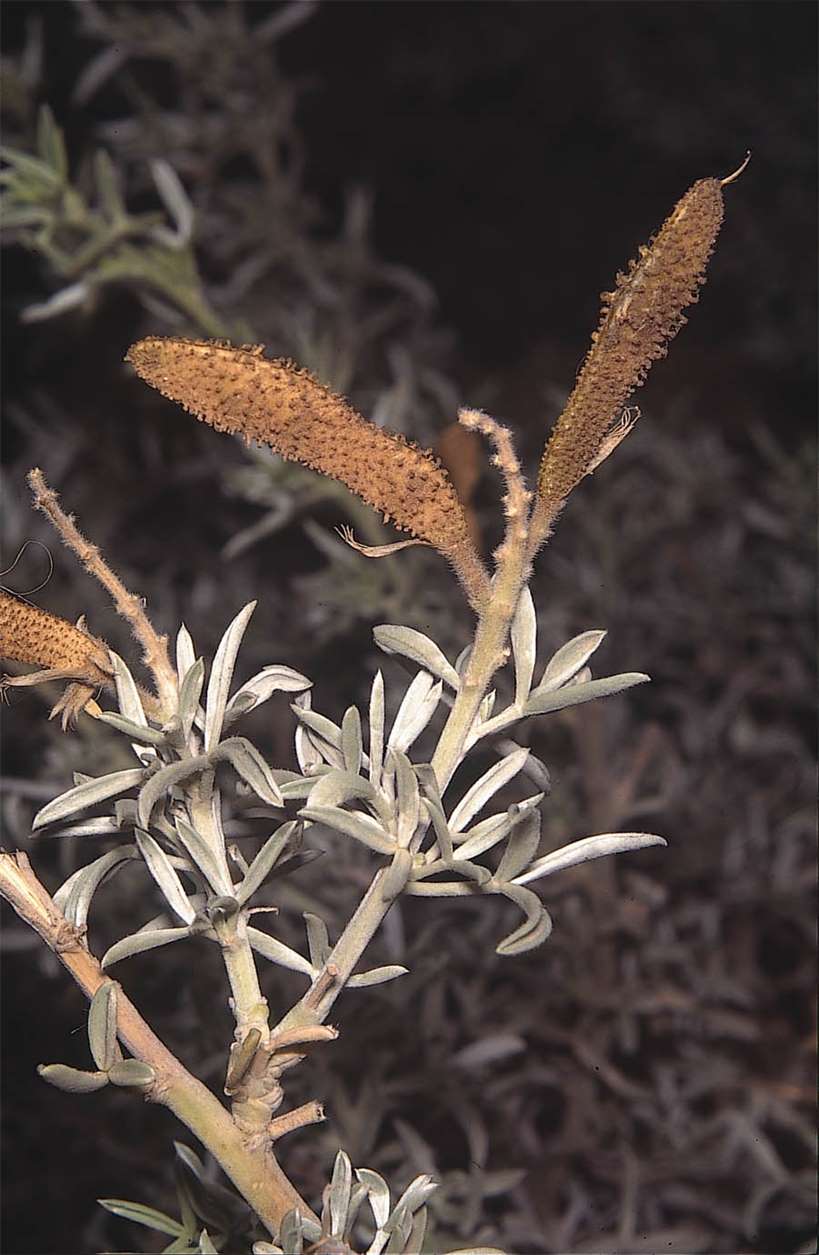
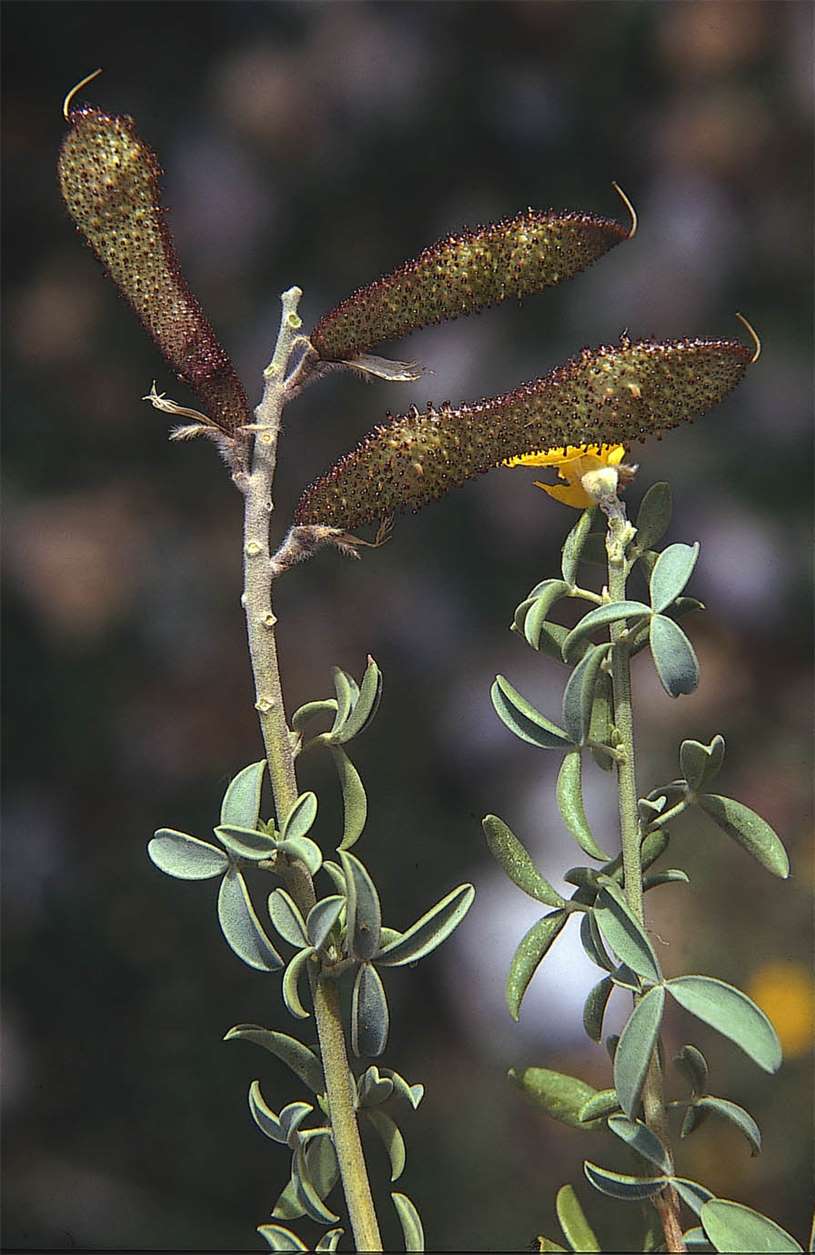
Shrub, up to 1.5(2) m in height, evergreen, hermaphrodite, very ramose, with upright or slightly extended branching, greenish-whitish in overall appearance. Stems and older branches with greyish-brown bark, slightly fissured, that peels off into longitudinal strips. Young branchlets densely covered by silky-silvery hairs. Leaves alternate, trifoliolate, with leaflets 12-16 × 3.5-5.5 mm, subequal, obovate-lanceolate, acute, attenuated at the base, subsessile, entire, with the margin sometimes slightly involute, silky-villous and greenish-silvery on both sides. Inflorescence in dense terminal racemes (10-20 flowers), with villous peduncle and pedicels, with whitish erect hairs. Calyx with a subcampanulate tube about 3-5 mm, bilabiate, densely villous, with erect hairs, not glandular; the upper lip divided almost to the base into 2 laciniae ovate-triangular and longly acuminate; the lower lip longer than the upper lip, with its upper third divided into into 3 subulate teeth. Corolla papilionoid, yellow, with standard silky-pubescent on the dorsal side; wings a little shorter, glabrous; keel very arched upwards, slightly shorter than the wings. Androecium monadelphous, with 10 stamens. Pod 3-5 × 0.4-0.6 cm, oblong-linear, compressed, dehiscent, and covered with reddish-brown glandular tubercles. Seeds 3-6, ovoid, compressed, brownish and smooth.
Flowering:
April to May.
Fruiting:
June to August.
Habitat:
Thickets and steppes in mountains (up to 2,000 m) and plains, in primarily semiarid bioclimate, on mesomediterranean and supramediterranean floors.
Distribution:
Endemic to Morocco: from the eastern High Atlas to the Saharan Atlas near to Figuig, Saghro Massif (eastern Anti-Atlas) and steppes of the high Muluya (between the High Atlas and the Middle Atlas).
Conservation status:
A relatively common species but with a small distribution area, not considered threatened. Currently, it has not been assessed at a global level in the IUCN Red List of Threatened Species. In the Livre Rouge de la flore vasculaire du Maroc (Fennane, 2021) it has been considered as Least Concern (LC).