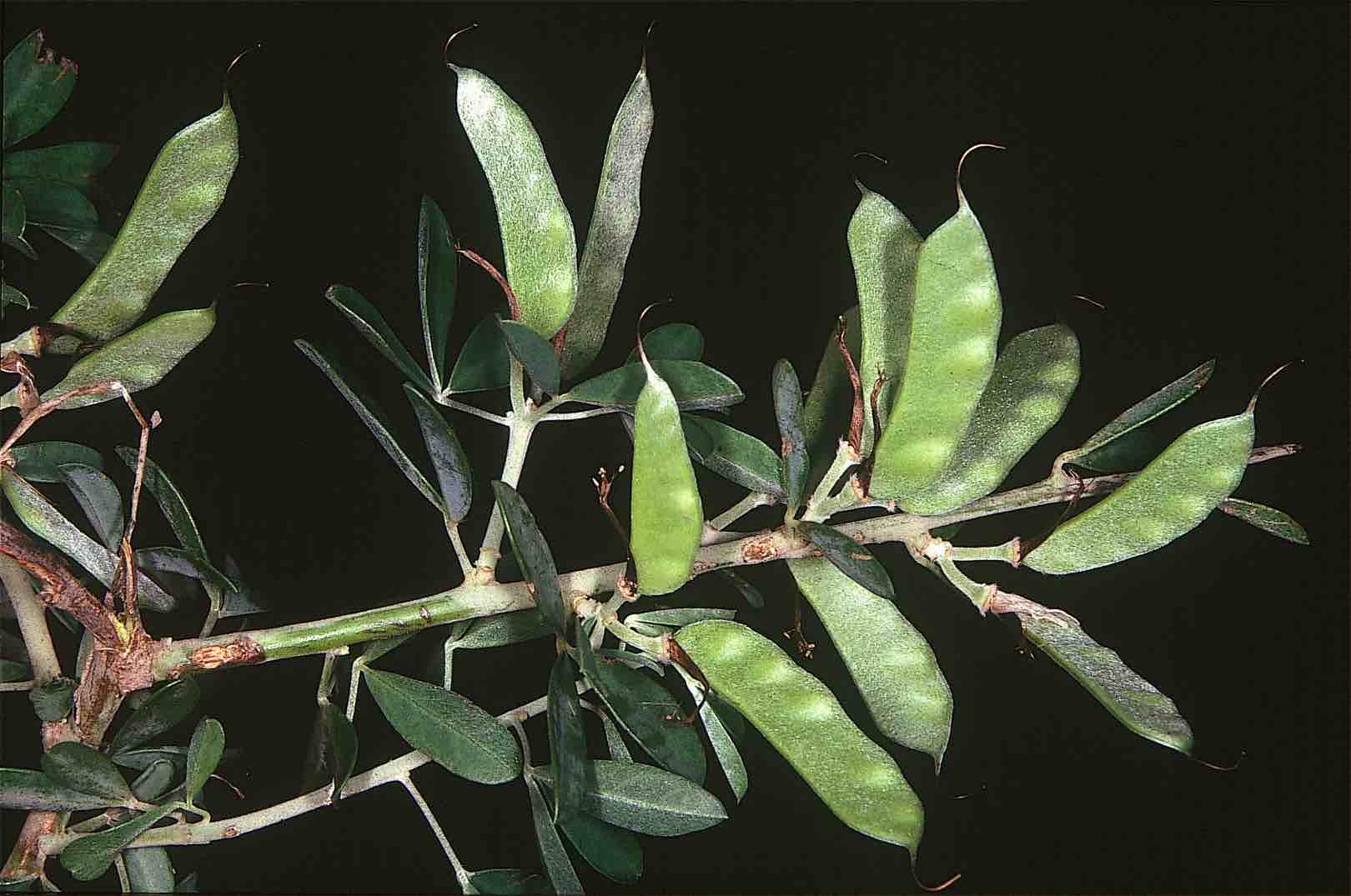
Cytisus albidus DC.
Spartium molle Cav., Chamaecytisus mollis (Cav.) Greuter & Burdet, Cytisus ifnianus Font Quer
Eng.: White broom. Spa.: Escoba blanca, escobón blanco. Fre.: Cytise blanc du Maroc.
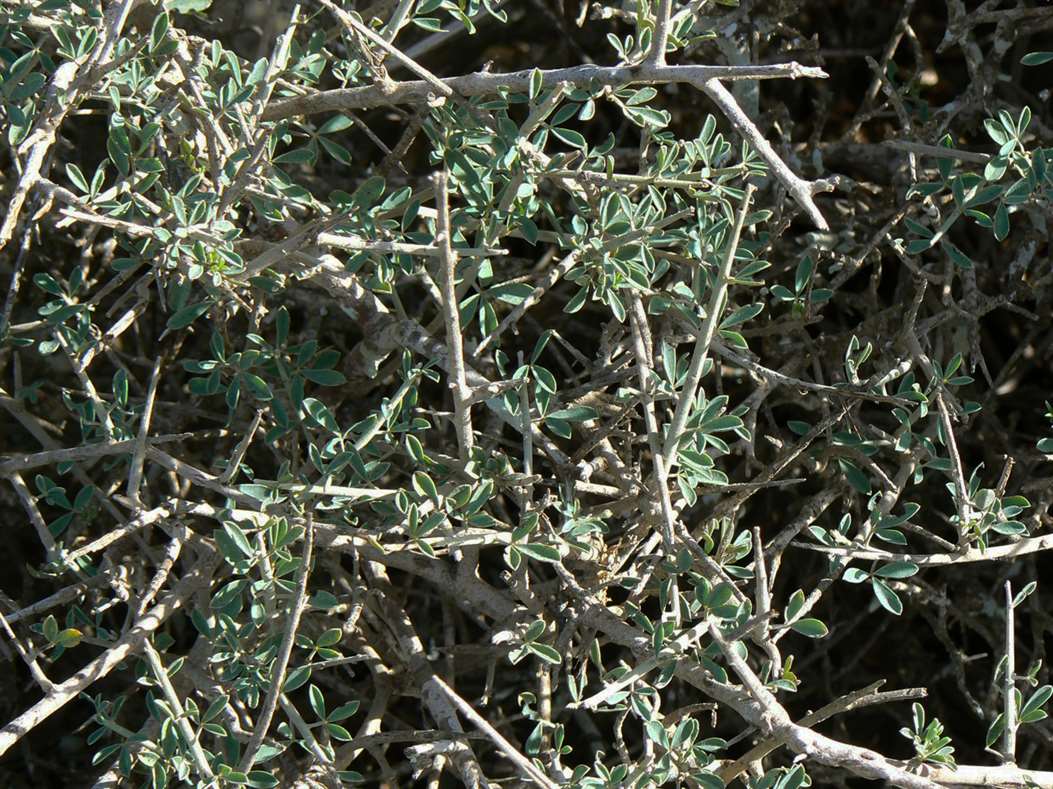
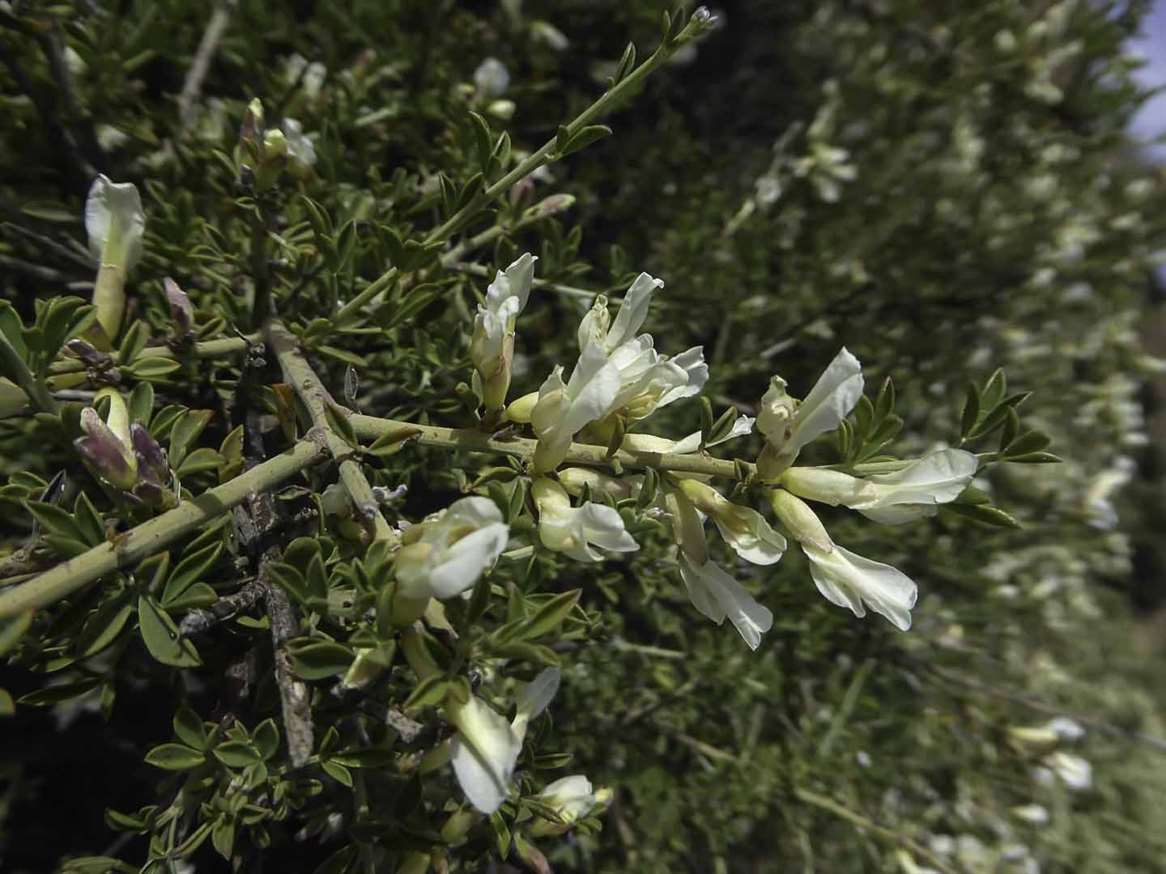
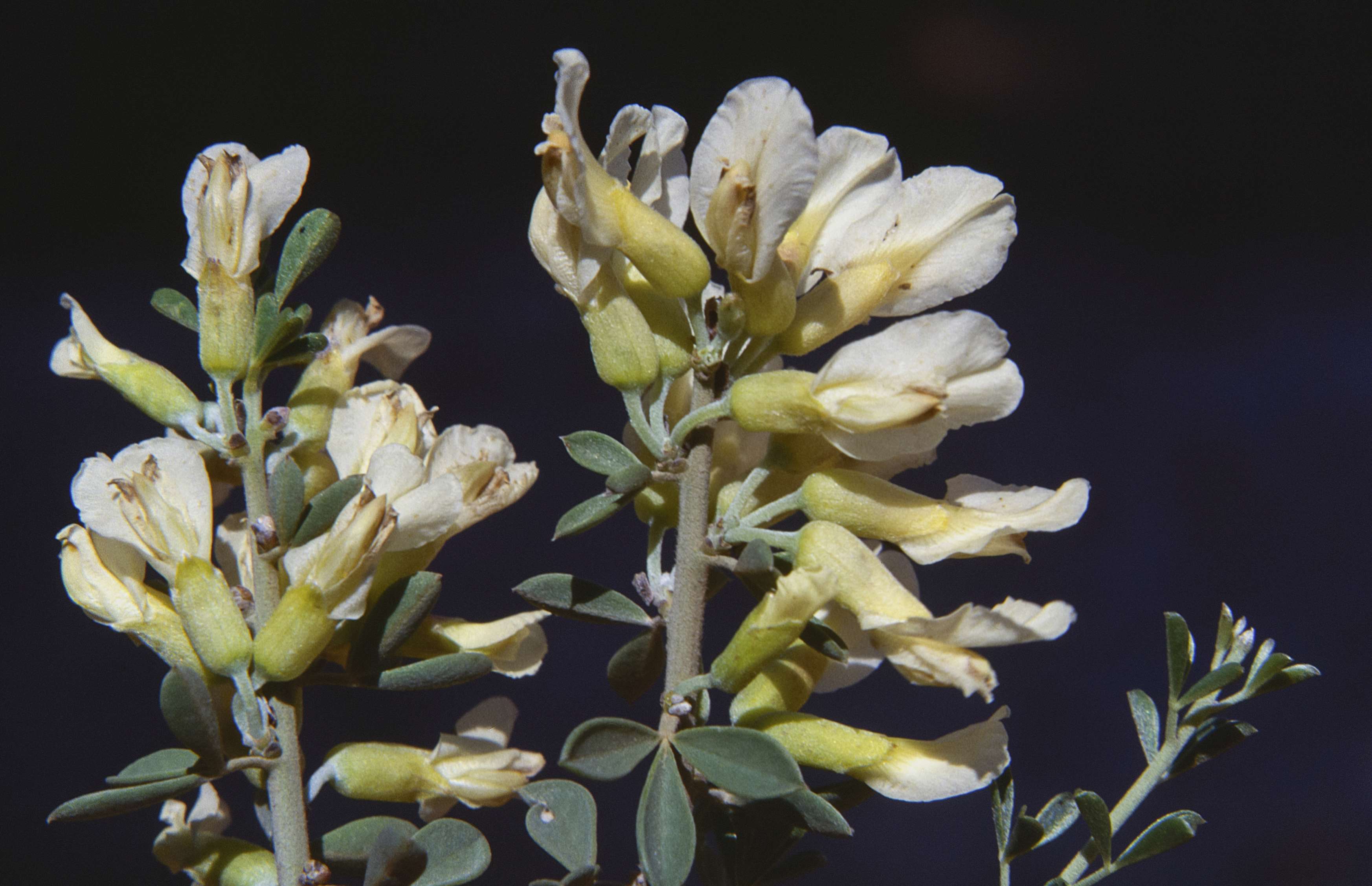
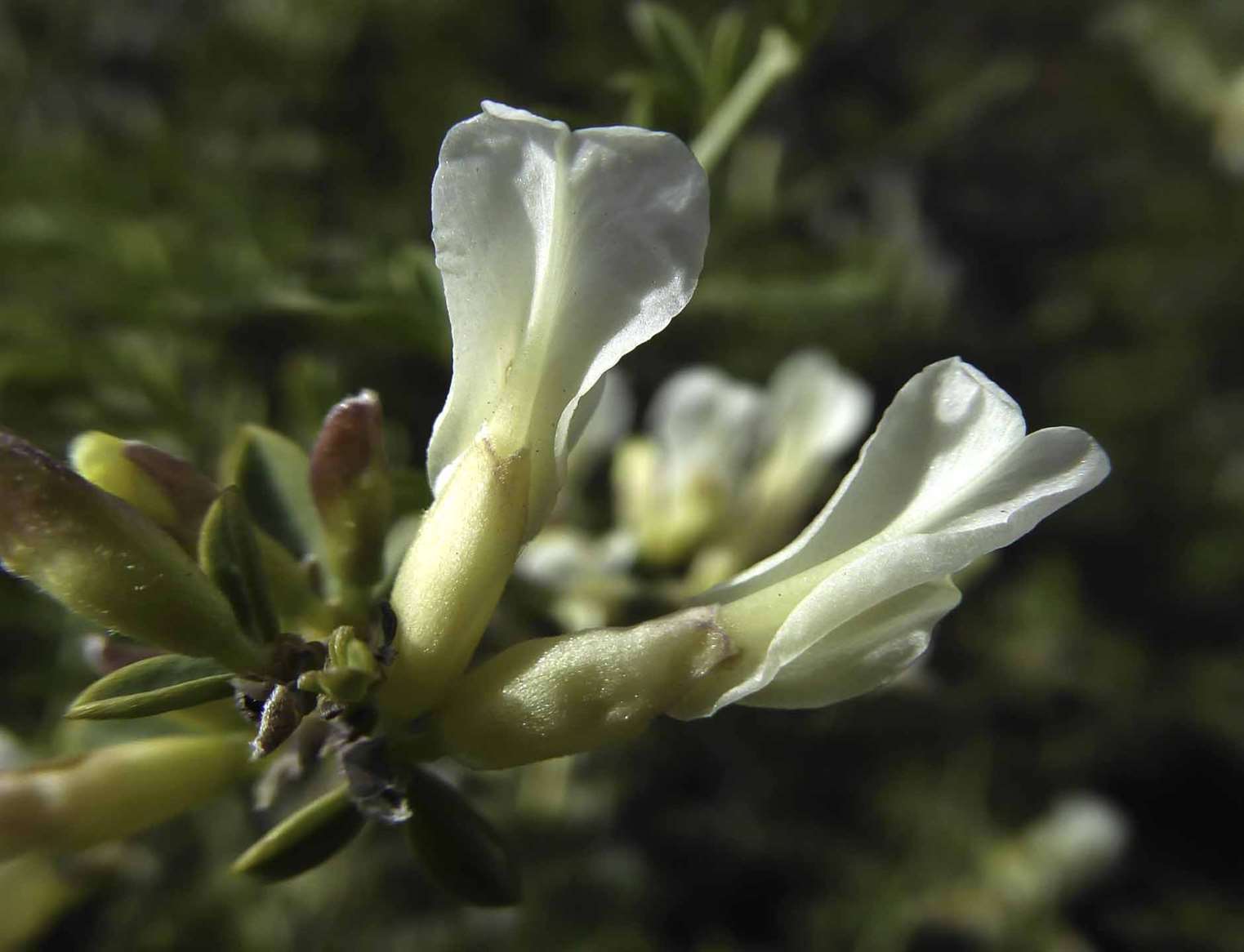
Shrub up to 2 m in height, spinescent, hermaphrodite, deciduous, highly ramose to intricate, with stems and branches extended or extended-erect, sharp. Stems and old branches with smooth bark, slightly or not fissured at all, brown. Young branchlets cylindrical or slightly angled, tomentose-whitish. Leaves alternate, trifoliolate, without stipules, with petiole 2-5 mm, ± tomentose, and leaflets 8-16 × 4-8 mm, subsessile, obovate or oblong-obovate, entire, acute or subacute, attenuated at the base, glabrous or glabrescent and green on the upper side, and sericeous and a little lighter on the underside, the central leaflet always a little larger. Flowers in axillary fascicles of 2-4, with pedicel 2-4 mm, hairy, with 1-2 bracteoles halfway along the pedicel, caducous. Calyx 8-9 mm, campanulate-cylindrical, green, sericeous, bilabiate, the upper lip with 2 prominent teeth, and the lower lip with 3, small. Corolla 13-17 mm, papilionoid, white or greenish-whitish, with an oblong-obovate standard, glabrous, longer than the wings and the keel, the latter arched, obtuse. Androecium monadelphous, with 10 stamens. Ovary hairy, and capitate stigma. Pod 20-30 × 5-7 mm, oblong, compressed, acuminate, attenuated at the base, green at first and then black, pubescent-sericeous, with 2-6 seeds. Seeds 2.5-3.5 mm, ovoid, compressed, smooth, ochre or reddish.
Flowering:
January to April.
Fruiting:
May to July
Habitat:
Forests and thickets in plains and low mountains (up to 1,300 m in altitude), in mostly semiarid bioclimate, on inframediterranean and thermomediterranean floors.
Distribution:
Endemic to Morocco. Along coastal and subcoastal areas, from near Casablanca to the western and central High Atlas, Sus Valley and western Anti-Atlas.
Conservation status:
A relatively common species but with a small distribution area. Currently, it has not been assessed at a global level in the IUCN Red List of Threatened Species. In the Livre Rouge de la flore vasculaire du Maroc (Fennane, 2021) it has been considered as Near Threatened (NT).