Cytisus balansae (Boiss.) Ball
Sarothamnus balansae Boiss., C. purgans subsp. balansae (Boiss.) Maire
Spa.: Piorno del Atlas. Fre.: Cytise. Ara.: Irrhis, amsgré, chdida. Tam.: azmorui, tadamruit.
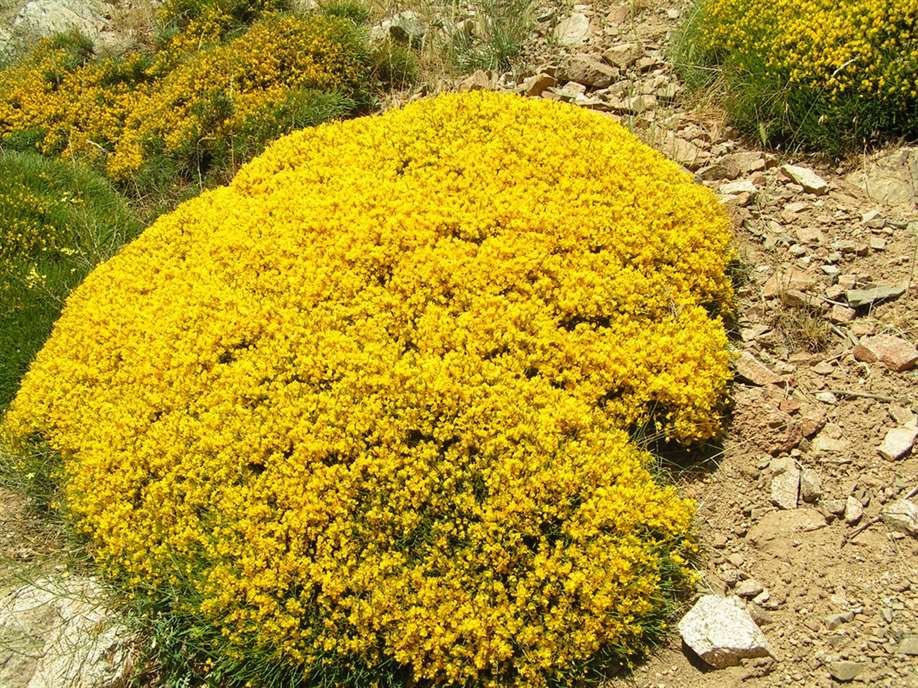
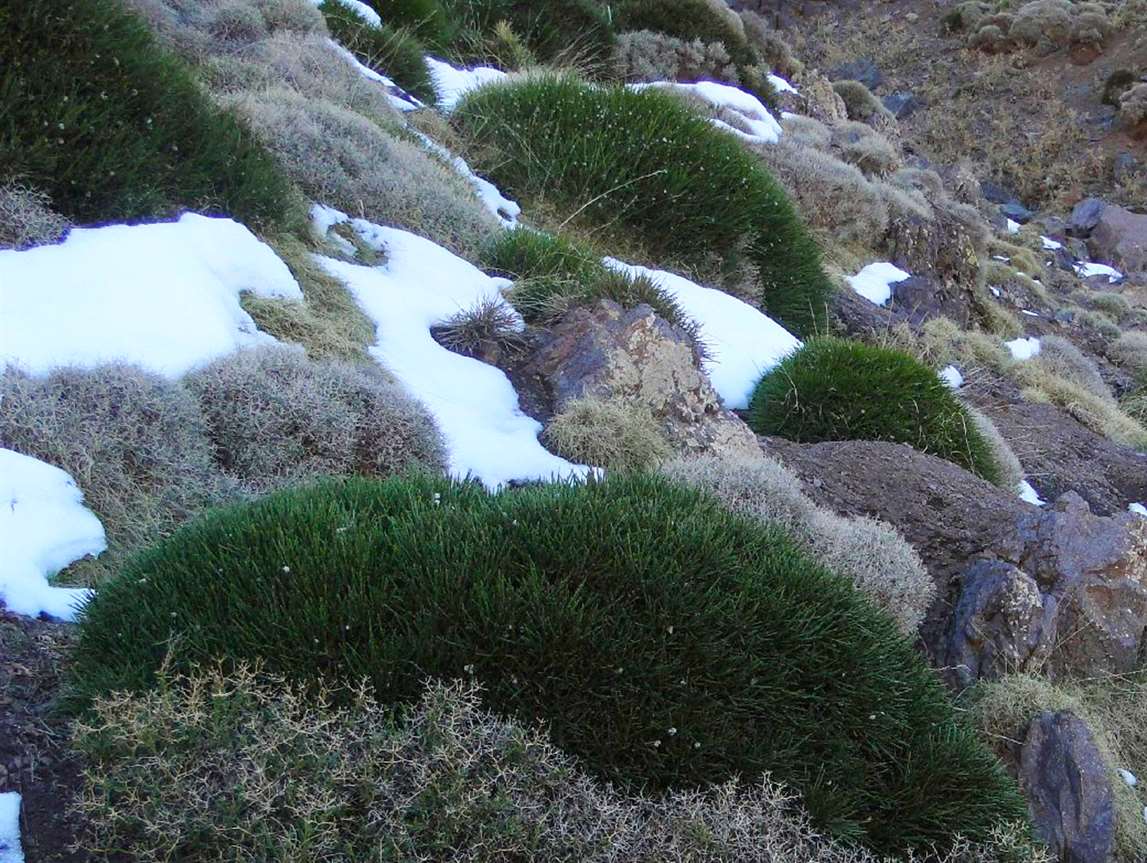
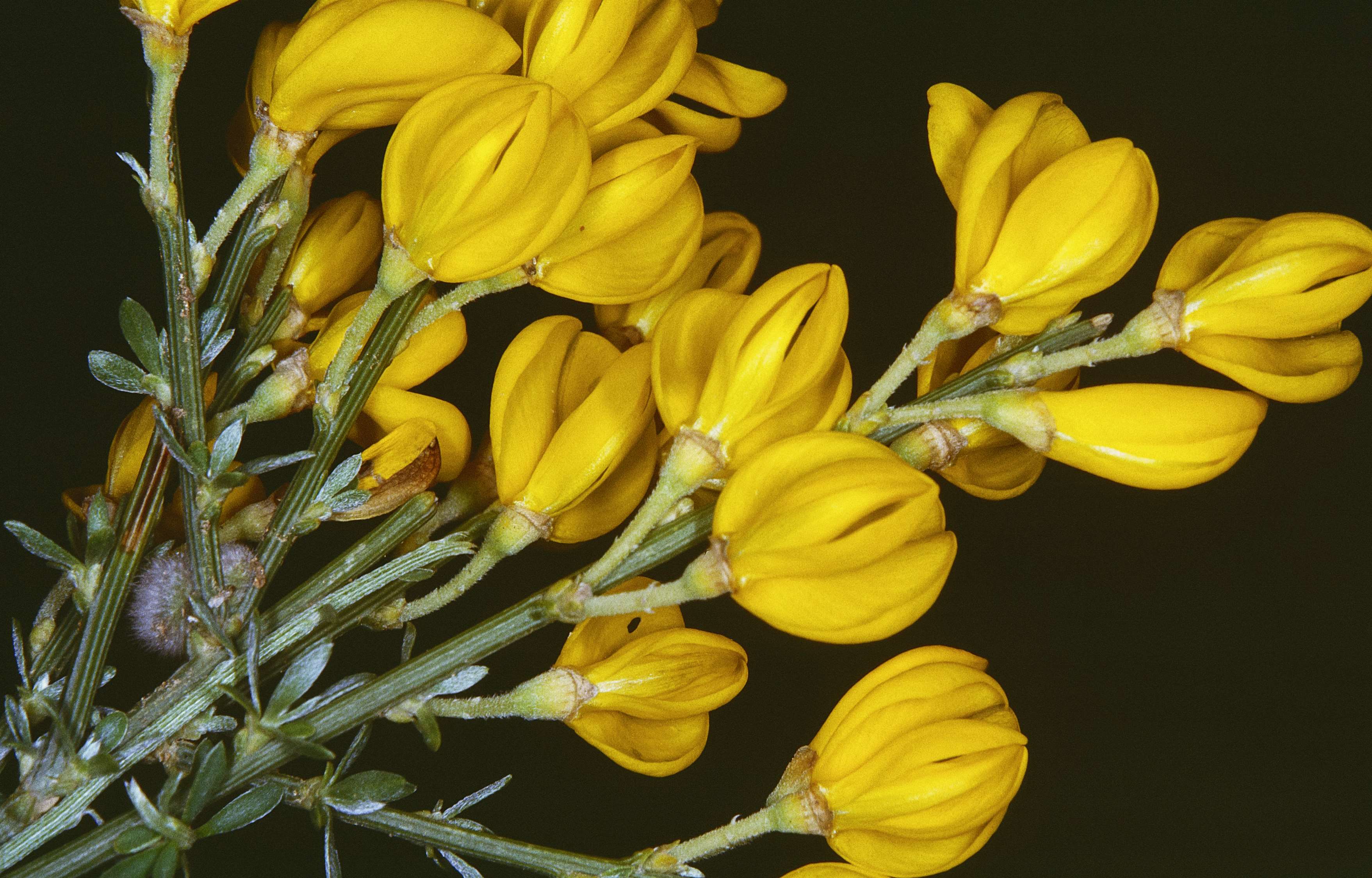
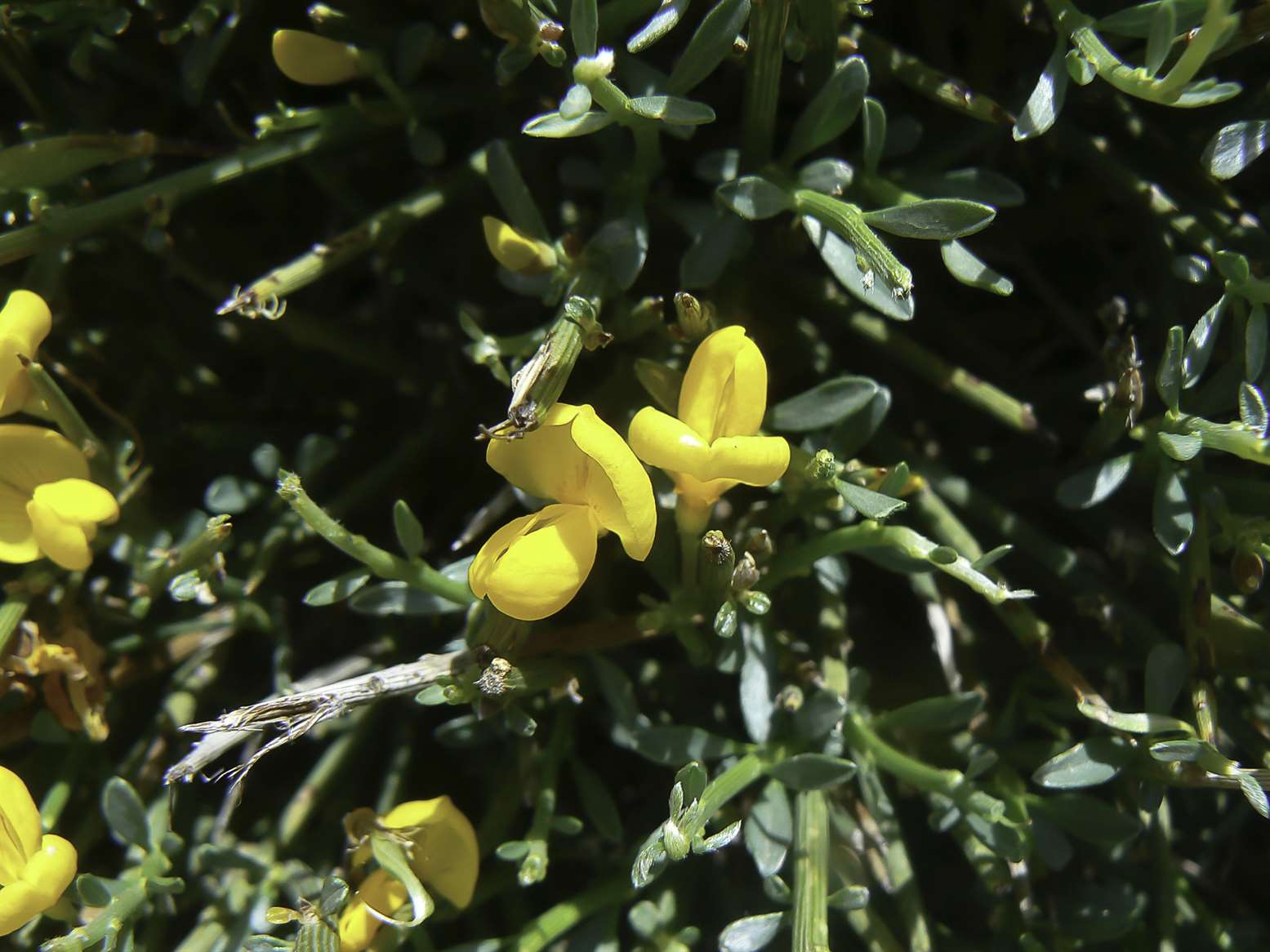
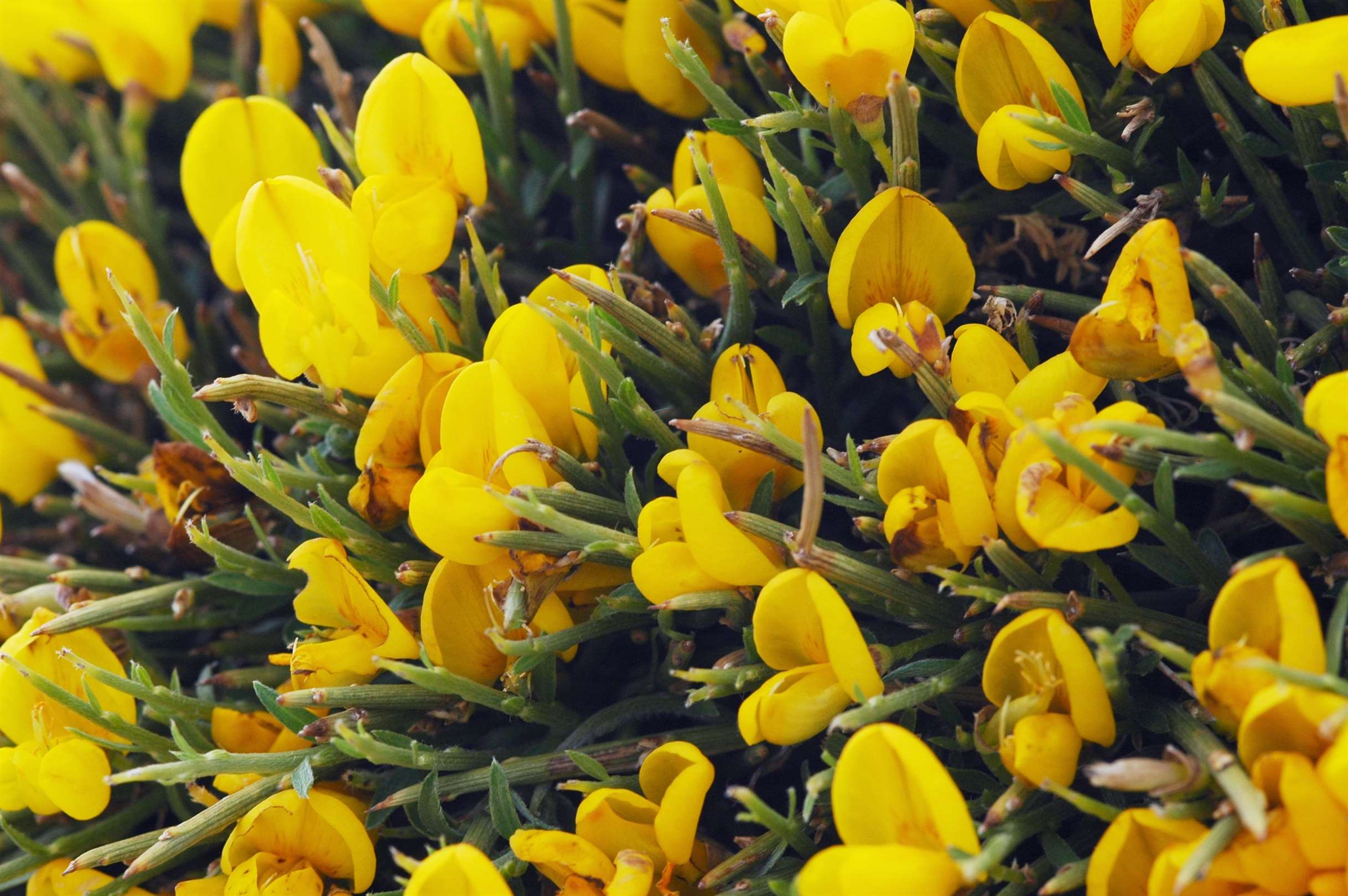
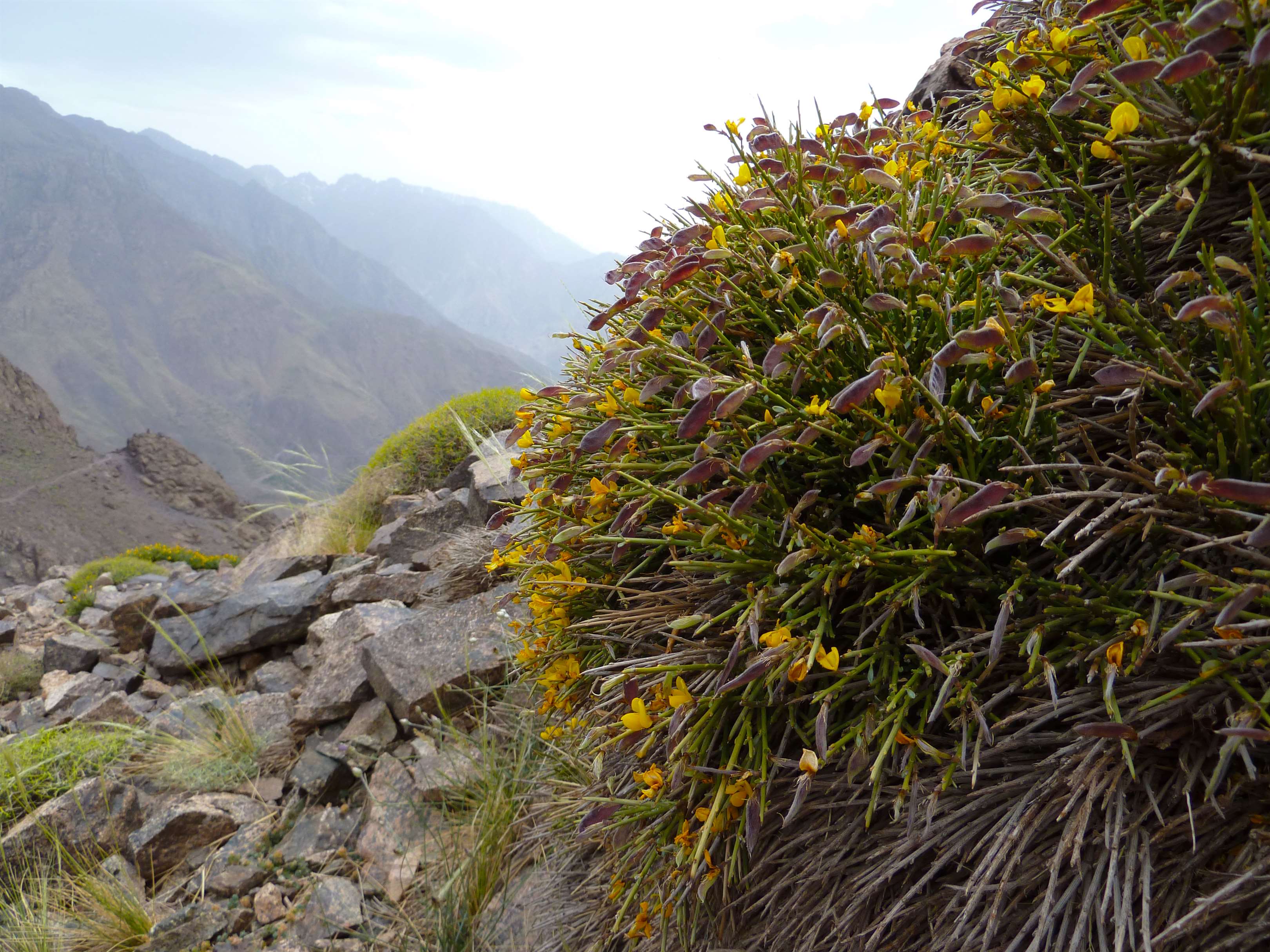
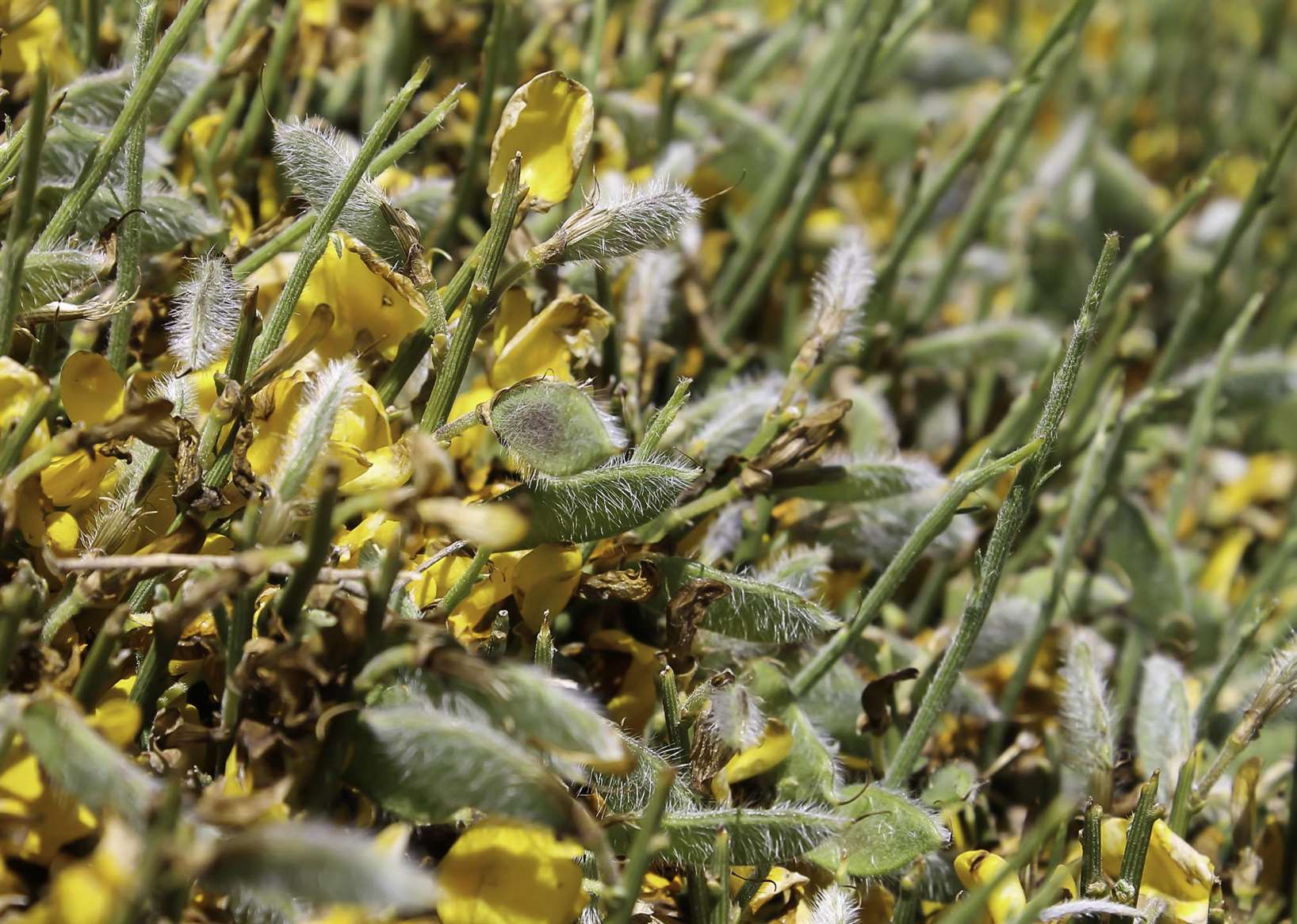
Shrub or subshrub up to 0.5(0.8) m in height, spinescent, cushion-shaped, highly branched from the base, stem and branches sharp, hermaphrodite, with leaves promptly deciduous. Stems and old branches with bark fissured longitudinally, scabrid, brown. Young branchlets ridged longitudinally, with 9-14 T-shaped ribs, green, with abundant hairs. Leaves unifoliolate, subsessile, alternate or in fascicles, without stipules, with leaflet c. 8 × 3 mm, linear-lanceolate to obovate-lanceolate, obtuse, attenuated at the base, hairy on both sides, green. Flowers solitary or in pairs, axillary, with pedicel 3-6 mm, sericeous, with 2 bracteoles about halfway. Calyx 3-5 mm, campanulate, bilabiate, with lips briefly dentate, the upper lip with 2 teeth and the lower lip with 3 and slightly larger, sericeous. Corolla 9-15 mm, papilionoid, yellow, with an obovate or suborbicular standard, slightly longer than the wings and the keel, the latter clearly incurved. Androecium monadelphous, with 10 stamens. Ovary hairy, and stigma elongated. Pod 12-25 × 5-8 mm, oblong, highly compressed, green at first and then blackish-brown, villous, with 1-4 seeds. Seeds 2.2-4 mm, ovate-suborbicular, highly compressed, smooth, brown-blackish.
Flowering:
June to July.
Fruiting:
July to September.
Habitat:
Clearings in forests and thickets of high mountain, calcareous or siliceous (1,600-3,500 m in altitude), in semiarid to humid bioclimate, on oromediterranean and supramediterranean floors.
Distribution:
Endemic to the high mountains of North Africa. It grows in Morocco, in the highest summits of the Middle Atlas, High Atlas (central and western) and Anti-Atlas (Jebel Saghro) and, in Algeria, in Lalla Khadidja (Djurdjura) and the mountain tops of Hodna, of Belezma and of Aures.
Observations:
C. valdesii Talavera & P.E.Gibbs (C. balansae var. atlanticus Ball) is the name applied to various Moroccan plants from the summits and slopes of the Middle Atlas, High Atlas and eastern Anti-Atlas, wishing to differentiate them from C. balansae by the number of ribs, particularly high (12-14), branches with straight hairs only, and flowers with a standard larger than the wings and the keel. These characters have been reviewed (Auvray & Malecot, 2013) and have not been considered of a diagnostic value, therefore the species in question is not recognised.
Conservation status:
A relatively common and widely distributed species, not considered threatened. Currently, it has not been assessed at a global level in the IUCN Red List of Threatened Species.