Populus tremula L.
Eng.: Aspen, common aspen, Eurasian aspen, European aspen, quaking aspen. Spa.: Álamo temblón. Fre.: Peuplier tremble. Ara.: Aruari. Tam.: Acefcaf, amellal.
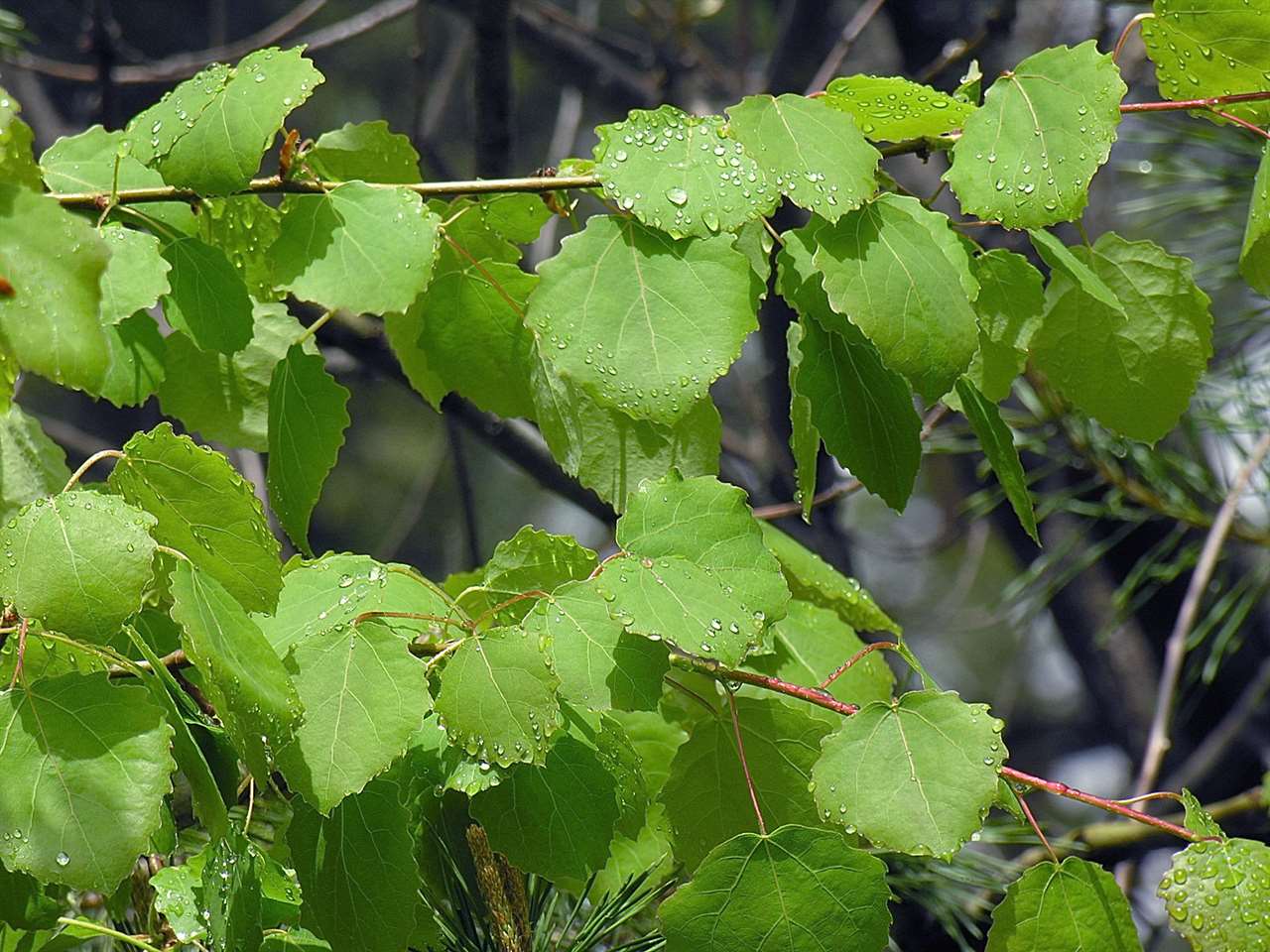
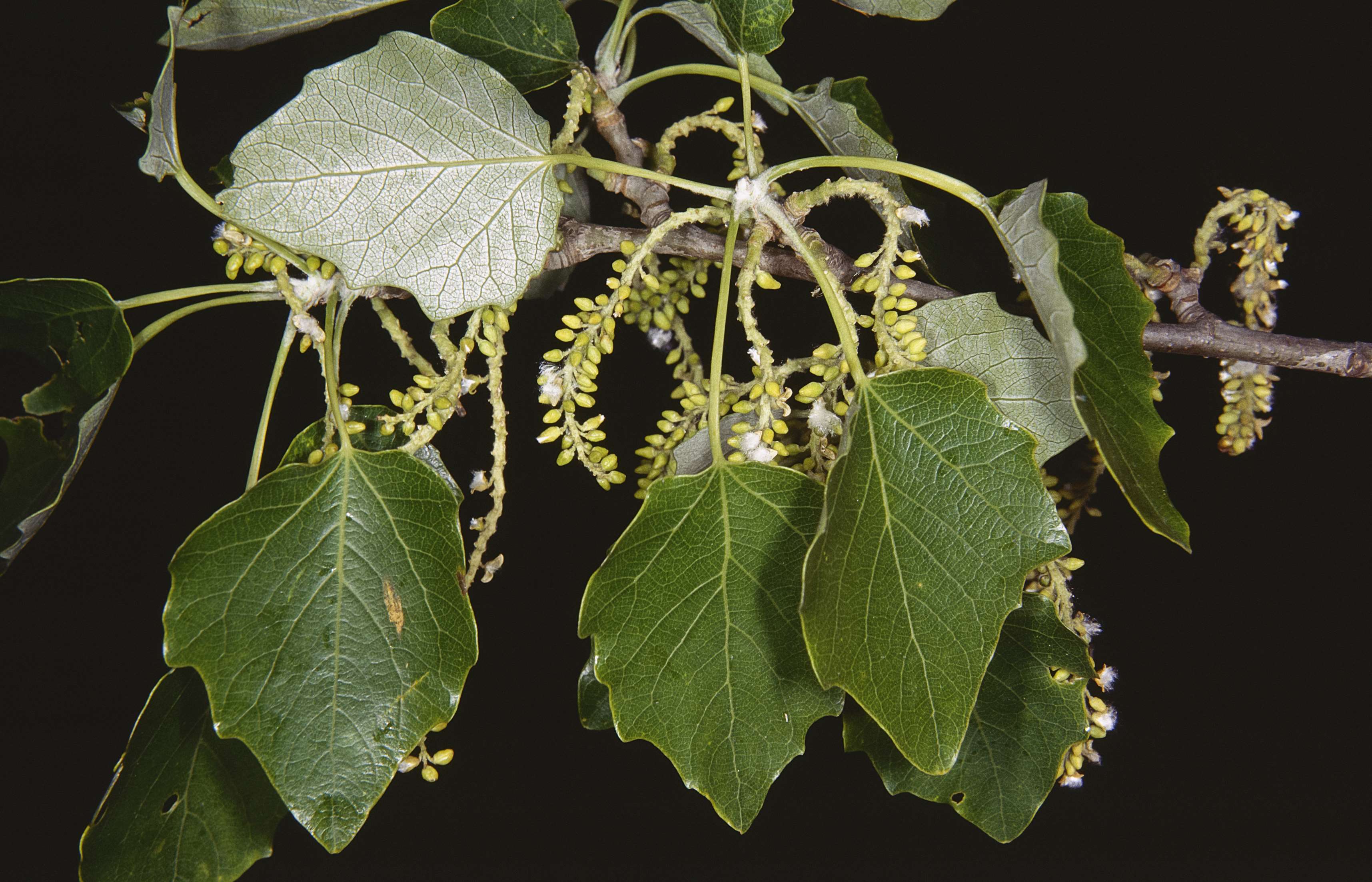
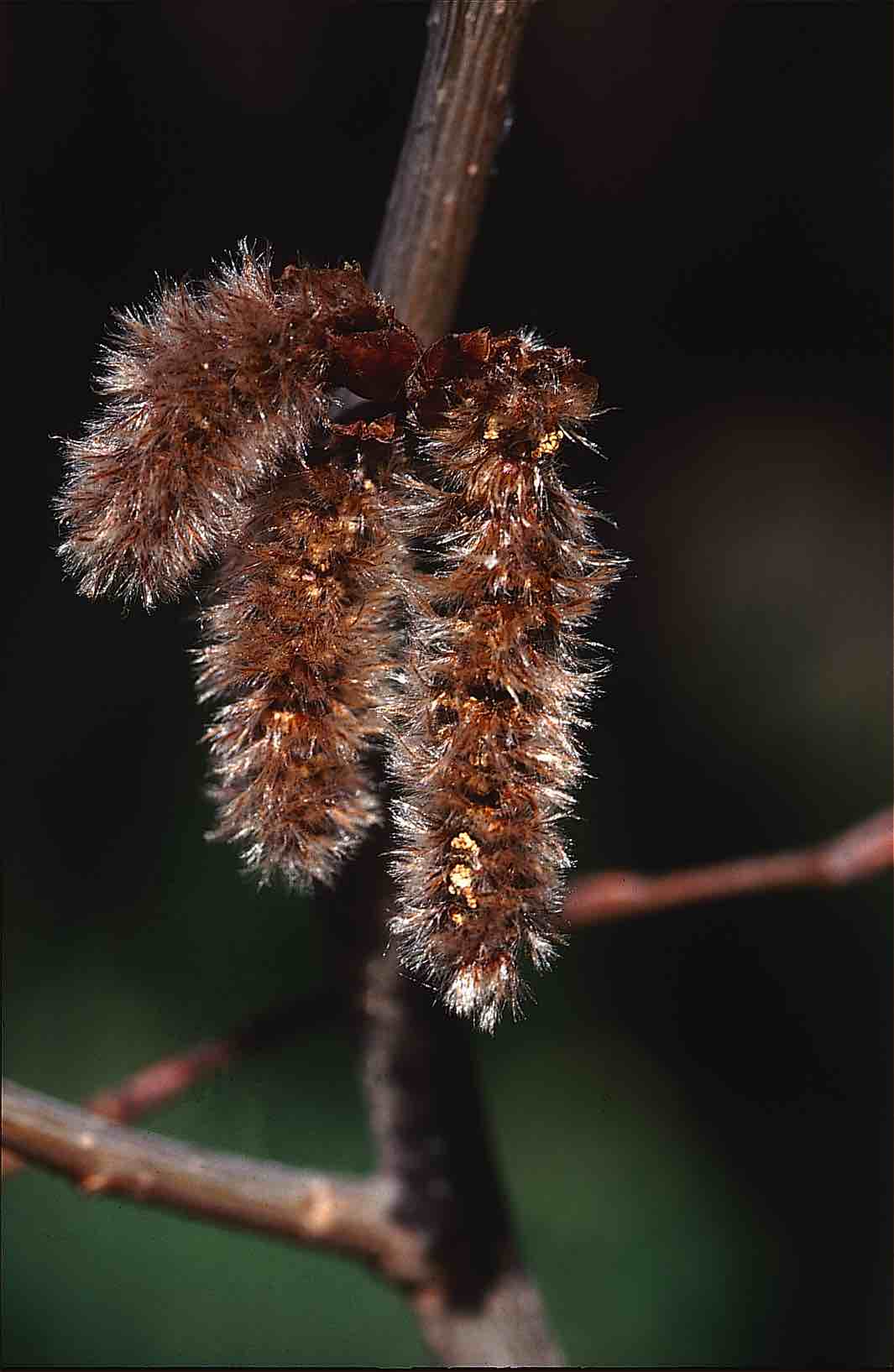
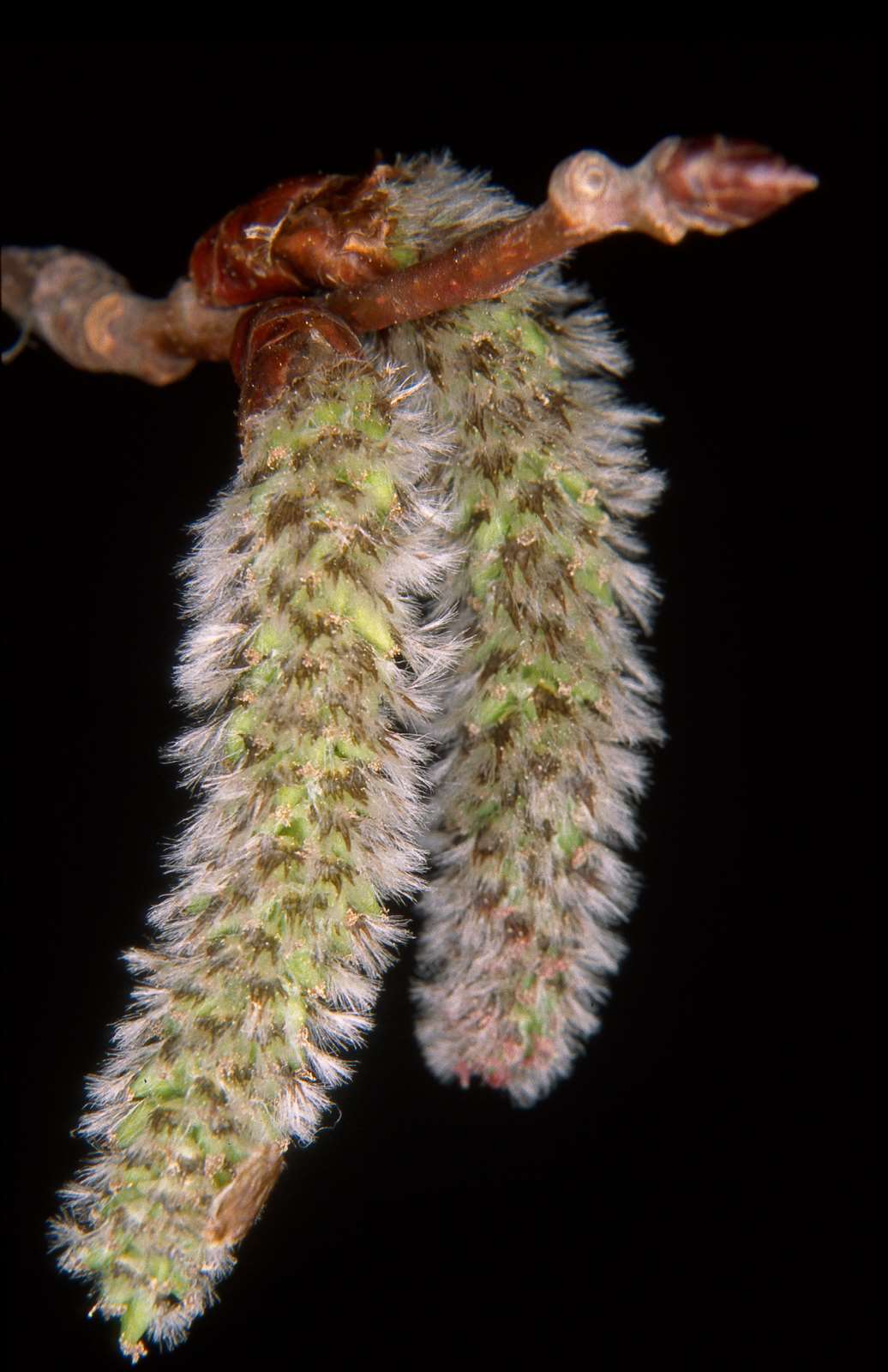
Deciduous tree, dioecious, up to 20(30) m in height, of irregular size, but with a large crown, open branching. Trunk ± erect, with grey-white bark and almost smooth in the middle and upper parts of the trunk and in old branches; at the bottom part of the trunk in older trees the bark fissures and takes a brown-greyish colour; young branches greenish-brown, slightly hairy at first, turning promptly glabrous. Buds with 3-4 egg scales, slightly viscous, slightly hairy at first then promptly glabrous. Leaves 3-7(15) × 3-8 cm, alternate, deciduous, suborbicular, with obtuse lobes or thick teeth shallow and irregularly distributed; green on both sides, slightly darker on the upper side; glabrous; with a long and laterally compressed petiole, making them to oscillate, tremble at the slightest wind and produce a distinctive sound that allows this tree usually to be heard before it’s seen in a forest. Inflorescences in cylindrical pendant aments 5-12 × 1,5-2 cm, very villous. Flowers with persistent nectariferous disk, male flowers with 4-12 stamens with white filaments and purple anthers; female flowers with short pedicels, with an ovoid-conical ovary and 2 purple stigmas. Fruit a small ovate capsule about 4 mm, dehiscent into 2 valves releasing numerous seeds with long whitish hairs. 2n = 38.
Flowering:
February to April.
Fruiting:
April to May.
Habitat:
Near watercourses or, if not close to watercourses, in forest with wet soils. In cooler climates.
Distribution:
Widely distributed across Eurasia, but very rare in North Africa, where it grows in Algeria only between 1,800-2,000 m in the Babor and Tababort (Little Kabylia) mountains, in mixed forests of cedar and Numidia fir (Abies numidica).
Conservation status:
Relatively common and widespread species. It is not considered threatened at a global level; however, in North Africa it is a species of restricted distribution and with very few specimens. Currently, in the IUCN Red List of Threatened Species it is evaluated as Least Concern (LC) at a global level (Barstow, Rivers & Beech, 2017). In Algeria it is included in the List of protected non cultivated flora (Executive Decree 12-03 on 4-Jan-2012).