Linum suffruticosum L.
L. tenuifolium subsp. suffruticosum (L.) Litard.
Eng.: White flax. Spa.: Lino silvestre, lino blanco.
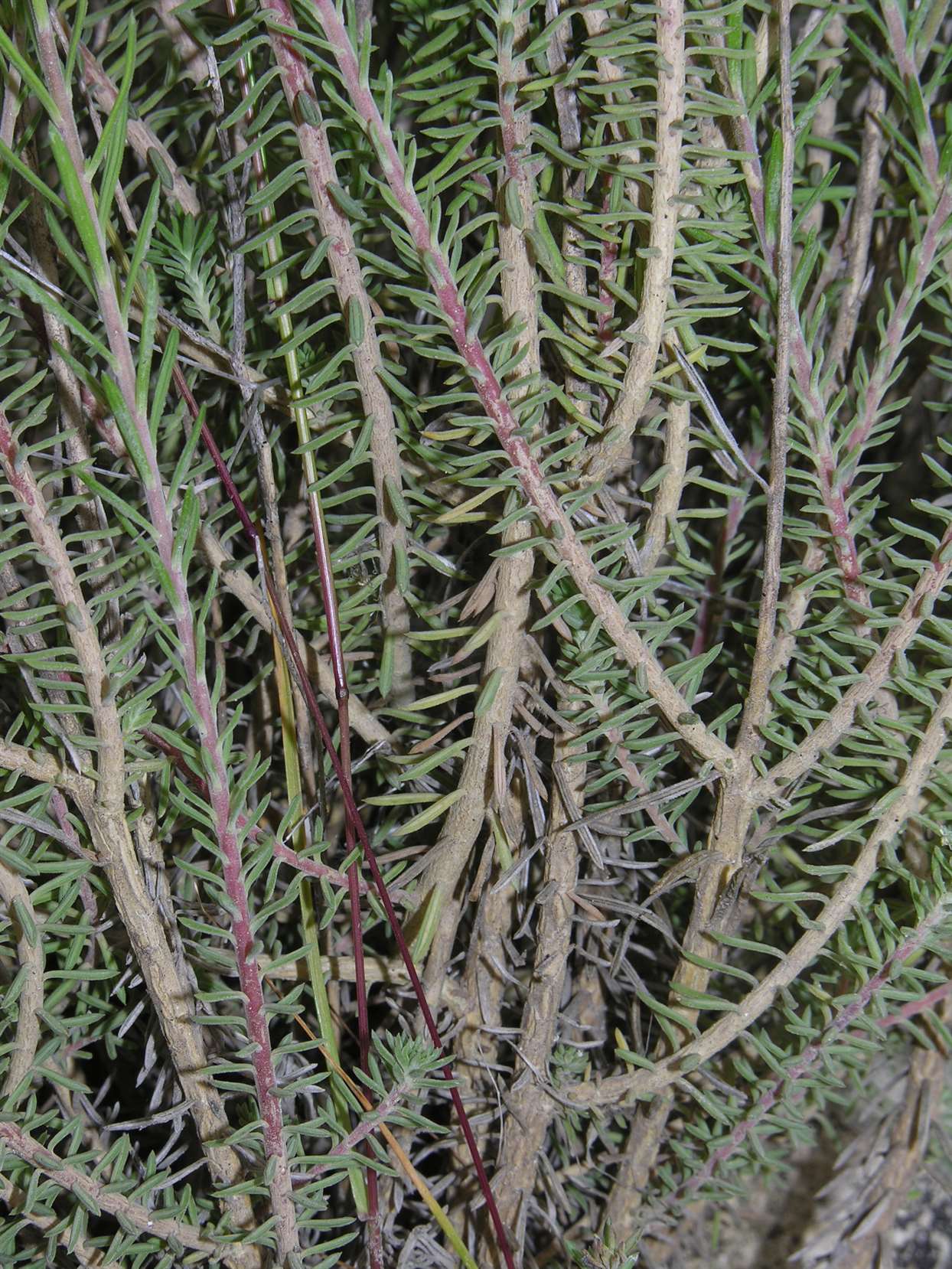
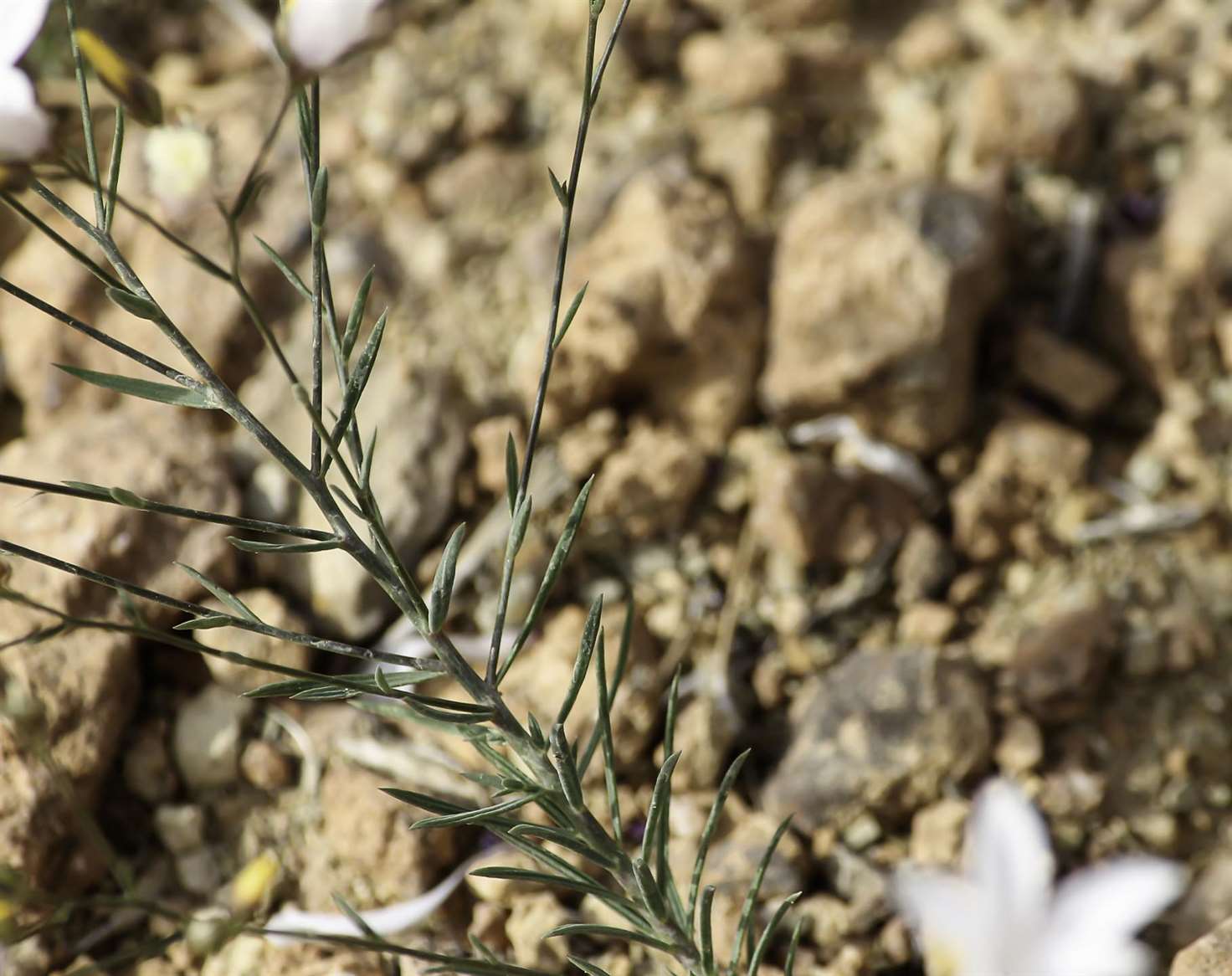
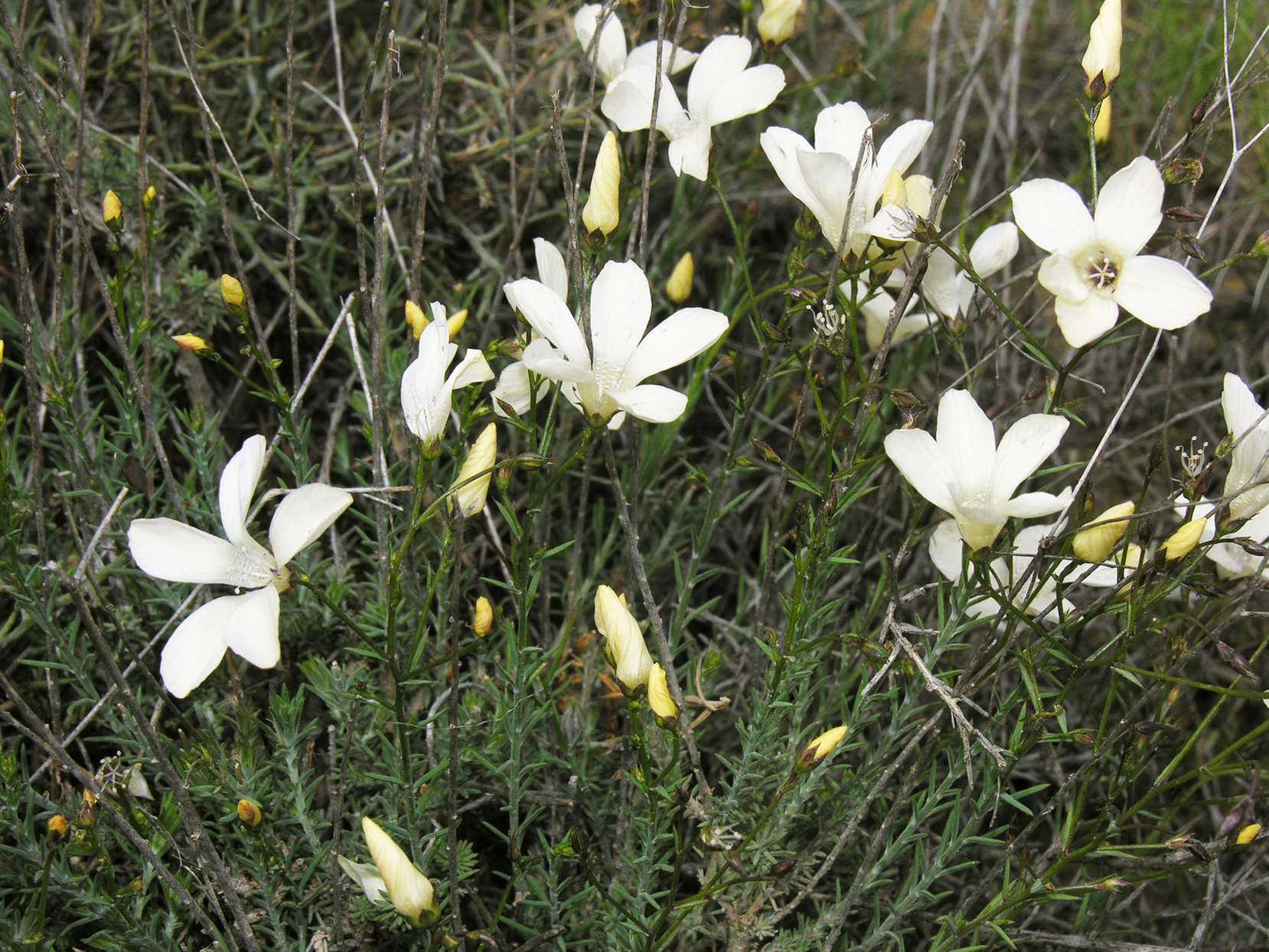
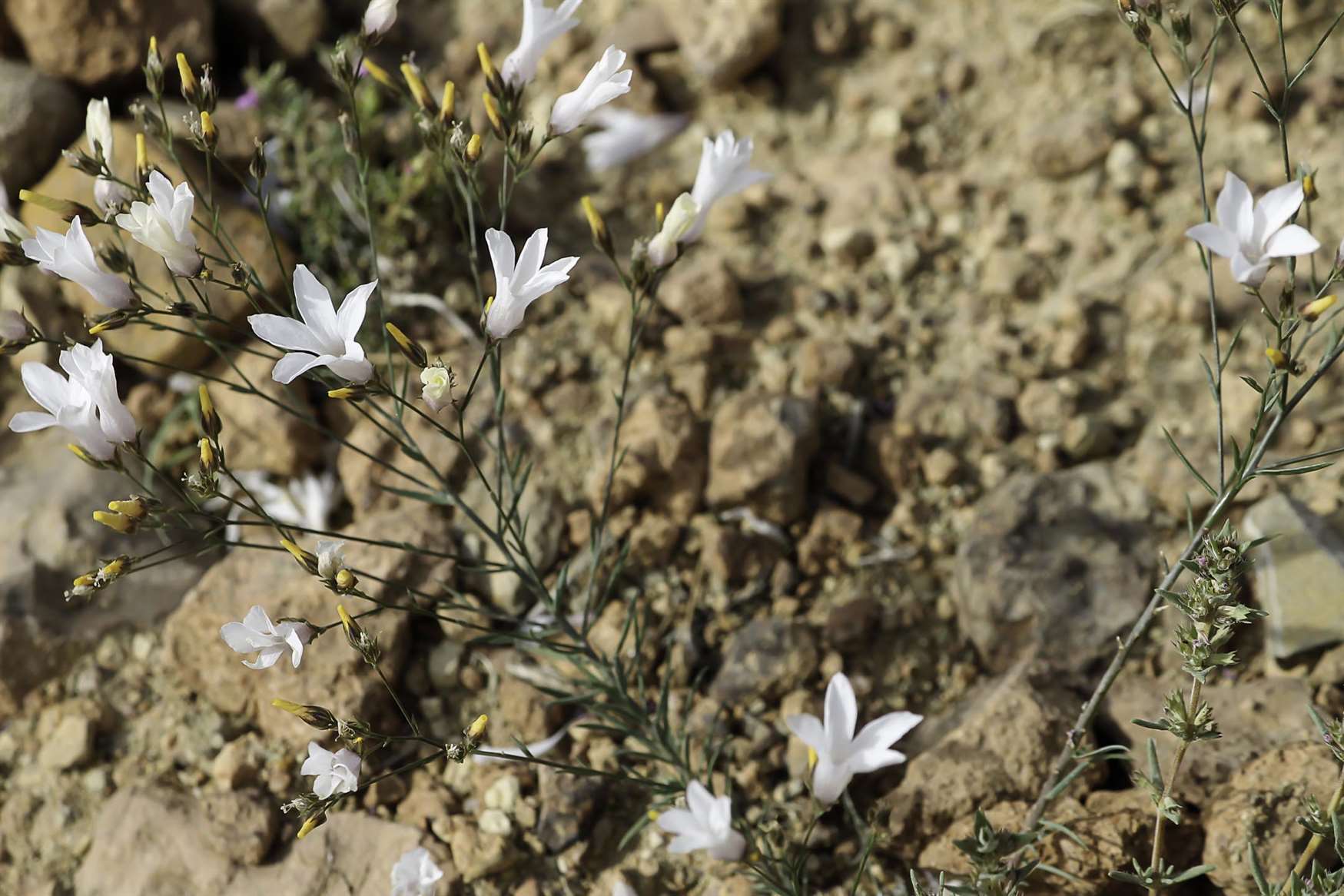
Erect shrublet, evergreen, hermaphrodite, up to 1 m in height. Highly branched from the ground, sometimes with a well defined, upright or procumbent main stem. Bark greyish-brown, fissured on the older stems. Branches erect, greenish, densely covered by an indumentum of short hairs. Leaves linear, almost acicular (1.5-3 cm), alternate, dark green on the upper side of the leaf, glabrescent, with very marked and projecting midrib, a bit lighter and hairy on the underside. Margin slightly thickened and revolute. Inflorescence a corymbiform sparse cyme. Flowers relatively large and showy, pentamerous. Sepals (4-7 mm) ovate-acuminate, hairless but with glandular cilia along the margin. Petals longly spatulate, obovate-cuneate, 2-4 times longer than the sepals, first white, with the claw or base purplish in colour, turning yellow and then promptly caducous. Ovary with 5 long styles, each crowned by a globose stigma. Fruit an ovoid capsule, finishing on a tip, containing minute compressed seeds (2-2,3 mm). 2n = 36.
Flowering:
May to July.
Fruiting:
August to November.
Habitat:
It seems indifferent to the type of substrate, but it prefers warm and sunny environments, usually on S facing slopes. Open thickets, mainly on base-rich soils, rarely on siliceous soils. From sea level up to 1,500-1,800(2,000) m in altitude.
Distribution:
Western Mediterranean region. In North Africa it grows almost everywhere in the Mediterranean region of Morocco, Algeria and Tunisia.
Conservation status:
A relatively common and widespread species. It is not considered threatened. Currently, it has not been assessed at a global level in the IUCN Red List of Threatened Species. In the Livre Rouge de la flore vasculaire du Maroc (Fennane, 2021) it has been considered as Least Concern (LC).