Hypericum hircinum L. subsp. metroi (Maire & Sauvage) Sauvage
H. metroi Maire & Sauvage
Eng.: Stinking tutsan, stinking St John’s wort. Spa.: Orval, hipérico. Fre.: Millepertuis.
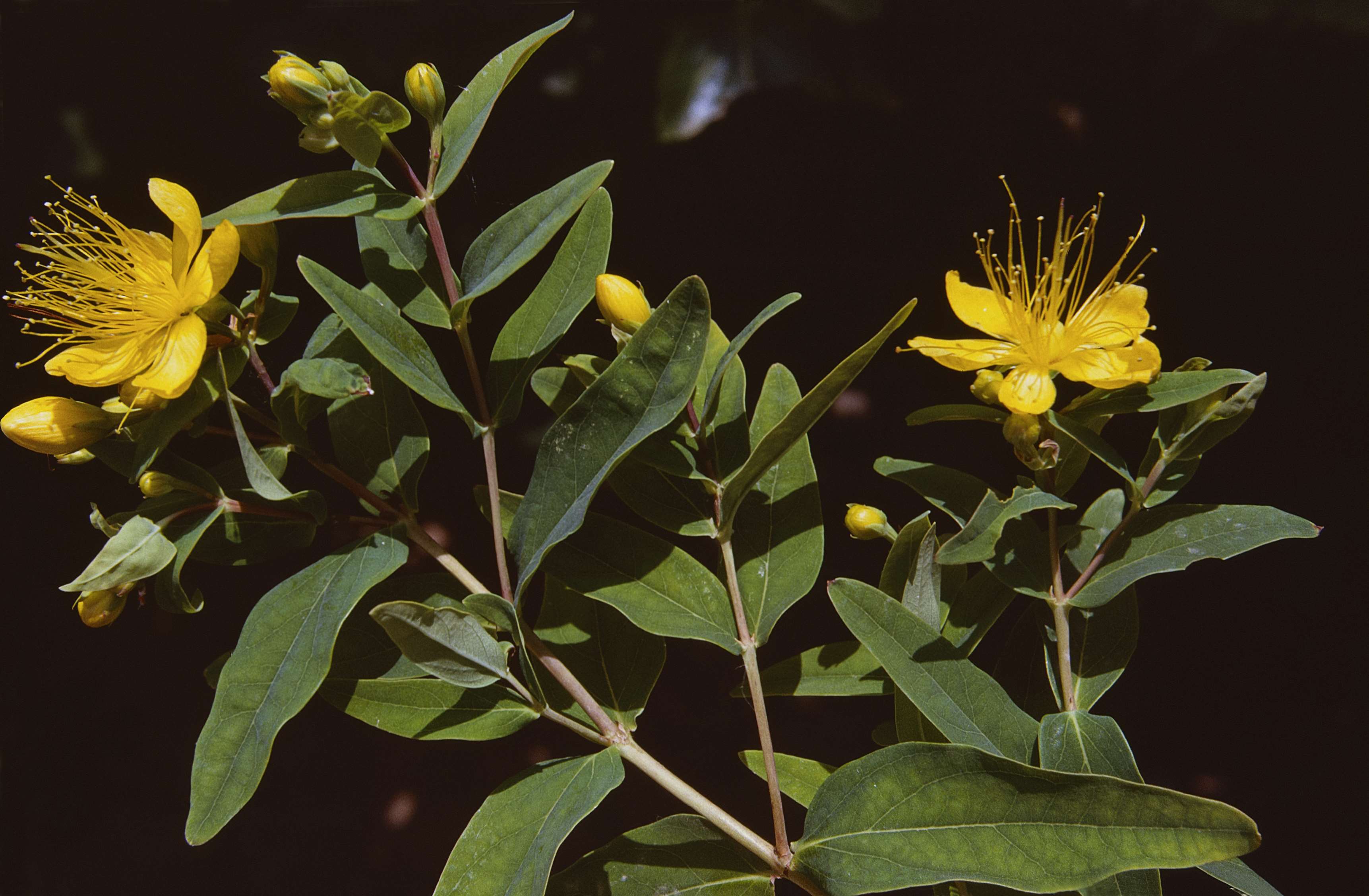
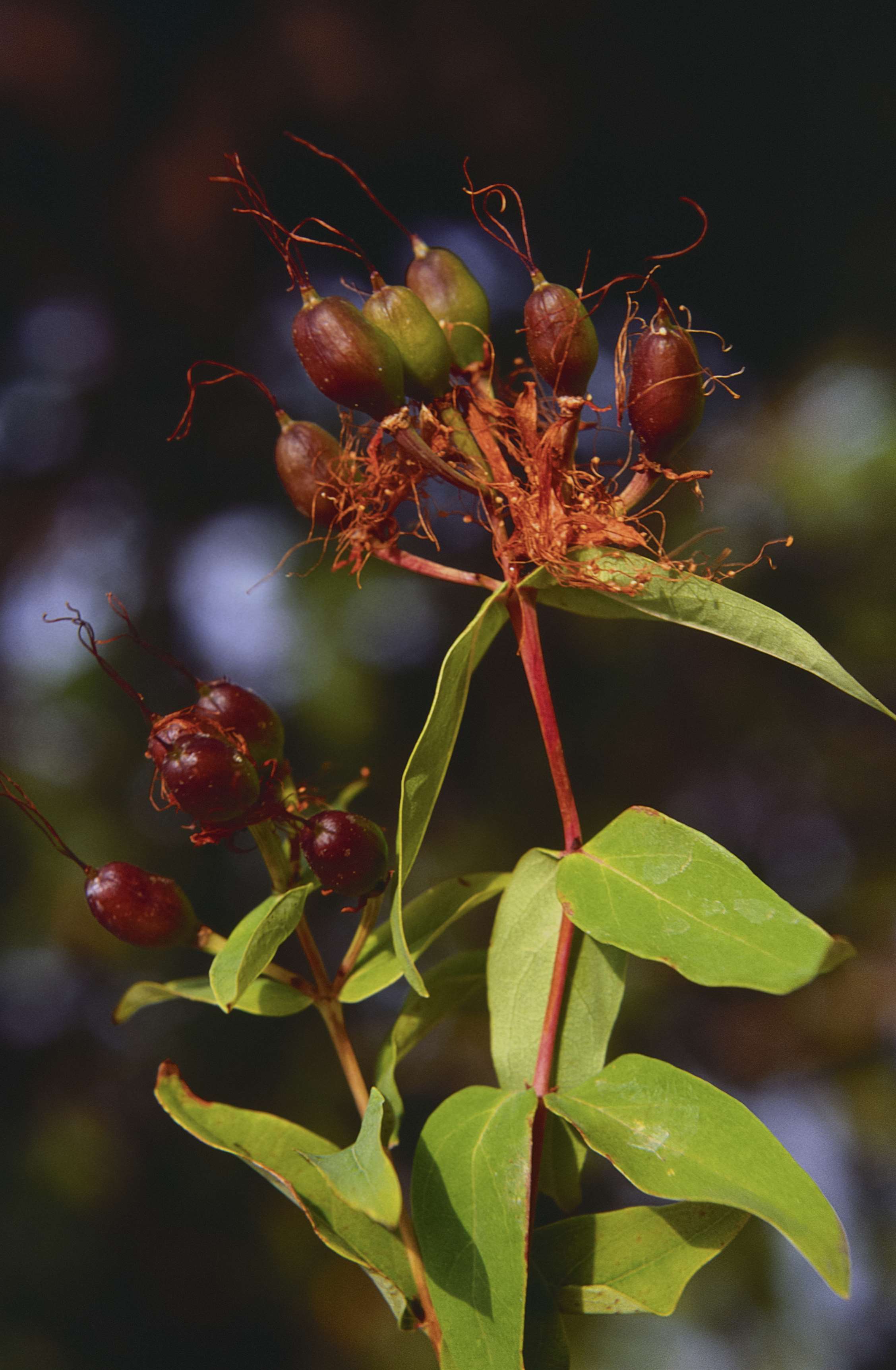
Deciduous shrub, up to 3 m in height, stems long, slender, flexuous or extended-erect, somewhat pendulous when very long, with 2-4 clear striations. Bark greyish-brown and fissured on older stems, brown on younger stems; branches and branchlets green, sometimes reddish. Leaves (30-60 × 9-18 mm) opposite, oval to oval-lanceolate, obtuse or subacute, sessile, with margin entire, not undulate, with translucent glands. Inflorescence in dichotomous cymes of 2-6 flowers, born at the axil of the pair of upper leaves. Bracts up to 6 mm, narrowly lanceolate. Flowers 3-4 cm in diameter, bright yellow, without spots. Pedicel 6-10 mm. Sepals 5, narrowly lanceolate (4-6 mm), green, subpersistent. Petals 5 (16-20 mm long), obovate-spatulate, emarginate, yellow. Stamens numerous, grouped into 5 fascicles the same colour as the petals. Ovary with 3 greenish-yellow carpels, lengthened by 3 styles, 12-17 mm. Fruit a capsule (10-12 mm long) oblong-trigonous, coriaceous, reddish-brown to greyish, which opens at maturity into 3 valves. Seed elongated (1.5 × 1.8 mm), with papillose surface, brown with a narrow wing.
Flowering:
from late June to August.
Fruiting:
September to November.
Habitat:
Small permanent water courses on siliceous and calcareous soils.
Distribution:
Southern Europe and the Middle East. In North Africa, it is represented by subsp. metroi, with a very restricted distribution, endemic to Jebel Tazekka (Ras Kebdana, Bab-Azhar, etc.) in Morocco.
Conservation status:
H. hircinum has not been assessed at a global level on the IUCN Red List of Threatened Species. However, subsp. metroi has a very restricted distribution and its status needs further consideration. In the Livre Rouge de la flore vasculaire du Maroc (Fennane, 2021) H. hircinum has been considered as Critically Endangered (CR).