Fagonia harpago Emb. & Maire
Zygophyllum harpago (Emb. & Maire) Christen. & Byng, F. ifniensis Caball.
Fre.: Fagonie. Ara.: Tliha, dereima, handagog, shaki, shoka, showeika.
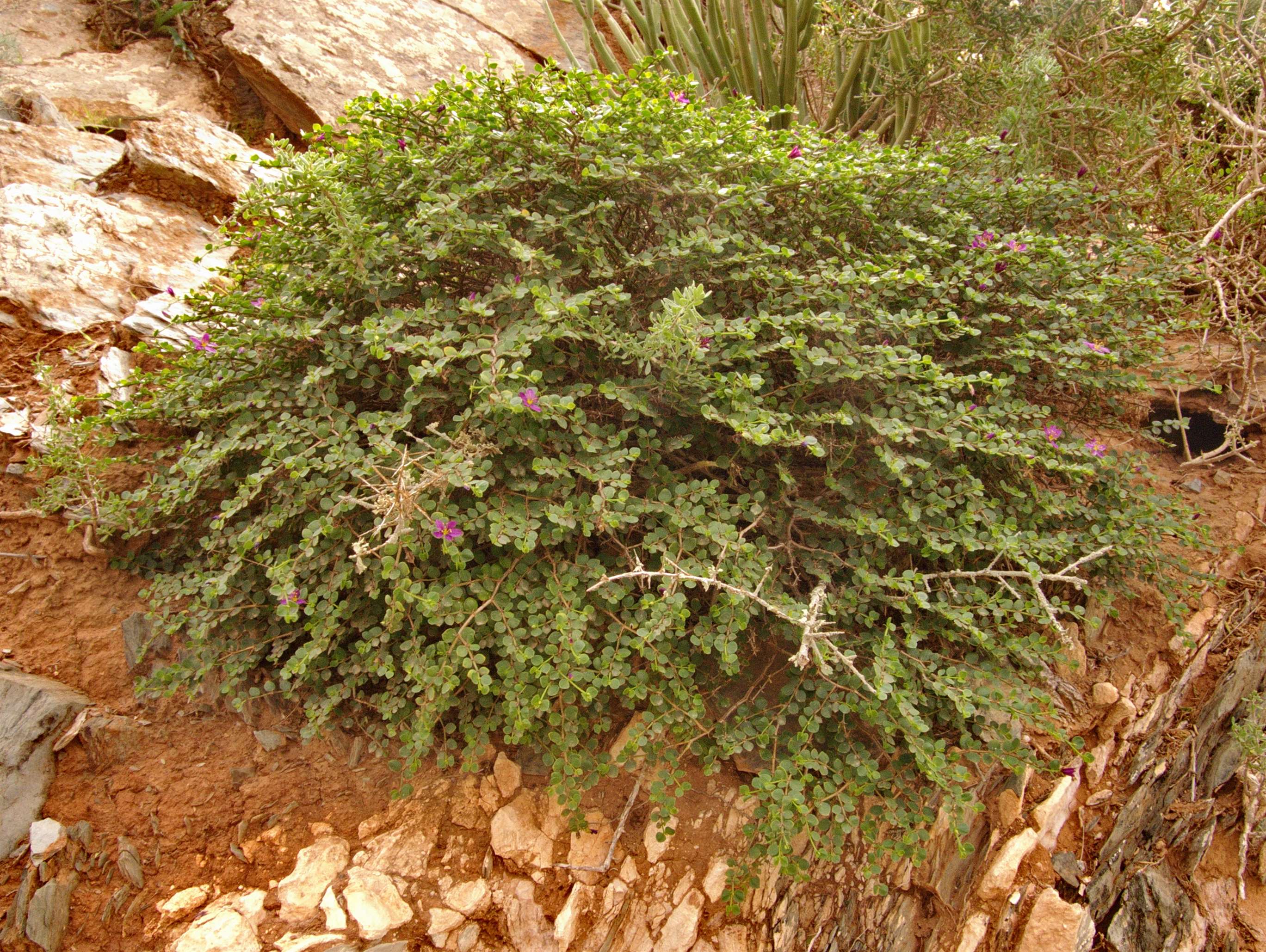
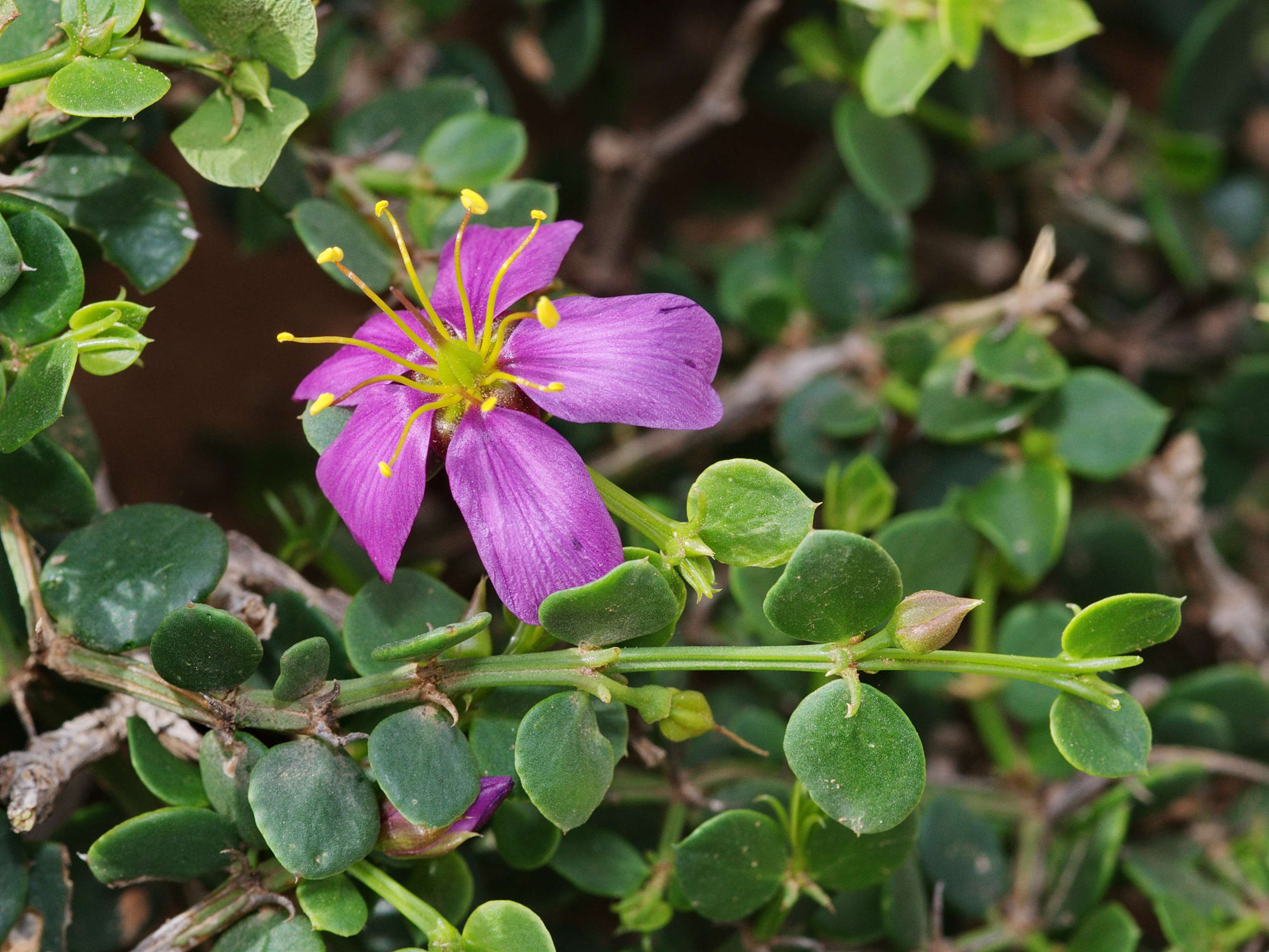
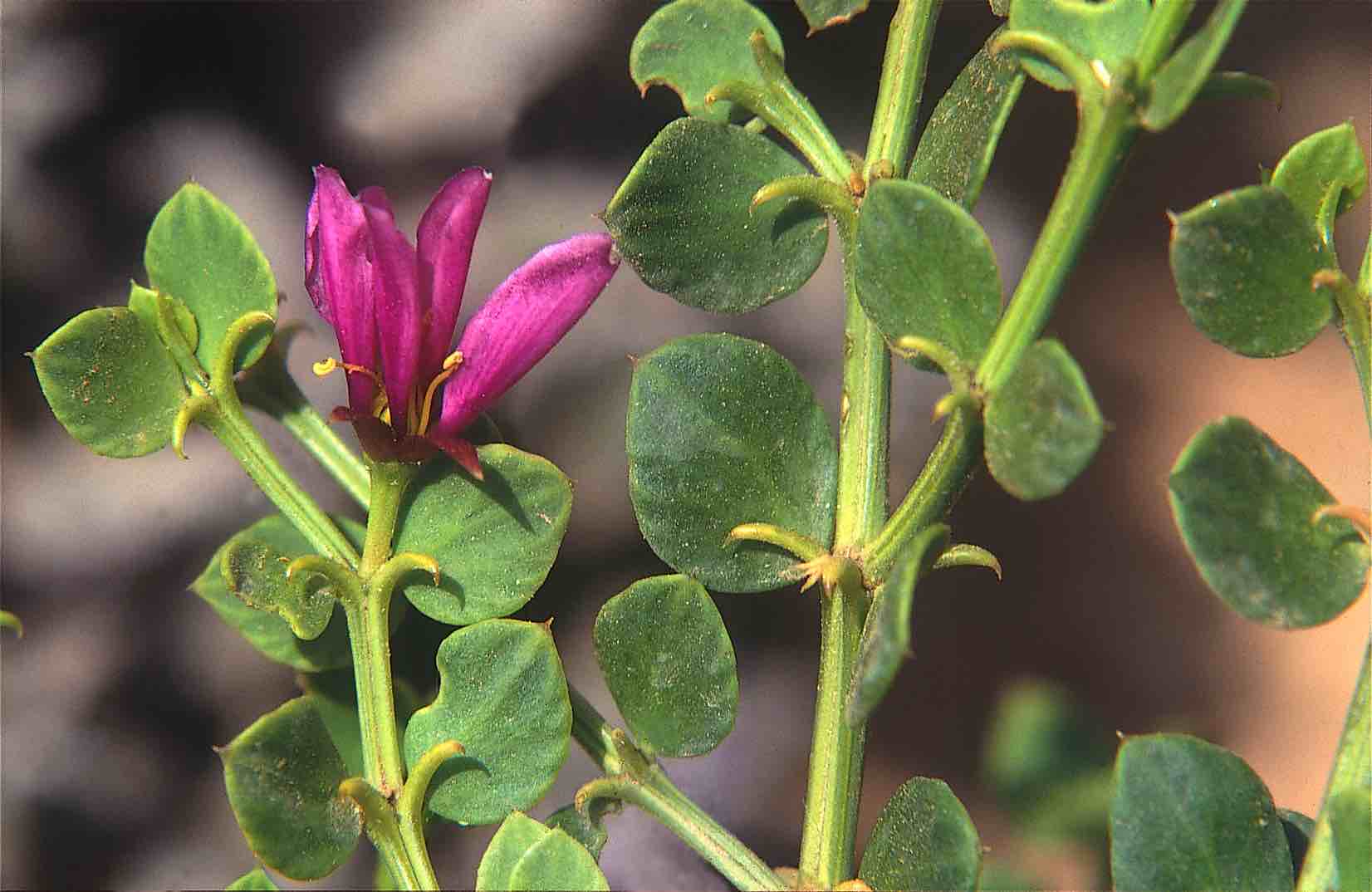
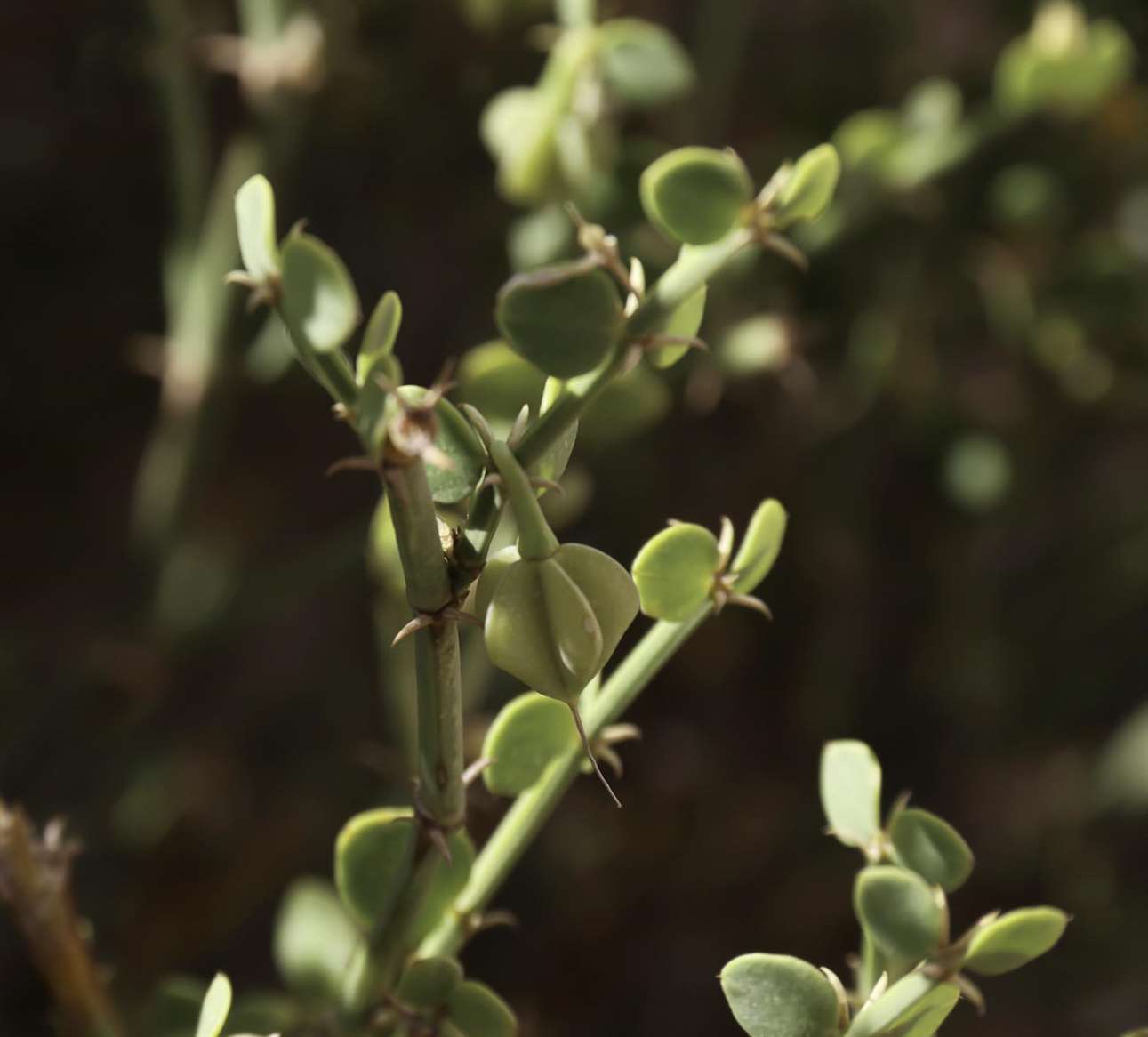
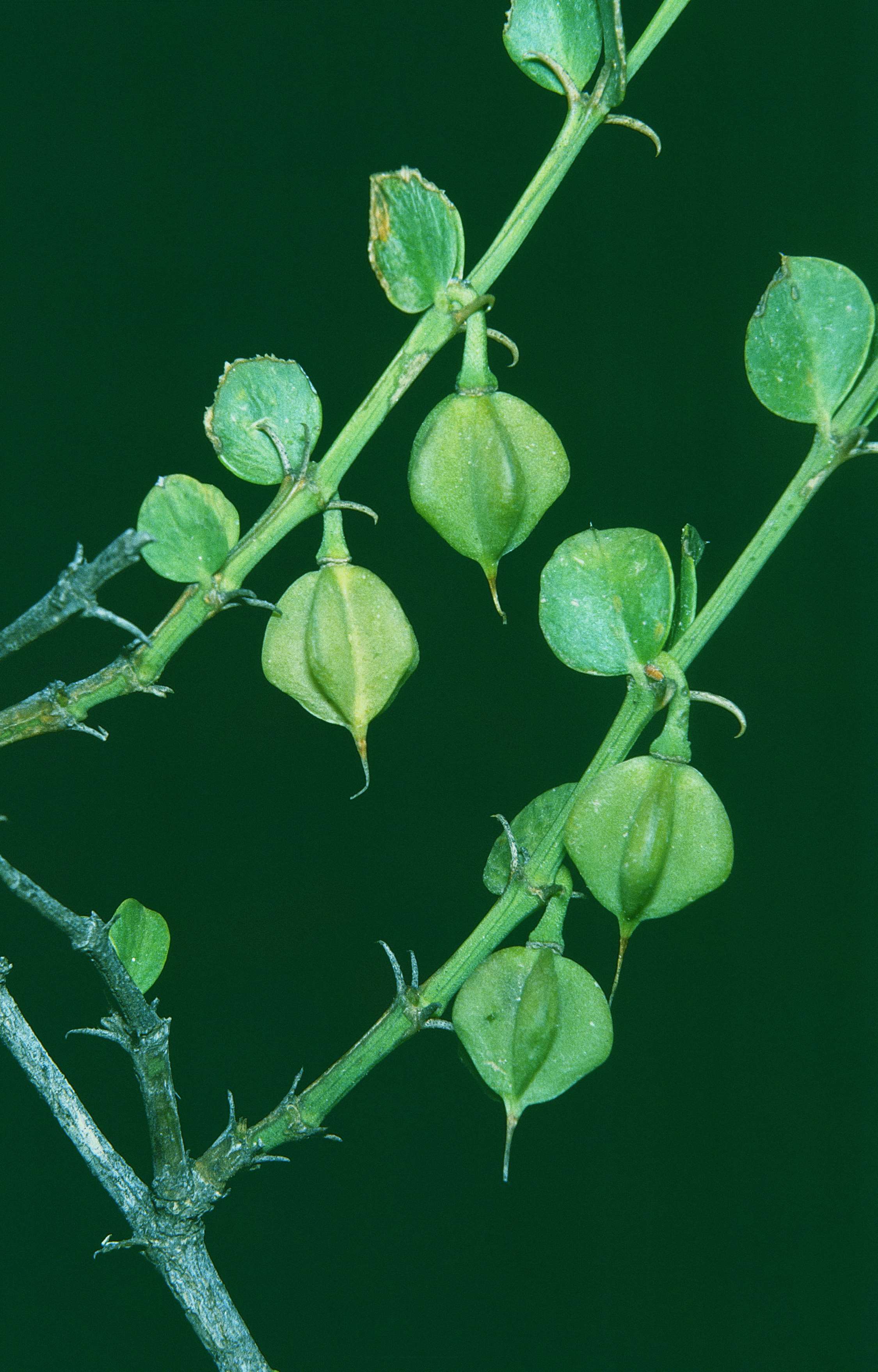
Small shrub, ± erect, up to c. 60(100) cm in height, branched. Stems glabrous, cylindrical or subcylindrical, although younger stems sometimes deeply sulcate and with greyish-brown bark, fissured in older specimens. Leaves an ovate leaflet, widely elliptic to suborbicular, flat, 4-14 × 4-10 mm, glabrous, ending in a mucro 0.25 mm long and somewhat fleshy; petiole very short sometimes non-existent, glabrous or with few glands. Spiny stipules, 3.5-6.5 mm long, up to c. 0.85 mm wide at the base, strongly recurved backwards in the shape of a hook. Inflorescence a sparse raceme, lateral, or sometimes solitary terminal flowers. Flowers pedunculate, pentamerous, large for the genus (12-30 mm in diameter). Calyx with 5 small free sepals, oval-lanceolate, green. Corolla with 5 petals, first upright, later open in the shape of a star, oblong-ellipsoid, deep pink or purplish. Stamens green with yellow anthers. Fruit a pendant capsule shaped like a spinning-top with five very acute and compressed lobes, star-shaped in cross section.
Flowering:
March to May.
Fruiting:
June to September.
Habitat:
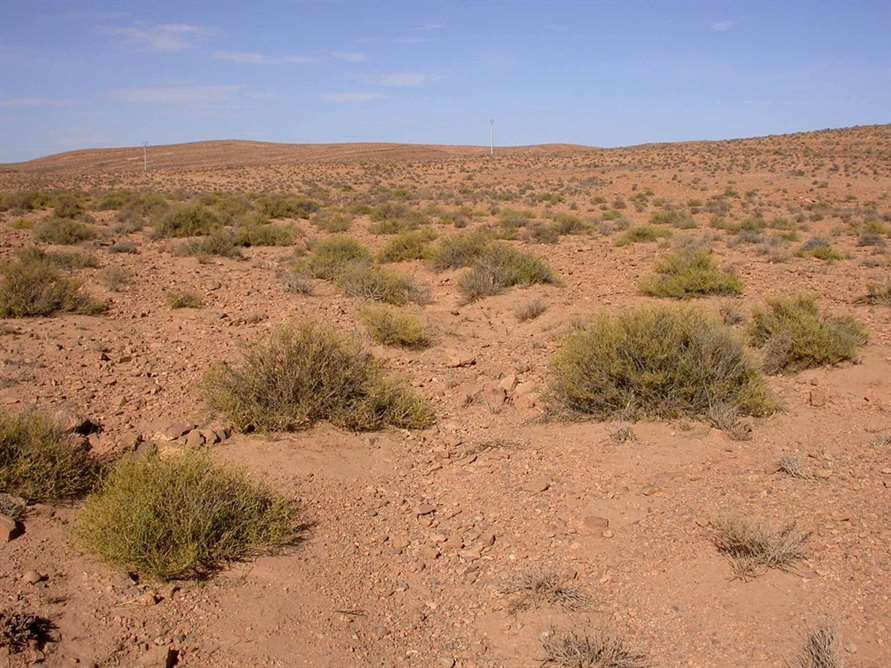
In highly diverse terrains, sandy, gravelly or even rocky. It seems to prefer siliceous soils. From almost sea level up to about 1,300 m in altitude. In semiarid to Saharan bioclimate.
Distribution:
Endemic to southern Morocco, from the foothills of the western Anti-Atlas mountains up to the mounts close to the Draa River mouth (Jebel Guir, Jebel Taissa, etc.).
Conservation status:
Relatively common and widely distributed species. It is not considered threatened. Currently, it has not been assessed at a global level on the IUCN Red List of Threatened Species. In the Livre Rouge de la flore vasculaire du Maroc (Fennane, 2021) it has been considered as Near Threatened (NT).