Plumbago europaea L.
Eng.: Leadwort. Spa.: Belesa, hierba belesa. Fre.: Dentelaire. Ara.: Suak er raïan, djuz er raïan, tefel el djuza, chetranj.
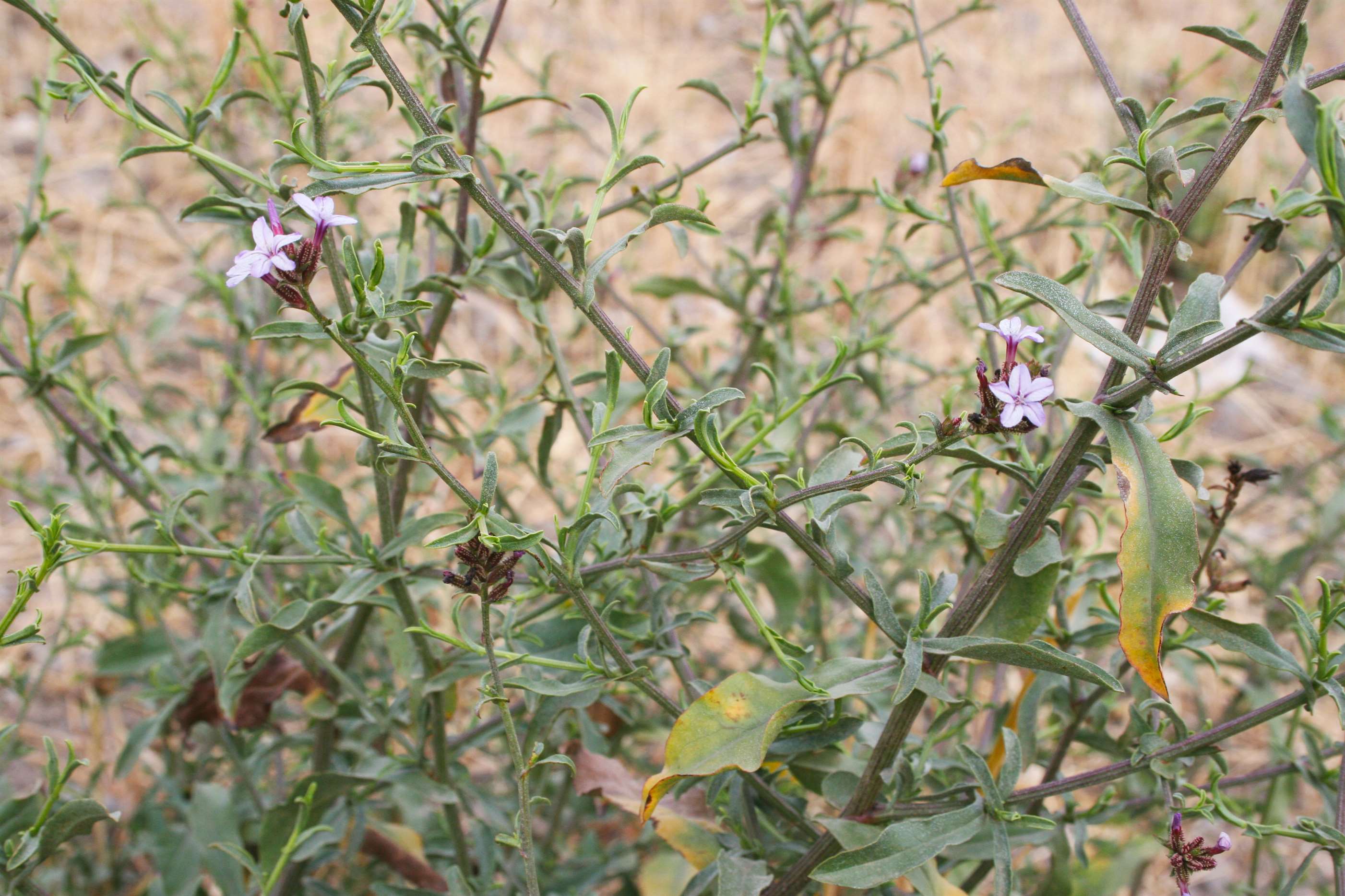
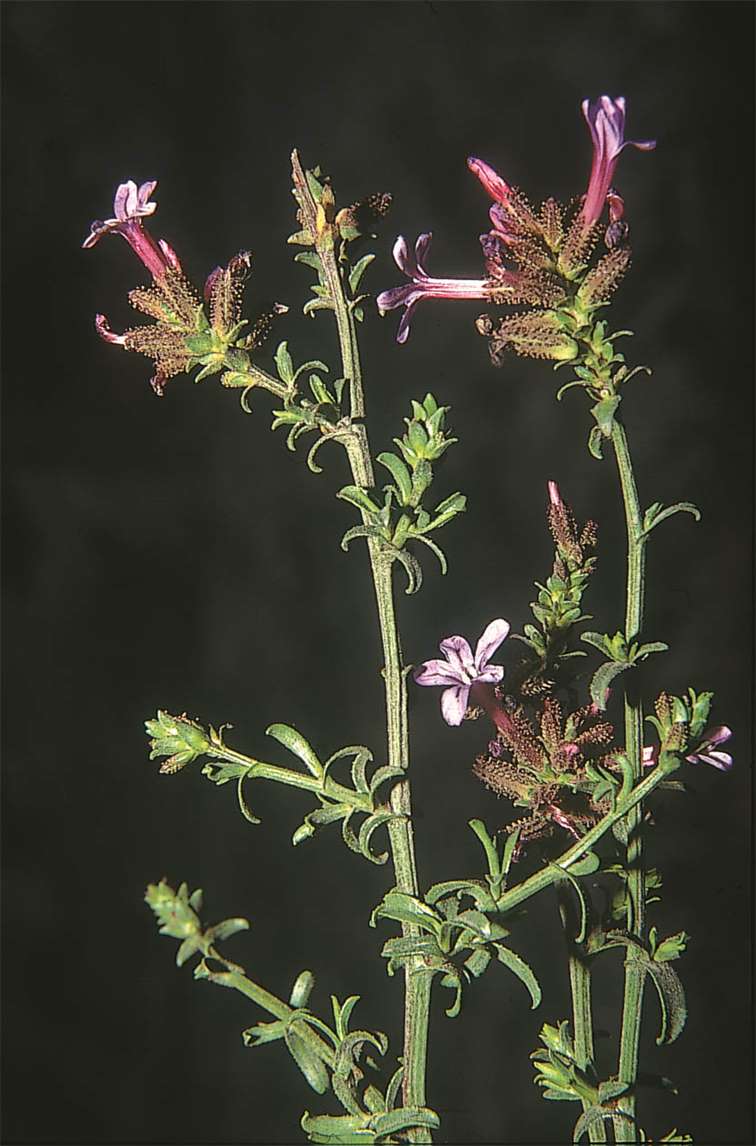
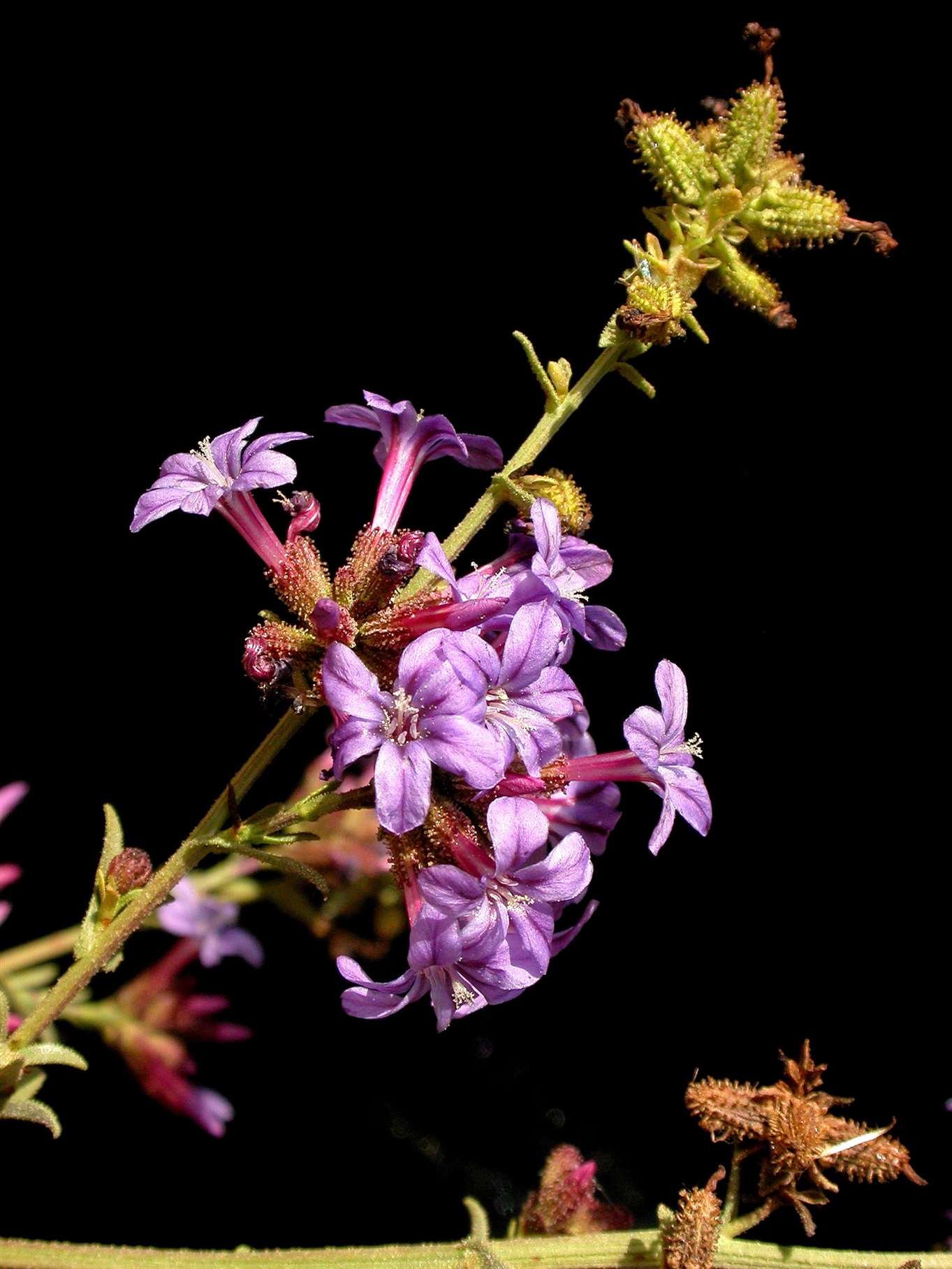
Subshrub (suffrutex) 0.3(1.2) m, woody only at the base, stems flexuous slender and long, heavily striated, glabrous. Leaves (2-10 × 0.8-3 cm) simple, alternate; lower leaves with long petioles, oblong to ovate, middle and upper leaves sessile and amplexicaul, linear to oblong-lanceolate, entire or dentate, ciliate-glandular. Inflorescence spiciform, terminal, composed of bracteate cymes with one flower each. Flowers hermaphrodite, actinomorphic, pentamerous, hypogynous, subsessile. Calyx 5-7.5 mm, tubular, with 5 small teeth, with 5 stipitate-glandular longitudinal ribs. Corolla 10-15(20) mm, hypocrateriform, with tube exceeding the calyx in length and obovate lobes; pink, violet or blue, glabrous. Stamens 5, free. Ovary unilocular, with 1 style and 5 stigmatic branches. Fruit a capsule 5-8 mm. 2n = 12, 14.
Flowering:
June to October
Fruiting:
July to November.
Habitat:
In various types of soils, but ± deep and/or ruderal, like in slopes, ditches, livestock resting areas, etc.; in dry subhumid environment, from sea level to about 1,000 m above sea level.
Distribution:
Mediterranean region and SW Asia. In North Africa in the Mediterranean region of Morocco, Algeria and Tunisia.
Conservation status:
A rare species but widely distributed. Currently, it has not been assessed at a global level in the IUCN Red List of Threatened Species. In the Livre Rouge de la flore vasculaire du Maroc (Fennane, 2021) it has been considered as Least Concern (LC).