Hammada articulata (Moq.) O. Bolòs & Vigo
Hammada scoparia (Pomel) Iljin, Haloxylon scoparium Pomel, Haloxylon articulatum subsp. scoparium (Pomel) Batt., Arthrophytum scoparium (Pomel) Iljin
Spa.: Barrilla tamojo. Fre.: Saligne à balai. Ara.: Remt, rimt, hardjem, nadjrem, baggel, harmaq, bessit, ouan idehan, (Egypt): tafwa. Tam.: Uanihdán, iremt, tafu.
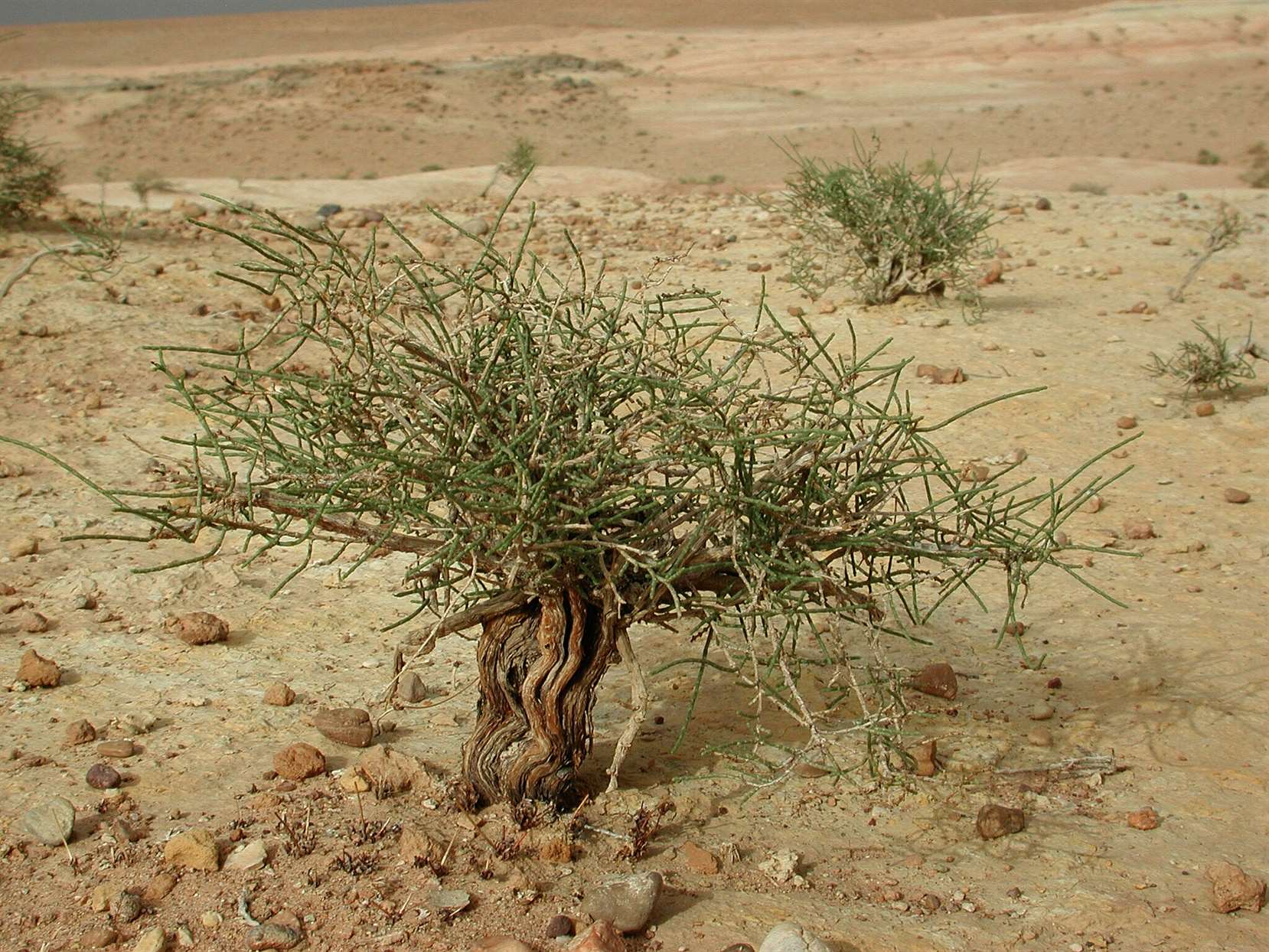
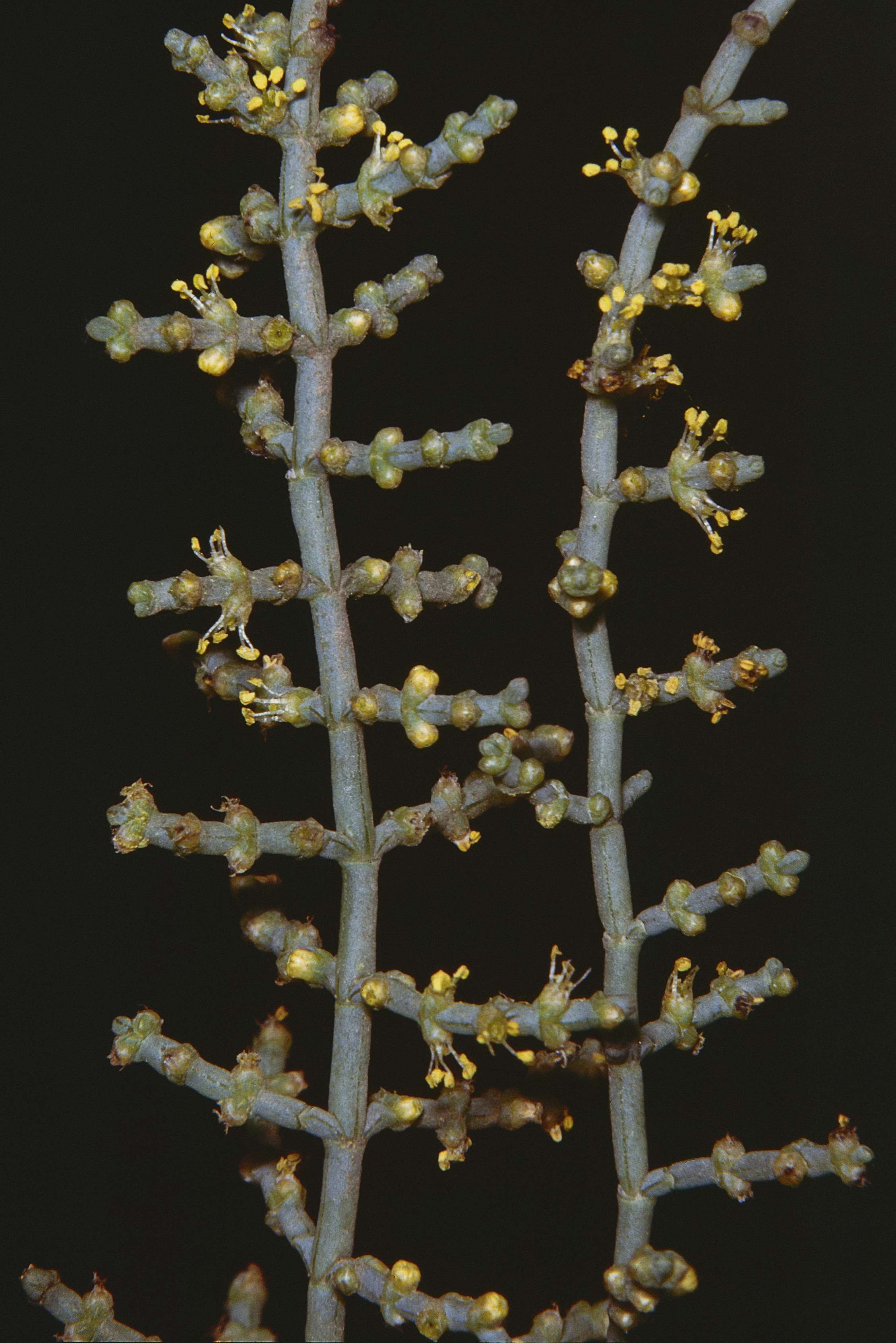
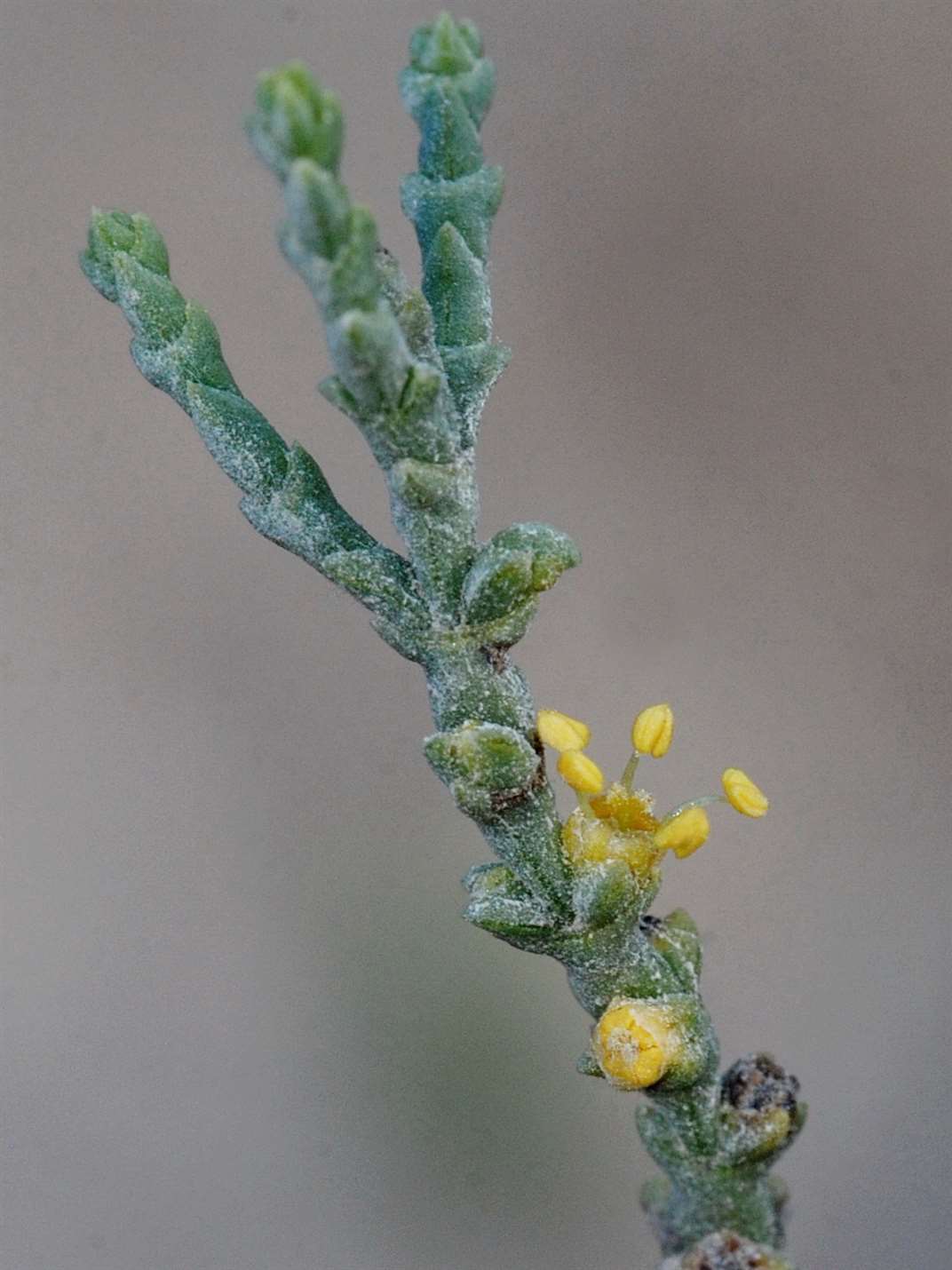
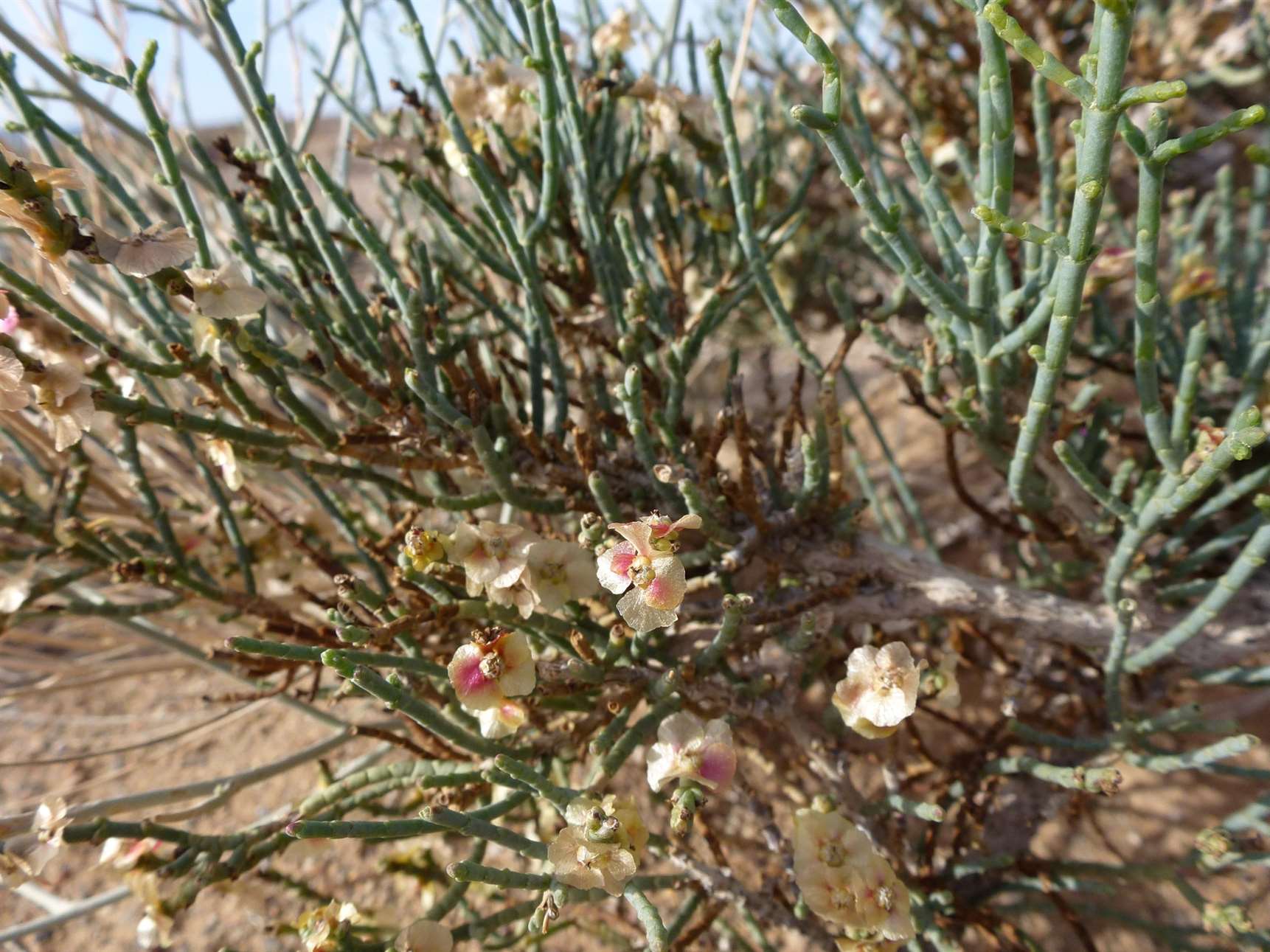
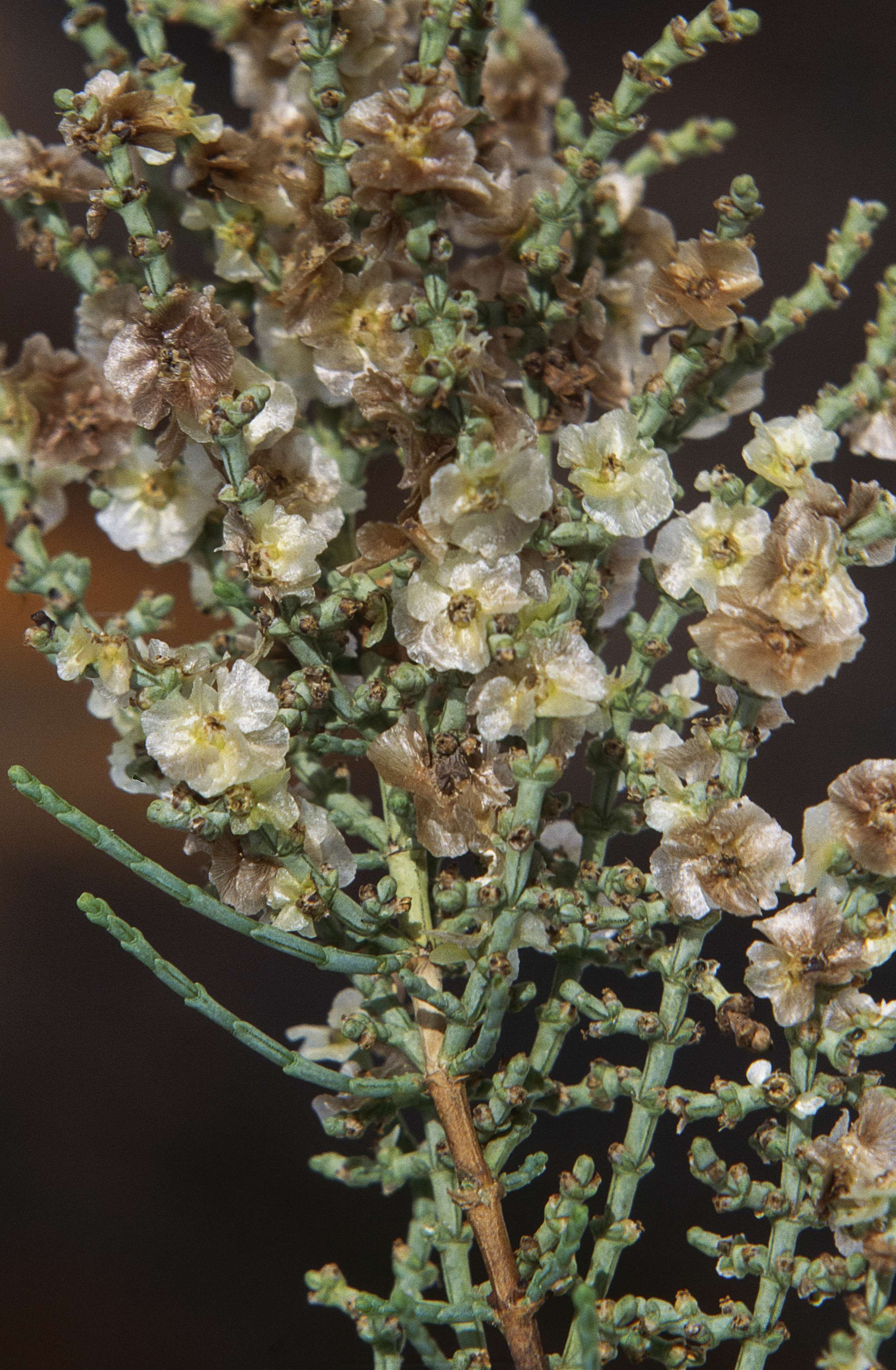
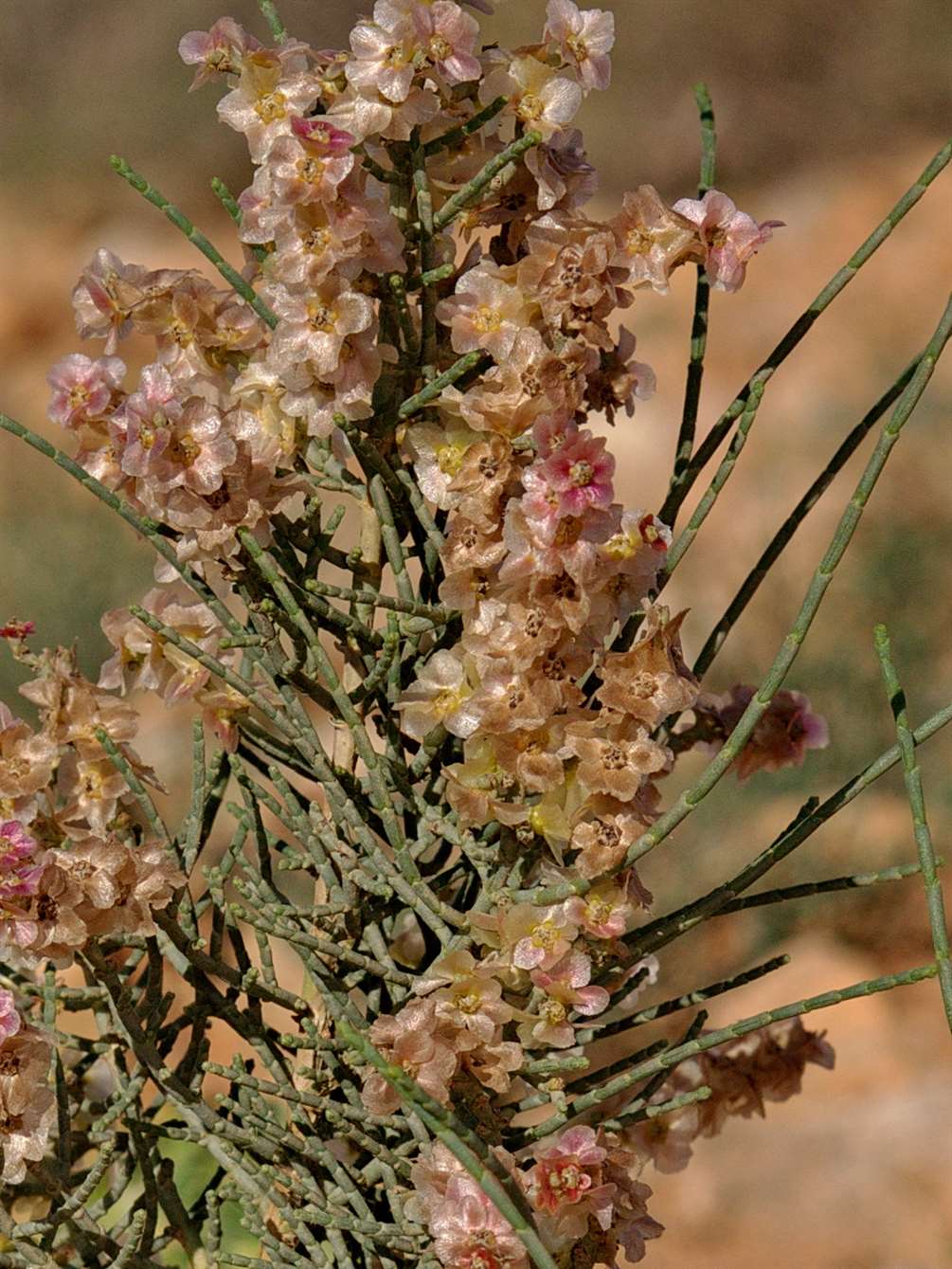
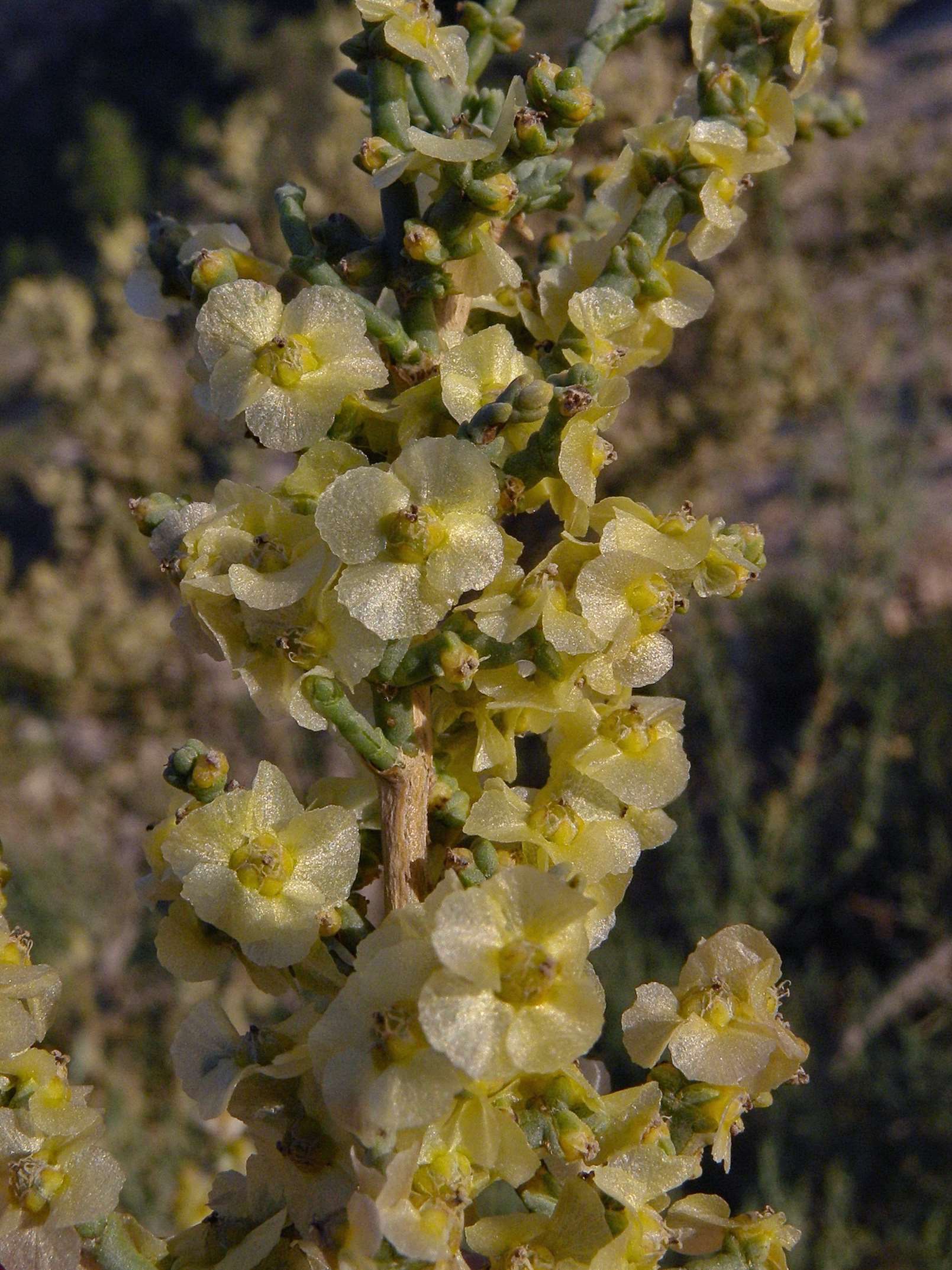
Evergreen subshrub, hermaphrodite, erect, up to 1 m in height, very ramose, sometimes somewhat intricate, stems and branches covered in a brown-ashen bark. Branchlets cylindrical, articulate, more or less dark green branches that blacken when drying. Leaves (0.5-2 mm), opposite, fused together and to the segment, forming 2 opposite laminas on top of the segment, ± triangular-subulate, fleshy. Leaf axil glabrescent, with some very short hairs. Flowers all hermaphrodite, usually solitary in the leaf axil. Inflorescence a slender spike, ± dense. The fruit is an achene surrounded by the 5 perianth parts, each with a dorsal wing. Wing wide, ovate-rounded, finely striated; its colour varies from light pink to brown.
Flowering:
July to December.
Fruiting:
September to February.
Habitat:
Desert and semidesert areas, in different types of soils, steppes and especially on the regs (stony desert) and depressions, but with little or no salinity.
Distribution:
In N Africa, mainly in the western and northern Sahara, but also in steppic semiarid areas of central. S and NW Morocco, the high Algerian-Moroccan plateaus and the Saharan Atlas, reaching the Mediterranean through the semi-arid region of the Muluya depression.
Observations:
Some authors have separated H. articulata (Moq.) O. Bolòs & Vigo [Caroxylon articulatum Moq., Haloxylon articulatum (Moq.) Bunge, Salsola articulata Cav.] from the Iberian Peninsula of the African plants, with the name of Hammada scoparia (Pomel) Iljin, [Haloxylon scoparium Pomel, Arthrophytum scoparium (Pomel) Iljin], but nowadays it tends to be considered as a single species.
Conservation status:
Relatively common and widely distributed species that is not considered threatened. Currently, it has not been assessed at a global level in the IUCN Red List of Threatened Species. In the Livre Rouge de la flore vasculaire du Maroc (Fennane, 2021) it has been considered as Least Concern (LC).