Salsola oppositifolia Desf.
S. longifolia auct., S. verticillata auct.
Spa.: Zagua, salado negro. Fre.: Soude à longues feuilles. Ara.: Semmumed, al asla, smumel, tasra, azil. Tam.: Tarmut.
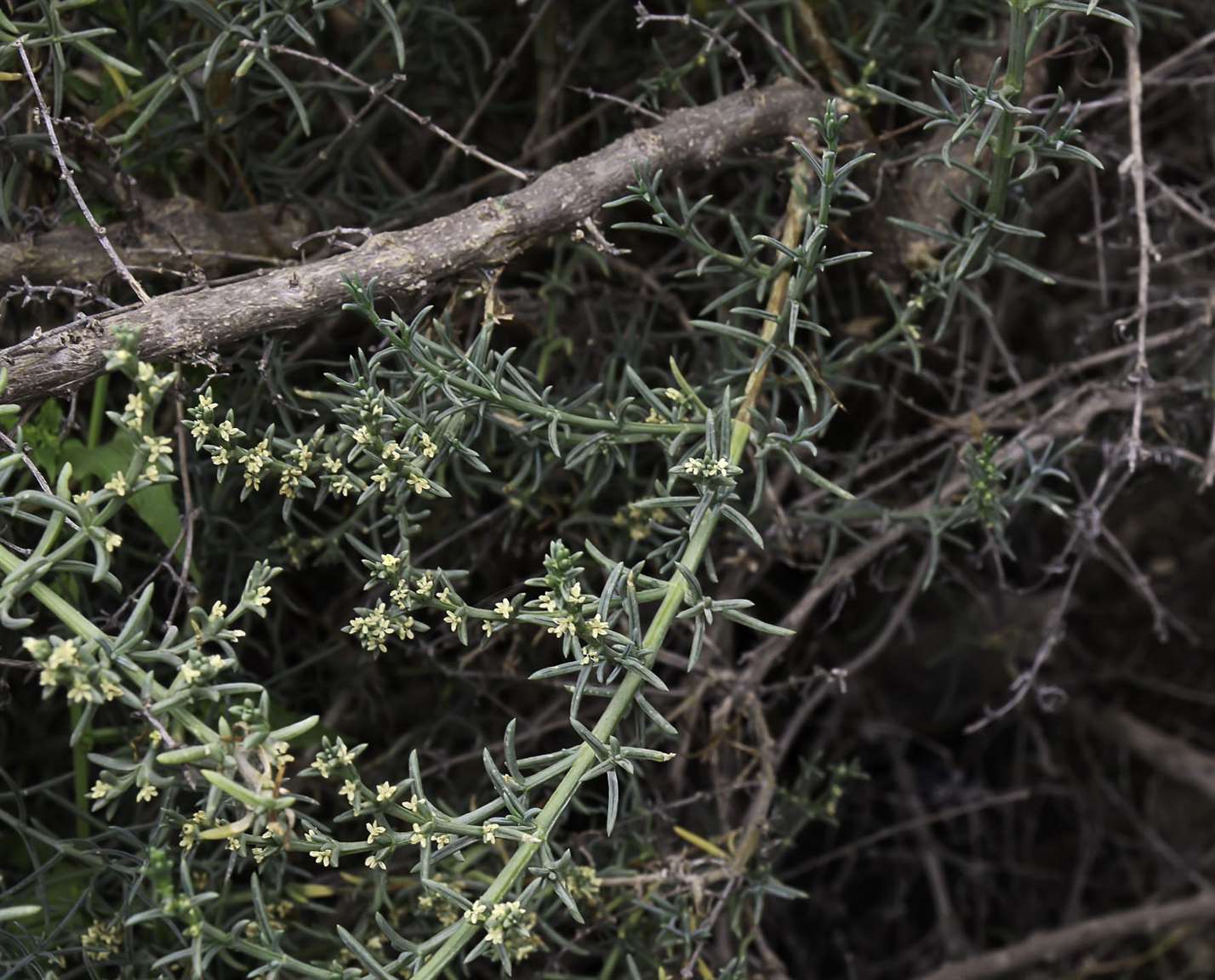
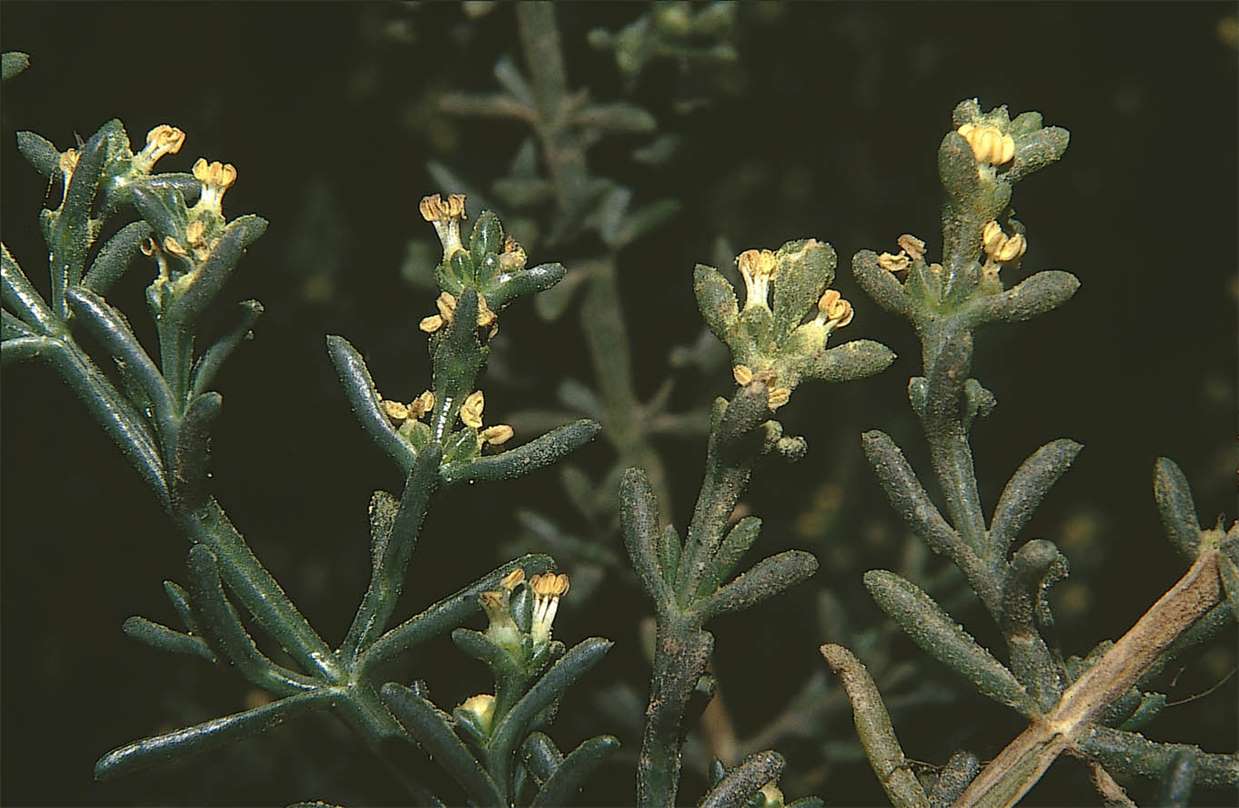
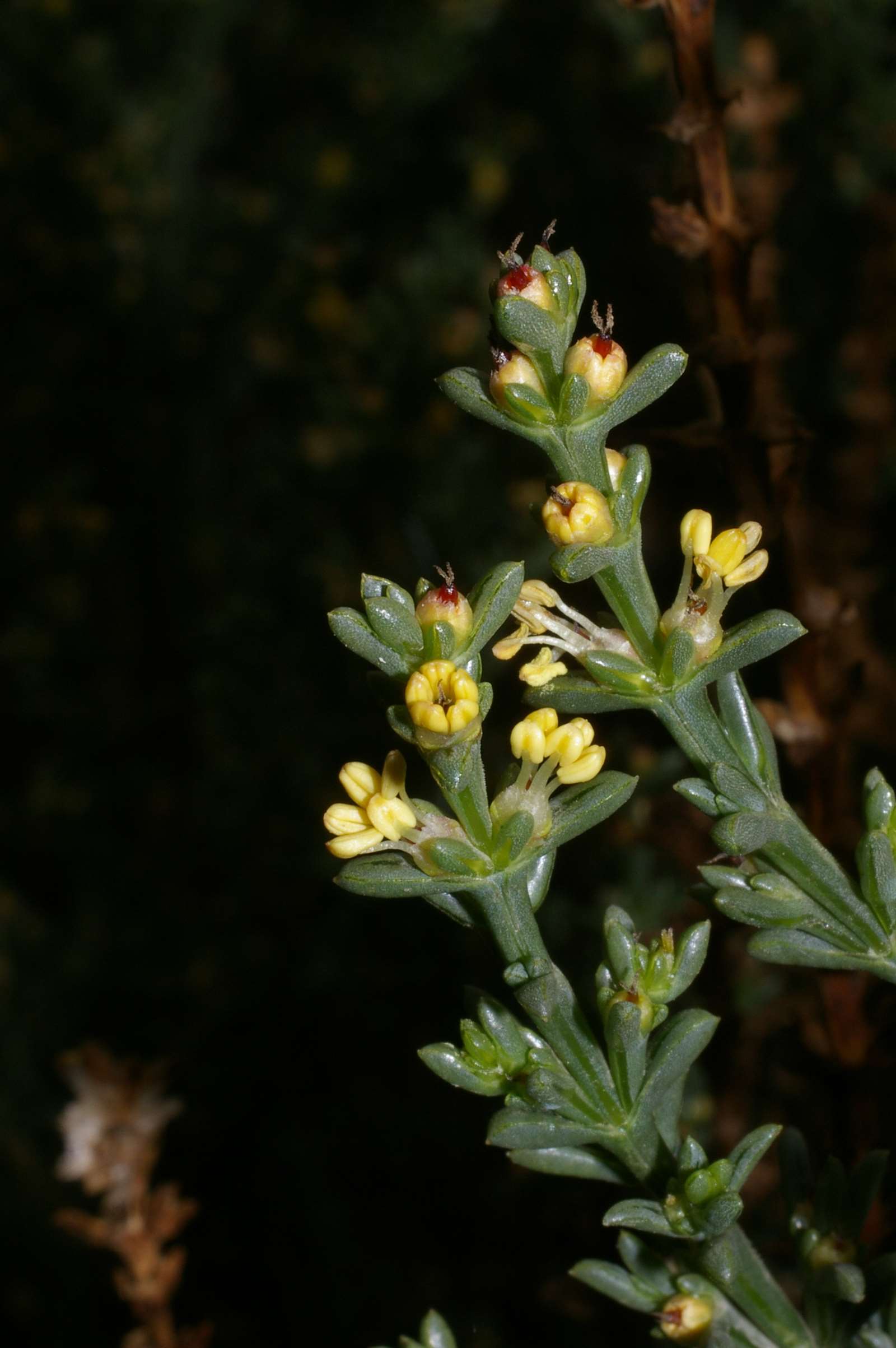
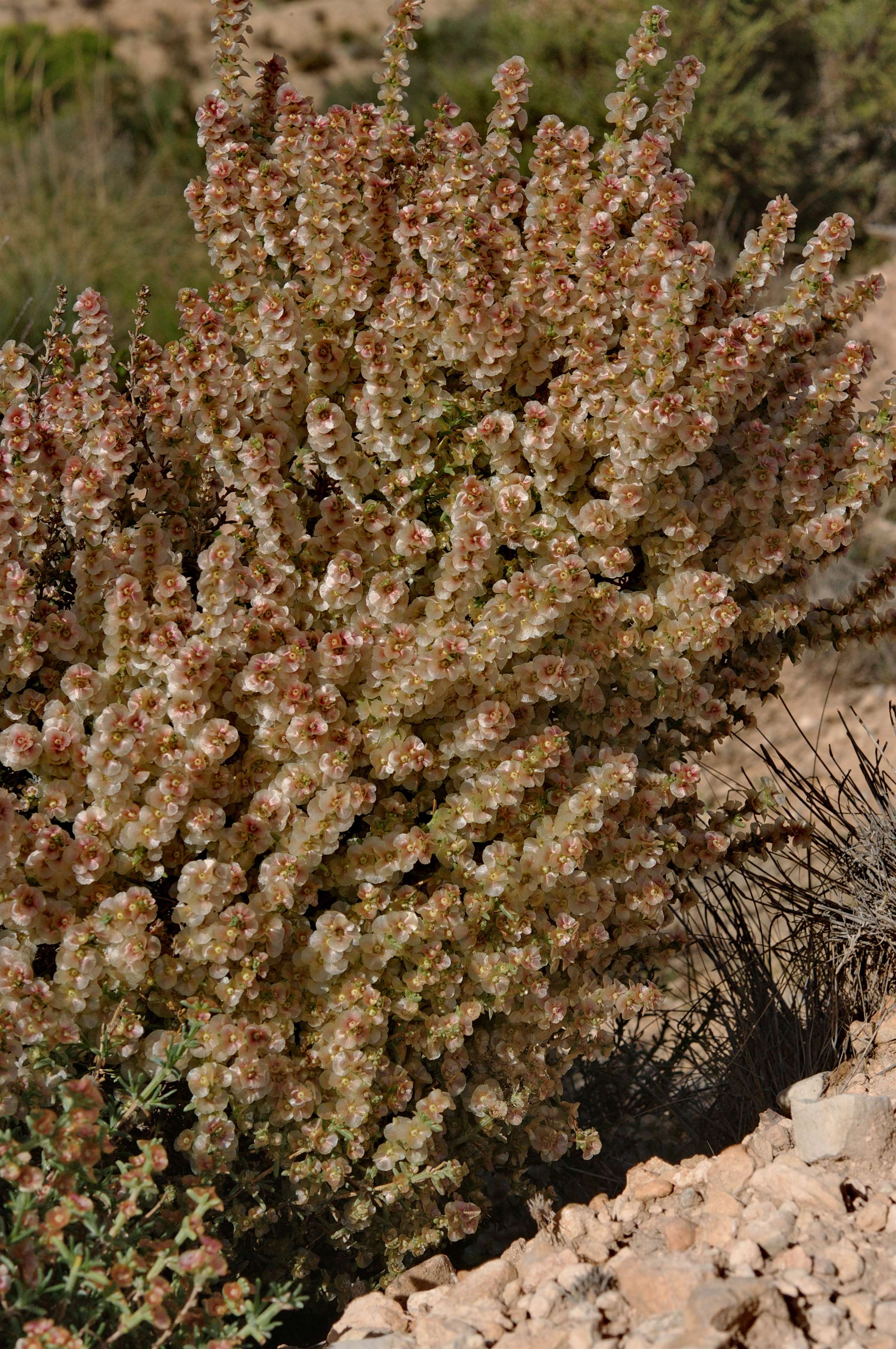
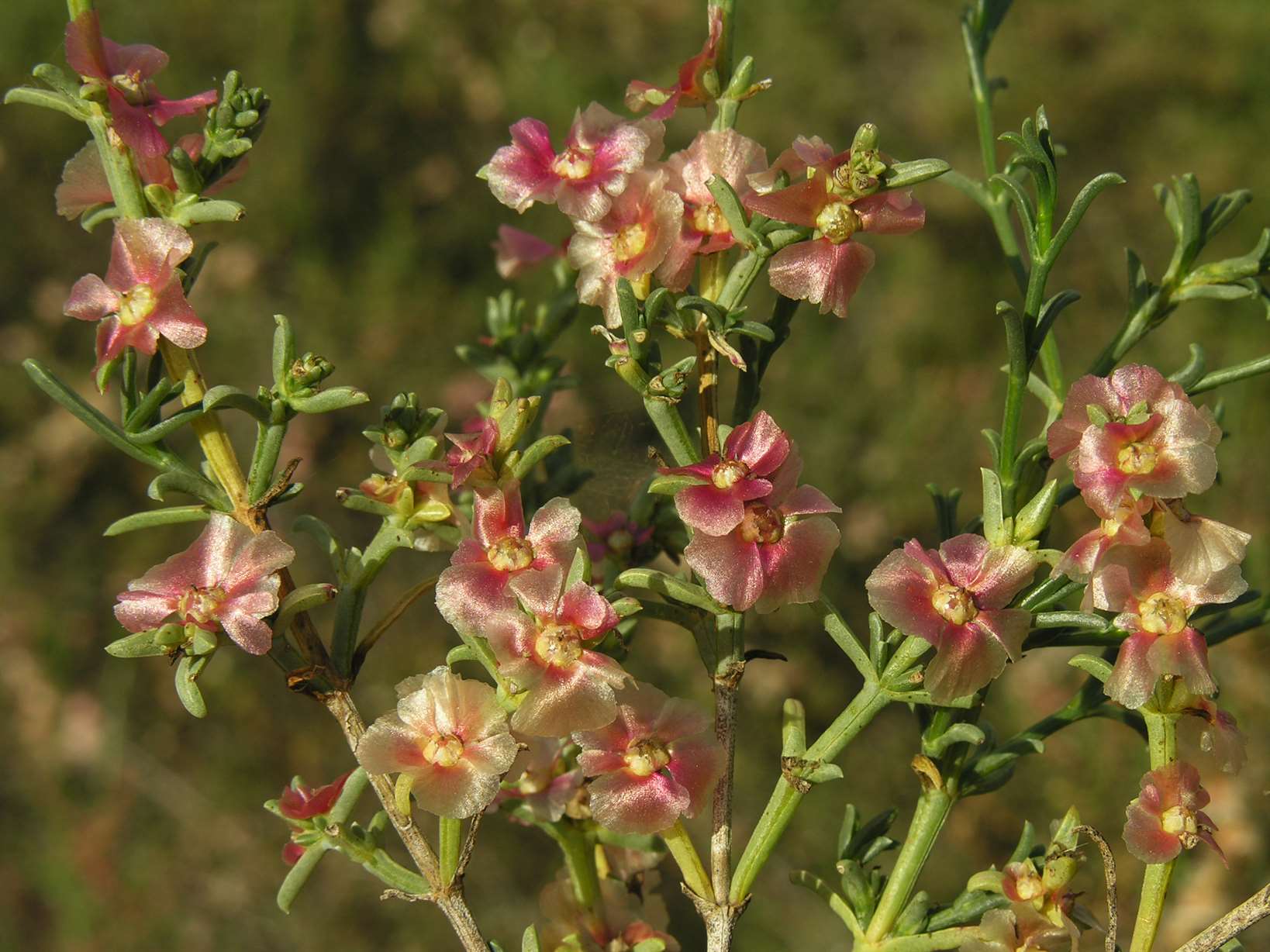
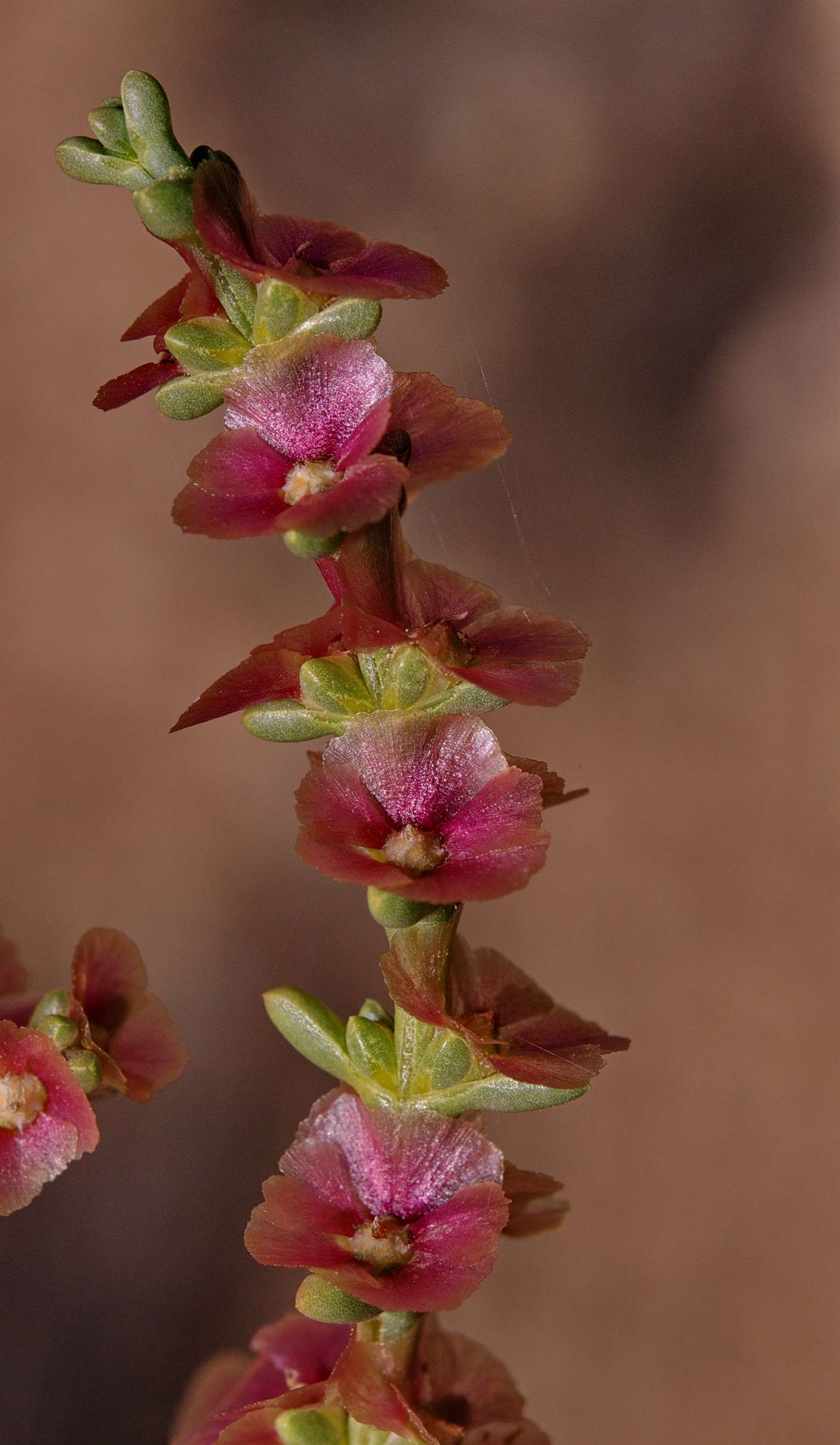
Evergreen shrub, hermaphrodite, ± upright, up to 4 m in height (usually 0.8-2 m), very ramose from the base. Trunk and main branches with white bark, fissured longitudinally on older specimens. Glabrescent plant in all its parts. Branches, branchlets and leaves opposite. Branchlets greenish-white, younger branchlets sometimes reddish. Its main feature —which gives it its name— are opposite leaves (1-3 cm long), sessile, linear, trigonous, acute, slightly recurved backwards, fleshy, dark green in colour, or ± ashy due to the waxy powder that covers them. Flowers all hermaphrodite, solitary in the leaf axil, in spiciform inflorescences arranged in panicles. Perianth with 5 membranous parts and 5 stamens. Fruit perianth with large and showy wings, first whitish-green and later turning from pink to red (20-30 mm in diameter).
Flowering:
April to October.
Fruiting:
In autumn.
Habitat:
On all types of terrain, including rocky and sandy, always somewhat saline, in coastal and inland areas. Semiarid to dry bioclimate.
Distribution:
Southern Spain and Italy, Balearic Islands and Sicily. It appears in North Africa widely distributed scattered in areas of Mediterranean influence, especially in islands and coastal areas, reaching towards the E to Egypt, Sinai Peninsula, Arabian Peninsula and Palestine.
Conservation status:
It is a common species and in principle it is not considered threatened. Currently, it has not been assessed at a global level in the IUCN Red List of Threatened Species. In the Livre Rouge de la flore vasculaire du Maroc (Fennane, 2021) it has been considered as Least Concern (LC). In the updated red list of Egypt (Shaltout & Bedair, 2023) it has been considered as Vulnerable (VU).