Suaeda vera Forssk. ex J.F. Gmel.
S. fruticosa auct., Chenopodium fruticosum L., Salsola fruticosa (L.) L.
Eng.: Shrubby sea-blite. Spa.: Sosa prima, almajo dulce, zagua. Fre.: Soude buissonneuse, soude ligneuse. Ara.: Sud, adjerem, sobtta, suida, sueda, tirbar, essabta, bu greba, geriba, ussera, adlil, sabta, hemmam (the last 2 in Egypt). Tam.: Tabelkost, seger, taxa, aggaia.
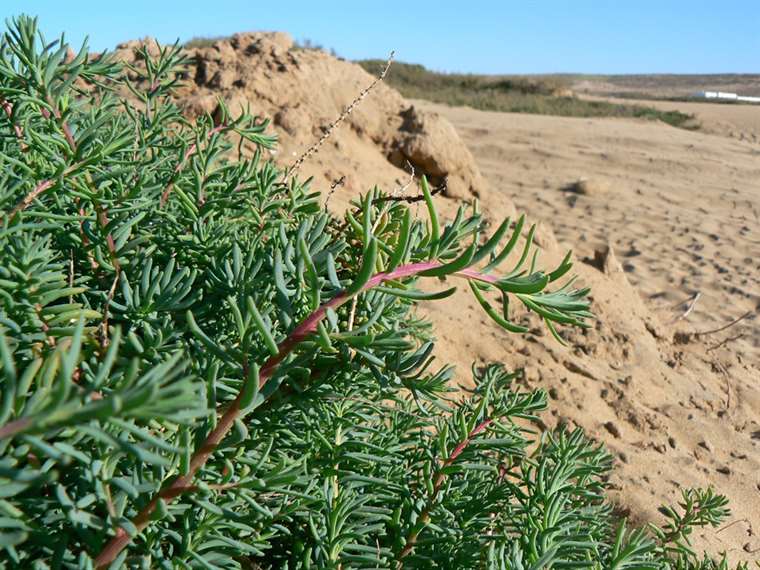
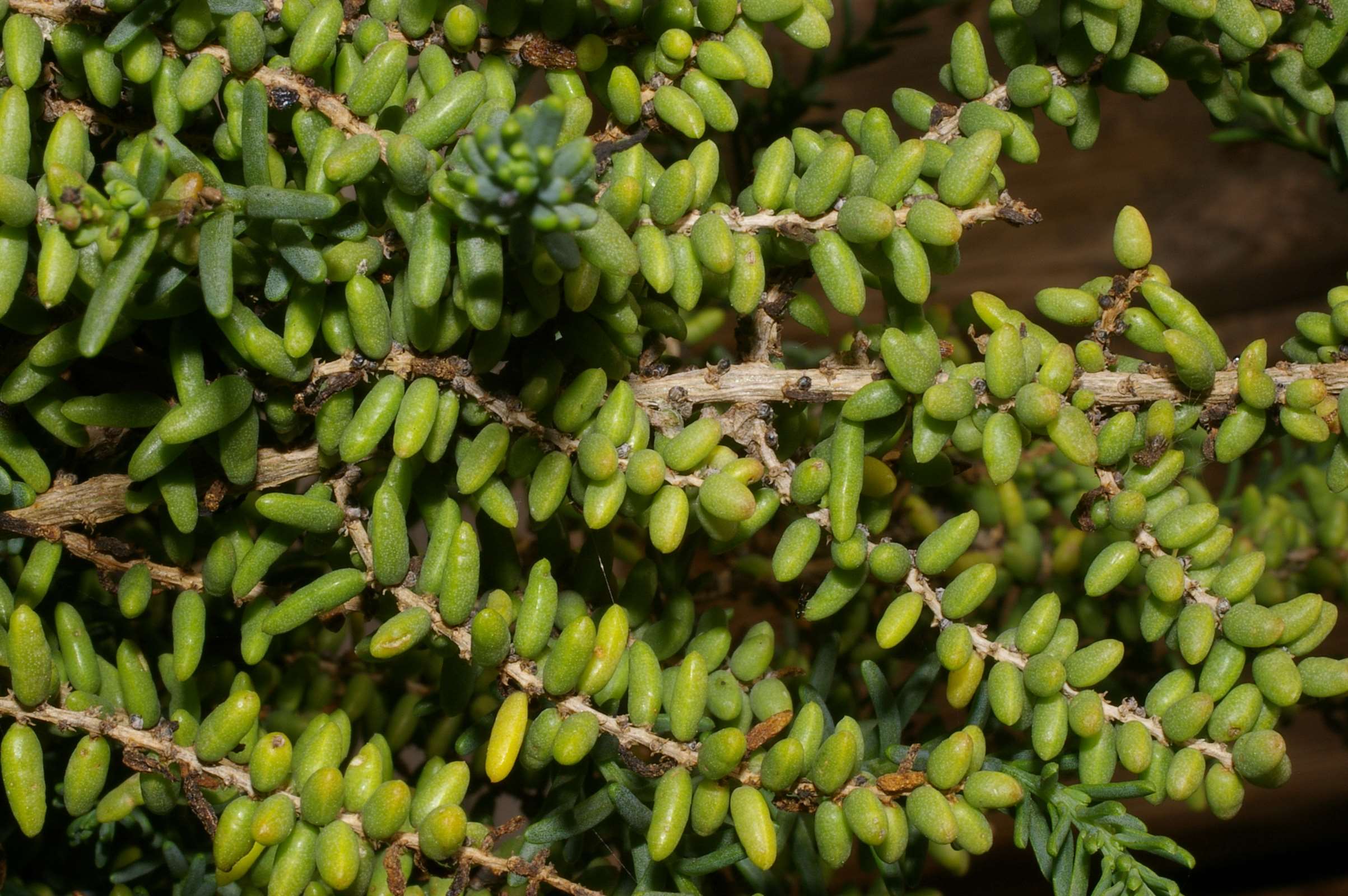
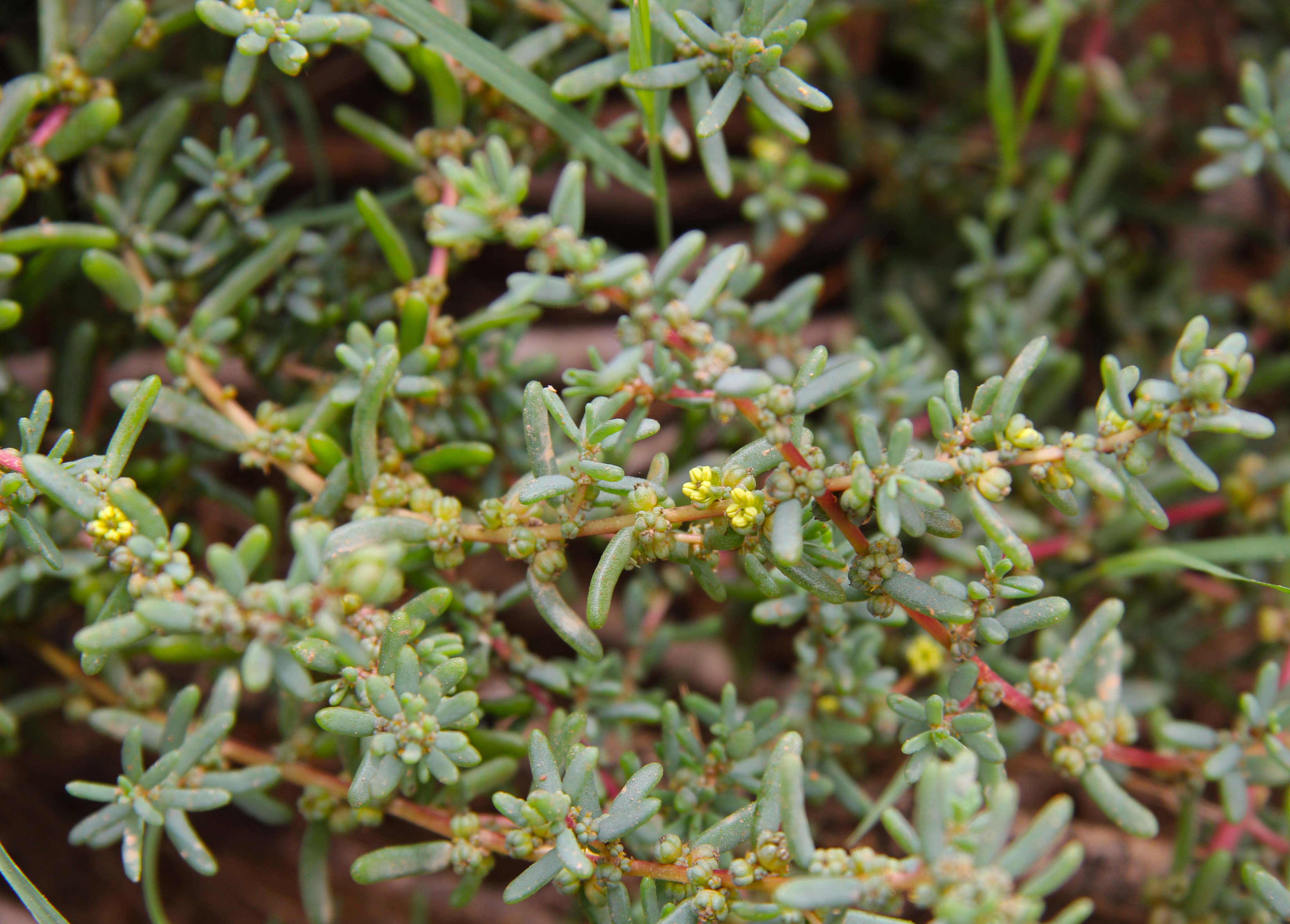
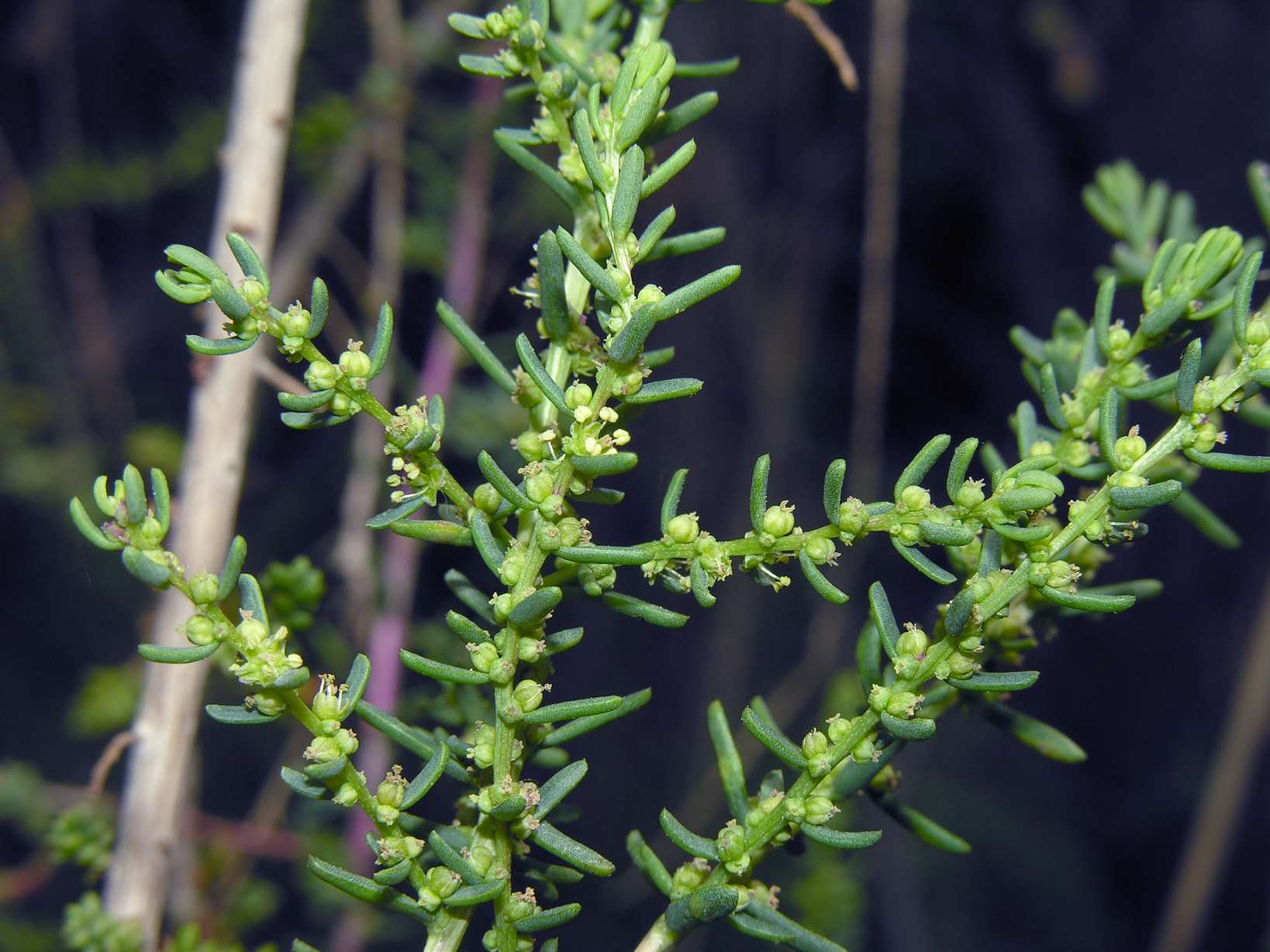
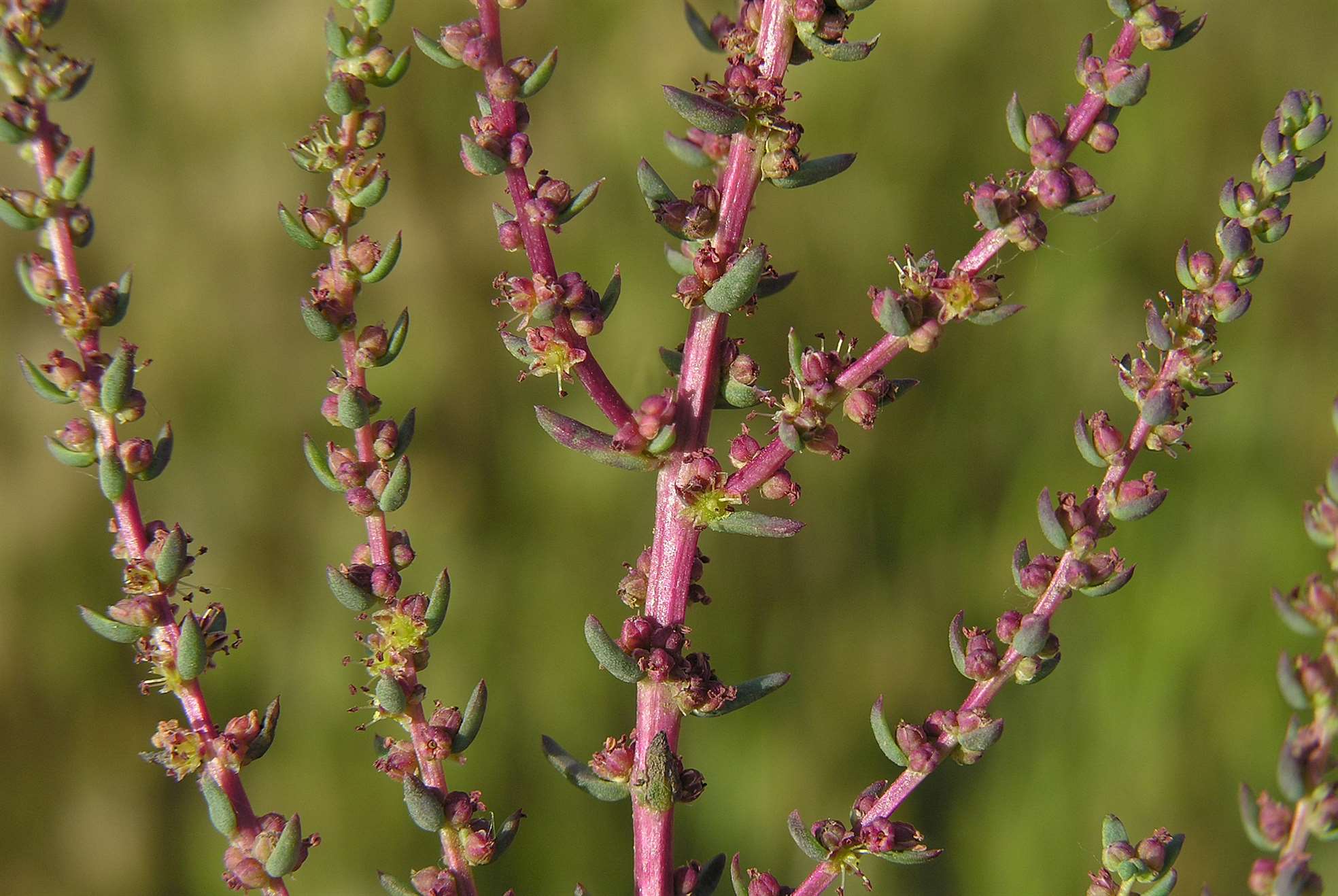
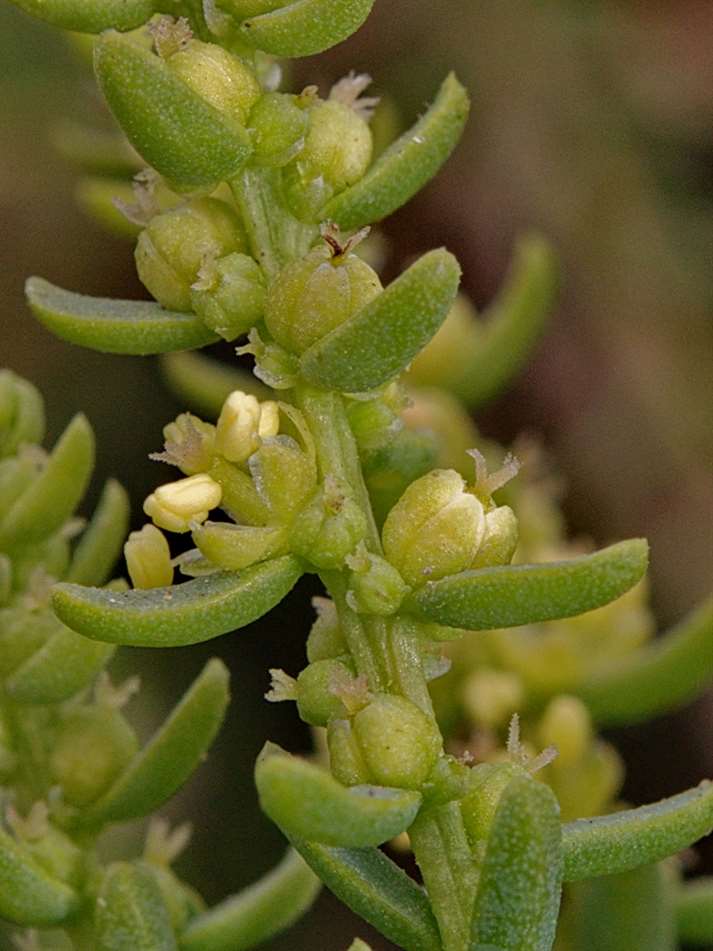
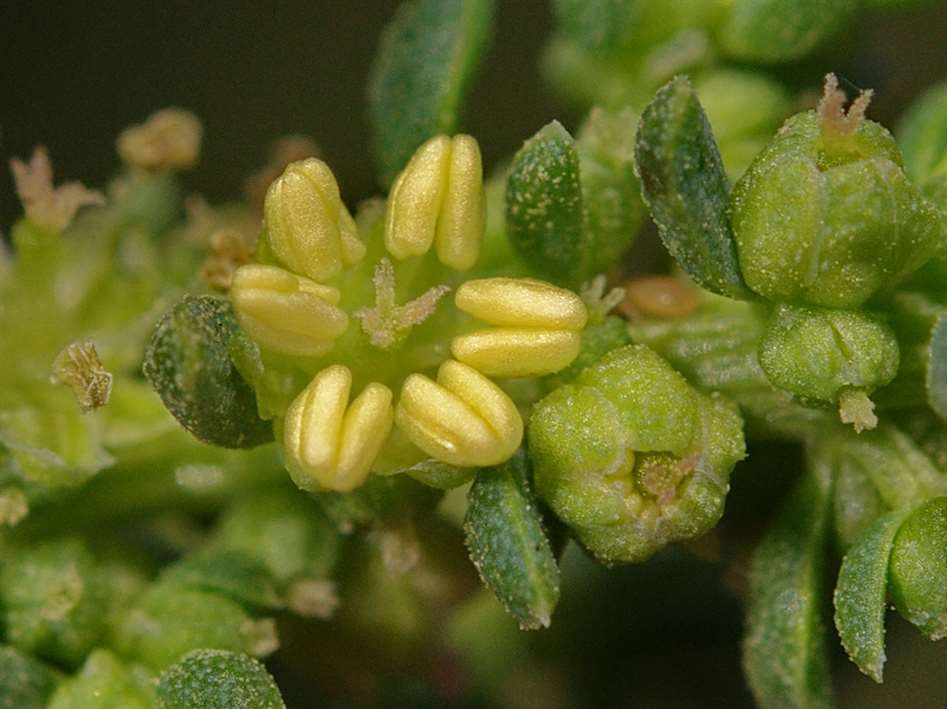
Evergreen shrub, hermaphrodite, up to 2 m in height or even taller, very ramose, stems prostrate-ascending, with whitish bark, striated, glabrous. Branches very slender. Leaves (3-20 × 0.3-2 mm) often abundant, alternate, linear or narrowly oblong or ovoid, with obtuse or slightly acute apex, upper side ± flat, underside slightly convex or not convex at all, margins slightly angular, entire, deep green in colour, glabrous, subsessile, often covered with a white-bluish waxy powder. Leaves not always clearly bifacial; subcylindrical leaves are sometimes common. Flowers very small (0.8-1.1 mm diameter), greenish, sessile, grouped in glomeruli of 2-5 flowers in the axils of upper leaves. Bracteoles scarious, silvery, usually persistent. Perianth with 5 parts, ovate, resembling sepals, fused at the base, each accompanied by a stamen. Ovary ± conical. Stigmas 3 to 5, ± flat and triangular, very small (0.2-0.5 mm). Fruit an achene surrounded by 5 parts of the perianth wingless on the dorsal side. Seed black and smooth.
Flowering:
April to November.
Fruiting:
May to December.
Habitat:
Sandy, rocky and silty soils, saline and humid, from coastal and inland areas.
Distribution:
Mediterranean region; in the Atlantic it reaches from the Canary Islands to the British Isles. In North Africa, mainly in the Mediterranean area, reaching towards the S to the western and northern Sahara. It has also been cited in central Sahara (Tassili-n-Ajjer).
Conservation status:
It is a common and even locally abundant species. It is not considered threatened. Currently, it has not been assessed at a global level in the IUCN Red List of Threatened Species. In the Livre Rouge de la flore vasculaire du Maroc (Fennane, 2021) it has been considered as Least Concern (LC).