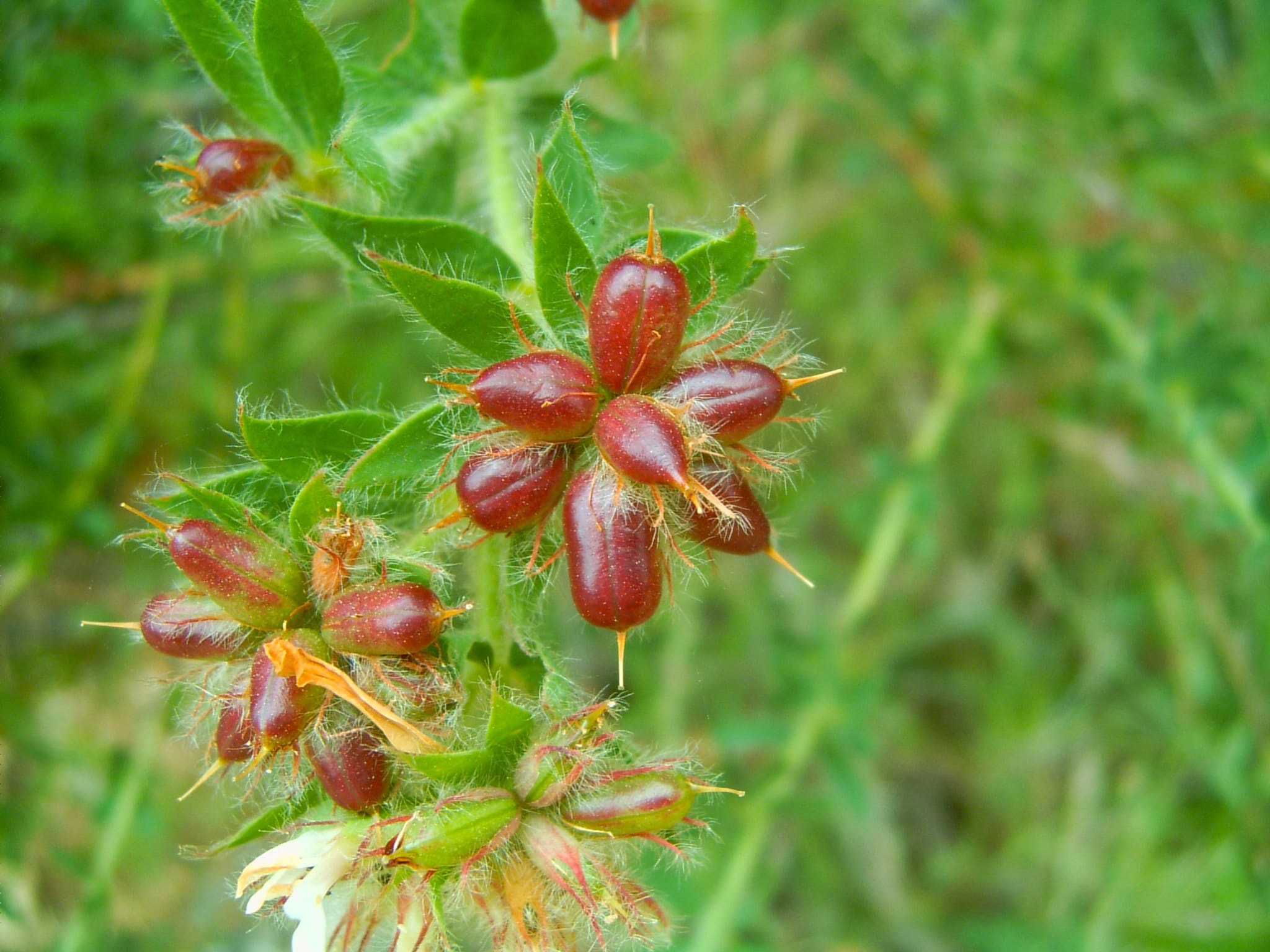
Lotus L.
Genus composed by about 110 species distributed across Eurasia, Africa, and Oceania. The species discussed here, being more or less woody, were previously placed in the genus Dorycnium L., but current genetic studies reveal that they should be included in Lotus.
They are subshrubs or herbaceous plants sometimes perennial somewhat woody at the base, with trifoliolate leaves, with stipules identical to the leaflets. There are 4 species in North Africa, distributed along the Mediterranean area. L. dorycnium is woody, L. rectus is herbaceous, somewhat lignified at the base, but due to its large size it is also treated here. The other 2 species are of smaller size and essentially herbaceous, are the following:
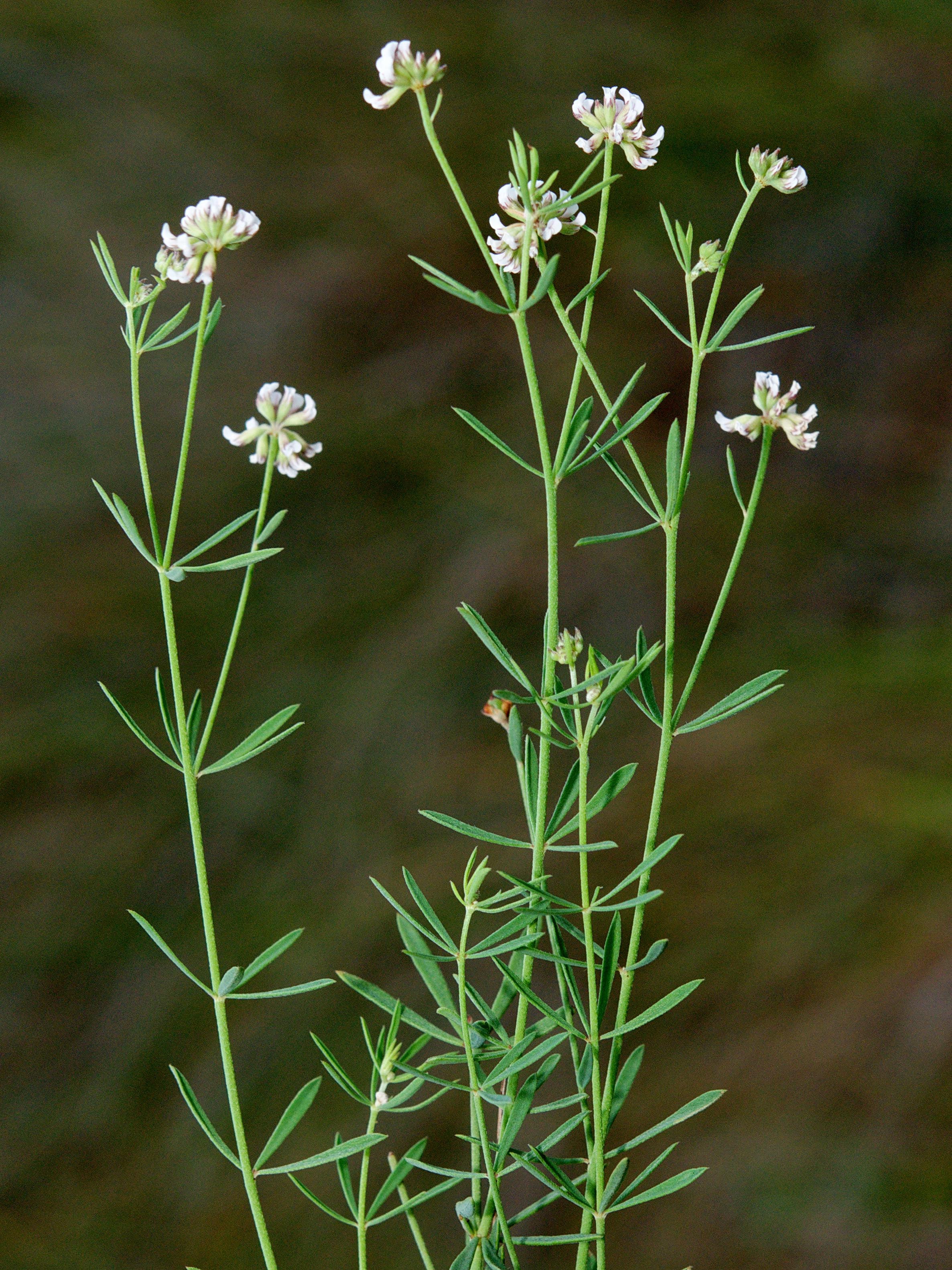
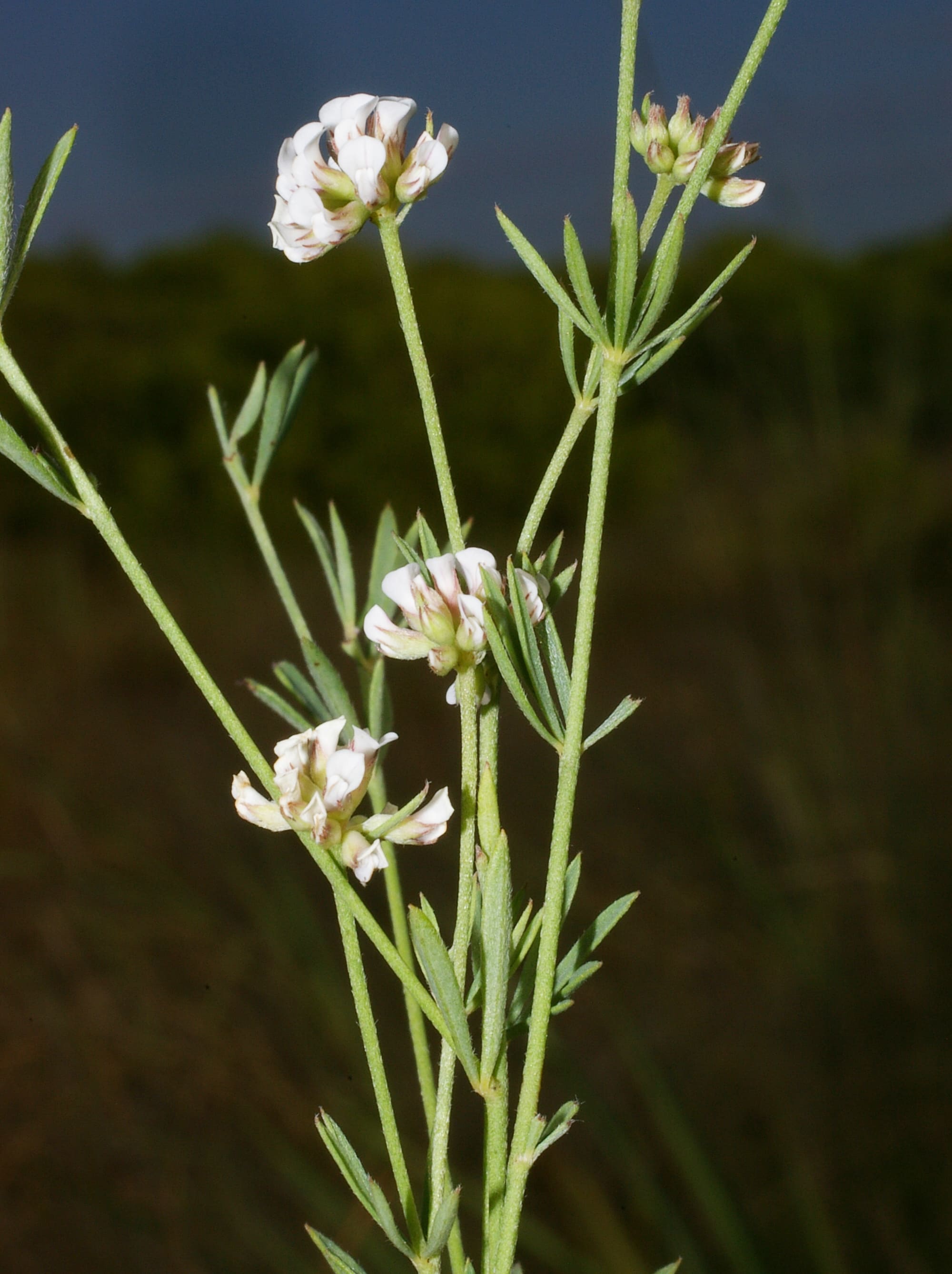
Lotus jordanii (Loret & Barrandon) Coulot, Rabaute & J.-M. Tison [Dorycnium gracile Jord., D. herbaceum Vill. subsp. gracile ( Jord.) Nyman, D. pentaphyllum subsp. gracile ( Jord.) Rouy, D. pentaphyllum subsp. jordanianum (Willk.) Quezel & Santa, Lotus herbaceus subsp. gracilis ( Jord.) Jauzein] is a perennial plant almost entirely herbaceous, capable of reaching 1 m in height, with stems slightly lignified or not lignified at all in the lower half, leaves with linear leaflets and pods with 1 seed, very similar to L. dorycnium from which it is distinguished for having the pedicel of the same length as the calyx tube; plant from the western Mediterranean; in North Africa it is found in northern Algeria.
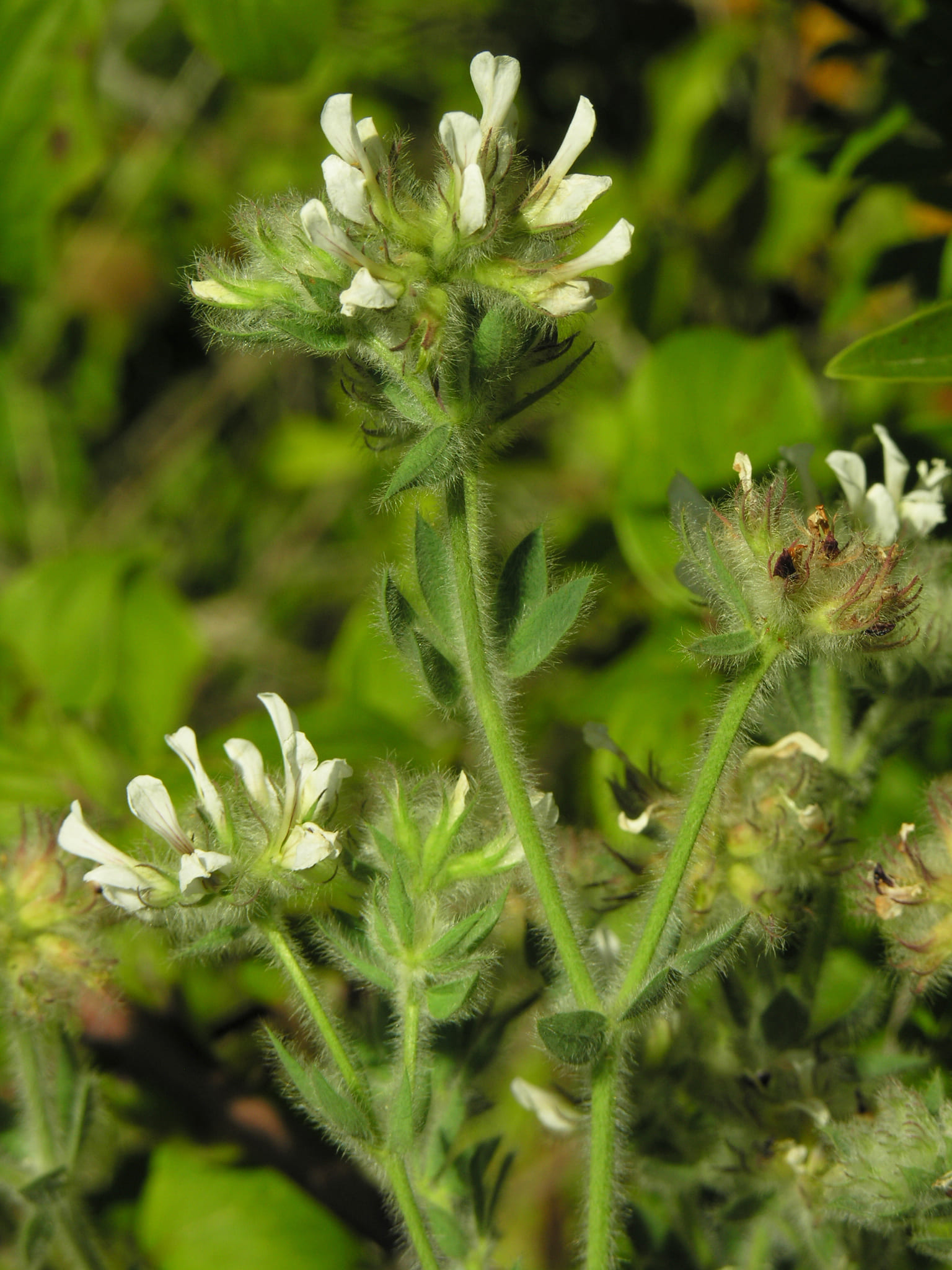
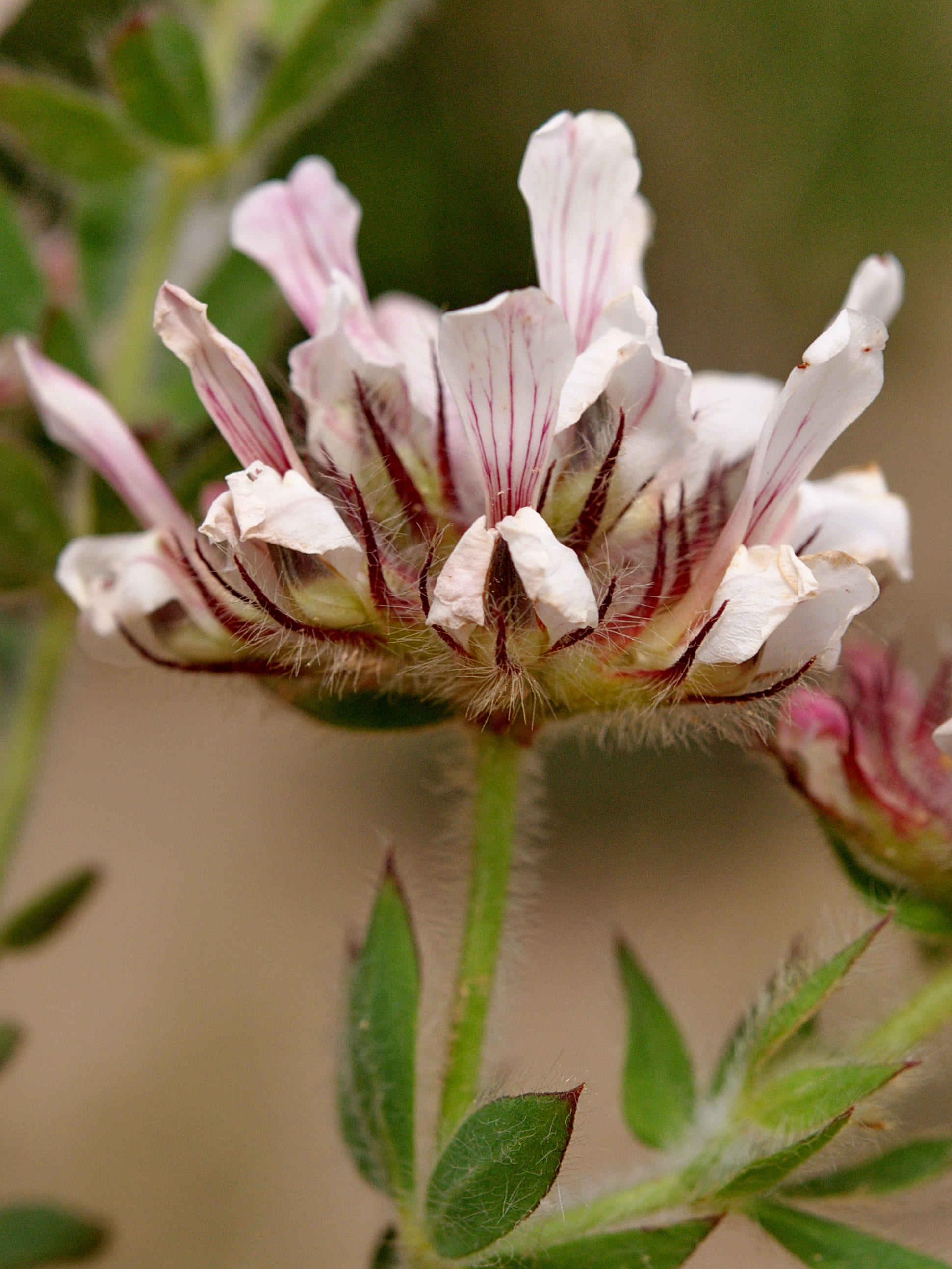
Lotus hirsutus L. [Dorycnium hirsutum (L.) Ser. Bonjeanea hirsuta (L.) Rchb.], usually a subshrublet up to 30(80) cm in height, woody at the base, but usually prostrate, leaves with wide leaflets, obovate, and pods with 2-6 seeds; a common Mediterranean species in southern Europe; rare in North Africa, it is only known from NE Algeria and the northern area of Libya. Rare but widely distributed species, they are not considered threatened. Currently, they have not been assessed at a global level in the IUCN Red List of Threatened Species. In Algeria L. jordanii (cited as D. gracile) is included in the List of protected non cultivated flora (Executive Decree 12-03 on 4-Jan-2012).
Key to species
1 Branchlets and leaves glabrescent or with short and highly branched hairs. Leaflets linear. Pod ovoid, with a single seed 2
1 Branchlets and leaves villous, with erect hairs. Leaflets wide, obovate. Pod oblong-linear, with 2-6 seeds 3
2 Shrublet or shrub up to 1 m in height. Pedicel much shorter than the calyx tube Lotus dorycnium
2 Perennial plant up to 90 cm in height with herbaceous stems. Pedicel same length as the calyx tube Lotus jordanii
3 Subshrublet up to 30(80) cm in height, woody at the base, often prostrate. Flowers 12-15 mm long. Pods 8-10 mm long Lotus hirsutus
3 Perennial plant up to 2 m in height, stems herbaceous, sometimes lignified at the base. Flowers 6-8 mm long and pods 10-20 mm long Lotus rectus
Updated by: H. Sainz & J. Charco.