Apteranthes R.Br.
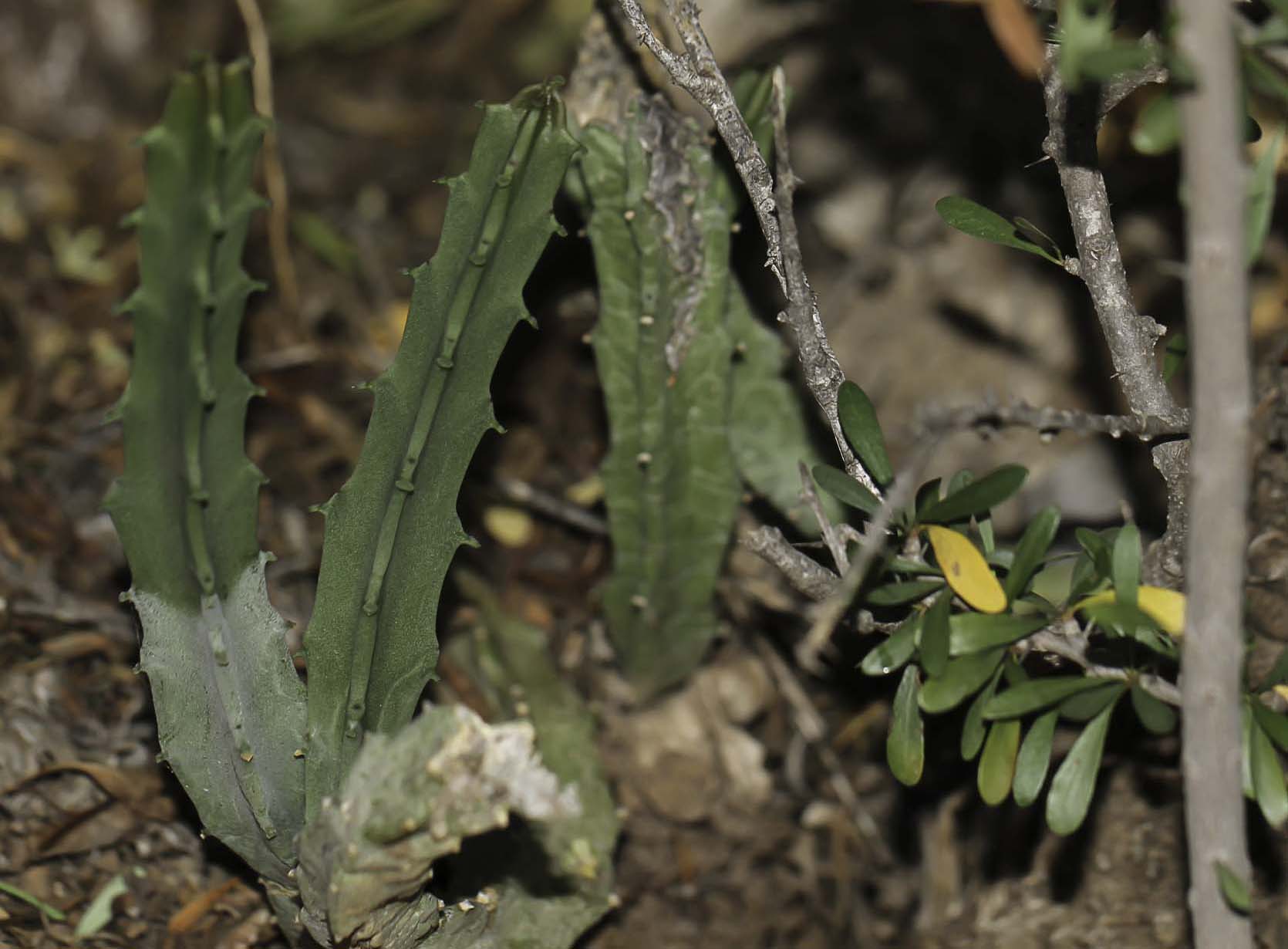
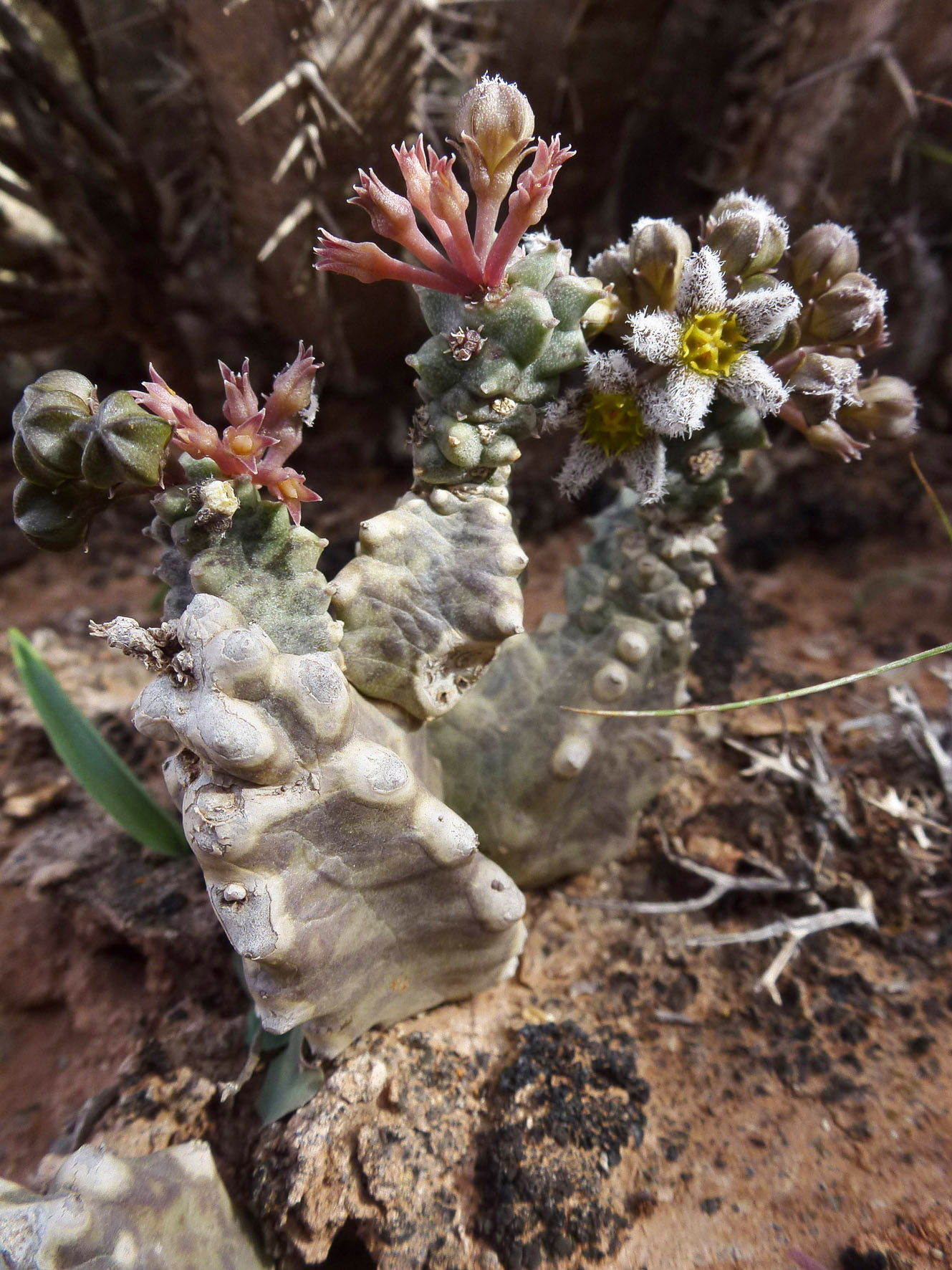
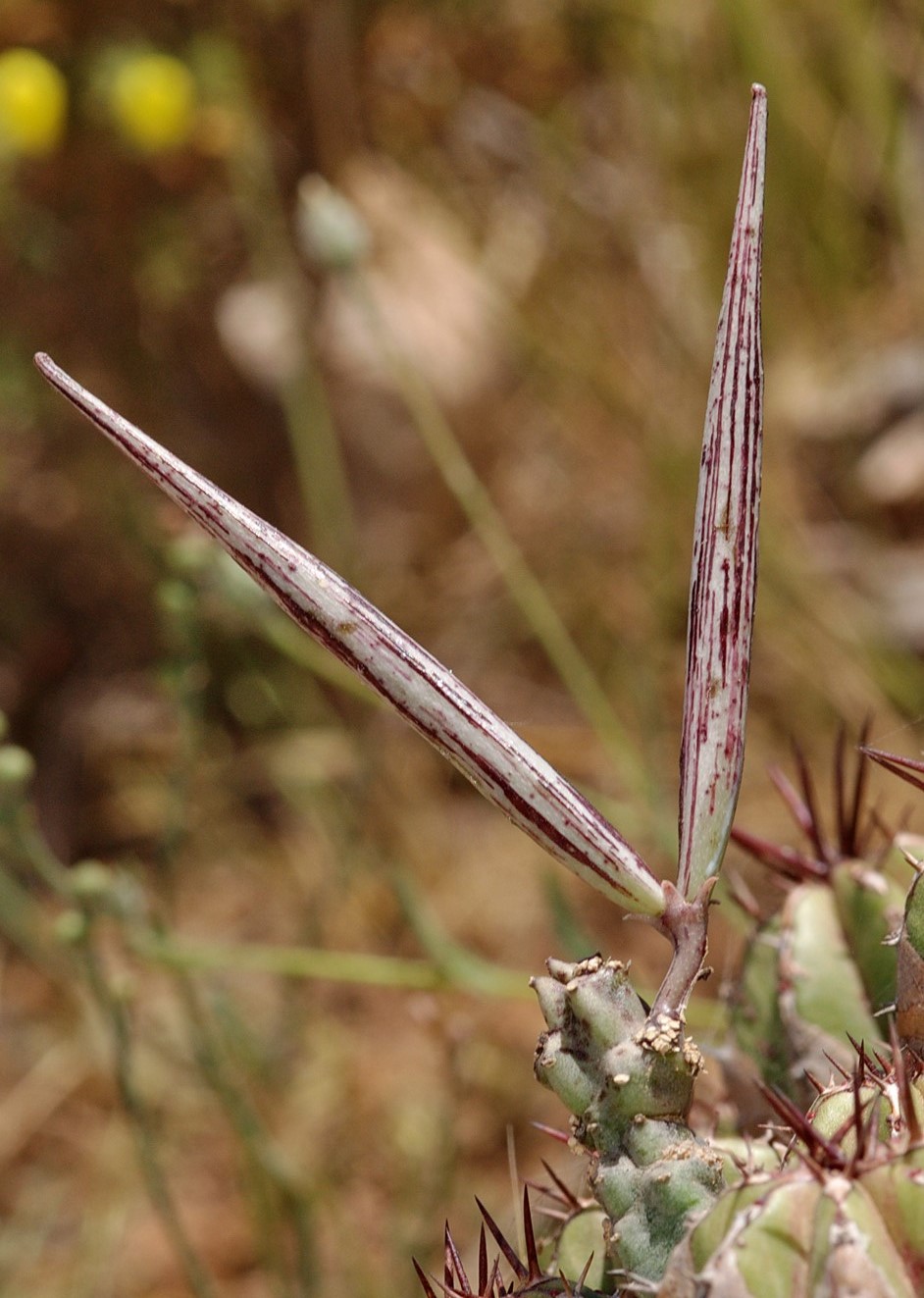
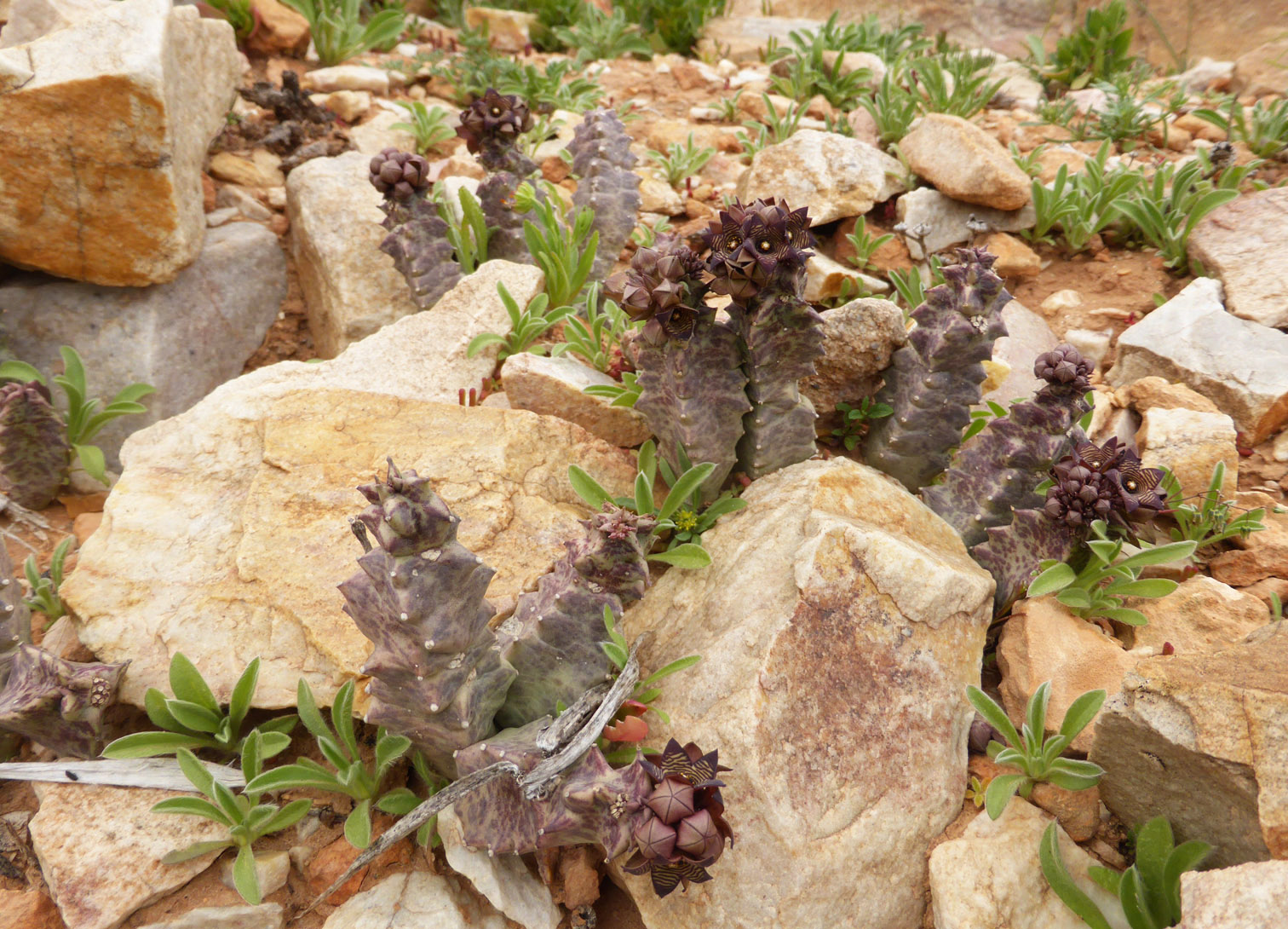
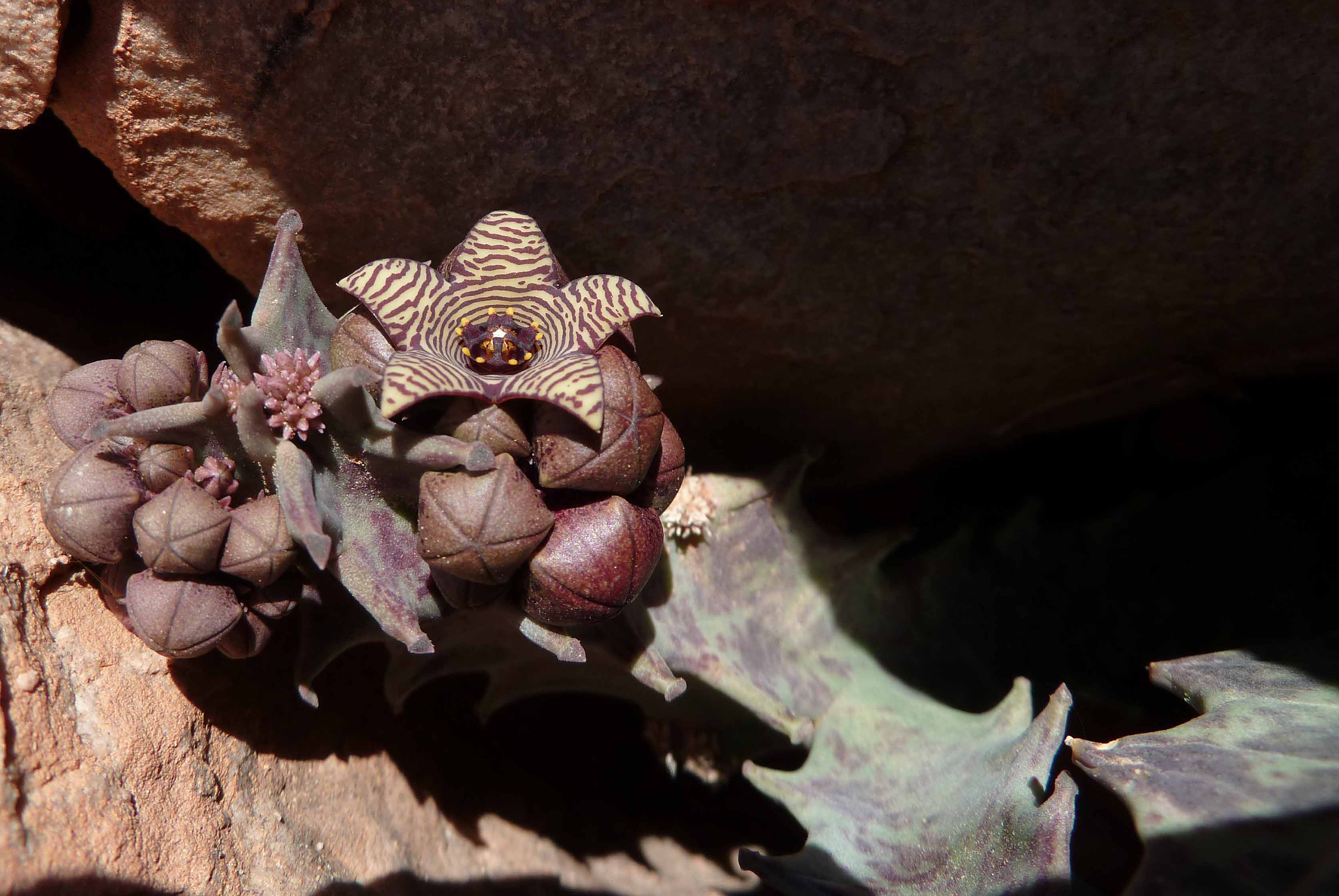
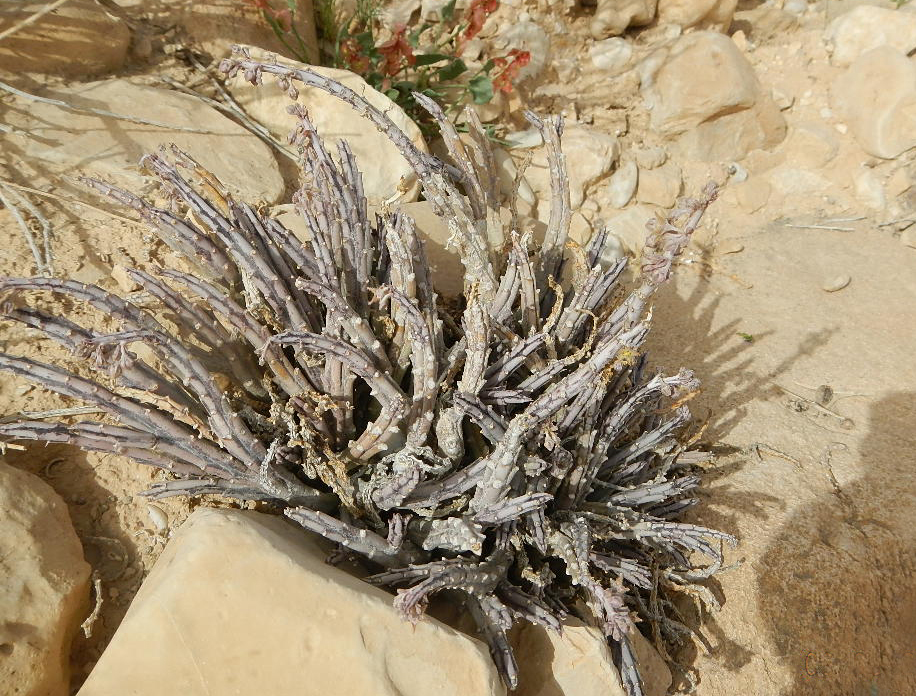
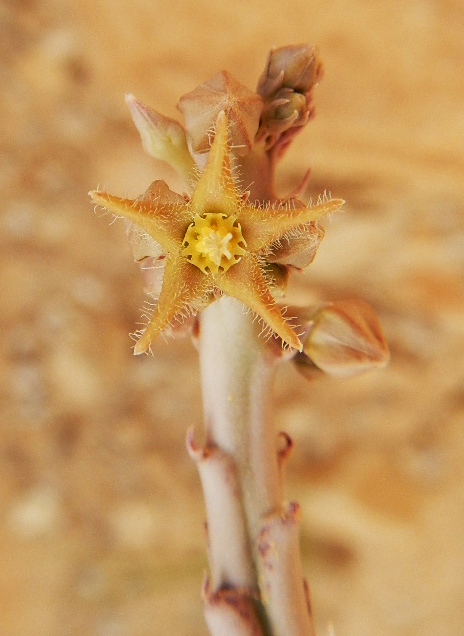
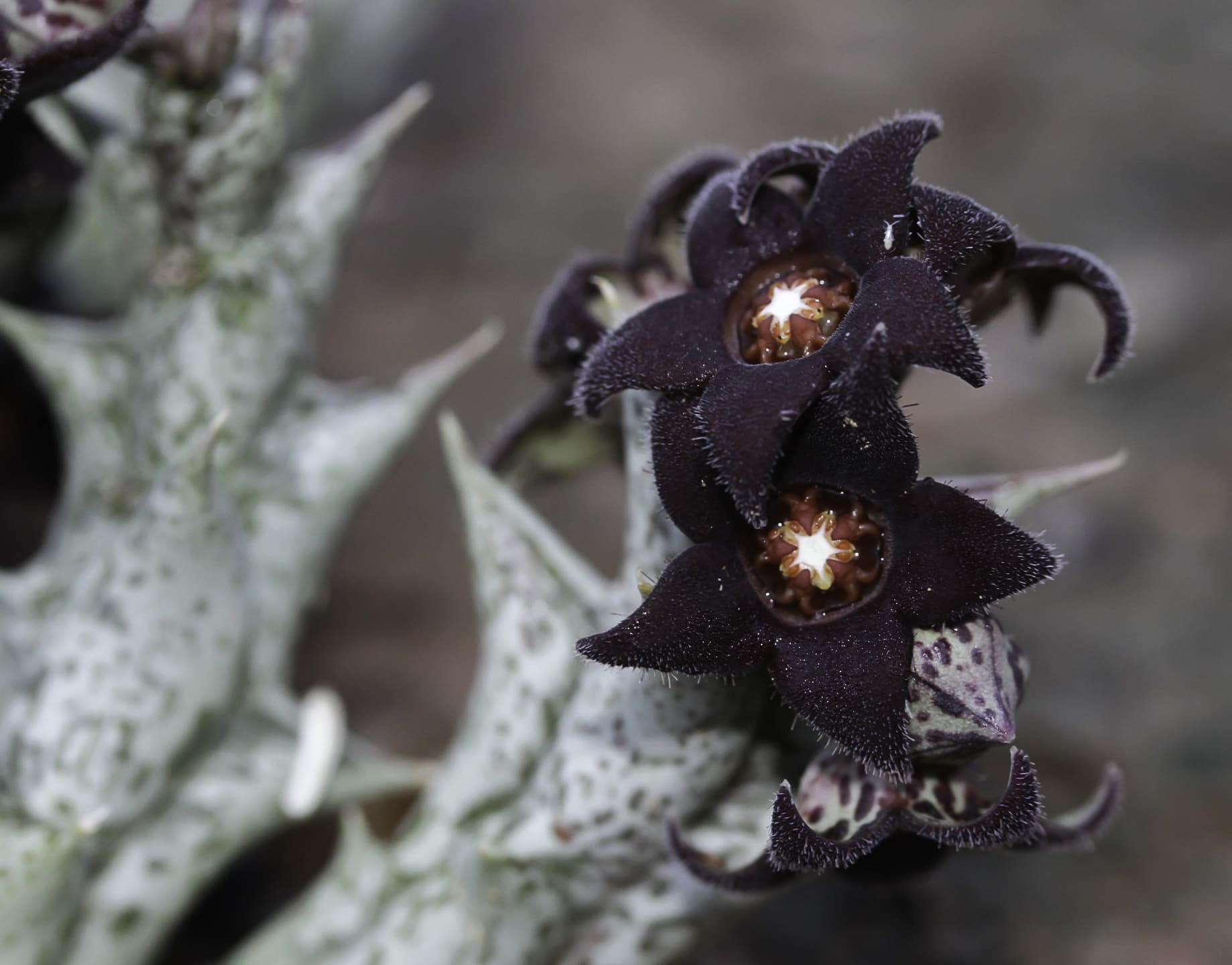
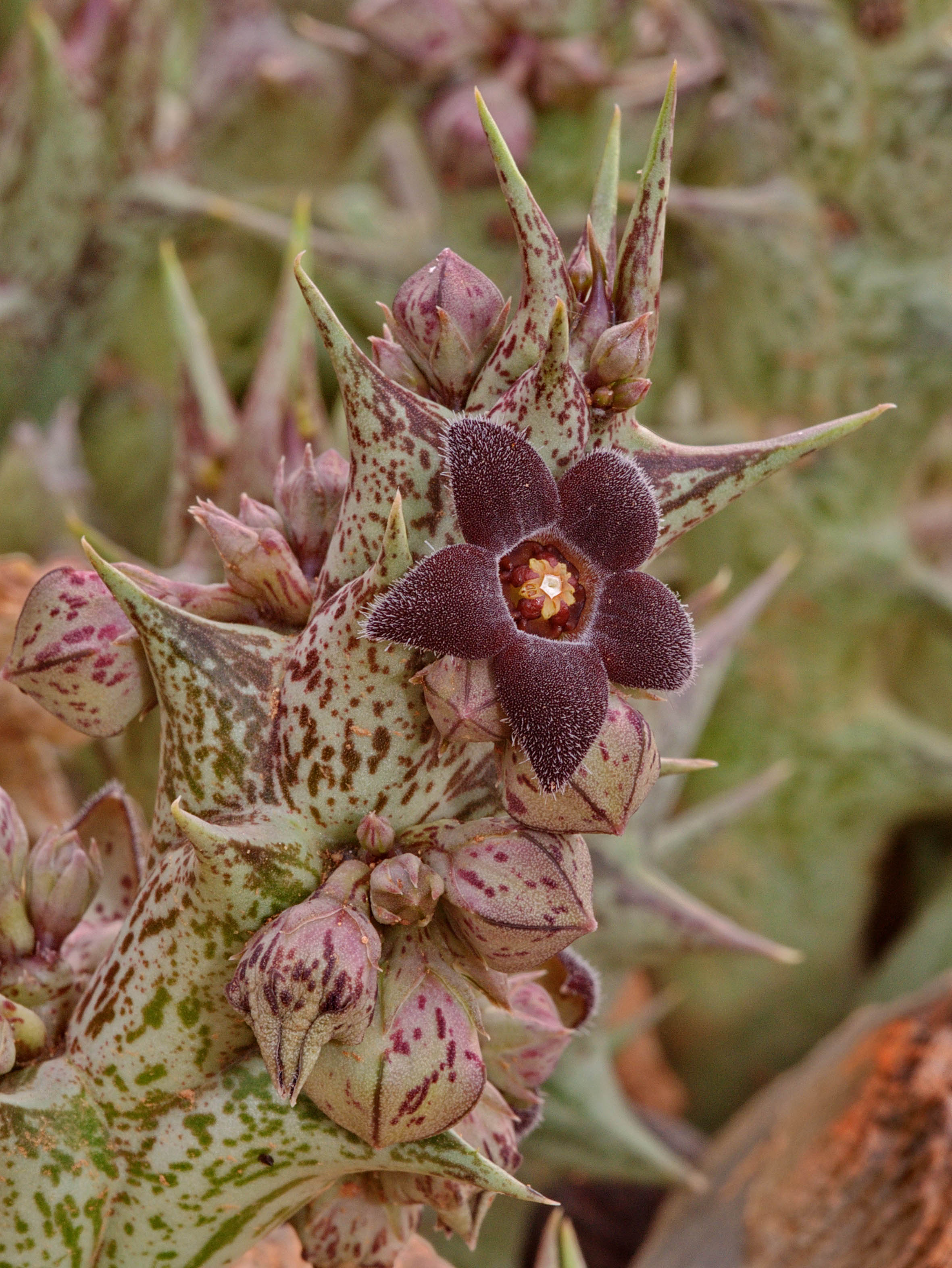
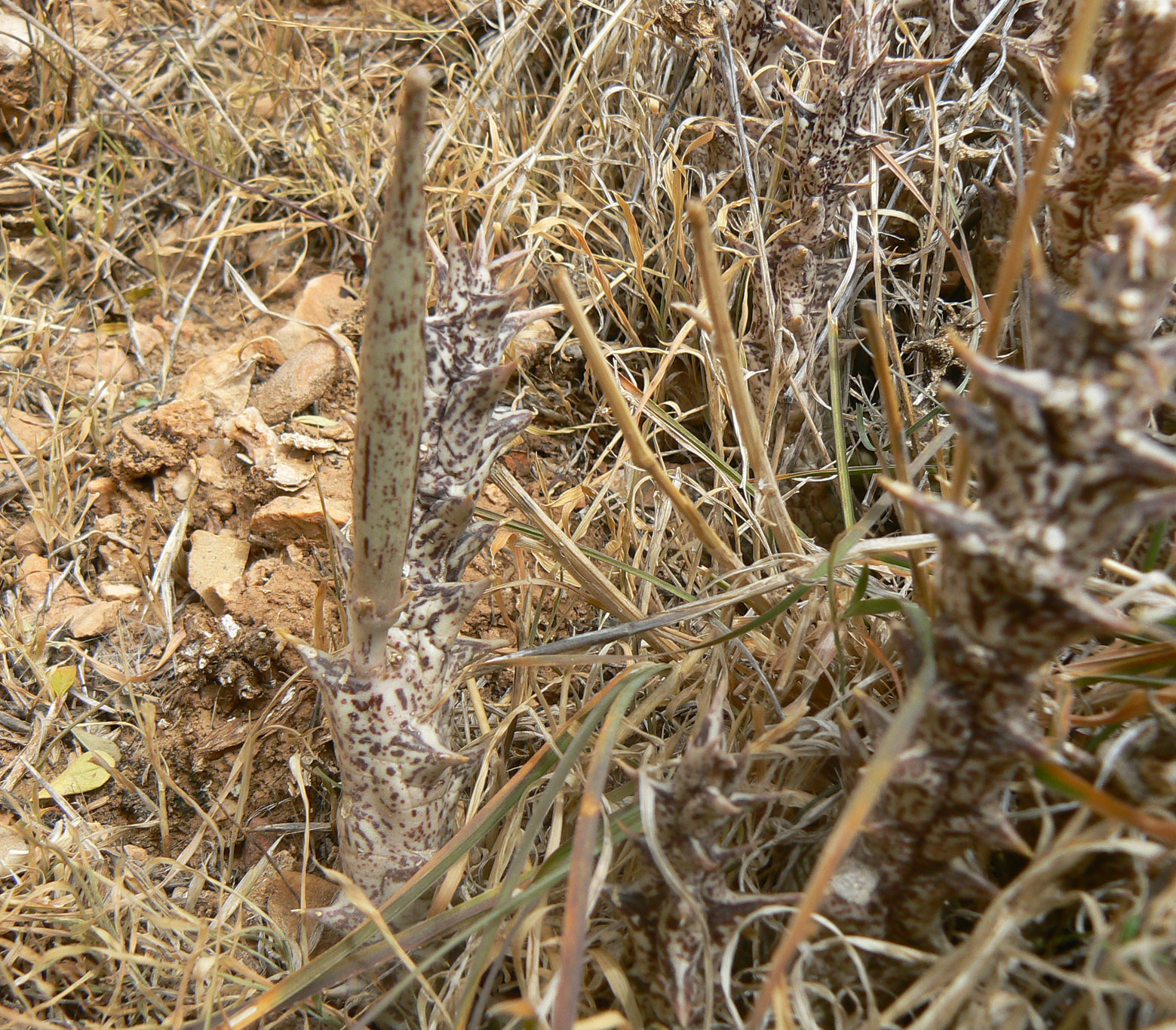
Genus composed of 7 species of succulent plants, which are distributed in the extreme S of Europe, North Africa, Arabian Peninsula and the Middle East, reaching to the E as far as India. In the N of Africa live 4 species. Although they cannot be considered arboreal or shrub species, this genus is discussed here because its largest species (A. joannis) has somewhat lignified stems at the base and a length of up to 3-4 m.
Among the Apocynaceae and more specifically among the lineages of succulent plants (former subfamily Stapelioideae, which is now included in the tribe Ceropegieae) several revisions and readjustments of genera have been carried out, among them the 5 that are present in North Africa. The most recent classification will be followed here (Govaerts et al. 2021).
Most of these species were previously assigned to the genus Caralluma R.Br., all of them small and that here (in addition to the 2 largest, the aforementioned A. joannis and Desmidorchis retrospiciens, which we will discuss in more detail), are cited below:
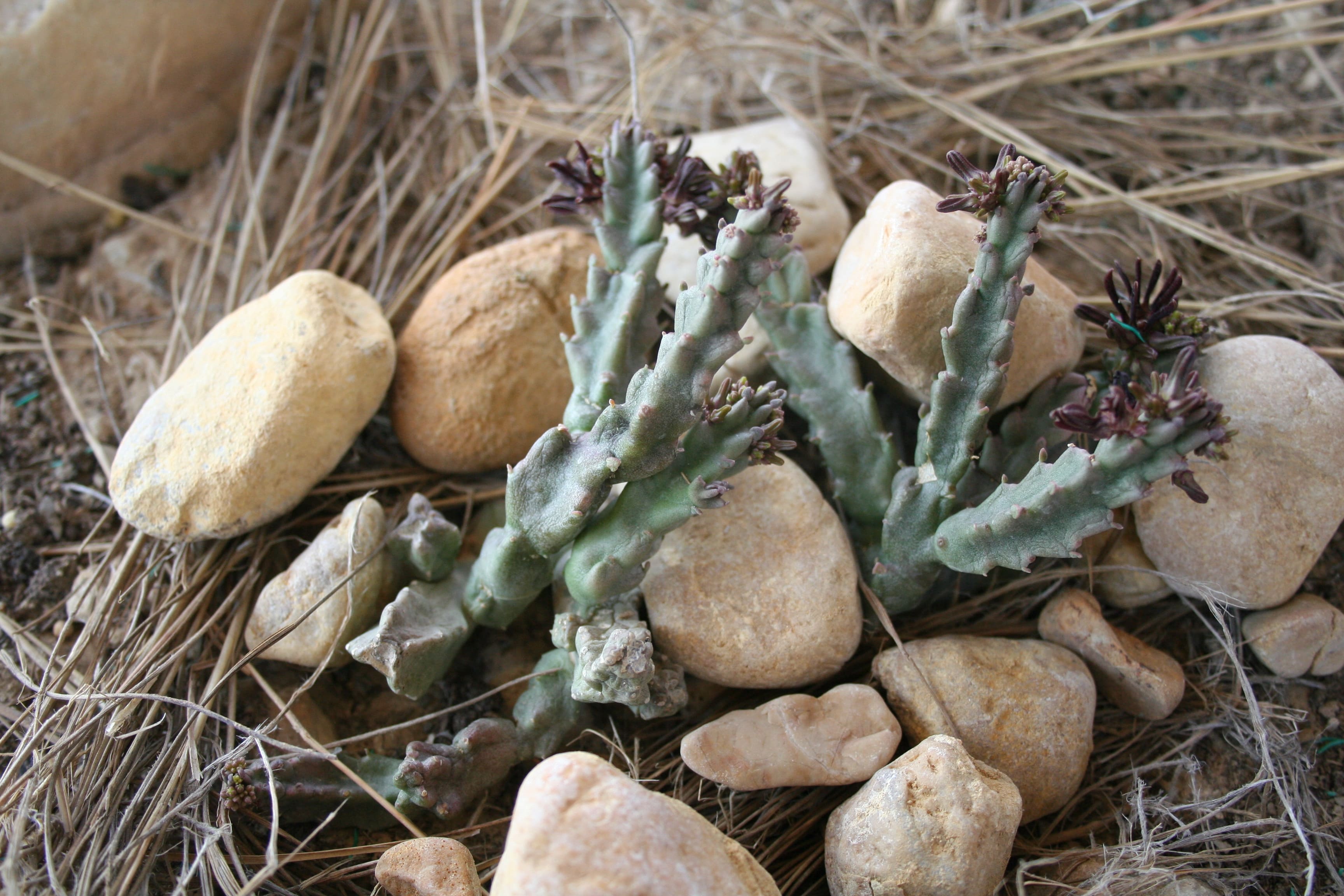
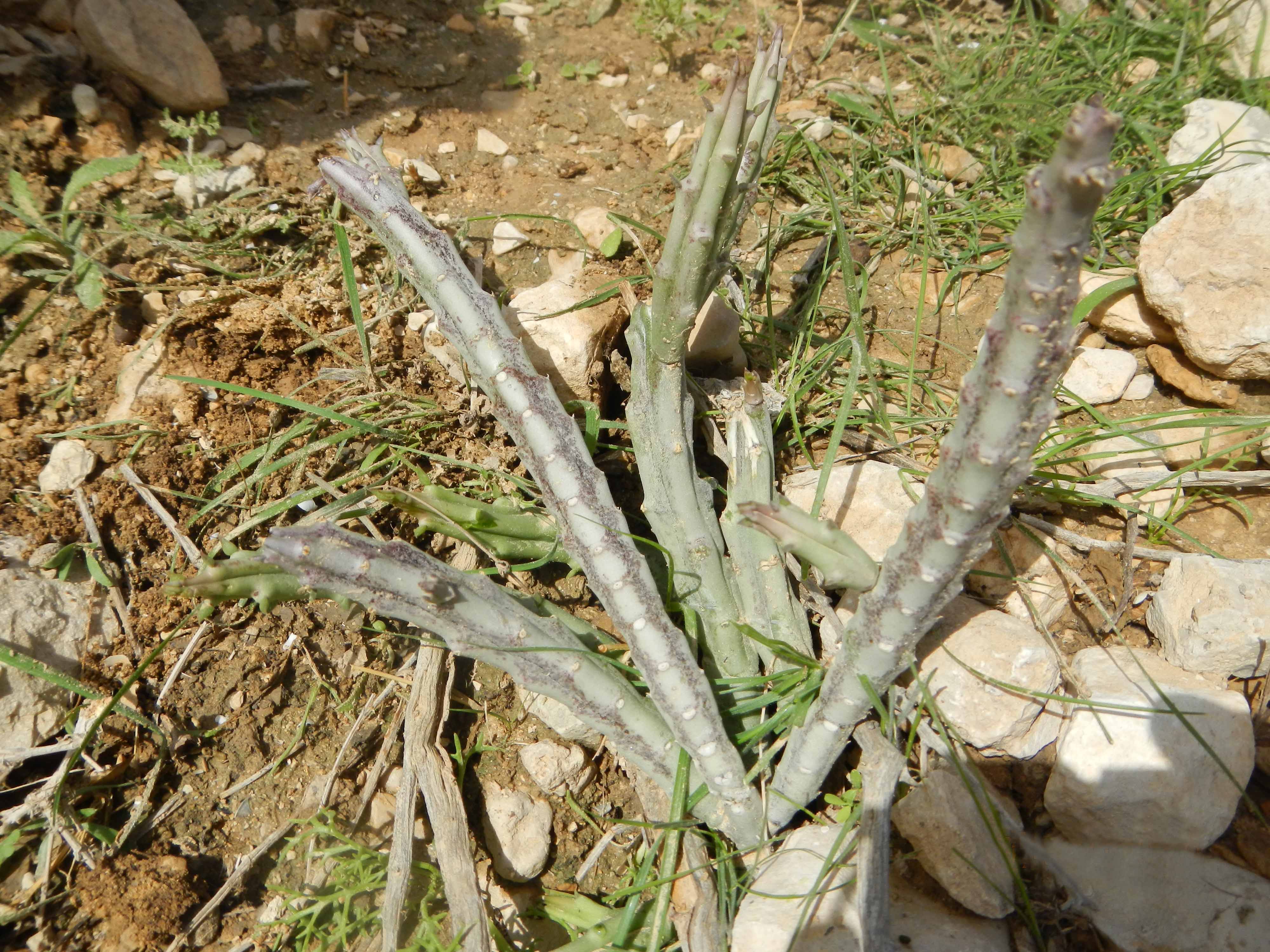
A. munbyana (Decne. ex Munby) Meve & Liede [Caralluma munbyana (Decne. ex Munby) N.E. Br.], with stems up to 30(40) cm, always tetragonal, not cylindrical at the apex, with smaller flowers (<15 mm); corolla entirely dark purple, with linear and glabrous lobes. Iberian-Maghrebi endemic (SE Spain and N of Morocco and Algeria).
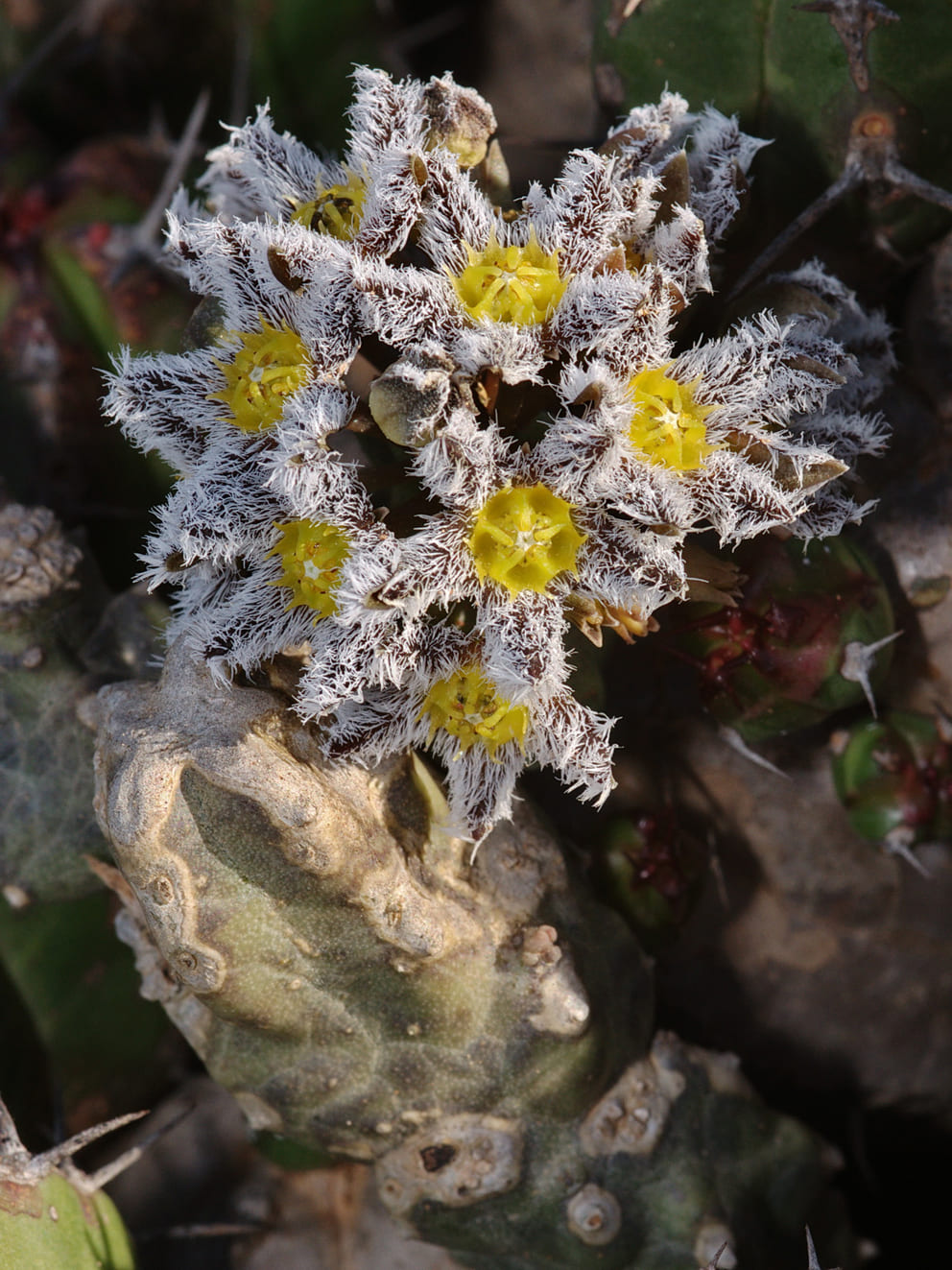
A. burchardii subsp. maura (Maire) Meve & F. Albers [Caralluma burchardii subsp. maura (Maire) Meve & F. Albers], with stems up to 30(40) cm, always tetragonal, not cylindrical at the apex; flowers even smaller (6-10 mm); corolla dark purple, but sometimes covered so densely in white hairs that it seems to be whitish. It is endemic to the SW of Morocco (the type subspecies is from the eastern Canary Islands).
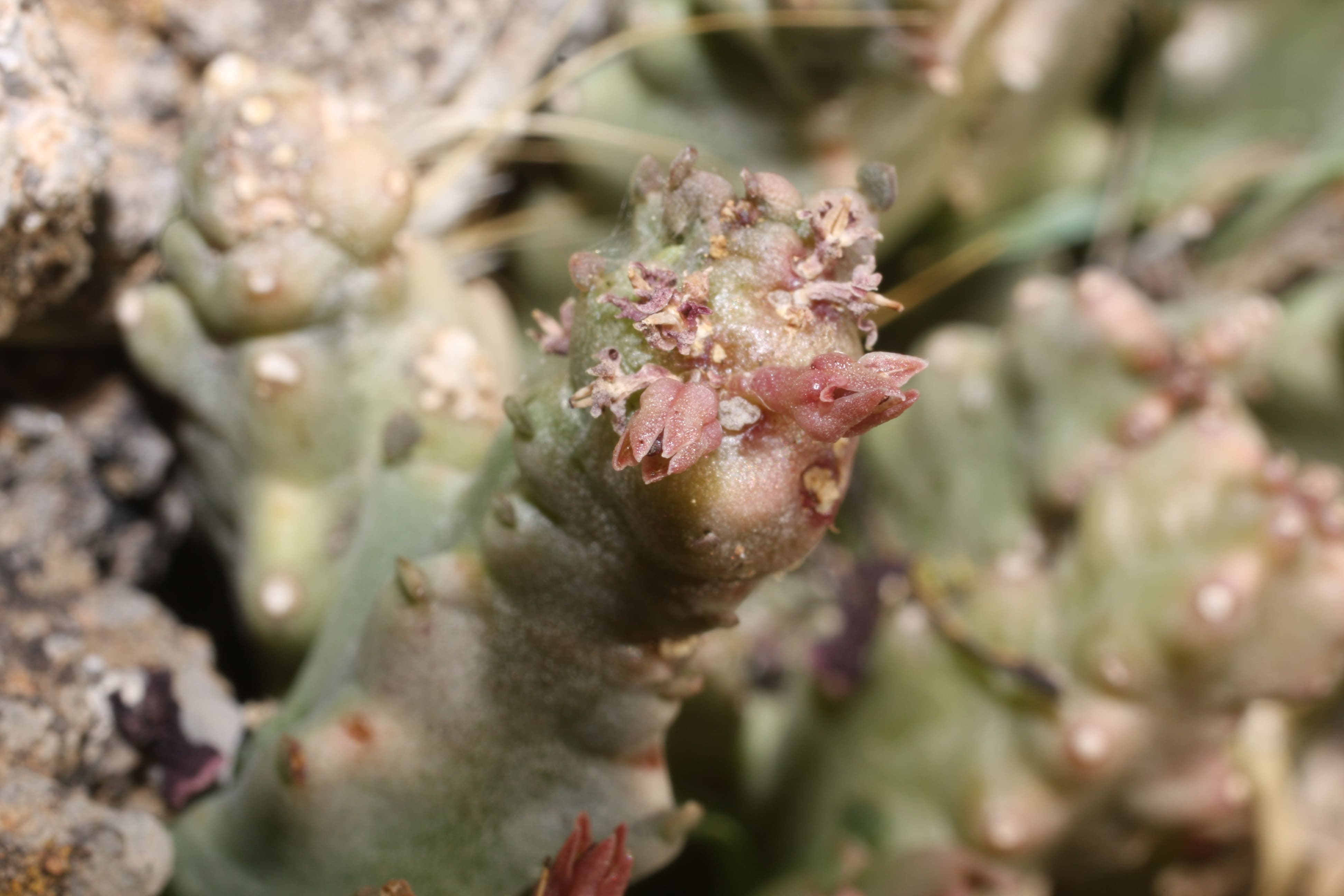
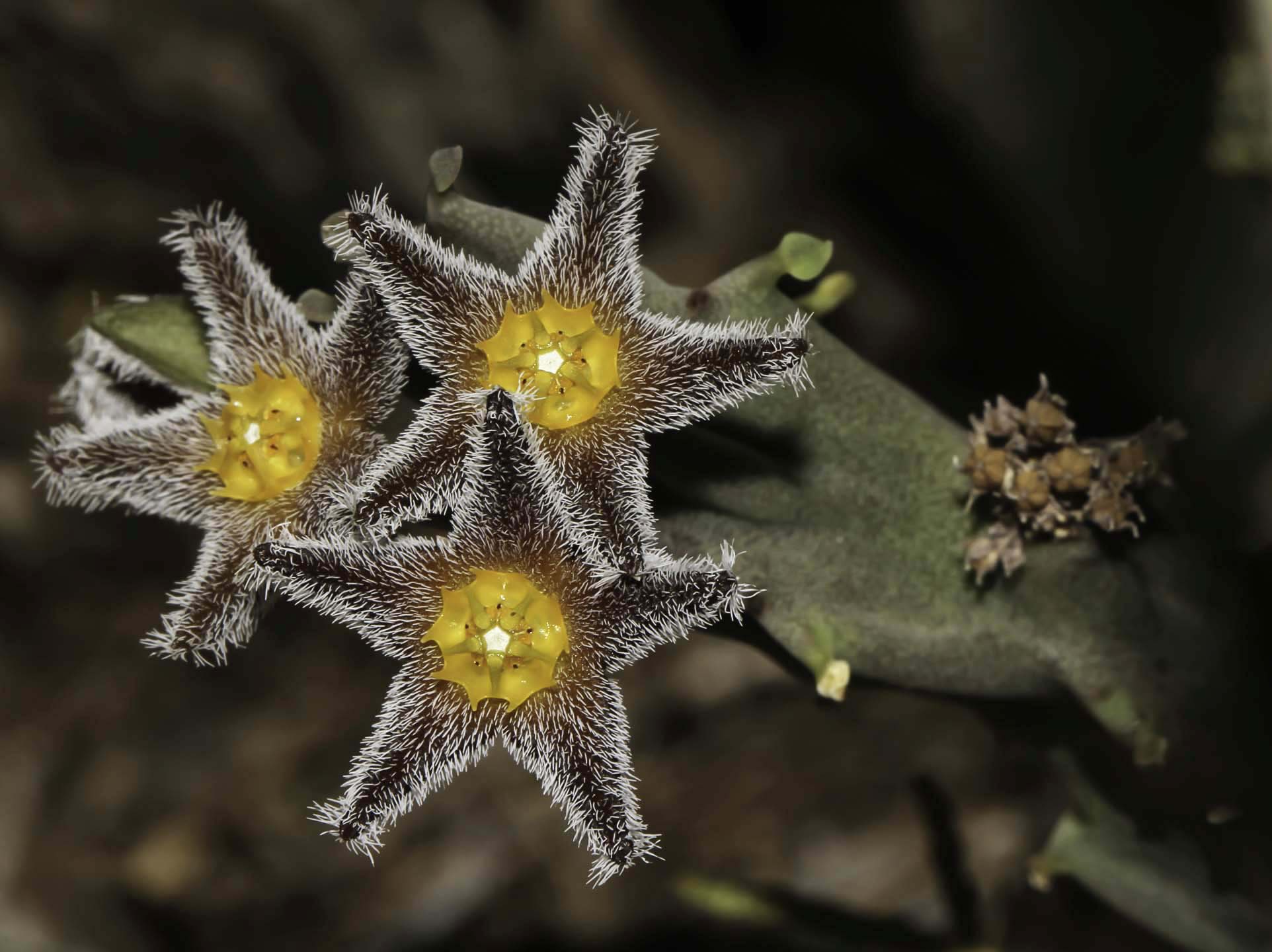
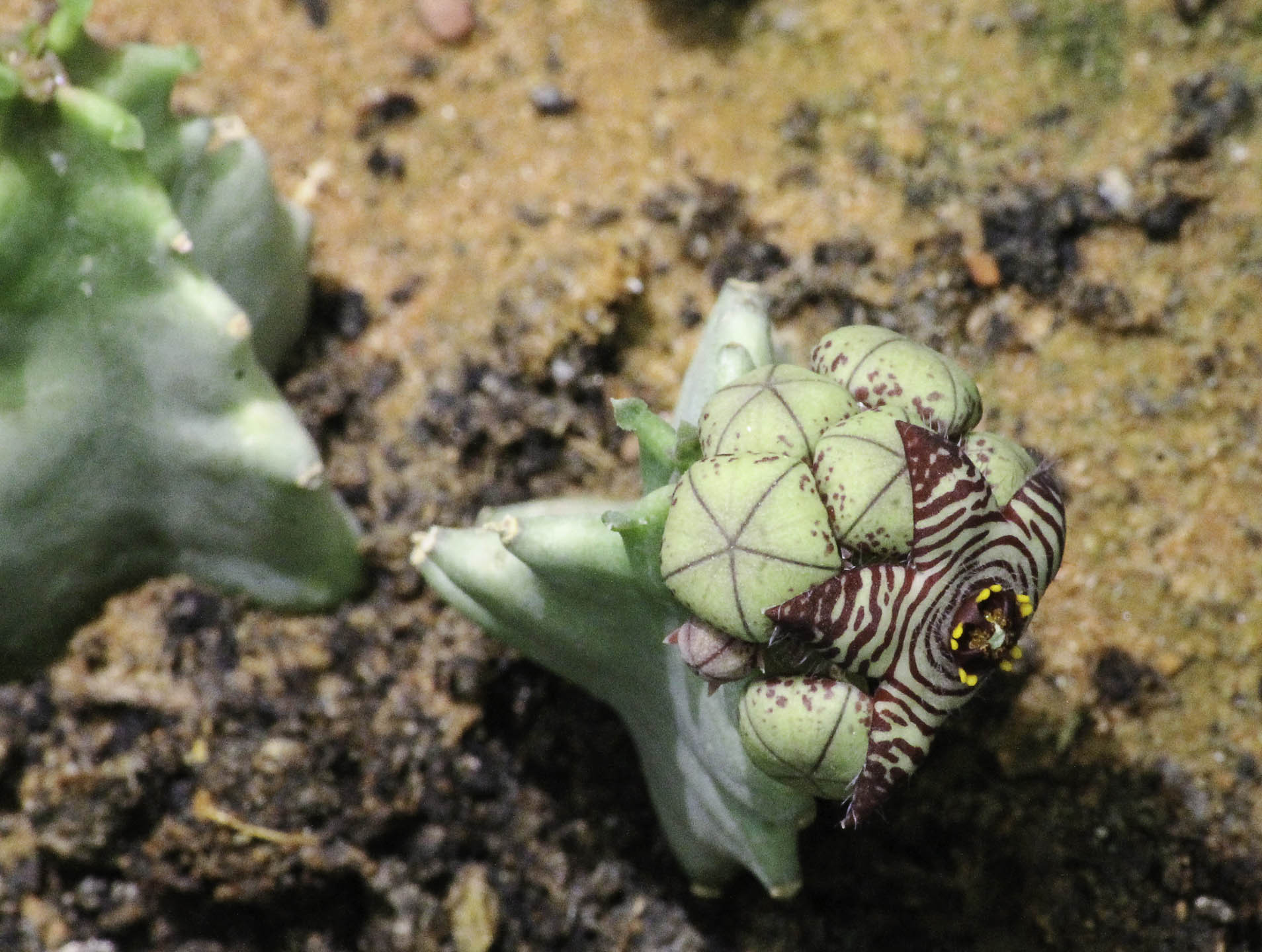
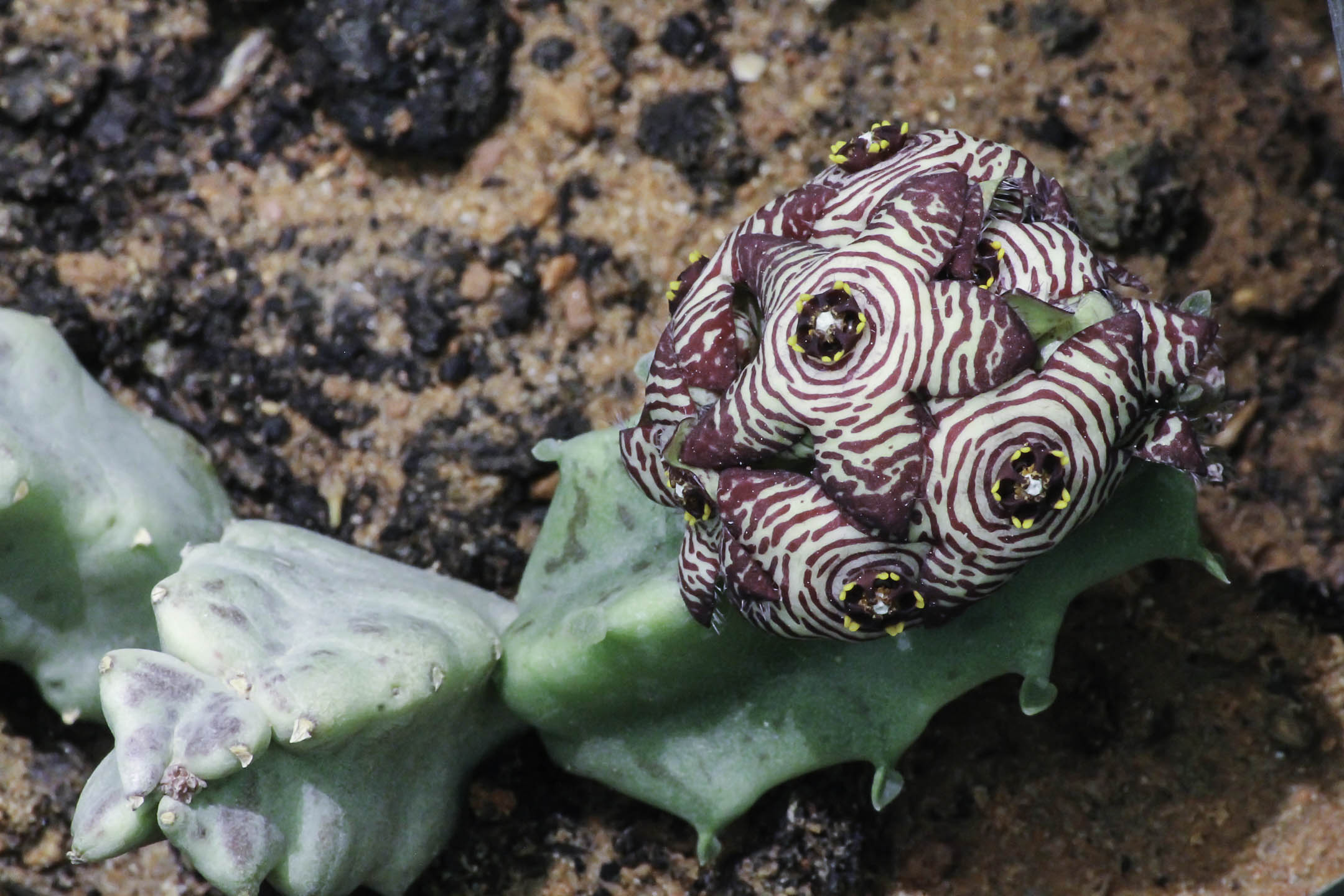
A. europaea (Guss.) Murb. [Caralluma europea (Guss.) N.E. Br., Desmidorchis europea (Guss.) Kuntze], with stems up to 30(40) cm, always tetragonal, not cylindrical at the apex; flowers 12-20 mm in diameter; corolla with lobes that are striped at the base, with transversal red lines on a whitish background (the lines become closer together towards the terminal part of the lobe, that is completely red). Mediterranean area of North Africa, from Morocco to Egypt, with a few extra populations in SE Spain and Sicily. The species has been divided into two subspecies based on the external staminal crown: if it is elongated in the shape of a nail, it is the subsp. maroccana (Hook.f.) Plowes, endemic to Morocco and, if the outer staminal crown has lobes reduced to sessile balls, it is the subsp. europaea, which extends throughout the range of the species.
Caralluma dalzielii N.E. Br. [C. sudanica Bruyns, Ceropegia sudanica (Bruyns) Bruyns. With the latest taxonomic changes, the genus Caralluma is only represented in North Africa by this species. It has also been cited under invalid names, already used for taxa from India or Arabia: C. adscendens (Roxb.) R.Br., non (Roxb.) Haw.; C. fimbriata auct., non Wall.; C. attenuata auct., non Wight or C. subulata auct., non Forssk. former Decne]. It is a succulent plant up to 60(100) cm tall; stems with 4 very distinct angles, but in the upper (floriferous) part longly cylindrical; flowers solitary or in pairs, large (c. 25 mm); corolla lobes triangular at the base, striped (transversal black lines on a yellow background), towards the apex they become lanceolate and solid dark purple in colour, fimbriate with long dark purple hairs. In Africa, it grows in the tropical and dry northern area, mainly in the Sahel, from Senegal and Mauritania to Somalia.
The genus Caudanthera had also been included in the genus Caralluma, which only has 4 species, 2 of them in northern Africa:
Caudanthera edulis Meve & Liede [Caralluma edulis (Edgew.) Benth. ex Hook.f., Caralluma vittata N.E.Br., Boucerosia edulis Edgew., Spiralluma longidens (N.E.Br.) Plowes], up to 20(30) cm tall; stems with 4 very distinct angles but becoming longly cylindrical in the upper (floriferous) part; flowers solitary or in small groups of 2-4, with long pedicels, campanulate in the basal half, divided into 5 triangular lobes at the base and then longly linear, whitish, glabrous. It is found from Mauritania to India. In Africa, it reaches from the N, following the coast of the Red Sea, up to the Jebel Elba.
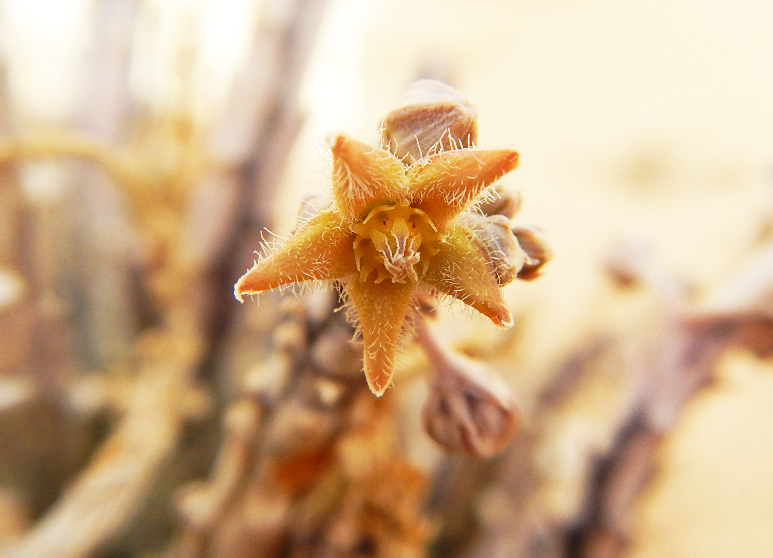
Caudanthera sinaica (Decne.) Plowes [Caralluma sinaica (Decne.) A. Berger, Boucerosia sinaica Decne., Caralluma maris-mortui Zohary], up to 30(40) cm tall; stems with 4 very distinct angles but becoming longly cylindrical in the upper (floriferous) part; flowers 3-5; corolla 6-8 mm, whitish-yellowish, with longly triangular lobes, covered in white cilia. In it is distributed in the SE of the Mediterranean region and the Arabian Peninsula. From the Sinai Peninsula, Palestine and Israel to Yemen.
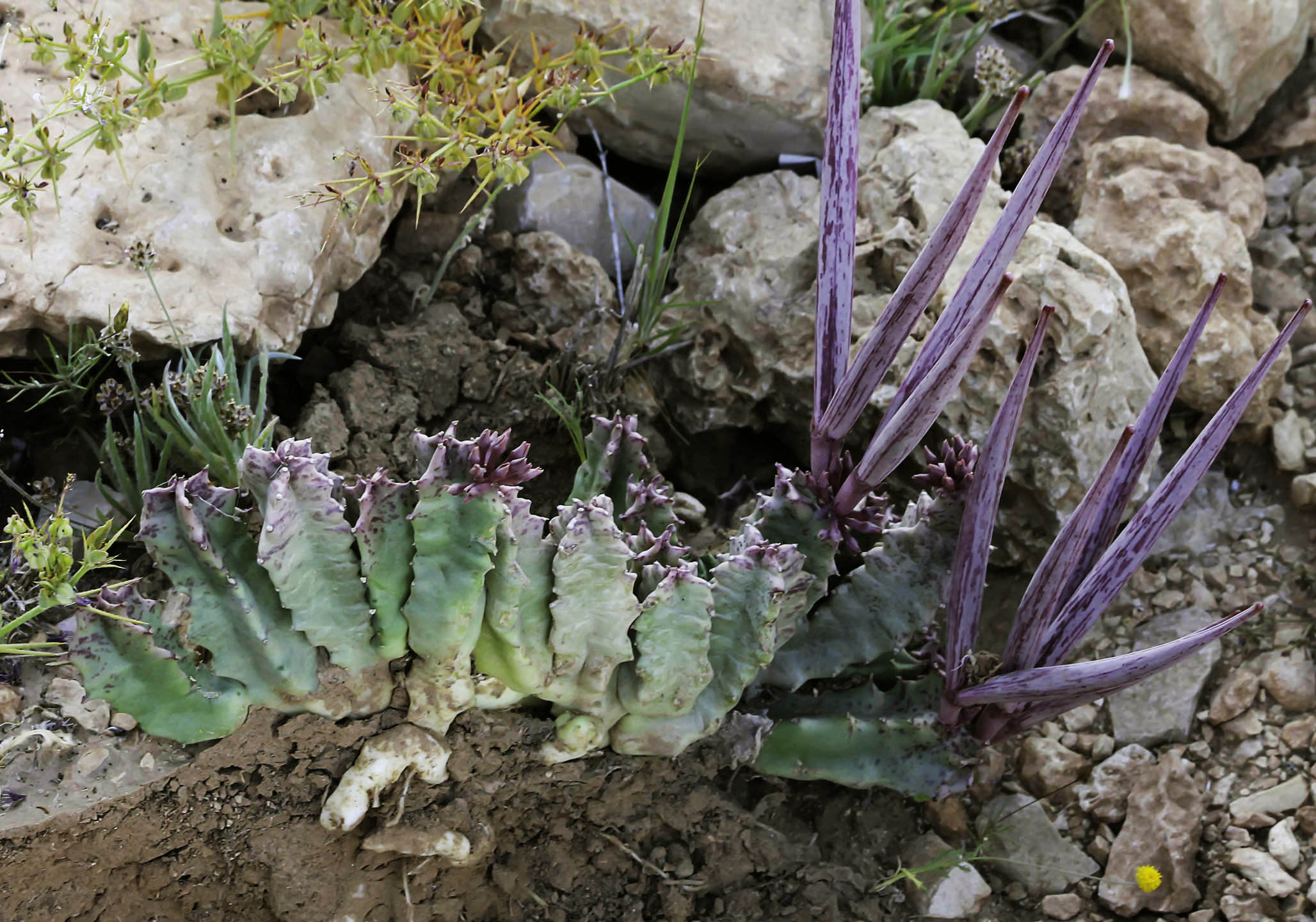
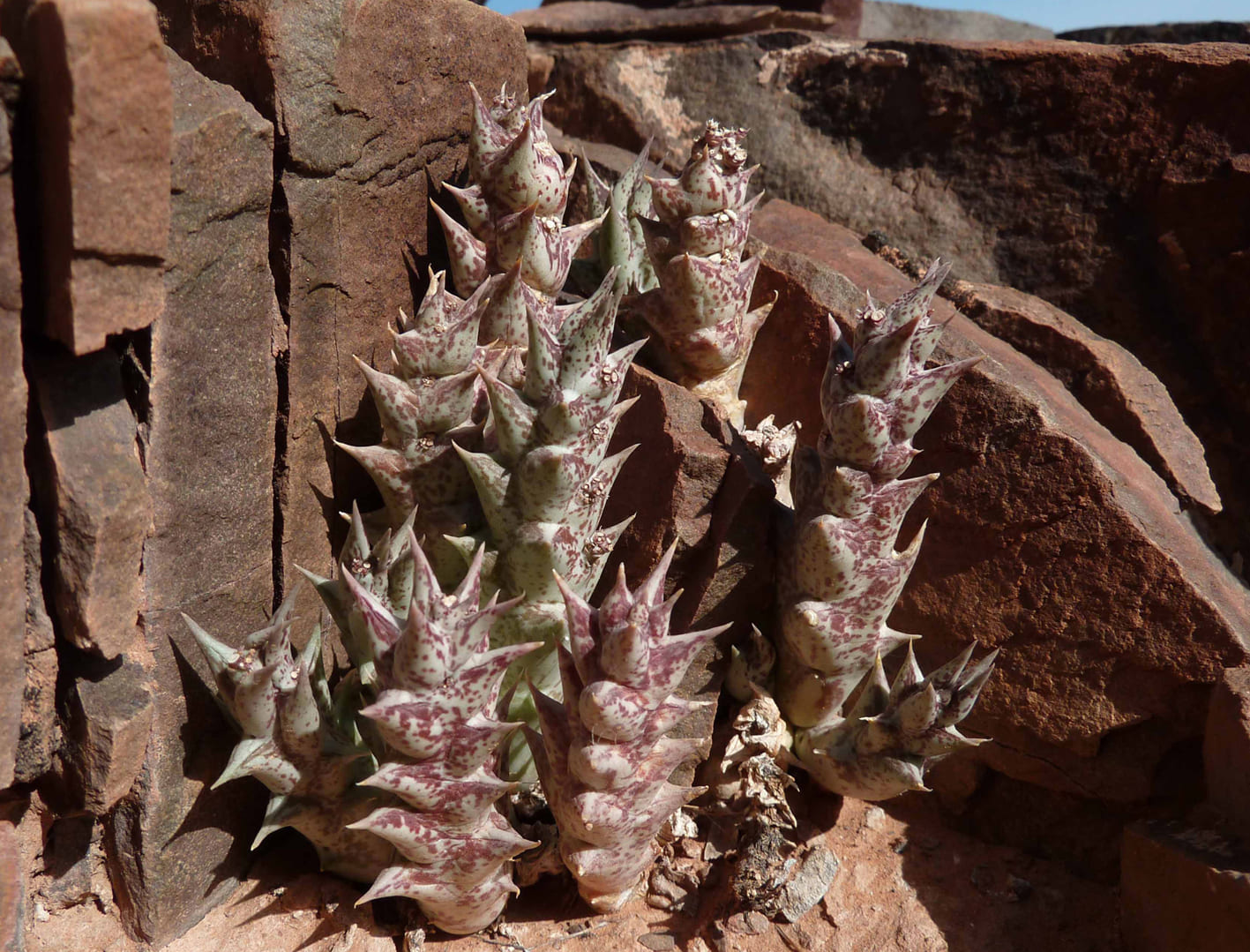
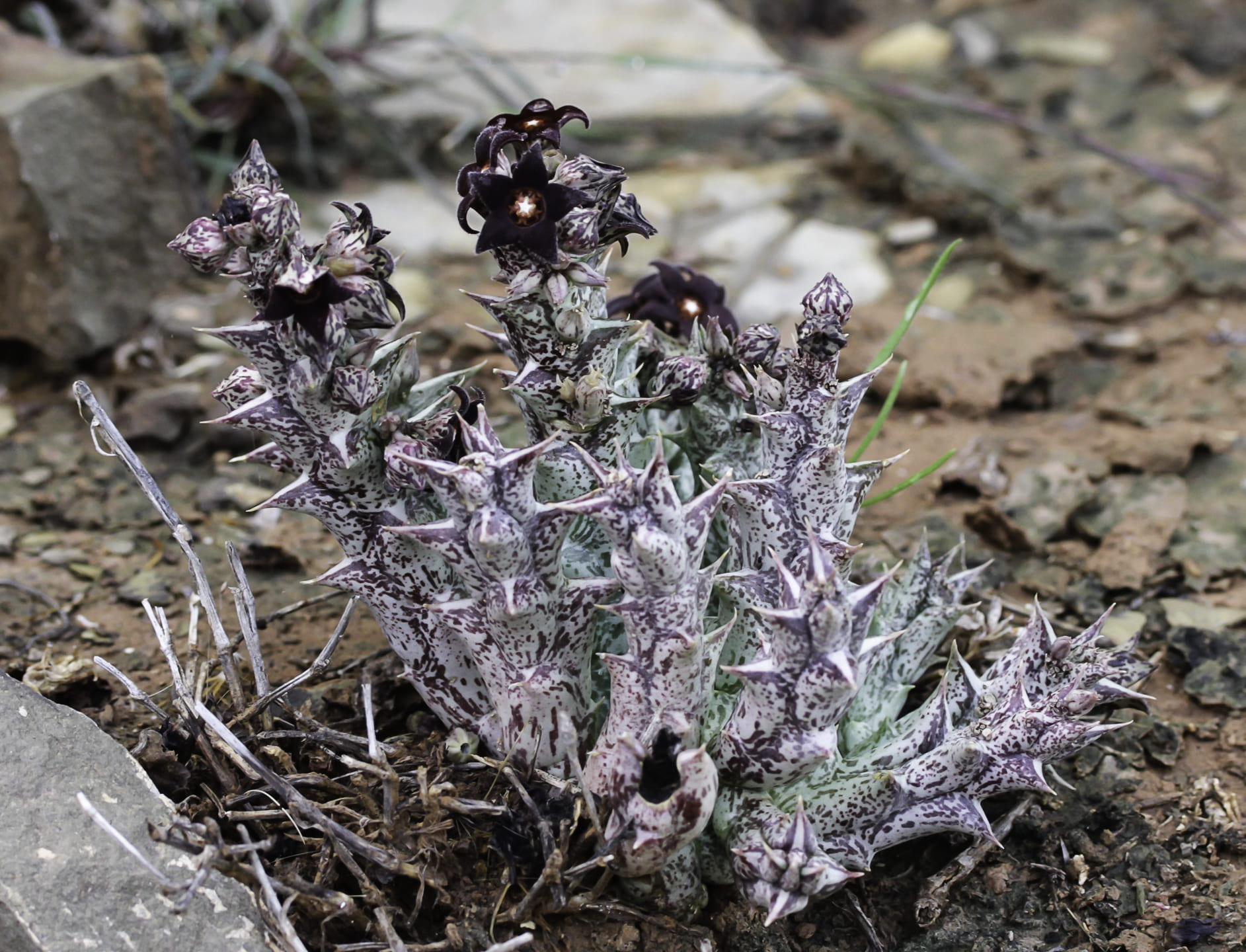
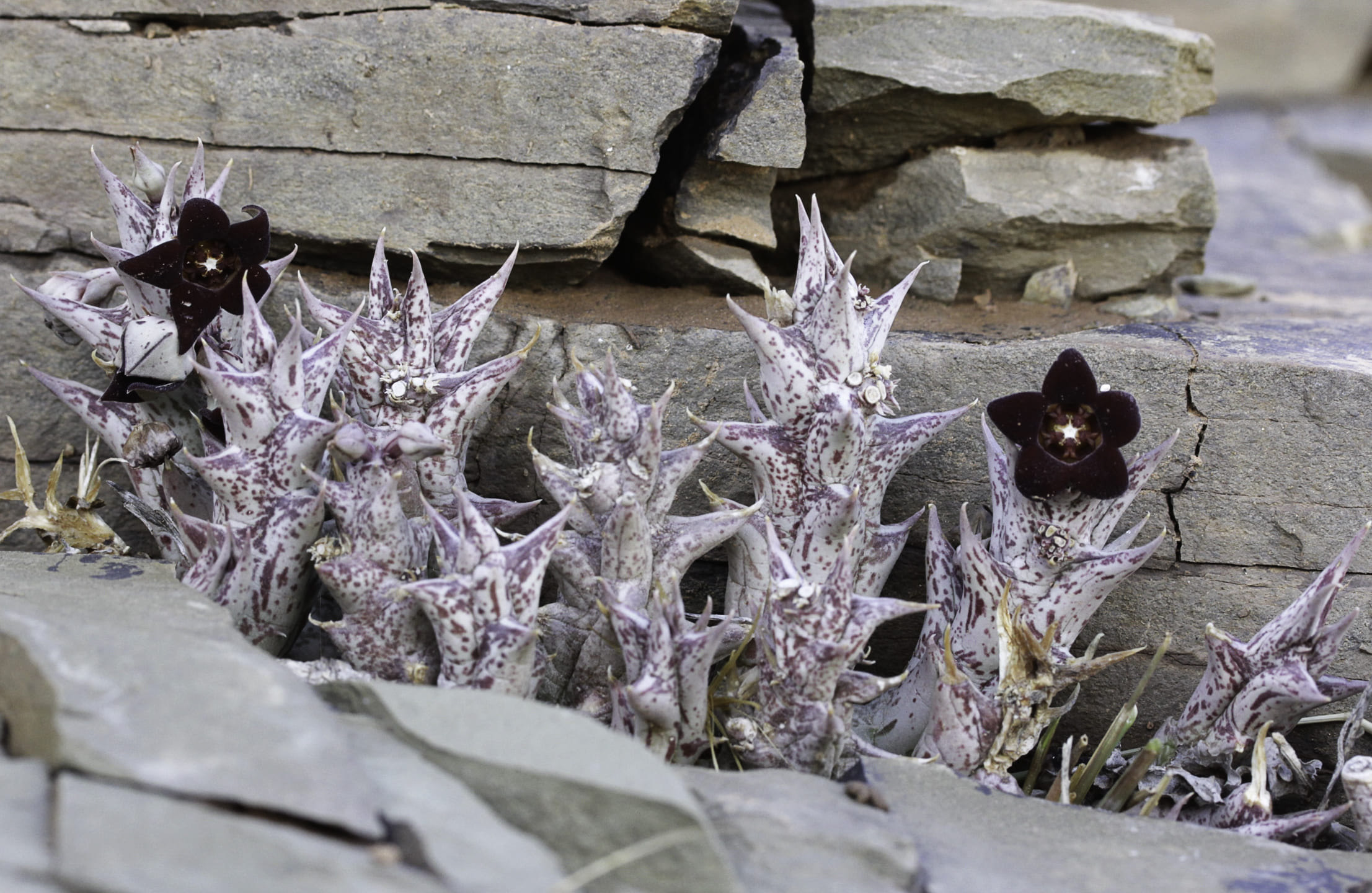
Orbea decaisneana (Lem.) Bruyns [Caralluma venenosa Maire, Ceropegia venenosa (Maire) Bruyns, Pachycymbium decaisneanum (Lem.) M.G. Gilbert, Desmidorchis decaisneana (Lem.) Kuntze]. Finally, it is worth mentioning this strange species, that used to be in the genera Caralluma, Desmidorchis or Ceropegia, is now included in the genus Orbea. It can be easily identified for its stems, up to 30(50) cm in height, that have large conical appendages along their length; flowers large (20-25 mm in diameter), dark red-purplish. Endemic to Morocco, where it is largely distributed throughout the dry areas, from the Mediterranean to the northern Sahara. Some populations have been segregated at the infraspecific level, such as O. decaisneana subsp. hesperidum (Maire) Jonkers [Caralluma decaisneana subsp. hesperidum (Maire) Raynaud, C. hesperidum Maire, C. commutata subsp. hesperidum (Maire) Maire], although this division seems to have little acceptance at present.
The 7 taxa mentioned above are generally uncommon but with more or less wide distribution areas. None are assessed globally on the IUCN Red List of Species. The canary taxon A. burchardii subsp. burchardii is assessed. In the Red List of vascular plants of Egypt (Flora Aegyptiaca Vol 1, 2000) C. edulis (cited as Caralluma vittata) is listed as “Rare”. In the Livre Rouge de la flore vasculaire du Maroc (Fennane, 2021) A. burchardii subsp. maura and A. munbyana have been considered as Endangered (EN), A. europaea and O. decaisneana as Near Threatened (NT) and C. sinaica as Not Applicable (NA). In Algeria, O. decaisneana (listed as Caralluma venenosa) is included in its List of protected non cultivated flora (Executive Decree 12-03 on 4-Jan-2012). As this species has traditionally been listed in the genus Pachycymbium, when all Pachycymbium species were listed under CITES Annex II, it would now continue to be listed here.
The other cactiform species of North Africa, of the genus Euphorbia, can be differentiated because they are spiny, they have white latex and tiny flowers (2.5-6.5 mm in diameter); in the succulent species of Apocynaceae there are no spines, the latex is colourless and the flowers are larger (6-30 mm).
See below the key to the species of the genus Apteranthes, which now groups most of them.
Bruyns, P., Al-Farsi, A. & Hedderson, T. 2010. Phylogenetic relationships of Caralluma R.Br. (Apocynaceae). Taxon 59(4):1031-1043
Gilbert, M.V. 1990. A review of Caralluma R.Br. and segregates. Bradleya 8: 1-32.
Govaerts, R., Nic Lughadha, E., Black, N., Turner, R. & Paton, A. (2021). The World Checklist of Vascular Plants, a continuously updated resource for exploring global plant diversity. https://doi.org/10.1038/s41597-021-00997-6. Scientific Data 8: 215.
Meve, U. & Liede, S. 2002. A molecular phylogeny and generic rearrangement of the stapelioid Ceropegieae
(Apocynaceae-Asclepiadoideae). Plant Systematics and Evolution, 234(1), 171-209.
Plowes, D.C.H. 1995. A reclassification of Caralluma R. Brown (Stapelieae: Asclepiadaceae). Haseltonia 3: 49-70.
Key to species
1 Stems easily up to 1 m in length. Flowers 20-25 mm in diameter. Corolla warty and slightly hairy on the margins of the lobes Apteranthes joannis
1 Less robust plant whose stems do not exceed 0.6 m in length. Flowers less than 15 mm. Corolla glabrous or ciliated 2
2 Corolla with linear lobes Apteranthes munbyana
2 Corolla with triangular or oval lobes 3
3 Corolla with divisions covered inside with white hairs (rarely green) that give it a white appearance. Staminal crown with hook-shaped appendages sometimes elongated at the end Apteranthes burchardii
3 Corolla with divisions ciliated or not, but slightly hairy, purple ± striated in a helix of yellowish or greenish lines Apteranthes europaea
Updated by: J. Charco, J.F. Mota & F.J. Pérez García.